Posts by Woodley Smith
Meet Your 2026 Board of Directors Candidates
We are pleased to introduce you to this year’s candidates for the American Cider Association Board of Directors. With six seats up for a vote, this year’s candidates bring a wealth of experience and passion to the table, eager to steer the future of the cider industry.
Elections will take place electronically from February 3-5, with ballots sent out on the morning of February 3 and closing at 9:00 AM Eastern on February 5. Each cidery’s primary contact will receive one ballot, offering the opportunity to influence the direction of the ACA.
The board positions open this year include two at-large seats, three regional chairs, and one large cidery seat. Each nominee has put forth a bio and candidate statement which you can read below. All ACA member cideries will vote on at-large seats, while regional chairs and large cidery seats will be decided by cideries within those specific categories. This election is not only a chance to select visionary leaders but also to strengthen the community that supports and celebrates the art of cidermaking.
At-Large Cidery Seats
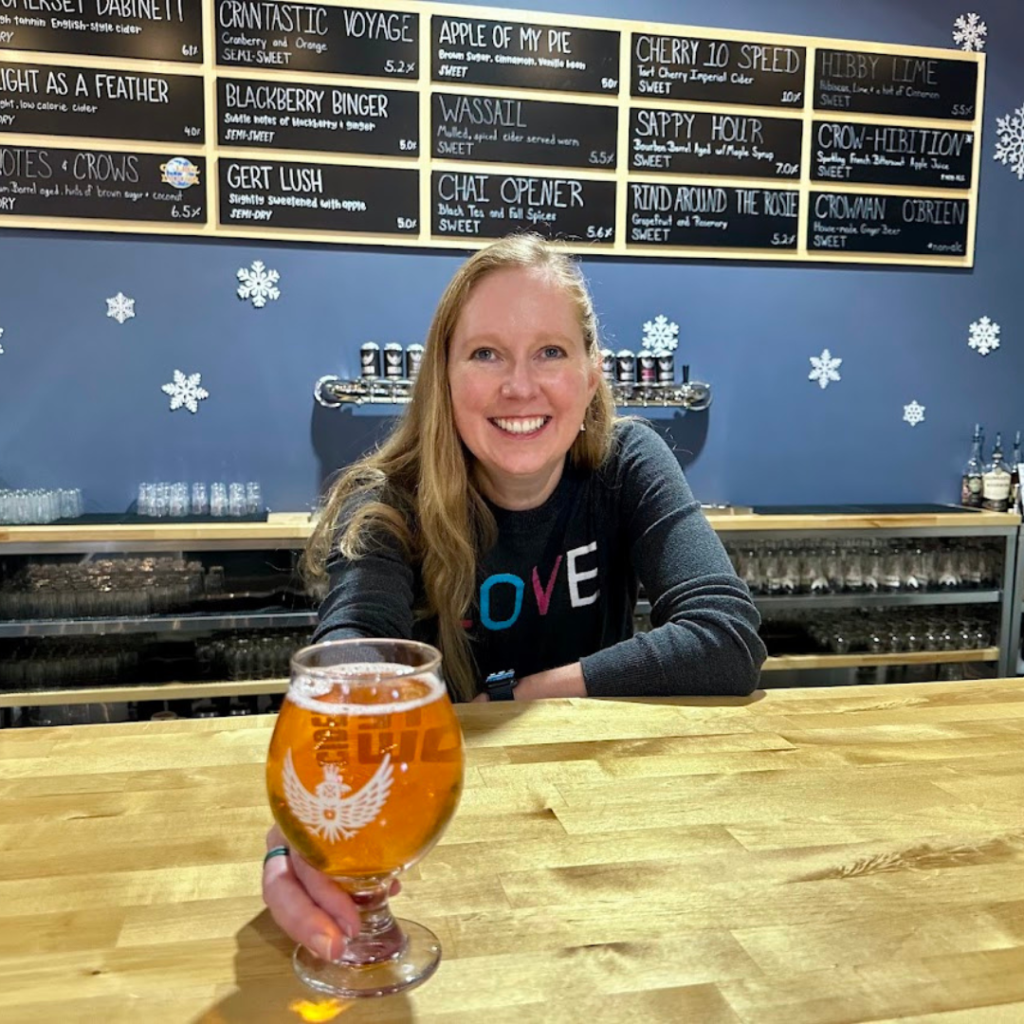
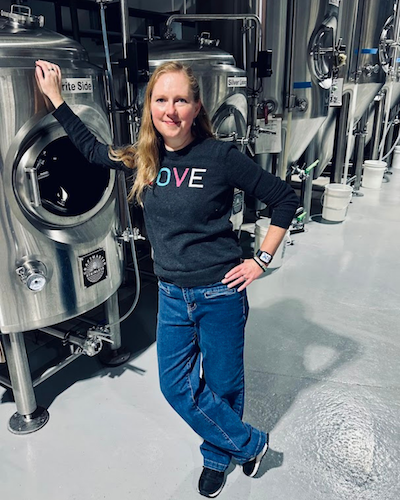
Denise Gardner, White Crow Cider Company, Wichita, Kansas
Bio:
Denise Gardner is the co-owner of White Crow Cider Company in Wichita, Kansas, where she helps run a cidery and taproom built through hands-on experience and determination. Over the past several years, she has truly worn just about every hat—making cider, running the taproom, managing distribution relationships, and handling marketing and social media—while learning what it takes to build a sustainable cider business from the ground up. Denise is passionate about consumer education, practical problem-solving, and supporting cideries navigating real-world challenges like labor, rising costs, and changing drinking habits. She values collaboration, honest conversation, and making sure all cider voices are heard.
Candidate Statement:
My board platform centers on listening, collaboration, and practical leadership that reflects the realities of cideries operating across diverse regions and business models.
If elected, I want to help the ACA continue to deliver meaningful value to its members. That means supporting education, advocacy, and resources that are clear, practical, and easy to apply, especially for cideries navigating tight staffing, increasing expenses, and shifting customer expectations. Strong board decisions are grounded in an understanding of how these pressures show up in day-to-day operations.
As an At-Large board member, I want to be someone members feel comfortable talking to and heard by. I believe good board work starts with listening, asking thoughtful questions, and helping bring different perspectives into productive conversation so the organization can move forward together.
My goal is to help support a resilient, adaptable cider industry and an ACA that reflects and serves its members nationwide.


Greta Pittard Wright, Wise Bird Cider, Lexington, Kentucky
Bio:
Greta Pittard Wright is an experienced strategic leader with more than 18 years in media, production, and brand development. She has guided multi-million-dollar initiatives across broadcast, digital, and feature films, consistently driving meaningful growth and creative excellence. As co-founder of Wise Bird Cider, an award-winning, family-run cidery, she brings deep commitment to quality, tradition, and community stewardship. Greta is passionate about strengthening the cider industry through collaboration, thoughtful leadership, and values-driven innovation. She thrives in environments that empower people, foster shared success, and create lasting positive impact.
Candidate Statement:
As a board member, Greta Pittard Wright will advocate for strengthening the cider industry through greater visibility, deeper agricultural support, and clearer regulatory pathways. She believes the ACA plays a vital role in expanding consumer understanding of cider as a diverse, craft-driven beverage with deep agricultural roots. Greta is committed to advancing nationwide consumer education that highlights cider’s quality, traditions, and unique styles.
She will champion policies and programs that support growers of cider-specific apples, recognizing that a thriving orchard economy is foundational to the category’s future. Additionally, Greta is dedicated to pushing for simplified, modernized distribution regulations that allow cideries of all sizes to grow sustainably and competitively. She aims to foster collaboration, empower producers, and strengthen the long-term resilience of the American cider community.

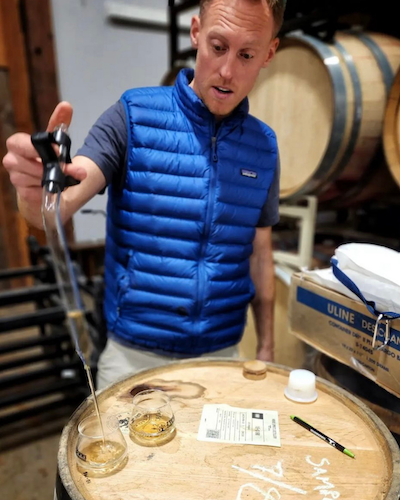
Dave Takush, 2 Towns Ciderhouse, Corvallis, Oregon
Bio:
Dave Takush is the Head Cidermaker and Co-Owner of 2 Towns Ciderhouse. Dave earned a Master’s Degree in Fermentation Science at Oregon State University and has over fifteen years of experience in the cider industry. His passion for fermentation led him to join two childhood friends in starting 2 Towns Ciderhouse in Corvallis, Oregon. Now one of the largest craft cider producers in the nation, 2 Towns has over 100 employees and is dedicated to producing quality craft cider from 100% fresh-pressed Pacific NW apples. Dave is the current Secretary of the ACA board and serves as board member of the Cider Institute.
Candidate Statement:
The cider industry is simply the best. I feel lucky to be present at a time when the tradition of hard cider has made a comeback into the mainstream. In the face of serious headwinds in the alcohol market, cider has shown its resilience and strength. If I am re-elected onto the ACA board, I will put my efforts into 1) Passing the bubble bill to allow fruit cider to be carbonated without penalty or fear from the TTB, 2) The ability for cider producers to put harvest dates on their labels, and 3) Financial Stability for the ACA so that we can continue to grow CiderCon® into one of the best alcohol industry events in the world. We are stronger together and there is a place for everyone in the world of cider. From apple nerds to wild fermentation enthusiasts, my goals are to create a strong marketplace for our passions and businesses.
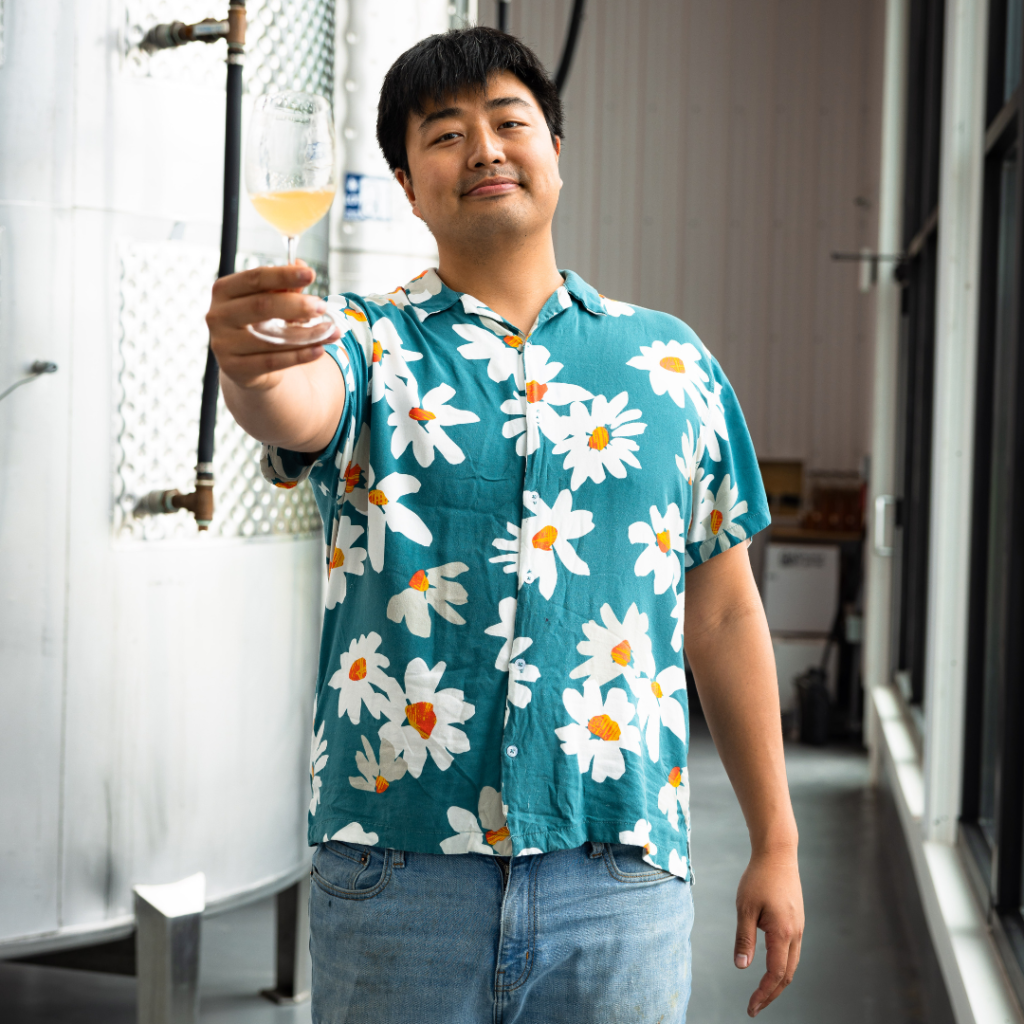
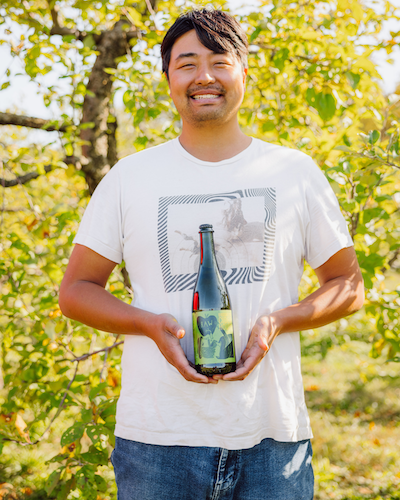
Richard Yi, Brooklyn Cider House, New Paltz, New York
Bio:
I am the cidermaker for Brooklyn Cider House, bringing ten years of wine industry experience and a degree in winemaking to every part of our production. My work focuses on fruit, fermentation, and building cider with clear character. At Brooklyn Cider House I have helped strengthen operations and support steady growth. I also serve on the board of the New York Cider Association, where I work to advance cider education and support the industry statewide.
Candidate Statement:
My primary goal for the American Cider Association is to grow national awareness and sales by reshaping how consumers and the trade understand cider. The category still battles the misconception that all cider is sweet, which limits retailer enthusiasm and consumer exploration. The ACA can lead the industry by formalizing cider style definitions and creating clear, engaging educational tools that help retailers, distributors, and consumers navigate cider’s true diversity. This work must be done in partnership with regional cider associations to ensure aligned, consistent messaging.
I believe we can promote a fresh, contemporary identity for cider—one that feels exciting, modern, and authentic. “Pick Cider” is a strong foundation, and I would love to help build the next evolution of that message.
Regional Chair – Midwest
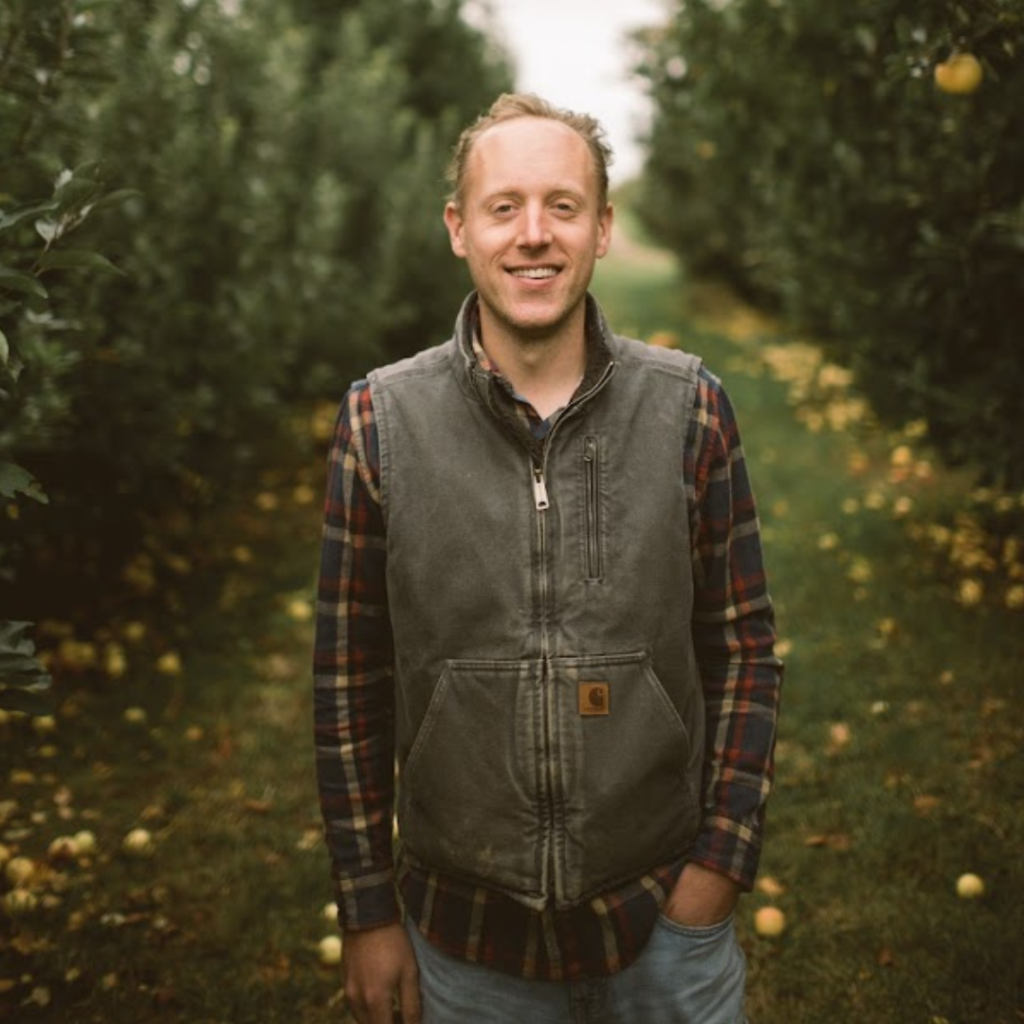
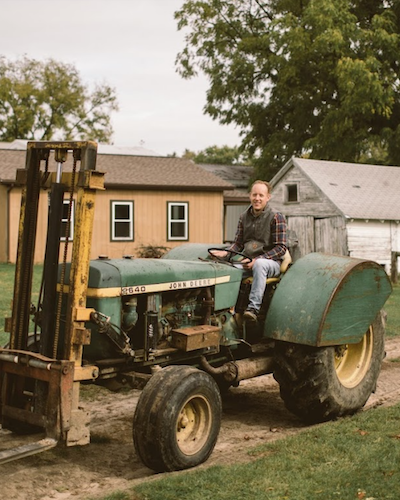
John Behrens, Farmhaus Cider Co. and Farmhaus Farms, Hudsonville, Michigan
Bio:
I’m a longtime CPA turned Corporate Controller for a Fortune 500 company who discovered there had to be more to life. I started Farmhaus Cider Co. along with my wife 11 years ago on my 150+ year old family homestead. Three years ago we purchased a beloved apple orchard, fruit farm, farm market and bakery in Michigan and I added apple grower to my resume and list of responsibilities. Now we grow a wide variety of apples, pears, peaches, plums and cherries for use in our ciders and others in the industry.
Candidate Statement:
Through my next term with the American Cider Association (1) I will continue to encourage the ACA to adapt its business model to improve the long term financial stability of the organization. (2) I’ll work to improve the regional engagement and connectivity of cideries across the Midwest region. (3) I’ll continue to grow and improve the perception and recognition of cider as a standalone category across the BevAlc industry.
Regional Chair – Mountain West


Talia Haykin, Haykin Family Cider, Aurora, Colorado
Bio:
Talia Haykin is the co-founder of Haykin Family Cider in Colorado, which she launched with her husband Daniel in 2017 after several years as dedicated home cider makers. Their work centers on celebrating the full range of apples and exploring how they express themselves through fermentation. Talia oversees operations, finance, compliance, sales, and marketing for the cidery, bringing prior experience as the CMO of large nonprofits and as a professional writer and marketing strategist. She lives in Denver with her husband and their three children, and firmly believes apples are better fermented than paired with peanut butter.
Candidate Statement:
I’m running for re-election to the ACA board because I care deeply about having small, independent cideries represented – especially scrappy startups without inherited infrastructure, large teams, or built-in resources. At Haykin Family Cider, I’m often the person figuring out marketing, compliance, sales, and operations as I go, and I bring that reality into board conversations. I focus on making sure the perspective of smaller producers is heard, particularly those in western states where the cider community can feel more spread out. I also enjoy contributing where I can on marketing and communication questions. I believe cider is at a tipping point, and with the right people and clear priorities, the ACA can remain a practical, steady resource for producers like me. I’d be glad to continue serving.
Regional Chair – Northwest
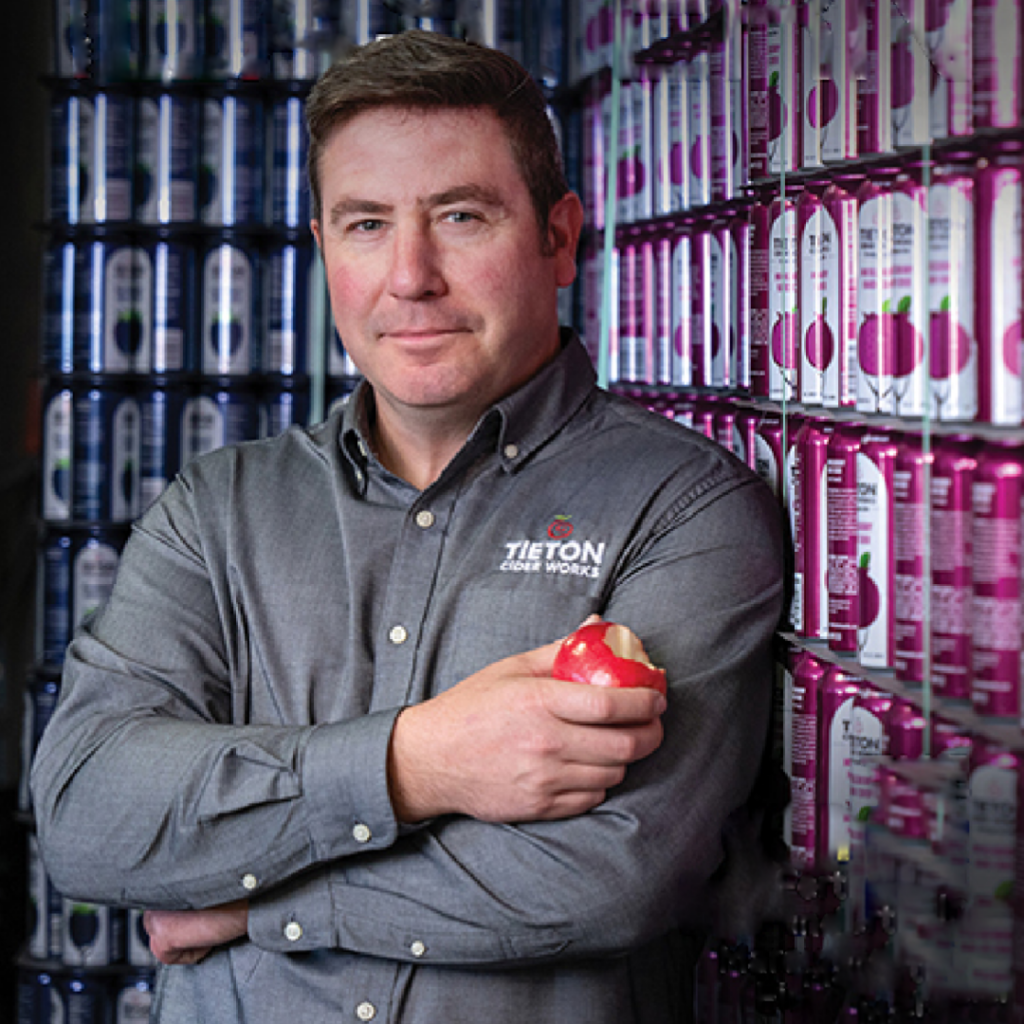
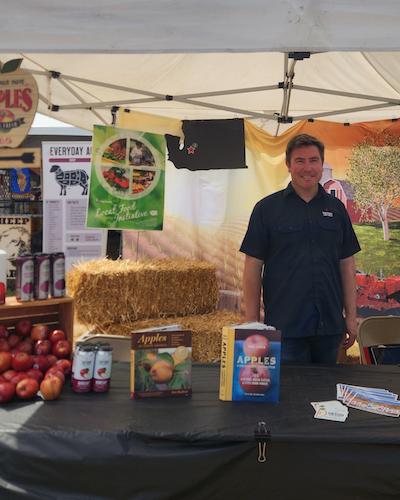
Marcus Robert, Tieton Cider Works, Yakima, Washington
Bio:
Marcus Robert is President, Cider Maker, and Co-Owner of Tieton Cider Works in Yakima, Washington, and a fourth-generation farmer in the Yakima Valley. With deep roots in agriculture and over a decade of cidermaking experience, Marcus brings a grower-producer perspective to industry leadership. He has served on the American Cider Association Board since 2017, representing the Northwest region and advocating for fair regulation, education, and sustainable growth. Marcus is committed to strengthening the cider community and supporting producers of all sizes through thoughtful, practical leadership.
Candidate Statement:
I am running for re-election to the American Cider Association Board to help guide American cider through its next phase of growth and opportunity. As a fourth-generation farmer and co-owner of Tieton Cider Works in Yakima, Washington, I bring a producer-led perspective grounded in agriculture, cidermaking, and scaling a national business.
Cider has proven its staying power, maintaining stability while many beverage categories have declined. With focused leadership, collaboration, and strategic advocacy, the category can continue to grow market share and strengthen its position in the beverage alcohol industry.
During my time on the ACA Board, I have worked to enhance regional representation, advance practical policy solutions, and expand resources that help cider makers of all sizes thrive. I am committed to continuing this work and ensuring a resilient, unified, and sustainable future for American cider.
Large Cidery Seat

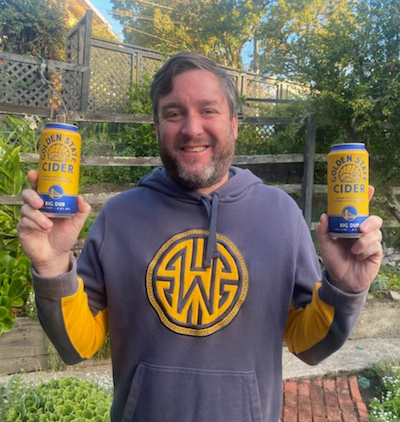
Chris Lacey, Golden State Cider, Sebastopol, California
Bio:
Chris Lacey has spent more than 20 years in the beverage industry, leading growth across beer, wine, and cider. As CEO of Golden State Cider, he has guided the brand to become the #1 cider in California and #5 nationally.
Chris began his career in New York with American Beer before joining Rogue Ales & Spirits, where he rose to VP of Sales, overseeing expansion into all 50 states and 30 countries. He went on to lead marketing for 20+ wine brands at Precept Wine and later drove record sales for Constellation Beer at DBI Beverage in San Francisco.
Today, Chris is also launching Sonoma Craft with business partner Chris Jackson, expanding into wine, beer, and beyond. He lives in Northern California with his wife and two children and brings a lifelong passion for fermentation, craftsmanship, and community to the cider industry.
Candidate Statement:
I’m excited about the opportunity to continue working with the ACA. My key goals are to advocate for transparency and quality as the cider category continues to evolve along with supporting key legislation initiatives such as the Bubble Tax, to provide a more balanced playing field for the cider segment. Through working together, we have the potential to redefine the global standard for what cider can be for the long-term.
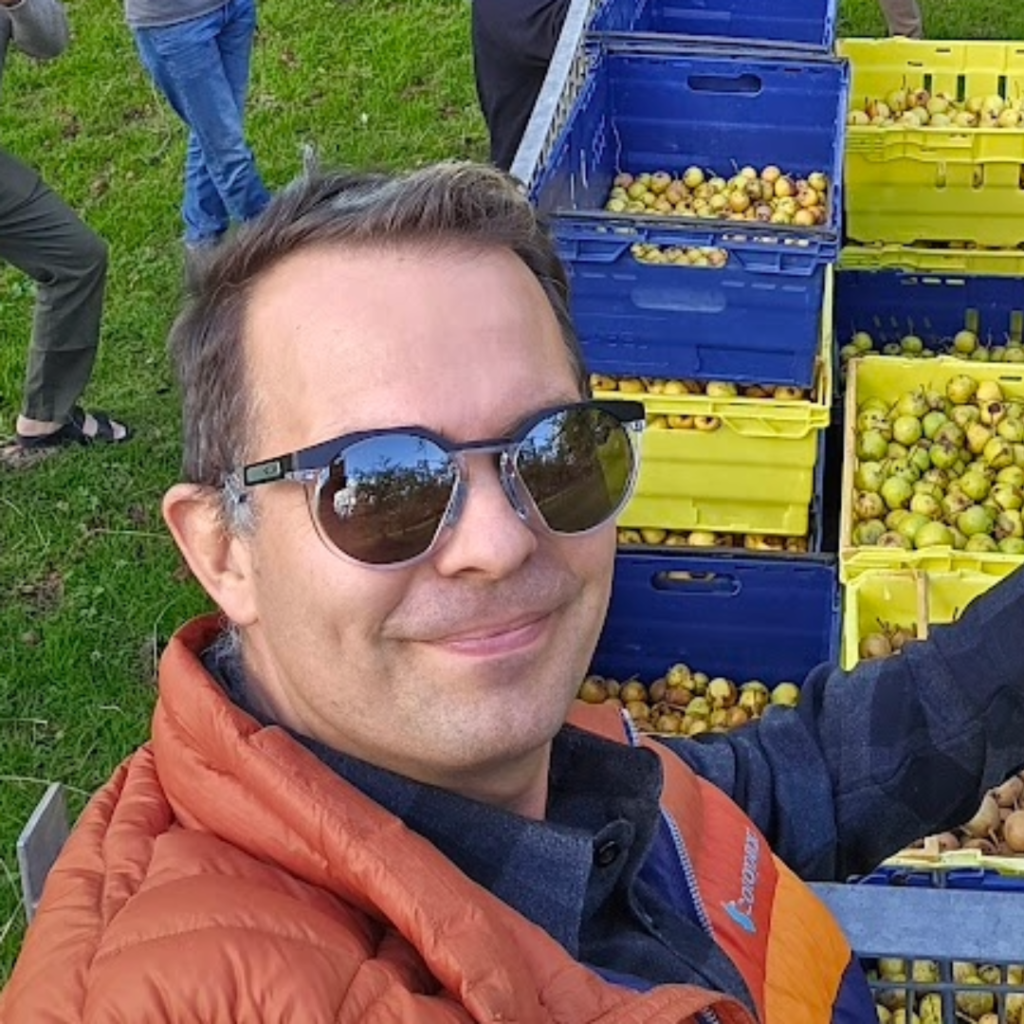

Colin Schilling, Schilling Cider, Auburn, Washington
Bio:
Colin Schilling is the CEO and Co-Founder of Schilling Cider, where he has helped shape the company into one of the nation’s most innovative and forward-thinking craft cideries.
Colin’s passion for food and beverage extends well beyond cider. He enjoys exploring new tastes and experiences and has contributed his expertise to brands in the non-alcoholic, coffee, energy, and cannabis spaces. His background includes an MBA focused on entrepreneurship and business sustainability, as well as experience in technology consulting, giving him a broad perspective on how businesses can make a positive impact.
Deeply committed to the idea that business can be a force for good, Colin has woven sustainable practices into every aspect of Schilling Cider’s operations. He is recognized for fostering a people-first company culture and continually strives to create a supportive and enriching work environment for every employee.
Colin is eager to connect with others who share his belief in the power of community, innovation, and positive change. He looks forward to collaborating with fellow board members to help further the mission and values of the ACA.
Candidate Statement:
- Advocacy & Fair Taxes: Support ACA lobbying to strengthen cider businesses and reduce taxes, ensuring fair treatment for cider producers.
- Grow National Cider Month: Continue to grow National Cider Month to boost sales and visibility for all cideries large and small.
- Build Industry Partnerships: Foster stronger relationships with trade associations, distributors, and partners to drive collaboration and innovation.
- Improve Business Operations: Roll out programs to help cideries run more efficiently and thrive in today’s challenging market.
I’m committed to championing the cider community and delivering real value for ACA members. Thank you for your support and your vote.
Meet Eastern Cideries at Cider Share!


CiderCon® is almost here, and there’s no better way to kick things off than at the Cider Share Welcoming Reception on Tuesday, February 3, from 5:00 – 7:30 PM. This can’t-miss celebration brings together 50+ cideries from around the world and Eastern Cideries will be there to greet you.
As you enter Cider Share, you’ll be welcomed by the Eastern Wing, highlighting 12 cideries from Maine to Pennsylvania coming together to share their approaches to northern East Coast cider. Featuring regional apples, thoughtful craftsmanship, and innovation, attendees can taste and connect with cideries including:
- Absolem Cider Company — A Maine cidery blending tradition and innovation with orchard-driven expressions inspired by old-world techniques.
- Big Hill Ciderworks — From Pennsylvania orchards to your glass, Big Hill focuses on fruit-forward ciders with true farm flavor.
- Bird Dog Farm & Cider — A family-run cidery in New Hampshire crafting dry ciders from quality apples using time-honored methods.
- Eden Ciders — Vermont’s terroir in a bottle, offering sustainably grown heirloom apple ciders and more.
- Headwater Cider — A beloved Massachusetts local cidery known for balanced, thoughtful New England Style cider.
- New England Cider Co. – Connecticut cider crafted with real fruit that celebrates simplicity and traditional methods
- Ploughman Cider — Adams County, Pennsylvania cider made exclusively from apples grown at Three Springs Fruit Farm, backed by over 200 years of orchard history.
- South Hill Cider — Finger Lakes cidery crafting heirloom and wild apple ciders with farm-to-glass character.
- Stormalong Cider — Massachusetts producer with orchard-based hard ciders in a range of styles.
- Tapped Apple Cidery & Winery — Rhode Island company blending cider and wine traditions in flavorful, approachable pours.
- Watson Wheeler Cider — Vermont cidery focusing on authentic, terroir-reflective craft ciders.
- Yankee Cider Company — Connecticut cider makers celebrating New England apples in every bottle.
Whether you’re a seasoned cidermaker or brand new to the industry, Cider Share is the perfect place to reconnect with CiderCon® friends, make new connections, and kick off the conference in the best way possible. Tickets are $25 for Members and $35 for Non-members, and trust us—it’s worth every sip. Tickets can be added on during registration for CiderCon®.
A big thank-you to Voran for their continued sponsorship and support in making Cider Share possible.
April 18: Certified Pommelier™ Exam at Cider World


TAKE THE CERTIFIED POMMELIER™ EXAM AT CIDER WORLD IN FRANKFURT, GERMANY ON APRIL 18, 2026!
Are you ready to take the next step in your professional development in the cider industry?
If you have already passed the Level 1 Certified Cider Guide™ exam and are looking for that next challenge? Now is your chance!
The American Cider Association is pleased to announce a Certified Pommelier™ Exam will be held at Cider World in Frankfurt, Germany. The exam will take place Saturday, April 18, 2026. The exam will begin promptly at 8:30 AM.
*Level 1 Certified Cider Guide™ certification is a prerequisite for taking the Certified Pommelier™ Exam. (Haven’t taken your Level 1 Certified Cider Guide Exam™? Buy the bundle here! ACA Member discounts for Level 1 are available in the Resource Hub.)
There’s a discount code available for ACA members for the Certified Pommelier™ Exam. You can find that code in our Resource Hub.
WHAT IS THE CERTIFIED POMMELIER™ EXAM?
The American Cider Association’s mission is to grow a diverse and successful cider industry by providing valuable information, resources and services to our members and by advocating on their behalf. One way to fulfill this mission is through the Certified Cider Professional™ Program, a program aimed at educating the front-line of cider hospitality (distributors, retailers, bartenders and more!) while also welcoming journalists and serious cider enthusiasts.
The exam for the introductory level certification, Certified Cider Guide™ (CCG), is an online test that can be taken at any time. The exam for the more advanced second level of certification, Certified Pommelier™, is only available in person. The exam consists of two parts, a written theory exam comprising short answer and essay questions and a blind sensory evaluation of a number of ciders. Passing the introductory level exam is a mandatory prerequisite to sitting for the Level 2 Certified Pommelier™ exam.
Certified Pommeliers™ must have a fundamental understanding of all topics covered at the introductory level, but must also be able to think critically and demonstrate a deeper understanding of cider and the cider industry.
The topics covered in the exam are:
- Apples, the Orchard & History
- Cider Making
- Flavor & Evaluation
- Cider Families
- Keeping & Serving
- Food & Cider
- Social Responsibility
The exam is meant to be challenging. The only information necessary for successfully passing the theory section of the exam is contained in the Certified Pommelier Study Guide available on Amazon. To study for the evaluation section of the exam, candidates should consider attending one of the sensory analysis videos available through the ACA’s website or attend one of the regularly scheduled webinars. Access to pre-recorded webinars and registration for upcoming live webinars is available directly through our website.
WHY BECOME A CERTIFIED POMMELIER?
Cider is a beautifully nuanced beverage that is less well understood by most consumers. Having the knowledge and skills required to become a Certified Pommelier will equip you to better serve customers, enhance your standing in the beverage community, and give you a unique and valuable professional qualification. Being recognized as a Certified Pommelier will put you in the vanguard of advanced cider specialists in this ever growing category.
HOW MUCH DOES THE TEST COST?
The registration fee for the exam is $350. Current members of the ACA can register at a discounted price of $250 by using the discount code that can be found here. If a candidate sits for the exam but does not pass either section, or only passes one of the two sections, theory or sensory evaluation, they can resit for the section of the exam that they did not pass at a future date. The fee for retaking the exam is $175 for non-members and $125 for current members of the ACA.
Read Terms & Conditions before registering.
WHAT MATERIALS ARE AVAILABLE TO STUDY FOR THE EXAM?
- The Certified Pommelier Study Guide is available directly through Amazon. It is also available at all of Amazon’s international sites.This is the official study guide for the second level of the American Cider Association’s professional certification program. It contains all of the information needed to study for and pass the examination. No other reference materials are required.
- There is also a dedicated Facebook Group (that is open for all to join) with prep materials and in-depth peer conversations that many candidates have found useful.
- Sensory evaluation is an important part of being a Certified Pommelier which is why we test your ability to accurately analyze the structural components, aromas, and flavors of a variety of ciders. In order to aid in the development of your sensory evaluation skills and understand the approach to testing them, we have several pre-recorded videos available for purchase. In addition, we host several live sensory analysis webinars each year. You can access the videos and look for scheduled webinars here.
FREQUENTLY ASKED QUESTIONS
(Download the Frequently Asked Questions document.)
- When will we receive our graded exams? Exams are not returned to candidates, however you will be notified as to whether or not you have passed about 6 weeks from the exam date. If you did not pass a section of the exam, you may request a breakdown of your points by general topic to help you identify areas in which you could improve your score should you wish to retake the exam.
- What is the grade needed for passing? 60% of the possible points for sensory evaluation and 70% for theory
- Is there a tasting section on the test? Yes. You will be asked to evaluate six ciders in two flights, one flight that assesses your ability to distinguish between key structural elements and a second where you are asked to complete a full evaluation of three ciders using the Structured Sensory Analysis format. The possible aromas and flavors document will be supplied for use during the exam.
- How long does the test take? You are given 2 hours to complete the theory section of the exam and 1 hour and 15 minutes to complete the sensory evaluation section. There is a 15 minute break in between sections.
- Is it ok if the name on my ticket or registration doesn’t match the person who attends? Registrations are not transferable, so the name on the I.D. presented when checking in for the exam must match the name on the registration.
- What happens if I cannot attend my registered exam? Please see Exam Rescheduling, Timelines and Fees in the Terms and Conditions Document for full details. If you do need to cancel your registration, exam registration fees can be refunded up to 14 days before the exam. Please note that a $25 administration fee applies to any cancellation.
- When can I register for the exam? Exam registration is open until 14 days before the posted exam date.
- How can I contact the organizer with any questions? Please contact Director of Education Jennie Dorsey at jennie@ciderassociation.org.
- What can I bring into the event? Bringing a personal water bottle is recommended for both sections of the exam. Cell phones, smart watches, computers, books or papers, and any and all other personal items must be left at a designated storage area in the exam room. Pencils will be provided, and spare paper will be available on request. Spit cups, and water will be provided during the evaluation exam. We encourage you to bring your own water bottle for the theory exam. Please contact Director of Education Jennie Dorsey at jennie@ciderassociation.org prior to registering for the exam if you wish to request special accommodations.
- Is the Certified Pommelier Exam available in my area? Certified Pommelier exams are held periodically throughout the year and in a variety of locations. Please check our current exam schedule to find an exam suitable for you.
- How many Certified Pommeliers are there currently? You can find the current number of Certified Pommelers here.
- Do I need to pass the Certified Cider Guide exam to take the Certified Pommelier exam? Yes. Passing the introductory exam to become a Certified Cider Guide is a prerequisite. If you have not yet taken this exam, you can purchase a package which includes an instructional video, study guide, and access to an online exam HERE.
- Are there ID or minimum age requirements to sit for the event? YES. You must be of legal drinking age in the country where you sit for the exam, and when checking in at the exam you must provide a photo ID that will both verify your age and identity.
February 20: Taste Like a Pro Cider Sensory Workshop at Hardball Cider
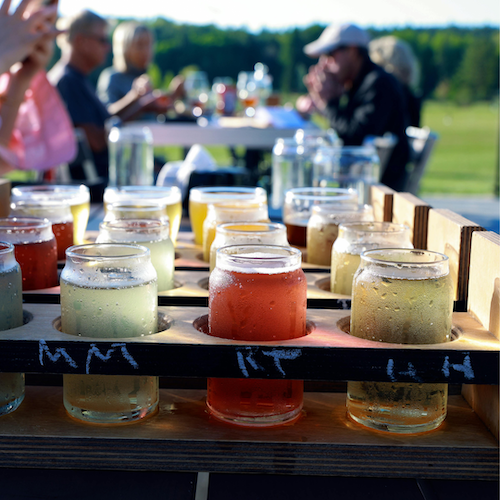
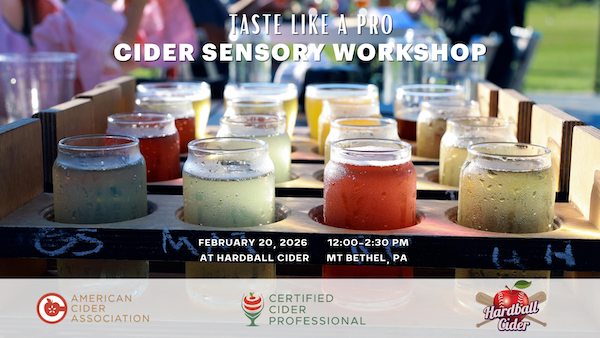
Join us at Hardball Cider in Mt. Bethel, PA on February 20!
Join us for a sensory deep dive into the world of cider and learn to taste cider like a pro! Whether you’re preparing for the Certified Pommelier™ exam or just curious how pros taste cider, this immersive, hands-on session will give you the tools to sip and share with confidence. You’ll learn how to detect flavors, spot faults, and describe cider like a seasoned cider professional. Walk away prepared for your exam, or to wow your friends with a sharper palate and a deeper love for the world’s most diverse fermented beverage.
Price: $45 Non-members, $35 ACA members (Member Discount can be found in the Resource Hub)
Location: Hardball Cider, 805 Orchard Rd, Mt. Bethel, PA 18343
Schedule:
- Welcome & Introduction (10 min)
- Part 1: Foundations of Sensory Tasting (25 min)
- Part 2: Structured Tasting Practice (60 min)
- Part 3: Identifying/Understanding Common Cider Faults (20 min)
- Part 4: Elevate Your Tasting Vocabulary (15 min)
- Wrap-Up + Q&A (20 min)
Explore the Art of Food & Cider Pairing with Jennie Dorsey’s New Book


For those who have ever wondered how to elevate their dining experience with the perfect cider pairing, Jennie Dorsey, the Director of Education at the American Cider Association, has crafted the ultimate guide. Her new book, Cider Paired and Plated: The Art of Food and Cider Pairing, is a sensory-driven journey that caters to professionals, enthusiasts, and curious drinkers alike and is now available for purchase on Amazon.com. In addition, it will be available for purchase at CiderCon® 2026 where Jennie will be happy to sign it for you!
Cider Paired and Plated weaves together foundational pairing theory with practical applications, exploring how elements like acidity, tannin, sweetness, carbonation, and aroma play with texture, fat, spice, and umami on the plate. Whether you’re a fan of crisp modern ciders, tannic bittersweet varieties, or sweet dessert ciders, you’ll find strategies to enhance your dining experience without feeling overwhelmed.
Cider Paired and Plated offers curated pairings across multiple courses, including:
- Cheeses
- Small plates and appetizers
- Entrées
- Desserts
- Cider-based cocktails
Each section features thoughtfully developed recipes, complete with step-by-step cooking instructions and practical notes on why each pairing excels. The cocktail recipes, in particular, highlight cider’s versatility as both a primary ingredient and a structural element behind the bar.
Designed to be both a reference and an invitation to experiment, Cider Paired and Plated encourages readers to think seasonally, locally, and creatively. Whether you’re hosting an intimate dinner, developing a beverage program, or studying for professional cider certification, this book empowers you to place cider at the heart of modern food and drink culture.
With an emphasis on sensory awareness, storytelling, and shared experiences, Cider Paired and Plated positions cider not as an alternative but as a centerpiece of contemporary culinary experiences. It’s an invitation to discover new dimensions of taste and enjoyment, one glass at a time. Check it out today!
New Dietary Guidelines Reinforce a Science-Based, Moderate Approach to Alcohol


The newly released U.S. Dietary Guidelines for Americans reaffirm a long-standing, evidence-based approach to alcohol consumption—one grounded in moderation and informed by the full body of peer-reviewed research. For the American Cider Association and our members, this outcome reflects the importance of keeping science, not bias, at the center of federal health policy.
Throughout the Guidelines development process, ACA worked alongside the Science Over Bias coalition, a group of beverage alchohol associations and additional stakeholders committed to transparency and scientific integrity. The coalition formed in response to proposals that would have dramatically lowered recommended alcohol limits based on selective research, advancing a “no consumption is best” approach. Ultimately, the final Guidelines maintained moderation standards that reflect decades of scientific consensus and real-world context.
The official DGA alcohol recommendation:
- Consume less alcohol for better overall health.
- People who should completely avoid alcohol include pregnant women, people who are recovering from alcohol use disorder or are unable to control the Sodium amount they drink, and people taking medications or with medical conditions that can interact with alcohol. For those with a family history of alcoholism, be mindful of alcohol consumption and associated addictive behaviors.
This change removes the previous daily guidance of up to one beverage for women and two beverages for men, shifting away from gender-specific intake recommendations.
This broad coalition of the nation’s agriculture, beverage and hospitality industries issued the following statement in response to the alcohol guidance in the new Dietary Guidelines for Americans:
“The Dietary Guidelines’ longstanding, overarching advice is that if alcohol is consumed, it should be done in moderation. These updated guidelines, underpinned by the preponderance of scientific evidence, reaffirm this important guidance.”
For cidermakers, this matters. Cider is an agricultural product rooted in orchards, rural economies, and small businesses—many of them family-owned and women-led. Federal nutrition guidance has real implications for how our industry is perceived, regulated, and communicated to consumers. Balanced, evidence-based policy allows producers to continue promoting responsible consumption while supporting local agriculture and hospitality.
ACA supports clear consumer education, transparency, and ongoing research into alcohol and health. At the same time, we believe that public policy must consider the totality of evidence and the diverse communities affected by it—from farmers and producers to consumers and public health professionals.
We appreciate the work of the many scientists, advocates, and coalition partners who spoke up during this process. The ACA will continue engaging with Congress, federal agencies, and allied organizations to ensure that future alcohol policy discussions remain fair, data-driven, and free from predetermined outcomes.
More resources about the Dietary Guidelines for Americans:
The Year in Cider from Feel Goods Insights

Each month consumer insights platform Sightlines will share one quick hit you can use to make confident decisions. Also, ACA members get 50% off a Sightlines subscription. Find the discount code in the Resource Hub.
Off-Premise
Cider was a quiet standout among alcohol categories this year. At a time when nearly every subset of the industry struggled—from high-end spirits to wine to craft beer—cider posted positive volume growth in the off-premise, with convenience stores representing an especially strong channel. Cider volume was up +1.7% in the off-premise through the end of November, according to Nielsen multioutlet and convenience store data, while dollar sales were up +2% in those aggregate stores. In convenience stores, cider dollar sales rose even higher, up +6%. The on-premise picture was less rosy, however cider still outperformed some other segments. Given signs of acceleration in the waning months of the year, cider is poised to enter 2026 on relatively strong footing.
The takeaway: As other categories like hard seltzer and craft beer decline, cider is showing signs of long-term resilience in flavor-forward spaces. Imperial, flavored, and single-serve cider have helped the category make continued inroads in convenience stores. The challenge ahead is to maintain momentum as c-store points of distribution fill in.
Beer Purchasers Index (BPI)
The National Beer Wholesalers Association’s forward-looking Beer Purchasers Index (BPI) for November—the most recent month for which data is available—shows cider as the lone category that wholesalers feel more optimistic about than they did in 2024. The November 2025 BPI reading of 41 also marks the first time in five years that cider has enjoyed a BPI over 40. That’s a bright spot; however, a BPI less than 50 still indicates a category in contraction, as wholesalers anticipate purchasing less of it compared to the year prior.
The takeaway: Cider has a compelling story to tell its wholesale and retail partners right now. Message around these wins (or, in some cases, its strength relative to other categories’ losses). There’s data to support an argument that certain flavored cider brands deserve coveted display space alongside ready-to-drink cocktails. Retailers might be willing to swap in cider at a time when flavored malt beverages and hard seltzers are cooling.
On-Premise
The on-premise, however, offers less positive numbers for cider. Volumes fell -9% over the past 52 weeks, according to NIQ, with those losses accelerating in the last 12 weeks. As with chain retail, other categories such as craft beer and hard seltzer suffered steeper declines, so cider held its volume share of the beer category (1%) on-premise. Dollar sales showed similar trendlines.
The takeaway: In a world where on-premise placements are still limited to a single draft handle or a few cooler spots, cider isn’t able to maximize on the strength of its flavor variety the way it does on retailers shelves. But it’s still an environment where cider isn’t ceding ground. Flavored malt beverages, craft beer, and hard seltzers all saw steeper volume declines this year than cider, meaning cider can potentially capture a portion of those drinkers looking for seasonal and fruit-forward offerings.
ACA Now Accepting Nominations for 2026 Board of Directors

The ACA Board of Directors is comprised of passionate, active cidery owners – large and small – who are committed to shaping the future of the organization and the greater cider industry. If you’d like to be part of that and are ready to lend your voice, ideas, and leadership to this important work, now’s your chance!
The American Cider Association (ACA) has six seats open for election on our Board of Directors in 2026. The available positions are as follows:
- 1 Large Cidery Seat
- 1 Regional Chair – Mountain West
- 1 Regional Chair – Northwest
- 1 Regional Chair – Midwest
- 2 At-Large Seats
Our annual nomination window is now open, and we want to hear from you!
Election Details
Elections will be conducted electronically during CiderCon® 2026, taking place in Providence, Rhode Island, from February 3-5. All U.S. member cideries are eligible to vote, with each cidery having one vote. Primary cidery contacts will receive an email on February 3 inviting them to vote for board members.
While previous volunteer experience with the ACA is not mandatory, it is highly encouraged for those considering a run for office.
Application and Eligibility
Here are the specifics for those interested in applying:
- Eligibility: Positions are open to any active ACA member cidery in the U.S., regardless of size, excluding the Large Cidery Seat which must be filled by a cidery making 1,000,000+ gallons annually.
- Application Deadline: December 19, 2025.
- Candidacy Requirements: You must be a permanent employee of a bonded cidery producing cider in the U.S.
- Term Duration: Each term lasts for three years.
Please be aware that incumbents may be running for re-election. Applications will be reviewed on a rolling basis until the deadline, and qualified candidates will receive further instructions on the board election process.
Need More Information?
For any questions regarding board service, feel free to reach out to ACA CEO Monica Cohen at monica@ciderassociation.org to schedule a meeting.
To submit your nomination by the December 19 deadline, please complete the self-nomination form. We look forward to your contributions and are excited to see the future leaders of our industry step forward!
Who’s Ready for the End of Premiumization?
Each month consumer insights platform Sightlines will share one quick hit you can use to make confident decisions. Also, ACA members get 50% off a Sightlines subscription. Find the discount code in the Resource Hub.
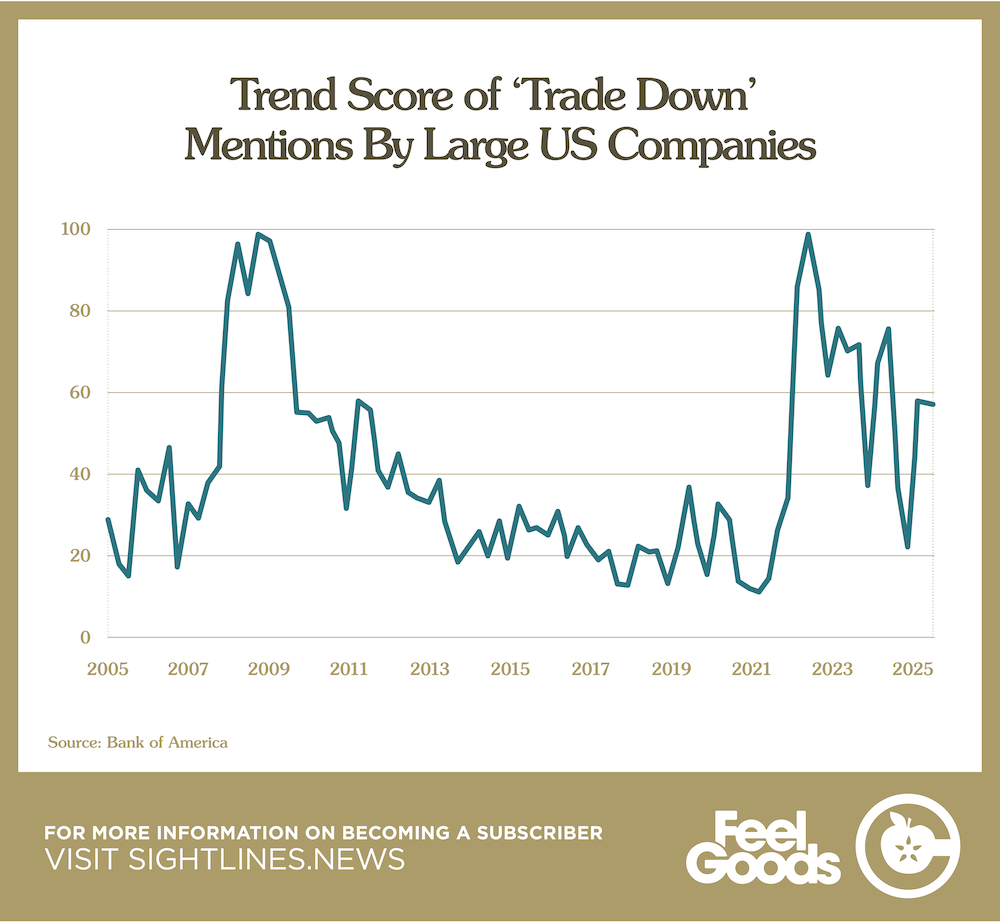
Consumer spending in the U.S. has, of late, been buoyed by the wealthiest Americans. Recent analysis of Federal Reserve data by Moody’s Analytics showed that the top 10% of earners in the U.S. (those whose households make $250,000 or more annually) accounted for 49% of total consumer spending in Q2 2025. That’s the highest level ever reported since such data collection began in 1989, and it’s well above the one-third of overall consumer spending that group represented in the early 1990s.
Well-off Americans have carried water for much of the economy, but they can’t do it forever—particularly not when it comes to alcohol. The discretionary spending power of the wealthy has for years been a driver of premiumization, but the tides may be turning. Those households, after all, only need to buy so much beer or wine or cider. Eventually, all but the most exclusive of luxury brands need “average” Americans to buy in, or need the wealthy to buy even more. But we are currently seeing the affluent slow their spending: Analysts at Jefferies and Moody’s have noted that affluent shoppers have pulled back on luxury spending and are showing an increased appetite for discounts and deals. As a result, mentions of “trading down” in conference calls by large U.S. consumer companies have ticked up in recent years, echoing spikes seen after the housing market crisis in 2008 and during the post-COVID inflationary period. Sales of private label staples are breaking records. Amazon Prime Day shoppers spent on staples, not big-ticket buys. Lower-cost retailers like Kohl’s, TJ Maxx, and Dollar Tree have seen stock prices rise this year as investors bet on shoppers continuing to hunt deals. Even Gen Z is taking advantage of early-bird specials and happy hours. Alcohol companies need to recognize that a broad trend toward premiumization is no longer a given. What will make up the slack when big spenders pull back?
C-Store Cider Sales Thrive This Year
Each month consumer insights platform Sightlines will share one quick hit you can use to make confident decisions. Also, ACA members get 50% off a Sightlines subscription. Find the discount code in the Resource Hub.
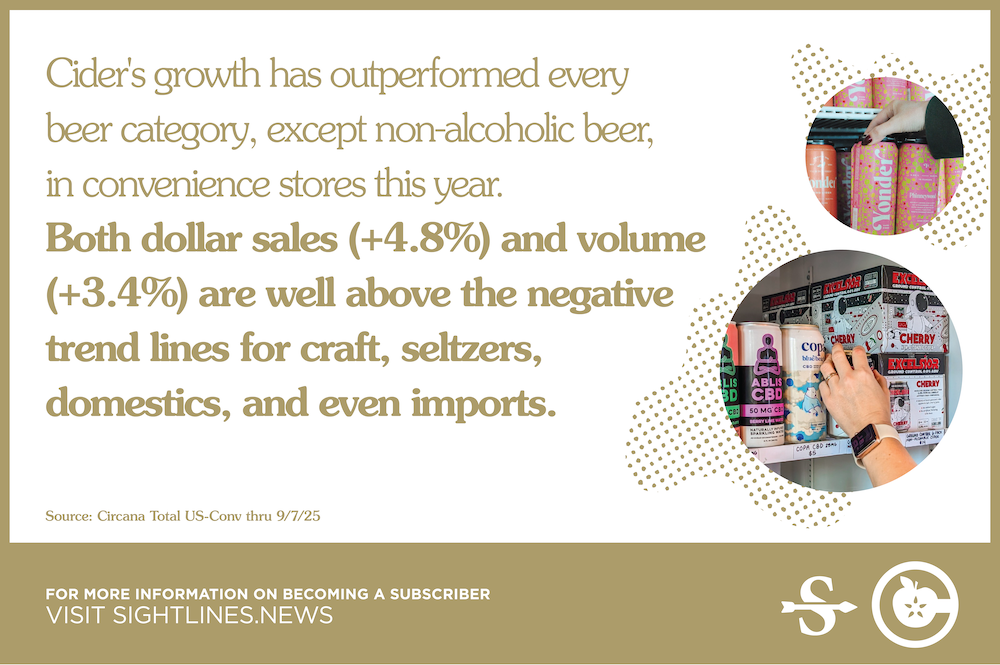
While alcohol has generally been in the red in most retail channels this year, cider sales in convenience stores offer a rare bright spot. Both dollar sales (+4.8%) and volume (+3.4%) are well above the negative trend lines for craft, seltzers, domestics, and even imports in Circana-tracked c-store data.
What explains the boom? Cider has finally arrived at the imperial party. In January, the Alcohol and Tobacco Tax and Trade Bureau (TTB) approved new standards of fill for higher-ABV cider that included 16 oz. and 19.2 oz cans. Prior to that update, those can sizes were only an option for cider under 7% ABV, excluding higher-strength cider from the single-serve can sizes that have proven so successful for imperial IPAs and high-gravity FMBs. At the time of the announcement, Jeff Parrish, co-owner of Oregon’s Portland Cider Company, called the move “a game changer,” and year-to-date sales confirm it.
But imperial cider in 19.2 oz. cans isn’t the only story line. Convenience stores’ craft beer SKU rationalization over the past year has also opened up space for higher-margin cider. And finally, cider enjoys crossover appeal with the popular RTD cocktail category—yet it may be available in c-stores where distilled spirits aren’t legally allowed. All of this presents a long runway for cider, which has yet to post numbers for October (National Cider Month), November (Thanksgiving), and December (Christmas and New Year’s Eve). We’d expect it to take an even bigger bite of the c-store apple in those final 2025 months.
Introducing the Certified Cider Guide™ Digital Flashcards


The American Cider Association is excited to share a brand-new study tool for anyone preparing for the Level 1 Certified Cider Guide™ exam! The Certified Cider Guide™ Digital Flashcards are now available for free, offering an easy and engaging way to test your knowledge wherever you are. Designed to help you master key terms, cider styles, and production concepts, these cards are the perfect resource for students, professionals, and cider enthusiasts alike.
Prefer something you can hold in your hands? A physical deck of the Certified Cider Guide™ Flashcards will be available for purchase at CiderCon® 2026, so you can keep learning and sharing your cider knowledge offline too.
Get started today, explore the digital deck, and take the next step in your cider education journey.
*Note: By downloading these flashcards, you agree to comply with all copyright laws protecting the Certified Cider Professional™ program materials. Unauthorized sharing, reproduction, or distribution is strictly prohibited.
American Cider Association Welcomes New Canadian Licensed Educator
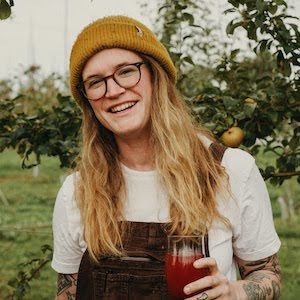
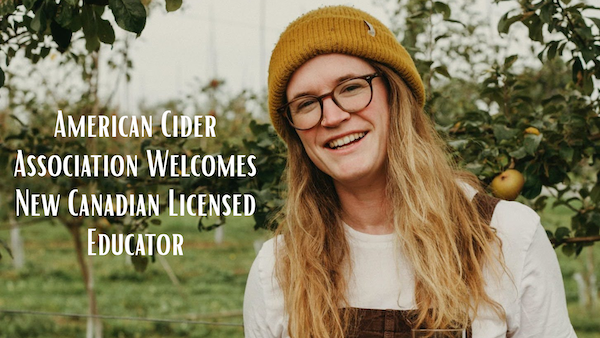
The American Cider Association (ACA) is proud to announce that Jenna Boucher has joined its growing network of Licensed Educators, bringing her award-winning expertise and Canadian perspective to the Certified Cider Professional™ (CCP) program.
Jenna is an accomplished cidermaker, judge, and educator with deep roots in Canada’s diverse cider scene. A Certified Pommelier™ and GLINTCAP award-winner, Jenna has honed her craft in cideries from coast to coast, including orchard-based, urban, and coastal operations. Known for her creativity and passion, she shares her love for cider and craft beverages through her Instagram, @bouche_bag, where she highlights both her own creations and the wider cider community.
A true cider nerd at heart, Jenna can be found experimenting with barrel aging, developing innovative blends, and leading taproom tastings in her signature overalls. Beyond production, she serves as a judge at respected competitions including GLINTCAP and the Canadian Beer Cup, and she contributes her expertise through committee work with both the ACA and the Canadian Cider Association (CCA).
“Jenna brings both knowledge and approachability to cider education,” said Jennie Dorsey, Director of Education and Program Development of the American Cider Association. “Her Canadian perspective and hands-on experience will be a huge asset as we continue expanding access to cider education.”
As a Licensed Educator, Jenna will lead Certified Cider Guide™ workshops and educational events designed to make cider learning inclusive, approachable, and full of flavor. Her role supports the ACA’s mission to advance the understanding and appreciation of cider among hospitality professionals, retailers, and consumers.
“I’m thrilled to represent Canada in this next step of cider education,” said Jenna. “Cider is such a vibrant, diverse beverage, and I’m excited to help people feel connected to it, whether they’re pouring it behind the bar, learning about food pairings, or simply enjoying it on a hike with a view.”
The ACA is excited to welcome Jenna to its Licensed Educator team and looks forward to supporting her work in building cider knowledge across Canada and beyond.
About the American Cider Association
The American Cider Association (ACA) is a non-profit trade organization that supports cider producers and advocates for the cider industry in the United States and internationally. Through education, legislation, and community-building, the ACA works to grow a diverse, vibrant, and thriving cider category.
The 2025 Government Shutdown: What it Means for You


Because Congress has not yet passed a continuing resolution to fund the government, a federal shutdown is now in effect beginning October 1, 2025. For cideries, the most immediate impact comes from the significant reduction of 87% of staff at the Alcohol and Tobacco Tax and Trade Bureau (TTB). The TTB will continue only essential functions. These include processing tax returns with payments, handling urgent legal matters, securing federal property, managing essential payroll and accounting, and continuing criminal enforcement. Most other services—such as label approvals, formula reviews, and permitting—are paused until funding is restored. In addition, the Small Business Administration (SBA) is also functioning at 23% of its workforce, focusing on existing loans and Emergency Injury Disaster Loans (EIDLs).
Here’s what you need to know from the TTB:
- Label approvals are on hold. TTB will not review new Certificates of Label Approval (COLAs) during the shutdown. You can still submit applications, but they won’t be processed until funding resumes. Expect delays once staff return and begin working through the backlog.
- Formulas and permits are paused. If you need approval for a new formula, an ownership change, or a new location, those requests will sit in the queue as well. This can be especially disruptive for small and mid-sized cideries—the majority of U.S. producers—that often run on tight timelines and seasonal releases.
- Taxes and reports are still due. Even though most TTB staff are furloughed, cideries are still required to file operational reports and pay federal excise taxes on time. There may not be anyone available to answer questions until the government reopens, so it’s best to plan ahead.
- Expect a backlog. Once the shutdown ends, TTB will face a surge of pending applications. This could stretch timelines for weeks or months, especially for labels and formulas.
What you can do:
- Keep filing everything on time, even during the shutdown.
- Submit any pending labels or formulas now, so they’re in the system.
- Build extra time into your release schedules in case of delays.
- Communicate with distributors and partners about possible timing impacts.
Here’s what you need to know from the SBA:
- The SBA has halted processing new 7(a) and 504 loans, which are crucial for financing equipment, expansion, and working capital. This suspension affects all new loan applications, even those from lenders with delegated authority.
- While new loan processing is paused, the SBA continues to service existing loans. However, borrowers should expect longer processing times and slower assistance due to reduced staffing.
What you can do:
- Cideries relying on SBA loans for expansion, equipment upgrades, or working capital may face delays in accessing necessary funds
ACA will continue to monitor the situation and keep you updated. Please don’t hesitate to reach out with questions—we’re here to help you navigate these disruptions. Contact ACA Government Affairs Manager Jenn Martell with questions.
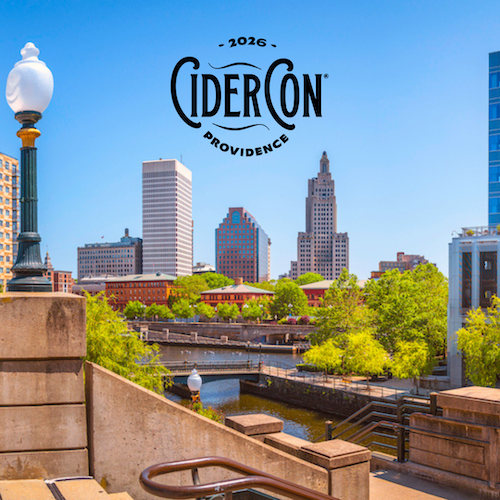
Cider Industry’s Premiere Event Coming to Providence, Rhode Island February 2026

For Immediate Release
American Cider Association
Cider Industry’s Premiere Event Coming to Providence, Rhode Island February 2026
CiderCon® 2026 is coming to Providence, Rhode Island, bringing together cidermakers, industry leaders, and innovators from around the globe to learn, connect, and celebrate the craft of cider.
This year’s theme, “Crafting Cider’s Future Together,” celebrates the collaboration and creativity driving the industry forward. While other beverage alcohol categories have suffered, cider – especially regional craft ciders – has seen an increase in sales this year.
Open to cider suppliers, makers and enthusiasts, the event features interactive workshops, panel discussions, and networking, while also offering attendees the opportunity to attend a variety of experiences from the fan-favorite Cider Share to regionally inspired cider tours, tastings and a large trade show.
Highlights of CiderCon® 2026
- Expanded General Session: An expanded general session will feature speakers from the cider industry and beyond and will share insights on market trends, sustainability, and innovation, paving the way for the future of cider.
- Sessions: A variety of sessions will cover topics such as cidermaking techniques and best practices, marketing strategies, cider’s terroir, business and compliance considerations, and the history and future of cider apples. The ACA is pleased to once again partner with the Cider Institute to develop the cider production sessions.
- Trade Show & Artisan Marketplace: Discover the latest products and services available to the cider industry in the Trade Show, sponsored by FruitSmart, showcasing innovations in equipment, packaging, and more. In addition, the inaugural Artisan Marketplace will feature makers eager to share their crafts with attendees.
- Networking Opportunities: There will be a plethora of networking events available, allowing attendees to connect with fellow professionals from every corner of the cider world, fostering relationships that can lead to future collaborations.
Exploring the Region
Four tours are scheduled to take place Monday, February 2, offering attendees the opportunity to get to know the region better. There will be a Connecticut cidery tour, a Rhode Island cidery tour, a tour of the Johnson & Wales University Culinary Museum, and a Prohibition in Providence drinking tour.
Registration Information
Registration for CiderCon® 2026 is now open. Early bird rates are available until November 3, 2025. Early bird rates are $479 for members and $875 for non-members. Rates will increase to $549 for members and $945 for non-members on November 3, 2025.
For more information, including the full schedule, speakers and registration details, please visit www.ciderassociation.org/cidercon2026.
About the American Cider Association:
The American Cider Association is a nonprofit trade association dedicated to supporting cidermakers and promoting the cider industry. Through education, advocacy, and community building, the ACA works to enhance the cider experience and ensure a vibrant future for all cider professionals.
###
Haritz Rodriguez Joins the Certified Cider Professional™ Program as a Licensed Educator in Spain, Portugal, and Mexico.
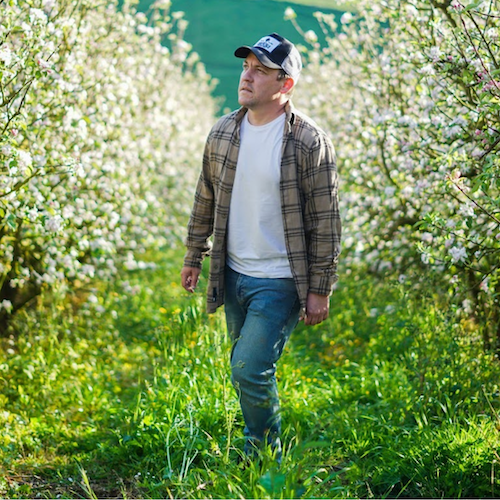
The American Cider Association (ACA) is proud to announce that Haritz Rodriguez, known across the cider world as @Ciderzale, has been appointed as the next Licensed Educator for the Certified Cider Professional™ (CCP) Program.
Haritz brings more than a decade of experience in cider education, culture, and promotion to this role. An independent journalist and marketing consultant specializing in the agrifood sector, Haritz has spent the last ten years working with cider producers, organizations, and festivals around the world to promote cider, cider tourism, and cider culture.
A Certified Pommelier™ with the American Cider Association and a member of the official tasting panel for the PDO Euskal Sagardoa, Haritz is a recognized authority on Basque sagardoa and international ciders. He has co-organized major cider events such as Sidrama Ponte de Lima (Portugal) and Sagardo Forum (Basque Country) and collaborated on notable competitions and festivals including the Nordic International Cider Awards, Cider World Frankfurt, and the World Cider Awards.
Haritz also advises cider houses in the Basque Country, the USA, and the UK, offers educational talks and tastings, and serves as a judge at numerous competitions worldwide. In 2018, he founded Ciderlands, an international cider tourism and culture network, expanding his influence as a connector and advocate for the global cider community.
In addition to his work on the ground, Haritz is an accomplished cider content creator. Under his personal brand Ciderzale, he shares striking photography, videos, and stories about cider with a global audience. His writing and photography have appeared in leading cider publications including Malus Magazine, Graftwood, and Full Juice. He has also contributed to travel and educational experiences for cider makers, journalists, and writers alike.
As part of his new role with the ACA’s Certified Cider Professional™ Program, Haritz will bring his extensive knowledge and international perspective to cider professionals and enthusiasts. The CCP Program is the world’s leading cider education and certification system, designed to elevate cider knowledge, improve consumer experience, and support the growth of the cider industry worldwide.
“We’re thrilled to welcome Haritz as a Licensed Educator,” says Jennie Dorsey, Director of Education and Program Development. “His expertise, energy, and passion for cider will help us strengthen our educational offerings worldwide.”
Click here to learn more about the Certified Cider Professional™ Program.
ACA Partners with Brock University to Offer Certified Cider Guide™ Workshop in Canada


The American Cider Association (ACA) is thrilled to announce a new collaboration with the Cool Climate Oenology and Viticulture Institute (CCOVI) at Brock University. Together, we are bringing our Level 1 Certified Cider Guide™ (CCG) training to Canada with a one-day, in-person workshop designed to prepare participants to earn their first level of cider certification.
Our Certified Cider Professional™ Program is the global gold standard in cider education. This new partnership with Brock University expands access to high-quality cider training for beverage professionals, educators, and enthusiasts throughout Canada.
During this immersive workshop, participants will explore cider history, production methods, styles, sensory evaluation, and food pairing. Attendees will leave with the knowledge and confidence to successfully complete the Level 1 Certified Cider Guide™ exam.
Workshop Highlights:
- A full-day of expert-led training aligned with ACA standards
- In-depth tasting, evaluation, and style analysis
- Access to the online certification exam
- Networking with peers in the beverage, hospitality, and education sectors
- The opportunity to earn internationally recognized cider credentials
This is a landmark moment for cider education in Canada, and we’re proud to partner with CCOVI at Brock University to make it happen. Registration details and the full schedule are available through Brock University.
February 3: Certified Pommelier Exam at CiderCon® 2026


TAKE THE CERTIFIED POMMELIER EXAM AT CIDERCON® 2026 IN PROVIDENCE, RHODE ISLAND ON TUESDAY, FEBRUARY 3RD!
Are you ready to take the next step in your professional development in the cider industry?
If you have already passed the Level 1 Certified Cider Guide exam and are looking for that next challenge? Now is your chance!
The American Cider Association is pleased to announce a Certified Pommelier Exam will be held at CiderCon® 2026 in Providence, RI . The exam will take place Tuesday, February 3, 2026. The exam will begin promptly at 8:30 AM. *Registration to CiderCon® is not required, but highly encouraged.
*Level 1 Certified Cider Guide certification is a prerequisite for taking the Certified Pommelier Exam. (Haven’t taken your Level 1 Certified Cider Guide Exam? Buy the bundle here! ACA Member discounts for Level 1 are available in the Resource Hub.)
There’s a discount code available for ACA members for the Certified Pommelier Exam. You can find that code in our Resource Hub.
WHAT IS THE CERTIFIED POMMELIER EXAM?
The American Cider Association’s mission is to grow a diverse and successful cider industry by providing valuable information, resources and services to our members and by advocating on their behalf. One way to fulfill this mission is through the Certified Cider Professional Program, a program aimed at educating the front-line of cider hospitality (distributors, retailers, bartenders and more!) while also welcoming journalists and serious cider enthusiasts.
The exam for the introductory level certification, Certified Cider Guide (CCG), is an online test that can be taken at any time. The exam for the more advanced second level of certification, Certified Pommelier, is only available in person. The exam consists of two parts, a written theory exam comprising short answer and essay questions and a blind sensory evaluation of a number of ciders. Passing the introductory level exam is a mandatory prerequisite to sitting for the Level 2 Certified Pommelier exam.
Certified Pommeliers must have a fundamental understanding of all topics covered at the introductory level, but must also be able to think critically and demonstrate a deeper understanding of cider and the cider industry.
The topics covered in the exam are:
- Apples, the Orchard & History
- Cider Making
- Flavor & Evaluation
- Cider Families
- Keeping & Serving
- Food & Cider
- Social Responsibility
The exam is meant to be challenging. The only information necessary for successfully passing the theory section of the exam is contained in the Certified Pommelier Study Guide available on Amazon. To study for the evaluation section of the exam, candidates should consider attending one of the sensory analysis videos available through the ACA’s website or attend one of the regularly scheduled webinars. Access to pre-recorded webinars and registration for upcoming live webinars is available directly through our website.
WHY BECOME A CERTIFIED POMMELIER?
Cider is a beautifully nuanced beverage that is less well understood by most consumers. Having the knowledge and skills required to become a Certified Pommelier will equip you to better serve customers, enhance your standing in the beverage community, and give you a unique and valuable professional qualification. Being recognized as a Certified Pommelier will put you in the vanguard of advanced cider specialists in this ever growing category.
HOW MUCH DOES THE TEST COST?
The registration fee for the exam is $350. Current members of the ACA can register at a discounted price of $250 by using the discount code that can be found here. If a candidate sits for the exam but does not pass either section, or only passes one of the two sections, theory or sensory evaluation, they can resit for the section of the exam that they did not pass at a future date. The fee for retaking the exam is $175 for non-members and $125 for current members of the ACA.
Read Terms & Conditions before registering.
WHAT MATERIALS ARE AVAILABLE TO STUDY FOR THE EXAM?
- The Certified Pommelier Study Guide is available directly through Amazon. It is also available at all of Amazon’s international sites.This is the official study guide for the second level of the American Cider Association’s professional certification program. It contains all of the information needed to study for and pass the examination. No other reference materials are required.
- There is also a dedicated Facebook Group (that is open for all to join) with prep materials and in-depth peer conversations that many candidates have found useful.
- Sensory evaluation is an important part of being a Certified Pommelier which is why we test your ability to accurately analyze the structural components, aromas, and flavors of a variety of ciders. In order to aid in the development of your sensory evaluation skills and understand the approach to testing them, we have several pre-recorded videos available for purchase. In addition, we host several live sensory analysis webinars each year. You can access the videos and look for scheduled webinars here.
FREQUENTLY ASKED QUESTIONS
(Download the Frequently Asked Questions document.)
- When will we receive our graded exams? Exams are not returned to candidates, however you will be notified as to whether or not you have passed about 6 weeks from the exam date. If you did not pass a section of the exam, you may request a breakdown of your points by general topic to help you identify areas in which you could improve your score should you wish to retake the exam.
- What is the grade needed for passing? 60% of the possible points for sensory evaluation and 70% for theory
- Is there a tasting section on the test? Yes. You will be asked to evaluate six ciders in two flights, one flight that assesses your ability to distinguish between key structural elements and a second where you are asked to complete a full evaluation of three ciders using the Structured Sensory Analysis format. The possible aromas and flavors document will be supplied for use during the exam.
- How long does the test take? You are given 2 hours to complete the theory section of the exam and 1 hour and 15 minutes to complete the sensory evaluation section. There is a 15 minute break in between sections.
- Is it ok if the name on my ticket or registration doesn’t match the person who attends? Registrations are not transferable, so the name on the I.D. presented when checking in for the exam must match the name on the registration.
- What happens if I cannot attend my registered exam? Please see Exam Rescheduling, Timelines and Fees in the Terms and Conditions Document for full details. If you do need to cancel your registration, exam registration fees can be refunded up to 14 days before the exam. Please note that a $25 administration fee applies to any cancellation.
- When can I register for the exam? Exam registration is open until 14 days before the posted exam date.
- How can I contact the organizer with any questions? Please contact Director of Education Jennie Dorsey at jennie@ciderassociation.org.
- What can I bring into the event? Bringing a personal water bottle is recommended for both sections of the exam. Cell phones, smart watches, computers, books or papers, and any and all other personal items must be left at a designated storage area in the exam room. Pencils will be provided, and spare paper will be available on request. Spit cups, and water will be provided during the evaluation exam. We encourage you to bring your own water bottle for the theory exam. Please contact Director of Education Jennie Dorsey at jennie@ciderassociation.org prior to registering for the exam if you wish to request special accommodations.
- Is the Certified Pommelier Exam available in my area? Certified Pommelier exams are held periodically throughout the year and in a variety of locations. Please check our current exam schedule to find an exam suitable for you.
- How many Certified Pommeliers are there currently? You can find the current number of Certified Pommelers here.
- Do I need to pass the Certified Cider Guide exam to take the Certified Pommelier exam? Yes. Passing the introductory exam to become a Certified Cider Guide is a prerequisite. If you have not yet taken this exam, you can purchase a package which includes an instructional video, study guide, and access to an online exam HERE.
- Are there ID or minimum age requirements to sit for the event? YES. You must be of legal drinking age in the country where you sit for the exam, and when checking in at the exam you must provide a photo ID that will both verify your age and identity.
February 2-5: CiderCon® 2026
Member Registration Information
- Conference Registration – $479 per person (September 30th – November 3rd)
- Late Registration – $549 per person (November 4th – February 3rd, 2026, or until conference space is full)
- On-site Registration – $695 per person, as space allows
- Are you a student or academic, or registering more than ten people from your company? Contact info@ciderassociation.org for discount details
Non-Member Registration Information – save money by joining the American Cider Association before registering!
- Conference Registration – $875 per person (September 30th – November 3rd)
- Late Registration – $945 per person (November 4th – February 3rd, 2026, or until conference space is full)
- On-site Registration – $1095 per person, as space allows
Included with your Registration
- Full access to all CiderCon® programming, from the expanded opening general session to the wide range of educational tracks packed with insights and information from industry experts and peers
- Full access to the Trade Show presented by FruitSmart
- Tuesday long sessions including TTB Bootcamp, Newcomers Networking Event and LQBTQIA+ Social
- Lunch on Wednesday and Thursday
- Coffee in the Trade Show presented by Amoretti
- Wednesday Happy Hour in the Trade Show
- Scion Exchange/Orchard Networking Session
- Free Conference App presented by Juicing Systems – download EventMobi: Event code: JuicingSystems26
- A wide selection of educational workshops covering cider production, business practices, and insights from industry experts and fellow cider professionals.
Optional Add-Ons
TOURS – Monday, February 2nd
Connecticut Cidery Tour – $150 per person 8:30am – 6:15pm Spend the day exploring the rich cider traditions of Connecticut on this exclusive CiderCon tour. You’ll visit four standout cideries, meet the makers, and taste the diverse styles shaping the state’s cider scene.
Rhode Island Cidery Tour – $127 per person 9am – 4pm Ease into CiderCon with a day trip through Rhode Island’s cider country. This tour balances cozy tastings, farm-fresh flavors, and conversations with the makers who bring Rhode Island apples to life in the glass.
Prohibition in Providence: A Drinking History Tour – $79 per person 1:30pm -3:30pmThis downtown cider and spirits tour brings guests back to prohibition in Rhode Island, which was a bootlegger’s paradise! Includes three restaurants cider & spirit tastings with food provided. Walking tour – dress appropriately.
Culinary Arts Museum Tour & Demonstration – $20 per person 2pm – 4pm Join us for a behind-the scenes experience at Johnson & Wales University’s Culinary Arts Museum, a world class facility celebrating the history, craft, and future of food and beverage. This free tour is a change to explore an incredible resource in Providence and see culinary education in action. This tour includes transportation to the venue, tour, and demonstration. Attendees will be responsible for return transportation.
Tuesday Workshops:
Understanding & Unlocking the Chemistry of Cider Aroma $90 8:30am – 12pm Unlock the hidden language of cider aroma in this interactive sensory workshop. Using a base cider spiked with key aroma compounds, participants will explore how different chemical families shape a cider’s character—from bright top notes of fruit, floral, and perfume, to complex layers of spice, smoke, and earthy tones. Designed for both newcomers and seasoned cider professionals, this workshop blends hands-on tasting with practical insights. You’ll sharpen your ability to identify and describe sensory attributes, link aromas to fermentation and production choices, and gain confidence in influencing the aromatic profile of your ciders to achieve stylistic goals.
From Vision to Viability: Start-Up Cider Business Bootcamp $75 8:30am – 12pm Where to begin? There are so many hurdles and challenges that face a startup cidery in today’s economy that it is hard to even know the right questions to ask. We can help! We’re going to spend three and a half hours addressing the fundamentals of the startup process through the experience of people who have been there before and done things “mostly right”. We’ll take you from start to finish in a cidery startup lifecycle and go over business plan development including: Financing; Real estate/buildout decisions; Branding; Licensing and compliance; Employee/equipment acquisition; and more! This will be a moderated panel discussion led by industry experts, followed by a Q and A with cideries of different sizes who can provide insights on models that may be similar to your own. Our hope is that you walk away feeling confident in your startup strategies and armed with the tools needed to operate a sustainable cider company for years to come.
Certified Pommelier Exam – $350 Are you ready to take the next step in your professional development in the cider industry? If you have already passed the Certified Cider Professional Level 1 Certification and are looking for that next challenge, Register here for the Certified Pommelier Exam.
CiderCon® Welcome Reception:
Cider Share – Sponsored by Voran – 5:00pm – 7:30pm $25 for a tasting ticket. Join the world’s largest Cider Share and the official kickoff of CiderCon! Featuring 50 cideries pouring cider from all over the world, delicious food, and all of your cider friends in one room. If you would like to pour your cider at Cider Share, you can apply here. If you are accepted to pour at the event, two complimentary tasting tickets are included for the people pouring your cider.
Tasting Sessions – Please note that sold out tasting sessions will have limited room in the back for those who want to listen to the lecture but not taste (free of charge). These are offered on a first come, first serve basis as space allows. Please be patient while ticket holders are seated first. Note: Some tasting sessions overlap! Don’t purchase tickets to every session – save some tickets for others, please. We charge a nominal fee for tasting sessions to create ticket-holder accountability, support our drink coordinator staff, buy our volunteers coffee, and cover any shipping costs for our generous speakers. Tasting session tickets are refundable and transferable before a session has taken place.
Wednesday, February 5th:
11am – Building a Responsive Wild Fermentation Program $20 This panel brings together four cidermakers to share detailed, practical insights into their wild fermentation programs—from fruit to final packaging. Each will walk through their unique approach, focusing on how they adapt to shifting conditions, including the impacts of climate change, while maintaining quality and consistency. Attendees will gain real-world strategies, hands-on techniques, and a deeper understanding of how to build or refine a wild fermentation program that is resilient, adaptable, and responsive to evolving challenges.
11am – Regional Identity in Eastern Cider $20 Taste the magic of how place and style transform cider. In this unique panel, Eastern cideries craft their own expressions from the same blended apple juice grown at Ricker Hill Orchards. Attendees will taste side-by-side ciders while learning about regional influences, fermentation choices, and stylistic intent. A rare chance to experience the artistry of cider through a shared starting point.
2pm – Who Put the Band-Aid in the Barnyard? $20 This session will attempt to tease apart the relative effects of apple character and yeast activity when it comes to phenolic aromas in cider. Many ciders, especially those produced using bittersweet and bittersharp apples, exhibit aromatic profiles described as clove, Band -Aid, barnyard, etc. These aromas, lumped into a category described as “phenolic” by Peter Mitchell and others, are very similar to those found in wines and beers that have been exposed, intentionally or not, to certain yeast strains, most notably Brettanomyces species. What kind of aromas are possible in apples with very low polyphenolic concentrations? What effect does yeast choice have on bittersweet and bittersharp apples? What are the most effective levers to pull when seeking to increase or decrease the phenolic aromas in a cider?
2pm – Going Still: The Resurgence of a Style $20 Still ciders are making a comeback, celebrated for their elegance, depth, and ability to showcase fruit and terroir. In this guided tasting, cideries from across the globe will share their approaches to crafting still cider, from cellar techniques to cultural traditions. Panelists will discuss why these quiet ciders are special, how they fit into their portfolios, and what makes them resonate with today’s drinkers. Attendees will taste along while exploring the artistry behind this resurgent style.
3:45pm – Golden Russet: A Northeast Terroir Showcase $20 Golden Russet is a storied American heirloom apple, beloved for its rich tannins and complex character in cider. In this session, a panel of Eastern cideries will showcase single-varietal Golden Russet ciders, highlighting how regional terroir shapes its expression. Attendees will taste and compare styles while learning about orchard practices, fermentation choices, and traditions that influence the final glass. This session is a rare chance to explore the depth and diversity of one iconic apple.
Thursday, February 6th:
10:30am The Traditional Method – The Why and The How $20 Traditional Method cider, which originated in England before Champagne, relies on natural fermentation to create its signature sparkle. This approach offers numerous benefits: elegant bubbles, minimal equipment needs, scalability from home to commercial production, preservation of fruit character, and the ability to achieve high carbonation without gushing. In this session, a panel of micro, medium, and large-scale producers will demonstrate the equipment and techniques suited to each production level, with guided tastings comparing Traditional Method to other styles. Attendees will leave with practical knowledge and key process insights to apply at any scale—from home cidermaking to professional production.
10:30am Taste of the North: Ontario Craft Cider $20 Ontario, Canada is a massive province with a huge range of soils and climates. We range from zone 7 to 0 and have every type of soil imaginable. Join a panel of cider makers from distinct ecoregions to discuss their orchard’s terroir and its impact on their apple and cider flavours. How this Northern climate makes for distinct ciders and distinguishes Ontario cider from the rest of the world.
2pm Evaluating Cider for the Certified Pommelier Exam $20 Participants will practice blindly evaluating two ciders using the ACA’s Structured Sensory Evaluation process guided by Certified Pommelier and ACA Director of Education and Program Development, Jennie Dorsey and a panel of Certified Pommeliers. This session will teach you how to objectively assess any cider, empowering you in the cidery and in assisting customers to find a cider they love while also helping you to prepare for the sensory portion of the Certified Pommelier exam.
2pm Essentials of Apple Brandy Production: Capturing the Spirits of your Orchard $20 Ever wondered what it would take to turn your cider into gorgeous brandy? Unfortunately, not every cider you make would work. Learn the differences between fermentation for cider versus brandy. How different equipment, fruit, aging and other techniques impact the final product. How to work with your local distillers and regulations in your region. And what it takes to craft spirits from your orchard.
3:45pm World of Cider: The Baltic Region $20 Cider is a global tradition with deep regional roots and distinctive expressions. In this international tasting panel, producers from Ukraine, the Baltics, Portugal, France, and the United Kingdom will share their ciders and perspectives, offering attendees a unique opportunity to explore how history, culture, and terroir shape cider around the world. From heritage-rich regions to emerging cider scenes, this guided tasting will highlight both the diversity and common threads that connect global cider traditions. Come ready to taste, compare, and be inspired by cider’s European story.
The ACA is proud to partner with the Cider Institute to develop a robust offering of production workshops at CiderCon 2026. Many of these sessions include a tasting component. Other tasting sessions focus on sensory lexicon, flavor and terroir.
CiderCon® Tee-Shirt $25 – Must be attending the conference – no shipping available.
Don’t forget! Use this link to book your hotel room at the Omni Providence – our host hotel and it’s connected to the Convention Center!
Note: Tours, Tastings and Sessions are subject to change. Space is limited. In the event of a session cancellation, fees will be refunded.
Important! Cancellation Policy:
In the event of cancellation by attendee (in writing to info@ciderassociation.org with receipt acknowledged by CiderCon® staff): Before November 1, 2025 – all fees paid less $100 for processing will be refunded. If cancellation occurs between November 1st, 2025 and January 20th, 2026, 50% of fees will be refunded – the remaining 50% will be forfeited. After January 20th, 2026 – the full cost will be forfeited. No refunds will be processed after this date.
January 10: Taste Like a Pro Workshop at Alchemy Cider


Join us at Alchemy Cider in Portland on January 10!
Join us for a sensory deep dive into the world of cider and learn to taste cider like a pro! Whether you’re preparing for the Certified Pommelier™ exam or just curious how pros taste cider, this immersive, hands-on session will give you the tools to sip and share with confidence. You’ll learn how to detect flavors, spot faults, and describe cider like a seasoned cider professional. Walk away prepared for your exam, or to wow your friends with a sharper palate and a deeper love for the world’s most diverse fermented beverage.
Price: $45 Non-members, $35 ACA members (Member Discount can be found in the Resource Hub)
Location: Alchemy Cider, 818 SE Ankeny St, Portland, OR 97214
Schedule:
- Welcome & Introduction (10 min)
- Part 1: Foundations of Sensory Tasting (25 min)
- Part 2: Structured Tasting Practice (60 min)
- Part 3: Identifying/Understanding Common Cider Faults (20 min)
- Part 4: Elevate Your Tasting Vocabulary (15 min)
- Wrap-Up + Q&A (20 min)
December 13: Taste Like a Pro Cider Sensory Workshop at Meriwether Cider

Join us for a sensory deep dive into the world of cider and learn to taste cider like a pro at Meriwether Cider on December 13, 2025! Whether you’re preparing for the Certified Pommelier™ exam or just curious how pros taste cider, this immersive, hands-on session will give you the tools to sip and share with confidence. You’ll learn how to detect flavors, spot faults, and describe cider like a seasoned cider professional. Walk away prepared for your exam, or to wow your friends with a sharper palate and a deeper love for the world’s most diverse fermented beverage.
Price: $45 Non-members, $35 ACA members (Member Discount can be found in the Resource Hub)
Location: Meriwether Cider, 224 N 9th St., Boise, ID 83702
Schedule:
- Welcome & Introduction (10 min)
- Part 1: Foundations of Sensory Tasting (25 min)
- Part 2: Structured Tasting Practice (60 min)
- Part 3: Identifying/Understanding Common Cider Faults (20 min)
- Part 4: Elevate Your Tasting Vocabulary (15 min)
- Wrap-Up + Q&A (20 min)
November 29: Taste Like a Pro Cider Sensory Workshop at Yonder Cider

Certified Pommelier™ Sensory Training Workshop at Yonder Cider in Seattle on November 29!
Join us at Yonder Cider for a sensory deep dive into the world of cider and learn to taste like a pro! Whether you’re preparing for the Certified Pommelier™ exam or just curious how the pros taste cider, this immersive, hands-on session will give you the tools to sip and share with confidence. You’ll explore the aromas, flavors, and nuances that make cider so unique. Learn how to detect flavors, spot faults, and describe cider like a seasoned cider professional, all while experiencing Yonder’s distinctive approach to cider making. Walk away prepared for your exam, or ready to wow your friends with a sharper palate and a deeper love for the world’s most diverse fermented beverage.
Price: $45 Non-members, $35 ACA members (Member Discount can be found in the Resource Hub)
Location: Yonder Cider / Balebreaker Taproom, 826 NW 49th St, Seattle, WA 98107
Schedule:
- Welcome & Introduction (10 min)
- Part 1: Foundations of Sensory Tasting (25 min)
- Part 2: Structured Tasting Practice (60 min)
- Part 3: Identifying/Understanding Common Cider Faults (20 min)
- Part 4: Elevate Your Tasting Vocabulary (15 min)
- Wrap-Up + Q&A (20 min)
October is National Cider Month: ACA is a Supporting Partner
National Cider Month is back for 2025! Founded by Schilling Cider in 2022, National Cider Month has grown into an industry-wide celebration of cider, cidermakers, and the apple harvest season. Held throughout October, this is a powerful opportunity to elevate the craft, connect with consumers, and shift perceptions about cider.
A number of cider companies have participated in a variety of ways in the last few years – from organizing promotions at the store shelf to drawing consumers into their tap rooms with special events. According to IRI data, cider sales saw a 5% lift during National Cider Month in its first year, highlighting the impact of coordinated consumer-facing promotion.
As we’re all about moving more cider, the American Cider Association is proud to be a supporting partner of National Cider Month. Leading up to – and throughout the month of October, we will be amplifying National Cider Month and member events as well as securing media coverage to help drive visibility and excitement for cider.
More than 160 cideries and counting have signed on to participate in National Cider Month. Once signed up you can access National Cider Month logos and other promotion materials as well as have your cidery and special events listed. Visit www.nationalcidermonth.com to learn more, register, and get involved. Scroll to the bottom and click Participate in NCM to start the sign up process.
Let’s work together to make sure it’s cider’s time!
November 28: Certified Pommelier Exam in Hereford, UK


TAKE THE CERTIFIED POMMELIER™ EXAM IN HEREFORD ON NOVEMBER 28th!
Are you ready to take the next step in your professional development in the cider industry?
If you have already passed the Level 1 Certified Cider Guide™ exam and are looking for that next challenge? Now is your chance!
The American Cider Association is pleased to announce a Certified Pommelier™ Exam will be held at The Green Dragon Hotel in Hereford, UK . The exam will take place Friday, November 28th, 2025. The exam will begin promptly at 11:00 AM.
*Level 1 Certified Cider Guide™ certification is a prerequisite for taking the Certified Pommelier™ Exam. (Haven’t taken your Level 1 Certified Cider Guide™ Exam? Buy the bundle here! ACA Member discounts are available.)
There’s a discount code available for ACA members who want to take the test. You can find that code in our Resource Hub.
WHAT IS THE CERTIFIED POMMELIER™ EXAM?
The American Cider Association’s mission is to grow a diverse and successful cider industry by providing valuable information, resources and services to our members and by advocating on their behalf. One way to fulfill this mission is through the Certified Cider Professional™ Program, a program aimed at educating the front-line of cider hospitality (distributors, retailers, bartenders and more!) while also welcoming journalists and serious cider enthusiasts.
The exam for the introductory level certification, Certified Cider Guide™ (CCG), is an online test that can be taken at any time. The exam for the more advanced second level of certification, Certified Pommelier™, is only available in person. The exam consists of two parts, a written theory exam comprising short answer and essay questions and a blind sensory evaluation of a number of ciders. Passing the introductory level exam is a mandatory prerequisite to sitting for the Level 2 Certified Pommelier exam.
Certified Pommeliers™ must have a fundamental understanding of all topics covered at the introductory level, but must also be able to think critically and demonstrate a deeper understanding of cider and the cider industry.
The topics covered in the exam are:
- Apples, the Orchard & History
- Cider Making
- Flavor & Evaluation
- Cider Families
- Keeping & Serving
- Food & Cider
- Social Responsibility
The exam is meant to be challenging. The only information necessary for successfully passing the theory section of the exam is contained in the Certified Pommelier Study Guide available on Amazon. To study for the evaluation section of the exam, candidates should consider attending one of the sensory analysis videos available through the ACA’s website or attend one of the regularly scheduled webinars. Access to pre-recorded webinars and registration for upcoming live webinars is available directly through our website.
WHY BECOME A CERTIFIED POMMELIER™?
Cider is a beautifully nuanced beverage that is less well understood by most consumers. Having the knowledge and skills required to become a Certified Pommelier™ will equip you to better serve customers, enhance your standing in the beverage community, and give you a unique and valuable professional qualification. Being recognized as a Certified Pommelier™ will put you in the vanguard of advanced cider specialists in this ever growing category.
HOW MUCH DOES THE TEST COST?
The registration fee for the exam is $350. Current members of the ACA can register at a discounted price of $250 by using the discount code that can be found here. If a candidate sits for the exam but does not pass either section, or only passes one of the two sections, theory or sensory evaluation, they can resit for the section of the exam that they did not pass at a future date. The fee for retaking the exam is $175 for non-members and $125 for current members of the ACA.
For non-members, the exam is $350.
Read Terms & Conditions before registering.
WHAT MATERIALS ARE AVAILABLE TO STUDY FOR THE EXAM?
- The Certified Pommelier™ Study Guide is available directly through Amazon. It is also available at all of Amazon’s international sites.This is the official study guide for the second level of the American Cider Association’s professional certification program. It contains all of the information needed to study for and pass the examination. No other reference materials are required.
- There is also a dedicated Facebook Group (that is open for all to join) with prep materials and in-depth peer conversations that many candidates have found useful.
- Sensory evaluation is an important part of being a Certified Pommelier™ which is why we test your ability to accurately analyze the structural components, aromas, and flavors of a variety of ciders. In order to aid in the development of your sensory evaluation skills and understand the approach to testing them, we have several pre-recorded videos available for purchase. In addition, we host several live sensory analysis webinars each year. You can access the videos and look for scheduled webinars here
Frequently Asked Questions
(Download the Frequently Asked Questions document.)
Are there ID or minimum age requirements to sit for the event? YES. You must be of legal drinking age in the country where you sit for the exam, and when checking in at the exam you must provide a photo ID that will both verify your age and identity .
Do I need to pass the Certified Cider Guide™ exam to take the Certified Pommelier™ exam? Yes. Passing the introductory exam to become a Certified Cider Guide™ is a prerequisite. If you have not yet taken this exam, you can purchase a package which includes an instructional video, study guide, and access to an online exam HERE.
How many Certified Pommeliers™ are there currently? You can find the current number of Certified Pommelers here.
Is the Certified Pommelier Exam™ available in my area? Certified Pommelier™ exams are held periodically throughout the year and in a variety of locations. Please check our current exam schedule to find an exam suitable for you.
What can I bring into the event? You may bring only a water bottle into the exam space. Cell phones, smart watches, computers, books or papers, and any and all other personal items must be left at a designated storage area in the exam room. Pencils will be provided, and spare paper will be available on request. Spit cups, and water will be provided during the evaluation exam. We encourage you to bring your own water bottle for the theory exam. Please contact the Cider Education Operations Manager, Jennie Dorsey at jennie@ciderassociation.org prior to registering for the exam if you wish to request special accommodations.
How can I contact the organizer with any questions? Please contact Cider Education Operations Manager Jennie Dorsey at jennie@ciderassociation.org.
When can I register for the exam? Exam registration is open until 14 days before the posted exam date.
What happens if I cannot attend my registered exam? Please see Exam Rescheduling, Timelines and Fees in the Terms & Conditions Document for full details. If you do need to cancel your registration, exam registration fees can be refunded up to 14 days before the exam. Please note that a $25 administration fee applies to any cancellation.
Is it ok if the name on my ticket or registration doesn’t match the person who attends? Registrations are not transferable, so the name on the I.D. presented when checking in for the exam must match the name on the registration.
How long does the test take? You are given 2 hours to complete the theory section of the exam and 1 hour and 15 minutes to complete the sensory evaluation section. There is a 15 minute break in between sections.
Is there a tasting section on the test? Yes. You will be asked to evaluate six ciders in two flights, one flight that assesses your ability to distinguish between key structural elements and a second where you are asked to complete a full evaluation of three ciders using the Structured Sensory Analysis format. The possible aromas and flavors document will be supplied for use during the exam.
What is the grade needed for passing? 60% of the possible points for sensory evaluation and 70% for theory
When will we receive our graded exams? Exams are not returned to candidates, however you will be notified as to whether or not you have passed about 6 weeks from the exam date. If you did not pass a section of the exam, you may request a breakdown of your points by general topic to help you identify areas in which you could improve your score should you wish to retake the exam.
November 15: Taste Like a Pro Cider Sensory Workshop in Port Angeles, Washington


Join us for a sensory deep dive into the world of cider and learn to taste cider like a pro! Whether you’re preparing for the Certified Pommelier™ exam or just curious how pros taste cider, this immersive, hands-on session will give you the tools to sip and share with confidence. You’ll learn how to detect flavors, spot faults, and describe cider like a seasoned cider professional. Walk away prepared for your exam, or to wow your friends with a sharper palate and a deeper love for the world’s most diverse fermented beverage.
Price: $45 Non-members, $35 ACA members (Member Discount can be found in the Resource Hub)
Location: PNWonderland Wine, 222 N Lincoln St., Port Angeles, WA
Schedule:
- Welcome & Introduction (10 min)
- Part 1: Foundations of Sensory Tasting (25 min)
- Part 2: Structured Tasting Practice (60 min)
- Part 3: Identifying/Understanding Common Cider Faults (20 min)
- Part 4: Elevate Your Tasting Vocabulary (15 min)
- Wrap-Up + Q&A (20 min)
October 26: Taste Like a Pro Cider Sensory Workshop at Schilling Cider
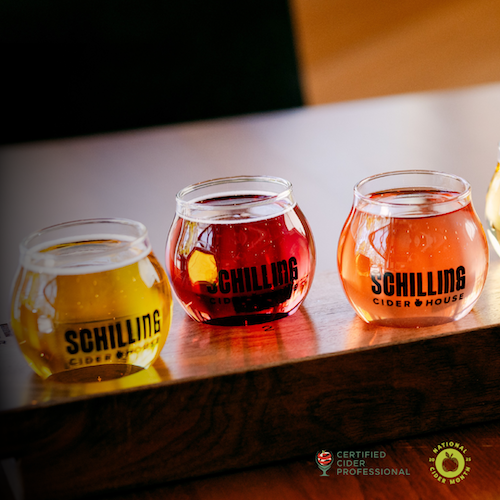
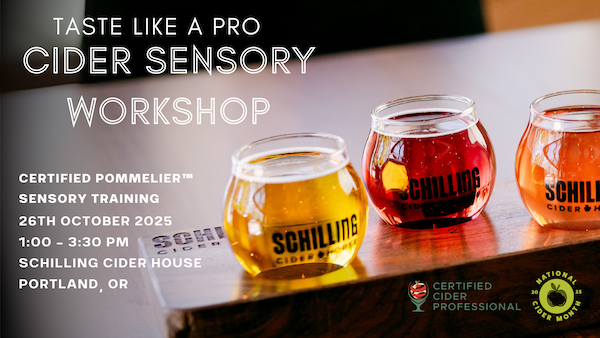
Taste Like a Pro Cider Sensory Workshop at Schilling Cider in Portland on October 26!
Celebrate National Cider Month with us by diving deep into the world of cider! This special session is the perfect way to honor cider’s diversity and craftsmanship while sharpening your tasting skills. Whether you’re preparing for the Certified Pommelier™ exam or simply curious about how pros taste cider, this immersive, hands-on workshop will give you the tools to sip and share with confidence. You’ll learn how to detect flavors, spot faults, and describe cider like a seasoned cider professional. Walk away prepared for your exam or ready to wow your friends with a sharper palate and a deeper appreciation for the world’s most diverse fermented beverage.
Price: $45 Non-members, $35 ACA members (Member Discount can be found in the Resource Hub)
Location: Schilling Cider, 2800 SE Division St, Portland OR
Schedule:
- Welcome & Introduction (10 min)
- Part 1: Foundations of Sensory Tasting (25 min)
- Part 2: Structured Tasting Practice (60 min)
- Part 3: Identifying/Understanding Common Cider Faults (20 min)
- Part 4: Elevate Your Tasting Vocabulary (15 min)
- Wrap-Up + Q&A (20 min)
Unlocking Cider Education: A New Study Resource Partnership Between ACA and Press Then Press

The American Cider Association (ACA) is proud to announce a new partnership with Press Then Press, a leading online cider retailer with a passion for education and community-building. This collaboration is centered around one shared goal: making cider and cider education more accessible to enthusiasts, professionals, and Certified Cider Professional™ (CCP) candidates across the country.
Through this partnership, Press Then Press will now offer curated study boxes with resources and digital downloads supplied directly from the American Cider Association. This partnership supports the Certified Cider Professional™ Program, starting with Level 1, Certified Cider Guide™ and carrying through to L2, Certified Pommelier™. These materials include practice exam questions, completed sensory analysis forms, sensory videos, and other helpful tools designed to build confidence and cider knowledge in a flexible, engaging format.
Why It Matters
The Certified Cider Professional™ Program is the first and only certification program dedicated to the international cider industry. It empowers service professionals, retailers, distributors, and cider lovers with the knowledge to confidently understand and share the nuances of cider, from apple varieties and production methods to food pairing and sensory evaluation.
By teaming up with Press Then Press, the ACA is extending the reach of these resources and giving learners a trusted shipping hub to find the large array of ciders needed for sensory evaluation expertise.
More resources are on the way, including enhanced digital tools, flashcard decks, and sensory evaluation aids.
Where to Find It
Visit the Press Then Press website to explore cider bundle options and visit the American Cider Association website for the growing catalog of CCP-certified resources.
Together, We’re Building a Stronger Cider Community
This partnership marks a major step forward in making cider education approachable and enjoyable for all. Whether you’re brushing up your knowledge or taking the next step in your cider career, ACA and Press Then Press are here to support your journey.
October 9: Taste Like A Pro: Cider Sensory Analysis Workshop in England


Certified Pommelier™ Sensory Training Workshop on October 9 at the Museum of Cider
Join us for a sensory deep dive into the world of cider and learn to taste cider like a pro! Whether you’re preparing for the Certified Pommelier™ exam or just curious how pros taste cider, this immersive, hands-on session will give you the tools to sip and share with confidence. You’ll learn how to detect flavors, spot faults, and describe cider like a seasoned cider professional. Walk away prepared for your exam, or to wow your friends with a sharper palate and a deeper love for the world’s most diverse fermented beverage.
Price: $45 Non-members/$35 Members (Discount Code available in Resource Hub.)
Location: Museum of Cider, Pomona Place, Hereford, HR4 0EF
Schedule:
- Welcome & Introduction (10 min)
- Part 1: Foundations of Sensory Tasting (25 min)
- Part 2: Structured Tasting Practice (60 min)
- Part 3: Identifying/Understanding Common Cider Faults (20 min)
- Part 4: Elevate Your Tasting Vocabulary (15 min)
- Wrap-Up + Q&A (20 min)
August 2025: Monthly Market Updates from Sightlines
Each month consumer insights platform Sightlines will share one quick hit you can use to make confident decisions. Also, ACA members get 50% off a Sightlines subscription. Find the discount code in the Resource Hub.
Non-alcoholic sparkling wines thrive on attributes that are driving other adult beverage trends: ease, versatility, and indulgence. Cidermakers are well poised to deliver on these, too—perhaps even through non-alcoholic offerings.
In a year when overall wine sales are at their lowest point in three decades, Circana data shows sales of non-alcoholic sparkling wines have increased +60%. The niche is poised for even further growth in the near future as best-selling Josh Cellars takes its zero-proof sparkling wine from limited-release markets to national sales this summer.
What explains the boom in booze-free bubbles? They’re easy to understand and versatile to use. Unlike alcohol-free spirits such as Seedlip or wine alternatives like Proxi, they’re not asking drinkers to understand flavors and ingredients built from the ground up—they’re just sparkling wine, sans booze.
Non-alc cider can play a similar role. Like NA prosecco, it can offer a sense of celebration for people and occasions when alcohol might not feel appropriate: daytime office parties, baby showers, or high school graduations. It can be mixed with syrups or garnishes to create zero-proof cocktails, yet it’s still something people can easily grasp. Whether in your tasting room or at events, non-alc bubbles—from grapes or apples—could be a sophisticated but approachable choice for people and occasions where alcohol doesn’t fit.
October 6: Certified Pommelier Exam at Potter’s Craft Cider
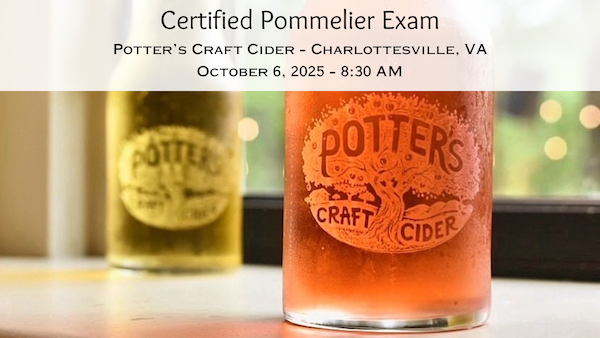
TAKE THE CERTIFIED POMMELIER EXAM IN VIRGINIA ON OCTOBER 6th!
Are you ready to take the next step in your professional development in the cider industry?
If you have already passed the Level 1 Certified Cider Guide exam and are looking for that next challenge? Now is your chance!
The American Cider Association is pleased to announce a Certified Pommelier Exam will be held at Potter’s Craft Cider in Charlottesville, VA . The exam will take place Monday, Octobier 6th, 2025. The exam will begin promptly at 8:30 AM.
*Level 1 Certified Cider Guide certification is a prerequisite for taking the Certified Pommelier Exam. (Haven’t taken your Level 1 Certified Cider Guide Exam? Buy the bundle here! ACA Member discounts are available.)
There’s also a discount code available for ACA members for the Certified Pommelier Exam. You can find that code in our Resource Hub.
WHAT IS THE CERTIFIED POMMELIER EXAM?
The American Cider Association’s mission is to grow a diverse and successful cider industry by providing valuable information, resources and services to our members and by advocating on their behalf. One way to fulfill this mission is through the Certified Cider Professional Program, a program aimed at educating the front-line of cider hospitality (distributors, retailers, bartenders and more!) while also welcoming journalists and serious cider enthusiasts.
The exam for the introductory level certification, Certified Cider Guide (CCG), is an online test that can be taken at any time. The exam for the more advanced second level of certification, Certified Pommelier, is only available in person. The exam consists of two parts, a written theory exam comprising short answer and essay questions and a blind sensory evaluation of a number of ciders. Passing the introductory level exam is a mandatory prerequisite to sitting for the Level 2 Certified Pommelier exam.
Certified Pommeliers must have a fundamental understanding of all topics covered at the introductory level, but must also be able to think critically and demonstrate a deeper understanding of cider and the cider industry.
The topics covered in the exam are:
- Apples, the Orchard & History
- Cider Making
- Flavor & Evaluation
- Cider Families
- Keeping & Serving
- Food & Cider
- Social Responsibility
The exam is meant to be challenging. The only information necessary for successfully passing the theory section of the exam is contained in the Certified Pommelier Study Guide available on Amazon. To study for the evaluation section of the exam, candidates should consider attending one of the sensory analysis videos available through the ACA’s website or attend one of the regularly scheduled webinars. Access to pre-recorded webinars and registration for upcoming live webinars is available directly through our website.
WHY BECOME A CERTIFIED POMMELIER?
Cider is a beautifully nuanced beverage that is less well understood by most consumers. Having the knowledge and skills required to become a Certified Pommelier will equip you to better serve customers, enhance your standing in the beverage community, and give you a unique and valuable professional qualification. Being recognized as a Certified Pommelier will put you in the vanguard of advanced cider specialists in this ever growing category.
HOW MUCH DOES THE TEST COST?
The registration fee for the exam is $350. Current members of the ACA can register at a discounted price of $250 by using the discount code that can be found here. If a candidate sits for the exam but does not pass either section, or only passes one of the two sections, theory or sensory evaluation, they can resit for the section of the exam that they did not pass at a future date. The fee for retaking the exam is $175 for non-members and $125 for current members of the ACA.
Read Terms & Conditions before registering.
WHAT MATERIALS ARE AVAILABLE TO STUDY FOR THE EXAM?
- The Certified Pommelier Study Guide is available directly through Amazon. It is also available at all of Amazon’s international sites.This is the official study guide for the second level of the American Cider Association’s professional certification program. It contains all of the information needed to study for and pass the examination. No other reference materials are required.
- There is also a dedicated Facebook Group (that is open for all to join) with prep materials and in-depth peer conversations that many candidates have found useful.
- Sensory evaluation is an important part of being a Certified Pommelier which is why we test your ability to accurately analyze the structural components, aromas, and flavors of a variety of ciders. In order to aid in the development of your sensory evaluation skills and understand the approach to testing them, we have several pre-recorded videos available for purchase. In addition, we host several live sensory analysis webinars each year. You can access the videos and look for scheduled webinars here.
FREQUENTLY ASKED QUESTIONS
(Download the Frequently Asked Questions document.)
- When will we receive our graded exams? Exams are not returned to candidates, however you will be notified as to whether or not you have passed about 6 weeks from the exam date. If you did not pass a section of the exam, you may request a breakdown of your points by general topic to help you identify areas in which you could improve your score should you wish to retake the exam.
- What is the grade needed for passing? 60% of the possible points for sensory evaluation and 70% for theory
- Is there a tasting section on the test? Yes. You will be asked to evaluate six ciders in two flights, one flight that assesses your ability to distinguish between key structural elements and a second where you are asked to complete a full evaluation of three ciders using the Structured Sensory Analysis format. The possible aromas and flavors document will be supplied for use during the exam.
- How long does the test take? You are given 2 hours to complete the theory section of the exam and 1 hour and 15 minutes to complete the sensory evaluation section. There is a 15 minute break in between sections.
- Is it ok if the name on my ticket or registration doesn’t match the person who attends? Registrations are not transferable, so the name on the I.D. presented when checking in for the exam must match the name on the registration.
- What happens if I cannot attend my registered exam? Please see Exam Rescheduling, Timelines and Fees in the Terms and Conditions Document for full details. If you do need to cancel your registration, exam registration fees can be refunded up to 14 days before the exam. Please note that a $25 administration fee applies to any cancellation.
- When can I register for the exam? Exam registration is open until 14 days before the posted exam date.
- How can I contact the organizer with any questions? Please contact Cider Education Operations Manager Jennie Dorsey at jennie@ciderassociation.org.
- What can I bring into the event? Bringing a personal water bottle is recommended for both sections of the exam. Cell phones, smart watches, computers, books or papers, and any and all other personal items must be left at a designated storage area in the exam room. Pencils will be provided, and spare paper will be available on request. Spit cups, and water will be provided during the evaluation exam. We encourage you to bring your own water bottle for the theory exam. Please contact the Cider Education Operations Manager, Jennie Dorsey at jennie@ciderassociation.org prior to registering for the exam if you wish to request special accommodations.
- Is the Certified Pommelier Exam available in my area? Certified Pommelier exams are held periodically throughout the year and in a variety of locations. Please check our current exam schedule to find an exam suitable for you.
- How many Certified Pommeliers are there currently? You can find the current number of Certified Pommelers here.
- Do I need to pass the Certified Cider Guide exam to take the Certified Pommelier exam? Yes. Passing the introductory exam to become a Certified Cider Guide is a prerequisite. If you have not yet taken this exam, you can purchase a package which includes an instructional video, study guide, and access to an online exam HERE.
- Are there ID or minimum age requirements to sit for the event? YES. You must be of legal drinking age in the country where you sit for the exam, and when checking in at the exam you must provide a photo ID that will both verify your age and identity.
October 5: Level 1 Certified Cider Guide Workshop at Buskey Cider
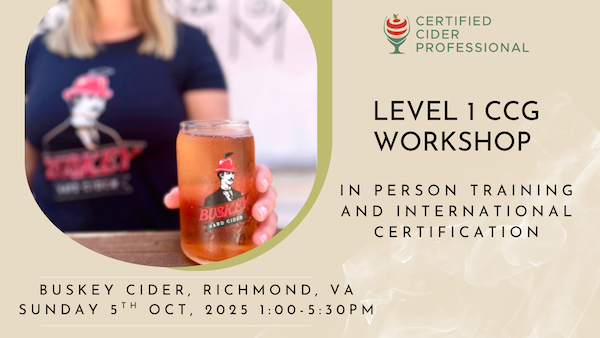
Join Us for a Level 1 Certified Cider Guide Workshop at Buskey Cider on October 5!
The world’s finest cider education program, the Certfied Cider Professional (CCP) Program, will be back again for another Level 1: Certified Cider Guide (CCG) classroom session. Leisurely run over the course of an afternoon, this L1 CCG training has been developed specifically for those who work directly with consumers and trade customers, namely those working in retail and hospitality, importers, distributors, wholesalers and employees of cider producers. It is also the program for cider fans, afficionados and drinkers to showcase their extra weight of knowledge and passion. It is designed to enable participants to have a professional standard of knowledge and appreciation for different types of cider and how they are achieved, an approach to assessing cider and the different sensorial qualities they have, and guidance on the best practice principles for serving, storing and selling.
Candidates will receive an email containing a downloadable study guide and a link to the online exam in advance of the workshop. The day itself will consist of a presentation of the materials from the study guide, with extra elaboration and, of course, the opportunity for questions. There will also be a guided sensory session of at least 3 ciders clearly demonstrating the key structural characteristics within cider, and utilising a structured approach to their assessment.
The topics covered in Level 1 CCG are:
- Apples, Pears and Orchards
- Cider Production
- Families and Flavour
- Evaluating Cider
- Keeping and Serving
- Cider and Food
- Social Responsibility
Schedule:
12:45 PM Arrival and Check-In
1:00 PM Presentation Begins
2:30 PM Break
2:45 PM Presentation Continues
4:00 PM Break
4:15 PM Sensory Evaluation Session
5:15 Optional Online Test Taking Time
September 17: Level 1 CCG Workshop in Wallington, Australia

Join us in Wallington, Australia this September!
The world’s finest cider education programme, the Certified Cider Professional (CCP) Programme, will be at Flying Brick Cider Co., located in Wallington, Victoria, Australia for a Level 1: Certified Cider Guide (CCG) classroom session on Wednesday 17 September. Leisurely run over the course of the afternoon, this L1 CCG training has been developed specifically for those who work directly with consumers and trade customers, namely those working in retail and hospitality, importers, distributors, wholesalers and employees of cider producers. It is also the programme for cider fans, aficionados and drinkers can showcase their extra weight of knowledge and passion. It is designed to enable participants to have a professional standard of knowledge and appreciation for different types of cider and how they are achieved, an approach to assessing cider and the different sensorial qualities they have, and guidance on the best practice principles for serving, storing and selling.
Candidates will receive an email containing a downloadable study guide and a link to the online exam in advance of the workshop. The day itself will consist of a presentation of the materials from the study guide, with extra elaboration and, of course, the opportunity for questions. There will also be a guided sensory session of at least three ciders clearly demonstrating the key structural characteristics within cider, and utilising a structured approach to their assessment.
Cost: $189 USD per person. (ACA Members can find their discount code in the Resource Hub.)
The topics covered in Level 1: CCG are:
- Apples, Pears and Orchards
- Cider Production
- Families and Flavour
- Evaluating Cider
- Keeping and Serving
- Cider and Food
- Social Responsibility
September 15: Level 1 Certified Cider Guide Workshop in Sydney, Australia

Join us in Sydney, Australia on September 15!
The world’s finest cider education programme, the Certified Cider Professional (CCP) Programme, will be in Australia for two Level 1: Certified Cider Guide (CCG) classroom sessions! The first will take place at Tafe! Ultimo in Sydney on Monday 15 September. Leisurely run over the course of a day, this L1 CCG training has been developed specifically for those who work directly with consumers and trade customers, namely those working in retail and hospitality, importers, distributors, wholesalers and employees of cider producers. It is also the programme for cider fans, aficionados and drinkers can showcase their extra weight of knowledge and passion. It is designed to enable participants to have a professional standard of knowledge and appreciation for different types of cider and how they are achieved, an approach to assessing cider and the different sensorial qualities they have, and guidance on the best practice principles for serving, storing and selling.
Candidates will receive an email containing a downloadable study guide and a link to the online exam in advance of the workshop. The day itself will consist of a presentation of the materials from the study guide, with extra elaboration and, of course, the opportunity for questions. There will also be a guided sensory session of at least three ciders clearly demonstrating the key structural characteristics within cider, and utilising a structured approach to their assessment.
The topics covered in Level 1: CCG are:
- Apples, Pears and Orchards
- Cider Production
- Families and Flavour
- Evaluating Cider
- Keeping and Serving
- Cider and Food
- Social Responsibility
Schedule:
12:45 PM: Arrival and Check-in
1:00 – 4:00 PM: Presentation
4:00 – 5:00 PM: Tasting Experience
5:00 – 5:45 PM: Take the online CCG 1 test (bring your own laptop)
Cost: $189 USD per person (ACA Members can find their discount code in the Resource Hub.)

September 11: From Orchard to Label: Cider Compliance Essentials

This webinar will walk through the most common compliance issues cider producers face when they have a TTB investigation. We will discuss key TTB compliance issues such as carbonation and alcohol thresholds, proper labeling and flavor designations, formula approval, when a COLA is required, and common tax class errors. We’ll also touch on record keeping, standard of fill updates, and what cidermakers need to know when making cider. Overall, this session provides practical insights to help you stay on the right side of TTB rules and regulations.
About Our Speaker:

Aniko Kasprian is the Industry Education Technical Advisor in the Office of Outreach at TTB. Previously, Ms. Kasprian was part of the Office of Special Operations group, where she worked as a Special Operations Investigator for 4 years working on FAA Trade Practice cases. Ms. Kasprian was also an investigator for the Western II District for 6 years, primarily focusing on wine and tobacco. Before joining TTB, Aniko served in the United States Air Force and was a Special Agent for the Department of Homeland Security. Ms. Kasprian’s primary area of expertise is in the alcohol industry. Ms. Kasprian has a BA in International Relations and Foreign Policy and an MS in Criminology with a focus on Forensic Profiling.
“Hard Cider Guy” Adrian Luna- Verduga Joins American Cider Association as Licensed Educator in the Northeast
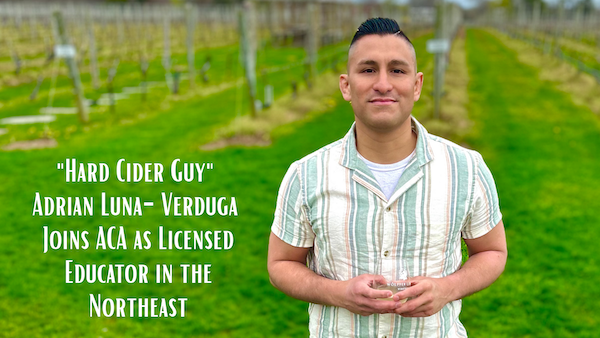
The American Cider Association (ACA) is pleased to introduce Adrian Luna-Verduga, widely known in the cider community as the Hard Cider Guy, as the newest Licensed Cider Educator serving New York, New Jersey, and Pennsylvania. A passionate advocate, Certified Pommelier™, and content creator, Adrian brings an enthusiastic and relatable voice for cider education.
Adrian’s cider journey began during a two-year road trip across the U.S. and Canada, where he and two friends chronicled their experiences exploring regional cider scenes. Adrian’s ability to translate cider culture into accessible, fun, and informative content has earned him a strong following and the respect of cider lovers and professionals alike.
As a Licensed Educator, Adrian will be offering ACA’s Level 1 Certified Cider Guide (CCG) certification workshops, helping beverage professionals and enthusiasts alike deepen their understanding of cider styles, service, and sensory evaluation. His appointment supports ACA’s mission to grow appreciation for cider and expand access to high-quality, standardized cider education across the world.
“Adrian embodies what we look for in a cider educator: curiosity, generosity, and a deep commitment to helping people connect with cider in meaningful ways,” said Jennie Dorsey, ACA’s Director of Education. “His energy is infectious, and his presence in the Northeast will be a huge asset to the cider community there.”
Adrian is based in the Northeast and is currently booking sensory sessions and workshops. For more information or to inquire about hosting a Certified Cider Professional training, visit our website.
For NE-specific inquiries, reach out to Adrian directly at Adrian@ciderassociation.org.
For all other inquiries, contact Jennie Dorsey at Jennie@ciderassociation.org.
Are You a Certified Pommelier Interested in Teaching?
We’re always looking for enthusiastic cider professionals to join our network of Certified Cider Professional Licensed Educators. If you’re a Certified Pommelier™ passionate about sharing your knowledge, we’d love to connect.
Contact Jennie Dorsey at jennie@ciderassociation.org to learn how you can get involved.
July 2025 Market Insights from Sightlines: Cross-Category Insights You Can Use
Each month, consumer insights platform Sightlines will share one quick hit you can use to make confident decisions. Remember, ACA members get 50% off a Sightlines subscription. Find the discount code in the Resource Hub.
Getting Creative With On-Premise Sales Channels
No doubt the on-premise is a critical sales lane for cider—that’s nothing new. But thinking about that stalwart channel through the lens of other categories like wine or non-alcoholic beer can unlock creative opportunities.
Craft brewery taprooms and spirits tasting rooms offer one example. These establishments tend to specialize in one type of alcohol—but drinkers are increasingly demanding more variety. It opens up space for cidermakers to place their products in other manufacturers’ spaces, helping them fill gaps without having to make the liquid themselves.
It’s something non-alcoholic beer brands have been able to capitalize on: A Craft Beer Professionals survey, conducted this April, found that small breweries are 370% more likely to say they’re offering a non-alcoholic beer made by another company than they were just six years ago. This makes sense. Members of Craft Beer Professionals are small breweries; 63% produce less than 500 barrels of beer annually. They likely don’t have the capacity, expertise, or equipment to make quality NA beer (or cider) on-site. Yet they recognize these are beverages drinkers have come to expect in 2025. This can extend to beer bars or distilleries as well, with a myriad of benefits for a cidermaker that go beyond sales.
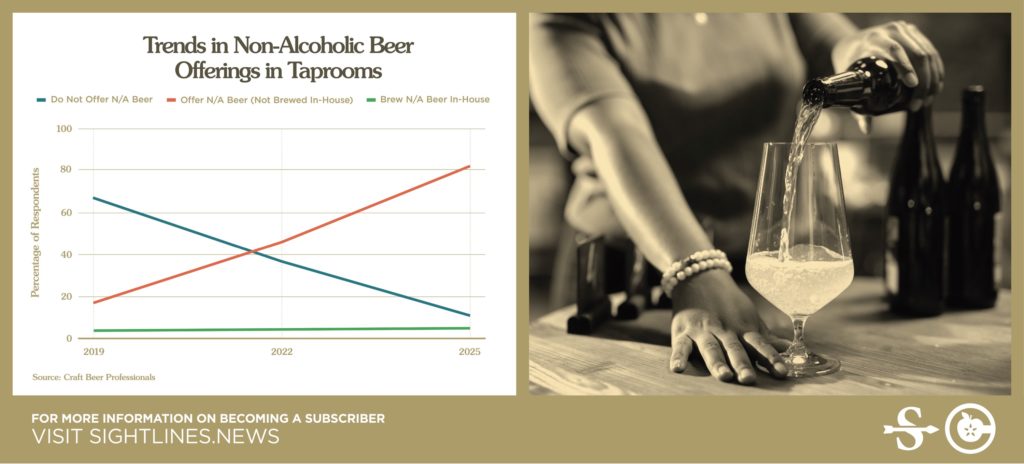
Offering packaged or draft options from another producer has benefits for both the retailer and the “guest” brand:
- The on-premise account attracts a larger set of customers, particularly those in group occasions. Show us a group of six friends in which at least one person doesn’t like or can’t tolerate a given type of alcohol.
- Management can observe the ordering behavior of a more diverse set of drinkers—not just their existing, dedicated fans.
- For suppliers of the “guest” brand being served, the taproom is a place to gain consumer traction. It’s an ideal environment to win a new cider drinker with an educated staff and a vibrant social setting. Your cider brand might be one of 15 on the grocery shelf, but it could be the sole option at a brewery’s taproom.
But cider can extend this thinking beyond mere taprooms, beer bars, and distilleries. Thinking like another category might open unique on-premise angles: A spirits brand is often eager to be used in a signature cocktail, for example. Why not the same for a cider spritz? Wine brands strive to be recommended by the glass as a pairing with a particular dish; again, why not the same for a cider?
Cribbing strategies from other categories is a fresh way to approach on-premise accounts with creative ideas—and to win new drinkers.
ACA Members Scoop Up Multiple Awards from Northwest Cider Cup and Cidercraft Magazine Awards


Both the Northwest Cider Cup and Cidercraft Magazine recently announced award winners following their competitions and, once again, ACA members put on an excellent showing, garnering awards across every style category. Members bringing home awards from these prestigious competitions are:
Northwest Cider Cup
- 2 Towns Ciderhouse
- Alpenfire Cider
- Bauman’s Cider
- Blossom Barn Cidery
- Cockrell Cider Farm
- Empyrical Cider
- Endless Orchard
- Finnriver Farm & Cidery
- Greenwood Cider
- Kristof Farms
- Portland Cider Co.
- RAW Cider
- Rootwood Cider
- Schilling Cider
- Seattle Cider Co.
- Tieton Cider Works
- Click here for a complete listing of winners.
Cidercraft Magazine Awards
- 1911 Established
- 2 Towns Ciderhouse
- Alpenfire Cider
- Bauman’s Cider
- Brooklyn Cider House
- Champlain Orchards
- Ciderboys
- Endless Orchard
- Fenceline Cider
- Glacial Till Craft Cider
- Island Orchard Cider
- James Creek Cider House
- Kristof Farms
- Martinelli’s 1868 Hard Cider
- Mast Year Collective
- Portland Cider Co.
- Schilling Cider
- Seattle Cider Co.
- Sheltered Valley Cider
- Snow Capped Cider
- Snowbird Farm & Cidery
- Tieton Cider Works
- White Crow Cider Company
- Woodchuck Cider
- Yankee Cider Company
- Yonder Cider
- Click here for a complete listing of winners.
Sixteen New Certified Pommeliers Join the Ranks of Global Cider Experts

The American Cider Association is proud to welcome sixteen new Certified Pommeliers to our growing international community of cider professionals. These individuals earned their certifications at recent exams held in Frankfurt, Germany; Grand Rapids, Michigan; and Los Angeles, California, proving once again that cider education is going global.
As cider’s presence on menus and shelves continues to expand, formal training and credentialing are more important than ever. Whether you’re behind the bar, designing a beverage program, or guiding tastings, cider knowledge isn’t just an asset—it’s a necessity.
“We’re thrilled to welcome these Certified Pommeliers to our vibrant and growing community,” said Jennie Dorsey, ACA Director of Education and Program Development. “Each one of them brings a passion for cider and a commitment to excellence that is helping shape the future of the industry.”
Meet the New Class of Certified Pommeliers
Please join us in congratulating the following individuals on achieving this rigorous certification:
- Jorn Meinderts (Vercierderij), Schiedam, The Netherlands
- Hester van Sprang (Iessel Cider), Deventer, The Netherlands
- Marin van Sprang (Iessel Cider), Deventer, The Netherlands
- Beatrix Swanson (Independent Cider Writer and Judge), Helston, United Kingdom
- Ryan Cannon (Cider Enthusiast), Ventura, California
- Emily Chebul (Benny Boy Brewing), Los Angeles, California
- Rio Connelly (Scion Cider), Salt Lake City, Utah
- Ted O’Neill (Retired Hobbyist), Grand Rapids, Michigan
- Beckett Vigh (Siciliano’s Specialty Beverage and Supply), Grand Rapids, Michigan
- Andrew Schultz (Texas Corners Brewing Company), Kalamazoo, Michigan
- Bird Peterson (Left Foot Charley), Traverse City, Michigan
- Jeffrey Cottrell (Castle Museum of Saginaw County History), Saginaw, Michigan
- Danielle Miller (Tandem Cider), Traverse City, Michigan
- Josh Sejat (Alkemista LLC), Grand Rapids, Michigan
- Scott Katsma (Seattle Cider), Seattle, Washington
- Ambrosia Borowski (Chicago Cider Week), Chicago, Illinois
Each Certified Pommelier has completed a demanding exam that includes theory, written responses, and blind sensory analysis. Their achievement represents not only personal dedication but also a commitment to advancing the cider category at large.
Why Certified Pommelier Matters
The Certified Pommelier designation is more than a title—it’s a testament to deep expertise and the ability to elevate cider service at every level.
From restaurant dining rooms to tasting rooms, beverage distributors to educators, Certified Pommeliers bring:
- In-depth knowledge of global cider traditions and production methods
- Expertise in pairing cider with food in innovative, memorable ways
- Sensory skills that rival top-level wine or beer professionals
- A competitive edge in hiring, advancement, and industry leadership
“We know that top dining experiences are built on knowledgeable, confident service—and cider deserves to be part of that conversation,” said ACA CEO Monica Cohen. “Our Certified Cider Professional program ensures that hospitality leaders are prepared to showcase cider’s full potential and deliver elevated experiences to every guest.”
About the Certified Cider Professional Program
The Certified Cider Professional (CCP) Program is the world’s leading cider education pathway, offering two levels of certification:
- Level 1 – Certified Cider Guide (CCG): A foundational exam ideal for anyone working with cider in service, sales, or retail.
- Level 2 – Certified Pommelier: A rigorous exam for professionals looking to demonstrate advanced cider knowledge and sensory analysis skills.
To support learners, the ACA offers a growing suite of resources, including webinars, study guides, and the newly updated Certified Pommelier textbook (2nd edition).
Ready to Join the Ranks?
Upcoming Level 2 Certified Pommelier exams are scheduled for:
- October 6, 2025 – Potter’s Craft Cider in Charlottesville, Virginia
- February 3, 2026 – CiderCon® in Providence, Rhode Island
If you’re ready to take your cider knowledge to the next level—or you’re just getting started with Level 1—visit ciderassociation.org/certification for more details, prep materials, and registration info.
For questions, reach out to Jennie Dorsey, ACA’s Director of Education and Program Development.
Congratulations to our new Certified Pommeliers—we can’t wait to see how you’ll shape the future of cider!
Calling All Creators: Showcase Your Work at CiderCon® 2026’s New Artisan Marketplace!


Get ready to connect with cider lovers and art enthusiasts alike! For the first time ever, CiderCon® 2026 is opening the doors to artists, jewelers, and makers of all kinds with a dedicated Artisan Marketplace—a new feature within our renowned international trade show.
Whether you craft cider-inspired illustrations, forge one-of-a-kind jewelry, design textiles, create handmade soaps, or dabble in any form of artisan goods, this is your chance to showcase your work at the largest professional cider gathering in the world.
Why the Artisan Marketplace?
Cider is more than a beverage—it’s a culture. A lifestyle. An intersection of tradition, craft, storytelling, and creativity. The cider community is passionate, curious, and deeply appreciative of handmade quality—and that makes CiderCon® the perfect space to share your work with a fresh, enthusiastic audience.
This marketplace isn’t just about selling—it’s about sharing your story with hundreds of attendees who value artistry, small business, and the spirit of creation.
What You Can Expect:
- A vibrant, dedicated artist zone within the CiderCon® 2026 trade show floor
- Access to engaged cider professionals, makers, and fans from across the world
- The opportunity to network with industry leaders, fellow creatives, and future collaborators
- Inclusion in the official CiderCon® 2026 program and online vendor directory
- A curated space designed to celebrate your craft—whether it’s visual, wearable, or wildly unique
Who Should Apply?
We’re seeking a diverse lineup of vendors whose work reflects craftsmanship, originality, and heart.
Think:
- Handmade jewelry
- Printmaking and posters
- Illustration and fine art
- Pottery and ceramics
- Textile and fiber arts
- Woodworking
- Soap and body care products
- Upcycled or sustainable goods
- Cider-themed or locally inspired items
- And more!
Whether you’re a full-time maker or an emerging artisan looking for your next big opportunity, the CiderCon® Artisan Marketplace is your stage.
Event Details:
CiderCon® 2026 Trade Show
Providence, RI — February 4-5, 2026
Artisan Marketplace open during trade show hours
Vendor spots are limited and curated—apply early to be considered!
How to Apply:
Applications open June 23, 2025 and close January 1, 2026. Click here to apply.
Vendor fees are kept intentionally accessible to support small businesses, artists, and emerging creatives.
Sightlines: Cross-Category Insights You Can Use June 2025
Each month, consumer insights platform Sightlines will share one quick hit you can use to make confident decisions. Remember, ACA members get 50% off a Sightlines subscription. Find the discount code in the Resource Hub.
Going Fizz-Free is Gaining New Audiences—and Cider Can Meet the Need
When drinkers reach for a packaged beverage, it’s most likely carbonated, with at least half of Americans drinking a carbonated soft drink daily. But that’s been changing, and in recent years, a growing number of beverage alcohol brands have explicitly asserted themselves as fizz-free alternatives: Brands like MolsonCoors’ Happy Thursday Spiked Refresher and Surfside Surfside Iced Tea + Vodka have made their lack of bubbles a core selling point, while NOCA Beverages (short for “no carbonation”) has made it an entire brand ethos. And one of the country’s largest RTD brands—Twisted Tea—has long won with drinkers who feel that a lack of bubbles allows them to enjoy multiple servings more easily. Carbonation can lead to feelings of bloating and fullness for some drinkers, and new, fizz-free brands help those people enjoy the pace and freedom of a lighter beverage.
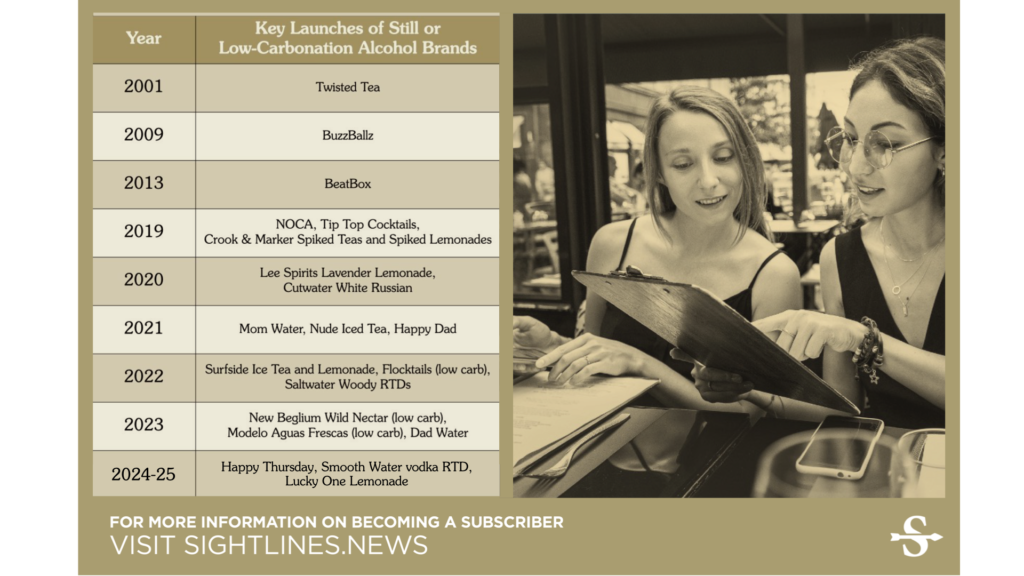
Still cider is nothing new, but it’s traditionally put into a higher-end wine context and struggles to gain traction in more casual settings. But among young consumers reaching for canned cocktails and malt beverages, there’s rising interest in non-carbonated drinks, showing how different categories are working against different expectations. Beverages with lower or no carbonation also often have the advantage of not needing as much flavor to meet consumer desires (carbonation can sometimes dissipate flavor impact) and opens up serving opportunities, such as pouring over ice.
As you consider the positioning of your product—whether a traditional cider, modern craft, a flavor-driven RTD brand, or non-alc alternative to beer or wine, etc.—how you think about carbonation could be as important as “dry” or “gluten-free” or apple varietal for the consumer you’re seeking—perhaps even more so.
Celebrating Success at GLINTCAP 2025

We’re raising our glasses—filled with cider, of course—to celebrate the outstanding achievements of our incredible members at this year’s Great Lakes International Cider and Perry Competition (GLINTCAP). Known as the world’s largest and most esteemed cider competition, GLINTCAP is a true testament to cider craftsmanship, creativity, and excellence. With over 1,000 entries from around the globe, this competition provides a platform for cidermakers to showcase their dedication and skill.
Celebrating Craftsmanship and Innovation
These accolades are not just about the medals; they reflect our members’ innovation, dedication to their craft, and unwavering passion for crafting top-notch cider. Congratulations to all our talented members who made a splash at GLINTCAP 2025! From micro to large producers, it’s a joy to witness such diversity and excellence within our community. Check out ACA member medal winners below!
Cidermaker of the Year
- Micro Cidermaker of the Year – 5,000 Gallons or Less: Empyrical Orchard & Cidery – Snohomish, Washington
- Small Cidermaker of the Year – 5,001 to 25,000 Gallons: Haykin Family Cider – Aurora, Colorado
- Midsize Cidermaker of the Year – 25,001 to 500,000 Gallons: Snow Capped Cider – Austin, Colorado
- Large Cidermaker of the Year – 500,001 Gallons or More: 2 Towns Ciderhouse – Corvallis, Oregon
- Canadian Cidermaker of the Year: Annapolis Cider Company – Wolfville, Nova Scotia
- Click here to see the complete list of Producer of the Year honorees.
Commercial Best-in-Class
- Modern Cider – Dry: Alde Sider Fra Hardanger – Alde Sider (Norway)
- Modern Cider – Sweet: Smackintosh – Tandem Ciders (MI, USA)
- Heirloom Cider – Sweet: Chisel Jersey – Snow Capped Cider (CO, USA)
- Tannin Forward Cider – Dry: Kingston Black SV – Bauman’s Cider (OR, USA)
- Tannin Forward Cider – Sweet: Marechal – Haykin Family Cider (CO, USA)
- Rosé Cider: Airlie Red – Raw Cider Company (OR, USA)
- Low Tannin Perry: Winter Pear – Snow Capped Cider (CO, USA)
- High Tannin Perry: Principle – Empyrical Orchard & Cidery (WA, USA)
- Fruit Cider – Dry: Porters & Perry – Snow Capped Cider (CO, USA)
- Hopped Cider: Hopped Brut Apple – Island Orchard Cider (WI, USA)
- Botanical Cider: Lavender Honey – Tieton Cider Works (WA, USA)
- Wood Aged Cider: Blanc Mollet – Snow Capped Cider (CO, USA)
- Specialty Cider – Dry: Hopped Apricot – Snow Capped Cider (CO, USA)
- Ice Cider: McIntosh Ice Cider – Haykin Family Cider (CO, USA)
- Spirits: Michigan Honeycrisp Vodka – Vander Mill (MI, USA)
- Click here to see the complete list of 2025 Best-in-Class Winners
Recognizing Expertise and Growth
We are also pleased to announce that more than 20 Certified Pommeliers from across the globe were judges this year. Their high standard of sensory and technical knowledge is invaluable, and their presence highlights the growth of the certification program and the increasing professionalism within the cider industry.
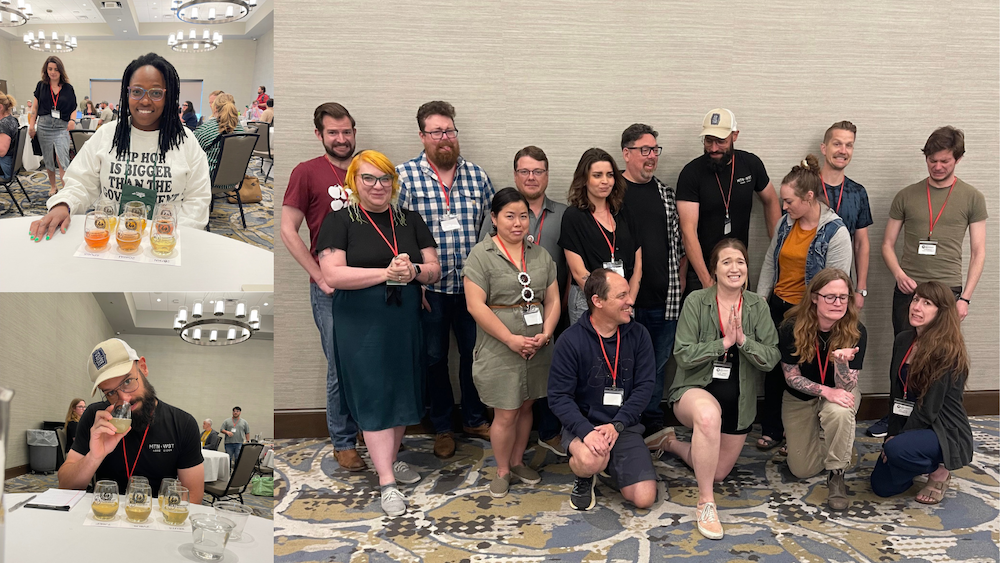
In addition to these experts, we were delighted to have cider professionals supported by the ACA’s Cider is for Everyone Scholarship as judges this year. This initiative seeks to increase equity and access within the cider world, bringing new voices and perspectives to the competition.
ACA Director of Education Jennie Dorsey says, “Bringing together Certified Pommeliers and new voices through the scholarship program strengthens both the technical and cultural foundation of this competition.”
July 15: Level 1 Certified Cider Guide Workshop in Chester, England
Join us in Chester, England on July 15th for a Level 1 Certified Cider Guide Workshop & Certification!

The world’s finest cider education programme, the Certfied Cider Professional (CCP) Programme, will be back again for another Level 1: Certified Cider Guide (CCG) classroom session. Leisurely run over the course of a day, this L1 CCG training has been developed specifically for those who work directly with consumers and trade customers, namely those working in retail and hospitality, importers, distributors, wholesalers and employees of cider producers. It is also theprogramme for cider fans, afficionados and drinkers can showcase their extra weight of knowledge and passion. It is designed to enable participants to have a professional standard of knowledge and appreciation for different types of cider and how they are achieved, an approach to assessing cider and the different sensorial qualities they have, and guidance on the best practice principles for serving, storing and selling.
Candidates will receive an email containing a downloadable study guide and a link to the online exam in advance of the workshop. The day itself will consist of a presentation of the materials from the study guide, with extra elaboration and, of course, the opportunity for questions. There will also be a guided sensory session of at least 3 ciders clearly demonstrating the key structural characteristics within cider, and utilising a structured approach to their assessment.
The topics covered in Level 1: CCG are:
- Apples, Pears and Orchards
- Cider Production
- Families and Flavour
- Evaluating Cider
- Keeping and Serving
- Cider and Food
- Social Responsibility
ACA members can find their discount code in the Resource Hub!
June 10: Charting the Course: Key Cider Club Trends Uncovered by Vinoshipper

The ACA and Vinoshipper invite you to join us for a coffee chat style webinar on Tuesday, June 10 at 10:00 AM as Terra Jane Albee from Vinoshipper presents on the ins and outs of incorporating a club program to your business model. A cider club can offer many benefits, including predictable revenue streams, reduced marketing costs, and enhanced customer loyalty. Pulling from the Vinoshipper informational database, Terra Jane will walk you through the trends that have emerged over the last several years from cideries that have built in cider club programs.
This webinar is exclusive to ACA members! Not a member? Click here to join now!
Join Us as a CiderCon® 2026 Vendor
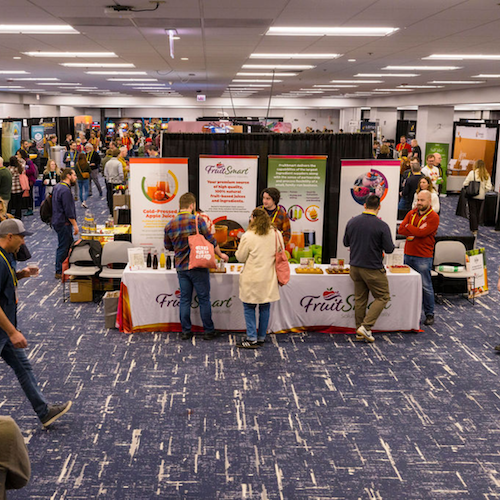
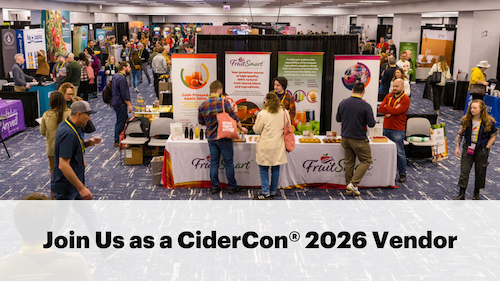
Get ready for CiderCon® 2026, coming to the heart of Providence, Rhode Island, from February 3-5, 2026! Join us for the world’s premier cider industry conference with cider professionals from all over the globe and put your brand in front of the movers, makers, and shakers of the cider industry.
Why You Should Join Us
CiderCon® is the only event where the entire cider supply chain comes together to learn, connect, and discover what’s next. Don’t miss your chance to showcase your products and services to a crowd of over 1,000 eager cider professionals.
This is your opportunity to:
- Connect with cider producers, orchardists, and buyers from across the globe
- Showcase your products and services to a highly engaged audience
- Generate leads, build brand awareness, and deepen industry relationships
- Be seen as a key player supporting the growth and innovation of the cider community
Exclusive trade show hours means crowds of attendees will head your way to connect with your business. In addition, games and a happy hour will ensure that attendees are stopping by your booth for a visit.
Vendor and Sponsorship Perks
- Booth Spaces: Secure your 10’ x 10’ booth for just $2500, which includes three conference passes and lunch on Wednesday & Thursday. Booth prices increase on July 1 so book your booth now to lock in the lowest rates!
- Sponsorship Opportunities: Elevate your brand with custom sponsorships. Stand out and support the American Cider Association while reaching a dedicated audience.
Spots are limited — reserve your booth now and be part of the buzz!
Interested? Fill out our CiderCon® 2026 Vendor Application today!
Have questions? Contact our Trade Show Coordinator Ellen Husch at tradeshow@ciderassociation.org.
Meet Your Board Member: Scott Spelbring
We’re pleased to introduce you to board member Scott Spelbring of Henway Hard Cider, who was recently elected as Southern chair. Read on to get to know more about Scott and Henway Hard Cider in this Q&A.
Where do you work and what is your position?
I am the Director of Enology and Viticulture for Henway Hard Cider and Bluemont Winery located in Bluemont, VA in northern Virginia
Tell us about your cidery/farm/orchard
We’re on a 400 acre farm at the base of the Blue Ridge Mountains in Loudoun County, Virginia. The Zurschmeide family has been farming in Loudoun County since the 1970s but established the current farm (Great Country Farms) and orchard operation in 1993. In addition to the cidery and winery we have a large u-pick operation for a variety of apples, peaches, strawberries and other fruits and vegetables as well as 45 acres of wine grapes under vine.
How did you get into cider?
I began drinking cider at a relatively young (too young?) age courtesy of an English family that I was close to. When I was interviewing for the winemaker position at Bluemont back in 2016 one of the questions asked was “how do I feel about cider?”. That question and suddenly having access to a variety of estate apples quickly sent me down the path of making cider!
Why did you decide to run for a position on the board?
Having been in the wine, cider and craft beverage industry for 15+ years I understand how hard it is to navigate and succeed in this industry. I’m hoping to be able to use my experiences to contribute to the success, growth and passion of this amazing industry!
What are your hopes for the future of the US Cider Industry?
I’m hoping that more attention will be brought to cider as a whole and that it gains traction as a stand alone category a la wine, beer and spirits. Bringing awareness to cider’s diversity and history would be amazing!
How do you describe your cider region?
It’s the “Apple Capital” of Virginia! 16,000+ acres of apple orchards producing roughly 6,000,000 bushels of apples annually
What’s your favorite apple to work with and why?
I wish I were more diverse in my apples – I tend to work more with blends from our orchards or surrounding properties. Typically I work with everything from Pippin, Arkansas Blacks, a little Crab, York, Pink Lady’s, etc.
What is your favorite cider/food pairing?
I love a dry crisp cider with sushi or Thai!
What is your favorite nature/cider pairing?
Maple bourbon barrel finished cider and a campfire
What would you like our members to know about you that they might not know?
I am an avid dog lover, prefer the beach over the mountains and ex-rock and roll musician
CiderCon® 2026 Request for Speaking Proposals
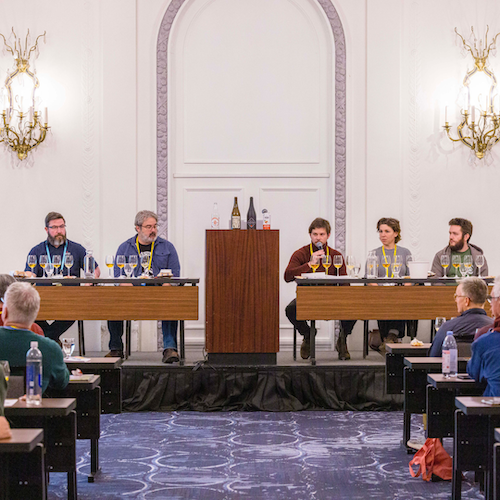

Submission Deadline Extended to June 30!
Mark your calendars for an unparalleled gathering of minds and talents at CiderCon® 2026, set to transform the city of Providence, Rhode Island from February 2-5, 2026. As the world’s leading event dedicated to advancing the craft of cidermaking, CiderCon® offers an exceptional platform for networking, learning, and sharing the rich traditions and innovative techniques that define our industry.
This year, we’re casting a wide net to bring in knowledgeable, passionate, and visionary speakers from the cider industry and beyond. We’re looking for presentations that will enlighten and inspire – covering a wide array of topics from best practices and emerging trends to groundbreaking research and process improvements. Additionally, we invite speakers from outside but related industries to cider. Our industry will be strengthened with fresh perspectives.
The topics we’re particularly excited about this year include:
- Cidermaking (Production, Safety and Operations, etc.)
- Sales (Wholesale, Cider Clubs, DtC, Marketing and Branding, On-Premise, etc.)
- Better Business (Human Resources, Compliance, Equity & Inclusion etc.)
- Orcharding (Pest & Disease Management, Orchard Planning, etc.)
- Data/Trends (Cider, BevAlc, Etc.)
- Cider’s Flavor and Terroir
- Innovation
If you have insights or experiences in these areas, we want to hear from you! Please be aware that our attendees do not want presentations that are sales pitches for your company or products or services. They want information that will be useful and relevant for their businesses.
At the heart of CiderCon® is our unwavering commitment to inclusivity. We believe that diversity fuels innovation and strengthens our community. That’s why we encourage proposals from individuals of all backgrounds, including BIPOC, LGBTQIA+, veterans, and those with disabilities.
Please submit your proposals to the CiderCon® committee by June 15, 2025 by filling out this Google form. If you’re selected as a speaker, you’ll receive a complimentary pass to CiderCon® 2026, including lunches and access to all the fantastic non-ticketed events we have planned. Decisions for speakers will be made by mid-August. We may reach out to you in the interim to get more details on your session. If you have questions, please reach out to our Speaker Coordinator Jenn Martell at jenn@ciderassociation.org.
Don’t miss this opportunity to help the cider industry continue to thrive. Together, we can make CiderCon® 2026 an event that celebrates our craft, fosters innovation, and builds a more inclusive and vibrant community. We can’t wait to see you in Providence!
Meet Your Board Member: Tom Hart

We’re pleased to introduce you to board member Tom Hart of Humboldt Cider Company, who was recently elected as Pacific Coast chair. Read on to get to know more about Tom and Humboldt Cider Company in this Q&A.
Where do you work and what is your position?
Humboldt Cider Company in Eureka, CA. I am Co-Owner/Operator. I manage our sales and distribution departments and work with our local orchard partners.
Tell us about your cidery/farm/orchard
We started in my friend’s garage in 2014 and have grown incrementally over the years. We make a wide variety of ciders from small batch single-varietal orchard based ciders to large batch fruited ciders. We help manage two local orchards and work with the California State Parks and the National Park Service on fun historic orchard restoration projects.
How did you get into cider?
My friend told me about my current business partner’s plans to start a cider company in Eureka. I reached out and started as the first employee. I realized early on that I had discovered my passion: apples. After a couple years, I bought into the company and the rest is history!
Why did you decide to run for a position on the board?
I have strong relationships with cider companies large and small throughout the Pacific Coast region. I want to be a voice for all sizes and types of cider companies within the region and help highlight all the Pacific Coast has to offer.
What are your hopes for the future of the US Cider Industry?
I want to continue to see our market share grow within the alcohol industry. I also want to help inform the public about cider’s deep history in this country and the contributions cider companies make in their local communities.
How do you describe your cider region?
The Pacific Coast region features some of the most diverse brands in the industry. We range from high-end small batch companies like Tilted Shed, Two Broads, Raging Cider and Paradise to larger well-known brands like Golden State, Ace and Two Rivers. We are fortunate to live in a region full of natural beauty and are proud to share a strong sense of community.
What’s your favorite apple to work with and why?
My favorite apple to work with is the Wickson Crab. First and foremost, I am an Albert Etter enthusiast through and through. Second, the Wickson is a very small and unassuming apple, but it packs quite the punch. It has deep historical roots to our region and makes for a wonderful cider.
What is your favorite cider/food pairing?
Don’t judge me, but I am partial to pairing Humboldt County’s Cypress Grove chèvre with a cold glass of Humboldt Cider Company’s Gravenstein.
What is your favorite nature/cider pairing?
Humboldt County is home to Six Rivers National Forest and Redwood National and State Parks. My favorite summer activity is drinking cider alongside the Smith or Trinity River while taking in all the natural beauty that surrounds me.
What would you like our members to know about you that they might not know?
Humboldt Cider Company is proud to feature artwork from Dave Van Patten. Did you know Dave recently won a Grammy? His album artwork on the Grateful Dead’s “In and Out of the Garden” box set took home the trophy for Best Recording Package in 2023.
New Member Benefit: Share Your Events on the ACA Website

Our members are doing exciting things across the country! As part of our ongoing commitment to support and promote your hard work and passion for crafting exceptional cider, we are introducing a new feature that will spotlight your cider events on our official website.
Showcase Your Events
Starting now, as a member of the American Cider Association, you will have the opportunity to feature your cider events on our website. Whether you’re hosting a tasting, a workshop, or a special seasonal celebration, this platform will provide you with greater visibility and will allow cider enthusiasts from across the nation to discover and attend your events. We’ve started with a few of our events to give you an idea of just what it will look like. Check it out here. There is also a direct link from our homepage to the Upcoming Cider Events page that will host all of your event submissions.
How It Works
We want to make this process as easy as possible for you. Here’s how you can get your events listed on the website:
- Submit Your Event Details: The first step is to fill out our Event Submission Form. (You’ll be prompted to login to your ACA account in order to access the form. Once you’ve logged in you should see a link on the left menu bar on your member dashboard to submit your event) This is your opportunity to showcase what makes your event unique and appealing. Be sure to include all the enticing details that will draw cider lovers to your event.
- Email Us Your Photo: Visuals are a powerful way to capture attention. Send us a photo that represents your event. The image should be 500×500 pixels and less than 2 MB in size. Email your photos to pickcider@ciderassociation.org. If a photo isn’t provided, we’ll use a stock image as a placeholder.
- Review and Approval: Our team will review submitted events to ensure they align with our community standards and approve them onto the website.
- Weekly Updates: Each Monday, we will update our website with the newly approved events. Be sure to submit your events in advance so they can be seen by the most people.
Why You Should Take Advantage of This Benefit
This new benefit is designed to enhance your event’s reach and impact. Our analytics show that people come to the ACA website looking for cider events. By being featured on our platform, you could potentially reach new cider enthusiasts eager to discover and participate in your events.
If you have any questions, please feel free to reach out to Communications Manager Woodley Smith at woodley@ciderassociation.org.
ACA Welcomes 18 People to the Growing Ranks of Certified Pommeliers Following CiderCon® 2025 Exam

As cider’s popularity continues to grow and an increasing number of producers and styles enter the market, more professionals and enthusiasts are deepening their expertise through certification.
The American Cider Association (ACA) is pleased to announce that 18 individuals successfully passed the recent Certified Pommelier exam held at CiderCon® 2025 in Chicago, Illinois. The following individuals join a growing community of cider experts dedicated to elevating the industry: Yakira Batres from Bauman’s on Oak kitchen crew, cidermaker Jenna Boucher from Two Blokes Cider, cidermaker Marcio Buffalo from Mountain West Hard Cider, taproom manager Dylan Ford Pitcher from Lost Generation Brewing Company, cidermaker Alex Gill from Indian Ladder Farms Cidery & Brewery, cidermaker Abram Goldman-Armstrong from Alde Sider, Megan Hereford owner and co-founder of Daring Wine & Cider Company, cidermaker Kia Hitt from Angry Orchard Cider House, general manager of Bauman’s on Oak Chris Leimena, Gabriela Muñoz who wears many hats at Keepsake Cidery, Jason Schmink owner of Oak Tree Orchards, cidermaker Eli Shanks from Western Cider, marketing director for brand partnerships Marina Sumrada from Schilling Cider, founder of Blind Bear Beverages Claire Trindle, quality assurance manager Sadie Wagnell from Schilling Cider, owner and cidermaker Christine Walter of Bauman’s Cider, and cider enthusiasts Matt Hart and Ian McPherson.
“We are so proud to welcome these new Certified Pommeliers to our vibrant community of experts elevating the appreciation and understanding of cider,” says ACA Director of Education and Program Development Jennie Dorsey. “Each new member brings with them the stories of orchards, the craftsmanship of cidermakers, and the passion of enthusiasts that makes our community thrive. We are very excited to see what the future holds and the new heights that our community can reach together.”
The ACA originally launched its Certified Cider Professional (CCP) program to equip industry leaders with the expertise to navigate cider’s rich diversity with confidence. Increasingly the program is gaining popularity with food and beverage professionals wanting to set themselves apart from their peers with exceptional skills, deep knowledge, and a commitment to hospitality.
“We know that top dining experiences are built on knowledgeable, confident service, and cider deserves to be part of that conversation,” says ACA CEO Monica Cohen. “Our Certified Cider Professional program ensures that food and beverage professionals have the expertise to showcase cider’s full potential. With cider pairings, we know the dining experience for guests are elevated.”
More about the Certified Cider Professional Program and Upcoming Opportunities
The CCP program is designed to educate those on the front-line of cider sales, making it the world’s most comprehensive and in-depth cider appreciation program for food and beverage professionals worldwide.
The CCP program begins with a Level 1 Certified Cider Guide (CCG) designation to help industry professionals develop a fundamental understanding of cider. The Level 2 Certified Pommelier (CP) designation takes it a step further by encouraging cider professionals to think critically and showcase a higher level of understanding of the elements of cider. The rigorous testing process consists of four types of questions, including short answer, fill in the blank, essay, and blind sensory–which is based on tasting.
The ACA is dedicated to ensuring that all information tested on the exam is made accessible to anyone who desires to learn. To that end, the ACA released a textbook in March of 2023 to help candidates prepare to take the exam with just one comprehensive resource. The second edition of the textbook was released in March of 2024 to present a more global view of the cider industry as well as including new sections covering important emerging sectors such as low and no-alcohol products.The textbook is available for purchase through Kindle Direct Publishing. Additionally, the ACA offers sensory analysis practice webinars and a Facebook study group continuously updated with resources for exam candidates. Interested candidates can find links to all Certified Pommelier resources on the ACA website.
For those interested in attaining their Certified Pommelier designation, there are several upcoming exams to choose from:
- April 26: Frankfurt, Germany at CiderWorld
- May 14: Grand Rapids, Michigan at GLINTCAP
- May 21: Los Angeles, California at Benny Boy Brewing
- October 6: Charlottesville, Virginia at Potter’s Craft Cider
Contact the ACA’s Director of Education and Program Development Jennie Dorsey if you have questions about the Certified Cider Professional program or are interested in taking either the Level 1 Certified Cider Guide or Level 2 Certified Pommelier exams. You can also learn more at https://ciderassociation.org/certification.
###

Yakira Batres
Jenna Boucher

Marcio Buffolo

Dylan Ford Pitcher

Alex Gill
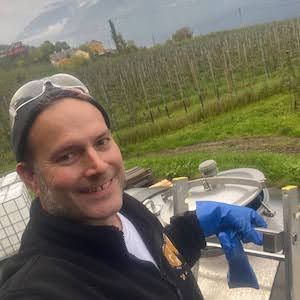
Abram Goldman-Armstrong
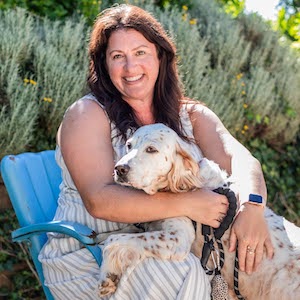
Megan Hereford

Kia Hitt
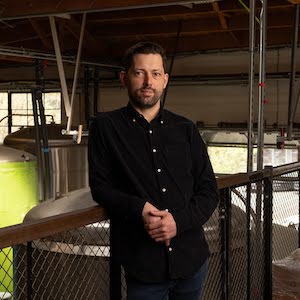
Chris Leimena
Gabriela Muñoz

Jason Schmink

Eli Shanks
Marina Sumrada
Claire Trindle
Sadie Wagnell
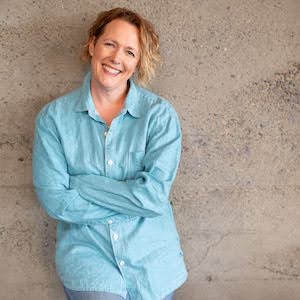
Christine Walter

Matt Hart
Member Highlight: Daring Wine & Cider Company
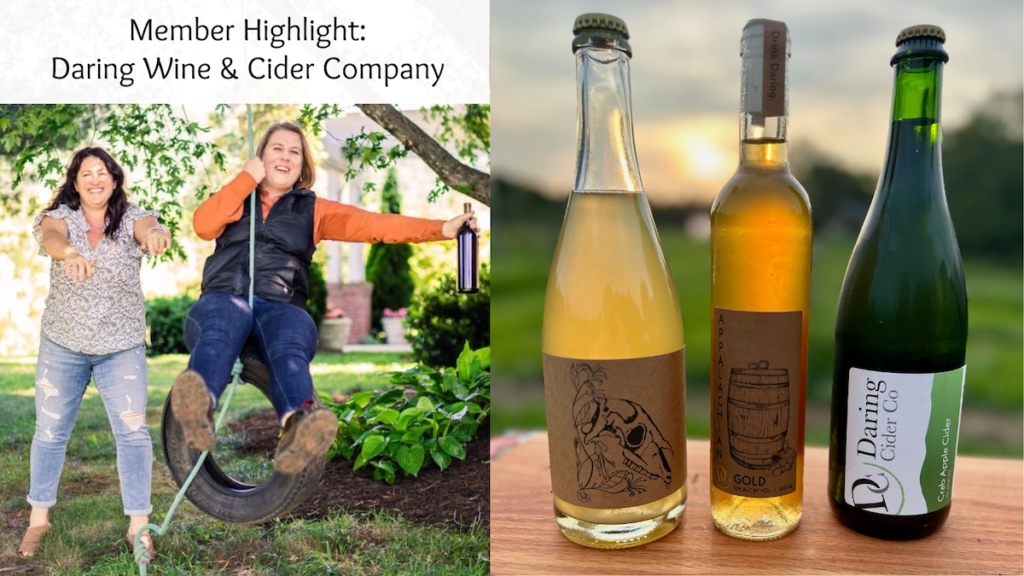
Cidery Name
Where are you located and when did you start?
We are located in Stuart, Virginia in the foothills of the Blue Ridge Mountains, we got our farm winery license in July of 2022.
Describe your cidery in three words.
Brave. Bold. Daring.
What inspired you to start making cider?
Our (Jocelyn and Megan) friendship grew from working together in the wine industry in Virginia (over 20 years ago!), and when Jocelyn started working with Diane Flynt at Foggy Ridge Cider she was hooked and pulled me into that world as well. It has been a long-time dream of ours to create our own place and make the ciders we love to drink and want to share with the world.
Describe your cider making style.
Small lot, carefully crafted, quaffable, crushable dry ciders. We make our ciders like we make our wine and they are clean and crisp celebrations of all the things that cider apples grown in Virginia can be. We are also focusing on harvesting locally sourced fruit and botanicals so we can expand our range of cider offerings.
What is your favorite cider that you make?
Crab Apple Blend – This dry cider made from 75% Hewes Crab and 25% Ruby Red Crab is a constant crowd pleaser and always the one we reach for when we are craving cider.
Where can cider enthusiasts find your products?
On our website (we ship!), at pop-ups, wine bars and restaurants around Virginia, or by visiting us at the farm.
What’s your favorite way to enjoy cider (food pairing, occasion, etc.)?
With friends over a great meal.
What’s one piece of advice you would give to someone new to making cider or wanting to start a cidery?
Make the connections in the industry with people who can mentor you and guide you on your journey. We wouldn’t be where we were if it weren’t for the great people who have helped and encouraged us along the way.
What are your hobbies or interests outside of cidermaking?
Cidermaker Jocelyn enjoys working in her vegetable garden, tending to her ever-growing planting of native flowers and tending to the animals on her farm all with the help of her family. You can find Megan out enjoying all the beautiful places in the state to hike and walk with her dogs.
Member Highlight: Draper Girls Cider Co.
Cidery Name
Where are you located and when did you start?
Mount Hood, Oregon. We started in 2017 doing hard cider. The farm was established in 1962
Describe your cidery in three words:
Small Batch Boutique Cider
What inspired you to start making cider?
My three daughters Rachel, Crystal and Stefanie kept pushing me to create unique, small batch cider.
Describe your cider making style:
Our style is to focus on fruit forward flavors including semi-dry to semi-sweet.
What is your favorite cider that you make?
Tart cherry for sure!
Where can cider enthusiasts find your products?
It is available at our Country Store in Mount Hood and we do take some flavors to the Portland State University Farmers Market on Saturdays.
What’s your favorite way to enjoy cider (food pairing, occasion, etc.)?
On a hot summer day with crushed ice paired with locally made pizza.
What’s one piece of advice you would give to someone new to making cider or wanting to start a cidery?
You don’t have to go big to be successful. Be unique and stay true to who you are.
What are your hobbies or interests outside of cidermaking?
Traveling to the coast in the winter months or enjoying the Portland Trailblazers. We are definitely huge sports fanatics.
Is there anything else you’d like to share with our readers?
We appreciate all of the support from our cider community, customers and loyal followers. Your support and love for cider over the years has made us who we are. We enjoy giving people from all over the world a unique cider experience.
Member Highlight: Bivouac Ciderworks
Cidery Name
Where are you located and when did you start?
Located in San Diego, CA and started operations in 2018.
Describe your cidery in three words:
Premium, women-powered, adventurous
What inspired you to start making cider?
It’s a long story.
Describe your cider making style:
Inspired by tradition, driven by innovation.
What is your favorite cider that you make?
San Diego Jam
Where can cider enthusiasts find your products?
Throughout Southern California and Arizona at Total Wine, Whole Foods, Vons, Sprouts, Lazy Acres, Disneyland, and more!
What’s your favorite way to enjoy cider (food pairing, occasion, etc.)?
On the top of a mountain, or paired with a fine meal.
What’s one piece of advice you would give to someone new to making cider or wanting to start a cidery?
Don’t get into this business for the money.
What are your hobbies or interests outside of cidermaking?
Hiking, climbing, camping, paddle boarding, traveling & drinking cider while doing all of those things!
Is there anything else you’d like to share with our readers?
Cider is as approachable as beer, yet as nuanced as wine, and Bivouac Ciderworks looks forward to growing with this awesome community as cider takes over the world!
May 21: Certified Pommelier Exam at Benny Boy Brewing

TAKE THE CERTIFIED POMMELIER EXAM IN LOS ANGELES, CALIFORNIA ON MAY 21!
Are you ready to take the next step in your professional development in the cider industry?
If you have already passed the Level 1 Certified Cider Guide exam and are looking for that next challenge? Now is your chance!
The American Cider Association is pleased to announce a Certified Pommelier Exam will be held at Benny Boy Brewing in Los Angeles, California. The exam will take place Wednesday, May 21st, 2025. The exam will begin promptly at 9 AM.
*Level 1 Certified Cider Guide certification is a prerequisite for taking the Certified Pommelier Exam. (Haven’t taken your Level 1 Certified Cider Guide Exam? Buy the bundle here! ACA Member discounts are available.)
There’s also a discount code available for ACA members for the Certified Pommelier Exam. You can find that code in our Resource Hub.
WHAT IS THE CERTIFIED POMMELIER EXAM?
The American Cider Association’s mission is to grow a diverse and successful cider industry by providing valuable information, resources and services to our members and by advocating on their behalf. One way to fulfill this mission is through the Certified Cider Professional Program, a program aimed at educating the front-line of cider hospitality (distributors, retailers, bartenders and more!) while also welcoming journalists and serious cider enthusiasts.
The exam for the introductory level certification, Certified Cider Guide (CCG), is an online test that can be taken at any time. The exam for the more advanced second level of certification, Certified Pommelier, is only available in person. The exam consists of two parts, a written theory exam comprising short answer and essay questions and a blind sensory evaluation of a number of ciders. Passing the introductory level exam is a mandatory prerequisite to sitting for the Level 2 Certified Pommelier exam.
Certified Pommeliers must have a fundamental understanding of all topics covered at the introductory level, but must also be able to think critically and demonstrate a deeper understanding of cider and the cider industry.
The topics covered in the exam are:
- Apples, the Orchard & History
- Cider Making
- Flavor & Evaluation
- Cider Families
- Keeping & Serving
- Food & Cider
- Social Responsibility
The exam is meant to be challenging. The only information necessary for successfully passing the theory section of the exam is contained in the Certified Pommelier Study Guide available on Amazon. To study for the evaluation section of the exam, candidates should consider attending one of the sensory analysis videos available through the ACA’s website or attend one of the regularly scheduled webinars. Access to pre-recorded webinars and registration for upcoming live webinars is available directly through our website.
WHY BECOME A CERTIFIED POMMELIER?
Cider is a beautifully nuanced beverage that is less well understood by most consumers. Having the knowledge and skills required to become a Certified Pommelier will equip you to better serve customers, enhance your standing in the beverage community, and give you a unique and valuable professional qualification. Being recognized as a Certified Pommelier will put you in the vanguard of advanced cider specialists in this ever growing category.
HOW MUCH DOES THE TEST COST?
The registration fee for the exam is $350. Current members of the ACA can register at a discounted price of $250 by using the discount code that can be found here. If a candidate sits for the exam but does not pass either section, or only passes one of the two sections, theory or sensory evaluation, they can resit for the section of the exam that they did not pass at a future date. The fee for retaking the exam is $175 for non-members and $125 for current members of the ACA.
Read Terms & Conditions before registering.
WHAT MATERIALS ARE AVAILABLE TO STUDY FOR THE EXAM?
- The Certified Pommelier Study Guide is available directly through Amazon. It is also available at all of Amazon’s international sites.This is the official study guide for the second level of the American Cider Association’s professional certification program. It contains all of the information needed to study for and pass the examination. No other reference materials are required.
- There is also a dedicated Facebook Group (that is open for all to join) with prep materials and in-depth peer conversations that many candidates have found useful.
- Sensory evaluation is an important part of being a Certified Pommelier which is why we test your ability to accurately analyze the structural components, aromas, and flavors of a variety of ciders. In order to aid in the development of your sensory evaluation skills and understand the approach to testing them, we have several pre-recorded videos available for purchase. In addition, we host several live sensory analysis webinars each year. You can access the videos and look for scheduled webinars here.
FREQUENTLY ASKED QUESTIONS
(Download the Frequently Asked Questions document.)
- When will we receive our graded exams? Exams are not returned to candidates, however you will be notified as to whether or not you have passed about 6 weeks from the exam date. If you did not pass a section of the exam, you may request a breakdown of your points by general topic to help you identify areas in which you could improve your score should you wish to retake the exam.
- What is the grade needed for passing? 60% of the possible points for sensory evaluation and 70% for theory
- Is there a tasting section on the test? Yes. You will be asked to evaluate six ciders in two flights, one flight that assesses your ability to distinguish between key structural elements and a second where you are asked to complete a full evaluation of three ciders using the Structured Sensory Analysis format. The possible aromas and flavors document will be supplied for use during the exam.
- How long does the test take? You are given 2 hours to complete the theory section of the exam and 1 hour and 15 minutes to complete the sensory evaluation section. There is a 15 minute break in between sections.
- Is it ok if the name on my ticket or registration doesn’t match the person who attends? Registrations are not transferable, so the name on the I.D. presented when checking in for the exam must match the name on the registration.
- What happens if I cannot attend my registered exam? Please see Exam Rescheduling, Timelines and Fees in the Terms and Conditions Document for full details. If you do need to cancel your registration, exam registration fees can be refunded up to 14 days before the exam. Please note that a $25 administration fee applies to any cancellation.
- When can I register for the exam? Exam registration is open until 14 days before the posted exam date.
- How can I contact the organizer with any questions? Please contact Cider Education Operations Manager Jennie Dorsey at jennie@ciderassociation.org.
- What can I bring into the event? Bringing a personal water bottle is recommended for both sections of the exam. Cell phones, smart watches, computers, books or papers, and any and all other personal items must be left at a designated storage area in the exam room. Pencils will be provided, and spare paper will be available on request. Spit cups, and water will be provided during the evaluation exam. We encourage you to bring your own water bottle for the theory exam. Please contact the Cider Education Operations Manager, Jennie Dorsey at jennie@ciderassociation.org prior to registering for the exam if you wish to request special accommodations.
- Is the Certified Pommelier Exam available in my area? Certified Pommelier exams are held periodically throughout the year and in a variety of locations. Please check our current exam schedule to find an exam suitable for you.
- How many Certified Pommeliers are there currently? You can find the current number of Certified Pommelers here.
- Do I need to pass the Certified Cider Guide exam to take the Certified Pommelier exam? Yes. Passing the introductory exam to become a Certified Cider Guide is a prerequisite. If you have not yet taken this exam, you can purchase a package which includes an instructional video, study guide, and access to an online exam HERE.
- Are there ID or minimum age requirements to sit for the event? YES. You must be of legal drinking age in the country where you sit for the exam, and when checking in at the exam you must provide a photo ID that will both verify your age and identity.
May 20: Cider & Charcuterie at Benny Boy Brewing
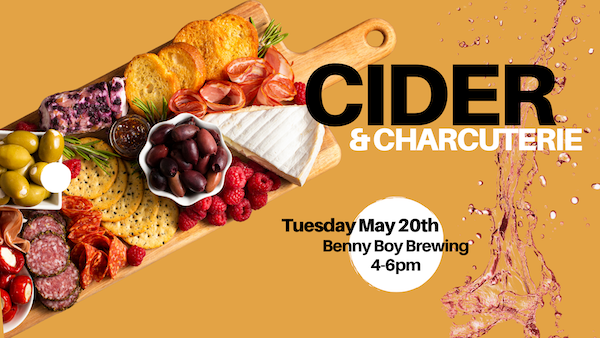
Cider & Charcuterie Pairing Workshop: A Flavor Adventure!
Join us for a mouthwatering journey into the art of cider and charcuterie pairing on May 20 at Benny Boy Brewing from 4:00 – 6:00 PM! Whether you’re a cider enthusiast, a foodie, or just looking for a fun night out, this hands-on workshop will teach you how to match crisp, refreshing ciders with the perfect selection of cured meats, cheeses, and accompaniments.
What to Expect:
- Guided tastings of expertly curated ciders
- A delicious spread of artisanal charcuterie & cheeses
- Insider tips on pairing flavors for the ultimate tasting experience
- A relaxed, social atmosphere with plenty of chances to sip, snack, and learn!
By the end of the evening, you’ll have the knowledge (and confidence!) to craft perfect pairings at home and impress your friends at your next gathering. Spots are limited—reserve yours now!
Price: $50.00
CiderCon® 2025 Fact Sheet
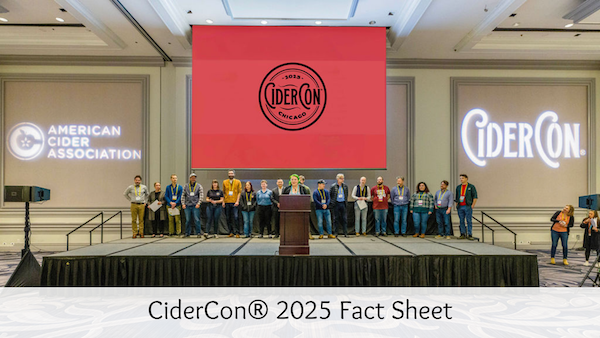
CiderCon® 2025 took place from February 4 – 7 in Chicago, Illinois. This annual event, organized by the American Cider Association, serves as a leading conference for cider industry professionals from around the world. The conference, now in it’s 15th year, featured a rich program of educational sessions, networking opportunities, and an extensive trade show. Here is a brief overview of the key happenings at this year’s CiderCon®:
Key Highlights
- Venue: The event was hosted at Chicago Hilton on Michigan Avenue in downtown Chicago.
- Attendance: Around 850 cider industry professionals from around the globe attended including:
- Attendees from 40 states with California, Washington, New York, Michigan & Illinois having the highest representation.
- Attendees from 13 countries, including Austria, Canada, Denmark, France, Lithuania, the Netherlands, New Zealand, Norway, Poland, Spain, Sweden, the UK, and a 7 person delegation from Chile, our Guest Cidermaking Country of Honor.
- Workshops and Sessions:
- Close to 40 educational sessions with 88 speakers covered topics such as cider production techniques, marketing strategies, sustainability practices, and cider business management.
- The Cider Institute of North America helped to develop the Crafting Amazing Cider track sessions once again.
- Ten tasting sessions highlighting everything from quince ciders to brewer’s yeast in cider to keeving to cider cocktails.
- Scholarships:
- The ACA hosted 5 recipients for their Cider is For Everyone Scholarship at CiderCon® 2025. This scholarship is designed to bring individuals from historically marginalized populations within the beverage industry to CiderCon® to increase the accessibility of cider education and catalyze the careers and ownership pathways of these burgeoning cider professionals.
- Cider Share:
- Cider Share is the beloved opening reception of CiderCon®. This year Cider Share took place on February 5 and featured more than 60 cideries from around the country and the world pouring their ciders for CiderCon® attendees.
- Experiences:
- Five experiences were held on February 4 including a tour of the Field Museum, a pizza-making course, a cider cocktail course, a barrel to glass tour, and a cider-pairing dinner highlighting cidermakers from diverse backgrounds.
- Keynote Speakers:
- The ACA welcomed 3 keynote speakers on the morning of February 6. Scott Ramsey, Executive Director of the New York Cider Association, facilitated a “fireside chat” with New York Liquor Commissioner Lily Fan. They discussed how a liquor authority can work to support a sustainable craft cider industry and celebrate the recent historic win of a state bill that expanded market access for cidermakers in New York. Debbie Morrison of Yellow Belly Cidery and Sapsucker Farms in Minnesota shared how she and her husband Jim approach sustainability at their operations from multiple perspectives.
- Certified Pommelier
- The ACA once again offered its Certified Pommelier exam at CiderCon® 2025. The Certified Pommelier is an advanced second-level designation of the ACA’s Certified Cider Professional program geared toward beverage and hospitality industry professionals. Close to 30 people sat for the challenging test that included a blind sensory evaluation section. The new cohort of Certified Pommeliers will be announced in 6 weeks.
- Networking:
- There were numerous networking opportunities at CiderCon® 2025, including a Newcomer Networking session, a LGBTQIA+ Cider Professional meetup, a Cider Institute of North America meetup, a Guild Leader’s meeting, and an Orcharding Meetup where attendees exchanged apple tree scion wood.
- Trade Show:
- Over 80 exhibitors displayed the latest equipment, products, and services tailored for the cider industry at the Trade Show sponsored by FruitSmart™.
- Vendors came from around the country and the world and featured several new vendors as well as many who have returned year after year to support the cider industry.
- Chicago Cider Week
- CiderCon® 2024 once again coincided with Chicago Cider Week which featured cider-focused events across the city.
CiderCon® 2026 will be held in Providence, Rhode Island from February 3-6, 2026.
CiderCon® was created to offer the commercial hard cider industry an outlet to meet, share ideas, collaborate, and affect positive changes in cidermaking, apple and pear production, the cider market, and cider regulations. CiderCon® is organized by the American Cider Association whose mission is to grow a diverse and successful US. cider industry by providing valuable information, resources, and services to our members and by advocating on their behalf.
ACA Announces New Membership Levels for Orchardists
The American Cider Association (ACA) was thrilled to announce the introduction of new associate member levels specifically tailored for orchardists at CiderCon® 2025, alongside the launch of a dynamic new orcharding forum. This development is designed to support and enhance the community of those who cultivate the apples and other fruits that are fundamental to the cider industry.
New Associate Member Levels for Orchardists
In our continuous effort to foster growth and provide robust support for the cider industry, the ACA has introduced new associate membership levels that cater specifically to orchardists. These new levels are crafted to provide orchardists with benefits, resources, and networking opportunities that will support their invaluable contributions to the cider community.
New Membership Levels
- Associate Member USDA Small Farms (<$500,000 GAS) $185
- Associate Member USDA Commercial Farms (>$500,000 GAS) $375
Benefits of Membership:
- Access to Expert Talks and Webinars: Stay informed with the latest trends, techniques, and research in orchard management and cider production.
- Networking Opportunities: Connect with other orchardists and industry professionals through events and online communities.
- Industry Insights and Reports: Receive in-depth reports and insights into market trends, helping you stay ahead in the evolving cider industry.
- Discounts on ACA Events: Enjoy reduced rates on key industry events, allowing you to engage and learn without barriers.
Introducing the Orcharding Forum
To further empower our orchardists, we are delighted to launch the ACA Orcharding Forum. This online platform is a dedicated space for member orchardists to share knowledge, ask questions, and collaborate on best practices. Whether you are a seasoned orchardist or new to the field, the forum is a valuable resource for everyone involved in the cider supply chain. Participate in engaging conversations about apple varieties, orchard business management, orchard practices and find folks looking to buy and sell apples or juice for cider.
The launch of this forum marks a significant step in our commitment to supporting the orchardist community, ensuring they have a platform to learn, share, and grow together as well as connect with cidermakers around the country.
For details on how to use the forum, download our Orcharding Forum One-Pager.
Join Us Today
We invite all orchardists to explore these new opportunities at the American Cider Association. Whether you are interested in the new membership levels or eager to participate in the orcharding forum, there is something for everyone. Join us on this exciting journey as we continue to cultivate a vibrant and sustainable cider industry.
For more information on how to become a member, please visit the American Cider Association website or contact Membership & Engagement Coordinator Miranda Bradeen at miranda@ciderassociation.org.
2025 ACA Award Recipients


The American Cider Association (ACA) Awards presented at CiderCon® 2025 shine a spotlight on the exceptional contributions within the cider community, celebrating those who have played pivotal roles in advancing the industry. The awards are divided into two distinct categories: Member Awards and Board Awards. The Member Awards reflect the collective gratitude of the ACA members, honoring partners in the beverage community who have been instrumental in introducing cider to new audiences. Meanwhile, the Board Awards recognize visionary leaders whose efforts have significantly propelled the U.S. cider industry forward. Together, these awards acknowledge the dedication, innovation, and passion that continue to drive the cider industry to new heights.
Member Awards
- Best Cider Retailer:
- East: Boutique Wines & Spirits – Fishkill, NY
- Midwest: Total Wine – Indianapolis, IN
- Mountain West: Central Market of Texas
- Northwest: TeKu Tavern, Seattle, WA
- Pacific Coast: Redfield Cider Bar & Bottle Shop – Oakland, CA
- South: Corks & Kegs – Richmond, VA
- Best Cider Focused Establishment
- East: Mullers Cider House – Rochester, NY
- Midwest: Bitter Pops – Chicago, IL
- Mountain West: JL Beers, Sioux Falls, SD
- Northwest: Cider & Cedar, Tacoma, WA
- Pacific Coast: Alma’s Cider & Beer – Los Angeles, CA
- South: Church Key, Washington D.C.
- Best Cider Distributor
- East: Craft Collective Homegrown, Bellingham, MA
- Midwest: New France Wine Company, St. Paul, MN
- Mountain West: Johnson Brothers of North Dakota, Fargo, ND
- Northwest: Dickerson Distributors, Bellingham, WA
- Pacific Coast: Lime Ventures, Concord, CA
- South: Virginia Eagle Distributing, VA
- Individual Excellence in Cider Hospitality
- East: Khris Hogg, Circumstance, Swanville, Maine
- Midwest: Gabriela Muñoz – Keepsake Cidery, Dundas, MN
- Northwest: David Damjanovic – The Place, Portland, OR
- Pacific Coast: Jessica Olson-Ealy and Rick Tranchina, Pomme Cider Shop, Sonoma, CA
- South: Zach Carlson – Sage Bird Ciderworks, Harrisonburg, VA
Board Awards
- Apple Advocate of the Year:
- William Mullan – For elevating the appreciation of the diversity of apples through his photography.
- Kristen Richard – For elevating the apple in wine media (example here).
- Excellence in Leadership in the Industry
- Aaron Sarnoff-Wood, 2 Towns Ciderhouse, Corvallis, OR for his tireless advocacy against neo-prohibition in Oregon.
- Significant Impact on the Industry
- Amy Stinson – Vermont Cider Company – For her legacy work to pass the CIDER Act.
- Scott Ramsey – New York Cider Association – For his inspiring work to grow the New York Cider community, and his advocacy of S.2852A/A.3132A allowing direct to consumer shipping of cider in New York.
- Member Appreciation Award
- Benny Boy Brewing & Cider House – Los Angeles, CA: for being a champion of cider education and advocating for cider within the craft beverage community.
- Nine Pin Cider Works – Albany, NY: For their active participation in state and federal advocacy.
Congratulations to all of this year’s award winners!
ACA Announces 2025 Board Election Results
The American Cider Association (ACA) is excited to announce the results of our recent board elections. We welcome new and returning members who will continue to drive our mission to grow a diverse and successful U.S. cider industry.
New Appointments and Re-elections
We are pleased to announce the following individuals who have been elected to serve on the ACA board:
Tom Hart of Humboldt Cider Company in California has been elected as the new Regional Chair for the Pacific Coast.
Scott Spelbring of Henway Hard Cider in Virginia has been named the new Regional Chair for the South.

Christine Walter of Bauman’s Cider in Oregon has been re-elected to the At-Large seat.
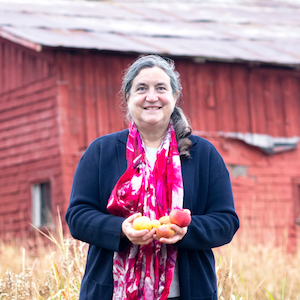
Eleanor Léger of Eden Ciders in Vermont has been re-elected as the Regional Chair for the East.

Ben Calvi of Vermont Cider Company has been re-elected to a Large Cidery seat
Executive Board
We are also pleased to announce the executive board members who will lead the ACA:
- Christine Walter of Bauman’s Cider will continue in her role as President
- Ben Calvi of Vermont Cider Company has been chosen to serve as Vice President.
- Dave Takush of 2 Towns Ciderhouse in Oregon will continue in his role as Secretary.
- John Behrens of Farmhaus Cider in Michigan will continue in his role as Treasurer.
Gratitude for Past Service
We extend our heartfelt thanks to outgoing board member for the Pacific Coast Sarah Hemly and outgoing board member for the South David Glaize for their dedicated service on the ACA board. Their contributions have been instrumental in shaping the future of the cider industry, and we are grateful for their commitment and hard work.
We look forward to a productive year ahead with our newly appointed board members and executive team as we continue to champion the growth and success of the cider industry.
ACA Releases 3 New Cider Education Books
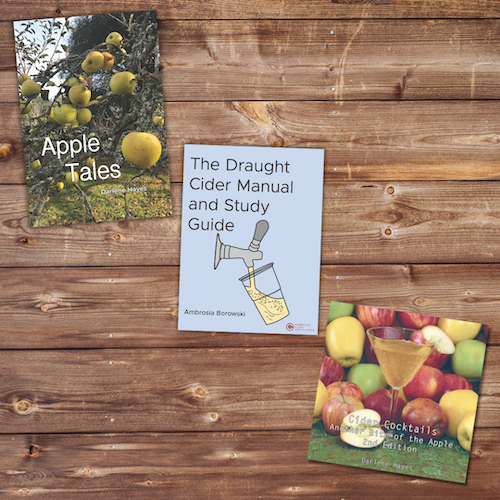
The American Cider Association is thrilled to announce the release of three new books as part of its ongoing commitment to cider education. The first, The Draught Cider Manual and Study Guide by Ambrosia Borowski, is a thorough guide to draught beverage systems and how they operate. The book contains detailed descriptions of basic components, how they are put together to create both temporary and permanent draught systems, draught service, cleaning and maintenance, and trouble shooting. Throughout, Borowski discusses how the requirements for cider differ from those for beer, the most common draught beverage. The Draught Cider Manual and Study Guide will be an indispensable tool for anyone wanting to install or modify a draught system for cider. It will also serve as a study guide for the ACA’s new certification, Draught Cider Specialist, that will be launched later in 2025.
The ACA’s two other new titles are Cider Cocktails – Another Bite of the Apple, Second Edition and Apple Tales – Stories from the Orchard, both written by long-time ACA Education Committee member Darlene Hayes. The former is an updated version of Ms. Hayes’ previous book and includes a host of recipes for cocktails using a variety of ciders, including 16 new ones, as well as cider-containing appetizers to go with them. Useful for cider enthusiasts and the hospitality sector alike, this book expands the ways in which people can enjoy cider.
The third book, Apple Tales, tells the stories of 25 individual apple cultivars that are most frequently used to create single-named variety ciders such as Porter’s Perfection, Newtown Pippin, and Harrison. Ms. Hayes explores each apple’s history and places it in the larger historical context of culture, science, and agricultural advancement. She also includes varietal descriptions based on her extensive collection of cider tasting notes, a valuable addition to the understanding of the varietal characteristics of apples used in cider.
All three books are available for purchase on the ACA website as well as on Amazon. Copies will also be available at CiderCon® 2025 at the ACA Bookstore.
March 26: Level 1 Certified Cider Guide Workshop & Certification in Hereford, England
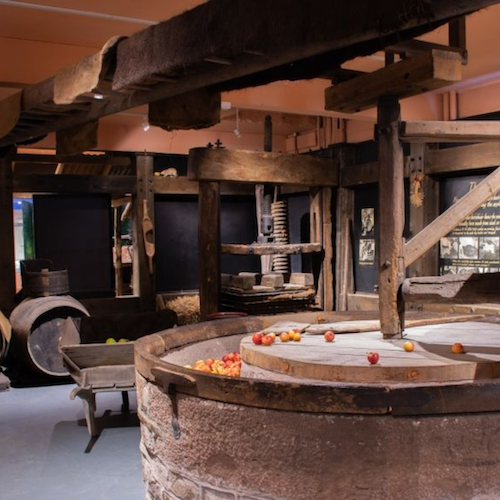

The world’s finest cider education programme, the Certfied Cider Professional (CCP) Programme, will be back again for another Level 1: Certified Cider Guide (CCG) classroom session on Wednesday 26 March 2025! This session will be undertaken in Hereford a day prior to the UK’s pre-eminent cider conference – CraftCon . Leisurely run over the course of a day by Gabe Cook (a.k.a. The Ciderologist) from 10:00 – 16:00, this Level 1 CCG training has been developed specifically for those who work directly with consumers and trade customers, namely those working in retail and hospitality, importers, distributors, wholesalers and employees of cider producers. It is also the programme for cider fans, aficionados and drinkers who want to showcase their extra weight of knowledge and passion. It is designed to enable participants to have a professional standard of knowledge and appreciation for different types of cider and how they are achieved, an approach to assessing cider and the different sensory qualities they have, and guidance on the best practice principles for serving, storing and selling.
Candidates will receive an email containing a downloadable study guide and a link to the online exam in advance of the workshop. The day itself will consist of a presentation of the materials from the study guide, with extra elaboration and, of course, the opportunity for questions. There will also be a guided sensory session of at least 3 ciders clearly demonstrating the key structural characteristics within cider, and utilising a structured approach to their assessment.
Cost: $189 US, $139 US for ACA Members (Discount code for members to use during checkout can be found here. You will be prompted to login to access the discount code.)
The topics covered in Level 1: CCG are:
- Apples, Pears and Orchards
- Cider Production
- Families and Flavour
- Evaluating Cider
- Keeping and Serving
- Cider and Food
- Social Responsibility
February 24: Level 1 Certified Cider Guide Workshop & Certification in Japan

The world’s finest cider education program, the Certified Cider Professional (CCP) Program, is back again for another a Level 1: Certified Cider Guide (CCG) classroom session at Full Monty British Pub & Cider House in Yokohama on Monday 24 February. Leisurely run over the course of a day, this L1 CCG training has been developed specifically for those who work directly with consumers and trade customers, namely those working in retail and hospitality, importers, distributors, wholesalers and employees of cider producers. It is also the program for cider fans, aficionados and drinkers can showcase their extra weight of knowledge and passion. It is designed to enable participants to have a professional standard of knowledge and appreciation for different types of cider and how they are achieved, an approach to assessing cider and the different sensory qualities they have, and guidance on the best practice principles for serving, storing and selling.
Candidates will receive an email containing a downloadable study guide and a link to the online exam in advance of the workshop. The day itself will consist of a presentation of the materials from the study guide, with extra elaboration and, of course, the opportunity for questions. There will also be a guided sensory session of at least three ciders clearly demonstrating the key structural characteristics within cider, and utilizing a structured approach to their assessment.
Cost: $189 US, $139 US for ACA Members (Discount code to use during checkout can be found here. You will be prompted to login to access the discount code.)
The topics covered in Level 1: CCG are:
- Apples, Pears and Orchards
- Cider Production
- Families and Flavour
- Evaluating Cider
- Keeping and Serving
- Cider and Food
- Social Responsibility
Monica Cohen Appointed CEO of the American Cider Association

Portland, OR – February 16, 2025 – The American Cider Association (ACA) is excited to announce the appointment of Monica Cohen as its Chief Executive Officer. Cohen, a seasoned executive with leadership roles within the food and beverage industry, succeeds Michelle McGrath, who will be stepping down after a highly successful tenure with the organization.
Cohen, formerly a C-suite executive at Dairy Farmers of America (DFA), brings a wealth of expertise in organizational growth, brand development, and strategic leadership. At DFA, Cohen was instrumental in driving the company’s growth and establishing key partnerships that expanded its market reach. Her diverse background, combining agricultural industry experience with a deep understanding of consumer trends, makes her ideally positioned to lead the ACA into its next phase of development and success.

“I am truly excited to join the American Cider Association at such a pivotal moment for the cider industry,” says Cohen. “With the rapid growth in consumer interest and the exciting innovation happening within the sector, I look forward to collaborating with cidermakers across the country to advance this vibrant industry and ensure its continued success. I also want to thank Michelle McGrath for her exceptional leadership and the incredible foundation she has laid for the ACA.”
Cohen will focus on furthering the ACA’s advocacy efforts at both the federal and state levels, driving business development opportunities for cidermakers, and continuing to grow cider’s visibility among consumers. She also aims to strengthen the ACA’s role as a leading voice for the U.S. cider industry and expand educational initiatives to help cidermakers succeed in an increasingly competitive marketplace.
In announcing Cohen’s appointment, Christine Walter, President of the ACA Board of Directors, expresses confidence in the new CEO’s ability to lead the organization forward: “Monica’s extensive leadership experience, deep industry knowledge, and commitment to driving growth make her the ideal choice to lead the ACA. We are thrilled to welcome her and look forward to her vision for the future of the cider industry.”
McGrath, who has served as the ACA’s CEO for the past eight years, will be departing the organization to pursue new opportunities. Under McGrath’s leadership, the ACA achieved significant milestones, including a major expansion in membership, enhanced industry advocacy, and increased visibility for craft cider. Her unwavering commitment to the cider community and her strategic direction have been integral to the growth of the industry.
“Michelle’s leadership has been instrumental in building the American Cider Association into the organization it is today,” says Walter. “Her passion for the cider industry and tireless efforts on behalf of our members have made a lasting impact. We are grateful for her dedication and wish her the very best in her future endeavors.”
McGrath reflected on her time with the ACA, saying, “It has been an incredible honor to serve as the CEO of the American Cider Association. I am proud of all we’ve accomplished together and excited to see the continued success of the industry. I look forward to seeing where Monica’s leadership takes the ACA as it continues to grow and thrive.”
As the ACA looks to the future, it remains committed to promoting and protecting the interests of cidermakers across the U.S., fostering innovation, and advocating for sound policies that benefit the sector. Cohen’s appointment represents a new chapter for the association as it continues to champion the U.S. cider industry and elevate its profile both domestically and internationally.
###
About the American Cider Association:
The American Cider Association (ACA) is the national trade organization representing the cider industry in the United States. Founded in 2013, the ACA’s mission is to promote and protect the cider industry by supporting cider makers, advocating for public policies that support growth, and fostering innovation in cider production and distribution. The ACA is dedicated to growing the profile of American cider through advocacy, education, and collaboration with cider makers and industry stakeholders.
For media inquiries, please contact:
Woodley Smith
Communications Manager
American Cider Association
Meet Your 2025 Board of Director Candidates
The American Cider Association was founded 12 years ago by a group of individuals with a clear vision of a nonprofit structure, controlled by its members. In doing so, this ensured that those most impacted by the association’s work would be the same people in decision making roles. Today, the ACA has a Board of Directors, made up of its members, that help to expand its reach and impact. The founding board of directors took great care to protect geographic and business size diversity through the founding bylaws, a choice that still benefits the association today through our current board.
As cidery members of the ACA, this means that your input helps to shape the organization. One of the benefits of your ACA membership is the ability to participate in voting. Every cidery, no matter the size, gets one vote as part of the ACA’s commitment to inclusivity and diversity in its board, which represents a range of cidery business models, sizes, and regions.
The 2025 ACA Board Elections are rapidly approaching. If you are an active member of the ACA and a bonded active cidery, your principal contact will receive an electronic ballot on Thursday, February 6, 2025 via email at 8:30 AM Central Time. You can vote from your hotel room at CiderCon® or from the cellar back home–all voting is done remotely. The ballot will close at 11:30 AM Central Time on Friday, February 7, 2025.
This year there are 5 open seats on the ACA Board of Directors. They are:
- At-Large Seat
- Large Cidery Seat
- Regional Chair – East
- Regional Chair – Pacific Coast
- Regional Chair – South
Please take the time to learn about the candidates running for the 2025 ACA Board by reading about them below. Candidates are listed by position for which they are running, and then alphabetically if more than one candidate is running for a seat.
At-Large Seat
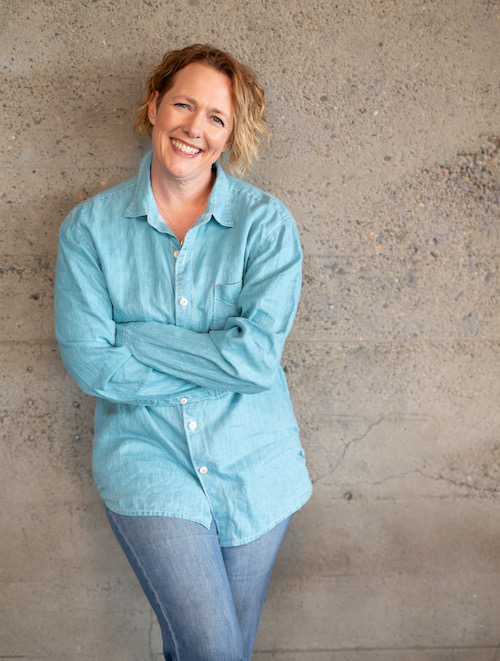
Christine Walter
Christine grew up on her family’s farm, Bauman Farms, in rural Oregon. Raising apples and pressing juice with her family are some of her earliest memories. She studied biochemistry in college, and started and ran a small retail company for 22 years before discovering and quickly falling in love with cider. It took her a couple years to convince her family that cider was a real thing and that I might be able to make it on the farm if they would only let her use a small corner of a barn to launch Bauman’s Cider. As you can imagine she has since taken over the whole barn, and created a huge following among her family. She is also currently a member of the board of the The Cider Institute of North America and regular guest instructor.
Candidate Statement
I personally straddle the line between making nuanced, apple-honoring traditional ciders and pushing the edge of innovation in dessert apple-centric recipe-driven ciders. With exceptional quality as my guiding light, I seek always to grow the pool of people who hold cider in high regard. The more people who appreciate the art and craft of cider, and the more people who look for it when they choose to drink, the better we can all do as an industry to foster relationships, build diversity and to contribute to the social and financial economy of the communities we live in.
Large Cidery Seat


Ben Calvi
Ben Calvi is the Director of Cider Making for Vermont Hard Cider Co. in Middlebury, Vermont. Previously, he made cider at Champlain Orchards in Shoreham, Vermont, and wines at Esser Vineyards and Quintessa in the Napa Valley, for Burklin-Wolf in Germany, and at the Robert Mondavi Institute in Davis, California. Ben lives on a tiny apple orchard in nearby Cornwall with his wife, Sophie, and two children, Arthur and Delfina. He joined the American Cider Association board of directors in 2016.
Candidate Statement
As a board director for the ACA since 2016, I bring continuity, valuable perspective, and a wealth of experience. I am currently serving as interim Vice President on the executive committee. Over the years, my board service has focused on supporting key initiatives, including the founding of the CCP and DEI committees, and spearheading Legislative efforts. It is crucial for cider makers to continue fostering unity and a shared voice, enabling us to effectively showcase American ciders in an ever-evolving, hyper-competitive beverage landscape. Together, we can ensure the future success and growth of the cider industry.
Regional Chair – East
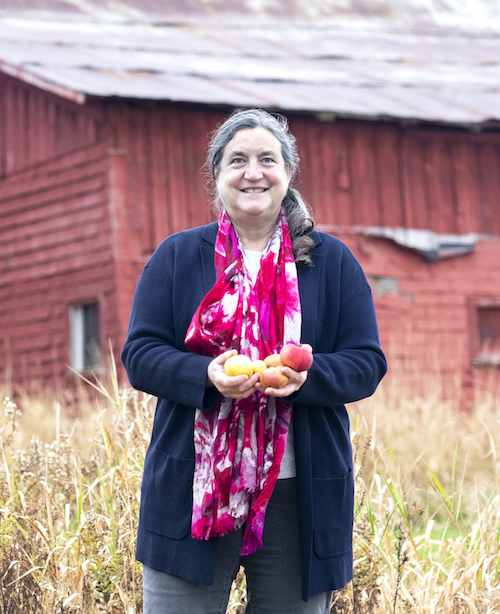
Eleanor Léger
Eleanor Léger is the Founder of Eden Specialty Ciders of Vermont. Eden was established in 2007, and is a leading producer of ice ciders and heritage ciders. Eleanor has served on the Board of the American Cider Association, as a member of the Vermont Working Landscape Enterprise Board, and was a founder of the Vermont Cider Makers Association. In addition to leading the team at Eden, Eleanor writes about the economics of small cider production at Cidernomics.com
Candidate Statement
Hello from Vermont. It has been a great honor to serve as Eastern Region Chair. I’ve met so many wonderful cider makers of all sizes and types from across our large region. I’ve traveled to Philly CiderWeek and the PA Cider Fest to the Hudson Valley and the Finger Lakes, Franklin County Cider Days, Cider Feasts, and Maine Apple Camp. Whenever I’m in conversation at the ACA Board, I’m thinking of all of you, your needs, and how we can work together to make the cider business easier, more visible in the market, and more successful. I’m looking forward to supporting our new CEO and our Board President, and partnering with NY and PA Cider Associations, as we continue to fight for things like bubble-tax relief, harvest dates, and ensuring our continued ability to ship DTC. Don’t ever hesitate to contact me with your questions, concerns and ideas!
Regional Chair – Pacific Coast

Tom Hart
Tom Hart began his cider journey as the first employee at Humboldt Cider Company in 2015. He became a co-owner in late 2016 and has been following his passion for apples ever since. Tom’s cider journey started in the cellar cleaning tanks, pressing apples and pitching yeasts, and has grown to include nearly all aspects of the industry since then. He currently helps manage two orchards, runs Humboldt Cider’s sales and distribution departments and handles the day-to-day issues that come with owning a small business.
Tom has worked with California State Parks and the National Park Service on historic orchard restoration projects, including the restoration of the Tower House orchard after the devastating 2018 Carr Fire. His love of history has led him to become a quasi-expert on Albert Etter and he helps maintain Etter’s 1894 homestead orchard. Tom derives a lot of his industry passion from these areas and hopes to work with the ACA to help highlight cider’s rich history and deep roots in his region and country.
Candidate Statement
I am excited for the opportunity to work with the ACA and represent cider companies large, medium and small for the Pacific Coast region. I believe it is important to take a big tent approach and listen to all the opinions and needs of cideries in our region. It is my goal to help make the ACA more accessible to individual companies and highlight our region’s rich history, contributions and desires at the national level. I know how hard it is to run a small business in our industry, and I will work diligently to assist and advocate for the Pacific Coast region at the national level in any way I can. My door is always open.
Regional Chair – South


Daron Ford
Since 2006, I’ve pursued a passion for fermentation science crafting wine across Napa Valley, Western Australia, and Northern Michigan, as well as brewing beer and cider in my home state of Minnesota. Now living in Williamsburg, VA, with my wife and three boys, I’m focused on bringing modern ciders to Coastal Virginia at Sly Clyde Ciderworks. With a background in life sciences, art, and business, I bring a unique blend of scientific technique and creativity to the cider world.
Candidate Statement
I bring a serious passion for science, creativity, and business efficiency to the ACA. My experience with producers of all sizes gives me insight into our industry needs at every scale. As Southern regional chair, I will advocate for our unique challenges, foster connections among producers, and amplify the voice of our special region. I’m committed to maximizing our resources, contributing scientific expertise, and collaborating on innovative solutions. Dedicated and approachable, I aim to build on our impressive foundation, represent you effectively, and celebrate our shared successes – ideally over a glass of cider.

Scott Spelbring
Scott Spelbring is Director of Winemaking and Cidermaking for Bluemont Vineyard and Henway Hard Cider, located in Northern VA at the base of the Blue Ridge Mountains. With a passion for crafting exceptional beverages and using local resources, Scott’s 15 years of wine and cidermaking combines innovative techniques and traditional methods to create unique wines and ciders that reflect the region’s rich agricultural heritage. Always creating, Scott thrives on “start-ups” and building brands and was involved in the music industry and internet technology prior to wine and cider. He is a Virginia Cider Association board member.
Candidate Statement
As an advocate for craft beverages and a dedicated member of our cider community, I have witnessed firsthand the potential of our region’s cider industry. My vision is to strengthen collaboration, help amplify our voices in national and local conversations, and foster a vibrant culture of cider appreciation. Our industry is shaped by passionate large and small business owners who pour their hearts into their craft and it’s vital that we create a supportive ecosystem to help them succeed through wide ranging initiatives. Whether it’s supporting legislation such as the Bubble Bill Modernization Act, creating marketing initiatives and consumer connections or supporting entry level cider-makers and cideries I want to help drive cider forward! Together, we can grow and foster our industry while preserving its unique heritage.
ACA Welcomes New Certified Pommeliers Following London Exam

The American Cider Association is pleased to welcome two new European Certified Pommeliers after completion of the second certification exam offered outside of the United States. The new Certified Pommeliers are key members of the European cider community, and their embrace of the Certified Cider Professional Program is another step forward in the realization of the ACA’s vision for the industry through increasing the understanding and appreciation of cider and perry. The exam was held in London, England on November 22, 2024.
The new Certified Pommeliers are Haritz Rodriguez (aka Ciderzale), an independent Basque journalist and marketing consultant in the agri-food field with a special focus on cider, and Niklass Barkans, Latvia’s first formally educated wine and cidermaker who makes cider and fruit wines at Latvia’s largest winery – ABAVAS. Full bios available here.
“We are so proud to welcome two new international Certified Pommeliers to our vibrant community dedicated to elevating the appreciation and understanding of cider,” says ACA Education Operations Director Jennie Dorsey. “Each new member brings with them the stories of orchards, the traditions from their regions, the craftsmanship of cidermakers, and the passion of enthusiasts that makes our community thrive. We are very excited to see what the future holds and the new heights that our community can reach together.”
Education and certification programs such as those run by Cicerone, the Wine and Spirits Education Trust, and the Court of Master Sommeliers, have done much to increase the understanding of the beverages they cover and enhance the professional standing of the individuals that complete them. With its CCP program, the ACA is poised to do the same for cider, raising the drink’s profile within the larger hospitality community as cider’s share of the global beverage market continues its steady growth. Continuing education is an important part of staying relevant in a rapidly changing hospitality environment.
###
For more information about the CCP program contact Education Operations Director Jennie Dorsey at jennie@ciderassociation.org or visit the ACA website at www.ciderassociation.org. For information about CCP classes in Europe, contact European CCP representative Gabe Cook at gabe@ciderassociation.org.
BREAKING! TTB Publishes Ruling Approving New Volumes for Cider, Wine & Mead

Rule Making is Giant Victory for ACA in Fight More Parity for Cider Category
Portland, OR — The ACA is excited to share that the TTB announced today the addition of 13 new standards of fill for wine (including cider and mead), among them 473 ml (16 oz) and 569 ml (19.2 oz). The rule is set to be published in the Federal Register on January 10 and will be effective at that time. The American Cider Association is claiming the new standards as a major victory for the cider category and the Association, as pushing for more parity with beer and wine have been priorities in the Association’s strategic efforts to lift the cider category.
The newly approved standards now available to cider, wine & mead are:
- 473 ml (16 oz)
- 569 ml (19.2 oz)
- 180 ml
- 300 ml
- 330 ml
- 360 ml
- 550 ml
- 600 ml
- 620 ml
- 700 ml
- 720 ml
- 1.8 liter
- 2.25 liter
What This Means for Cider
The TTB regulates approved packaging volumes for wine, cider, mead and spirits. This authority was granted in the Federal Alcohol Administration (FAA) Act in 1935 at the time prohibition was repealed. As cider and mead are both subclasses of wine, the standards of fill for cider are contained in the TTB regulations covering labeling and advertising for wine (27 CFR part 4).
Previously, 16 oz and 19.2 oz can sizes were only an option for cider, wine, and mead under 7% ABV. Higher ABV cider (and wine and mead) could be labeled and distributed for in-state sales only if combined with a TTB-approved certificate of label (COLA) exemption. That was a challenging and limited solution for the cider industry.
“The COLA-exemption route was a band-aid. It proved that there is demand for higher ABV cider in these packaging volumes, but it wasn’t opening the market in a meaningful way. These new packaging volumes will be a game changer for regional cider in 2025,” said Jeff Parrish, Co-owner of Portland Cider Company and Committee Chair of ACA’s Government Affairs Committee.
An Opportunity for the US Cider Industry
Large format cans in convenience channels have been a critical source of growth for craft beverages since the COVID pandemic. Likewise, “imperial” ciders (cider over 6.9% ABV) have been a source of growth for cider in chain retailers, but imperial ciders in 16 oz and 19.2 oz cans were illegal.
“Now we will see single-serve regional cider succeeding in more convenience-oriented craft beverage spaces. That’s a big win for cider,” said ACA’s former longtime CEO Michelle McGrath who led the industry-wide efforts to lobby for the additional standards of fill until the end of December.
ACA board member Shannon Edgar of Stormalong Cider is excited about what the changes mean for a cidery like his. “We take a ‘hands off’ approach letting the cider ferment with less intervention. Some of these apples naturally ferment to ABV’s over 7% due to the higher sugar content. It’s great to be able to package these ciders in their natural state, in our container of choice that our customers are accustomed to,” Edgar said.
“Packaging is no panacea, but I’ve seen switching formats be a winning move for both larger regional cideries and smaller local cideries. Partnerships can help ease the cost of transition,” said McGrath.
A Track Record of Success for the ACA
The ACA first successfully lobbied for the addition of 355 ml (12 oz) cans for cider, wine, and mead in 2020. The change allowed regional cider to take advantage of ABV and packaging trends, and it made it easier for orchard-based cideries to incorporate cans, too. The adoption of 12 oz. packaging increased sales for the cider category. In 2024, regional cider was one of the only beverage alcohol categories to grow in both sales and volume. The ACA began pushing for 473 ml (16 oz) and 569 ml (19.2 oz) volumes to be added to approved wine standards of fill in 2022. Since the ACA’s original petition, they have continued to organize grassroots outreach and to lobby the TTB to adopt the changes. The TTB’s announcement today proves that the ACA and its members can collaborate to successfully pursue parity with other beverage categories.
###
To request an interview, please email ACA’s Board President, Christine Walter: christine@baumanscider.com.
The ACA is a 501(C)6 not-for-profit organization who is working to build and protect a sustainable and diverse cider industry in the United States through targeted education, advocacy, and a welcoming, thriving cider community.
Cider Share at CiderCon® 2025

Join us at the Cider Share Welcoming Reception on Wednesday, February 5 from 5:00 PM to 7:30 PM to officially kick off CiderCon® 2025! With up to 60 cideries pouring cider from all over the world, delicious food, and all your cider friends in one room, this is the perfect way to celebrate the start of CiderCon®! Whether you’re an experienced cidermaker or new to the industry, Cider Share is a great place to connect with others and start the conference on a high note.
A big thanks to the continuing sponsorship of Voran to help make Cider Share happen!
Tickets for Cider Share are only $20 for ACA members and $30 for non-members, so make sure to add it to your registration as space is limited.
Already registered for CiderCon® 2025 but forgot to add Cider Share tickets? Add them now by clicking here!
Interesting in pouring your ciders at Cider Share?
If you’re a cidermaker, consider applying to serve your ciders at Cider Share. Cideries will be selected through a lottery, with attention to geography and style. Pouring space is limited so please submit your application for consideration as soon as possible.
Fill out the application form here.
The deadline to apply is January 15 or when space is full. Cideries accepted to pour will be notified and asked for additional details.
Two pourers are allowed per company, and all other employees must buy tickets to attend.
February 5: Certified Pommelier Exam at CiderCon® 2025


Take the Certified Pommelier Exam at CiderCon® 2025 in Chicago, Illinois on February 5!
Ready to take the next step in your professional development in the cider industry? If you have already passed the Level 1 Certified Cider Guide exam and are looking for that next challenge? Now is your chance!
The American Cider Association is pleased to announce a Certified Pommelier Exam will be held at CiderCon® 2025 at the Chicago Hilton, 720 Michigan Ave.
The exam will begin promptly at 8:30 AM on Wednesday, February 5.
*Level 1 Certified Cider Guide certification is a prerequisite for taking the Certified Pommelier Exam. (Haven’t taken your Level 1 Certified Cider Guide Exam? Buy the bundle here! ACA Member discounts are available.)
There’s also a discount code available for ACA members for the Certified Pommelier Exam. You can find that code in our Resource Hub.
WHAT IS THE CERTIFIED POMMELIER EXAM?
The American Cider Association’s mission is to grow a diverse and successful cider industry by providing valuable information, resources and services to our members and by advocating on their behalf. One way to fulfill this mission is through the Certified Cider Professional Program, a program aimed at educating the front-line of cider hospitality (distributors, retailers, bartenders and more!) while also welcoming journalists and serious cider enthusiasts.
The exam for the introductory level certification, Certified Cider Guide (CCG), is an online test that can be taken at any time. The exam for the more advanced second level of certification, Certified Pommelier, is only available in person. The exam consists of two parts, a written theory exam comprising short answer and essay questions and a blind sensory evaluation of a number of ciders. Passing the introductory level exam is a mandatory prerequisite to sitting for the Level 2 Certified Pommelier exam.
Certified Pommeliers must have a fundamental understanding of all topics covered at the introductory level, but must also be able to think critically and demonstrate a deeper understanding of cider and the cider industry.
The topics covered in the exam are:
- Apples, the Orchard & History
- Cider Making
- Flavor & Evaluation
- Cider Families
- Keeping & Serving
- Food & Cider
- Social Responsibility
The exam is meant to be challenging. The only information necessary for successfully passing the theory section of the exam is contained in the Certified Pommelier Study Guide available on Amazon. To study for the evaluation section of the exam, candidates should consider attending one of the sensory analysis videos available through the ACA’s website or attend one of the regularly scheduled webinars. Access to pre-recorded webinars and registration for upcoming live webinars is available directly through our website.
WHY BECOME A CERTIFIED POMMELIER?
Cider is a beautifully nuanced beverage that is less well understood by most consumers. Having the knowledge and skills required to become a Certified Pommelier will equip you to better serve customers, enhance your standing in the beverage community, and give you a unique and valuable professional qualification. Being recognized as a Certified Pommelier will put you in the vanguard of advanced cider specialists in this ever growing category.
HOW MUCH DOES THE TEST COST?
The registration fee for the exam is $350. Current members of the ACA can register at a discounted price of $250 by using the discount code in our Resource Hub. If a candidate sits for the exam but does not pass either section, or only passes one of the two sections, theory or sensory evaluation, they can resit for the section of the exam that they did not pass at a future date. The fee for retaking the exam is $175 for non-members and $125 for current members of the ACA.
Read Terms & Conditions before registering.
WHAT MATERIALS ARE AVAILABLE TO STUDY FOR THE EXAM?
- The Certified Pommelier Study Guide is available directly through Amazon. It is also available at all of Amazon’s international sites.This is the official study guide for the second level of the American Cider Association’s professional certification program. It contains all of the information needed to study for and pass the examination. No other reference materials are required.
- There is also a dedicated Facebook Group (that is open for all to join) with prep materials and in-depth peer conversations that many candidates have found useful.
- Sensory evaluation is an important part of being a Certified Pommelier which is why we test your ability to accurately analyze the structural components, aromas, and flavors of a variety of ciders. In order to aid in the development of your sensory evaluation skills and understand the approach to testing them, we have several pre-recorded videos available for purchase. In addition, we host several live sensory analysis webinars each year. You can access the videos and look for scheduled webinars here.
Frequently Asked Questions (Download the Frequently Asked Questions document.)
- Are there ID or minimum age requirements to sit for the event? YES. You must be of legal drinking age in the country where you sit for the exam, and when checking in at the exam you must provide a photo ID that will both verify your age and identity .
- Do I need to pass the Certified Cider Guide exam to take the Certified Pommelier exam? Yes. Passing the introductory exam to become a Certified Cider Guide is a prerequisite. If you have not yet taken this exam, you can purchase a package which includes an instructional video, study guide, and access to an online exam HERE.
- How many Certified Pommeliers are there currently? You can find the current number of Certified Pommelers here.
- Is the Certified Pommelier Exam available in my area? Certified Pommelier exams are held periodically throughout the year and in a variety of locations. Please check our current exam schedule to find an exam suitable for you.
- What can I bring into the event? You may bring only a water bottle into the exam space. Cell phones, smart watches, computers, books or papers, and any and all other personal items must be left at a designated storage area in the exam room. Pencils will be provided, and spare paper will be available on request. Spit cups, and water will be provided during the evaluation exam. We encourage you to bring your own water bottle for the theory exam. Please contact the Cider Education Operations Manager, Jennie Dorsey at jennie@ciderassociation.org prior to registering for the exam if you wish to request special accommodations.
- How can I contact the organizer with any questions? Please contact Cider Education Operations Manager Jennie Dorsey at jennie@ciderassociation.org.
- When can I register for the exam? Exam registration is open until 14 days before the posted exam date.
- What happens if I cannot attend my registered exam? Please see Exam Rescheduling, Timelines and Fees in the Terms and Conditions Document for full details. If you do need to cancel your registration, exam registration fees can be refunded up to 14 days before the exam. Please note that a $25 administration fee applies to any cancellation.
- Is it ok if the name on my ticket or registration doesn’t match the person who attends? Registrations are not transferable, so the name on the I.D. presented when checking in for the exam must match the name on the registration.
- How long does the test take? You are given 2 hours to complete the theory section of the exam and 1 hour and 15 minutes to complete the sensory evaluation section. There is a 15 minute break in between sections.
- Is there a tasting section on the test? Yes. You will be asked to evaluate six ciders in two flights, one flight that assesses your ability to distinguish between key structural elements and a second where you are asked to complete a full evaluation of three ciders using the Structured Sensory Analysis format. The possible aromas and flavors document will be supplied for use during the exam.
- What is the grade needed for passing? 60% of the possible points for sensory evaluation and 70% for theory
- When will we receive our graded exams? Exams are not returned to candidates, however you will be notified as to whether or not you have passed about 6 weeks from the exam date. If you did not pass a section of the exam, you may request a breakdown of your points by general topic to help you identify areas in which you could improve your score should you wish to retake the exam.
Raise A Glass: A Celebration of Diverse Cider Voices

Join us for an exclusive 4-course paired tasting dinner at the renowned Black-owned Bronzeville Winery in Chicago on Tuesday, February 4, 2025 from 6:00 – 9:00 PM. This special CiderCon® event is designed to showcase ciders crafted by cidermakers of color, celebrating diversity and creativity within the cidermaking industry. Tickets are on sale now and available to CiderCon® attendees and the general public.
Meet the Featured Cidermakers
This event brings together the talents of several accomplished BIPOC cidermakers who are making waves in the industry:

Hannah Ferguson from D.O.P.E. Cider House and Winery in Ohio.
Hannah Ferguson was born and raised in Youngstown, OH. Hannah has been a home wine and cider maker for 10 years. She started D.O.P.E. (Dwelling On Positive Energy) Brands LLC in 2017. To expand her knowledge in the industry in 2018 she became an assistant brewer for a local brewery and stayed in the position for 2.5 years. Hannah is the first female black brewer in the state of Ohio, she is also the first black female owned cider and winery (she is the head wine and cider maker) in the state of Ohio DOPE Cider House and Winery opened August 20, 2022. DOPE Brands, LLC is not only a cider and wine manufacturer, but we are a lifestyle brand that takes pride in creating connections and experiences uniquely through cider and wine. Most importantly D.O.P.E. is about Dwelling On Positive Energy and empowering underrepresented minorities in the industry as well as enthusiasts.

Monique Tribble from Yonder Cider in Washington
A lover of all things fermented, Monique Tribble was born in the heart of Oregon Wine Country. After college, she headed to Alaska to help run a small bed and breakfast. It was there, not Oregon, that she discovered and honed her love of wine. After long days at sea, fishermen would come to the B&B for dinner, drinking and sharing with Monique their best bottles. It’s in these moments, in the most unexpected of places, she discovered her favorites – Oregon Pinot Noirs – were from the very place she grew up and knew she had found her calling. Monique returned to Oregon to work at Lange Estate Winery in the tasting room and cellar to take her new found passion to the next level. Also spending time at Firesteed and a winery in Arizona, Monique quickly began exploring what other fruit she could ferment. The answer was apples and she jumped on as the head cidermaker at Wandering Aengus Ciderworks, followed by time at Seattle Cider Company as lead cidermaker and Republic of Cider as director of production. Now Head Cidermaker at Yonder Cider, Monique spends her days dreaming up and creating new fermentations, continuously exploring new varietals and the characteristics they impart. A passionate cook and avid record collector, she hopes to one day open an operation of her own, honoring her late grandparents whom she pressed apples with throughout her childhood.
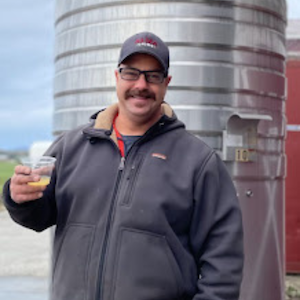
Y. Dave Klawer from Alma Cider in Washington
Dave Klawer is a cidermaker, orchardist, Certified Pommelier, cider advocate, educator, and enthusiast. Dave’s desire to spend more time outdoors, his interest in growing tree fruit, and his joy of fermentation led him to pursue a Master’s Degree in Agriculture. His dream is to grow and supply NW cidermakers with world class cider fruit, and high quality fresh pressed juice. When Dave is not focused on cider, he spends time with his wife and kids, and he continues to work his 20-year career as a registered nurse. Dave and his wife Heather co-founded Bitters & Sharps. A family owned wholesale nursery and orchard management company located in the beautiful Skagit Valley of NW Washington. Bitters & Sharps specializes in and consults on cider fruit production, custom grafting, orchard design, and orchard planning. Dave’s ambitions are driven by his desire to craft the best possible cider and perry products. He believes knowledge sharing and collaboration within the cider community is essential to elevating NW ciders and the cider category in general. Lastly, he really, really likes cider.
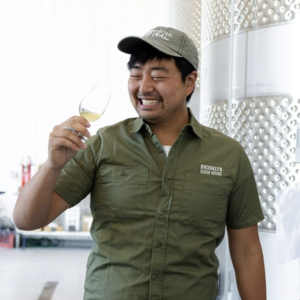
Richard Yi from Brooklyn Cider House in New York
Brooklyn Cider House started out of a love for Basque ciders, and that passion remains. However, their focus has evolved and cidermaker Richard Yi, son of founder and cidermaker Peter Yi, is excited to part of the team now creating their own twists on classic cider styles and pushing the boundaries of what cider can be. Richard and the team are excited to experiment with different aging vessels, like amphora, and explore co-ferments. Investing in innovative, passion-driven projects has always been at the core of the company and Richard can’t wait to try the fruits of their labor. In addition, the Yi family has an orchard that is filled with heirloom varieties of apples that they use in their ciders.

And featuring cider from Casa de Oro Cider in California
As a Latinx owned & operated cidery Casa de Oro Cider is uniquely positioned to celebrate the diverse cultural & ancestral heritage that the Americas have. They feel it is their responsibility to preserve & contribute to that legacy and with every drop of cider their patrons drink, they too are a part of this experience. Their ciders focus on elevating Mexican ingredients to work in concert with traditional cidermaking practices. They produce high ABV wine-like ciders that strike a balance with the big and bold characteristics that their ingredients provide. They let their cider ferment naturally, meaning while we monitor the process we have minimal to no intervention throughout the entire process allowing the native yeast, fruit, and adjuncts to fully express themselves. This results in an unfiltered, still, dry, rich, unctuous cider. Theirs cider offer the natural variations from season to season and terroir to terroir making each batch release special.
These passionate cidermakers will guide you through the tasting experience, offering insights into their creative processes and the inspirations behind their unique blends.
A Celebration of Culture and Community
Set against the backdrop of Chicago’s rich culinary scene, this dinner promises an unforgettable fusion of flavors and cultures. It’s an opportunity not only to enjoy delicious food and outstanding cider but also to connect with a community that values diversity and innovation.
Throughout the evening, each carefully curated course will be paired with distinctive craft ciders, offering a unique flavor journey for guests. What makes this event truly special is the opportunity to hear the stories and traditions behind the ciders, as shared by the cidermakers themselves. You’ll gain a deeper understanding of the artistry involved in cidermaking and the vibrant cultural influences that shape each sip.
Seats for this one-of-a-kind event are limited. Don’t miss out on the chance to be part of this extraordinary evening. Reserve your spot today! Tickets are $160 (includes gratuity, taxes and fees) and are available to add on during CiderCon® 2025 registration or through Bronzeville Winery (gratuity, taxes and fees added at time of purchase).
January 30: The Future of Hard Cider: Innovation and Market Trends for the Top Producers


Description:
Join us for an ACA member exclusive webinar hosted by 3-Tier Beverages in partnership with the American Cider Association. This event will take a deep dive into the performance of the top hard cider producers over the past year, providing key insights into how leading cider brands have navigated the ever-evolving bev-alc market and what strategies they’ve employed to achieve growth and success.
What to Expect:
- Market Performance Analysis: Get an in-depth analysis of year-over-year sales trends, market share, and overall growth of the top hard cider producers.
- Key Industry Trends: Discover emerging trends and consumer preferences that have shaped the hard cider market, and the strategies top producers have implemented to stay ahead.
- Challenges and Opportunities: Understand the challenges faced by the industry and its ever shifting consumer demands. Learn how the leading brands have turned these challenges into opportunities.
- Innovation in Hard Cider: Explore how innovation, both in product types and methods of marketing, is driving the success of top cider makers. Learn about the latest cider varieties, and flavor innovations.
US Treasury Requiring LLCs to Submit Beneficial Ownership Information

The US Treasury’s Financial Crimes Enforcement Network (FINCEN) is requiring all LLC to submit beneficial ownership information (BOI) or face high fees. This is part of the Corporate Transparency Act. FINCEN has recently granted a 12-day extension, so you now have until January 13, 2025 to file and avoid fees.
BOI reports can be e-filed through FINCEN here: https://boiefiling.fincen.gov/
For more information on who should file a BOI report by the new deadline, reference this blog from Wolters Kluwer. https://www.wolterskluwer.com/en/expert-insights/boi-reporting-deadlines-extended-by-fincen-following-stay-of-nationwide-injunction
There is additional relief for certain LLCs impacted by disaster here: https://www.adamsandreese.com/news-knowledge/fincen-announces-boi-reporting-extension-in-hurricane-areas
For more questions about filing your BOI report with FINCEN, visit their FAQ page here: https://www.fincen.gov/boi-faqs#B_1
ACA Announces Keynote Speakers for CiderCon® 2025 from New York and Minnesota

Speakers to Focus on Conference Theme: “Cider’s Balanced Future: Planet, People, Profit”

The 15th annual CiderCon® will take place in Chicago, Illinois from February 4-7, 2025 at the beautiful Hilton Chicago. CiderCon®, the world’s largest professional cider conference, will feature a stellar line-up of speakers who will delve into the 2025 theme, “Cider’s Balanced Future: Planet, People, Profit.” Speakers will cover a wide range of topics on sustainability, ranging from agricultural practices to business practices, manufacturing, people management and beyond.
The ACA is thrilled to feature three keynote speakers who will touch on a sustainable approach to cider that addresses the planet, people and profit. Scott Ramsey, Executive Director of the New York Cider Association, will facilitate a “fireside chat” with New York Liquor Commissioner Lily Fan. They will discuss how a liquor authority can work to support a sustainable craft cider industry and celebrate the recent historic win of a state bill that expanded market access for cidermakers in New York. Debbie Morrison of Yellow Belly Cidery and Sapsucker Farms in Minnesota will share how she and her husband Jim approach sustainability at their operations from multiple perspectives.

Lily Fan / NY Liquor Commission: NY Liquor Commissioner Lily Fan was nominated to lead the New York State Liquor Authority by Governor Kathy Hochul and is the first woman to head the agency. She is an engaging and heartfelt speaker that will share how she has effectively shaped the liquor authority’s approach to support small brands.

Scott Ramsey / New York Cider Association: Executive Director Scott Ramsey brings more than 30 years of corporate and non-profit marketing, communications, event production, and strategic leadership experience to his work in promoting, advocating, and building markets for New York Cider.
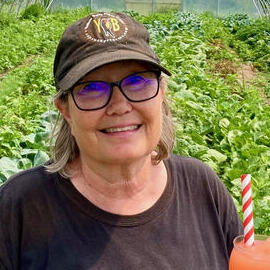
Debbie Morrison / Yellow Belly Cidery: Debbie and her husband Jim are the owners of Sapsucker Farms and Yellow Belly Cidery, a 179-acre regenerative farm in Quamba, Minnesota. They are well known for seamlessly integrating the natural environment in their operation, which includes growing vegetables, fruits, honey bees, maple syrup, chickens, and of course, an apple orchard. They are a regional community hub and prioritize the planet, people and profit at their cidery.
“Sustainability is an important topic for cidermakers right now,” says ACA CEO Michelle McGrath. “We’re an agricultural product at heart, so we’re especially tied to the planet, the people and the small businesses developing this industry. We’ll be looking at how to nurture a collaborative industry that supports these pillars.”
In addition to the keynote, there are several talks throughout the week in at CiderCon® 2025 that will discuss why aligning with a triple bottom line approach is particularly important to business right now, including 3 Tier Beverage’s Crafting the Future: Gen-Z’s Influence on Alcohol Brands and Tapping into Green – Marketing Sustainability In Cider with Amanda Oborne and Davey McHenry.
To learn more about the triple bottom line approach to sustainability, watch this video from Outlier.org.
To learn more about the conference, head to the CiderCon® 2025 website.
Member Highlight: Hale & True
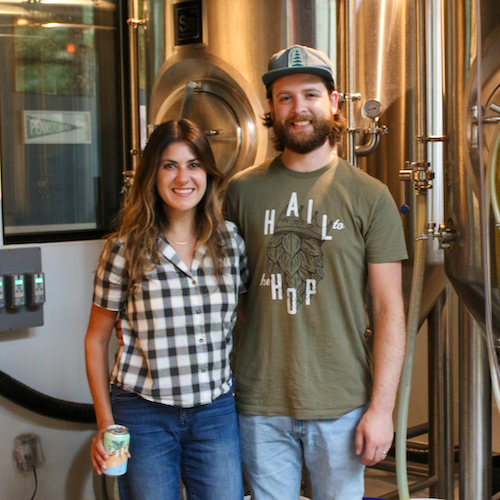
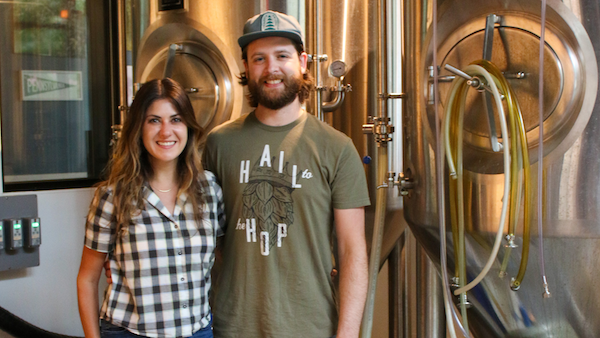
Cidery Name
Where are you located and when did you start?
Located in Philadelphia, we opened our doors in 2018 (but made cider for years before that).
Describe your cidery in three words:
Welcoming, comfortable, accessible
What inspired you to start making cider?
A love of fermentation!
Describe your cider making style:
Highlighting local Pennsylvania apples and thoughtfully incorporating other ingredients to create ciders that are balanced yet complex.
What is your favorite cider that you make?
The Standard
What exciting plans or new releases do you have coming up:
We released Goldberry in August, a seasonal cider co-fermented with strawberries and finished with lemon. We also host a lot of events at our taproom, have a new partnership with a Philadelphia restaurant for food.
Where can cider enthusiasts find your products?
At our taproom in Philadelphia, online for shipping through our website, and at stores, bars, and restaurants throughout the Philadelphia region.
What’s your favorite way to enjoy cider?
After a day enjoying the outdoors, ideally alongside our friends and family.
What’s one piece of advice you would give to someone new to making cider or wanting to start a cidery?
From Risa on business: Be extremely persistent and remain true to yourself! From Kerry on cidermaking: Learn how to make a clean, consistent, and delicious cider from just apples before experimenting with additions.
What are your hobbies or interests outside of cidermaking?
Being outdoors (hiking, running, biking, climbing, swimming), music, our dog.
The American Cider Association Announces Departure of CEO Michelle McGrath After 8 ½ Years of Inspiring Leadership

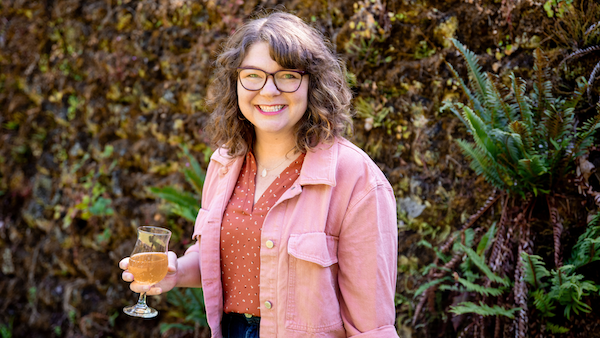
Portland, OR–Longtime American Cider Association CEO Michelle McGrath will depart her role at the end of 2024. This change comes after more than 8 years of successful leadership overseeing significant advancements in the ACA’s mission for the benefit of the US cider community. McGrath was hired in 2016 as the first CEO of the ACA, then called the United States Association of Cider Makers. Since her hiring, she led a transformation of the ACA into the internationally-respected nonprofit trade organization that it is today.
“Michelle has been instrumental at the helm of ACA for both our organization as well as for the cider industry. We will miss her creative, strategic, and compassionate leadership, but we are excited to see where her next endeavors take her. The board is grateful for Michelle’s 8 ½ years of service during which she reached many meaningful milestones for the ACA,” says current ACA Board President, Christine Walter of Bauman’s Cider.
As CEO, McGrath expanded and diversified membership, events, and programs, enhanced the association’s capabilities, reach, credibility and network, and effectively advocated for policy change supporting cider with Congress, the TTB, and state governments.
“I’m really proud of what the board, staff, volunteers, partners, and members have accomplished together over the last 8+ years. It’s been a true honor to work with such inspiring people, and although I am ready to move to the next phase of my career, I will cherish my time and the relationships I’ve built at the ACA forever,” says McGrath. “It’s hard to express how much the people in this industry mean to me, and I’m incredibly grateful for the friendships and memories made. I was a cider fan before I took the reins at the ACA, and I’ll be a cider fan for life!”
A few of McGrath’s many accomplishments:
- Increased the ACA’s membership by more than 60% to nearly 800 members
- Achieved a substantial 100% increase in annual revenue by diversifying funding sources
- Expanded the ACA’s team to several highly capable and passionate team members
- Organized and led 8 CiderCon® events, the largest cider-industry event worldwide
- Oversaw the development, growth and global expansion of the ACA’s Certified Cider Professional program, the only globally available education program for beverage and culinary industry professionals
- Championed programs and policies to support the growth of a diverse interest in cider, including the ACA’s Cider is for Everyone Scholarship
- Created a market insights program that shares market data and reports with members and the beverage industry at large
- Fostered strong relationships with key national beverage media outlets and cultivated meaningful press highlighting the growth of cider and the humans behind it
- Supported national collaborative efforts to expand small-producer tax credits
- Fought for the right to list harvest years on TTB-approved labels for cider over 7% ABV
- Led efforts in securing TTB approval for 12 oz (approved in 2020), 16 oz, and 19.2 oz packaging sizes for wine, mead, and cider over 7% ABV (TTB comments recently closed)
- Collaborated with congressional champions and allied segments to introduce the Bubble Tax Modernization Act (HR 7029) to increase allowable carbonation thresholds for fruit cider, fruit wine and fruit mead under 8.5% ABV
McGrath shared that her championing of farmers will continue in her next role. She plans to stay engaged with the cider industry, and she will be at CiderCon® 2025 in Chicago, Illinois.
“I’m excited to see everyone, and to experience the cider from the featured guest country this year–Chile! Let’s share some cider together, friends!” McGrath says.
The ACA Board of Directors is accepting applications for its next dynamic and visionary CEO until November 24. Interested applicants are encouraged to apply early, as applications will be reviewed on a rolling basis. Those interested in applying can learn more here.
###
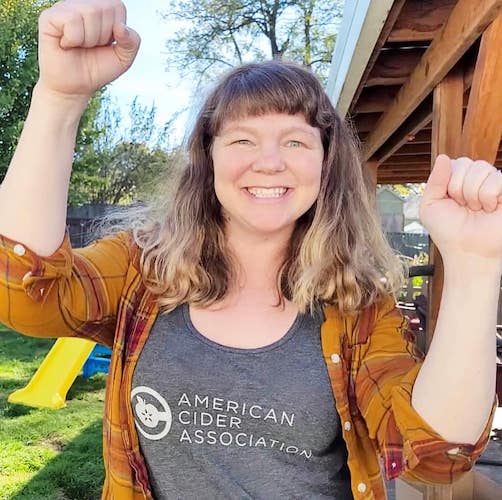
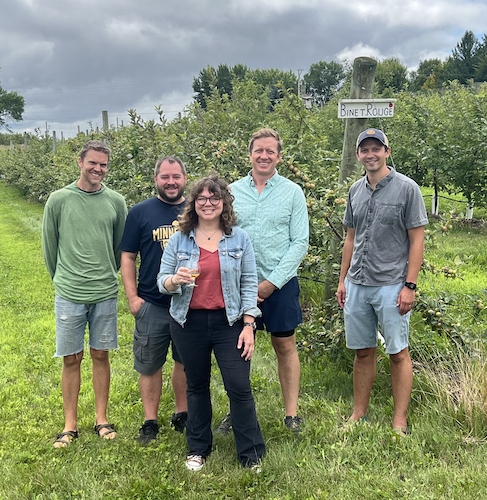
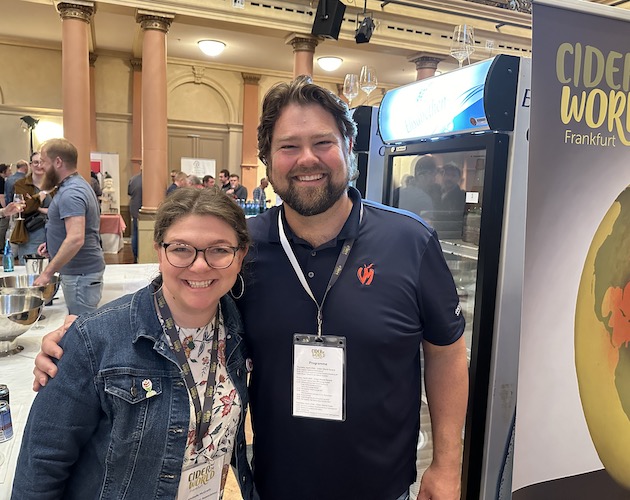
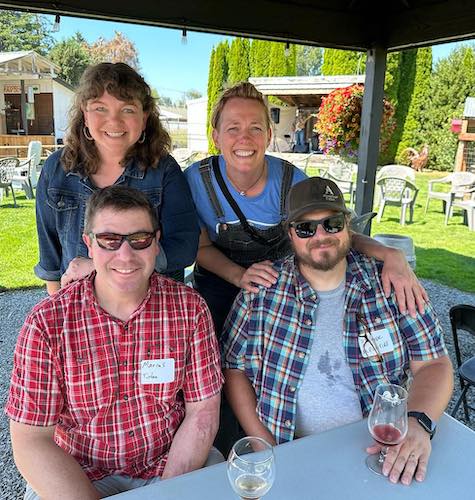
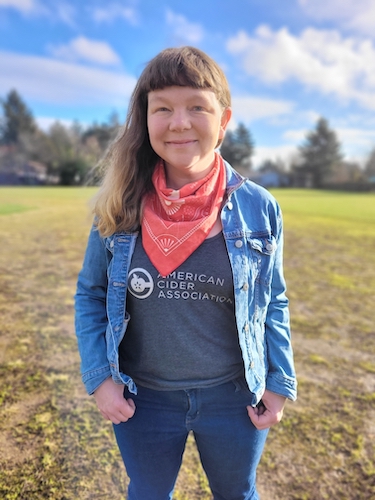
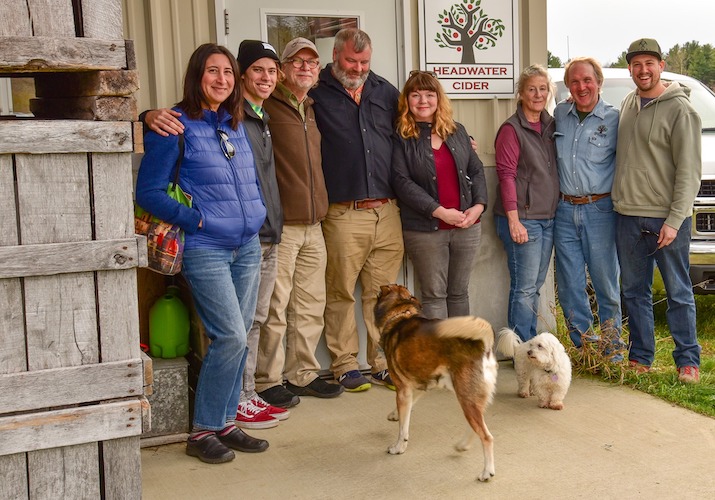
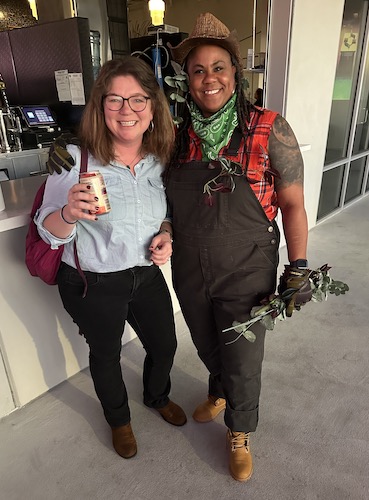

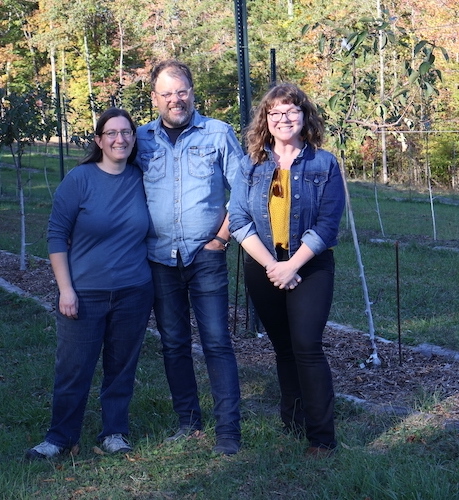
Join the American Cider Association as Our Next Visionary CEO!

Are you a dynamic leader looking to dive into the hard cider industry to fight for cider’s rightful place in the beverage alcohol space? Are you an energetic convener who specializes in bringing people together behind a shared vision? Do you love championing agriculture, apple growers and innovators? Do you get excited about new market stats, storytelling, event planning? Are you inspired by partnering with members of Congress to help position the cider industry for more success? If you answered yes to any of these questions, please consider learning more about the American Cider Association’s current open position for our next CEO!
The Organization
The American Cider Association (ACA) is a nonprofit membership-driven trade association that supports commercial hard cider and perry producers in the U.S. Our mission is to build and protect a sustainable and diverse cider industry in the United States through targeted education, effective advocacy, and a welcoming, thriving cider community. We were founded by commercial cidermakers for commercial cidermakers at CiderCon® 2013, the annual gathering of professional cidermakers from across the country and the globe which the ACA has managed since 2016.
Our programs include government affairs, CiderCon®, member education, market data insights, the Cider is for Everyone scholarship, media engagement, and the only globally available cider education and certification program for food and beverage professionals–the Certified Cider Professional program. We are a big tent organization and all commercial cider producers are welcome to join and engage in our work.
The Market
The cider industry has grown sustainably over the last 13 years and it is continuing to see growth through the success of regional cider businesses. Today the cider market is 10X the size it was a decade ago, and there are 1,300 commercial producers with at least one producer located in every state. The beverage industry is very dynamic, and many segments of the beverage industry are experiencing contraction. Cider could be poised for continued growth with its popularity with Gen Z consumers and its relative environmental footprint compared to other beverages. The vast majority of cider businesses are small, and more than half of the producers in the US grow at least some of their own apples. Business models are very diverse in the cider industry, with small and large, urban and rural cideries all playing important roles.
The Role
The next CEO of the American Cider Association will provide strategic, dynamic and inspiring leadership for the cider industry and the organization. The CEO holds overall operational and fiscal management responsibilities for the association. They lead the ACA in accordance with our mission, the evolving needs of our members, and strategic guidance from our board of directors. The role is comprised of:
- 25% Strategic Management
- 25% Event Management (CiderCon®)
- 15% Fiscal and Operational Management
- 15% Partnership and Member Management
- 10% Advocacy
- 10% Board Management & Development
Application Process:
- To read the full job description for this position, click here.
- To apply for this position, send your resume and cover letter to careers@ciderassociation.org. Please include 3 professional references in your application.
- Applications will be reviewed on a rolling basis and interested candidates are strongly encouraged to apply early.
- The application window will close when the position is filled or at 9PM PT on November 24, 2024.
- We kindly ask that you refrain from reaching out with inquiries about this position. Only applications submitted through the instructions provided on ACA’s website will be considered. Thank you for your understanding!
November 13: Live Sensory Analysis Webinar with Tandem Ciders

You’re invited to a Live Sensory Analysis webinar on Wednesday, November 13, from 4:00 to 6:00 PM Pacific Time!
Join our Certified Pommelier panel as they guide you through an immersive sensory experience featuring cider from Tandem Ciders from Michigan. During this live practice session, you’ll learn how to analyze and appreciate cider like a pro and prep for your Certified Pommelier exam.
Not able to make it to the live event? No worries! The webinar will be recorded and available for you rewatch at any time with your initial purchase.
Cider must be purchased separately. Please be aware that it may take several days to receive your cider order, so we encourage you to purchase your ciders as soon as possible. Also, please verify that cider can be sent to your state before purchasing ciders. Ciders can be purchased directly from Tandem Ciders by clicking here.
Cost to register for the webinar is $30 for non-members and $20 for ACA members. Are you an ACA member? You can find your discount code in the Resource Hub by clicking here.
Once registered, you will receive a confirmation email. This email is a placeholder for the event. The evening before the event you will receive an email with a Zoom link to the webinar. Please note this link will be sent to the registered email.
November 18: Level 1 Certified Cider Guide Workshop at Bauman’s on Oak

Join us on Monday, November 18, 2024 from 2:00 – 6:00 PM Pacific!
The American Cider Association is excited to collaborate with Bauman’s On Oak to host this Certified Cider Guide Workshop, which includes a tasting experience and certification opportunity.
This workshop is meant for all, and is the first level of the American Cider Association’s in depth international cider education program, Certified Cider Professional.
We have a wonderful afternoon planned including a Certified Instructor led in person training, including an “introduction to sensory evaluation” tasting experience featuring the five cider families. Participants of this workshop will also be able to take the test online immediately after the training or take the test at a later date.
Cost per person is $189 which includes the in person training, instructor led tasting experience, downloadable study guide, cidery tour and online exam fee. Please note that ACA members will receive $50 off registration. Members can find the discount code in the Resource Hub by clicking here.
All are welcome! Please share this event with anyone who sells cider, works in a tasting room or retail shop, chefs, sommeliers, cicerones, buyers and cidermakers who are interested in cider education or in adding a cider certification to their accreditation or cider fans who want to up their cider street cred.
Schedule
- 1:45 PM: Arrival and Check-in
- 2:00 – 5:00 PM: Presentation (with breaks)
- 5:00 – 6:00 PM: Tasting Experience
- 6:00 PM: Take the Online Level 1 Certified Cider Guide Test (bring your own laptop)
- 6:30 PM: Cidery Tour and Networking
2025 ACA Award Nominations

The American Cider Association is pleased to announce that we have opened nominations for the ACA Awards for folks who are doing great things for cider! We welcome your nominations for businesses and people who have been excellent ambassadors for cider in the last year.
Please nominate only one business or person per category. Businesses should not be cideries, but those who help promote cider through their support of cideries and cidermakers. Please submit your nominations by December 1, 2024. Only submissions from active members will be accepted.
We will be presenting awards in each ACA defined region in the following categories:
- Best Cider Retailer
- Best Cider Focused Establishment
- Best Cider Distributor
- Cider Advocate of the Year: A cider tender that excels at promoting cider (Cidery employees can nominated for this award)
- Excellence in Leadership within the Industry (ACA Member)
- Significant Impact on the Industry
- Apple Advocate of the Year: an individual that excels at being an ambassador to the fruit
Awards will be presented at CiderCon® 2025!
ACA Announces 2025 Cider is for Everyone Scholarship Recipients

The American Cider Association (ACA) is thrilled to announce the awardees of the ACA’s 4th Cider is for Everyone Scholarship. Recipients are Marcio Buffolo, head cidermaker at Mountain West Hard Cider; Renaldo Haynes Sr., home brewer and meadmaker; Joanne Mumbey, founder of BeyLoved Pairings LLC and bartender at Green Bench Brewing Co.; Jonathan Osei, National Urban Fellow and Workforce Development Fellow at Project for Pride in Living; Lisa Suarez-Tadus, owner and winemaker at Suárez Wines; and Whitney Williams, food and drink content creator at @workout.to.eatout_pdx. (Photos and bios below.)
This scholarship is designed to bring individuals from historically marginalized populations within the beverage industry to CiderCon® to increase the accessibility of cider education and catalyze networking opportunities for burgeoning cider professionals.
Each scholarship includes registration, travel, and lodging to attend CiderCon® 2025 in Chicago, Illinois. CiderCon® is the world’s premier networking and educational event for the professional cidermaking community. Additionally, scholarship recipients receive a year of ACA membership and study materials and waived exam fees to pursue recognition through the Certified Cider Guide and Certified Pommelier education and certification programs offered by the ACA. New this year, scholars are also eligible for travel stipends to participate in cider judging at various cider competitions throughout the country after earning their credentials as Certified Pommeliers.
This scholarship is part of a broader effort by the ACA to advocate for diversity, equity, and inclusion within the cider industry. In 2019 the ACA launched the Antiracism, Equity and Inclusion Committee, which recognizes diversity, equity and inclusion as important and necessary principles for the present and future successes of the cider industry. Its members, in conjunction with the rest of the organization, strive to create events, opportunities and organizational policies that embody principles and practices of equity and inclusion.
“This scholarship is one of our best tools for fostering a more diverse cider industry,” says Michelle McGrath, CEO of the ACA. “The scholarship needs to work in lock step with our efforts to create a more inclusive industry so that, as we have more diverse CiderCon® attendees, they are surrounded by a welcoming community and equitable environment.”
The ACA is grateful for support from Seattle Cider, Nine Pin Cider and the Great American Beer Festival for sponsoring the Cider is for Everyone Scholarship. Additional companies who wish to support this program should contact miranda@ciderassociation.org.
Please contact Michelle McGrath at michelle@ciderassociation.org for media inquiries. Interested in helping support the Cider is for Everyone Scholarship? Please contact our Membership & Engagement Coordinator Miranda Bradeen at miranda@ciderassociation.org.
###
Meet the Recipients

Marcio Buffolo is from Brazil where he graduated with a degree in biology from Federal University of Rio de Janeiro and a Master’s degree in cell biology. After moving to Utah in 2013, Marcio worked as a scientist at the University of Utah in the Metabolism and Diabetes Department. After a few years, he moved to the fermentation industry where he worked at Shades Brewing for over 6 years. He is now the Head Cidermaker at Mountain West Hard Cider. He is a professional beer judge and cider judge who hold a Certified Cider Guide designation. He is also a professor for the MBAA Malt & Beer course.

Renaldo Haynes Sr. (a.k.a. Ren) is a home brewer looking to transition into professionally and legally selling meads. His love of mead developed from his home brewing experience. Once he transitioned to mead making he discovered his true passion to create and express himself artistically. He has watched in awe as strangers lined up to taste him meads at the Barrel and Flow Festival. In the future, he aims to gain knowledge of cidermaking while incorporating elements of that into his mead making and further change the view of his culture in the industry while showcasing his talents in mead making. Ren is also a proud husband, father, and maker of meads. He is a self-described “Blerd” (Black Nerd), and enjoys sci-fi, fantasy, and comic books, Black history books, hip hop, jazz, and R&B music, and especially anything Batman related. He also enjoys reading, watching anime, and spending time with his family while enjoying a good mead or cider by an evening fire in his yard.
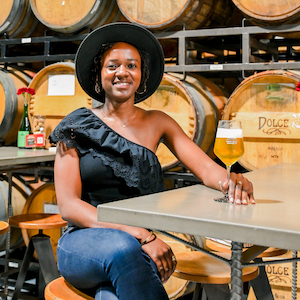
Joanne Mumbey is a Certified Cicerone®, founder of BeyLoved Pairings LLC and currently bartends at Green Bench Brewing Co. which produces beer, cider and mead. She is originally from Uganda, and because of the global nature of her parents’ work she was able to experience various cultures and their cuisines. Her curiosity and love for so many cuisines led her to attend Culinary School at Johnson & Wales University in Providence, RI, where she grew a passion for craft beer. During her time at Green Bench, her first taste of a farmhouse cider opened a whole new world to her and piqued her interest in cider. From that time on she has sought out cider trainings and tastings at Green Bench and beyond to learn more about this wonderful drink. She recently launched BeyLoved Pairings LLC, where she hosts curated beer and food pairing experiences with a focus on diverse cuisines that are typically overlooked in the traditional drinks’ pairing spaces. With this scholarship, she is excited to gain her Pommelier certification to expand her food pairings to include cider.

Jonathan A. Osei, National Urban Fellow and Workforce Development Fellow at Project for Pride in Living in Minneapolis, blends his Arizona roots and Ghanaian-Black Southern heritage to fuel his passion for community work and craft beverages. His journey in the nonprofit social impact space is intertwined with his love for diverse cultures and flavors.
While studying in the Triangle area, Jonathan’s interest in the craft beverage scene blossomed, with Durham introducing him to a variety of craft drinks that broadened his palate. This experience sparked a particular fondness for cider, beginning with Bold Rock Cider and later, Bull City Ciderworks.
In Washington, D.C., Jonathan’s enthusiasm led to his roles as a DC Brand Ambassador for Artisanal Brewing Ventures (and a Beertender at his neighborhood brewery, City State Brewing), sharing exceptional craft beverages. He is committed to diversifying the craft beer and cider industry, actively promoting (DMV) Black brewers through the Black Brew Movement and fostering inclusivity and collaboration. Jonathan’s goal is to enrich the craft beverage culture with diverse flavors and perspectives, bringing people together to enjoy unique and delightful beverages.

Lisa Suarez-Tadus has been making wine since 2011 after a successful television news career in Colorado and Canada. She enrolled in a food and wine school and joined two brother winemakers who just started a winery in Ontario. Her experience in Niagara-on-the-Lake gave her a foundation in winemaking she brings home to Colorado. Today, Lisa is in a new chapter for her wine label, Suárez Wines. She planted more than 1500 cider and cider-crab apples in high density on her farm in Boulder County and is now preparing to dip her skills into producing cider.

Whitney Williams is a food and drink content creator, gym rat and cider enthusiasts from Portland Oregon. She operates an account on Instagram called @workout.to.eatout_pdx where she shares her experiences in the gym and at restaurants and tap houses around Oregon. She has always loved cider and during the pandemic found herself seeking more knowledge around the cidermaking process and becoming a cider club member at many cideries in Portland. Since then, she has been spreading the word about the complexities of cider to anyone who will listen. She hopes to translate her love for cider into hosting and educating people about cider through cider pairing dinners at local restaurants, cider centered events and working with cideries in Portland, Oregon. She hopes her presence in the cider world will inspire other women of color to get involved and chase their dreams.
CiderCon® 2025 Returns to Chicago for the 15th Global Cider Conference and Trade Show


The American Cider Association is pleased to announce that the 15th annual CiderCon® will take place in Chicago, Illinois from February 4-7, 2025. CiderCon® 2025 will feature experiences, cider tastings, educational workshops, a trade show and networking opportunities for all attendees. Attendees of CiderCon® include professional cidermakers large and small, cidery CEOs and employees, apple and pear growers, beer and wine journalists, cider enthusiasts, and beverage retailers and wholesalers.
The ACA has been working with folks on the ground in the Windy City to make CiderCon® 2025 a unique educational experience for cider industry professionals. This includes several experiences to get to know Chicago better while sipping cider.
CiderCon®’s theme this year is: Cider’s Balanced Future: Planet, People, Profit. An emphasis on sustainability, people management, and financial health is reflected in the workshop selections to incorporate the theme. “We know that cider is in its nature a sustainable beverage, but how can we be a sustainable industry? That’s the conversation we’re hoping to have at CiderCon® this year,” said ACA Board President Christine Walter.
Within and beyond the theme, a full range of educational sessions will cover topics of cider production, marketing, sales, branding, sensory evaluation, compliance, business strategy, orcharding and more. The ACA will once again partner with the Cider Institute of North America (CINA) to develop the cider production sessions.
“We have so many amazing sessions already lined up and others in the works, “ said ACA CEO, Michelle McGrath. “It’s been rewarding to think about the impact of CiderCon® on the industry, and to rise to the challenge of deepening that. CiderCon® is very special and we’re committed to improving it every year.”
The ACA is pleased to be welcoming and featuring international cidermaking guests from Chile for CiderCon® 2025. Chile has a long and storied history of cidermaking as an important part of the country’s local culture and economy. Each year, millions of gallons of cider produced from the forests of heirloom cider apples growing in Chile. Most of this cider is sold under the name “chicha” but there is a growing movement of new cidermakers and established companies that are seeking to bring cider to the forefront of the Chilean beverage industry. The Chilean delegation will feature cidermakers, orchardists, educators, researchers, and government officials who are working to bring cider to local, national and international markets.
The extensive trade show, presented by long-standing ACA partner FruitSmart, will feature cider-committed specialty vendors excited for the return of CiderCon® to Chicago and welcome several first-time vendors eager to join the cider community.
In addition, Chicago Cider Week will once again coincide with CiderCon® 2025. The week will feature fantastic events and hospitality for cider friends visiting from far and wide. In addition, Cider Summit Chicago will once again take place at Navy Pier on Saturday, February 8.
CiderCon® 2025 will be held at the beautiful Chicago Hilton Hotel on Michigan Avenue. Registration is now open to all. Tickets to CiderCon® are just $435 for ACA members if booked by December 13. After December 13, member registration rates will rise to $499. Onsite registration for members is $635. Public tickets are $795 until December 13, and $859 after December 13. Public onsite tickets are $995.
More information about the wide array of events and educational sessions being offered and registration can be found on the CiderCon® website and you can follow @ciderconference on Instagram for the latest news. CiderCon® is an ACA event produced with the generous support of our members and ACA’s premier sponsor, FruitSmart.
###
CiderCon® 2025 Tasting Sessions
From quince to mistelles to keeved cider, CiderCon® 2025 tasting sessions will provide something for everyone! Check out the full list and be sure to add them on during registration.
Does Cider Need Tannin?
Price: $12
Speakers: Tom Oliver, Kari Williams, Christine Walter, Scott Katsma
Date & Time: Thursday, February 6, 10:30 – 11:45 AM
What is tannin, where does it come from and why it is needed for flavor and balance in cider. What are the challenges to growing tannic cider fruit varietals? How do you best balance the holy trinity of tannin, acidity and sweetness/alcohol holy trinity in cider making? And what is the consumer’s view and the benefit to them of tannin? Attendees will gain an appreciation of the integral part that tannins play in quality cider and the importance of this pillar of cider making.
Porter’s Perfection: West of England to the PNW
Price: $12
Speakers: Adam Wells, Albert Johnson, Autumn Stoscheck
Date & Time: Thursday, February 6, 2:00 – 3:15 PM
Apple varieties are the engine room of cider’s flavour, and as the global cider revolution grows, so the distinct characteristics of individual varieties are becoming ever more treasured and celebrated. Classic bittersweet and bittersharp varieties from the UK are even crossing the Atlantic to find homes in American orchards, and taking on new directions of flavour from region to region.
One such apple is the fantastic Somerset bittersharp, Porter’s Perfection. A standout in the orchard for its curious habit of fusing multiple apples together as one, it’s an unusual example of a British variety seemingly more often seen on US labels than in the UK.
In this tasting and panel discussion we’ll shine a spotlight on Porter’s Perfection made in both its west English home, and in multiple regions of the USA, discovering both the flavours inherent to this treasured apple variety and the unique inflections of flavour that each country and region brings to the glass.
A Chef’s Guide to Creating Cider Cocktails
Price: $15
Speakers: Chandler Tomayko
Date & Time: Thursday, February 6, 3:45 – 5:00 PM
In this session you will explore the world of cider cocktails told from a chef’s perspective. Chef and bartender Chandler Tomayko of BevFluence® will take you on a journey from cider to cocktail and everything in between. Learn how to craft delicious cocktails using both high tannin and low tannin ciders, paired with seasonal ingredients and culinary techniques that elevate traditional drinks into something truly special. Tastings include 2 ciders and 2 cider cocktails made from the featured ciders.
Keeving: Basics and Practical Applications
Price: $12
Speakers: Dave Takush, Dion Stepanski, Yann Gilles, Christine Walter
Date & Time: Thursday, February 6, 3:45 – 5:00 PM
Explore the traditional cidermaking technique of keeving in this focused session. Learn the core principles and practical applications of keeving across various production scales. The panelists will provide insights into their keeving methods, share key techniques, and discuss the impact on cider quality. The session will also feature a tasting of different keeved ciders, allowing attendees to experience the results of this unique process firsthand. Gain valuable knowledge on how to effectively implement keeving in cider production.
Brewer’s Yeast in Cider for Unique Flavor & Branding
Price: $12
Speakers: Brian Wing, Andy Diacetis, Jen Curs
Date & Time: Friday, February 7, 10:30 – 11:45 AM
This session will explore how new yeast strains are developed and brought to market. Trials were developed using nine different brewing yeast strains on bulk apple juice. The audience will learn about the analytical results and tasting data from these ciders so they can take home ideas for their own experimentation. There will be three ciders to taste during the session made with brewing yeast strains.
Chilean Cider: Honoring Rich Traditions
Price: $12
Speakers: Eli Shanks, Jose Antonio Alcalde, Fabian Lara, Harriet Nahrwold, Carlos Martinez, Gicella Saldivia, Rene Galindo
Date & Time: Friday, February 7, 10:30 – 11:45 AM
Chile has a long and storied cidermaking history with 500 years of culture and livelihoods built around cider, and dozens of endemic, true cider apple varieties. A new generation of cidermakers are building off of this tradition and bringing new energy and innovation into the industry, and are coming to CiderCon 2025 to share their ciders and their stories with you. From a multi-generational, Native Chilean family cidery, to the very people responsible for identifying and classifying the distinct and unique Chilean cider apples, to the most envelope-pushing producers of the day, this tasting session will be filled with overlooked history, a reflection of a modern reality for cidermaking in a place unlike anywhere else in the world, and ciders made from apples that have never been grown or even tasted in North America. Don’t miss it.
How to Evaluate Ciders for the Certified Pommelier Exam
Price: $12
Speakers: Jennie Dorsey, Tim Powers, Kate Pinsley
Date & Time: Friday, February 7, 2:00 – 3:15 PM
Participants will practice blindly evaluating two ciders using the ACA’s Structured Sensory Evaluation process guided by Certified Pommelier and Education Operations Director Jennie Dorsey and a panel of Certified Pommeliers. This session will teach you how to objectively assess any cider, empowering you in the cidery and in assisting customers to find a cider they love while also helping you to prepare for the sensory portion of the Certified Pommelier exam.
The Paradigm of Natural Cider Production
Price: $12
Speakers: Haritz Rodriguez, TBD
Date & Time: Friday, February 7, 2:00 – 3:15 PM
The definition of natural cider varies depending on how you look at it. In Spain it is regulated by law, which perfectly defines what can be considered natural cider. However, the concept of natural cider goes beyond a style and differs in other places, depending on the philosophy of each cider maker. Biodynamic agriculture, organic agriculture, no addition of sulfites (at any point in the process?), spontaneous fermentation without added yeasts, no stabilization… What’s the paradigm of natural cider? In this debate we want to explore the limits of natural cider and define the paradigm. What is it that all those producers want the consumer/purchaser to understand by the word natural and what is it that the consumer thinks they are purchasing when buying or asking for “natural cider”?
Apple Mistelles: History, Production and Enjoyment
Price: $15
Speakers: Jennie Dorsey, Yann Gilles, Ambrosia Borowski
Date & Time: Friday, February 7, 3:45 – 5:00 PM
Apple mistelles, a lesser-known yet richly flavorful beverage, have been gaining appreciation for their unique blend of history, craftsmanship, and taste. In this session, participants will delve into the fascinating history of apple mistelles, learning about their production process and the distinct characteristics they offer. Through a guided tasting, you will explore the full range of flavors that mistelles can provide—from sweet and rich to crisp and aromatic—while gaining a deeper understanding of their role in the wider world of apple-based beverages.
Embracing Quince: A Sensory Exploration in Cider
Price: $12
Speakers: Brandon Buza, Jose Antonio Alcalde, Rene Galindo Quidel
Date & Time: Friday, February 7, 3:45 – 5:00 PM
The use of quince in cider, as a blended ingredient or as a featured single varietal, has grown in recent years given a passionate fan base. Although quince is known for contributing unique floral aromas, customers, buyers, sommeliers and makers are still learning about this mysterious fruit. The full extent of what it can bring to a cider when done right is little known. In this session, participants will join us for a visual and sensory introduction to this exciting pome, carefully tasting through a flight of quince ciders to arrive at a better understanding of what quince offers to a cider’s aroma, structure and flavor when alone or when interacting with apples.
TTB Reopening Comment Period on Proposed Standards of Fill

The TTB has opened a comment period on proposed additions to the standards of fill (Notice 210A) — including additions to the approved packaging sizes for wine, cider and mead over 6.9% ABV. The comment period will close on Oct 9, 2024 and the ACA is encouraging cideries and cider enthusiasts to submit comments in support of 16 oz (475 mL) and 19.2 oz (570 mL) packaging volumes for cider, mead and wine over 6.9% ABV. Comments can be submitted through the TTB’s website: SUBMIT COMMENTS HERE.
The ACA supports these additional standards of fill for cider because:
- Not having these common beverage alcohol packaging sizes cuts cider out of innovation opportunities driven by consumer demand.
- Lack of these packaging volumes puts cider at a disadvantage compared to beer and beyond-beer products taxed like beer, such as flavored-malt-beverages, who have access to these packaging volumes.
- Cider is an agricultural product made from apples. Apples will ferment to a higher ABV naturally depending on the weather that harvest season. Warmer temperatures equate to higher sugar levels resulting in higher alcohol levels. Making packaging decisions after fermentation is not a viable business model.
The American Cider Association is a staunch advocate for fair access to additional packaging sizes for cider, mead and wine over 6.9% ABV. In 2020, the TTB approved 355 ml (12 oz), 255 ml, and 200 ml packaging sizes in part as a response to ACA and ACA member petitions. In 2022, we petitioned for 16 oz (475 mL) and 19.2 oz cans (570 mL) for cider, mead and wine over 6.9% ABV and we have been advocating for their addition to permitted standards of fill ever since. In response to our inquiries, the TTB included 16 oz (475 mL) and 19.2 oz (570 mL) packaging volumes in their proposed rule. The summary of our comments can be found in Notice 210A.
Please join us in supporting the addition of 16 oz (475 mL) and 19.2 oz (570 mL) packaging volumes for cider, mead and wine. Be sure to submit your comments before October 9.
ACA Welcomes 15 Certified Pommeliers Following Washington & Minnesota Exams
The American Cider Association is pleased to announce that 15 individuals successfully passed the recent Certified Pommelier exams held in Bellingham, Washington and Minneapolis, Minnesota. The new Certified Pommeliers are Kathleen Amaral, Assistant Production Sensory Manager with the Boston Beer Company; Eliseo Bell-Uribe, owner and head cidermaker at Heartland Ciderworks; former cidermaker and lifelong cider enthusiast Rachel Bolongaro of Canada; Taylor Corrigan from Finnriver Farm & Cidery; Mikey Crews, owner/operator of Wine Grapes Direct; cider enthusiast Ava Davis of Washington; Christian Scott Junes, cidermaker at Wild State Cider and owner of Borealis Beverage Company; Greg Kodgis, lead bartender and cocktail coordinator at Number 12 Cider; Alexander Logan, Cidermaker for 19 Acres Cider Co.; Kyle McLennan, co-founder and president of 19 Acres Cider Co.; Brighid O’Keane, Executive Director of the Cider Institute of North America (CINA); cider enthusiast Matt Spiess of Nashville, Tennessee; Adam Wargacki from Empyrical Orchards and Cider & Cidery; cidermaker Maia Wohlert from Greenwood Cider; and cider enthusiast Rosie Zollinger from Australia.
“We are so proud to welcome the new Certified Pommeliers to our vibrant community dedicated to elevating the appreciation and understanding of cider,” says ACA Education Operations Director Jennie Dorsey. “Each new member brings with them the stories of orchards, the craftsmanship of cidermakers, and the passion of enthusiasts that makes our community thrive. We are very excited to see what the future holds and the new heights that our community can reach together.”
Early on, the American Cider Association recognized the need to promote specialized knowledge about the cider category. Certifications are increasingly being used to set food and beverage professionals apart. However, most certification programs cover cider in a cursory manner or not at all. With cider being a beautifully nuanced beverage with a diverse set of elements often less understood by food and beverage professionals, the establishment of the Certified Cider Professional (CCP) program in 2016 was a strategic maneuver.
Today, the CCP program is designed to educate those on the front-line of cider sales, making it the world’s most comprehensive and in-depth cider appreciation program for food and beverage professionals worldwide.
“We know that consumers respond to engaged servers, and that confident recommendations go a long way in influencing their purchase decision. Our theory of change is that cider enthusiasm is contagious–CCP is how we keep the flame growing,” says ACA CEO Michelle McGrath.
###
Kathleen Amaral
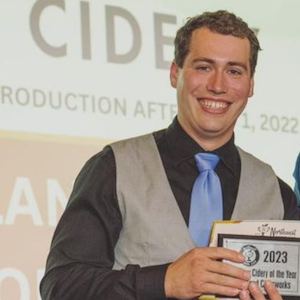
Eliseo Bell-Uribe
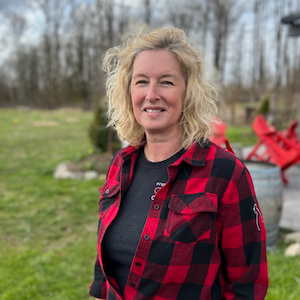
Rachel Bolongaro

Taylor Corrigan

Mikey Crews
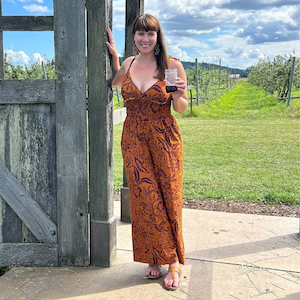
Ava Davis

Christian Scott Junes

Greg Kodgis
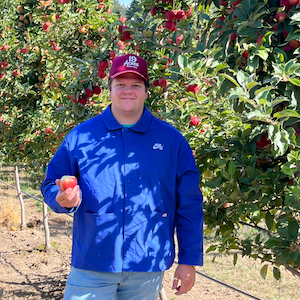
Alexander Logan
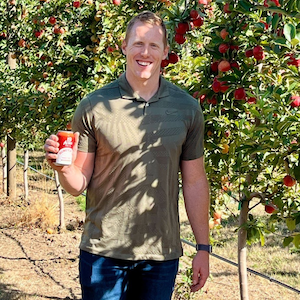
Kyle McLennan
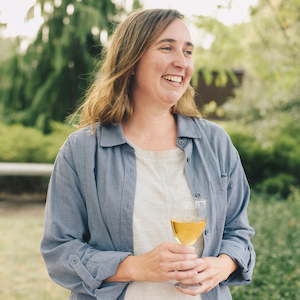
Brighid O’Keane

Matt Spiess

Adam Wargacki
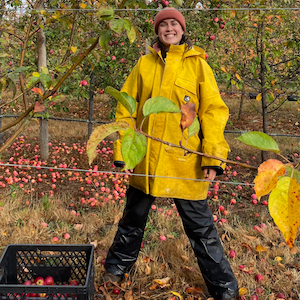
Maia Wohlert
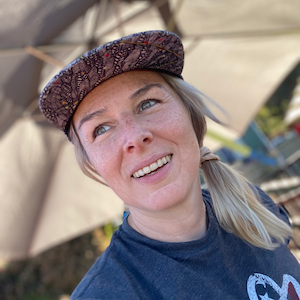
Rosie Zollinger
More about the Certified Cider Professional Program and Upcoming Opportunities
The CCP program begins with a Certified Cider Guide (CCG) Level 1 certification to help industry professionals develop a fundamental understanding of cider. The Certified Pommelier (CP) Level 2 takes it a step further by encouraging cider professionals to think critically and showcase a higher level of understanding of the elements of cider. The rigorous testing process consists of four types of questions, including short answer, fill in the blank, essay, and blind sensory–which is based on tasting.
The ACA is dedicated to ensuring that all information tested on the exam is made accessible to anyone who desires to learn. To that end, the ACA released a textbook in March of 2023 to help candidates prepare to take the exam with just one comprehensive resource. The second edition of the textbook was released in March of 2024 to present a more global view of the cider industry as well as including new sections covering important emerging sectors such as low and no-alcohol products.The textbook is available for purchase through Kindle Direct Publishing. Additionally, the ACA offers sensory analysis practice webinars and a Facebook study group continuously updated with resources for exam candidates. Interested candidates can find links to all Certified Pommelier resources on the ACA website.
For those interested in attaining their Certified Pommelier designation, there are several upcoming exams to choose from:
Contact the ACA’s Education Operations Director Jennie Dorsey if you have questions about the Certified Cider Professional program or are interested in taking either the Level 1 Certified Cider Guide or Level 2 Certified Pommelier exams. You can also learn more at https://ciderassociation.org/certification.
Member Highlight: Rebel Sheep Wine Co.
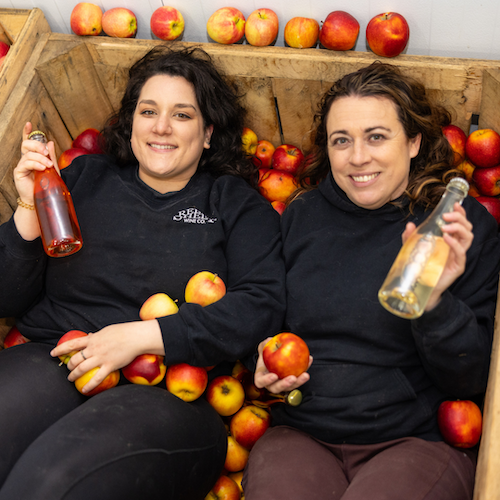

Cidery Name:
Where are you located and when did you start?
Located in Chester, New Jersey. Opened in 2024
Describe your cidery in three words:
Innovative, sustainable, rebellious
What inspired you to start making cider?
We farm around 500 acres in our area. In 2021 our apple crop came into full production, and we had an abundance of apples. We decided making cider would be a great addition to our farm and a unique way to cut down on food waste.
Describe your cider making style:
Spontaneous. We use only our own apples and focus on using all natural ingredients from our farm that bring out the best qualities of New Jersey fruit. We rely on the seasons to decide what cider we make.
What is your favorite cider that you make?
Hopposites Attract. We blended a cider with a strawberry wine and then dry hopped it.
What exciting plans or new releases do you have coming up:
A lot of plans are in the works. We just opened in 2024 so we are still figuring out what blends we like and what our signature flavors will be.
Where can cider enthusiasts find your products?
Our tasting room and various farmers markets that we attend throughout Northern New Jersey.
What’s your favorite way to enjoy cider?
With our homemade Apple Cider Donuts.
What’s one piece of advice you would give to someone new to making cider or wanting to start a cidery?
Don’t get discouraged when your cider does not turn out perfectly. Trial and error is part of the process until you find out what works best.
What are your hobbies or interests outside of cidermaking?
Farming 500 acres of fruits and vegetables doesn’t leave a lot of time for hobbies, but attending workshops and listening to cider and wine podcasts is enjoyable.
Is there anything else you’d like to share with our readers?
New Jersey has farms and makes great wine and cider! We are the Garden State for a reason!
2025 Board Nominations Now Open
Do you have a passion for growing the cider industry? Are you looking to find a platform for your ideas, where you will be seen and heard? Would you like to work with a group of like-minded industry leaders to create positive change?
Five seats on our Board of Directors are up for grabs in 2025. Seats that will be up for election this year are as follows: 1 Large Cidery Seat, 1 Regional Chair – South, 1 Regional Chair – East, 1 Regional Chair – Pacific Coast, and 1 At-Large Seat. Our annual nomination window is now open, and we want to hear from you!
Elections will take place electronically during CiderCon® 2025 in Chicago, Illinois on February 6-7. All U.S. member cideries are eligible to vote (1 vote per cidery).
Although it is not required, we strongly encourage candidates to have an ACA volunteer history before running for office.
Please see below for more specifics on service and how to apply:
- Positions are open to any active ACA member cidery in the U.S., regardless of size.
- Applications are due by November 14th, 2024.
- To qualify for candidacy, you must be a permanent employee of a bonded cidery, producing cider in the U.S.
- Incumbents may be running for their seats again.
- Terms are three years.
- Applicants will be reviewed when the submission window has closed
- Qualified candidates will receive further instructions on developing their platforms and what board service includes.
Have more questions about board service? Schedule a chat with ACA CEO Michelle McGrath by clicking here.
To submit your nomination by the November 14th deadline fill out the self-nomination form.
September 16: Sensory Analysis Workshop at Seattle Cider Co.
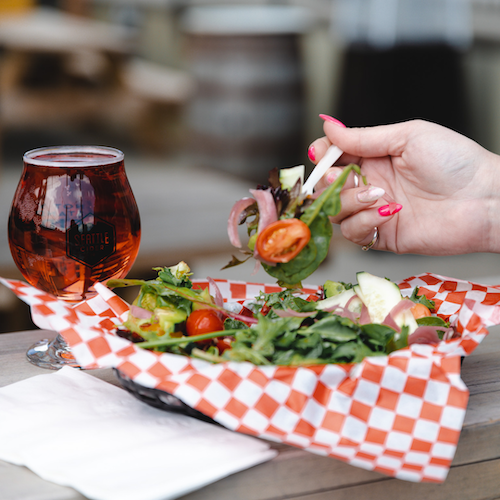
Interested in learning how to taste cider like a pro? Join us September 16 from 5:00-7:00 PM Pacific! Tickets available at the door!
The American Cider Association is excited to announce that we will be teaming up with Seattle Cider Co. to host a cider sensory workshop. Over the course of 2 hours, an expert Certified Pommelier will lead you through a guided tasting experience. This hands-on workshop will teach you the professional tips and tricks for understanding the elements of cider as well as give you a basic understanding of food and cider pairing. Light snacks will be included. Perfect for cider lovers at any level!
Come sip, swirl, and savor delicious ciders and snacks!
Must be 21 or over to attend.
Price: $40 Tickets are no longer available online but they can be purchased at the door.
ACA Members can find their discount code in the Resource Hub.
Made possible with support from the Northwest Cider Association and a specialty crop block grant from the Washington Department of Agriculture.
September 25: Certified Cider Guide Workshop & Certification in London, England


The world’s finest cider education programme, the Certified Cider Professional (CCP) Programme, will be back again for another Level 1: Certified Cider Guide (CCG) classroom session and exam in the heart of London on Thursday 25th September. Leisurely run over the course of a day, this L1 CCG training has been developed specifically for those who work directly with consumers and trade customers, namely those working in retail and hospitality, importers, distributors, wholesalers and employees of cider producers. It is also the programme for cider fans, afficionados and drinkers who want to showcase their extra weight of knowledge and passion. It is designed to enable participants to have a professional standard of knowledge and appreciation for different types of cider and how they are achieved, an approach to assessing cider and the different sensory qualities they have, and guidance on the best practice principles for serving, storing and selling.
Candidates will receive an email containing a downloadable study guide and a link to the online exam in advance of the workshop. The day itself will consist of a presentation of the materials from the study guide, with extra elaboration and, of course, the opportunity for questions. There will also be a guided sensory session of at least 3 ciders clearly demonstrating the key structural characteristics within cider, and utilising a structured approach to their assessment.
ACA Member? Click here for your discount code in the Resource Hub.
The topics covered in Level 1: CCG are:
- Apples, Pears and Orchards
- Cider Production
- Families and Flavour
- Evaluating Cider
- Keeping and Serving
- Cider and Food
- Social Responsibility
Schedule
- 9:30 – Arrival and Check In
- 10:00 – CCG Presentation Part 1
- 11:30 – Break
- 11:45 – CCG Presentation Part 2
- 13:15 – Lunch
- 14:15 – Sensory Analysis
- 16:00 – Exam
September 26: Live Sensory Analysis Webinar with Albemarle CiderWorks
You’re invited to a Live Sensory Analysis webinar on Thursday, September 26th, from 4:00 to 6:00 PM Pacific! Join our Certified Pommelier panel as they guide you through an immersive sensory experience featuring cider from Albemarle CiderWorks in Virginia
During this live practice session, you’ll learn how to analyze and appreciate cider like a pro and prep for your Certified Pommelier exam.
Not able to make it to the live event? No worries! The webinar will be recorded and available for you rewatch at any time with your initial purchase.
Cider must be purchased separately. Please be aware that it may take several days to receive your cider order, so we encourage you to purchase your ciders as soon as possible. Also, please verify that cider can be sent to your state before purchasing ciders. Ciders can be purchased directly from Albemarle CiderWorks using the links below.
Cost to register for the webinar is $30 for non-members and $20 for ACA members.
Are you an ACA member? Click here to find your discount code in the Resource Hub.
Once registered, you will receive a confirmation email. This email is a placeholder for the event. The evening before the event you will receive an email with a Zoom link to the webinar. Please note this link will be sent to the registered email.
October 3: Live Sensory Analysis Webinar with ABAVAS

You’re invited to a Live Sensory Analysis webinar on Thursday, October 3rd, from 18:00-20:00 British Standard Time!
Join our Certified Pommelier panel as they guide you through an immersive sensory experience featuring cider from ABAVAS in Latvia. During this live practice session, you’ll learn how to analyze and appreciate cider like a pro and prep for your Certified Pommelier exam. Not able to make it to the live event? No worries! The webinar will be recorded and available for you rewatch at any time with your initial purchase. Cider must be purchased separately. Please be aware that it may take several days to receive your cider order, so we encourage you to purchase your ciders as soon as possible. Also, please verify that cider can be sent to your nation before purchasing ciders. Ciders can be purchased from ABAVAS by clicking here.
Once registered, you will receive a confirmation email. This email is a placeholder for the event. The evening before the event you will receive an email with a Zoom link to the webinar. Please note this link will be sent to the registered email.
Cost is $30 for non-members and $20 for ACA members. Are you an ACA member? You can find your discount code here in the Resource Hub.
November 22: Certified Pommelier Exam in London

Take the Certified Pommelier Exam at WSET Headquarters in London, England on Friday 22nd November!
Are you ready to take the next step in your professional development in the cider industry? If you have already passed the Level 1 Certified Cider Guide exam and are looking for that next challenge? Now is your chance! The American Cider Association is pleased to announce a Certified Pommelier Exam will be held at WSET HQ, London, England on Friday 22nd November . The exam will take place Fridat 22nd November 2024 at WSET, 39-45 Bermondsey Street, London, SE12 3XF. The exam will begin promptly at 09:30 AM.
*Level 1 Certified Cider Guide certification is a prerequisite for taking the Certified Pommelier Exam. (Haven’t taken your Level 1 Certified Cider Guide Exam? Buy the bundle here! ACA Member discounts are available.)
There’s also a discount code available for ACA members for the Certified Pommelier Exam. You can find that code in our Resource Hub.
WHAT IS THE CERTIFIED POMMELIER EXAM?
The American Cider Association’s mission is to grow a diverse and successful cider industry by providing valuable information, resources and services to our members and by advocating on their behalf. One way to fulfill this mission is through the Certified Cider Professional Program, a program aimed at educating the front-line of cider hospitality (distributors, retailers, bartenders and more!) while also welcoming journalists and serious cider enthusiasts.
The exam for the introductory level certification, Certified Cider Guide (CCG), is an online test that can be taken at any time. The exam for the more advanced second level of certification, Certified Pommelier, is only available in person. The exam consists of two parts, a written theory exam comprising short answer and essay questions and a blind sensory evaluation of a number of ciders. Passing the introductory level exam is a mandatory prerequisite to sitting for the Level 2 Certified Pommelier exam.
Certified Pommeliers must have a fundamental understanding of all topics covered at the introductory level, but must also be able to think critically and demonstrate a deeper understanding of cider and the cider industry.
The topics covered in the exam are:
- Apples, the Orchard & History
- Cider Making
- Flavor & Evaluation
- Cider Families
- Keeping & Serving
- Food & Cider
- Social Responsibility
The exam is meant to be challenging. The only information necessary for successfully passing the theory section of the exam is contained in the Certified Pommelier Study Guide available on Amazon. To study for the evaluation section of the exam, candidates should consider attending one of the sensory analysis videos available through the ACA’s website or attend one of the regularly scheduled webinars. Access to pre-recorded webinars and registration for upcoming live webinars is available directly through our website.
WHY BECOME A CERTIFIED POMMELIER?
Cider is a beautifully nuanced beverage that is less well understood by most consumers. Having the knowledge and skills required to become a Certified Pommelier will equip you to better serve customers, enhance your standing in the beverage community, and give you a unique and valuable professional qualification. Being recognized as a Certified Pommelier will put you in the vanguard of advanced cider specialists in this ever growing category.
HOW MUCH DOES THE TEST COST?
The registration fee for the exam is $350. Current members of the ACA can register at a discounted price of $250 by using the discount code in our Resource Hub. If a candidate sits for the exam but does not pass either section, or only passes one of the two sections, theory or sensory evaluation, they can resit for the section of the exam that they did not pass at a future date. The fee for retaking the exam is $175 for non-members and $125 for current members of the ACA.
Read Terms & Conditions before registering.
WHAT MATERIALS ARE AVAILABLE TO STUDY FOR THE EXAM?
- The Certified Pommelier Study Guide is available directly through Amazon. It is also available at all of Amazon’s international sites.This is the official study guide for the second level of the American Cider Association’s professional certification program. It contains all of the information needed to study for and pass the examination. No other reference materials are required.
- There is also a dedicated Facebook Group (that is open for all to join) with prep materials and in-depth peer conversations that many candidates have found useful.
- Sensory evaluation is an important part of being a Certified Pommelier which is why we test your ability to accurately analyze the structural components, aromas, and flavors of a variety of ciders. In order to aid in the development of your sensory evaluation skills and understand the approach to testing them, we have several pre-recorded videos available for purchase. In addition, we host several live sensory analysis webinars each year. You can access the videos and look for scheduled webinars here.
Frequently Asked Questions (Download the Frequently Asked Questions document.)
- Are there ID or minimum age requirements to sit for the event? YES. You must be of legal drinking age in the country where you sit for the exam, and when checking in at the exam you must provide a photo ID that will both verify your age and identity .
- Do I need to pass the Certified Cider Guide exam to take the Certified Pommelier exam? Yes. Passing the introductory exam to become a Certified Cider Guide is a prerequisite. If you have not yet taken this exam, you can purchase a package which includes an instructional video, study guide, and access to an online exam HERE.
- How many Certified Pommeliers are there currently? You can find the current number of Certified Pommelers here.
- Is the Certified Pommelier Exam available in my area? Certified Pommelier exams are held periodically throughout the year and in a variety of locations. Please check our current exam schedule to find an exam suitable for you.
- What can I bring into the event? You may bring only a water bottle into the exam space. Cell phones, smart watches, computers, books or papers, and any and all other personal items must be left at a designated storage area in the exam room. Pencils will be provided, and spare paper will be available on request. Spit cups, and water will be provided during the evaluation exam. We encourage you to bring your own water bottle for the theory exam. Please contact the Cider Education Operations Manager, Jennie Dorsey at jennie@ciderassociation.org prior to registering for the exam if you wish to request special accommodations.
- How can I contact the organizer with any questions? Please contact Cider Education Operations Manager Jennie Dorsey at jennie@ciderassociation.org.
- When can I register for the exam? Exam registration is open until 14 days before the posted exam date.
- What happens if I cannot attend my registered exam? Please see Exam Rescheduling, Timelines and Fees in the Terms and Conditions Document for full details. If you do need to cancel your registration, exam registration fees can be refunded up to 14 days before the exam. Please note that a $25 administration fee applies to any cancellation.
- Is it ok if the name on my ticket or registration doesn’t match the person who attends? Registrations are not transferable, so the name on the I.D. presented when checking in for the exam must match the name on the registration.
- How long does the test take? You are given 2 hours to complete the theory section of the exam and 1 hour and 15 minutes to complete the sensory evaluation section. There is a 15 minute break in between sections.
- Is there a tasting section on the test? Yes. You will be asked to evaluate six ciders in two flights, one flight that assesses your ability to distinguish between key structural elements and a second where you are asked to complete a full evaluation of three ciders using the Structured Sensory Analysis format. The possible aromas and flavors document will be supplied for use during the exam.
- What is the grade needed for passing? 60% of the possible points for sensory evaluation and 70% for theory
- When will we receive our graded exams? Exams are not returned to candidates, however you will be notified as to whether or not you have passed about 6 weeks from the exam date. If you did not pass a section of the exam, you may request a breakdown of your points by general topic to help you identify areas in which you could improve your score should you wish to retake the exam.
Chile Featured To Join CiderCon® 2025 As Guest of Honor


The American Cider Association is honored to announce that they will welcome Chile as the guest cidermaking country of honor for CiderCon® 2025 in Chicago next February. Chile has a long and storied history of cidermaking as an important part of the country’s local culture and economy. Each year, millions of gallons of cider produced from the forests of heirloom cider apples growing in Chile. Most of this cider is sold under the name “chicha” but there is a growing movement of new cidermakers and established companies that are seeking to bring cider to the forefront of the Chilean beverage industry. The Chilean delegation will feature cidermakers, orchardists, educators, researchers, and government officials who are working to bring cider to local, national and international markets.
The delegation attending CiderCon® 2025 are members of the Chilean Cider Collective (COSICHI). Featured speakers include Harriet Nahrwold, co-founder of Sidrería Quebrada de Chucao; Carlos Flores, orchardist and and co-founder of Punta de Fierro Fine Cider; Rene Galindo Quidel, founder and cidermaker of Sidrería TenCai; Gicella Thamar Saldivia González, family farmer and orchardist who is also president of the Chilwe Cooperative, an organic farming and cidermaking cooperative from the island of Chiloé; Carlos Martinez Cárdenas, partner at Agrícola Tralcao, producers of the Lemon Apple and Della Cha ciders, and Agronomic Advisor at Austral University; José Antonio Alcalde, orchardist and professor at the Pontificia Universidad Católica de Chile, and co-author of the first Chilean Cider Guide (Guía de la Sidra en Chile), 2022; Fabian Lara Mercado, Policy Coordinator for INDAP, the most important financial arm of the Chilean Ministry of Agriculture, responsible for helping small-holder farmers and orchardists and a BJCP certified cider judge; and Eli Shanks, co-founder of Punta de Fierro Fine Cider.


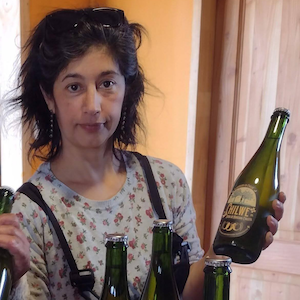





“The Chilean Cider Collective and its members represent a wide diversity of Chilean cidermaking across 750 miles of territory. We are all very excited and humbled to be invited to participate in CiderCon® and share about the past, present and future of cider in Chile,” says Eli Shanks.
The rich history of cidermaking in Chile, influenced by immigrants from Spain, Germany, Scandinavia, and the Netherlands, as well as the native Mapuche people, has led to unique cidermaking techniques and orcharding practices that will be of interest to CiderCon® 2025 attendees.
The Chilean delegation will be joining sessions in CiderCon®’s Explore History, Flavor & Terroir track, Grow Amazing Apples track, and others. The theme for CiderCon® this year is “Cider’s Balanced Future: Planet, People, Profit.” This theme is well represented by the Chilean cidermakers who integrate the triple bottom line approach to sustainability in their cidermaking principles.
CiderCon® registration will open on September 17, 2024 for ACA members.
###
2024 Apple Crop Outlook
We reached out to experts in apple growing to get a look at the 2024 Apple Crop Outlook. Check out what these experts from around the U.S. had to say about this year’s apple crop.
David Glaize, Glaize Apples, Winchester, VA
August 15: The Virginia apple crop dodged some early frosts in the spring of 2024. We had terrific pollination weather and fruit set was strong. We suffered a severe drought in July/August which has kept the apples small, and is stressing the trees, especially the newly planted blocks. Some of the older trees are showing wilted leaves and have begun dropping fruit. However, rain and colder temps are starting to move in. The crop is looking good, and we will hopefully continue to get more size and color, although harvest did come slightly earlier than in years past. Virginia will harvest a good size crop this year, although acreage of processing fruit is still being pushed out due to a weak market.
Marcus Robert, Tieton Cider Works, Yakima, WA
August 5: Apple crop in Washington State looks promising with near-average volumes. Most areas avoided damage from spring frost and return bloom on most varieties was healthy. Biannual bearers, like Golden Delicious and Honey Crisp, look to have small yields this year. All in all, the state is predicting 120-125 million box crop. This is down from the previous season of 134 million boxes but much higher than 2022’s crop of 104 million boxes. Although sales volumes have been higher than previous years, at the current rate of sales WA State looks to have 8 weeks of inventory from 2023 in storage as of the date of this report, August 5, 2024. New crop will start harvest in the next few weeks.
Gregory Peck, Cornell University, New York
July 24: The cider apple crop in New York is shaping up to be one of the best in recent years. After a few years of freeze events and disease outbreaks, it’s nice to see so many apples (and pears!) throughout the State. New York had a couple of scary mornings on April 24 and 25 when many apple varieties had already reached bud break and the temperature dropped to the low 20’s, but thankfully there was minimal damage to most orchards. There has been adequate precipitation and plenty of heat this summer to help size up the fruit. A warm spring led to an early bloom, which means that growers and cider producers should anticipate apples to ripen a week or more early this year. Additionally, some farms had a spotty fruit set on a few varieties, and so cider producers will need to be creative about which apples to blend to create their established products. Although harvest is still more than a month away, there should be plenty of high-tannin and other specialty cider apples available for the State’s craft producers and for others looking to purchase New York grown cider apples.
Megan Muehlbauer, Rutgers University, New Jersey
July 15: The spring of 2024 was a normal one. Phenology moved along as expected. There were no significant freeze events in New Jersey, which is in part why there is a very heavy crop set at most farms. The greatest concern right now is the hot dry weather, which has lead to some leaf hopper issues and the potential for sunburn of the fruit. Growers have had to irrigate a bit this year since the rains have been sporadic and spotty.
The dry weather has helped to minimize the disease pressure, so diseases are being well controlled.
Jake Mann, Five Mile Orchard, Pajaro Valley, CA
June 20: Greetings from the Pajaro Valley. I’m writing this on the summer solstice, and so far (knock on a tree-trunk) the outlook for our 2024 apple crop looks promising. Nice fruit set. Not super loaded, but not sparse.
The 2023 harvest (as predicted) was the worst we’ve seen in the past decade (and according to those before me, EVER) Low fruit set, and subsequent aphid damage took us down close to a 50% yield compared to normal years. A few fortunate turns did help: summer temps were mild, so the fruit didn’t burn, we were able to do a lighter irrigation due to the accumulated precipitation from the ’23 floods, and our steady picking crew got everything harvested. We did miss out on some sales, for not having the quantity / quality of certain varieties.
While we shook our heads, put the budgets under a microscope, and tried to look past the ’23 disaster, winter delivered a fantastic amount of precipitation and chilling hours. (We escaped the weird February heat wave that was becoming more common too, so no early bud activity.) Bloom was gorgeous, a bit later (as with the past couple years). Some of our delayed dormant sprays were going out in mid April. (usually completed by spring equinox around here) No major apple scab events or pest outbreaks to chase through the sensitive spring months, which has been a relief.
Irrigations will begin in mid-July. We’ll keep our eyes on that first Gravenstein harvest date in mid August that carries us into (hopefully) an even-tempered, plentiful picking season… with a full cooler, and lots of heirloom fruit off to our customers up and down the west coast. Looking forward to meeting up with a big number of California Cidermakers at the Central Coast Cider Festival in Atascadero on August 24th!
Nik Wiman, Oregon State University
June 18: It has been a cool spring here in Western OR. Bloom and fruit set was excellent and we are seeing a huge apple crop and we are trying to get it thinned down right now. Not expecting much fire blight but we are seeing some scab. We will have a field day this September to showcase our cider orchard.
Renae Moran, University of Maine
June 12: Bloom and Fruit Set – The freezing temperatures that occurred before bloom did not appear to have an impact on flowers other than a few Honeycrisp king blooms which were dead at the time of inspection.
Bloom occurred about one week ahead of the average time, occurred May 18 for McIntosh and May 20 for Honeycrisp at the UMaine research station in Monnouth. Full bloom was a few days later in northern Maine. Most trees had an abundance of bloom. Pollination conditions were favorable most days, but a few days of temperatures above 85 °F occurred which can interfere with fertilization. Fruit set has been very heavy in most trees. As of June 12, some chemical thinning appears to be working, but fruit set is still too heavy in Honeycrisp and some other varieties.
Tree Survival – A few apple tree deaths have occurred at the UMaine research station. Cause of apple tree death is most likely too much rainfall last year.
Nikki Rothwell, Michigan State University Extension
June 11: The Michigan apple crop is shaping up to be another big one this year. This situation is slightly unusual in that this crop is sizable after following two previous seasons with big crops. We had a mild winter for Michigan, which was coupled with a warm spring. We did not see the usual ups and downs that are typical in spring here in our state—no spring frost/freeze events that have the potential to reduce the crop size.
We had lots of accumulations of growing degree days this spring, so we are 7-10 days ahead of ‘normal’. In addition to warm conditions, we have had ample rainfall this spring. Tree growth has been tremendous, and fruitlet size is already 20mm and it is just early June. Growers have been aggressively thinning trees down to the optimal crop load for the trees, and we have had a run of cooler weather during this thinning window. Cool weather at thinning time can result in trees setting too large of a crop, so there may be some hand thinning activity later in the season.
Disease issues are still under control despite the wet weather. Wet and warm conditions favor fungal development, and growers have been diligent about disease control this spring. We have observed little apple scab in orchards thus far. Powdery mildew seems more prevalent this year, which is unusual as this disease prefers hot and dry, but we think there was ample inoculum in the orchard from last year, so this disease got a toe hold in some orchards this current season.
Every season is different, and 2024 is no exception. Although we have a ways to go until harvest, Michigan is off to a great start!
Help Shape the Future of Cider: Take the 2023 ACA Cider Production Survey

At the American Cider Association we work hard to support cider and cidermakers across the United States every day of the year, but we can’t do it without some help from you. We need to provide Congress, the media, and buyers with the most up-to-date and complete industry overview we possibly can. We are asking for you to assist us in collecting aggregated production information for the US cidery industry for 2023 so that we have the most accurate information to promote cider at all levels.
If you are licensed to make cider on a commercial basis we invite you to take our survey so we can gather information vital to promoting and protecting cider in the US.
Details:
- This survey will take about 30 minutes to complete.
- The survey is being aggregated and anonymized by a third party. They have agreed to not share information with us that might identify who you or your cidery are. YOUR PRIVACY MATTERS TO US.
- Your cidery name is collected by the 3rd party to ensure there are no duplicates, but the ACA will not store that information after the survey has been returned to us with identify features removed.
- We do ask a number of questions about sales, staffing and production for 2023. You will find it helpful to have that data handy before completing the survey.
- Note: If you produce wine or other beverages besides cider, please answer only considering your cider production.
- Deadline to complete the survey is December 13, 2024.
- Anyone who submits their completed survey and provides their contact info will be entered into a raffle to win an American Cider Association hoodie (4 available) and a grand prize winner will receive a complimentary ticket to CiderCon® 2025!
If you have any questions regarding this survey or how the data is used, please contact CEO of the American Cider Association Michelle McGrath.
We appreciate your help in allowing us to continue to promote cider across the United States!
ACA Announces Continuation of Cider Is For Everyone Scholarship for CiderCon® 2025
The American Cider Association is pleased to share that their Cider Is For Everyone Scholarship program will continue for CiderCon® 2025. This scholarship is designed to support people from historically marginalized groups in North America in gaining access to professional development and networking opportunities in the cider industry. The goal is to increase the accessibility of cider education to jump-start the careers of these cider professionals. Many scholars have gone on to share their knowledge with the cider industry as well, as CiderCon® speakers and more.
The scholarship package includes:
- Registration to CiderCon® 2025 (including travel and lodging)
- Level 1 Certified Cider Guide training and certification exam
- Two Certified Pommelier sensory webinars
- The Certified Pommelier Study Guide
- Registration fee for the Certified Pommelier Exam
- And after passing the Certified Pommelier Exam, a travel stipend becomes available for cider judging opportunities
Applications are now being accepted and the deadline to apply is August 30. Those interested in applying can fill out the application form here. Potential recipients will be contacted to schedule a brief interview and winners of the scholarship will be notified in September. CiderCon® 2025 takes place February 4 – 7 in Chicago, Illinois.
This scholarship is part of a broader effort by the ACA to advocate for diversity, equity, and inclusion in the cider industry. In 2019 the ACA launched the Anti-racism, Equity and Inclusion committee which recognizes diversity, equity and inclusion as an important and necessary part of present and future successes of the cider industry. This committee structures its work around a belief that existing structures of power, privilege and discrimination must be actively questioned and evaluated in order to create equitable opportunities in an environment that embraces and values our differences. They strive to create events, opportunities and organizational policies that embody these values, and to continue evaluating these practices for sustained growth and improvement.
The ACA’s first scholarships developed out of a partnership with Beer Kulture in 2021, and the program has grown every year since.
“This scholarship is one of our best tools for fostering a more diverse cider industry,” says Michelle McGrath, CEO of the ACA. “The scholarship needs to work in lock step with our efforts to create a more inclusive industry so that, as we have more diverse CiderCon® attendees, they are surrounded by a welcoming community and equitable environment.”
Those interested in sponsoring or donating to the Cider Is For Everyone Scholarship Fund can learn more on the ACA website or connect with CEO Michelle McGrath at michelle@ciderassociation.org.
###
August 18: Sensory Analysis Workshop at Minneapolis Cider Co.

Interested in learning how to taste cider like a pro?
The American Cider Association is pleased to announce that we will be teaming up with Minneapolis Cider Co. to host a cider sensory workshop! Join us on Sunday, August 18 at 3:00 PM Central for an in person workshop!
Over the course of 2 hours, an expert Certified Pommelier will lead you on a guided tasting through two ciders and a food pairing. This hands on workshop will teach you the professional tips and tricks for understanding the elements of local and national ciders as well as give you a basic understanding of food and cider pairing. Light snacks included.
Come sip, swirl, and savor delicious ciders! Perfect for cider lovers at any level.
Must be 21 or over to attend.
Are you an ACA member? Find the member discount code in the Resource Hub.
August 19: Certified Cider Guide Workshop & Certification at France 44
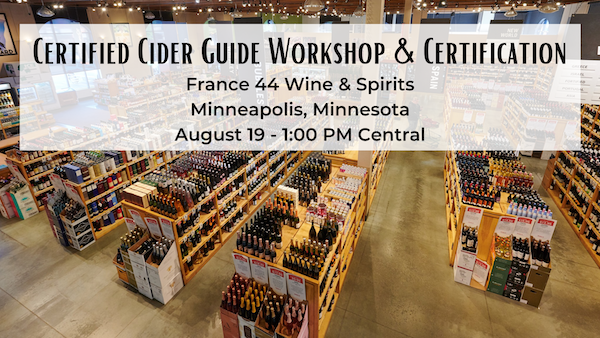
Earn your Level 1 Certified Cider Guide accreditation and enjoy a tasting experience at France 44 on August 19 at 1:00 PM Central!
The American Cider Association is excited to collaborate with France 44 to host an in person workshop for the Certified Cider Professional Program Level 1 Certified Cider Guide. Participants will have the opportunity to complete the online certification exam immediatly after the training or on their own at a later date.
Cost per person is $189 which includes the in person training, instructor led tasting experience, a downloadable study guide, and access to the online certification exam. ACA members can contact Education Operations Manager Jennie Dorsey for the discount code to receive $50 off their registration.
This is a great opportunity for the Minnesota cider community to gather in person to network and earn their first level of cider certification. Registration to this event will also include a 15% discount to France 44 retail store and a celebratory cider on their roof following the event.
We would love to see anyone who sells cider, works in a tasting room or retail shop, chefs, sommeliers, cicerones, buyers, cidermakers, and anyone who loves cider. All are welcome to begin their cider education journey by adding this cider certification to their accreditations.
Location:
France 44, 4351 France Avenue South, Minneapolis, MN 55410
Schedule:
- 1:00 – 4:00 PM Certified Cider Guide Workshop
- 4:00 – 5:00 PM Introductory to Sensory Analysis Tasting Training
- 5:00 – 6:00 PM Take the Online Certification Exam
- 6:00 – 7:00 PM Celebratory toast on the rooftop, networking, and retail discounts
August 20: Certified Pommelier Exam at Minneapolis Cider Company
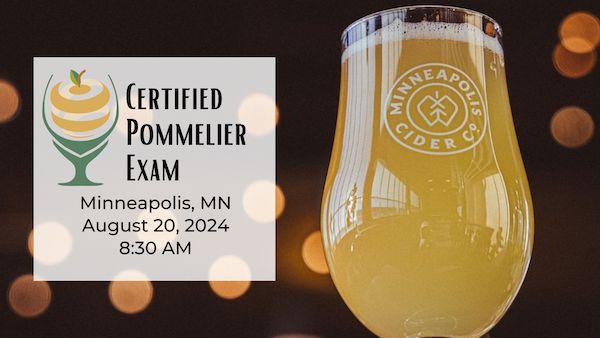
Take the Certified Pommelier Exam at Minneapolis Cider Company on August 20, 2024!
Ready to take the next step in your professional development in the cider industry? If you have already passed the Level 1 Certified Cider Guide exam and are looking for that next challenge? Now is your chance!
The American Cider Association is pleased to announce a Certified Pommelier Exam will be held at Minneapolis Cider Company, 701 SE 9th St., Minneapolis, MN 55414.
The exam will begin promptly at 8:30 AM on Tuesday, August 20, 2024.
*Level 1 Certified Cider Guide certification is a prerequisite for taking the Certified Pommelier Exam. (Haven’t taken your Level 1 Certified Cider Guide Exam? Buy the bundle here! ACA Member discounts are available.)
There’s also a discount code available for ACA members for the Certified Pommelier Exam. You can find that code in our Resource Hub.
WHAT IS THE CERTIFIED POMMELIER EXAM?
The American Cider Association’s mission is to grow a diverse and successful cider industry by providing valuable information, resources and services to our members and by advocating on their behalf. One way to fulfill this mission is through the Certified Cider Professional Program, a program aimed at educating the front-line of cider hospitality (distributors, retailers, bartenders and more!) while also welcoming journalists and serious cider enthusiasts.
The exam for the introductory level certification, Certified Cider Guide (CCG), is an online test that can be taken at any time. The exam for the more advanced second level of certification, Certified Pommelier, is only available in person. The exam consists of two parts, a written theory exam comprising short answer and essay questions and a blind sensory evaluation of a number of ciders. Passing the introductory level exam is a mandatory prerequisite to sitting for the Level 2 Certified Pommelier exam.
Certified Pommeliers must have a fundamental understanding of all topics covered at the introductory level, but must also be able to think critically and demonstrate a deeper understanding of cider and the cider industry.
The topics covered in the exam are:
- Apples, the Orchard & History
- Cider Making
- Flavor & Evaluation
- Cider Families
- Keeping & Serving
- Food & Cider
- Social Responsibility
The exam is meant to be challenging. The only information necessary for successfully passing the theory section of the exam is contained in the Certified Pommelier Study Guide available on Amazon. To study for the evaluation section of the exam, candidates should consider attending one of the sensory analysis videos available through the ACA’s website or attend one of the regularly scheduled webinars. Access to pre-recorded webinars and registration for upcoming live webinars is available directly through our website.
WHY BECOME A CERTIFIED POMMELIER?
Cider is a beautifully nuanced beverage that is less well understood by most consumers. Having the knowledge and skills required to become a Certified Pommelier will equip you to better serve customers, enhance your standing in the beverage community, and give you a unique and valuable professional qualification. Being recognized as a Certified Pommelier will put you in the vanguard of advanced cider specialists in this ever growing category.
HOW MUCH DOES THE TEST COST?
The registration fee for the exam is $350. Current members of the ACA can register at a discounted price of $250 by using the discount code in our Resource Hub. If a candidate sits for the exam but does not pass either section, or only passes one of the two sections, theory or sensory evaluation, they can resit for the section of the exam that they did not pass at a future date. The fee for retaking the exam is $175 for non-members and $125 for current members of the ACA.
Read Terms & Conditions before registering.
WHAT MATERIALS ARE AVAILABLE TO STUDY FOR THE EXAM?
- The Certified Pommelier Study Guide is available directly through Amazon. It is also available at all of Amazon’s international sites.This is the official study guide for the second level of the American Cider Association’s professional certification program. It contains all of the information needed to study for and pass the examination. No other reference materials are required.
- There is also a dedicated Facebook Group (that is open for all to join) with prep materials and in-depth peer conversations that many candidates have found useful.
- Sensory evaluation is an important part of being a Certified Pommelier which is why we test your ability to accurately analyze the structural components, aromas, and flavors of a variety of ciders. In order to aid in the development of your sensory evaluation skills and understand the approach to testing them, we have several pre-recorded videos available for purchase. In addition, we host several live sensory analysis webinars each year. You can access the videos and look for scheduled webinars here.
Frequently Asked Questions (Download the Frequently Asked Questions document.)
- Are there ID or minimum age requirements to sit for the event? YES. You must be of legal drinking age in the country where you sit for the exam, and when checking in at the exam you must provide a photo ID that will both verify your age and identity .
- Do I need to pass the Certified Cider Guide exam to take the Certified Pommelier exam? Yes. Passing the introductory exam to become a Certified Cider Guide is a prerequisite. If you have not yet taken this exam, you can purchase a package which includes an instructional video, study guide, and access to an online exam HERE.
- How many Certified Pommeliers are there currently? You can find the current number of Certified Pommelers here.
- Is the Certified Pommelier Exam available in my area? Certified Pommelier exams are held periodically throughout the year and in a variety of locations. Please check our current exam schedule to find an exam suitable for you.
- What can I bring into the event? You may bring only a water bottle into the exam space. Cell phones, smart watches, computers, books or papers, and any and all other personal items must be left at a designated storage area in the exam room. Pencils will be provided, and spare paper will be available on request. Spit cups, and water will be provided during the evaluation exam. We encourage you to bring your own water bottle for the theory exam. Please contact the Cider Education Operations Manager, Jennie Dorsey at jennie@ciderassociation.org prior to registering for the exam if you wish to request special accommodations.
- How can I contact the organizer with any questions? Please contact Cider Education Operations Manager Jennie Dorsey at jennie@ciderassociation.org.
- When can I register for the exam? Exam registration is open until 14 days before the posted exam date.
- What happens if I cannot attend my registered exam? Please see Exam Rescheduling, Timelines and Fees in the Terms and Conditions Document for full details. If you do need to cancel your registration, exam registration fees can be refunded up to 14 days before the exam. Please note that a $25 administration fee applies to any cancellation.
- Is it ok if the name on my ticket or registration doesn’t match the person who attends? Registrations are not transferable, so the name on the I.D. presented when checking in for the exam must match the name on the registration.
- How long does the test take? You are given 2 hours to complete the theory section of the exam and 1 hour and 15 minutes to complete the sensory evaluation section. There is a 15 minute break in between sections.
- Is there a tasting section on the test? Yes. You will be asked to evaluate six ciders in two flights, one flight that assesses your ability to distinguish between key structural elements and a second where you are asked to complete a full evaluation of three ciders using the Structured Sensory Analysis format. The possible aromas and flavors document will be supplied for use during the exam.
- What is the grade needed for passing? 60% of the possible points for sensory evaluation and 70% for theory
- When will we receive our graded exams? Exams are not returned to candidates, however you will be notified as to whether or not you have passed about 6 weeks from the exam date. If you did not pass a section of the exam, you may request a breakdown of your points by general topic to help you identify areas in which you could improve your score should you wish to retake the exam.
August 22: Crafting Compelling Stories: The Role of Data in Your Brand’s Narrative

Join us August 22 at 11:00 AM Pacific for an insightful webinar hosted by the American Cider Association in partnership with 3-Tier Beverages, where we’ll explore how to transform raw data into compelling narratives that captivate your audience and elevate your cider brand.
In this session, you’ll learn:
- The Essentials of Data Storytelling: Discover the fundamentals of turning data into engaging stories that resonate with your customers and how you can differentiate your cider in a competitive market.
- Effective Data Analysis Techniques: Gain practical insights into analyzing and interpreting data from the ACA Member Dashboard to uncover meaningful trends and patterns that can inform your storytelling.
- Crafting Your Brand Narrative: Learn strategies for integrating data insights into your brand story to highlight your cider’s unique attributes and characteristics to connect with your target audience on a deeper level.
Whether you’re established or just starting out, this webinar will provide you with the tools and techniques needed to utilize the full potential of your data to tell the best story for You and Your Brand.
Speakers

Julia Lechleiter
Julia Lechleiter started out her career at 84.51 on their Insights team where she supported emerging CPG brands in leveraging Kroger household data to guide customer-focused assortment, promotion, innovation and digital strategies. After supporting clients on numerous new item presentations and being exposed to the power of BASES innovation research, she joined NIQ on the BASES BevAl team. While she learned to love the BevAl industry, she missed working in a data platform to support clients run various analyses, specifically those related to retailer relations which led her to 3 Tier. Julia graduated from Miami University with a degree in Marketing, and lives in Cincinnati, Ohio with her husband. They have a 1-year old son, John, and two cocker spaniels, Bailey and Phil.
Devon Hevener
Devon Hevener started out his career working in the culinary industry as the general manager for 5 years where he used data to better understand trends in the area to help the business grow from a single food cart to several carts and a brick and mortar. Most recently, he has spent the last year working with the American Cider Association as a Consumer and Market Data Research Intern where he was able to learn the industry firsthand through the mentorship of industry experts and various ad-hoc projects which helped connect him to 3-Tier. One of his most significant projects was the creation of a formal database of all cider producers within the United States. Devon graduated from Portland State University with a degree in Business Technology & Analytics and currently lives in the Portland, Oregon area with his wife Hannah.
August 31: Certified Cider Guide Workshop & Certification in Yokohama, Japan


For the first time, the Certfied Cider Professional (CCP) Program is being taught in Japan!
The world’s finest cider education program will launch with a Level 1: Certified Cider Guide (CCG) classroom session and exam at Antenna America Kannai in Yokohama on Saturday 31 August. Leisurely run over the course of a day, this Level 1 CCG training has been developed specifically for those who work directly with consumers and trade customers, namely those working in retail and hospitality, importers, distributors, wholesalers and employees of cider producers. It is also the program for cider fans, aficionados and drinkers can showcase their extra weight of knowledge and passion. It is designed to enable participants to have a professional standard of knowledge and appreciation for different types of cider and how they are achieved, an approach to assessing cider and the different sensory qualities they have, and guidance on the best practice principles for serving, storing and selling.
Candidates will receive an email containing a downloadable study guide and a link to the online exam in advance of the workshop. The day itself will consist of a presentation of the materials from the study guide, with extra elaboration and, of course, the opportunity for questions. There will also be a guided sensory session of at least three ciders clearly demonstrating the key structural characteristics within cider, and utilizing a structured approach to their assessment.
The topics covered in Level 1 CCG are:
- Apples, Pears and Orchards
- Cider Production
- Families and Flavor
- Evaluating Cider
- Keeping and Serving
- Cider and Food
- Social Responsibility
Schedule
- 12:45 PM: Arrival & Check In
- 1:00 – 4:00 PM: Certified Cider Guide Presentation
- 4:00 – 5:00 PM: Tasting Experience
- 5:00 – 5:45 PM: Take the Online CCG Test (Bring your own laptop)
ACA Recruiting Vendors for CiderCon® 2025 Trade Show


CiderCon® 2025 returns to its beloved Chicago home base next February! We’re thrilled to invite high quality industry specific suppliers and service providers to join our 12th annual CiderCon® Trade Show. Our event attracts over 1000 industry professionals every year by offering a wide variety of educational sessions and activities for cider producers, alongside an extensive and upbeat trade show highly customized for the growing hard cider industry. CiderCon® 2025 will be hosted at the beautiful Chicago Hilton on Michigan Avenue from February 5-7, with the trade show serving as a central feature of the conference. A cider happy hour, fun games with prizes and other engaging events will be held within the trade show. Dedicated trade show time is built into the conference schedule between educational sessions ensuring plenty of time for attendees to engage with vendors and explore new opportunities.
If you haven’t been a vendor at CiderCon® before, now is the time to get involved and showcase your products and services to the rapidly growing cider industry. Our attendees always appreciate the chance to interact with vendors and discover new goods and services that will help their businesses grow.
Booth prices for CiderCon® 2025 are $3000 for a 10’ x 10’ space – and that includes 3 passes to the conference as well as lunch on Thursday and Friday!
Interested in joining us? Email our Trade Show Coordinator Ellen Husch for more information!
There are also numerous sponsorship opportunities available for vendors. Supporting the American Cider Association is a great way to support the sustainability of your customer base. The ACA loves our sponsors and we shout out our appreciation for our sponsors far and wide at CiderCon®, on our website, on social media and beyond and our members hear us. Our CEO Michelle McGrath is eager to work with you on creating a custom sponsorship experience that meets your brand’s personality.
CiderCon® 2024 saw record attendance, and traditionally our highest attendance takes place in odd-numbered years when we are in Chicago. Don’t miss out on what could be our largest CiderCon® to date!
New York’s Senator Schumer to Champion the Bubble Tax Modernization Act
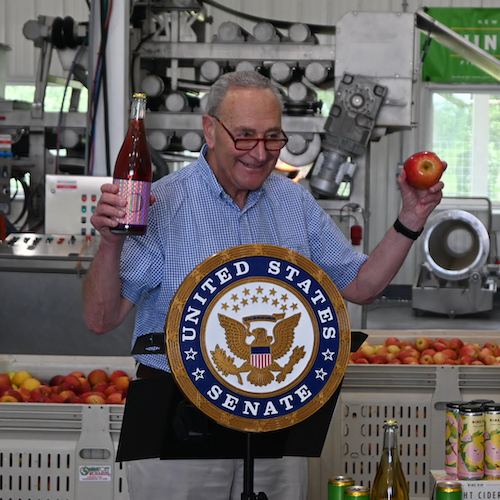
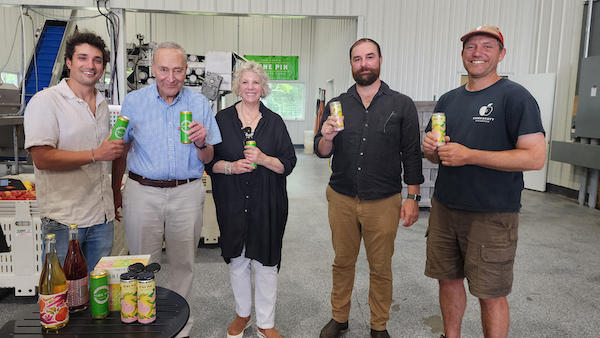
The American Cider Association is pleased to share that U.S. Senate Majority Leader Charles E. Schumer will be championing the Bubble Tax Modernization Act in the Senate. While standing at New York’s Samascott Orchards, a provider of apples to New York’s Nine Pin Cider, Senator Schumer emphasized his commitment to close the carbonation barrier that is continuing to hold back innovation in the cider industry.
“There is no reason that craft cidermakers like Albany’s Nine Pin should get hit with a whopping 1,400% tax increase if they want to make bubblier cider or cider that is mixed with other fruits which has soared in popularity. It hurts our craft cidermakers, hurts consumers, hurts our growers, and is slowing the growth of this booming industry in Upstate NY,” said Senator Schumer. “That is why I am proud to support the Bubble Tax Modernization Act to finally pop this convoluted carbonation tax hamstringing the craft cider industry.”
Senator Schumer has long been a supporter of the cider industry and was instrumental in the passage of the CIDER Act in 2016. The CIDER Act successfully lowered taxes and increased the allowable carbonation threshold on hard cider made from apples and pears. The Bubble Tax Modernization Act seeks to achieve a similar result for ciders fermented or flavored with fruits other than apples and pears.
In a state like New York where diversified farms are plentiful, putting a carbonation cap on fruit ciders limits opportunities for collaboration, innovation, and success with consumers for both growers and cidermakers. Products like Nine Pin’s blueberry cider, made with a blend of apples from Samascott Orchards and blueberries from Indian Ladder Farm, are a prime example of profit extension for farms through year-round value-added agriculture.
Additionally, extreme weather events can create gaps in apple harvest, making co-fermentation or blending with other desirable fruits necessary in certain harvest years. “Flexibility in fruit is important for growers,” says Michelle McGrath, CEO of the American Cider Association. “We’ve seen an uptick in co-ferments and fruit blends driven by consumer interest, but also driven by necessity. If your harvest was demolished by a freeze or a heat dome, why wouldn’t you consider blending with other fruit that had a better harvest? The bubble tax makes it harder to pivot when needed,” McGrath continued.
To put the current tax structure in content, 100 gallons of hard apple or pear cider costs $22 in federal taxes. However, if cidermakers make a co-fermented batch of cider with blackberries and carbonate it like other products, they will have to pay $340 in federal taxes. The Bubble Tax Modernization Act would allow fruit ciders to carbonate to the levels that hard apple and pear ciders are allowed. This change would allow cidermakers to give consumers the fruitier bubblier cider they want at a price they can afford.
The Bubble Tax Modernization and Tax Reform Act, which only applies to products under 8.5% alcohol by volume, would also open fruit mead and fruit wine up to more carbonation. Like cider, mead and winemakers with products under 8.5% ABV can carbonate at a higher threshold–until fruit is involved. In today’s beverage landscape, many producers are making cider, mead and wine. The lack of carbonation is a competitive disadvantage for these producers. The bill was introduced in January 2024 with bipartisan support on the house side through Congressman Earl Blumenauer (OR) and Congressman Mike Kelly (PA).
“We’re thrilled about Senator Schumer’s enthusiastic support of the Bubble Bill. He’s a champion for New York’s agricultural community and he gets that the community includes cider,” McGrath said.
To learn more about the current bubble tax, download our Bubble Tax Fact Sheet.
July 8: The Sweet Spot: Choosing Equipment That’s Not Too Big, Not Too Small, but “Just Right”
ACA Member Exclusive Webinar, July 8 – 11:00 AM Pacific
Join us for an in-depth look into the science of selecting the perfect cider-making equipment in our upcoming Coffee Chat with Juicing Systems. In this session, we’ll look into the critical factors that can propel your cider-making operation to new growth. From understanding your current operational status and pinpointing bottlenecks to planning for future growth and comparing equipment options, we’ll cover it all. Learn how the right equipment can save time, reduce labor costs, and significantly boost your productivity and profitability.
Whether you’re an experienced cider maker or just starting out, you’ll gain valuable insights into making informed decisions that align with your goals. Explore side-by-side comparisons of different equipment setups, discover the financial benefits of financing, and get practical advice on choosing equipment that fits your needs and budget. Don’t miss out on this opportunity to equip yourself with the knowledge to grow your cider business efficiently and effectively.
About Our Speaker

Meet Remo Trovato, the founder behind JuicingSystems.com. Originally from Switzerland, he found his home in Canada’s Okanagan Valley with his wife, Kristen. They started MobileJuicing.com to tackle food waste in orchards, but soon realized North America needed better juicing tech.
With Remo’s savvy and connections, he introduced European machinery to North America, innovating their operation. Now, Juicing.Systems not only sells but also services and maintains equipment, thanks to the team’s deep expertise.
When he’s not juicing, Remo’s shredding mountains on his snowboard or cherishing his family’s time. But what he loves most? The relationships with his clients. To Remo, the sale is not the end of the transaction, but the beginning of their relationship.
Can’t make it to the live webinar? This webinar will be recorded and made available to ACA members in our Resource Hub.
July 22: Certified Cider Guide Workshop & Certification in Bellingham, WA


Earn your cider certification and enjoy a tasting experience at Lost Giants Cider Company!
The American Cider Association is excited to collaborate with Lost Giants Cider Co. to host an in person workshop and tasting for the Certified Cider Professional Program, Level 1 Certified Cider Guide on July 22 at 1:00 PM Pacific. Participants will be able to take the certification test online immediatly after the training or take the test on their own at a later date. Registration to this event will also include a tour of Lost Giants!
Cost per person is $189 which includes the in person training, tasting experience, and test fee. ACA Members can find their exclusive discount code in the Resource Hub.
This is a great opportunity for the Northwest cider community to gather in person to attend the workshop and earn their certification.
Food and more cider will be available for purchase at the tasting room after the training.
We would love to see anyone who sells cider, works in a tasting room or retail shop, chefs, sommeliers, cicerones, buyers, cidermakers, and anyone interested in cider in any way. You are all invited to build your cider education and earn your Certified Cider Guide accreditation.
Location:
Lost Giants Cider Company, 1200 Meador Avenue, Bellingham, WA 98229
Schedule:
- 1:00 – 4:00 PM Certified Cider Guide Workshop
- 4:00 – 5:00 PM Introductory to Sensory Analysis Tasting Training
- 5:00 – 6:00 PM Take the Online Certification Exam
- 6:00 – 7:00 PM Optional Networking Hour
July 23: Certified Pommelier Exam at Lost Giants Cider
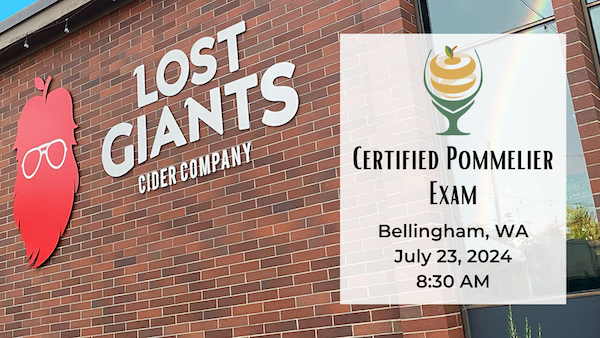
Take the Certified Pommelier Exam at Lost Giants Cider in Bellingham, Washington on July 23!
Ready to take the next step in your professional development in the cider industry? If you have already passed the Level 1 Certified Cider Guide exam and are looking for that next challenge? Now is your chance!
The American Cider Association is pleased to announce a Certified Pommelier™ Exam will be held at Lost Giants Cider in Bellingham, WA. The exam big promptly at 8:30 AM on Tuesday, July 23, 2024.
*Level 1 Certified Cider Guide certification is a prerequisite for taking the Certified Pommelier Exam. (Haven’t taken your Level 1 Certified Cider Guide Exam? Buy the bundle here! ACA Member discounts are available.)
There’s also a discount code available for ACA members for the Certified Pommelier Exam. You can find that code in our Resource Hub.
WHAT IS THE CERTIFIED POMMELIER EXAM?
The American Cider Association’s mission is to grow a diverse and successful cider industry by providing valuable information, resources and services to our members and by advocating on their behalf. One way to fulfill this mission is through the Certified Cider Professional Program, a program aimed at educating the front-line of cider hospitality (distributors, retailers, bartenders and more!) while also welcoming journalists and serious cider enthusiasts.
The exam for the introductory level certification, Certified Cider Guide (CCG), is an online test that can be taken at any time. The exam for the more advanced second level of certification, Certified Pommelier, is only available in person. The exam consists of two parts, a written theory exam comprising short answer and essay questions and a blind sensory evaluation of a number of ciders. Passing the introductory level exam is a mandatory prerequisite to sitting for the Level 2 Certified Pommelier exam.
Certified Pommeliers must have a fundamental understanding of all topics covered at the introductory level, but must also be able to think critically and demonstrate a deeper understanding of cider and the cider industry.
The topics covered in the exam are:
- Apples, the Orchard & History
- Cider Making
- Flavor & Evaluation
- Cider Families
- Keeping & Serving
- Food & Cider
- Social Responsibility
The exam is meant to be challenging. The only information necessary for successfully passing the theory section of the exam is contained in the Certified Pommelier Study Guide available on Amazon. To study for the evaluation section of the exam, candidates should consider attending one of the sensory analysis videos available through the ACA’s website or attend one of the regularly scheduled webinars. Access to pre-recorded webinars and registration for upcoming live webinars is available directly through our website.
WHY BECOME A CERTIFIED POMMELIER?
Cider is a beautifully nuanced beverage that is less well understood by most consumers. Having the knowledge and skills required to become a Certified Pommelier will equip you to better serve customers, enhance your standing in the beverage community, and give you a unique and valuable professional qualification. Being recognized as a Certified Pommelier will put you in the vanguard of advanced cider specialists in this ever growing category.
HOW MUCH DOES THE TEST COST?
The registration fee for the exam is $350. Current members of the ACA can register at a discounted price of $250 by using the discount code in our Resource Hub. If a candidate sits for the exam but does not pass either section, or only passes one of the two sections, theory or sensory evaluation, they can resit for the section of the exam that they did not pass at a future date. The fee for retaking the exam is $175 for non-members and $125 for current members of the ACA.
Read Terms & Conditions before registering.
WHAT MATERIALS ARE AVAILABLE TO STUDY FOR THE EXAM?
- The Certified Pommelier Study Guide is available directly through Amazon. It is also available at all of Amazon’s international sites.This is the official study guide for the second level of the American Cider Association’s professional certification program. It contains all of the information needed to study for and pass the examination. No other reference materials are required.
- There is also a dedicated Facebook Group (that is open for all to join) with prep materials and in-depth peer conversations that many candidates have found useful.
- Sensory evaluation is an important part of being a Certified Pommelier which is why we test your ability to accurately analyze the structural components, aromas, and flavors of a variety of ciders. In order to aid in the development of your sensory evaluation skills and understand the approach to testing them, we have several pre-recorded videos available for purchase. In addition, we host several live sensory analysis webinars each year. You can access the videos and look for scheduled webinars here.
Frequently Asked Questions (Download the Frequently Asked Questions document.)
- Are there ID or minimum age requirements to sit for the event? YES. You must be of legal drinking age in the country where you sit for the exam, and when checking in at the exam you must provide a photo ID that will both verify your age and identity .
- Do I need to pass the Certified Cider Guide exam to take the Certified Pommelier exam? Yes. Passing the introductory exam to become a Certified Cider Guide is a prerequisite. If you have not yet taken this exam, you can purchase a package which includes an instructional video, study guide, and access to an online exam HERE.
- How many Certified Pommeliers are there currently? You can find the current number of Certified Pommelers here.
- Is the Certified Pommelier Exam available in my area? Certified Pommelier exams are held periodically throughout the year and in a variety of locations. Please check our current exam schedule to find an exam suitable for you.
- What can I bring into the event? You may bring only a water bottle into the exam space. Cell phones, smart watches, computers, books or papers, and any and all other personal items must be left at a designated storage area in the exam room. Pencils will be provided, and spare paper will be available on request. Spit cups, and water will be provided during the evaluation exam. We encourage you to bring your own water bottle for the theory exam. Please contact the Cider Education Operations Manager, Jennie Dorsey at jennie@ciderassociation.org prior to registering for the exam if you wish to request special accommodations.
- How can I contact the organizer with any questions? Please contact Cider Education Operations Manager Jennie Dorsey at jennie@ciderassociation.org.
- When can I register for the exam? Exam registration is open until 14 days before the posted exam date.
- What happens if I cannot attend my registered exam? Please see Exam Rescheduling, Timelines and Fees in the Terms and Conditions Document for full details. If you do need to cancel your registration, exam registration fees can be refunded up to 14 days before the exam. Please note that a $25 administration fee applies to any cancellation.
- Is it ok if the name on my ticket or registration doesn’t match the person who attends? Registrations are not transferable, so the name on the I.D. presented when checking in for the exam must match the name on the registration.
- How long does the test take? You are given 2 hours to complete the theory section of the exam and 1 hour and 15 minutes to complete the sensory evaluation section. There is a 15 minute break in between sections.
- Is there a tasting section on the test? Yes. You will be asked to evaluate six ciders in two flights, one flight that assesses your ability to distinguish between key structural elements and a second where you are asked to complete a full evaluation of three ciders using the Structured Sensory Analysis format. The possible aromas and flavors document will be supplied for use during the exam.
- What is the grade needed for passing? 60% of the possible points for sensory evaluation and 70% for theory
- When will we receive our graded exams? Exams are not returned to candidates, however you will be notified as to whether or not you have passed about 6 weeks from the exam date. If you did not pass a section of the exam, you may request a breakdown of your points by general topic to help you identify areas in which you could improve your score should you wish to retake the exam.
July 25: Level 1 Certified Cider Guide Workshop & Certification in London


Join Us July 25th in London for a Level 1 Certified Cider Guide Workshop & Certification!
For the first time, the Certified Cider Professional (CCP) Program is being taught in the UK! The world’s finest cider education program will launch with a Level 1: Certified Cider Guide (CCG) classroom session and exam in the heart of London on Thursday 25th July. Leisurely run over the course of a day, this L1 CCG training has been developed specifically for those who work directly with consumers and trade customers, namely those working in retail and hospitality, importers, distributors, wholesalers and employees of cider producers. It is also the program for cider fans, aficionados and drinkers can showcase their extra weight of knowledge and passion. It is designed to enable participants to have a professional standard of knowledge and appreciation for different types of cider and how they are achieved, an approach to assessing cider and the different sensory qualities they have, and guidance on the best practice principles for serving, storing and selling.
Candidates will receive an email containing a downloadable study guide and a link to the online exam in advance of the workshop. The day itself will consist of a presentation of the materials from the study guide, with extra elaboration and, of course, the opportunity for questions. There will also be a guided sensory session of at least 3 ciders clearly demonstrating the key structural characteristics within cider, and utilizing a structured approach to their assessment.
The topics covered in Level 1: CCG are:
- Apples, Pears and Orchards
- Cider Production
- Families and Flavor
- Evaluating Cider
- Keeping and Serving
- Cider and Food
- Social Responsibility
Event Timeline:
- 09:30: Arrival and Check In
- 10:00: CCG Presentation Part 1
- 11:30: Break
- 11:45: CCG Presentation Part 2
- 13:15: Lunch
- 14:15: Sensory Analysis
- 15:30: Exam
Dry Cider July Looks to Celebrate 0g Residual Sugar Ciders
The ACA’s Dry Cider July campaign is set to launch on July 1, 2024 as a way of highlighting ciders containing zero grams of residual sugar. We encourage everyone to join the campaign through social media with the hashtags #dryciderjuly and #pickdrycider!
There is a common misconception that all ciders are sweet. The ACA is out to bust this cider myth–it’s actually easy for a cidermaker to ferment their cider to 100% dry leaving no sugar in the final product. For those looking to limit their sugar intake or who prefer the flavor of dry ciders, we have put together a database of producers and offerings that make finding these ciders easier for consumers.
The range of ciders in the Dry Cider Finder reflects the vast possibilities of flavor and styles possible in cider, even without sugar. From single varietal ciders, showcasing specific apple varieties and served in a 750 ml bottle, to ciders aged on rose petals and sage and served in a 12 oz can, and everything in between.
The Dry Cider Finder can be found on our website.
If you are a cidery and have 0g residual sugar ciders that you would like to have showcased in the directory, please fill out our form here by June 18th, 2024 to be included on this year’s list. You must be an active ACA member to be included in the Dry Cider Finder.
For any questions regarding the Dry Cider July campaign, please don’t hesitate to reach out to our Membership and Engagement Coordinator Miranda Bradeen.
American Cider Association Partners With Great American Beer Festival® Competition to Welcome Cider

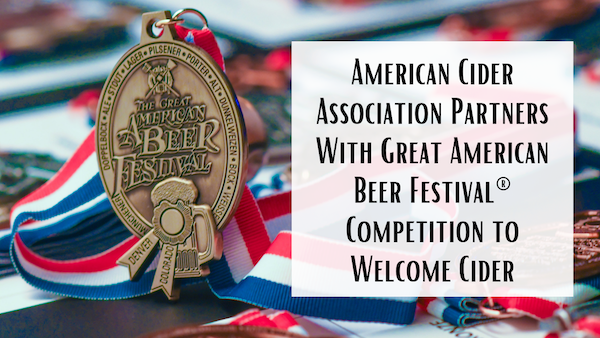
The American Cider Association (ACA), the national trade organization for the hard cider industry, is thrilled to announce its partnership with the Great American Beer Festival® (GABF®) Competition. This collaboration will see the introduction of cider as a prominent category in the esteemed annual competition, set to take place this October in Denver, Colorado. GABF, organized by the Brewers Association (BA), is the nation’s largest professional beer competition. Its medals are globally acknowledged as an emblem of brewing excellence and among the most sought-after accolades within the brewing community.
The GABF competition started in 1987 and has grown to be one of the largest beer competitions in the world, with over 9,000 individual beers entering each year. In 2023, 9,298 entries spanning 99 beer categories across 175 styles were judged, and 263 breweries were awarded 303 medals.
“The medals are meaningful to the winners due to the competition’s reputation with retailers and wholesalers. This is one of the many reasons that GABF opening its doors to cider is something we’re excited about,” says ACA’s CEO Michelle McGrath. “Although cider is not beer, the two categories have a lot in common–especially routes to market–making collaboration possible and exciting.”
The BA welcomes the ACA partnership by including ACA’s input on styles and judges and extends the BA member competition entry rate to ACA’s cidery-level members. GABF registration opened on June 11, and the ACA cidery-level members can find instructions for submitting their entries in the ACA Resource Hub.
“The Great American Beer Festival competition serves as a platform for the finest beers from across the nation to undergo rigorous scrutiny and vie for the title of ‘Best in Class,’” remarked Chris Williams, competition director for the Great American Beer Festival. “This year, we are pleased to invite the more than 1,300 commercial cider producers to compete for medals in the inaugural cider categories.”
“There is a global ecosystem of cider competitions that provide a range of services to the cider industry, including professional cider education, networking, recognition, and category development,” says McGrath. “We value all the various competitions and are thrilled to welcome GABF into the world of cider competitions.”
The BA sees this as the beginning of developing cider at GABF and hopes to work with the ACA to grow entries and styles in subsequent years.
The consumer-facing festival—the nation’s largest beer festival—also showcases cider and other beverages, and the ACA will be present at the festival this fall.
Learn more about the GABF competition here. ACA members can log into their ACA member accounts starting June 11 and head to the Resource Hub for information on how to get member rate discounts to enter cider in GABF 2024.
Press Release: ACA Welcomes Six New European Certified Pommeliers

The American Cider Association is pleased to welcome six new European Certified Pommeliers after completion of the first certification exam offered outside of the United States. The new Certified Pommeliers are some of the key members of the European cider community, and their embrace of the Certified Cider Professional program is another step forward in the realization of the ACA’s vision for the industry through increasing the understanding and appreciation of cider and perry.
The new Certified Pommliers hale from countries across the continent including the UK, Italy, France, Germany, and Lithuania. They are Adam Wells, who was on the shortlist for 2024 Fortnum and Mason’s Drink Writer of the Year for his work at Cider Review, Marco Manfrini, president of the Associazione Pommelier e Assaggiatori di Sidro, influential cider writer (Cider Explorer) Natalia Wszelaki, historian, writer and maker at Kertelreiter Cider & Perry Barry Masterson, cidermaker at Sodo Sidrinė Donatas Genys, and wine and cider scientist and consultant Yann Gilles.

Donatas Genys
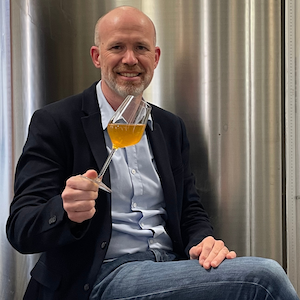
Yann Gilles
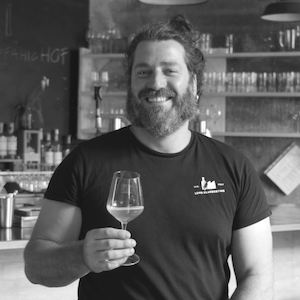
Marco Manfrini

Barry Masterson

Adam Wells

Natalia Wszelaki
“The response to the exam was amazing,” shares the ACA’s CEO Michelle McGrath, “and to have such a distinguished group now part of the growing global CCP community is a testament to the CCP program’s role in supporting the growth of cider within the larger beverage category. It is a rigorous exam, and you could tell that all who sat for it had taken their studies seriously though they are all already playing significant roles in the cider industry. We are so grateful to Christine Isensee-Kiseau, Michael Stöckl, and the whole Cider World Frankfurt team for partnering with the ACA to make this exam happen and hope we can do it again next year.”
Education and certification programs such as those run by Cicerone, the Wine and Spirits Education Trust, and the Court of Master Sommeliers, have done much to increase the understanding of the beverages they cover and enhance the professional standing of the individuals that complete them. With its CCP program, the ACA is poised to do the same for cider, raising the drink’s profile within the larger hospitality community as cider’s share of the global beverage market continues its steady growth. Continuing education is an important part of staying relevant in a rapidly changing hospitality environment.
For more information about the CCP program contact Education Operations Manager Jennie Dorsey at jennie@ciderassociation.org or visit the ACA website at www.ciderassociation.org. For information about CCP classes in Europe, contact European CCP representative Gabe Cook at gabe@ciderassociation.org.
###
Member Rate Increase and New Member Levels Notification
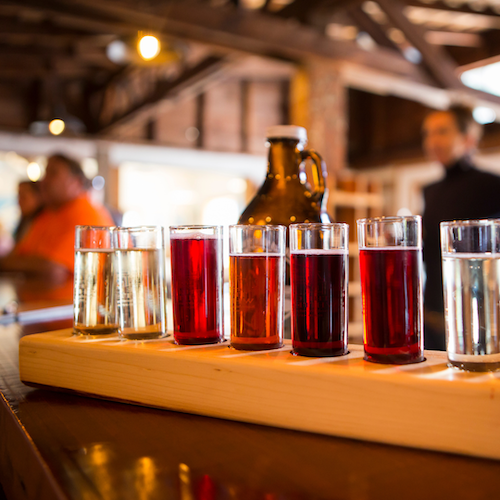

We love cider! At ACA we are deeply committed to supporting the industry and our members so that the US cider community can be strong today and continue thriving for years to come.
So it goes without saying, we also love our members. That’s one reason why we haven’t increased our membership dues for more than 7 years. We know your resources are limited, and for this reason, we take our fee structure and your benefits very seriously. But the time has come to adjust our membership rates slightly, so we can continue growing our education and advocacy programming. We are also adding some new membership levels to better meet demand.
PAYING DUES EARLY
If you would like to pay your next annual dues early, we will be happy to honor the current rate before the increases take place on July 1. Please contact our membership and engagement coordinator Miranda for more information.
VOTING LEVEL MEMBERS
Active US Cideries (Organizational Membership Type)
The American Cider Association’s bylaws define voting level members as any commercial producer of cider and/or perry with production in the United States of America with a valid, current Federal winery license issued by the Alcohol and Tobacco Tax and Trade Bureau (TTB)–a requirement for all commercial cider producers in the United States.
Voting level member dues will increase on July 1, 2024. The range in increase will depend on your membership level. These increases will help the ACA to continue delivering relevant and impactful programs to support your business’s bottom line, make your life easier with access to helpful resources and expertise, and cultivate a healthy US cider industry and community.
These memberships are an example of an Organizational Membership Type, where all employees are eligible and included in the membership for no additional cost.
| US Commercial Cidery Membership Levels | Prior Dues | New Dues | Rate Increase |
| Annual production of 1-5,000 gal/year | $175 | $185 | 6% |
| Annual production of 5,001-25,000 gal/year | $350 | $370 | 6% |
| Annual production of 25,001-100,000 gal/year | $500 | $550 | 10% |
| Annual production of 100,001-500,000 gal/year | $1,000 | $1,150 | 15% |
| Annual production of 500,001-1,000,000 egal/year | $2,000 | $2,300 | 15% |
| Annual production of > 1,000,000 gal/year | $3,000 | $3,450 | 15% |
ALLIED MEMBERS
Allied members are not voting level members per ACA’s bylaws.
Cideries-in-planning (Organizational Membership Type)
Before a cidery begins commercial production, they may join as allied members to get access to the helpful resources available to ACA members.
- The dues for US-based Cidery-In-Planning members will increase 6% to $185 annually.
- The new Cidery-In-Planning member type for International Members will be $196 annually.
Enthusiasts (Individual Membership Type)
We are excited to add a second enthusiast type membership specifically for bartenders, sommeliers, beverage directors, chefs and other food, beverage and hospitality professionals.
- The Hospitality membership type will be $75 per person annually.
- The home cidermaker/enthusiast membership will remain $75 per person annually.
Retailers, Bars, Restaurants and Wholesalers (Organizational Membership Type)
Retailers, bars, restaurants or wholesalers who sign up as allied members can include all their employees in their membership with no added fee.
- Independent Retailers, Bars, Restaurants and Wholesalers: $250 per company annually
- Corporate and Chain Retailers, Bars, Restaurants: $385 per company annually
Allied Trade (Organization Membership Type)
The ACA is lucky to have the support of vendors, suppliers, service providers and partner organizations who believe in our programming to support the cider industry. (Please note that Allied Trade member benefits apply to an organization’s employees, not members, volunteers, subsidiaries or clients.)
- Allied Trade Memberships: $375 per company per year
Orchards (Organizational Membership Type)
We are adding two different types of farm memberships for fruit growers based on farm revenue. For now these memberships use the USDA farm designations to differentiate. We are developing specific benefits for our grower members, and are looking into how to designate our members that are both growers and cider producers. Stay tuned!
- Family Farms (<$500,000 gross annual sales): $195 per farm annually
- Commercial Farms (>$500,000 gross annual sales) $375 per farm annually
International Cider Producer Members (Organizational Membership Type)
We are privileged to have international cideries participate in ACA programming year round. We’re refining our international cidery level member fees as follows:
| Int’l Commercial Cidery Membership Levels | Dues |
| Annual production of 1-5,000 gal/year | $ 196 |
| Annual production of 5,001-25,000 gal/year | $ 383 |
| Annual production of 25,001-100,000 gal/year | $ 567 |
| Annual production of 100,001-500,000 gal/year | $ 1,155 |
| Annual production of 500,001-1,000,000 gal/year | $ 2,300 |
| Annual production of > 1,000,000 gal/year | $ 3,500 |
THANK YOU, MEMBERS!
We’re looking forward to continuing working with you and for you! Together we can grow and nurture a robust and diverse cider industry. We appreciate your support. We can’t do it without you!
Press Release: ACA Reaches 100 Certified Pommeliers Following New York Exam
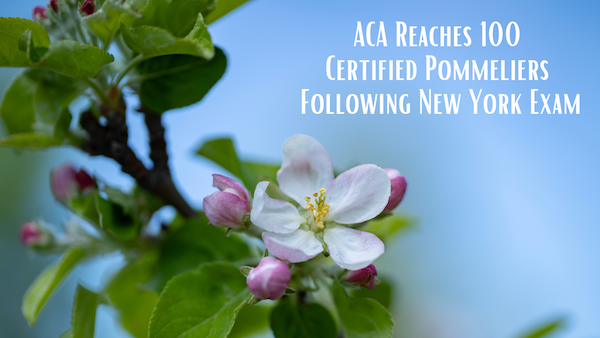
The American Cider Association is thrilled to announce that 100 individuals have now attained the prestigious Certified Pommelier designation following the exam held at ACA member cidery Wölffer Estate in Sagaponack, New York on April 18. This benchmark is meaningful for the Certified Pommelier program because the exam is rigorous with robust theory and sensory evaluation sections . The new Certified Pommeliers are Hannah Keggins, Cidermaker at Westwind Orchard, Alicia Pelkey, Cidermaker at Red Apple Farm, and Charlee Oddo, Cider Expert at Ancona’s Wines & Liquor.
Hannah Keggins

Alicia Pelkey

Charlee Oddo
“We are beyond excited to celebrate that we now have 100 Certified Pommeliers. To see the dedication of so many in the beverage community equip themselves with advanced skills to guide consumers through the wide variety of ciders available is truly inspiring,” comments ACA CEO Michelle McGrath.
Early on, the American Cider Association recognized the need to promote specialized knowledge about the cider category. Most food and beverage certification programs cover cider in a cursory manner or not at all. With cider being a beautifully nuanced beverage with a diverse set of elements often not known by culinary and hospitality professionals, the establishment of the Certified Cider Professional (CCP) program in 2016 was a strategic maneuver to educate professional audiences.
Today, the CCP program is educating those on the front-line of cider sales, making it the world’s most comprehensive and in-depth cider appreciation program for food and beverage professionals worldwide.
“We know that consumers respond to engaged servers, and that confident recommendations go a long way in influencing their purchase decision. Our theory of change is that cider enthusiasm is contagious–CCP is how we keep the flame growing,” adds McGrath.
Certified Cider Professional Program Benchmarks as of May 21, 2024:
- Number of Level 1 Certified Cider Guides: 2,602
- Number of States with Certified Cider Guides: 49 including DC
- Number of Countries with Certified Cider Guides: 20
- Number of Level 2 Certified Pommeliers: 100
- Certified Pommeliers Around the World: United States, Canada, Japan, Australia, Italy, New Zealand and the UK
More about the Certified Cider Professional Program and Upcoming Opportunities
The CCP program begins with a Certified Cider Guide (CCG) Level 1 certification to help industry professionals develop a fundamental understanding of cider. The Certified Pommelier (CP) Level 2 takes it a step further by encouraging cider professionals to think critically and showcase a higher level of understanding of the elements of cider. The rigorous testing process consists of four types of questions, including short answer, fill in the blank, essay, and blind sensory–which is based on tasting.
The ACA is dedicated to ensuring that all information tested on the exam is made accessible to anyone who desires to learn. To that end, the ACA released a textbook in March of 2023 to help candidates prepare to take the exam with just one comprehensive resource. The second edition of the textbook was released in March of 2024 to present a more global view of the cider industry as well as including new sections covering important emerging sectors such as low and no-alcohol products.The textbook is available for purchase through Kindle Direct Publishing. Additionally, the ACA offers sensory analysis practice webinars and a Facebook study group continuously updated with resources for exam candidates. Interested candidates can find links to all Certified Pommelier resources on the ACA website.
For those interested in attaining their Certified Pommelier designation, there are several upcoming exams to choose from:
- July 23: Bellingham, WA
- August 20: Minneapolis, MN
- October 8: Austin, TX
- February 5, 2025: CiderCon® 2025 Chicago
In addition, there is a live sensory analysis webinar scheduled for June 27 from 4:00 – 6:00 PM Pacific featuring Brooklyn Cider House. Those interested in attending can find all the details on the ACA website. Taking advantage of sensory analysis webinars is highly encouraged for those interested in taking the Certified Pommelier exam.
Contact the ACA’s Education Operations Manager Jennie Dorsey if you have questions about the Certified Cider Professional program or are interested in taking either the Level 1 Certified Cider Guide or Level 2 Certified Pommelier exams. You can also learn more at https://ciderassociation.org/certification.
###
May 30: Navigating Trends: Insights Into Wine & Spirits for Cidermakers

Join us for an exclusive webinar hosted by 3 Tier Beverages consultants Julia Lechleiter and Mary Mills, in collaboration with the American Cider Association. We will explore Wine and Spirit trends and the possible intersection with Cider.
As the BevAlc industry continues to evolve, it’s crucial for Cider producers to stay informed to be able to adapt to shifting consumer preferences. In this insightful session, industry experts will explore key trends, innovations, and consumer behaviors that are shaping the Wine and Spirits landscape provided through NIQ Scan and Consumer Panel Data.
Whether you’re a seasoned professional or new to the cider industry, this webinar offers a unique opportunity to gain valuable knowledge and stay ahead of the curve.
About the Speakers:

Mary Mills
Mary Mills joined 3 Tier Beverages in 2022 from NielsenIQ, where she spent 14 years across client management, business development, and innovation insights. She has experience working with various clients in the food, beverage, and consumer goods industries, with 9 years focused on alcohol specifically. She holds a Marketing degree from The Ohio State University and is an avid Buckeye fan. She resides in Columbus, Ohio with her husband Andy and two children, Luke and Ava.
Julia Lechleiter
Julia Lechleiter started out her career at 84.51 on their Insights team where she supported emerging CPG brands in leveraging Kroger household data to guide customer-focused assortment, promotion, innovation and digital strategies. After supporting clients on numerous new item presentations and being exposed to the power of BASES innovation research, she joined NIQ on the BASES BevAl team. While she learned to love the BevAl industry, she missed working in a data platform to support clients run various analyses, specifically those related to retailer relations which led her to 3 Tier. Julia graduated from Miami University with a degree in Marketing, and lives in Cincinnati, Ohio with her husband. They have a 1-year old son, John, and two cocker spaniels, Bailey and Phil.
June 17: Sensory Analysis Workshop at Bivouac Ciderworks
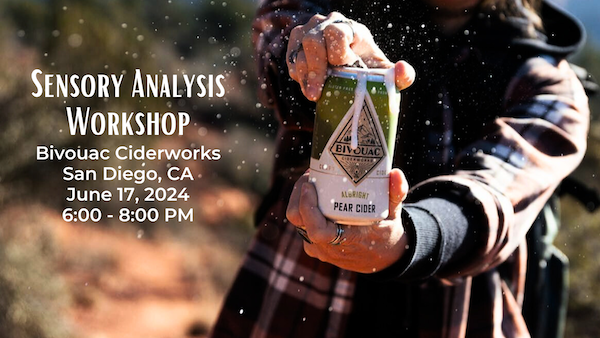
Interested in learning how to taste cider like a pro? The American Cider Association is proud to announce that we will be teaming up with Bivouac Cider to host a cider sensory workshop. Join us Monday, June 17 from 6:00 – 8:00 PM at Adventure Lodge, 3980 30th Street, San Diego, CA 92104 for an in person workshop.
Over the course of 2 hours, an expert Certified Pommelier will lead you on a guided tasting through two ciders and a food pairing. This hands on workshop will teach you the professional tips and tricks for understanding the elements of local and national ciders. Come sip, swirl, and savor delicious ciders! Perfect for cider lovers at any level
Cost: $40
Agenda:
- 5:30 PM: Doors open
- 6:00 PM: Cider sensory analysis workshop begins.
- 8:00 PM: Networking
Must be 21 or over to attend.
Are you an ACA member? Click here to access the member exclusive discount code in our Resource Hub.
June 27: Live Sensory Analysis Webinar with Brooklyn Cider House
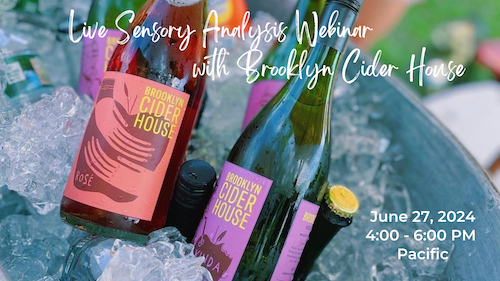
You’re invited to a Live Sensory Analysis webinar on Thursday, June 27th, from 4:00 to 6:00 PM Pacific!
Join our Certified Pommelier panel as they guide you through an immersive sensory experience featuring cider from Brooklyn Cider House in New York.
During this live practice session, you’ll learn how to analyze and appreciate cider like a pro and prep for your Certified Pommelier exam.
Not able to make it to the live event? No worries! The webinar will be recorded and available for you rewatch at any time with your initial purchase.
Cider must be purchased separately. Please be aware that it may take several days to receive your cider order, so we encourage you to purchase your ciders as soon as possible. Also, please verify that cider can be sent to your state before purchasing ciders. Ciders can be purchased from Brooklyn Cider House by clicking here. Use code “CP2024” at checkout to receive $2 off the bundle price.
Cost for the webinar is $30 for non-members and $20 for ACA members. Are you an ACA member? You can find your discount code in the Resource Hub.
Once registered, you will receive a confirmation email. This email is a placeholder for the event. The evening before the event you will receive an email with a Zoom link to the webinar. Please note this link will be sent to the registered email.
USA Featured as Guests of Honor at CiderWorld in Germany
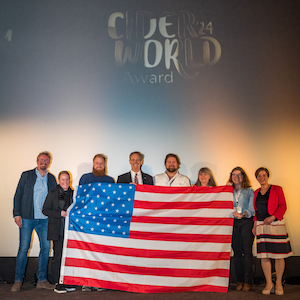
Darlene Hayes Recognized for Her Efforts to Develop the Category

The 16th annual CiderWorld took place in Frankfurt, Germany last week. The combined competition, celebration, and cider expo welcomed the United States as the Guest Country of Honor this year. In addition, the ACA was able to partner with CiderWorld to offer the first Level 1 Certified Cider Guide Workshop & Certification and the first Certified Pommelier Exam in Europe.

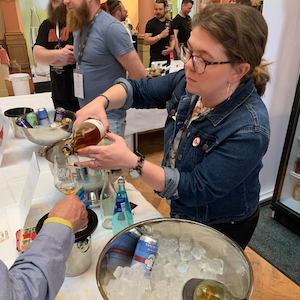
CiderWorld’s expo was held at the Palmengarten and featured over 100 exhibitors from 17 countries who shared their cider with attendees.The American Cider Association joined member cideries ANXO and Vander Mill at the USA’s spotlight booth. The ACA also poured cider from Alpenfire Cider, Bauman’s Cider, Metal House Cider, Raging Cider & Mead and Tanuki Cider, highlighting the diversity and range of American Cider to German consumers.
“Many of the visitors to our cider booth were shocked to hear about the size of the American cider industry and taste the quality of some of the ciders made there. It was an incredible experience to share these ciders with German consumers who drink a lot more cider than the average American,” reflected Michelle McGrath, CEO of ACA.
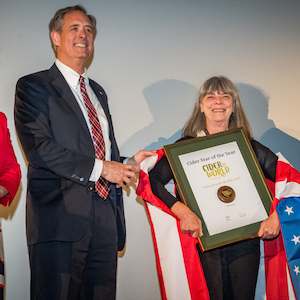
Every year at CiderWorld an individual is recognized as the Cider Star of the Year. The ACA is thrilled to announce that this year the honor went to Darlene Hayes, ACA Educational Content Manager. Darlene was recognized for her efforts to raise awareness of the cider industry around the world, her research into the history and roots of cider in the U.S., and for her work with other cider specialists to develop a consensus on knowledge and standards.
“Darlene Hayes’ extensive knowledge of science and law, as well as her exceptional palate, make her the ideal partner when it comes to the growth and development of the cider industry,” says Michael Stöckl, Managing Director of CiderWorld.
Norman Thatcher Scharpf, U.S. Consul General, joined the CiderWorld award ceremony to meet U.S. cider producers and celebrate the U.S. being the guest country of honor. He formally addressed the audience with remarks on the growth and significance of the U.S. cider market.
Frankfurt and the Hessen region are steeped in centuries of cider culture that have not only persevered but flourished, symbolizing a cherished heritage and a testament to the region’s love for its local produce and traditional crafts. Known locally as “Apfelwein” in German, this cider has been a staple of Hessen culture, deeply ingrained in the social fabric of the region. The art of cidermaking in Hesse evolved from the abundant apple orchards dotting the countryside, with families passing down time-honored recipes from generation to generation. Frankfurt, in particular, emerged as a hub for cider production and consumption, giving rise to cozy “Apfelweinwirtschaften” (apple wine taverns) where locals and visitors alike can gather to enjoy local cider.
It was a great honor to participate in the CiderWorld competition and expo. The ACA hopes that more U.S. cideries will enter the CiderWorld competition in the future.
###
Meet Your Board Member: Josie Mielke
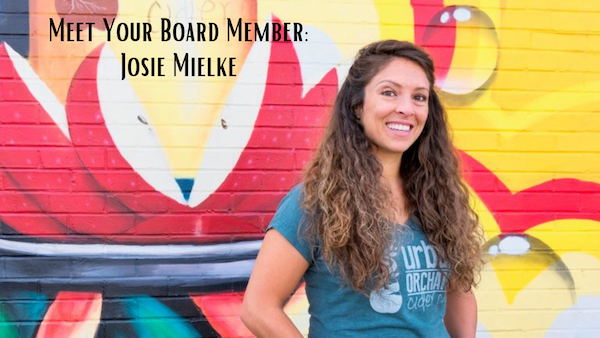
Josie Mielke is the co-owner and operations manager at Urban Orchard Cider Company in Asheville, North Carolina. She was elected to the ACA board of directors in January 2024 to an At Large Seat.
Tell us about your cidery/farm/orchard
Urban Orchard Cider Company is family owned and operated by a crew of passionate and fun-loving cider nerds. We source ALL of our apples from North Carolina, and utilize multiple yeast strains to craft a diverse offering of cider flavor and aromatic profiles. Our current collection of recipes contains over 80 innovative and creative ciders, utilizing fruits, vegetables, spices, herbs, flowers, and hot peppers. All of our ciders are aged a minimum of six months, to allow for natural clarification, and the maturation of natural flavors and aromas.
How did you get into cider?
Like a lot of people I am gluten intolerant. I had dabbled in cidermaking because I went gluten free in 2006 and could not find a cider that I enjoyed. Unfortunately, at that time there was not a lot of selection and I found that they were all too sweet for me. At the same time I had moved back to Asheville and was having a very hard time finding employment due to the recession and Asheville being a service based city. Our family had discussed starting a business after the recession and with the craft beer boom and the accessibility of apples in our area this seemed like the perfect fit. 11 years later, we’re still here, and sometimes I really can’t remember how it all happened. Small business is a whirlwind.
Why did you decide to run for a position on the board?
The pandemic had a big impact on my view of community. Pre-Covid I felt like an isolationist. I kept my head down and plowed through, focused solely on our business operations. Post-Covid and now 11 years in the industry I have a more holistic view of what we can accomplish together. A thriving cider industry is good for all of us. I would be lying if I also didn’t mention that I was getting a little stagnant in my position. The opportunity to branch out of my daily routine and make an impact invigorates me. As a political science and history double major there really is nothing more exciting than dropping a bill in Congress and trying to get it passed. I can’t wait to witness and be a part of the process for the Bubble Bill.
What are your hopes for the future of the US Cider Industry?
I’d like to see cider valued for the artful product that it is. The entire industry has been working for a long time to overcome stereotypes about our category. The fact is that the US is producing some fantastic cider and I think that the public is finally catching on that cider is a versatile, creative and sophisticated beverage. Not to mention it tastes damn good.
How do you describe your cider region?
The South is full of old generational apple farms. Many of which in our area used to grow for Gerber. Urban Orchard has made it a point to always buy local, and now it’s as important as ever. Asheville is booming and the housing market is hungry for land. Many farms are considering sales to real estate developers and farming is a tough gig. Now that Gerber is gone, cider is stepping in as a value added product for growers. While the majority of our fruit is dessert and eating apples, we think that you can craft fantastic cider from blending the variety of cultivars which provide some lovely acids and great sugar content.
What’s your favorite apple to work with and why?
I don’t really have a favorite apple. While the apple is always the star in Urban Orchard products, I really enjoy experimentation with complementary fruits, herbs, vegetables, hot peppers, etc. That may set me apart from a lot of producers as I am not a traditionalist, but my passion comes from a culinary inquisitiveness and it’s the most fun aspect of the business to me.
What is your favorite cider/food pairing?
Ginger infused cider and sushi (yum). Really any nice cider with spicy Asian food is delicious. Cider and ice cream is also very tasty.
What is your favorite nature/cider pairing?
Cider on the beach baby! A better beverage has never been made for a hot day in the sun.
What would you like our members to know about you that they might not know? –non-cider related!
Traveling is my passion, as well as staying fit by challenging myself at the gym, outdoor activities, dancing and yoga. I have two energetic Airedales and a blind little poodle who keep me on my toes. I recently became a certified scuba diver and went to Norway to swim with Orcas! I also do volunteer work such as working the polls during elections, planning fundraisers for food security, and assisting with care for mistreated animals.
ACA Seeks Guest Country for CiderCon® 2025

CiderCon® is one of the most robust, diverse, thorough and connected professional cider conferences in the world. We pride ourselves on being a host to international attendees year after year. The 15th annual CiderCon® will take place in Chicago, Illinois from February 4-7, 2025. We expect well over 1,000 people to attend. We are requesting proposals from other countries to send a diverse representation of their regional cidermaking community to be featured guests of honor at CiderCon® 2025. Previously featured countries are Spain, France, UK, Canada, New Zealand, Ireland, Sweden and Norway. Guests from these countries continue to attend future CiderCons because of the quality programming and because CiderCon® is an exchange of ideas, understanding and knowledge that enriches the global cider community.
Costs: The American Cider Association will waive CiderCon® registration fees, provide up to 5 nights hotel for up to 4 cidermakers, and pay for and help coordinate cider imports for educational sessions. Guest countries are asked to further fund cidermaker expenses (airfare, taxi, per diem). Cidermakers may also fundraise through sponsorships, and we are happy to brainstorm strategies. ACA will also provide professional photos of cidermakers participating in CiderCon®, suitable for PR uses by their home country.
Proposals will be considered on the following priorities: (A) evidence of guest country financial commitment (B) compelling cider story (C) depth of cidermaking knowledge for proposed speakers (D) diversity of proposed speakers, in cider style, cider opinions, and demographics. We are also prioritizing countries that have not been featured before.
Countries in close proximity to each other may want to team up if there are less cideries available in their own country. We welcome creative proposals.
Proposals are due June 1, 2024 at 5 PM Pacific Time. Please contact Michelle@ciderassociation.org if you have any questions.
CiderCon® 2025 Request for Speaking Proposals


Mark your calendars for an unparalleled gathering of minds and talents at CiderCon® 2025, set to transform the vibrant city of Chicago from February 5-7, 2025. As the world’s leading event dedicated to advancing the craft of cidermaking, CiderCon® offers an exceptional platform for networking, learning, and sharing the rich traditions and innovative techniques that define our industry.
This year, we’re casting a wide net to bring together the most knowledgeable, passionate, and visionary individuals among us. We’re looking for presentations that will enlighten and inspire, covering a wide array of topics from best practices and emerging trends to groundbreaking research and process improvements.
To make a successful proposal, please specify:
- Target audience: Role in industry as well as business model
- Skill Level: Is material appropriate for beginner, intermediate, advanced, or expert level audience members
- Key Takeaways: What skill, tool or new understanding will attendees walk away with?
The topics we’re particularly excited about this year include:
- Compliance
- Branding
- Marketing
- Distributor Relationships
- Sales Strategies
- Market Trends
- Human Resources
- Finance
- Safety
- Leadership
- Equity & Inclusion.
If you have insights or experiences in these areas, we want to hear from you!
At the heart of CiderCon® is our unwavering commitment to inclusivity. We believe that diversity fuels innovation and strengthens our community. That’s why we encourage proposals from individuals of all backgrounds, including BIPOC, LGBTQIA+, veterans, and those with disabilities. Furthermore, we’re eager to hear from voices in related fields outside of cider to enrich our discussions and broaden our horizons.
Please submit your proposals to the CiderCon® committee by June 1, 2024 by filling out the Google Form. If selected, you’ll receive a complimentary pass to CiderCon® 2025, including lunches and access to all the fantastic non-ticketed events we have planned.
Don’t miss this opportunity to contribute to the growth and success of the cider industry. Together, we can make CiderCon® 2025 a milestone event that celebrates our craft, fosters innovation, and builds a more inclusive and vibrant community. We can’t wait to see you in Chicago!
April 12: Member Orientation Webinar

Join us for our Member Orientation on April 12 at 11:00 AM Pacific
We are thrilled to announce that we will be holding our first ever Member Orientation webinar! There is such a vast amount of resources that the ACA offers to you all and we want to make sure that you know where to find them and how to take advantage of them. Miranda, our new Membership Coordinator will be leading a short video to go over who we are as an organization, the benefits of being a member, and a tour of our website. We have made a few changes to make the things that you are looking for most, more easily accessible. She will also discuss the easiest ways to manage your membership, give your team access to the membership portal, and answer any questions you may have.
The Orientation will take place via Zoom on April 12th at 11:00am Pacific Standard Time. If you have any questions regarding the Orientation, feel free to reach out to our Membership & Engagement Coordinator Miranda Bradeen at miranda@ciderassociation.org. If you are unable to attend, the video will be recorded and you will be able to watch it at a time that is convenient for you.
We look forward to seeing you there!
May 13: 2024 Annual Membership Meeting
We’re thrilled to invite you to join us on Monday, May 13, 2024 at 12:00 PM Pacific on Zoom for our 2024 Annual Membership Meeting.
During the meeting, we’ll reflect on our accomplishments from the past year, take a close look at our new strategic plan, and discuss how we work together under the big tent of cider in the upcoming year to sustainably grow the cider industry. After the meeting, we’ll have an optional virtual cider hang for anybody wanting to network with your cider peers. Let’s lift a glass together to the great year ahead!
Please note that you must be an Active ACA Member to attend the meeting, but don’t worry if you’re not yet one, you can join or renew your membership by clicking here.
We’ll send you the Zoom link before the meeting on May 13, 2024, so be sure to keep an eye on your inbox. We look forward to seeing you all virtually and celebrating the cider industry.
Government Affairs Update: ACA Lauds the CHEERS Act to Support Bars, Restaurants and Venues with Draft Systems

On March 11, U.S. Representatives Darin LaHood (R-IL-16) and Steven Horsford (D-NV-04) introduced the Creating Hospitality Economic Enhancement for Restaurants and Servers Act (CHEERS Act), a bipartisan effort aimed at supporting local businesses, restaurants, and bars with a focus on draft beverage systems. This legislation seeks to revitalize the hospitality industry by expanding tax incentives for investments in energy-efficient systems that include keg and tap property.
The American Cider Association has joined the Beer Institute, the Brewer’s Association, National Beer Wholesalers Association, the National Restaurant Association, the Independent Restaurant Coalition and others in applauding this effort. By offering support for the use of draft lines and keg equipment in establishments, the CHEERS Act recognizes the importance of draft beverages and their connection to a thriving hospitality sector.
Michelle McGrath, CEO of the American Cider Association, highlighted the significance of draft cider sales in the Beer Institute’s press release about the bill on March 11, stating that draft cider accounts for 60% of hard cider consumption at establishments.
“On-premise consumption plays a crucial role in introducing consumers to cider, making restaurants, pubs, taprooms, sports arenas, bars, and movie theaters vital components of the commercial cider ecosystem,” McGrath stated.
The CHEERS Act’s focus on supporting investments in new, energy-efficient draft equipment is welcomed by the cider industry as it provides much-needed relief for the hospitality sector. This legislation acknowledges the importance of draft sales in sustaining local small businesses and aims to contribute to their recovery during these challenging times.
The ACA applauds Representatives LaHood and Horsford for their introduction of the CHEERS Act.
To read more about the CHEERS Act visit the Beer Institute website.
Apples of Our Eye: Honoring Women’s Contributions to Cider
Happy International Women’s Day! Today, we’re celebrating the incredible women making waves in the cider industry every day! From orchardists to cidermakers to CEOs and everything in between, these women are shaping the future of cider with their passion, creativity, and expertise. Let’s raise a glass to their hard work and dedication, breaking stereotypes and barriers along the way. Cheers to the women redefining the cider scene one delicious sip at a time!
We rounded up some recent news articles featuring women in cider. Check out the links below for a fresh cup of inspiration. Do you have some exciting news about women in cider that we missed? Let us know.
And be sure to follow us on Instagram, where we’ll highlight members for Women’s Month throughout March.
Recent Articles and Podcasts Featuring Women in Cider
- Laura Cherry, co-owner at Dragon’s Head Cider in Washington: Small and Fierce Cider with Laura; Dragon’s Head Cider
- Ellen Cavalli, cider evangelist at Tilted Shed in California: Ellen Cavalli Lives Life in Full
- Andrea Homoya, co-founder and CEO of Ash & Elm in Indiana: Indianapolis Company is One of Nation’s Largest Regional Alcoholic Cider Producers
- Molly Leadbetter, Owner of Meriwether Cider in Idaho: Have a Question About Cider? You’ll Want to Ask Idaho’s First Certified Pommelier
- Lara Worm, Owner of Bivouac Cider in California: First Look: Bivouac Adventure Lodge North Park
- Amie Fields, Partner and Sales Director of Botanist and Barrel, North Carolina: Botanist and Barrel Eclectic Ferments
- Cheesemonger Alisha Norris Jones in Chicago: Cheese & Hard Cider, Made for Each Other: A Conversation with Alisha Norris Jones
- Lucy Bauer, Innovation Manager, 2 Towns Ciderhouse in Oregon: Celebrating Women with Cider: 2 Towns Releases Return of The Baddie
- Eleanor Leger, President & CEO, Eden Specialty Ciders, Vermont: Growing Cider: Eleanor Leger of Eden Ice Cider
- Hannah Ferguson, Owner, D.O.P.E. Cider House, Ohio: Hannah Ferguson, Owner of Dope Cider House & Winery Makes History as the First Black Cidery Owner in the State of Ohio
- Nikki West, Owner/Cidermaker at Cider from Mars, Virginia: Nikki West of Cider From Mars
- Bex Pezzullo, Founder, Sincere Cider, California: Bay Area Sommelier Pivoted from Grapes to Apples, then Took Sincere Cider on the Road
- Amberlee Carlson, Sagebird Ciderworks, Virginia: Apple-achian Cider with Amberlee, Sagebird Ciderworks
Open That Cider Bottle Winners

We had so much fun with Open That Cider Bottle this year and we can tell everyone else did too! The plethora of fun, sweet, beautiful and inspiring photos and stories that rolled in over the course of the day kept us smiling. There were so many to choose from that we had a hard time picking just one. So below, you’ll see this year’s prize winners and some runners up that we couldn’t resist sharing as well!
Best Cider Bottle Story Winner

A road trip, a dog, sipping cider amongst the orchards trees, the first of many adventures together. We loved the memories that Adam & Megan’s story evoked.
Best Cider Bottle Story Runner Up
The joy of falling in love with cider is what Matt brought to mind in his post. Heading back to the place where his cider adventure started and sharing a saved bottle around a fire with folks on a cold winter day
Best Cider Adventure Story Winner
Sometimes the adventure is in trying out new things. Sometimes they succeed, sometimes they don’t, but we sure had fun watching David’s pet nat (TNT) explode over and over again. Being a cidermaker requires a sense of adventure and we thought David’s trials put that on full display.
Best Cider Adventure Story Runner Up
Partaking of the local flavors wherever you happen to find yourself certainly inspired us! Not to mention Darlene’s beautiful picture of the setting where she found herself.
Best Cider/Food Pairing Suggestion Winner
Chicken tikka masala and cider? Yummy! Not to mention that we loved that David is studying for his Level 1 Certified Cider Guide exam while sipping and dining!
Best Cider/Food Pairing Suggestion Runner Up
We know that Eric and Storie of Press then Press know their ciders, but we loved seeing them show off their Certified Pommelier skills and pairing nachos with a tart apple-forward cider!
Best Cider Artistry Winner
This reel by George Hoerichs was just too pretty to watch only once. The fir trees, the flowers, the pine cones, the sunlight! Just, wow!
Best Cider Artistry Runners Up
Dave had us hooked as soon as we saw the fireplace, the glasses, and the snacks. Then the cider starts pouring and we fell in love!
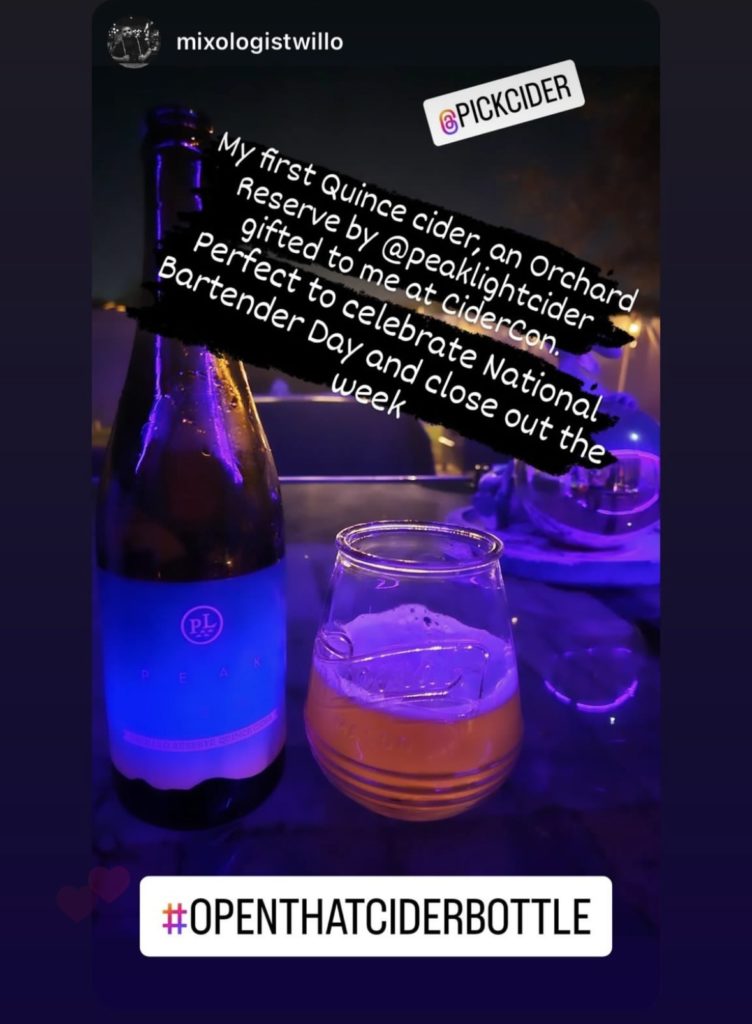
Not only is the lighting super cool on this image from Will, but trying out his first quince cider and celebrating National Bartender Day had us wishing we could celebrate with him!
And the randomly drawn winner of the cider suitcase is:
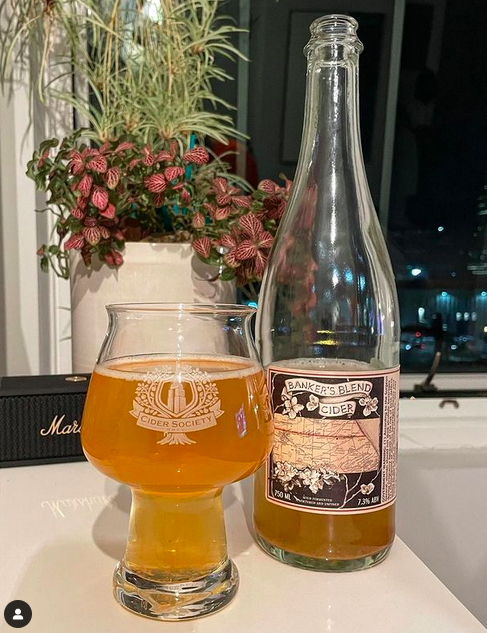
ACA Releases 2nd Edition of Certified Pommelier Study Guide


The ACA is thrilled to introduce the second edition of its Certified Pommelier Study Guide, designed specifically for students preparing for level two of the CCP program. With the CCP program expanding globally, the Certified Pommelier Study Guide has undergone a significant update to offer a more comprehensive overview of the cider industry from an international perspective. This new edition now includes sections on emerging sectors like low and no-alcohol products, catering to the evolving landscape of the industry. The new edition is also available digitally for the first time, providing students with more ways to access the guide.
New material in the second edition will be the source for questions on the exam beginning in 2025, so candidates who have already purchased the first edition will have all the material that they need for any exam being held in 2024.
Additionally, the ACA has revamped its product categorization system, known as the Cider Families, to better align with global marketing practices, providing students with a more accurate portrayal of the market. The revised Cider Families guide offers a fresh take on product categorization, reflecting the dynamic nature of the cider market on a worldwide scale.
For those interested, the updated Cider Families guide can be accessed on the ACA website, while the second edition of the Certified Pommelier Study Guide is now available for purchase on Amazon in both print and digital formats. Information from second edition will not appear on Certified Pommelier exams until 2025 to allow people the opportunity to purchase and review the new study guide.
For aspiring Certified Pommeliers and cider enthusiasts alike, the release of the second edition of the Certified Pommelier Study Guide marks a significant milestone in the CCP program. By incorporating a more global perspective and addressing key trends in the industry such as the rise of low and no-alcohol products, the ACA continues to demonstrate its commitment to providing relevant and up-to-date resources for industry professionals.
Urge Congress to Support the Bubble Bill

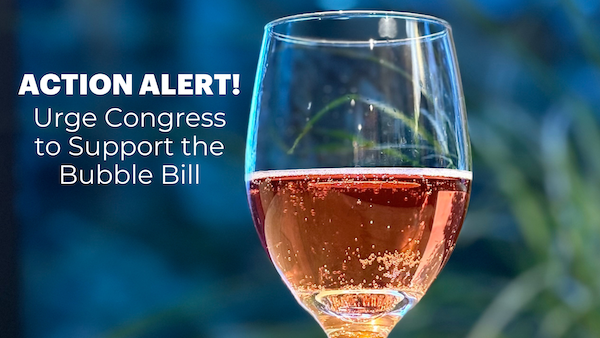
Earlier this year Representatives Earl Blumenauer (OR-D) & Mike Kelly (PA-R) introduced the Bubble Tax Modernization Act of 2024 (HR 7029) to the 118th Congress. Since then Representatives Suzanne Bonamici (OR-D), Andrea Salinas (OR-D), Lori Chavez-Deremer (OR-R), and Val Hoyle (OR-D) have signed on as co-sponors of the legislation. The “Bubble Bill” will amend a minor carbonation tax disparity for lower alcohol wine, cider and mead made with fruit. Read the complete bill here.
Despite the popularity of bubbly beverages, the carbonation tax–colloquially called the ‘bubble tax’ on fruit wine, fruit cider, and fruit mead makes carbonating these agricultural products at sparkling levels cost prohibitive. Most craft beverage entrepreneurs can’t afford to carbonate these products at the level the market wants. The result is that an important American agricultural sector is falling flat.
Current tax rates for low-ABV carbonated fruit wine, cider, and mead are $3.30 or $3.40 per gallon. Meanwhile low-ABV carbonated grape wines have a current tax rate of $1.07 per gallon. In addition, fruited beers, seltzers, hard kombucha, and ready-to-drink canned cocktails are carbonating freely to give consumers the bubbles they want.
Raising the floor of the carbonation tax threshold to include ALL low-ABV wine, cider, and mead to 0.64 grams of carbon dioxide per hundred milliliters will allow producers to compete more fairly in the evolving beverage market. The Craft Beverage Modernization and Tax Reform Act of 2020 achieved this for grape-only wines, but fruit-based craft beverages were overlooked. This created an excise tax disparity of $2.00 to $3.00 a gallon depending on the product. For more information download the Understanding Bubble Taxes explanatory document.
Allowing more carbonation will foster more economic opportunities for craft beverage makers, allow for more small producer collaborations, create increased opportunities for farms to stay viable with value-added products, and allow for diversification that could help farms and businesses mitigate disasters such as fires, droughts, floods, or crop disease.
Please ask your Congressional representatives to sign onto the Bubble Bill today to support American craft beverage producers and manufacturers.
ACA Welcomes Sixteen New Certified Pommeliers Following CiderCon® 2024


PRESS RELEASE
American Cider Association
Contact: Michelle McGrath
Email: michelle@ciderassociation.org
The American Cider Association is pleased to announce that sixteen individuals successfully passed the Certified Pommelier examination held at CiderCon® 2024 in Portland, Oregon in January. The new Certified Pommeliers from the United States are Andrew Byers of Finnriver Farm & Cidery, Jason Cassidy of The Cider Farm, Daniel James of Pioneer Beverage, Jakob Jordan & Leah Pagett of Bold Rock Hard Cider, Molly Leadbetter of Meriwether Cider, Hard Cider Guy Adrian Luna, Valerie Scott of Duluth Cider, Pete Serventi of Serventi Ranch, Clayton Slaughter of Slaughter Orchard & Cidery, Ashley Wilson of Schilling Cider and Olivia Yi of Brooklyn Cider House. New international Certified Pommeliers are The Ciderologist Gabe Cook of the UK, John Powell of Cider Apples New Zealand Ltd, Lee Reeve of inCider Japan, and freelancer Monika Sut of Italy.
The rigorous exam tested candidates on their understanding of cider production, history, and sensory evaluation. As a result, those newly certified are now equipped with advanced skills to guide consumers through the wide variety of ciders available and to help elevate the cider industry at the point of sale. The ACA congratulates all of the newest Certified Pommeliers on displaying their specialized cider knowledge and evaluation skills!
Early on, the American Cider Association recognized the need to promote specialized knowledge about the cider category. Certifications are increasingly being used to set food and beverage professionals apart. However, most certification programs cover cider in a cursory manner or not at all. With cider being a beautifully nuanced beverage with a diverse set of elements often less understood by food and beverage professionals, the establishment of the Certified Cider Professional (CCP) program in 2016 was a strategic maneuver. Today, the CCP program is designed to educate those on the front-line of cider sales, making it the world’s most comprehensive and in-depth cider appreciation program for food and beverage professionals. Most recently, due to increased inquiries and interest the CCP program has expanded to an international audience. For more information, the ACA press release outlines the international expansion.
The CCP program begins with a Certified Cider Guide (CCG) Level 1 certification to help industry professionals develop a fundamental understanding of cider. The Certified Pommelier (CP) Level 2 takes it a step further by encouraging cider professionals to think critically and showcase a higher level of understanding of the elements of cider. The rigorous testing process consists of four types of questions, including short answer, fill in the blank, essay, and blind sensory–which is based on tasting.
The ACA is dedicated to ensuring that all information tested on the exam is made accessible to anyone who desires to learn. To that end, the ACA released a textbook in March of 2023 to help candidates prepare to take the exam with just one comprehensive resource. The textbook is available for purchase through Kindle Direct Publishing. Additionally, the ACA offers sensory analysis practice webinars and a Facebook study group, continuously updated with resources for exam candidates. Interested candidates can find links to all Certified Pommelier resources on the ACA’s website.
A live sensory analysis webiner is scheduled for March 28, 2024 from 4:00 – 6:00 PM Pacific featuring Meriwether Cider. Those interested in attending can find all the details on the ACA website. Additional sensory analysis webinars will be released at a later date once cider availability for unique offerings has been confirmed. The ACA is also currently looking for additional cideries interested in having their ciders featured in a webinar. Interested cideries can reach out to Education Operation Manager Jennie Dorsey.
2024 Certified Pommelier exams will be held at the following locations:
- April 18: Wolffer Estate Vineyard
- April 27 : Frankfurt, Germany: CiderWorld
- July 23: Bellingham, WA
- August 20: Minneapolis, MN
- October 8: Austin, TX
- February 5, 2025: CiderCon® 2025 Chicago
More details and registration for all exams will be announced as soon as they are finalized.
Contact the ACA’s Education Operations Manager Jennie Dorsey if you have questions about the Certified Cider Professional program or are interested in taking either the Level 1 Certified Cider Guide or Level 2 Certified Pommelier exams. You can also learn more at https://ciderassociation.org/certification.
###
Additional Information:
Bios for all Certified Pommeliers can be found on the ACA website.
ACA Announces International Expansion of Certified Cider Professional Program

PRESS RELEASE
February 26, 2024
Contact: Michelle McGrath
Email: michelle@ciderassociation.org
The American Cider Association is pleased to announce the expansion of its beverage professional education and certification program to the global cider community. The Certified Cider Professional program was launched at CiderCon® 2016 with a particular focus on the United States. Since then, the certification program has developed to become the most robust and thorough cider appreciation and education program for beverage professionals in the world. Most recently the ACA has revised study and exam materials to have a broader scope, and the ACA’s Certified Cider Professional program is now applicable to anywhere in the world that cider is made and sold.
“We have been getting an increasing number of inquiries about the CCP program from all over the world,” says Jennie Dorsey, ACA Education Operations Manager. “A number of candidates for the second level of certification, Certified Pommelier, have even made a trip to the U.S. just to sit for the exam, so clearly there is an unmet need out there and no other comparable education program available.”
Award winning educator and global cider expert Gabe Cook, aka The Ciderologist, has joined forces with the ACA to help expand its certification program to a global audience. Cook says, “I am delighted to be teaming up with the ACA through CCP to increase the knowledge, respect and passion for one of the world’s truly great and ancient drinks.” He continues, “Now is the time for a unified education program that is applicable and open to anyone and everyone from Seattle to Somerset to Sydney. It is a true reflection of the globalization of cider and indicative of this being an incredibly exciting time for cider.”
Additional updates geared toward program growth include CCP branding. The ACA has newly retitled CCP’s introductory level to “Certified Cider Guide,” and has updated the CCP branding to better distinguish the two offered CCP levels–(1) Certified Cider Guide and (2) Certified Pommelier.
The first international in-person Certified Cider Guide training workshop and exam was held in Melbourne, Australia in the fall of 2023 with the support of Cider Australia. The exam took place following the Australian Cider awards and ten individuals earned the title of Certified Cider Guide.
Additional in-person classes and exams are planned for Europe in the coming months. On-demand virtual training and Certified Cider Guide exams are also available at any time.
The inaugural international Certified Pommelier exam is scheduled to be held in April 2024 to coincide with the Cider World event in Frankfurt, Germany. To earn their title Certified Pommeliers are rigorously tested on their cider knowledge with a written theory exam and a sensory evaluation exam.
“We are very confident in our educational programming, and these recent steps will help us reach more US beverage professionals as well as international ones,” says ACA’s CEO Michelle McGrath. “Gabe Cook is uniquely suited to helping us grow the program overseas, and we’re really excited about the partnership. He works tirelessly for the cider category,” McGrath adds.
There are currently 2,480 Certified Cider Guides and 97 Certified Pommeliers.
The American Cider Association is an organization of cider and perry producers in the United States. The Certified Cider Professional program is helping the ACA reach its vision for the US cider industry which includes but is not limited to the following aspirations: (1) Throughout America, it is widely understood that cider pairs exceptionally well with food, (2) America’s most talented chefs and beverage professionals are promoting cider and food pairings on their menus, in their public relations and on television, (3) US cider is the most coveted cider in the global marketplace.
Visit cidercertification.org to learn more about CCP training and exam opportunities around the world. International certification inquiries can be made with Gabe Cook at Gabe@ciderassociation.org. North America based inquiries can be made with Jennie Dorsey at Jennie@ciderassociation.org.
###
Additional Information:
Certified Cider Professional Logos: CLICK HERE
Certified Cider Professional Photos: CLICK HERE
Gabe Cook Photos and Bio: CLICK HERE
April 17: Level 1 CCG Workshop at Wölffer Estate


Wölffer Estate Vineyards is excited to collaborate with the American Cider Association to host an in person workshop for the Certified Cider Professional Program Level 1 Certified Cider Guide at their cidery. The Level 1 Certified Cider Guide Workshop will be held April 17, 2024 at 1:00 PM Eastern at Wolffer Estate Vineyard, 139 Sagg Road, Sagaponack, New York 11962.
Cost per person is $189 which includes the in person training, instructor led tasting, and test fee. Participants will be able to take the test online immediately after the training or take the test at a later date. ACA members can contact Education Operations Manager Jennie Dorsey for a member discount code.
This is a great opportunity for the New York cider community to gather in person to attend the workshop and get CCG certified. Registration to this event will include a tour.
Lunch and cider will also be available for purchase at our tasting room after the training.
We would love to see anyone who sells cider, works in a tasting room or retail shop, chefs, sommeliers, cicerones, buyers and cidermakers who are interested in cider education and adding a cider certification to their accreditation sign up and join us!
Travel by Car:
Upon arrival, take the driveway all the way up to the Main Cider House (identified by the marquee sign on the building). Parking is available both in front of the Main Cider House as well as in our auxiliary lot (P2), a quick 5 minute walk from the building.
Public Transportation Options:
Bridgehampton location is closest to the winery. Ubers are available and only a short ride from the Bridgehampton stations, about 10 minuets.
Agenda:
- 12:45 PM: Arrival and Check-in
- 1:00 – 2:30 PM: Presentation
- 2:30 – 3:30 PM: Tasting Experience
- 3:30 – 4:00 PM: Take the online CCG 1 test (bring your own laptop)
- 4:00 PM: Enjoy a glass of cider and some food with a view
April 18: Certified Pommelier Exam at Wolffer Estate

TAKE THE CERTIFIED POMMELIER EXAM AT WOLFFER ESTATE VINEYARDS ON APRIL 18!
Are you ready to take the next step in your professional development in the cider industry?
If you have already passed the Level 1 Certified Cider Guide exam and are looking for that next challenge? Now is your chance!
The American Cider Association is pleased to announce a Certified Pommelier™ Exam will be held at Wolffer Estate Vineyards in Sagaponack, New York. The exam will take place Thursday, April 18, 2024 at the Wolffer Estate Vineyards, 139 Sagg Rd, Sagaponack, NY 11962. The exam will begin promptly at 8:30 AM.
*Level 1 Certified Cider Guide certification is a prerequisite for taking the Certified Pommelier Exam. (Haven’t taken your Level 1 Certified Cider Guide Exam? Buy the bundle here! ACA Member discounts are available.)
There’s a discount code available for ACA members who want to take the test. You can find that code in our Resource Hub.
WHAT IS THE CERTIFIED POMMELIER EXAM?
The American Cider Association’s mission is to grow a diverse and successful cider industry by providing valuable information, resources and services to our members and by advocating on their behalf. One way to fulfill this mission is through the Certified Cider Professional Program, a program aimed at educating the front-line of cider hospitality (distributors, retailers, bartenders and more!) while also welcoming journalists and serious cider enthusiasts.
The exam for the introductory level certification, Certified Cider Guide (CCG), is an online test that can be taken at any time. The exam for the more advanced second level of certification, Certified Pommelier, is only available in person. The exam consists of two parts, a written theory exam comprising short answer and essay questions and a blind sensory evaluation of a number of ciders. Passing the introductory level exam is a mandatory prerequisite to sitting for the Level 2 Certified Pommelier exam.
Certified Pommeliers must have a fundamental understanding of all topics covered at the introductory level, but must also be able to think critically and demonstrate a deeper understanding of cider and the cider industry.
The topics covered in the exam are:
- Apples, the Orchard & History
- Cider Making
- Flavor & Evaluation
- Cider Families
- Keeping & Serving
- Food & Cider
- Social Responsibility
The exam is meant to be challenging. The only information necessary for successfully passing the theory section of the exam is contained in the Certified Pommelier Study Guide available on Amazon. To study for the evaluation section of the exam, candidates should consider attending one of the sensory analysis videos available through the ACA’s website or attend one of the regularly scheduled webinars. Access to pre-recorded webinars and registration for upcoming live webinars is available directly through our website.
WHY BECOME A CERTIFIED POMMELIER?
Cider is a beautifully nuanced beverage that is less well understood by most consumers. Having the knowledge and skills required to become a Certified Pommelier will equip you to better serve customers, enhance your standing in the beverage community, and give you a unique and valuable professional qualification. Being recognized as a Certified Pommelier will put you in the vanguard of advanced cider specialists in this ever growing category.
HOW MUCH DOES THE TEST COST?
The registration fee for the exam is $350. Current members of the ACA can register at a discounted price of $250 by using the discount code in our Resource Hub. If a candidate sits for the exam but does not pass either section, or only passes one of the two sections, theory or sensory evaluation, they can resit for the section of the exam that they did not pass at a future date. The fee for retaking the exam is $175 for non-members and $125 for current members of the ACA.
Read Terms & Conditions before registering.
WHAT MATERIALS ARE AVAILABLE TO STUDY FOR THE EXAM?
- The Certified Pommelier Study Guide is available directly through Amazon. It is also available at all of Amazon’s international sites.This is the official study guide for the second level of the American Cider Association’s professional certification program. It contains all of the information needed to study for and pass the examination. No other reference materials are required.
- There is also a dedicated Facebook Group (that is open for all to join) with prep materials and in-depth peer conversations that many candidates have found useful.
- Sensory evaluation is an important part of being a Certified Pommelier which is why we test your ability to accurately analyze the structural components, aromas, and flavors of a variety of ciders. In order to aid in the development of your sensory evaluation skills and understand the approach to testing them, we have several pre-recorded videos available for purchase. In addition, we host several live sensory analysis webinars each year. You can access the videos and look for scheduled webinars here.
Frequently Asked Questions (Download the Frequently Asked Questions document.)
- Are there ID or minimum age requirements to sit for the event? YES. You must be of legal drinking age in the country where you sit for the exam, and when checking in at the exam you must provide a photo ID that will both verify your age and identity .
- Do I need to pass the Certified Cider Guide exam to take the Certified Pommelier exam? Yes. Passing the introductory exam to become a Certified Cider Guide is a prerequisite. If you have not yet taken this exam, you can purchase a package which includes an instructional video, study guide, and access to an online exam HERE.
- How many Certified Pommeliers are there currently? You can find the current number of Certified Pommelers here.
- Is the Certified Pommelier Exam available in my area? Certified Pommelier exams are held periodically throughout the year and in a variety of locations. Please check our current exam schedule to find an exam suitable for you.
- What can I bring into the event? You may bring only a water bottle into the exam space. Cell phones, smart watches, computers, books or papers, and any and all other personal items must be left at a designated storage area in the exam room. Pencils will be provided, and spare paper will be available on request. Spit cups, and water will be provided during the evaluation exam. We encourage you to bring your own water bottle for the theory exam. Please contact the Cider Education Operations Manager, Jennie Dorsey at jennie@ciderassociation.org prior to registering for the exam if you wish to request special accommodations.
- How can I contact the organizer with any questions? Please contact Cider Education Operations Manager Jennie Dorsey at jennie@ciderassociation.org.
- When can I register for the exam? Exam registration is open until 14 days before the posted exam date.
- What happens if I cannot attend my registered exam? Please see Exam Rescheduling, Timelines and Fees in the Terms and Conditions Document for full details. If you do need to cancel your registration, exam registration fees can be refunded up to 14 days before the exam. Please note that a $25 administration fee applies to any cancellation.
- Is it ok if the name on my ticket or registration doesn’t match the person who attends? Registrations are not transferable, so the name on the I.D. presented when checking in for the exam must match the name on the registration.
- How long does the test take? You are given 2 hours to complete the theory section of the exam and 1 hour and 15 minutes to complete the sensory evaluation section. There is a 15 minute break in between sections.
- Is there a tasting section on the test? Yes. You will be asked to evaluate six ciders in two flights, one flight that assesses your ability to distinguish between key structural elements and a second where you are asked to complete a full evaluation of three ciders using the Structured Sensory Analysis format. The possible aromas and flavors document will be supplied for use during the exam.
- What is the grade needed for passing? 60% of the possible points for sensory evaluation and 70% for theory
- When will we receive our graded exams? Exams are not returned to candidates, however you will be notified as to whether or not you have passed about 6 weeks from the exam date. If you did not pass a section of the exam, you may request a breakdown of your points by general topic to help you identify areas in which you could improve your score should you wish to retake the exam.
New Member Discount from Brewbound!
The ACA and Brewbound are pleased to announce a new partnership! Brewbound is offering ACA Members a 25% discount on their Insider subscription. Members can find their discount code in our Resource Hub.
Insiders receive access to all Brewbound site content, the Insider-exclusive newsletter, special virtual events and video content, and discounts on their events and job board.
Brewbound is a leading industry trade publication providing comprehensive information about the beverage space, analysis of industry trends, and in-depth interviews with industry leaders.
March 28: Live Sensory Analysis Webinar with Meriwether Cider

You’re invited to a Live Sensory Analysis webinar on Thursday, March 28, from 4:00 to 6:00 PM Pacific Time! Join our Certified Pommelier panel as they guide you through an immersive sensory experience featuring cider from Meriwether Cider in Idaho.
During this live practice session, you’ll learn how to analyze and appreciate cider like a pro and prep for your Certified Pommelier exam. Not able to make it to the live event? No worries! The webinar will be recorded and available for you to purchase and practice at your convenience.
We recommend ordering Meriwether Cider well in advance so you have it available to practice with during the webinar. You can purchase your Meriwether Cider for the webinar here.
Cost is $30 for non-members and $20 for ACA members. Are you an ACA member? Contact Education Operations Manager Jennie Dorsey for your discount code.
February 24 Open That Cider Bottle
“Open That Cider Bottle” Day is almost here! Join us for this 3rd annual cider tradition on February 24 by celebrating your enjoyment of special bottles of cider on social media. Cider is best when enjoyed, so let’s seize the day!
How to Participate:
Tell us and the world your cider bottle story and post it to Instagram, with the hashtag #openthatciderbottle and tag us @pickcider anytime on Saturday, February 24, 2024. Which cider bottle you want to open is up to you! Whether it’s an old favorite you’ve been saving or a new cider you can’t wait to try; a gift from a friend or a cider you stumbled on in your local bottle shop, we want to hear your bottle story! Also, the ACA will be offering prizes once again for various categories and everyone who participates will be entered to win a cider suitcase.
What Format?
Instagram posts! Whether it’s a photo, series of photos, or a reel be sure to share it as a post on your Instagram profile with the hashtag #openthatciderbottle and tag us @pickcider. We’ll be sharing your Open That Cider Bottle tales to our IG stories throughout the day as well as some of our own.
Prizes
Besides the cider suitcase that all who participate will be entered to win, one winner will be selected by ACA staff to win a Pick Cider t-shirt in the following categories:
- Best Cider Bottle Story – Share what makes the cider you chose so special to you.
- Best Cider Adventure Story – Capture your cider bottle with an image that embodies the spirit of adventure in the world of cider.
- Best Cider/Food Pairing Suggestion – Explore the world of culinary delights that pair well with your chosen cider.
- Best Cider Artistry – Showcase the artistic side of cider whether it be a beautiful label or a beautiful setting for your cider bottle.
A Little History on Open That Cider Bottle
Open That Cider Bottle began in 2022 when we stumbled upon Open That Bottle Night. Open That Bottle Night was started in 2000 by two Wall Street Journal columnists, Dorothy J. Gaiter and John Brecher. Since then, it has become an annual tradition held on the last Saturday of February, where people open that special bottle and share memories. We hope to make Open That Cider Bottle a special tradition for all those who love cider.
April 27: Certified Pommelier Exam at CiderWorld

TAKE THE CERTIFIED POMMELIER EXAM AT CIDERWORLD IN FRANKFURT, GERMANY ON APRIL 27!
The American Cider Association is pleased to announce a Certified Pommelier Exam will be held at CiderWorld in Frankfurt, Germany. The exam will take place Saturday, April 27, 2024 at Gesellschaftshaus Palmengarten, Palmengartenstrasse 11, 60325 Frankfurt am Mein, Germany. The exam will begin promptly at 8:30 AM.
*Level 1 Certified Cider Guide certification is a prerequisite for taking the Certified Pommelier Exam. (Haven’t taken your Level 1 Certified Cider Guide Exam? Buy the bundle here! ACA Member discounts are available.
There’s a discount code available for ACA members who want to take the test. You can find that code in our Resource Hub.
WHAT IS THE CERTIFIED POMMELIER EXAM?
The American Cider Association’s mission is to grow a diverse and successful cider industry by providing valuable information, resources and services to our members and by advocating on their behalf. One way to fulfill this mission is through the Certified Cider Professional Program, a program aimed at educating the front-line of cider hospitality (distributors, retailers, bartenders and more!) while also welcoming journalists and serious cider enthusiasts.
The exam for the introductory level certification, Certified Cider Guide (CCG), is an online test that can be taken at any time. The exam for the more advanced second level of certification, Certified Pommelier, is only available in person. The exam consists of two parts, a written theory exam comprising short answer and essay questions and a blind sensory evaluation of a number of ciders. Passing the introductory level exam is a mandatory prerequisite to sitting for the Level 2 Certified Pommelier exam.
Certified Pommeliers must have a fundamental understanding of all topics covered at the introductory level, but must also be able to think critically and demonstrate a deeper understanding of cider and the cider industry.
The topics covered in the exam are:
- Apples, the Orchard & History
- Cider Making
- Flavor & Evaluation
- Cider Families
- Keeping & Serving
- Food & Cider
- Social Responsibility
The exam is meant to be challenging. The only information necessary for successfully passing the theory section of the exam is contained in the Certified Pommelier Study Guide available on Amazon. To study for the evaluation section of the exam, candidates should consider attending one of the sensory analysis videos available through the ACA’s website or attend one of the regularly scheduled webinars. Access to pre-recorded webinars and registration for upcoming live webinars is available directly through our website.
WHY BECOME A CERTIFIED POMMELIER?
Cider is a beautifully nuanced beverage that is less well understood by most consumers. Having the knowledge and skills required to become a Certified Pommelier will equip you to better serve customers, enhance your standing in the beverage community, and give you a unique and valuable professional qualification. Being recognized as a Certified Pommelier will put you in the vanguard of advanced cider specialists in this ever growing category.
HOW MUCH DOES THE TEST COST?
The registration fee for the exam is $350. Current members of the ACA can register at a discounted price of $250 by using the discount code in our Resource Hub. If a candidate sits for the exam but does not pass either section, or only passes one of the two sections, theory or sensory evaluation, they can resit for the section of the exam that they did not pass at a future date. The fee for retaking the exam is $175 for non-members and $125 for current members of the ACA.
For non-members, the exam is $350.
Read Terms & Conditions before registering.
WHAT MATERIALS ARE AVAILABLE TO STUDY FOR THE EXAM?
- The Certified Pommelier Study Guide is available directly through Amazon. It is also available at all of Amazon’s international sites.This is the official study guide for the second level of the American Cider Association’s professional certification program. It contains all of the information needed to study for and pass the examination. No other reference materials are required.
- There is also a dedicated Facebook Group (that is open for all to join) with prep materials and in-depth peer conversations that many candidates have found useful.
- Sensory evaluation is an important part of being a Certified Pommelier which is why we test your ability to accurately analyze the structural components, aromas, and flavors of a variety of ciders. In order to aid in the development of your sensory evaluation skills and understand the approach to testing them, we have several pre-recorded videos available for purchase. In addition, we host several live sensory analysis webinars each year. You can access the videos and look for scheduled webinars here.
Frequently Asked Questions (Download the Frequently Asked Questions document.)
- Are there ID or minimum age requirements to sit for the event? YES. You must be of legal drinking age in the country where you sit for the exam, and when checking in at the exam you must provide a photo ID that will both verify your age and identity .
- Do I need to pass the Certified Cider Guide exam to take the Certified Pommelier exam? Yes. Passing the introductory exam to become a Certified Cider Guide is a prerequisite. If you have not yet taken this exam, you can purchase a package which includes an instructional video, study guide, and access to an online exam HERE.
- How many Certified Pommeliers are there currently? You can find the current number of CP’s here.
- Is the Certified Pommelier Exam available in my area? Certified Pommelier exams are held periodically throughout the year and in a variety of locations. Please check our current exam schedule to find an exam suitable for you.
- What can I bring into the event? You may bring only a water bottle into the exam space. Cell phones, smart watches, computers, books or papers, and any and all other personal items must be left at a designated storage area in the exam room. Pencils will be provided, and spare paper will be available on request. Spit cups, and water will be provided during the evaluation exam. We encourage you to bring your own water bottle for the theory exam. Please contact the Cider Education Operations Manager, Jennie Dorsey, at jennie@ciderassociation.org prior to registering for the exam if you wish to request special accommodations.
- How can I contact the organizer with any questions? Please contact Cider Education Operations Manager Jennie Dorsey at jennie@ciderassociation.org.
- When can I register for the exam? Exam registration is open until 14 days before the posted exam date.
- What happens if I cannot attend my registered exam? Please see Exam Rescheduling, Timelines and Fees in the Terms and Conditions Document for full details. If you do need to cancel your registration, exam registration fees can be refunded up to 14 days before the exam. Please note that a $25 administration fee applies to any cancellation.
- Is it ok if the name on my ticket or registration doesn’t match the person who attends? Registrations are not transferable, so the name on the I.D. presented when checking in for the exam must match the name on the registration.
- How long does the test take? You are given 2 hours to complete the theory section of the exam and 1 hour and 15 minutes to complete the sensory evaluation section. There is a 15 minute break in between sections.
- Is there a tasting section on the test? Yes. You will be asked to evaluate six ciders in two flights, one flight that assesses your ability to distinguish between key structural elements and a second where you are asked to complete a full evaluation of three ciders using the Structured Sensory Analysis format. The possible aromas and flavors document will be supplied for use during the exam.
- What is the grade needed for passing? 60% of the possible points for sensory evaluation and 70% for theory
- When will we receive our graded exams? Exams are not returned to candidates, however you will be notified as to whether or not you have passed about 6 weeks from the exam date. If you did not pass a section of the exam, you may request a breakdown of your points by general topic to help you identify areas in which you could improve your score should you wish to retake the exam.
CiderCon® 2024 Recap–Connecting Minds, Igniting Ideas for Growing the Cider Category


CEO’s Note–CiderCon® is carefully curated to offer expert-level content for all stages of the cider industry. In an industry as diverse as cider, it takes immense intentionality, and we are grateful to all of our speakers for participating! Many of our speakers have commented on how eager and engaged the CiderCon® audience was. Great speakers and great students–that’s my CiderCon® dream come true. Thank you to everyone involved! –Michelle McGrath, CEO ACA
- The 14th annual CiderCon® was held in Portland, Oregon from January 17-19, 2024 at the Oregon Convention Center, celebrating a return to Portland after 8 years. The week was deemed a success despite a rare multi day ice storm that impacted the travel plans of some attendees. CiderCon® is organized by the American Cider Association (ACA) and presented by FruitSmart, and it is the world’s largest conference for the hard cider industry.
- 1,250 people registered for CiderCon® 2024, including attendees, vendors, volunteers and speakers, and an estimated 1,100 attended. Registration was 20% more than the previous year, and CiderCon® 2024 attendance exceeded any prior year’s levels despite challenging weather conditions.
- Attendees came from 40 different states and DC, including Alaska and Hawaii.
- Oregon claimed the most registrants, followed by Washington, California, and New York.
- Attendees from 14 different countries participated in CiderCon®, including Austria, Canada, France, Germany, Israel, Italy, Japan, Latvia, New Zealand, Norway, the Russian Federation, Spain, Sweden, and the UK.
- An estimated 30% of CiderCon® attendees came from the Northwest (MT, ID, OR, WA, BC) this year.
- The ACA hosted 9 recipients for their Cider is For Everyone Scholarship at CiderCon® 2024. This scholarship is designed to bring individuals from historically marginalized populations within the beverage industry to CiderCon® to increase the accessibility of cider education and catalyze the careers and ownership pathways of these burgeoning cider professionals. Now in its third year, the scholarship received almost four times the number of applications than in the previous two years combined.
- The ACA hosted the annual cider guild leadership meeting on January 17 with guild leaders from the Northwest, Minnesota, New York, North Carolina, Ohio, California, Virginia, Utah, and Vermont as well as the UK, Norway, Japan, and Canada. The group shared regional strategies for engaging consumers, retailers, and distributors as well as preemptive strategies for protecting the cider industry from efforts to raise state excise taxes in the US.
- CiderCon® 2024 coincided with Oregon Cider Week, organized by the Northwest Cider Association (NWCA). Some events were postponed or canceled due to the inclement weather, but the events that remained were well attended and celebrated cider throughout Portland.
- The NWCA also organized the tours for CiderCon® 2024. Two overnight tours went to Seattle and Port Townsend areas to visit cideries in those regions. Two other tours explored cideries and bottle shops in Portland, after needing to shift from visiting the cider regions of the Columbia Gorge and the Willamette Valley due to the weather.
- Cider Share is an ACA-coordinated industry tasting only available to CiderCon® attendees as the beloved opening reception of the conference. This year Cider Share took place on January 17 and featured dozens of cidermakers from around the country and the world.
- The NWCA coordinated a special preview hour of Cider Share this year. The Cider Share preview hour was invite-only for wholesalers, buyers, media, and influencers to sample cider from throughout the Northwest. NWCA and ACA worked together to invite representatives from local and national companies as a strategy to recruit more wholesalers and buyers to attend CiderCon®. Portland’s weather made it hard for some to attend as flights were delayed, but participation in the preview hour was still high, especially from representatives of the media, who attended CiderCon® in record numbers this year.
- The ACA welcomed 3 keynote speakers on the morning of January 18, including multigenerational orchardists Kaitlyn Thornton (Tonasket, Washington) and Randy Kiyokawa (Kiyokawa Family Orchard in Hood River, Oregon), along with cidery owner Lara Worm (Bivouac Ciderworks in San Diego, California). All three discussed the theme for this year’s CiderCon®: Connecting to Consumers in an Age of Endless Choice.
- Following these three mini-presentations, Zoe Licata of Brewbound hosted a panel discussion, investigating the state of the hard cider industry with a selection of cidery representatives from around the country: Aaron Sarnoff-Wood (2 Towns Ciderhouse, Oregon), Casey Baxter (Blake’s Beverage Company, Michigan), Shannon Edgar (Stormalong Cider, Massachusetts), Caitlin Braam (Yonder Cider, Washington), and Eleanor Leger (Eden Specialty Ciders, Vermont).
- During the opening session, Michelle McGrath, CEO of the ACA, announced that Reps. Earl Blumenauer (OR-D) and Mike Kelly (PA-R) introduced the Bubble Tax Modernization Act of 2024 (HR 7029) to the 118th Congress of the United States on Thursday, January 18. The “Bubble Bill” will amend a carbonation threshold disparity for lower alcohol wine, cider and mead made with fruit.
- There were 38 educational sessions held during CiderCon® covering topics in the areas of Crafting Amazing Cider, Doing Better Business, Exploring Cider’s Flavor & Terroir, Growing Bountiful Apples, and Selling More Cider. The Cider Institute of North America helped to develop the Crafting Amazing Cider track sessions once again.
- There were 12 sensory sessions, including a tasting with cidermaking guests from Sweden and Norway. Other tasting sessions featured stone fruit co-ferments, international perry (pear wine), cider and beer/wine hybrids, foraged fruit cider, ancestral method cider, amphoras, and more.
- CiderCon® 2024 featured multiple data-driven sessions featuring speakers from 3 Tier Beverage, Wine Market Council, Prosparus, and Mintel, offering nuanced looks at trends in the beverage marketplace and how they may impact the hard cider market.
- Representatives from beverage retailers spoke at CiderCon® 2024 including speakers from Safeway, Whole Foods, World Foods, Zupan’s, John’s Marketplace, and Ponderosa Beer & Books.
- Two sessions explored sustainability issues and opportunities for the cider category, including a panel discussion with Christine Walter (Bauman’s Cider), Mike Biltonen (Know Your Roots), Mimi Casteel (Hope Well Winec), and Greg Jones (Abacela Winery) looking at orcharding, and a panel discussion moderated by Colin Schilling (Schilling Cider) looking at packaging and production with additional panelists from Santa Cruz Cider and American Canning.
- John Bunker, an American orchardist, pomologist, and “apple explorer” presented two sessions about apple identification.
- The ACA once again offered its Certified Pommelier exam at CiderCon® 2024. The Certified Pommelier is an advanced second-level designation of the ACA’s Certified Cider Professional program geared toward beverage and hospitality industry professionals. Close to 30 people sat for the challenging test that included a blind sensory evaluation section. The new cohort of Certified Pommeliers will be announced in 6 weeks.
- There were numerous networking opportunities at CiderCon® 2024, including a Newcomer Networking session sponsored by Maletis Beverage, a BIPOC Cider Professional Meetup, and an Orcharding Meetup where attendees exchanged apple tree scion wood.
- The TTB–the agency charged with regulating cider over 7% ABV and collecting excise taxes at the federal level–held two sessions at CiderCon® 2024. They were also available during the trade show to answer questions regarding topics ranging from labeling to licensing to formula approval.
- The trade show, sponsored by FruitSmart, featured 93 vendors from around the country and the world and featured several new vendors as well as many who have returned year after year to support the cider industry. Trade show vendor registration grew by 25% from the previous year, but the inclement weather reduced the number of participating vendors slightly. 93 vendors is still a strong showing for the trade show, which featured 113 booths overall.
- The Michigan Cider Association hosted a tap trailer in the trade show featuring an impressive range of Michigan ciders for trade show attendees to sample.
- The ACA Board of Directors recognized several industry members for their efforts to move the cider industry forward, including 2024 Members of the Year: Seattle Cider and Ploughman Cider, the 2024 Apple Advocate Awards: Congressman Earl Blumenauer (D-OR) and Jake Mann (Five Mile Orchard), and the 2024 Significant Impact Awards: Emily Ritchie (Executive Director of Northwest Cider Association) and Brighid O’Keane (Executive Director of Cider Institute of North America).
SAVE THE DATE: CiderCon® 2025 will be held in Chicago, Illinois from February 4-7, 2025.
CiderCon® was created to offer the commercial hard cider industry an outlet to meet, share ideas, collaborate, and affect positive changes in cidermaking, apple and pear production, the cider market, and cider regulations. CiderCon® is organized by the American Cider Association whose mission is to grow a diverse and successful US. cider industry by providing valuable information, resources, and services to our members and by advocating on their behalf.
Reps. Blumenauer & Kelly Introduce Bubble Bill
Representatives Blumenauer & Kelly Introduce the Bubble Tax Modernization Act
‘Bubble Bill’ Will Spur Innovation for Sparkling Co-fermented and Fruited Cider, Wine, and Mead
Washington, DC—Earlier today Representatives Earl Blumenauer (OR-D) & Mike Kelly (PA-R) introduced the Bubble Tax Modernization Act of 2024 (HR 7029) to the 118th Congress. The bill will amend a minor carbonation tax disparity for lower alcohol wine, cider and mead made with fruit.
Despite the popularity of bubbly beverages, the carbonation tax–colloquially called the ‘bubble tax’ on fruit wine, fruit cider, and fruit mead makes carbonating these agricultural products at sparkling levels cost prohibitive. Most craft beverage entrepreneurs can’t afford to carbonate these products at the level the market wants. The result is that an important American agricultural sector is falling flat.
“The cider industry is a quintessential American story. Pioneers taking what the land gives them and creating something magical. We must take every opportunity to support cidermakers, especially as the craft beverage industry recovers from the ravages of the pandemic. Right now, it is not a level playing field for cider, which is taxed more heavily than other carbonated, fruit-based beverages. My common-sense proposal will ensure cidermakers can create products for their customers, not the tax collector,” Rep. Blumenauer says.
Amie Fields, partner and sales manager at Botanist & Barrel Cidery & Winery in North Carolina, says the bill will enable innovation for their business.
“We are known for creativity and producing unique pet nats and bottle conditioned cider and wine with a range of ABVs, but recently we have been working on a series of lower alcohol content beverages. However, the carbonation tax currently disincentives our creativity, which hampers our ability to fully explore more sessionable beverages and boost our revenue by appealing to new customers,” explains Fields.
Current tax rates for low-ABV carbonated fruit wine, cider, and mead are $3.30 or $3.40 per gallon. Meanwhile low-ABV carbonated grape wines have a current tax rate of $1.07 per gallon. In addition, fruited beers, seltzers, hard kombucha, and ready-to-drink canned cocktails are carbonating freely to give consumers the bubbles they want.
Raising the floor of the carbonation tax threshold to include ALL low-ABV wine, cider, and mead to 0.64 grams of carbon dioxide per hundred milliliters will allow producers to compete more fairly in the evolving beverage market. The Craft Beverage Modernization and Tax Reform Act of 2020 achieved this for grape-only wines, but fruit-based craft beverages were overlooked. This created an excise tax disparity of $2.00 to $3.00 a gallon depending on the product.
Blumenauer’s legislation will address this disparity by changing how carbonation taxes are assessed. It will reduce a barrier for more innovative cider, fruit wine, and mead. In addition, it will create more economic opportunities for craft beverage makers, allow for small producer collaborations, create more opportunities for farms to stay viable with value-added products, and allow for diversification that could help farms and businesses mitigate disasters such as fires, droughts, floods, or disease.
HR 7029 is supported by the American Cider Association, the American Mead Makers Association, and Wine America.
###
The American Cider Association is an organization of cider and perry producers in the United States. Our mission is to grow a diverse and successful U.S. cider industry by providing valuable information, resources, and services to our members and by advocating on their behalf. You can learn more about them at www.ciderassociation.org.
Columbia River Gorge Cidery & Brewery Tour


The Columbia River Gorge is a breathtaking canyon that stretches for over 80 miles along the Columbia River, forming the border between the states of Oregon and Washington. It is a natural wonder that has been carved out over millions of years by the powerful forces of water and ice. The gorge is home to a stunning array of natural sights, including towering cliffs, cascading waterfalls, and lush forests, making it a popular destination for outdoor enthusiasts and nature lovers alike.
On the Columbia River Gorge Cidery & Brewery Tour you’ll have a chance to view towering cliffs, cascading waterfalls, and lush forests while touring three fermentation-focused businesses in this world-renowned region: Double Mountain, Mt. View Orchards, and Working Hands Fermentation. Not only will you be able to tour their production spaces and tasting rooms, but you’ll also get to taste their unique takes on cider and beer, and check out how these businesses attract both the local community and tourists, both beer and cider drinkers.
This CiderCon® 2024 tour includes tastings, lunch, and transportation, so all you have to worry about is having a good time. But there’s only 5 spots left so hurry up and add it to your CiderCon® 2024 registration today!
Thanks to the Northwest Cider Association for organizing this and all tours for CiderCon® 2024.
2024 ACA Board of Directors Candidates


The American Cider Association was founded 11 years ago by a group of individuals with a clear vision of a nonprofit structure, controlled by its members. In doing so, this ensured that those most impacted by the association’s work would be the same people in decision making roles. Today, the ACA has a Board of Directors, made up of its members, that help to expand its reach and impact. The founding board of directors took great care to protect geographic and business size diversity through the founding bylaws, a choice that still benefits the association today through our current board.
As cidery members of the ACA, this means that your input helps to shape the organization. One of the benefits of your ACA membership is the ability to participate in voting. Every cidery, no matter the size, gets one vote as part of the ACA’s commitment to inclusivity and diversity in its board, which represents a range of cidery business models, sizes, and regions.
The 2024 ACA Board Elections are rapidly approaching. If you are an active member of the ACA and a bonded active cidery, your principal contact will receive an electronic ballot on Thursday, January 18, 2024 via email at 8:30 AM Pacific Time. You can vote from your hotel room at CiderCon® or from the cellar back home–all voting is done remotely. The ballot will close at 11:30 AM Pacific Time on Friday, January 19, 2024.
This year there are two At-Large seats open on the ACA Board of Directors and 7 candidates in the running to choose from. Please take the time to learn about the candidates running for the 2024 ACA Board by reading about them below. Candidates are listed in alphabetical order by last name.
Brooke Glover and Soham Bhatt are both rotating off the current board after completing their elected terms of service. Both were dedicated and supportive board members who will leave behind big shoes for new directors to fill. We’re incredibly grateful for all they’ve contributed to shaping and growing the ACA. Thank you Brooke and Soham!
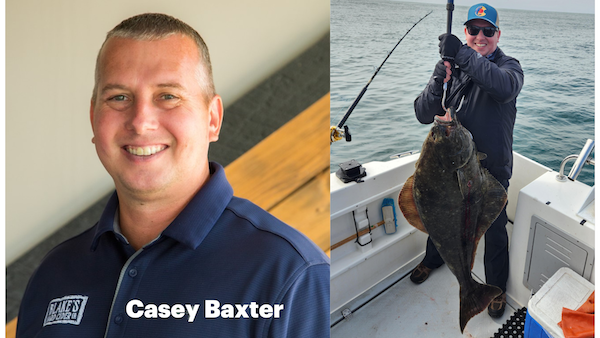
Casey Baxter has 20 years of beer/cider sales experience at both the distributor and supplier level. He is the National Key Account Director for the newly formed Blake’s Beverage Company that includes Blake’s Hard Cider, Austin Eastciders, and Avid Cider. Casey has been with Blake’s for 3 years and most recently spent time with Founders Brewing & Vermont Hard Cider. He is also a proud member and chair of the data insights committee for the American Cider Association.
Candidate Statement
I have had the pleasure of serving on the ACA Data Insights committee for a couple of years now, and my experience there has shaped my interest in running for the ACA board of directors. What I’ve noticed in my role at Blake’s and on the committee is that the cider industry’s ability to innovate is stifled by a lack of tax parity and uneven regulations. As a board member, I would support a full review of state tax laws and TTB regulations. I want to support the ACA to do more to create change and help grow the industry. I am also excited to continue supporting the ACA’s efforts to be the best source of cider industry data available, by clearly defining Regional/National or Craft Cideries and seeing how each are represented by the ACA, including small cideries not typically found in SKU data. I will use my expertise to support a focus on generating data stories within cider for press coverage. Lastly, I look forward to further engaging with the cider community and ACA members to understand needs outside of my current perspective while making lasting relationships and providing insight through my experience.

Shannon Edgar founded Stormalong Cider in 2014 in the pursuit of making ciders that showcase the unique flavors fermented from cider-friendly apples with high levels of acid, tannins, and sugar. The historical nature of some of these apple varieties and their connection to New England history has always been a focus and interest. Stormalong was born in a barn in the town of Sherborn, MA, which was once home to the largest refined cider mill in the world in the late 1800’s. Prior to starting Stormalong, as an avid musician, Shannon spent 20 years working in various roles throughout the music industry for both major and independent record labels as well as in artist development. Shannon currently resides in Sherborn, MA on a small farm with his wife, 2 children, and apple trees close by.
Candidate Statement
I have been fortunate to follow my passions in my professional life starting in music and now spending the last decade in cider. In my world, passion drives everything and provides that extra level of resolve and determination needed to move forward in the face of adversity. Keeping that spark alive is key to building and growing cider and our community.
I’ve been told “no” a lot, and have dealt with the criticism, discouragement, and frustration that comes along with the territory in hyper competitive industries like music and beverage. Learning to deal with setbacks and challenges is a skill set I have honed well.
Cider to me can be captivating, inspiring, and can help give your soul the fuel and support it needs. It can also bring frustration and disillusionment. I ask myself on a regular basis “why am I doing this?” But I always find the inspiration to forge ahead from witnessing the pleasures of others tasting our ciders, or the fulfillment of a win in the industry. On top of that, the personal joy and satisfaction of taking something grown from the earth and transforming it into something beautiful is a reward in and of itself. Commercial success is an added bonus.
For my part in the ACA, I would help those that need inspiration and those that need help getting back up after being knocked down. I would lend my knowledge and resources to help all members on their journey in cider. The cider community is unique in its’ underdog status, diverse mix of people and cultures, and the challenges it faces. I would like to continue educating and campaigning for cider and provide a passionate voice of advocacy and support.

Meet Jeremy “Skywolf” Fleming, a California native whose professional journey mirrors the diverse landscapes that surround him in his home state. He is currently the Head Cidermaker at SLO Cider Co, in San Luis Obispo, California, a company he and 2 partners established in 2020. Beyond the cidery, Jeremy serves as a Member-At-Large on the Central Coast Cider Association board of directors where he focuses on sponsorship outreach and media coordination. Jeremy regularly speaks at Cal Poly San Luis Obispo to graduate and undergraduate students regarding fermentation science and the nuances of manufacturing hard cider on a large scale. In addition, on a yearly basis he mentors several interns at his cider facility, designing senior projects for their graduation requirements, and offering them much needed hands-on experience in a manufacturing environment.
In years past, Jeremy began his professional beverage journey as co-founder and Head Brewer of a small craft brewery in San Luis Obispo. While immersed in the craft beer scene, Jeremy had the honor of contributing as the acting Treasurer on the board of directors for the Central Coast Brewers Guild. During this period, he played a pivotal role in expanding the guild’s reach across three counties, achieved through two successive bylaw updates spanning his four-year tenure. This era of growth significantly boosted the guild’s revenue by over 2,000% and helped foster collaboration within the beer community as well as enhance the sense of collective purpose among guild members. His experience in construction, engineering, and nuclear power systems hasn’t been the only thing that has contributed to his success in the craft beverage industry. He would point out that his experience in open-ocean outrigger racing and professional baking are just as important to his current career as a craft beverage specialist. Outside of his professional pursuits, you’ll find Jeremy immersed in fantasy novels, shredding on his snowboard, or finding peace paddling on the open ocean.
Candidate Statement
Over the past few years, I have grown to believe that the cider industry in the US is one of the most equitable and inclusive groups that I have ever known. After attending multiple CiderCon® events, and becoming a member of our local cider association, I’ve come to appreciate the diverse tapestry of voices that enrich this industry. I’m proud to be part of this industry and promise to always hold a welcoming space to contribute, collaborate, and thrive. As a Member-At-Large on the ACA Board, my goals would be twofold. My first goal would be to promote an industry wide strategy for Cider to be universally represented as its own unique category, not just another alternative beverage. Moving cider offerings from the bottom of the menu to its own dedicated section will increase confidence in the cider category, drive greater cider sales, and assist the cider industry’s growth. As a second goal, I plan to advocate for fair tax legislation at the state and federal levels. My overall goal would be encouraging new legislation to amend the CBMA, which would allow the addition of other fruits and flavorings to carbonated hard cider without triggering the Artificially Carbonated Wine tax.

Josie Mielke is the Operations Director and founder of Urban Orchard Cider Company in Asheville, NC. She was trained in the art of cider making in the United Kingdom at the Cider and Perry Academy in 2012 and opened Urban Orchard in the fall of 2013. Through Urban Orchard, Joise has championed NC agricultural, by committing to purchase apples from North Carolina. Her cidery has only purchased juice from Hendersonville, NC in the 11 seasons they have produced cider. Josie strongly believes in promoting the local economy, supporting NC farmers, and knowing where your food comes from. Josie has served on the Marketing Committee for the American Cider Association, is the Treasurer for the North Carolina Cider Association, mentors’ interns via AB Tech’s Brewing, Fermentation, and Distillation Program, and planned and executed Urban Orchard Cider Company from the ground up. When she is not working at Urban Orchard, you can find her either with her 3 dogs, at the gym, enjoying nature, dancing, volunteering for the community or traveling around the world.
Candidate Statement
Small business can be so difficult that it is often hard to think of the whole when you are fighting so hard for yourself; but the trials of post-pandemic operation have shown me that even a little bit of fellowship and sometimes commiseration can boost morale and be motivating for change. I believe that by having more routine and personalized interaction with Regional and State Cider Associations that the American Cider Association will be able to motivate more grassroots participation and increase the membership. It is imperative to our industry to look out for each other, to protect the value of cider in an ever-changing beverage landscape, and to have a cooperative Association that has the resources and backing to advocate for us at a federal level. Whether that’s lobbying for tax rates that fit the product, fairness in labeling, or a cohesive construct for consumer education and marketing, the ability to be successful starts with membership. I look forward to focusing on meeting Cider Makers from across the nation, collaborating to move the cider industry forward, and working with other like-minded individuals to identify what obstacles we need to overcome so that we all have the opportunity to be successful.

Jeff Parrish grew up in Eugene, Oregon and attended the Oregon Institute of Technology in Klamath Falls earning a degree in Laser Optical Engineering. The idea of starting a cider company wasn’t in his wildest dreams back then. His cider adventure started a few years later when he discovered Woodchuck Cider in 1995 at a Trader Joe’s in the Bay Area while buying alcohol for his brother’s bachelor party. Apples had always been his favorite fruit, and he absolutely loved fresh juice, but the concept of apples to cider was unheard of to him until then. His mind was blown that night, both figuratively and literally! The next chapter in Jeff’s cider story was in 2003 when on a trip to Victoria, BC, he discovered Merridale Cider. He had purchased a keg or two of Strongbow by then as that was the driest cider he could find locally at the time, but his mind got blown again when he was introduced to real craft cider made with English cider apples. A trip to Merridale became an annual pilgrimage to fill his car with coolers and bring back as much as he could carry.
Jeff’s cidermaking adventure started in 2007 when he discovered he could buy fresh pressed bittersweet juice from a local farm each fall. A few years later he began seeing the pioneers in NW craft cider at a local apple festival and the light bulb came on that maybe this passion could be turned into a living. A few years after that in 2012, burned out with our corporate sales jobs, and with all caution being thrown to the wind, his wife Lynda and he decided to start the Portland Cider Company. Now 11 years in, they love what they do, they love the cider community they are part of, and they take great joy in having created a workplace full of passionate cider lovers that they consider family.
Candidate Statement
As a member of the ACA since nearly its inception, I have enjoyed watching it grow from the small collection of passionate cidermakers to the entity today that speaks for over 800. Like the cidermakers it represents, the organization has learned as we’ve gone along and is better today than we were yesterday. I have been a member of the Legislative Committee for the past 4 years. That experience has shown me just how far we’ve come, and how far we still have to go to mold state and federal regulation to eliminate the barriers to making and marketing our cider. Should I be elected to the board, my focus will be on governmental engagement seeking change to the laws and regulations that stand in our way. Craft beer enjoys the freedom of innovation that allows them to basically put anything they want in their beer, in any size container they want, and at any ABV, with a single tax rate and little to no restrictions on how they market it. Cider should enjoy those same freedoms. I will do everything I can to help us get there.

Colin Schilling is the CEO and Co-Founder of Schilling Cider, one of the nation’s largest independent fresh pressed based cideries. In addition to cider, Colin has a passion for food and beverage broadly and has created and consulted on brands in the non-alcoholic, coffee, energy, and cannabis spaces. He has an MBA focused in entrepreneurship and business sustainability and worked in tech consulting prior to founding the cider company. In addition to the wholesale business, Schilling Cider operates two retail locations in Seattle and Portland which are the largest cider taprooms in the world by draft cider offerings! Colin strongly believes business is a force for good and change and has integrated numerous sustainable practices into the core business. He is also an industry thought leader on people-first company culture and works to deliver a best-in-class employment experience for every employee.
Candidate Statement
Hello Cider Friends! The cider industry is at a pivotal moment with shifting consumer preferences and demographics. While these shifts present challenges I see big opportunities and feel cider has never been in a better position to grow rapidly! I have long been an advocate for a collaborative all boats rise mentality for cider, and I want to extend this work through a board seat with the ACA. Specifically, our industry and our trade groups need to further strengthen our collaborative nature to present a united front in a landscape of distributor consolidation and changing consumer preferences. We need to work hard to gain share of mind with wholesalers and retailers as a collective and educate the next group of LDA consumers that cider is the BEST beyond beer option with amazing historical and agricultural stories. Additionally, I see the ACA as the strongest trade organization to represent cider’s interests in DC and will work to advance legal changes to continue to allow our industry to thrive. I have worked in the past to showcase and support cider of all styles and sizes through our two Cider Houses that carry more guest offerings than our own, I worked successfully to get cider the opportunity to pour at the nation’s largest craft beer festival, I helped build an annual selling occasion for cider through National Cider Month, and I have passed 3 cider focused laws in my home state. My goal is to further extend this work while serving on the board of the ACA! Cheers! PS – I would also love to talk about people first company cultures and environmental sustainability – but I am already over on my word count…

Brian Wing is Co-Owner and Head Cidermaker of Green Bench Mead & Cider of Saint Petersburg, FL. Opened in 2015, Green Bench seeks to showcase amazing craft cider to drinkers in the Sunshine State. Brian is an ACA Certified Pommelier™ and holds a position as instructor for University of South Florida’s Brewing Arts program where he teaches courses on production to aspiring professional cider and mead makers. Previously, Brian served 6 years on the Board of Directors for the American Mead Makers Association; four years as Treasurer and two as President. Brian holds an MBA from the University of South Florida and lives in Seminole with his wife and 6 month-old daughter.
Candidate Statement
We picked an unlikely spot to make cider when we started Green Bench in St Pete…but we were passionate about bringing excellent cider to Florida and nearly 10 years later, we are still committed to that goal. If elected to the board, I would like to see further development of our regional chapters; helping to create new events and workshops, focusing our marketing strategy, and creating a stronger sense of camaraderie amongst our members. For many of us, CiderCon® is the only time we are gathered in a room together and I’d like to see that change. We’re seeing an explosion of interest in cider here in the South, and strong regional partnerships will help ensure the cider produced here is of the quality our industry demands and will allow members to benefit from the help available all around them. I’d also continue to push for legislative reform on taxation to lower the barriers to entry for new cidermakers (and the barriers to profitability for existing cidermakers). I have years of experience sitting on the Board of other non-profits in the alcohol industry to help with that. Above all that, my role on the Board is to serve the needs of the members. I am very excited to meet with you in Portland so please come say “Hi”. We can share some cider (and maybe a few stories about the insanity that is running a small business over the past few years) and I can learn how my service can help you.
ACA Announces Cider is for Everyone Scholarship Recipients
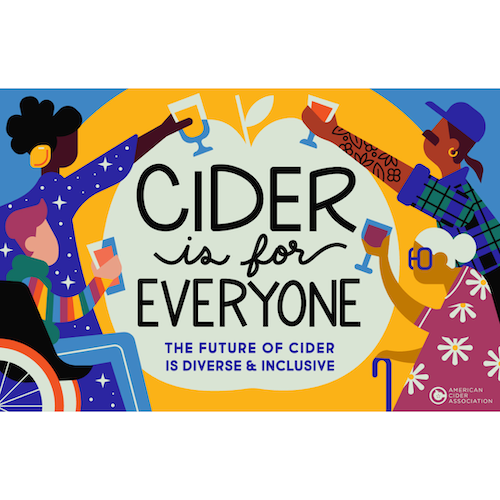
PORTLAND (December 29, 2023) – The American Cider Association (ACA) is thrilled to announce the awardees of the 2024 Cider is for Everyone Scholarship. Recipients are Genevieve Regalado (Benny Boy Brewing), Robert Freeman (EsoTerra Ciderworks), Britt Evans, Javier Naranjo (Oklawaha Brewing Company), Tasmine Fraser (Girl with a Cider Review, Cider Canada), Rae Adams (Wehrloom Honey & Meadery), Emily Ptasinski (Republic of Cider), WIlliam Santiago (Crafted Concoctions), Jonathan Osei (Artisanal Brewing Ventures), and José Sabas (Grape Ape). Full recipient bios can be found below.
This scholarship is designed to bring individuals from historically marginalized populations within the beverage industry to CiderCon® to increase the accessibility of cider education and catalyze the careers and ownership-pathways of these burgeoning cider professionals. Now in its third year, the scholarship received almost four times the number of applications than in the previous two years combined.
Each scholarship includes registration, travel and lodging to attend CiderCon® 2024 in Portland, Oregon. Additionally, scholarship recipients receive a year of ACA membership and study materials and waived exam fees to pursue recognition through the Certified Cider Professional and Certified Pommelier™ education and certification program offered by the ACA. The ACA is grateful for support from Yonder Cider, Seattle Cider Co, Nine Pin Ciderworks, 2 Towns Ciderhouse, Alma Cider, the Great Little Box Company, John’s Marketplace, Beer Kulture and Lifting Lucy to make the Cider is for Everyone Scholarship possible.
This scholarship is part of a broader effort by the ACA to advocate for diversity, equity, and inclusion within the cider industry. In 2019 the ACA launched the Antiracism, Equity and Inclusion Committee, which recognizes diversity, equity and inclusion as important and necessary principles for the present and future successes of the cider industry. This committee structures its work around a belief that existing structures of power, privilege and discrimination must be actively questioned, evaluated and reformed in order to create equitable opportunities and foster an environment that embraces and values our differences. Its members, in conjunction with the rest of the organization, strive to create events, opportunities and organizational policies that embody these principles, and work to continue evaluating these practices for sustained growth and improvement.
“This scholarship is one of our best tools for fostering a more diverse cider industry,” says Michelle McGrath, CEO of the ACA. “The scholarship needs to work in lock step with our efforts to create a more inclusive industry so that, as we have more diverse CiderCon® attendees, they are surrounded by a welcoming community and equitable environment.”
“There is a stark difference between being invited to an event and actually belonging in a space. The American Cider Association is doing the difficult and meaningful work of building a culture within the organization and the industry at-large that fosters true belonging by challenging itself to thoughtfully and carefully evolve and expand. The rapid growth and development of this scholarship program is both a testament to that thoughtfulness and indicative of the program’s importance. Its transformative impact on the lives of not just the individuals who receive it, but also the industry professionals who interact with recipients, spans far beyond the CiderCon® experience. This program, its participants, its sponsors, and its supporters collectively demonstrate that cider is, indeed, for everyone,” says ACA Scholarship Coordinator Olivia Pener, a recipient of the scholarship in 2023.
CiderCon® is the world’s premier networking and educational event for the professional cidermaking community. CiderCon® 2024 will take place in Portland, Oregon from January 17-19 at the Oregon Convention Center. Registration is now open and available at https://ciderassociation.org/cidercon2024.
Further information, media interviews, awardee bios and photos available upon request. Please contact Michelle McGrath at michelle@ciderassociation.org. Interested in helping support the Cider is for Everyone Scholarship? Please contact our Scholarship Coordinator Olivia Pener at scholarship@ciderassociation.org.
Meet Our Scholarship Recipients
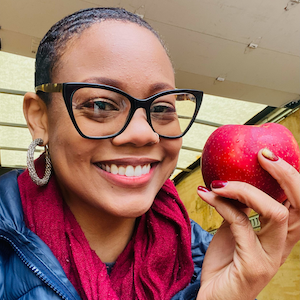
Britt Evans
Britt Evans is a proud West Philadelphian who started her journey in the city’s bustling food and beverage industry in 2010. In 2015, Britt developed a love for craft beer which led to a brewing position with Love City in 2021, making her one of the first Black Women to brew professionally in the city of Philadelphia. In the summer of 2023, Britt joined a collaboration with Farmer Jawn and Ploughman Cider, creating the successful “Uptown Cookout” blend for Barrel & Flow Fest. Now open to the beautiful world of apples and cidermaking, Britt is excited for the next phase in her journey. She hopes to explore the world and collaborate with fellow brewers/cidermakers, continuing to open doors and create safe spaces for Black Women in fermentation.

Emily Ptasinski
Hailing from the vibrant island of Taiwan, Emily Ptasinski has carved a unique path in the world of craft beverages as the co-owner and tasting room manager of Republic of Cider. Alongside her husband, they laid the foundation for their cidery in 2018, driven by a passion for redefining the boundaries of cider craftsmanship. Emily’s dedication to reshaping cider culture is reflected in her belief that inclusivity not only enriches flavors but also strengthens the very essence of craft beverages. To that, Emily has helped incorporate the distinct flavors of the Asian palate into their portfolio of ciders, even crafting her own Taiwanese plum wine, based on her own mother’s recipe. Embracing the significance of diversity, she champions the integration of varied perspectives and cultures into the fabric of craft beverages. Recognizing the pivotal role of representation, Emily actively promotes cider within the Taiwanese community, aiming to bridge cultural gaps and foster a sense of belonging.
Emily Ptasinski來自充滿活力的臺灣島,
作為蘋果酒共和國的老板娘和品酒室經理,她在手工飲料領域開闢了一條獨特的道路。 在重新定義蘋果酒工藝界限的激情驅使下,他們與她的丈夫一起在2018成立了,蘋果酒聯合國公司。 Emily致力於重塑蘋果酒文化,這反映在她的信念中,即包容性不僅能豐富風味,還能強化精釀飲料的精髓。 對此,Emily幫助將亞洲味覺的獨特風味納入了他們的蘋果酒組合,甚至根據她母親的食譜製作了自己的臺灣李子酒。 她擁抱多樣性的重要性,倡導將不同的視角和文化融入手工飲料的結構中。 Emily了解獨特性的重要,特別在西雅圖臺灣社群積極推廣蘋果酒,旨在彌合文化差距,培養歸屬感。
Emily很高興被選為美國蘋果酒協會2024年蘋果酒大會的獎學金獲得者。
Genevieve Regalado
Genevieve Regalado, the General Manager at Benny Boy Brewing in Los Angeles, CA, found her passion for cider kindled by the unique balance of dryness and sweetness in Benny Boy’s offerings. This pleasant surprise, given her background in the craft beer industry, not only sparked her creativity in imagining new flavor combinations but also inspired her to delve deeper into the world of cider. Motivated by her curiosity, she became the first on her team to pass the CCP 1 exam, thereby setting a precedent and guiding the development of a cider education program at Benny Boy. Currently, she is studying to pass her Certified Pommelier™ exam, demonstrating her commitment to continuous learning in her field. Genevieve is already infusing her creative ideas for new flavor profiles, featuring indigenous fruits and plants, into the team’s work. These ideas hold the potential to inspire new blends with Benny Boy’s beloved Pippin apple cider. As a proud member of the Latino community, she is weaving elements of her heritage into Benny Boy’s offerings and programming, fostering a broader appreciation for cider among diverse audiences.
Javier Naranjo
Javier Naranjo, a seasoned fermentation professional with a BS in Chemistry, began his journey at Flat Rock Cider Company, refining his craft for two transformative years. Transitioning to Oklawaha Brewing Company, where he currently serves as a Brewer, Javier has been part of a dedicated team that achieved notable success. Together, the team has secured prestigious medals from the North Carolina Brewers Guild and the U.S. Open Beer Championship, contributing to the elevated recognition of Hendersonville, NC’s burgeoning brewing scene.

Jonathan A. Osei
Jonathan A. Osei, Manager of Solutions Design & Delivery at Jobs For the Future, blends his Arizona roots and Ghanaian-Black Southern heritage to fuel his passion for community work and craft beverages. His journey in the nonprofit social impact space is intertwined with his love for diverse cultures and flavors.
While studying at Duke University, Jonathan’s interest in the craft beverage scene blossomed, with Durham introducing him to a variety of craft drinks that broadened his palate. This experience sparked a particular fondness for cider, beginning with Bold Rock Cider and later, Bull City Ciderworks.
In Washington, D.C., Jonathan’s enthusiasm led to his role as a DC Brand Ambassador for Artisanal Brewing Ventures, sharing exceptional craft beverages. He is committed to diversifying the craft beer and cider industry, actively promoting local Black brewers through the Black Brew Movement and fostering inclusivity and collaboration. Jonathan’s goal is to enrich the craft beverage culture with diverse flavors and perspectives, bringing people together to enjoy unique and delightful beverages.

José Sabas
José Sabas orginally hails from Coachella, California. He is currently the chef at Grape Ape, a natural wine bar in Portland, Oregon. José just recently started his journey in cidermaking and is focused on low intervention and co-fermentations, using only produce from the Pacific Northwest.

Rae Adams
Rae Adams, from Chicago, IL, moved to Western North Carolina in hopes to work with a farm futuristic enough to be using traditional farming technology without harmful chemicals and pesticides. Entering the professional world directly from a Liberal Arts program, with a concentration in Physics, was an exciting leap into the corporate hustle but was not the card best suited. She has since been a strong part of the Customer Service and Entertainment industries, including management teams of bars, music venues and restaurants in Chicago and Western North Carolina. Currently, Rae is the Director of Sales for Wehrloom Honey & Meadery in Graham County, Robbinsville, NC. The Wehrloom team philosophy is that no one holds any one title; they’re all Beekeepers, Mead Makers, and Packaging and Sales Specialists: Aron, Garret, Ted, Jessica, Gayle, Abby and Anna. Working at Wehrloom is more than a profession, it’s a passion.
Robert Freeman
When Robert Freeman was 18 he got a tattoo on his arm that has an apple in an eye, to signify a promise to himself to always proceed with intention and chosen purpose. All his intents and purposes have led him here. Nowadays, all he sees are apples. He is passionate about the potential and the future of apples and the cider industry in America. Robert currently works at EsoTerra Ciderworks. Getting this opportunity to go to CiderCon®, to become a member of the ACA, and to have the chance to become a Certified Pommelier™ – is a literal dream come true for Robert.
Tasmine Fraser
Tas Fraser is a Canadian cider enthusiast and social media content creator located in the Niagara region of Ontario, Canada. She is the founder of @girlwithaciderreview on Instagram where she shares her reviews of ciders from around the world. She started her Instagram in 2018 and has since developed many exciting projects. Throughout the pandemic, she created the IGTV show #ciderandlife to showcase local and global cideries making an impact in their communities. In 2021, she launched #noappleogies project to empower and highlight the work of women in cider and tackle issues of sexism and racism in the industry. The movement was intentional, reaching many corners of the world and generating conversation via podcasts, articles, and social media, and including some educational workshops on creating safe spaces in the beverage industry. Tas is currently a part of the CiderScene team and a member of the Cider Canada Board of Directors (and member of the Equity Committee). Outside of cider, she is pursuing her Masters in Social work, and working in the field doing preventative work and supporting survivors of gender-based violence.
William Santiago
Born in Puerto Rico, William Santiago is an award winning bartender currently working at Crafted Concoctions in Tavares, Florida. He has more than 10 years experience in the beverage alcohol industry. He is WSET certified in both Wine and Spirits level 2, a cocktail educator, and a spirit and cider enthusiast.
CiderCon® 2024 Aims to Tell Cider’s Story

Orchardists and Cidermakers Take Center Stage for Keynote Lineup
Portland, OR (December 14, 2023) – The American Cider Association (ACA) has announced the keynote speaker lineup for CiderCon® 2024, sharing that apple growers and cider producers will deliver opening remarks for the global industry event. This year’s theme, Connecting to Consumers in an Age of Endless Choice, will highlight the important and historic agricultural roots of cider in the US, and around the world.
“Our aim for the opening session is to celebrate American apple growers as integral members of the US cider supply chain,” says Michelle McGrath, the ACA’s CEO. “Storytelling is increasingly important in today’s consumer packaged goods industry, and cider’s story is deeply rooted in agriculture. The growers are critical to our industry.”
CiderCon® is the world’s largest professional hard cider conference, and the event welcomes cidermakers, apple growers, and beverage professionals worldwide to gather in Portland, Oregon, from January 17-19, 2024.
To kick-off the event, multigenerational orchardists Kaitlyn Thornton (Tonasket, Washington) and Randy Kiyokawa (Hood River, Oregon), along with cidery owner Lara Worm (Bivouac Cider in San Diego, California), will dig deeper into the theme for this year’s CiderCon®: Connecting to Consumers in an Age of Endless Choice. Following these three mini-presentations, Zoe Licata of Brewbound will host a panel discussion investigating the state of the hard cider industry with a selection of cidery representatives from around the country: Aaron Sarnoff-Wood (2 Towns Ciderhouse, Oregon), Eleanor Leger (Eden Specialty Ciders, Vermont), Caitlin Braam (Yonder Cider, Washington), Shannon Edgar (Stormalong Cider, Massachusetts), and Casey Baxter (Blake’s Cider, Michigan). McGrath will contribute remarks as well.
The ACA hopes to inspire attendees to hold deeper conversations with fellow conference-goers about how cider can reach new consumers in today’s beverage alcohol environment.
Over three days, CiderCon® attendees can choose from 40 educational sessions about cidermaking and cider business, attend a specialty trade show with over 120 vendors, and sample cider from around the country and the world at the opening reception, called Cider Share.
“We’re really excited to host the cider industry in Portland. We know the regional beauty, phenomenal food and plethora of cideries will be remembered by visitors when CiderCon® is over,” says McGrath. “Oregon is true cider country!”
Tickets for CiderCon® are still available through www.ciderassociation.org with discounted tickets offered to ACA members. The ACA reports that registration is outpacing all prior years, and they anticipate they will declare the event sold out in early January. The ACA is a 501C(6) nonprofit dedicated to supporting and protecting the U.S. hard cider industry.
###
Kait Thornton
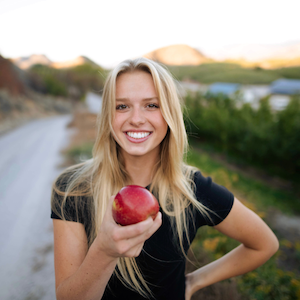
Kait Thornton is a 4th generation orchardist from North Central Washington. She shares her passion for the ins and outs of farm life & how apples/pears are grown to her over 450,000 followers on TikTok. She recently graduated from Washington State University and is on a mission to connect consumers to the food her family produces. You can find her on Tik Tok and Instagram.
Randy Kiyokawa
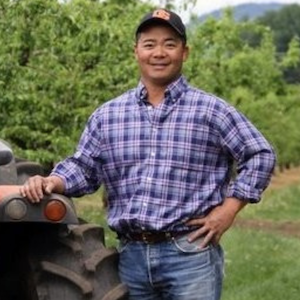
Randy Kiyokawa is a third-generation orchardist from Parkdale, Oregon, whose grandfather emigrated from Japan in 1905, and through hard work started farming in Hood River in 1911. After college Randy returned to the family orchard of more than 200 acres. While weathering many challenges, in 1989 Randy removed three acres of 80-year-old pear trees and planted 28 varieties of apples. Over time, customers requested different varieties that could not be found in stores or farmers markets, which has led to his offering now of over 120 varieties of apples. Randy’s diversification efforts expanded to Farmers Markets and direct sales to stores, restaurants, bakeries, schools and CSAs. Randy also credits his 45+ employees – many of whom have been with him for over 25 years — with the high-quality fruit for which Kiyokawa Family Orchards is known. You can follow Kiyokawa Family Orchards on Instagram.
Lara Worm
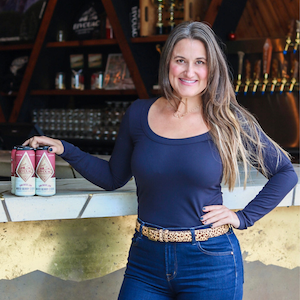
Lara Worm, co-founder, CEO, and self-described “Adventure Guide” of Bivouac Ciderworks, has taken an untraditional path to cider. The trial lawyer turned craft beverage entrepreneur who grew up in a multi-generational family restaurant business knows that there are two components to every great product: the ingredients and the story. Bivouac Ciderworks, established in 2017, was among the first commercial cideries in the craft-beer mecca of San Diego. Bivouac, telling their story through their active adventure lifestyle brand, set out to make approachable ciders that taste as great at the top of a mountain as they do with a fine meal. Bivouac’s brand, and North Park tasting room & restaurant has received great acclaim since its inception, earning recognition as one of U.S.A. Today’s “10 Best Cideries,” San Diego Magazine’s “best new brewery,” (before there was a cider category), and “Best ‘Alt-Drink’” (still, no cider category). Most recently, Lara was recognized as a “Food & Beverage Pioneer,” in San Diego, for her work introducing a wider audience to the possibilities in craft cider. In early 2024, Bivouac will open it’s newest concept, the “Adventure Lodge,” with a grand cider tasting bar and market featuring the finest cider from America and around the world. There, guests can enjoy a curated cider tasting program that leans in to the history, education, apple varietals and regions, and tasting notes found in cider. Lara says “cider is as approachable as beer, but as nuanced as wine,” and she intends to prove it. Follow Lara on Instagram.
Coffee Chat with 3 Tier Beverages


Are you curious about the latest trends in the cider industry? Join us for a members-only Coffee Chat webinar on January 9, 2024, at 10:00 AM Pacific Time, where Mary Mills and Julia Lechleiter from 3 Tier Beverages will share insights on 2023 chainr retail cider sales and consumer behavior.
The duo will provide a comprehensive analysis of the top 100 US cideries, off-premise growth, and regional insights based on data from NielsenIQ. With their expertise in the beverage industry, Mary and Julia will identify the drivers of growth and highlight emerging trends in the cider market at the chain retail level.
But the conversation doesn’t end there! Continue the discussion with 3 Tier Beverages at CiderCon® 2024 on Thursday, January 18 at 10:30 AM. This session will be co-led with our partners at CGA, a leader in on-premise data, and 3 Tier Beverages, a BevAl focused consultancy.
Don’t miss out on this exclusive opportunity to learn from industry experts and gain insights that can help your business thrive in the cider market. Register now for the Coffee Chat webinar and CiderCon® 2024 to stay ahead of the curve.
Certified Pommelier™ Ceremony at CiderCon® 2024

We are thrilled to share that the American Cider Association is hosting the inaugural Certified Pommelier™ Ceremony at CiderCon® 2024 in Portland, Oregon. This isn’t just any ceremony, it’s a celebration of achievements, a recognition of passion, and a toast to education.
Each and every Certified Pommelier™ brings their hard work, dedication, and cider expertise to the table. Their journey deserves to be celebrated, and what better place to do so than in the cider haven of Portland, Oregon.
So come join us at lunch on Thursday, January 18 at CiderCon® 2024 to raise a glass high to our Certified Pommeliers™ accomplishments and the beginning of a new chapter in cider education. Let’s toast to the future of cider and the continued success of our Certified Pommeliers™!
Interested in learning more about our Certified Cider Professional programs? Head to our Certification page.
CiderCon® 2024 Olympic Peninsula Tour
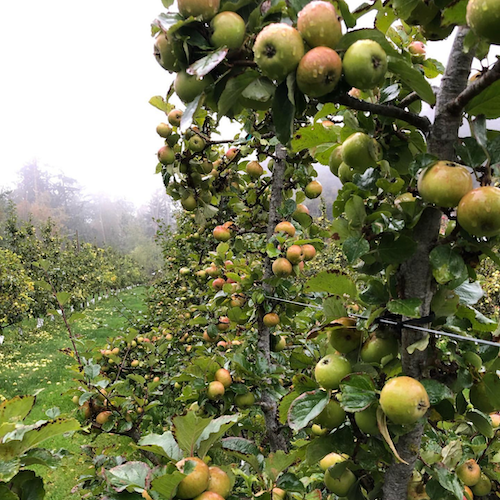

The Olympic Peninsula Tour will take you through some of the most breathtaking scenery in Washington State. While enjoying the stunning natural beauty, the rugged mountains, lush rainforests, pristine coastline and orchards, you will visit award winning cideries, an event space, a new cider education facility and spend the night at Fort Worden State Park. Led by Andrew Byers, head cidermaker and co-owner of Finnriver Farm & Cidery, we’ll taste our way across the Peninsula.
The Locations:
- Eaglemount Cider’s Palindrome – Eaglemount is located on 12 acres of mixed farm and woodlands known as Arcadia, just outside beautiful Port Townsend in Washington State. We’ll feast together and taste ciders in this historic barn.
- Alpenfire Cider – Shaped by the maritime climate’s mild summers and tempered by the foggy mist rolling off of Discovery Bay, Alpenfire Cider creates truly unique ciders from apples grown in their organic orchards. On the tour, we’ll visit both the cidery and orchard.
- Finnriver Farm & Cidery – Finnriver is an organic farm, orchard and craft cidery located along a salmon stream in the Chimacum Valley on the north Olympic Peninsula of Washington— the traditional and contemporary territories of the S’Klallam (Nəxʷsƛ̕áy̕əm̕) and the Chemakum (Aqokúlo or Čə́məq̓əm).
Craft Brewing & Distilling Center – Part of a community college, the Craft Brewing & Distilling Center (which also teaches cidermaking) exists to build flourishing, connected communities, entrepreneurs, educators, farmers, and cities are convening around growing the craft beer, cider, and spirits movement. Located just outside Olympia, Washington next to the historic Olympia Brewing Company, the tour will stop here to visit the classrooms and labs on our way up to the Peninsula. - Fort Worden Historical State Park – Fort Worden State Park and its gorgeous natural setting of Port Townsend is the kind of destination that stays with you forever. Originally designed as a military base to protect Puget Sound, Fort Worden has evolved into an iconic and cherished state park and lifelong learning center.
The tour will depart from the Hyatt Regency – Oregon Convention Center at 12:00 PM on Monday, January 15, 2024 and will return on Tuesday, January 16, 2024 at 6:00 PM. Dinner on Monday and breakfast and lunch on Tuesday will be provided, as well as accommodations at Fort Worden State Park in historic officers’ rooms, and cider tastings at Eaglemount Cidery, Alpenfire Cider, and Finnriver Farm & Cidery.
Cost: $295
If you’d like to join this tour, be sure to add it on during the registration process. The deadline to be included in this tour is December 11 so we have adequate time to book necessary accommodations.
Introducing Certified Pommelier™ Chapters


We were so excited to share the news of our 12 new Certified Pommeliers™ last week, but that’s not all we have to share; we’re not just about numbers (although they are fun) – we’re also about community, education, and advocacy. That’s why we’re also thrilled to announce the launch of the Certified Pommelier™ Chapters program.
Picture this: a network of educated cider enthusiasts spreading an understanding of the beverage across the globe. With leaders appointed in all six current ACA regions and Canada, the chapters are set to redefine the regional cider experience.
Meet Your Chapter Leaders:
- East: CT, MA,ME, PA, NH, NJ, NY, RI, VT- Paige Flori
- Midwest: IA,IL, IN, MI, MN, MO, OH, WI, KY- Sean Niemisto
- South: AL, AR, FL, GA, LA, MS, NC, SC, TN, VA, WV, MD, DE, DC- Josh Corl
- Mtn West: AZ, CO, NM, NV, UT, WY, SD, ND, KS, NE, OK, TX- Matthew Ostrander
- Northwest: OR, WA, ID, MT, AK- Storie Madrid
- Pacific Coast CA, HI- Brandon Buza
- Canada- Sara Boyd
How Do We Plan to Redefine the Regional Cider Experience?
- Community building: Our chapters, meetings and events will be more than just gatherings, they will help ignite a spark in the heart of local cider communities. Imagine sharing stories, clinking glasses, and forging friendships with like minded individuals who appreciate the art of cider. Chapters will play a pivotal role in nurturing these connections creating regional cider centric hubs.
- Education: Certified Pommelier™ chapters will be the epicenter of knowledge-sharing and skills development. From cider tastings to hands-on workshops, we hope to bring these educational events down to the local level and make them accessible for any cider lover.
- Advocacy: We’re not just sitting in the wings; we’re raising our glass high and advocating for the value of cider education. Certified Pommelier™ chapters will champion the industry in their respective regions aspiring to advance consumer understanding of the beverage and how it is made.
So, whether you’re a seasoned cider aficionado or just starting to dip your toes into the world of cider there’s a place for you in the Certified Cider Professional education community.
ACA Welcomes 12 New Certified Pommeliers™ After October Exams
The American Cider Association is proud to announce that twelve individuals successfully passed the Certified Pommelier™ examination in October 2023. The new Certified Pommeliers™ are Ann Bliss of Mullers Cider House, Bryan Barry, Christian Rodriguez, and Tom Hansen of Angry Orchard, Katie Black of DSSOLVR, Johnny Rice of Orchard Hill Cider Mill, Don Whitaker of Castle Hill Cider, Henry Johnson of Bold Rock Hard Cider, Chris Jackson of Treasury Cider at Fishkill Farms, Aaron Gore of Fresh Pitch Beverage Consulting, and cider enthusiasts Sabrina Nencetti and David Lindsey.
The rigorous exam, held in both New York and North Carolina last month, tested candidates on their understanding of cider production, history, and sensory evaluation. As a result, these newly Certified Pommeliers™ are now equipped with advanced skills to guide consumers through the wide variety of ciders available and to help elevate the cider industry at the point of sale.
Early on, the American Cider Association recognized the need to promote specialized knowledge about the cider category. Certifications are increasingly being used to set food and beverage professionals apart. However, most certification programs cover cider in a cursory manner or not at all. With cider being a beautifully nuanced beverage with a diverse set of elements often less understood by food and beverage professionals, the establishment of the Certified Cider Professional (CCP) program in 2016 was a strategic maneuver. Today, the CCP program is designed to educate those on the front-line of cider sales, making it the world’s most comprehensive and in-depth cider appreciation program for food and beverage professionals.
The CCP program begins with a Certified Cider Guide (CCG) Level 1 certification to help industry professionals develop a fundamental understanding of cider. The Certified Pommelier™ (CP) Level 2 takes it a step further by encouraging cider professionals to think critically and showcase a higher level of understanding of the elements of cider. The rigorous testing process consists of four types of questions, including short answer, fill in the blank, essay, and blind sensory–which is based on tasting.
The ACA is dedicated to ensuring that all information tested on the exam is made accessible to anyone who desires to learn. To that end, the ACA released a textbook in March of 2023 to help candidates prepare to take the exam with just one comprehensive resource. The textbook is available for purchase through Kindle Direct Publishing. Additionally, the ACA offers sensory analysis practice webinars and a Facebook study group, continuously updated with resources for exam candidates. Interested candidates can find links to all Certified Pommelier™ resources on the ACA’s website.
The next Certified Pommelier™ Exam will be held at CiderCon® 2024 in Portland, Oregon on January 17, 2024
Contact the ACA’s Education Operations Manager Jennie Dorsey if you have questions about the Certified Cider Professional program or are interested in taking either the Level 1 or Certified Pommelier™ exams. You can also learn more at https://ciderassociation.org/certification.
###
Check Out the Fun to be Had at the CiderCon® 2024 Trade Show!


The CiderCon® 2024 Trade Show, sponsored by FruitSmart is set to be the best yet! With over 100 vendors already confirmed and more on the way, there will be plenty of chances for you to connect with the companies that have helped your cidery thrive or meet new companies that can help take you to the next level. The CiderCon® Trade Show will be taking place at the Oregon Convention Center on January 18-19, 2024.
But wait, there’s more! Need a pick-me-up? Coffee will be available Thursday and Friday mornings, courtesy of Milne. And when Thursday afternoon rolls around, get ready to cheers with some cider at the Happy Hour sponsored by Hart Print.
But it’s not all about the drinks – there’s plenty of entertainment to go around. Check out the research poster presentations or get competitive with some games of corn hole and ping pong. And if you’re feeling nostalgic, Stern Pinball will have pinball machines available to play.
Now if you’re looking to make a statement, head over to the Ink Bus and get yourself an apple flash tattoo. It’s a fun and unique way to show your love for the fruit that brings us all together.
Don’t forget to stop by the ACA Bookstore to stock up on the latest cider book offerings and to meet our staff and board members. In addition, the TTB staff will be available for one-on-one questions, and folks from CINA will be on hand to provide feedback . With so much to see and do, and more on the way, the CiderCon® Trade Show is not to be missed!
Interested in becoming a CiderCon® vendor? Email our Trade Show Coordinator Ellen for more info!
Take the Member Input Survey

This content is for members only.
If you were a member and are now seeing this message, please Renew your membership to continue.
Now Accepting Nominations for ACA Board of Directors


Do you have a passion for growing the cider industry? Are you looking to find a platform for your ideas, where you will be seen and heard? Would you like to work with a group of like-minded industry leaders to create positive change?
If you answered “Yes” to these questions, YOU ARE IN LUCK! The ACA is looking to fill two At Large seats on our Board of Directors. Our annual nomination window is now open, and we want to hear from YOU! Elections will take place electronically during CiderCon® 2024 in Portland, Oregon in January. All U.S. member cideries are eligible to vote (1 vote per cidery).
Although it is not required, we strongly encourage candidates to have an ACA volunteer history before running for office.
Please see below for more specifics on service and how to apply:
- Positions are open to any active ACA member cidery in the U.S., regardless of size.
- Applications are due by December 8, 2023.
- To qualify for candidacy, you must be a permanent employee of a bonded cidery, producing cider in the U.S.
- Incumbents may be running for their seats again.
- Terms are three years.
- Applicants will be reviewed when the submission window has closed
- Qualified candidates will receive further instructions on developing their platforms and what board service includes.
Have more questions about board service? Schedule a chat with ACA CEO Michelle McGrath by clicking here.
To submit your nomination by the December 8 deadline fill out the self-nomination form.
Certified Pommelier™ Exam at CiderCon® 2024


TAKE THE CERTIFIED POMMELIER™ EXAM AT CIDERCON® 2024!
Are you ready to take the next step in your professional development in the cider industry?
If you have already passed the Certified Cider Professional Level 1 Certification and are looking for that next challenge? Now is your chance!
The American Cider Association is pleased to announce a Certified Pommelier™ Exam will be held at CiderCon® 2024 in Portland, Oregon. The exam will take place Wednesday, January 17, 2024 at the Oregon Convention Center, 777 NE Martin Luther King Jr Blvd, Portland, OR 97232. Deadline to register is December 18, 2023.
Read on to learn more about the Certified Pommelier™ Exam and how to prepare, what to expect, and how to register! (P.S. There’s a discount code available for ACA members who want to take the test. You can find that code HERE by logging in to your account.)
WHAT IS THE CERTIFIED POMMELIER™ EXAM?
The American Cider Association’s mission is to grow a diverse and successful U.S. cider industry by providing valuable information, resources and services to our members and by advocating on their behalf. One way to fulfill this mission is through the Certified Cider Professional Program–a program aimed at educating the front-line of cider sales (distributors, retailers, bartenders and more!).
The intro-level certification (CCP Level 1) is an online test that can be taken at any time. The more advanced level of certification–the Certified Pommelier™ exam–is an in person hand-written exam in two parts: Theory and Sensory. The theory portion of the exam consists of four types of questions: short answer, fill in the blank, matching, and essay, and the sensory portion of the exam is a blind tasting using the ACA’s structured sensory analysis forms.
*CCP Level 1 is a prerequisite for Certified Pommelier. (Haven’t taken your CCP Level 1? Buy the bundle here.)
Certified Pommeliers™ must have a fundamental understanding of all topics covered in CCP Level 1, but must also be able to think critically and use the basics to demonstrate a higher understanding of the elements of cider. This exam is meant to be challenging. Studying is highly recommended.
The topics covered in the exam are:
- Apples, the Orchard & History
- Cider Making
- Flavor & Evaluation
- Cider Families
- Keeping & Serving
- Food & Cider
- Social Responsibility
*If a test-taker passes only the Theory or only the Sensory portion of the exam, they are permitted the opportunity to retake the un-passed portion of the exam at a future date (within 18 months). After the 18 month grace period has lapsed, any portions of the exam not passed may be retaken at a 25% discount.
WHY BECOME A CERTIFIED POMMELIER™?
Cider is a beautifully nuanced beverage with a diverse set of elements that are often misunderstood by food and beverage professionals. Certifications are increasingly used in the professional realm to set oneself apart as an individual with specialized knowledge, though cider is often covered in a cursory manner by most certification programs, if at all. Although there are already more than 2.200 Level 1 Certified Cider Professionals, being recognized as a Certified Pommelier™ will put you in the vanguard of verified advanced cider specialists in this ever growing category.
HOW MUCH DOES THE TEST COST?
For ACA members, the exam is $200. There is a discount code that members can access to receive the exam at the membership rate of $200. That discount code can be found here.
For non-members, the exam is $275.
Price now includes access to a pre-recorded introductory webinar to the updated sensory form and sample sensory forms from key cider regions. The webinar can be accessed at any point to prepare for your exam.
FAQs
- Are there ID or minimum age requirements to enter the event? YES- You must be 21 or older and you must provide an ID to prove you are who you say you are.
- Do I need to pass the level 1 CCP exam to take the Certified Pommelier™ test? Yes. Passing the Level 1 CCP exam is a prerequisite. If you have not yet taken the Level 1 exam, you can purchase the Level 1 bundle on demand HERE. The bundle includes an on-demand webinar, study guide, and access to the online exam.
- What can I bring into the event? Nothing may be brought into the exam room. Cell phones must be left at the door. Pencils and drinking water will be provided.
- How can I contact the organizer with any questions? Please contact Education Operations Manager Jennie Dorsey at jennie@ciderassociation.org.
- What’s the refund policy? We will refund test takers until two weeks before the exam.
- Is there a training workshop? This is not a workshop, but an exam only. Once you register for your exam, sensory exam prep materials will be emailed to you. These prep materials include a sensory form instruction video, sample sensory forms, and blank sensory forms. We strongly suggest you purchase the Certified Pommelier™ Study Guide from Amazon. The study guide will cover all information presented in the theory portion of the exam. There is also a dedicated Facebook Group (that is open for all to join) with prep materials and in depth peer conversations. STUDY! We highly recommend interviewing cidermakers and cider tenders to help prepare. Blind tasting flights are also good prep. In addition, there are sensory webinars available for purchase here, and new live sensory analysis webinars will be announced on our certification page.
- Is it ok if the name on my ticket or registration doesn’t match the person who attends? If you are transferring registration to another person, please email us in advance.
- Is there a tasting section on the test? Yes. You will be asked to evaluate ciders from multiple cider families.
- How long does the test take? You are given 2 hours to complete the theory portion of the exam and 1 hour and 30 minutes to complete the sensory portion. There will be a 15 minute break in between exam portions.
Refund and Opt Out Policy
Refunds will be offered up to 2 weeks before the exam.
Any purchaser can opt out of the exam up to 72 hours prior to scheduled time. If opt out is chosen, another exam date must be chosen within 18 months. No refunds will be given.
Cider Is For Everyone Scholarship Application Now Open!
The American Cider Association is pleased to announce the continuation of their Cider Is For Everyone Scholarship program for CiderCon® 2024. This scholarship is designed to bring historically marginalized groups to CiderCon® to increase the accessibility of cider education and jump-start the careers and ownership-pathways of these cider professionals.
The scholarship package includes: registration to CiderCon® 2024 (including travel and lodging) and the entire suite of ACA’s Certified Cider Professional educational programming leading up to sitting for the Certified Pommelier™ exam (Level 1 CCP training and certification exam, two Certified Pommelier™sensory webinars; the Certified Pommelier™ study guide, and the registration fee for the Certified Pommelier™ Exam).
Applications are now being accepted and the deadline to apply is November 27. Those interested in applying can fill out the application form here. Recipients will be contacted to schedule a brief interview and winners of the scholarship will be notified by December 5. CiderCon® 2024 takes place January 16 – January 19, 2024 in Portland, Oregon
This scholarship is part of a broader effort by the ACA to advocate for diversity, equity, and inclusion for the cider industry. In 2019 the ACA launched the Antiracism, Equity and Inclusion committee which recognizes diversity, equity and inclusion as an important and necessary part of present and future successes of the cider industry. This committee structures its work around a belief that existing structures of power, privilege and discrimination must be actively questioned and evaluated in order to create equitable opportunities in an environment that embraces and values our differences. They strive to create events, opportunities and organizational policies that embody these values, and to continue evaluating these practices for sustained growth and improvement.
“This scholarship is one of our best tools for fostering a more diverse cider industry” says Michelle McGrath, CEO of the ACA. “The scholarship needs to work in lock step with our efforts to create a more inclusive industry so that, as we have more diverse CiderCon® attendees, they are surrounded by a welcoming community and equitable environment.”
Meet Our Scholarship Coordinator
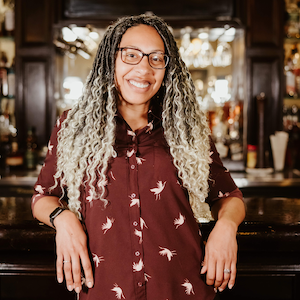
Olivia Pener’s passion for food and drink, and the way they bring people together, was ignited as a small child whose large family always gathered over meals in the kitchen. That flame was stoked by her experiences growing up in her family’s restaurant and being surrounded by multicultural foodways in St. Louis, MO. Now, after almost 20 years in the service industry and the nonprofit world, she brings her fervor for people and palates to the American Cider Association as their “Cider is for Everyone” Scholarship Coordinator. A recipient of the scholarship herself, Olivia was welcomed into the world of cider with open arms. She is excited to contribute to the growth and evolution of the cider industry as a diverse, equitable, inclusive, and dynamic environment for all. She lives in Mid-Missouri with her two cats, Felix and Nermal, and her Chihuahua mix, Swiper.
Have questions about the scholarship? Reach out to Olivia with any questions you might have!
CiderCon® 2024 to Be Held in Portland, Oregon


ACA Brings Largest Cider Conference in The World to The “City of Roses”
October 4th, 2023 (Portland, OR) – The American Cider Association is pleased to announce that CiderCon® 2024 will take place in Portland, Oregon from January 16-19, 2024. The largest cider conference in the world, CiderCon® 2024 will bring more than 1000 attendees to the city and surrounding areas for tours, tastings, educational workshops, networking opportunities, a trade show and more.
“It’s been eight years since we held CiderCon® here, and we’re thrilled to be back in the City of Roses,” says ACA CEO, Michelle McGrath. “Portlanders drink more cider per capita than any other city, so visiting attendees will feel right at home,” adds McGrath. This year, visiting attendees include Swedish and Norwegian cidermakers who are at the forefront of their own cider renaissance. “There’s a cider revolution going on in the Nordics, so we’re looking forward to sharing their experiences and ciders with attendees.”
The conference coincides with Oregon Cider Week (January 13-21, 2024), a statewide celebration of cider, featuring events for both aficionados and the cider-curious, hosted by the Northwest Cider Association (NWCA).
The two trade non-profits have been working with teams on the ground in the state of Oregon and beyond to create several tour options for CiderCon® attendees and media, including overnight adventures that explore both Oregon and Washington cidermaking regions. Together, the two states produce about 70% of the country’s apples, and are home to 165 cideries, making the area ripe for sourcing talent for the educational sessions.
A full range of workshop sessions will cover cider production, marketing, sales, branding, sensory evaluation, compliance, business strategy, orcharding and more. The ACA will once again partner with the Cider Institute of North America (CINA) to develop the cider production sessions.
“Despite increasing competition in the beverage alcohol space, cider has maintained its status as a mainstay beverage category, with year after year growth in local and regional cider brands across the country,” says McGrath, referring to cider’s growing popularity nationwide. In fact, regional and local cider was up 10.4% for the 52 week period ending on September 9th for chain retail measured by NIQ via 3 Tier Beverages.
The extensive trade show, presented by long standing ACA partner FruitSmart, will feature more than 100 vendors and be held at the Oregon Convention Center, with accommodations and other activities provided at the Hyatt Regency Hotel located just next door.
Tickets to CiderCon® are available now and are $435 for ACA members and $725 for the public, when booked by December 4th. After that date, member registration rates rise to $500 and public tickets go to $800. Ticket price includes the opening general session on Thursday morning, access to educational sessions, networking events, the trade show, and lunch on Thursday and Friday. Bulk pricing is available for groups of 5 or more.
More information about the wide array of events and educational sessions being offered as well as registration can be found on the CiderCon® website, and follow @cidercon on X or @pickcider on Instagram for the latest news. CiderCon® is an ACA event produced with the generous support of our members and ACA’s premier sponsor, FruitSmart.
###
Cider Share at CiderCon® 2024
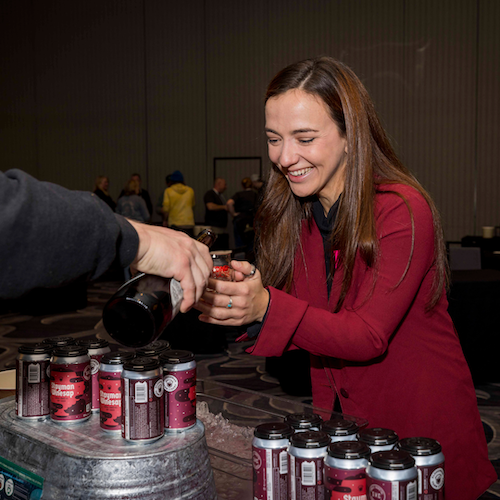
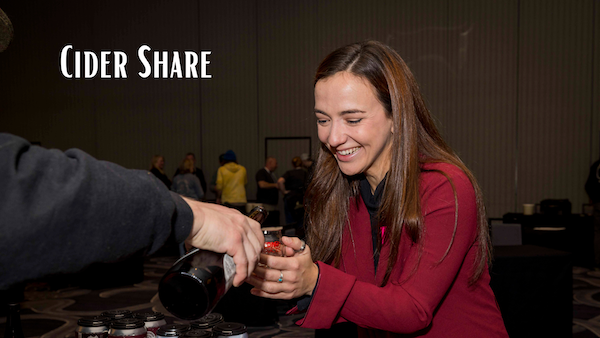
Get ready to raise a glass and toast to the start of CiderCon® 2024! Join us for our beloved welcoming reception, Cider Share, on Wednesday, January 17 from 5:00 to 7:30pm. Sip on some of the finest ciders while mingling with fellow cider folks from around the world. Whether you’re a seasoned cidermaker or a newbie to the industry, the Cider Share reception is the perfect opportunity to connect with like-minded individuals and kick off an unforgettable conference.
At Cider Share, attendees will have the chance to sample ciders from a variety of cidermakers from all over. Not only will you get to enjoy a wide variety of flavors and styles, but you’ll also have the opportunity to learn about the ciders from the cidermakers and their staff. Plus, with 600 people in attendance, Cider Share is a great way to connect with other cidermakers from your region and mingle with fellow CiderCon® attendees.
Tickets for Cider Share are only $20, so be sure to add it to your registration process before it’s too late!
And if you’re a cidermaker yourself, consider applying to pour your ciders at Cider Share. Cideries will be chosen through a lottery system, with considerations given to geography and style. Fill out the application form here. Deadline to apply is October 31 or when space has filled up. Two pourers will be allowed per company. All other company employees must purchase tickets to attend Cider Share.
Live Sensory Analysis Webinar with Haykin Family Cider

Join our Certified Pommelier™ panel in a live practice sensory webinar on Thursday, November 9 from 4:00-6:00 PM Pacific featuring cider from Haykin Family Cider. This webinar will also be available to watch again and practice as a prerecorded event. ACA Members can register for a discounted rate of $15. The discount code for members can be found here.
Cider must be purchased separately. Please be aware that it may take several days to receive your cider order, so we encourage you to purchase your ciders as soon as possible. Also, please verify that cider can be sent to your state before purchasing ciders. Ciders can be purchased from Haykin Family Cider here.
Once registered, you will receive a confirmation email. This email is a placeholder for the event. The evening before the event you will receive an email with a Zoom link to the webinar. Please note this link will be sent to the registered email.
CiderCon® 2024 Tours


From the mountains to the valleys, from the cities to the farms and rural communities, these CiderCon® 2024 tours will explore the diverse natural beauty, apple growing regions, and cider traditions of the Great Northwest.
What to Know Before You Go:
- Scheduled departure times are subject to change. Please contact Emily to confirm timing before making travel plans.
- All tours will involve decent amounts of walking and may involve mud, rough terrain, stairs and/or inclement weather. Please come prepared with sturdy walking shoes and clothing for all weather possibilities.
One Day Tours
Columbia Gorge Cidery & Brewery Tour
Tuesday, January 16, 8:30 AM – 5:45 PM
Cost: $110
Visit three fermentation focused businesses in the scenic Columbia River Gorge that make both cider and beer: Double Mountain, Mt View Orchards, and Working Hands Fermentation. We’ll tour production spaces and tasting rooms to see how these businesses attract both the local community and tourists, both beer and cider drinkers. Tour cost includes tastings, lunch, and transportation.
Visit:
- Double Mountain Brewery & Cidery
- Gold Row Hard Cider/Mountain View Brewery
- Working Hands Fermentation
- 33 Books Studio
Portland’s Quirky Culinary Adventure: Exploring Weird and Wonderful Food and Cider Pairings
Tuesday, January 16, 9:00 AM – 5:00 PM
Cost: $100
Indulge your senses in a culinary adventure like no other as we take you on a journey through the heart of Portland, Oregon, where food, cider, and culture collide in a tantalizing fusion of flavors and experiences. This tour features 5 unique locations, with multiple pairings at each location. Don’t miss out on this chance to celebrate the vibrant culinary scene of this beautiful city, known for its diverse and quirky offerings and world-renowned ciders.
Co-Existing & Co-Fermenting in the Willamette Valley Cider & Wine Region
Tuesday, January 16, 8:30 AM – 5:45 PM
Cost: $110
The Willamette Valley, just south of Portland, contains two-thirds of Oregon’s wineries and vineyards. It’s also home to fabulous cideries, many of them using the bounty of the region to make co-ferments. On this tour we’ll visit four cideries and orchards to chat about how they coexist in wine country and taste their ciders. Tour cost includes tastings, lunch, and transportation.
Visit:
2 Towns Ciderhouse Open House
Wednesday, January 17, 9:00 AM – 3:00 PM
Cost: $20
Catch a ride to 2 Towns Ciderhouse – Oregon’s largest craft cider producer – for a special CiderCon Open House. Tour the 2 Towns production space, meet with cidermakers, and mingle with CiderCon attendees under the big tent. Lunch and snacks from food trucks and more than 20 ciders will be available for purchase.
Overnight Tours
Olympic Peninsula Cider Tour
Monday, January 15, 12:00 PM – Tuesday, January 16, 6:15 PM
Cost: $295
Journey north to discover the beauty and history of the cideries, orchards, and lands of the Olympic Peninsula. This two day tour will visit two cideries, one cidery event space, and a new cider education facility. Tour cost includes tastings at 3 stops, dinner, lunch, breakfast, hotel, and transportation. In addition to the official tour agenda, you’ll have the opportunity to explore Fort Worden Historical Park where we will stay overnight in historic officer’s homes.
Visit:
- Eaglemount Cider’s Palindrome
- Alpenfire Cider
- Finnriver Farm & Cidery
- Craft Brewing & Distilling Center
- Fort Worden Historical State Park
Production Tour: Seattle & Surrounds
Overnight Full Tour Cost: $395
Monday, January 15, 9:00 AM – Tuesday, January 16, 6:00 PM
From small DIY to high tech high volume, this tour will visit 4 Seattle area cideries showcasing different production facility scales and styles. On this 2 day tour of production facilities you’ll visit Schilling Cider, Seattle Cider Company, Locust Cider, and Greenwood Cider Company. We’ll also make time for a tasting at Yonder Cider’s taproom and a cider pairing dinner at Capitol Cider. Tour cost includes tastings at each stop, 2 lunches, 1 dinner, 1 hotel night in Seattle, and transportation to and from Portland. In addition to the official tour agenda, you’ll have the opportunity to explore the Ballard brewery district and Capitol Hill neighborhood on your own.
Visit:
- Greenwood Cider Company
- Locust Cider
- Seattle Cider Company
- Schilling Cider
- Yonder Cider
- Capitol Cider
Partial Tour Cost: $100
Tuesday, January 16, 9:00 AM – 6:00 PM
Live in the Seattle area? Join the Seattle tour for a cider pairing dinner at Capitol Cider on Monday evening and all activities on Tuesday 1/16. Bring your luggage and meet at the hotel in Seattle on Tuesday morning You’ll meet the tour and catch a ride to Portland.
Visit:
CiderCon® 2024 Tasting Sessions
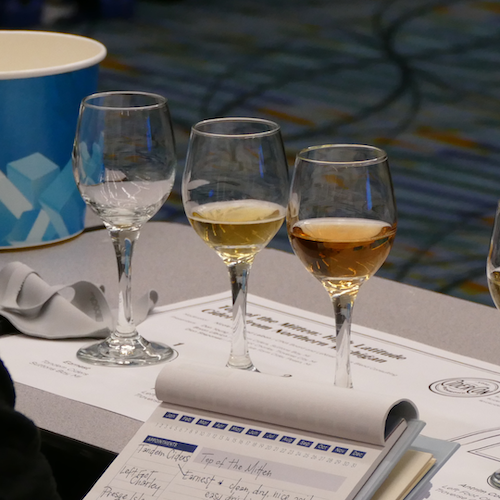
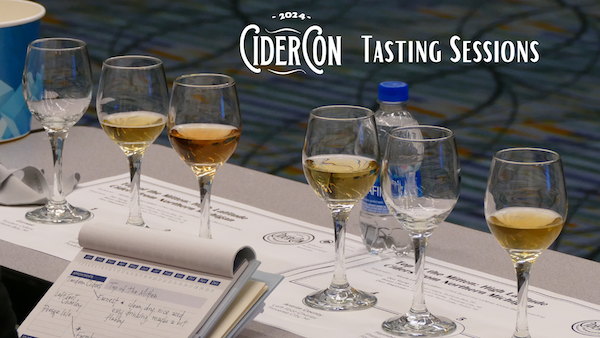
Tasting sessions have long been one of the most popular features of CiderCon®. Attendees can gain a wealth of knowledge while sipping on ciders that delve into the styles, production practices, flavors, and terroir available. Below you will find the CiderCon® 2024 tasting sessions outlined with dates and times as well as cost per session. It is important to note that some of these sessions may overlap, so be sure to check the schedule carefully. Don’t forget to add on any tastings that catch your eye during the registration process, as they are sure to sell out quickly!
An Introduction to Low-ABV & Non-Alcoholic Cider Production
Date & Time: Thursday, January 18, 10:30-11:45 AM
Cost: $12 SOLD OUT
Moderator: Dave Takush
Speakers: Ellen Cavalli, Christine Walter, John Berardino, Scott Katsma
This session will provide a basic overview of the various methods that can be used to produce low-ABV and non-alcoholic (NA) ciders, including a brief introduction to the technologies and regulations that may be associated with NA cider production. We will not be covering sparkling juice production, Participants will taste a range of products and should walk away with insight into various methods that might be employed to produce low-ABV and NA products, and the knowledge that there are different regulatory hurdles associated with NA production. Attendees will learn about different methods of low-ABV production, different methods of non-alcoholic production, technologies associated with NA production, and regulatory matters associated with NA production.
Breaking Boundaries: Cider Hybrids with Beer and Grape Wine
Date & Time: Thursday, January 18, 10:30-11:45 AM
Cost: $12 SOLD OUT
Moderator: Christine Hardie
Speakers: Ryan Burk, Johan Sjöstedt, Tom Oliver, Kathline Chery, Tariq Ahmed
An increasing number of cidermakers, winemakers, and brewers are experimenting with hybrids that break down what is typically expected from stand-alone beverages. By crossing boundaries between categories, the outcomes of these blends and co-fermentations offer exciting new flavors. Join this session to hear from producers about different approaches to hybrid products and considerations when unifying cider, wine and beer. Attendees will taste cider/grape wine hybrids from North America and grafts from the U.K. and Sweden, where beer/cider hybrids have been a key to bringing new consumers into the fold of cider.
Comparing the Effect of Yeast Inoculation Rate on Fermentation Kinetics, Chemical and Aroma Compounds in Cider Fermentations
Date & Time: Thursday, January 18, 2:00-3:15 PM
Cost: $12 SOLD OUT
Speakers: Jocelyn Kuzelka & Andy Hannas
Yeast produce different types and concentrations of aroma compounds as a function of yeast strain type, fermentation conditions, raw ingredients, and juice treatments. The sensory profile of cider is significantly associated with yeast selection and the quality of cider is dependent upon predictable fermentation outcomes. During yeast metabolism subtle changes in yeast cell inoculum level, determine rate of cell division, nitrogen demand, and availability of aroma precursors. It is generally accepted in the wine world, that 106 yeast cells/mL should allow the fermentation to proceed predictably and completely with little to no residual sugar remaining; while under inoculating leads to sluggish and stuck fermentations. However, recent research in wine and beer has suggested that yeast inoculation rate can be used to drive aroma production toward an increase in positive aromas. Speakers in this advanced level sensory session will explore the effect of yeast inoculum size on the production of aroma compounds both positive and negative in a cider fermentation, by decreasing cell count to accommodate the limited carbohydrate and nitrogen present in apple juice destined for fermentation. Attendees will learn more about yeast metabolism and how yeast inoculation rates can be used to drive cider style and quality.
Pear Necessities: The Fruits and Flavours of International Perry
Date & Time: Thursday, January 18, 2:00 – 3:15 PM
Cost: $12 SOLD OUT
Moderator: Adam Wells
Speakers: Albert Johnson, Natalia Wszelaki, Laura Cherry, Tom Oliver
Riding the wave of the cider revolution, perry – perhaps the world’s best-kept drinks secret – has gradually been ascending too. In the UK, continental Europe, the USA and beyond, makers and drinkers are waking up to the unique qualities of the fermented pear. In this session Adam Wells, founder-editor of Cider Review and currently writing his first book, Perry: A Drinker’s Guide, will lead a panel discussion and tasting of some of the best perries from around the world.
Nordic Approaches to Cidermaking
Date & Time: Thursday, January 18, 3:45-5:00 PM
Cost: $16 SOLD OUT
Moderator: Gabe Cook
Speaker: Åge Eitungjerde, Olav Bleie, Mikael Nypelius, Karl Sjöström, Andreas Sundgren
This year, we’re excited to welcome a delegation of Nordic cidermakers to CiderCon®. Join this session for a unique opportunity to try ciders from Norway and Sweden and learn about different production styles and techniques used in the region.
The Ancestral Method: Between Science & Art
Date & Time: Friday, January 19, 10:00-11:15 AM
Cost: $12 SOLD OUT
Moderator: Nicole LeGrand Leibon
Speakers: Yann Gilles, Levi Danielson
This very traditional method in France makes it possible to produce sparkling ciders, fermented in bottles, while preserving some residual sugars of the apple without adding anti-yeasts or using pasteurization. Willamette Valley is home to some renowned winemakers using this technique, and more and more cidermakers are experimenting with the Ancestral Method. Hear from experts about production considerations, ways to identify the critical points, and keys to success of this demanding method, between science and art. Attendees will walk away having understood the particularities, advantages and disadvantages of the ancestral method compared to other carbonation methods. They will be able to identify the critical points and keys to success of this demanding method, between science and art.
Harvest Harmony: Exploring the Potential of Apple and Stone Fruit Co-Ferments
Date & Time: Friday, January 19, 10:00-11:15 AM
Cost: $12
Moderator: Dan Pucci
Speakers: Adam Chinchiolo, Matt Sanford, Susannah Forbes
This session’s goal is to examine the extent of the possibilities of what apples plus+ can do. Co-ferments have been adopted across the fermentation world as a fun and exciting entry point both for producers and consumers alike. This session will focus on two different co-ferment mediums that are added with apples to produce something greater than the sum of their parts. This session will talk about making co-ferments but will focus on how these cider into a portfolio of offerings and how to engage with consumers about their nature, flavor and personality.
Evaluating Ciders for the Certified Pommelier™ Exam
Date & Time: Friday, January 19, 11:30-12:30 PM
Ticketed Session: $10
Speakers: Darlene Hayes, Tim Powers
Participants will practice evaluating ciders using the ACA’s Structured Sensory Evaluation process guided by Certified Pommeliers™ Darlene Hayes and Tim Godfrey. This session will teach you how to objectively assess any cider, empowering you in the cidery and in assisting customers to find a cider they love while also helping you to prepare for the Certified Pommelier™ exam.
Foraged Fruit Project: A Discussion of Discovery
Date & Time: Friday, January 19, 1:45-3:00 PM
Cost: $12
Moderator: Scott Ramsey
Speakers: Greg Peck, Maria Kennedy, Steve Selin
Cider producers in many parts of the country are foraging apples to use in their commercial products. Some producers do this as an inexpensive way to obtain apples, others are finding unique quality attributes from the foraged fruit, and still others believe that foraging is a way to discover climate resilient genotypes that can be propagated and grown in orchard settings. In this panel discussion, Cornell and Rutgers scientists will share results from a project that interviewed dozens of producers in the Northeastern US about their foraging practices, and then chemically analyzed the foraged fruit, as well as genotyped the trees to learn about the pedigree of the trees. Commercial cider producers will be on the panel to share their stories, as well as their ciders made from foraged apples. Attendees will learn about the scale and scope of foraging, the reasons why producers are foraging, and the quality of cider made from foraged fruit.
New Frontiers in Traditional European Cider Regions
Date & Time: Friday, January 19, 1:45-3:00 PM
Cost: $12
Moderator: Abram Goldman-Armstrong
Speakers: Darlene Hayes, Gabe Cook, Yann Gilles, Edu Vazcot
In an increasingly global cider community the exchange of information is leading to truly impressive innovations in both traditional and emerging cider producing regions. This panel of international cider experts will discuss the exciting new developments taking place across Europe. Traditional ciders may have their steadfast supporters, but in order to capture new consumers innovation is essential. This panel of writers, researchers, judges, and consultants, have a broad understanding of cider in all its forms, and will present some of the most innovative ciders from their regions.
Using Amphora & Terracotta Vessels in Cider Production
Date & Time: Friday, January 19, 3:30-4:45 PM
Cost: $12
Moderator: Christine Walter
Speakers: Dan Rinke, Andrew Beckham, Katie Selbee
Clay vessels have been used to ferment, store, and transport beverages since 6000 B.C. and a new wave of producers are rediscovering amphora and terracotta as a breathable, sustainable, and durable option for making cider. Andrew Beckham, the first commercial producer of terra cotta Amphorae for winemaking, cidermaking, and brewing in North America, will walk through the process of making his Novum fermenters and how to use them and care for them. Producers will discuss how they craft their ciders using terracotta, and what considerations to have when fermenting in amphora. This will also include a tasting of their ciders.
The Pasteurization Primer: Starting Out and Scaling Up
Date & Time: Friday, January 19, 3:30-4:45 PM
Cost: $12
Speakers: Aaron Homoya & Joseph Kilbourn
Anyone can pasteurize cider at any size! Learn the science, data tracking, and practical methods to start with test batches and scale up to a hundred cases per day and beyond. We will start with a brief overview of stability concerns, needs, and common methods for cider, then hone in on pasteurization theory, best practices, equipment options, and solutions for small to medium sized cideries. Topics include temperature monitoring, DIY small-scale bath pasteurization, batch pasteurizers, small tunnel pasteurizers, and brief discussion of many interrelated stability and packaging parameters. There will be a sensory tasting of pasteurized cider at different levels. Attendees will learn what a PU is, how to determine target min/max PUs, deciding what equipment options are right for you, and tips for how to scale.
Volunteer at CiderCon® 2024!
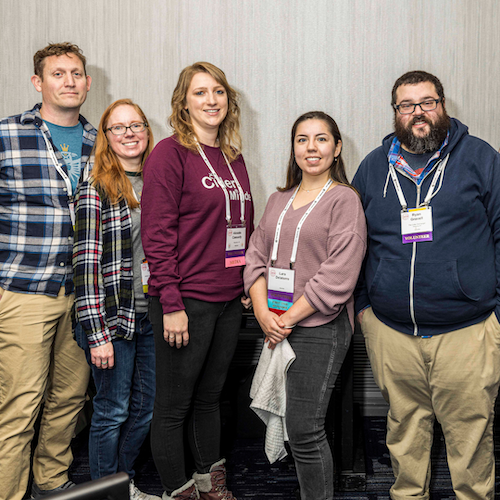
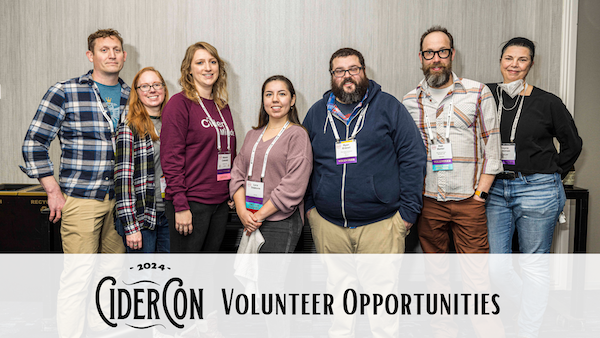
Fall is here and with the apples being picked all over this fair country, we can’t help but think of all the new ciders that will soon be bubbling away in fermentation vessels! Which also brings to mind the pleasant thought of another CiderCon® in the works! This year CiderCon® will once again be held in Portland, Oregon after an eight year hiatus. We’re already lining up an amazing assortment of tours, trainings, tastings, and educational sessions, not to mention the trade show, that we hope will help cidermakers thrive in 2024 and beyond. That being said, it takes a village to put on CiderCon® and we’re asking for your help. We are looking for volunteers for CiderCon® 2024 in Portland and we would love to have you join us!
Who’s Elegible?
- Are you a cidery making less than 25,000 gallons?
- Are you a cider enthusiast who would like to meet some of your favorite cidermakers?
- Are you a cidery in planning interested in learning from fellow cidermakers?
Then you are elegible! If you have questions about whether or not your eligible, email Woodley.
What’s expected of you as a volunteer?
It’s simple! 5 hours of your time between Monday, January 15 and Friday, January 19, including serving for at least 2 tastings (if physically able) within those 5 hours. That’s it!
What’s in it for you?
Tons! Your registration fee for CiderCon® will be waived! All general sessions and workshops will be open to you. While this does exclude paid tours or tastings, you will still be able to sign up and pay for these opportunities when you register for CiderCon®. That means that other than your volunteer shifts, the rest of the time is yours to check out the amazing sessions, tastings, trade show, etc. that make CiderCon® so wonderful to attend!
How do I sign up?
Please sign up on Bloomerang Volunteer if you’re interested in volunteering at CiderCon® 2024! Our Volunteer Coordinator, Woodley Smith, will be in touch with you as soon as more details are firmly in place.
If you have any questions, please contact Woodley Smith.
ACA Welcomes Three New Certified Pommeliers
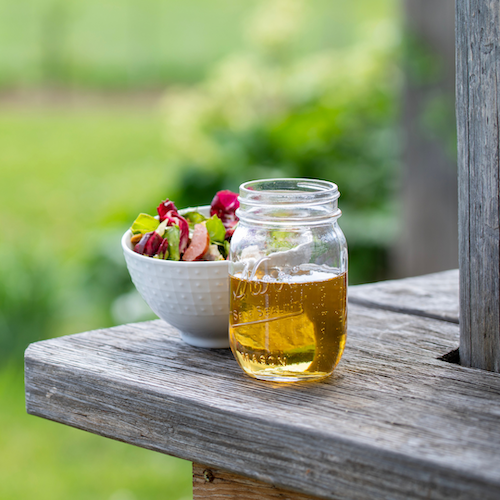

The American Cider Association is proud to announce that three individuals have successfully passed the Certified Pommelier™ examination. The new Certified Pommeliers™ are Anthony Chen–head brewer at AleSmith Brewing Company in San Diego; Lester Koga–owner of Bare Bottle Brewing in San Francisco; and Jessica Arlich–cider enthusiast from Vancouver, Washington. The rigorous exam, held in San Francisco last month, tested candidates on their understanding of cider production, history, and sensory evaluation. As a result, these newly Certified Pommeliers™ are now equipped with advanced skills to guide consumers through the wide variety of ciders available and to help elevate the cider industry at the point of sale. The ACA congratulates Anthony, Lester and Jessica on certifying their specialized cider knowledge and evaluation skills!

Lester Koga, Jessica Arlich, Anthony Chen
Early on, the American Cider Association recognized the need to promote specialized knowledge about the cider category. Certifications are increasingly being used to set food and beverage professionals apart. However, most certification programs cover cider in a cursory manner or not at all. With cider being a beautifully nuanced beverage with a diverse set of elements often less understood by food and beverage professionals, the establishment of the Certified Cider Professional (CCP) program in 2016 was a strategic maneuver. Today, the CCP program is designed to educate those on the front-line of cider sales, making it the world’s most comprehensive and in-depth cider appreciation program for food and beverage professionals.
The CCP program begins with a Level 1 certification to help industry professionals develop a fundamental understanding of cider. The Certified Pommelier™ certification (Level 2) takes it a step further by encouraging cider professionals to think critically and showcase a higher level of understanding of the elements of cider. The rigorous testing process consists of four types of questions, including short answer, fill in the blank, essay, and blind sensory–which is based on tasting.
The ACA is dedicated to ensuring that all information tested on the exam is made accessible to anyone who desires to learn. To that end, the ACA released a textbook in March of 2023 to help candidates prepare to take the exam with just one comprehensive resource. The textbook is available for purchase through Kindle Direct Publishing. Additionally, the ACA offers sensory analysis practice webinars and a Facebook study group, continuously updated with resources for exam candidates. Interested candidates can find links to all Certified Pommelier™ resources on the ACA’s website.
The ACA has three upcoming exam dates for those interested in pursuing their Certified Pommelier™ designation.
- October 11: Certified Pommelier™ Exam during New York Cider Week
- October 24: Certified Pommelier™ Exam in Asheville, North Carolina
- January 17: Certified Pommelier™ Exam at CiderCon® 2024
Contact the ACA’s Education Operations Manager Jennie Dorsey if you have questions about the Certified Cider Professional program or are interested in taking either the Level 1 or Certified Pommelier™ exams. You can also learn more at https://ciderassociation.org/certification.
New York Cider Week Certified Pommelier Exam
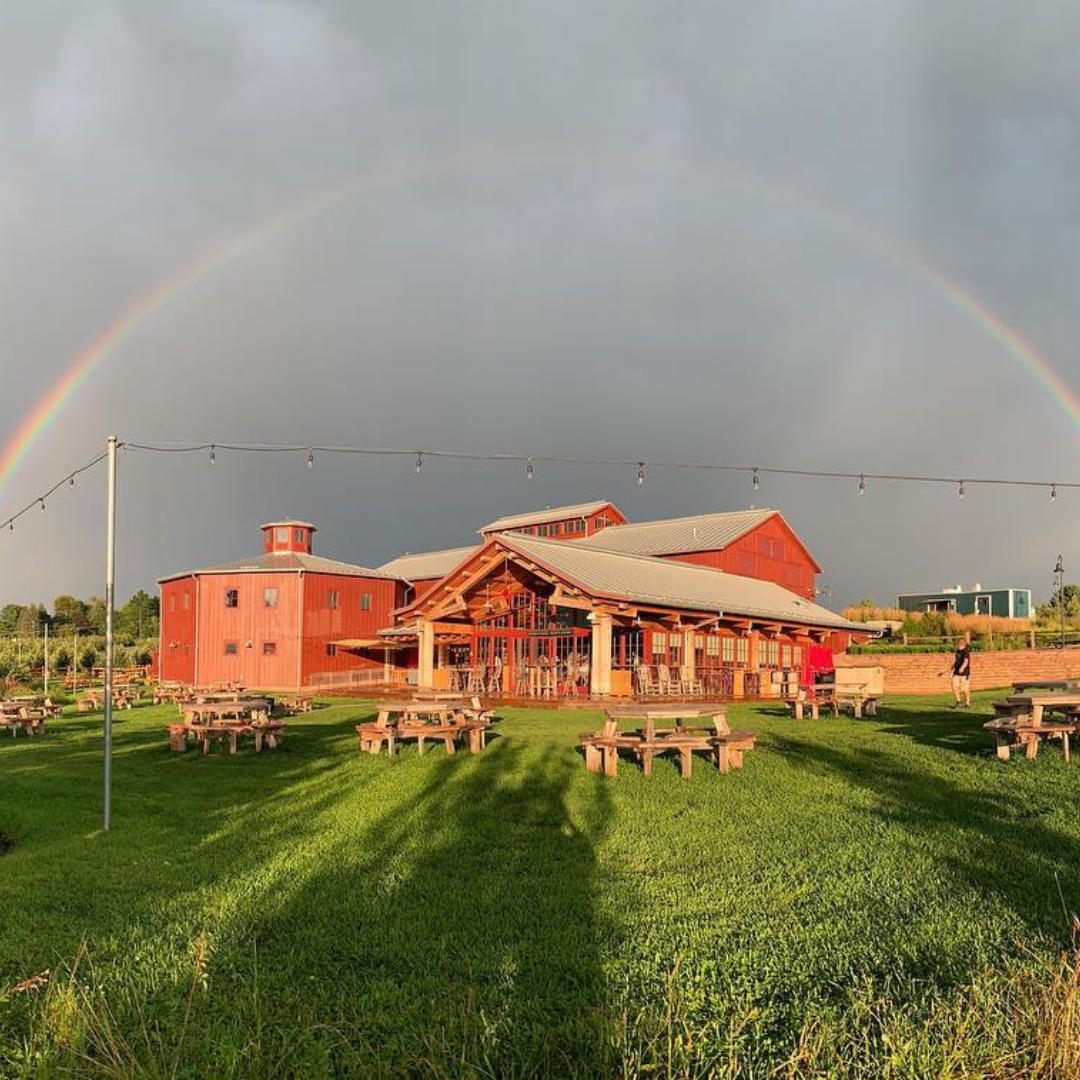
Are you looking for the next big step in your professional development? If you’ve already passed the Certified Cider Professional Level 1 Certification, then the American Cider Association has an exciting opportunity for you! We will be hosting a Certified Pommelier™ Exam on October 11, 2023 at the Angry Orchard Innovation Cider House in Walden, NY during New York Cider Week.
As a Certified Pommelier™, you’ll be recognized as an expert in the cider industry, with in-depth knowledge of apple varieties, orcharding, and cidermaking techniques. The exam will cover a wide range of topics, from the history of cider to the sensory evaluation of different ciders.
Don’t worry, though – you won’t be going into the exam blind! The ACA has provided plenty of resources to help you prepare, including study guides, online courses, and a Facebook study group. And if you’re an ACA member, you can even get a discount on the exam fee by logging into your account and finding the discount code.
So what are you waiting for? Register now for the Certified Pommelier™ Exam and take your cider knowledge to the next level! The registration deadline is October 1, 2023 so there’s no time to lose! Remember, the exam takes place on October 11, 2023, and registrants are asked to arrive by 7:45 AM. Good luck!
In Person CCP Level 1 at Angry Orchard

Are you ready to take your passion for cider to the next level? Join us at Angry Orchard Innovation Cider House during New York Cider Week for an in-person Certified Cider Professional Level 1 certification workshop! We are thrilled to collaborate with the American Cider Association to bring you this amazing opportunity to become CCP Level 1 certified.
During the workshop, you will learn about the history of cider, the cider making process, and the different styles of cider. This workshop also features a Certified Pommelier™ led tasting experience featuring New York Ciders! After the training, participants can take the test online immediately (BYO computer) or at a later date.
The cost per person for this fantastic experience is $65, which includes the test fee. But that’s not all! Lunch and, of course, more cider will be available for purchase at our tasting room after the training.
We would love to see anyone who sells cider, works in a tasting room or retail shop, owners, chefs, sommeliers, cicerones, buyers and cidermakers who are interested in cider education and adding a cider certification to their accreditation sign up and join us!
Space is limited, so register now and get ready to become a Certified Cider Professional!
Pour Your Cider at Cider Share at CiderCon® 2024
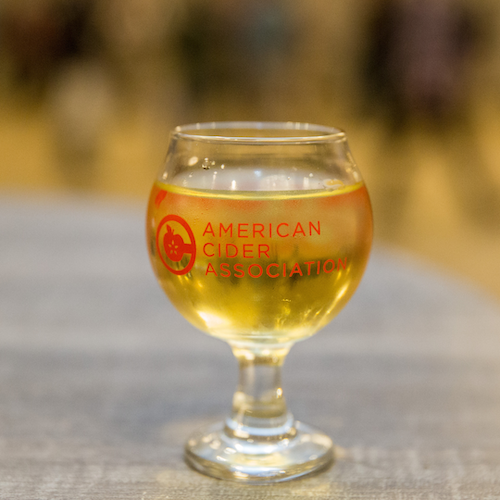
Ever dream of pouring your cider for the entire cider community while chatting with makers from around the world? Here’s your chance!
Applications are now being accepted for those interested in pouring their cider at Cider Share, CiderCon® 2024’s welcoming reception. Cider Share will take place on the afternoon of Wednesday, January 17 at the Hyatt Regency Convention Center. In order to pour at Cider Share the individual cidery must be participating in CiderCon® as a full attendee. Local cideries who are attending can request a temporary pourer pass for their staff. Pouring space is limited so please submit your application for consideration as soon as possible. The deadline to apply is October 31.
Cideries accepted to pour will be notified and asked for additional details.
Learn more about CiderCon®!
Additional Employee Retention Credit Eligibility & Other Tax Planning Opportunities – What Your Cidery and Accountant May Not Have Considered

Hey ACA members! Get your calculators ready and join us for an informative webinar on November 14 at 2:00 PM Pacific!
Many businesses took advantage of COVID-19 relief programs such as PPP and EIDL, but many more are still missing out on funds from the Employee Retention Credit (ERC) and have not filed for all quarters in which they are eligible (up to 7 quarters). Eligible employers who paid qualified wages can claim up to $26,000 per employee in refundable tax credits. Another missed opportunity occurs when companies do not effectively utilize tax planning strategies. These strategies include the work opportunity tax credit, research and development credit, planning for long-term sustainability, bonus depreciation, and business expenses. Join Strategic Tax Planning, a licensed CPA firm for a discussion on the common tax planning techniques that could increase your business’s after tax cash flow.

Tina Azarvand
Tina joined Strategic Tax Planning and is a Tax Manager with the firm. While working as a Tax Attorney, Tina became interested in the Employee Retention Credit through the ever-evolving legislation, where she decided to shift her focus to assisting small businesses with ERC while it is available.
As a Tax Attorney, Tina focused on assisting individuals and businesses facing tax controversies with the IRS and local taxing authorities. In 2022, Tina was selected to the SuperLawyers: Rising Stars list and the Best Lawyers: Ones to Watch list, both of which are distinctions given to less than 3% of the attorneys in each respective state. Tina was also selected as the Maryland Volunteer Lawyers Service (MVLS) Young Volunteer of the Year for 2022.
October Certified Pommelier™ Exam in North Carolina

TAKE THE CERTIFIED POMMELIER™ EXAM IN ASHEVILLE, NORTH CAROLINA!
Are you ready to take the next step in your professional development in the cider industry?
If you have already passed the Certified Cider Professional Level 1 Certification and are looking for that next challenge? Now is your chance!
The American Cider Association is pleased to announce a Certified Pommelier™ Exam will be held in Asheville, North Carolina! The exam will take place Tuesday, October 24, 2023 at the Bold Rock Taproom, 39 N Lexington Ave, Asheville, NC 28801
Read on to learn more about the Certified Pommelier™ Exam and how to prepare, what to expect, and how to register! (P.S. There’s a discount code available for ACA members who want to take the test. You can find that code HERE by logging in to your account.)
WHAT IS THE CERTIFIED POMMELIER™ EXAM?
The American Cider Association’s mission is to grow a diverse and successful U.S. cider industry by providing valuable information, resources and services to our members and by advocating on their behalf. One way to fulfill this mission is through the Certified Cider Professional Program–a program aimed at educating the front-line of cider sales (distributors, retailers, bartenders and more!).
The intro-level certification (CCP Level 1) is an online test that can be taken at any time. The more advanced level of certification–the Certified Pommelier™ exam–is an in person hand-written exam in two parts: Theory and Sensory. The theory portion of the exam consists of four types of questions: short answer, fill in the blank, matching, and essay, and the sensory portion of the exam is a blind tasting using the ACA’s structured sensory analysis forms.
*CCP Level 1 is a prerequisite for Certified Pommelier. (Haven’t taken your CCP Level 1? Buy the bundle here.)
Certified Pommeliers™ must have a fundamental understanding of all topics covered in CCP Level 1, but must also be able to think critically and use the basics to demonstrate a higher understanding of the elements of cider. This exam is meant to be challenging. Studying is highly recommended.
The topics covered in the exam are:
- Apples, the Orchard & History
- Cider Making
- Flavor & Evaluation
- Cider Families
- Keeping & Serving
- Food & Cider
- Social Responsibility
*If a test-taker passes only the Theory or only the Sensory portion of the exam, they are permitted the opportunity to retake the un-passed portion of the exam at a future date (within 18 months). After the 18 month grace period has lapsed, any portions of the exam not passed may be retaken at a 25% discount.
WHY BECOME A CERTIFIED POMMELIER™?
Cider is a beautifully nuanced beverage with a diverse set of elements that are often misunderstood by food and beverage professionals. Certifications are increasingly used in the professional realm to set oneself apart as an individual with specialized knowledge, though cider is often covered in a cursory manner by most certification programs, if at all. Although there are already more than 2.200 Level 1 Certified Cider Professionals, being recognized as a Certified Pommelier™ will put you in the vanguard of verified advanced cider specialists in this ever growing category.
HOW MUCH DOES THE TEST COST?
For ACA members, the exam is $200. There is a discount code that members can access to receive the exam at the membership rate of $200. That discount code can be found here.
For non-members, the exam is $275.
Price now includes access to a pre-recorded introductory webinar to the updated sensory form and sample sensory forms from key cider regions. The webinar can be accessed at any point to prepare for your exam.
FAQs
- Are there ID or minimum age requirements to enter the event? YES- You must be 21 or older and you must provide an ID to prove you are who you say you are.
- Do I need to pass the level 1 CCP exam to take the Certified Pommelier™ test? Yes. Passing the Level 1 CCP exam is a prerequisite. If you have not yet taken the Level 1 exam, you can purchase the Level 1 bundle on demand HERE. The bundle includes an on-demand webinar, study guide, and access to the online exam.
- What can I bring into the event? Nothing may be brought into the exam room. Cell phones must be left at the door. Pencils and drinking water will be provided.
- How can I contact the organizer with any questions? Please contact Education Operations Manager Jennie Dorsey at jennie@ciderassociation.org.
- What’s the refund policy? We will refund test takers until two weeks before the exam.
- Is there a training workshop? This is not a workshop, but an exam only. Once you register for your exam, sensory exam prep materials will be emailed to you. These prep materials include a sensory form instruction video, sample sensory forms, and blank sensory forms. We strongly suggest you purchase the Certified Pommelier™ Study Guide from Amazon. The study guide will cover all information presented in the theory portion of the exam. There is also a dedicated Facebook Group (that is open for all to join) with prep materials and in depth peer conversations. STUDY! We highly recommend interviewing cidermakers and cider tenders to help prepare. Blind tasting flights are also good prep. In addition, there are sensory webinars available for purchase here, and new live sensory analysis webinars will be announced on our certification page.
- Is it ok if the name on my ticket or registration doesn’t match the person who attends? If you are transferring registration to another person, please email us in advance.
- Is there a tasting section on the test? Yes. You will be asked to evaluate ciders from multiple cider families.
- How long does the test take? You are given 2 hours to complete the theory portion of the exam and 1 hour and 30 minutes to complete the sensory portion. There will be a 15 minute break in between exam portions.
Refund and Opt Out Policy
Refunds will be offered up to 2 weeks before the exam.
Any purchaser can opt out of the exam up to 72 hours prior to scheduled time. If opt out is chosen, another exam date must be chosen within 18 months. No refunds will be given.
Calling All Cideries: Submit Your Content for CiderCon Video!

As the cider industry continues to grow, it’s important that we come together to promote and celebrate our craft. With that in mind and CiderCon® 2024 returning to Portland for the first time in eight years, we’re going all out! To make this event even more special, we’re calling on all cideries to submit photo and video content for potential inclusion in a CiderCon® video. This is an opportunity for cideries to showcase their unique personalities and highlight what makes their brand stand out.
We are looking for content that demonstrates the authenticity and breadth of styles within the industry. This means that we want to see all aspects of cider production, from orchards and harvest to pressing and packaging and tap room facilities. But, what really makes content compelling is the PEOPLE! We want to celebrate the unique culture of cider and how much enjoyment it brings people. Shots and clips that include people are even better for all of these themes.
We want to feature a wide range of cideries, products, and individuals, so don’t hesitate to submit your content. Higher resolution is generally better, but we don’t necessarily need HD/high resolution for something to be a usable clip, and even cellphone photos or videos are great if the content is good. Just make sure that the full resolution file is uploaded and that the video is horizontal. Have questions? Reach out to Woodley!
So, what are you waiting for? Submit your content by October 18 and be a part of an exciting and representative highlight reel to celebrate our awesome industry! You’ll be able to submit your video by dropping it into this Google Drive. You’ll need to have a Google Drive account in order to upload. If you don’t have a Google Drive account, please send your content to Woodley.
ACA Welcomes Miranda Bradeen as the New Membership and Engagement Coordinator
The American Cider Association (ACA) is excited to announce the appointment of Miranda Bradeen as its new Membership and Engagement Coordinator. In this role, Miranda will be responsible for member outreach, engagement, and retention efforts, as well as supporting the ACA’s mission to promote cider in the United States.
Miranda has a long-standing history in the beverage and hospitality industry, with a passion for making people feel seen and heard. She is a sommelier by trade and has spent most of her career working with wine. However, after walking the Camino de Santiago del Norte through Spain in 2021, she fell in love with all things cider. Since then, she has been actively pursuing ways to learn about cider’s history, culture, growing regions and farming practices, cultivars, production methods, and people surrounding all of the above.
Miranda is excited to be a catalyst for growth within the industry and is eager to bring her expertise to the ACA. She is committed to supporting the organization’s members and ensuring they receive the best possible experience.
Currently, Miranda lives in Spokane, WA, with her husband, Scott, son Henry, and daughter, Dromi.
The ACA is thrilled to have Miranda on board and looks forward to the new ideas and fresh perspectives she will bring to the organization. Her extensive experience and passion for the beverage industry are sure to enhance the ACA’s efforts in promoting and growing the cider industry.
You can learn more about Miranda and the rest of the ACA staff on our webpage.
Celebrate Cider at Upcoming Festivals!


As the leaves begin to change and the air grows crisp, there’s nothing quite like sipping on a delicious cider to fully embrace the autumn season. And what better way to indulge in this quintessential fall beverage than by attending a cider festival? Whether you’re a seasoned cider connoisseur or a casual fan looking to expand your palate, there are plenty of local and regional cider festivals happening across the United States. From the East Coast to the West Coast, get ready to raise a glass and celebrate cider at these must-attend events!
Cider Summit Seattle
September 8-9, 2023
Seattle, Washington
Join the fun at Lake Union Park @ MOHAI for the region’s largest hard cider tasting event, featuring 150 selections from nearly 50 producers. Among the selections will be local, regional and international favorites, mead, cider cocktails, fruit spirits and maybe even a few surprises! This is an outdoor event – rain or shine!
Maryland Cider Festival
September 9, 2023
Gaithersburg, Maryland
Mark your calendars for the inaugural Maryland Cider Festival, happening on Saturday, September 9th from 11 am to 4 pm at Two Story Chimney Ciderworks in Gaithersburg, MD. The festival will feature ten local cideries showcasing their best hard ciders, from dry to sweet, still to sparkling, modern to heritage, and everything in between. You’ll get to sample a variety of flavors and styles, and learn more about the cider-making process from the experts.
Pour the Core NY
September 23, 2023
Yaphank, New York
Pour the Core: A Hard Cider Festival is coming to Southaven County Park in Yaphank on Saturday, September 23rd, for another fantastic fall day filled with ciders from local, national and international cidermakers, plus a donut eating contest, food trucks, and more!
Whidbey Island Cider Festival
September 30, 2023
Coupeville, WA
Check out the Whidbey Island Cider Festival. They strive to build community while highlighting the locally crafted ciders, meads, spirits and beers of their beautiful island. Come and see what Whidbey Island has to offer in locally crafted ciders, brews, spirits and mead!
Cider Week New York
October 6-15, 2023
Throughout New York State
Glynwood launched the inaugural Cider Week in 2010 as an outcome of a travel exchange between French and American cider producers. Distinctive products like hard cider evoke a local food culture and sense of place that is closely tied to agriculture in addition to garnering more profit for farmers. Recognizing these opportunities while addressing the still-real obstacles faced by our farming community, Glynwood’s goal was to foster a cider market in the Hudson Valley as the linchpin in a chain of positive social, environmental, economic and community benefits. After over 10 years of successful growth, Cider Weeks in New York are now a production of the New York Cider Association, and continue to cultivate an appreciation for New York’s orchard-based cider by showcasing NY cider’s diversity, food-friendliness, and excellent quality in cider production.
Carolina CiderFest
October 21, 2023
Asheville, North Carolina
Carolina CiderFest will feature ample tastings of hard cider, mead, apple wine, and seltzers along with artisanal food, live music, and workshops, all in the heart of Downtown Asheville. The al-fresco event will be held during the peak of fall colors and the height of the area’s busiest tourism season on Saturday, October 21, 2023 from 11:30 a.m. to 3 p.m. at the new, improved, and expanded venue, McCormick Field, home to Asheville’s own Tourists Baseball team.
Minnesota CiderFest
October 21, 2023
Minneapolis, Minnesota
The region’s premier cider sampling event, Minnesota CiderFest, will feature unlimited samples from the region’s best cideries. Join them for cider, food trucks, and music outdoors at Minneapolis Cider Company. Enjoy unlimited samples of unique ciders from your favorite local and regional cideries.
Philly Cider Week
October 21-29, 2023
Philadelphia, Pennsylvania
Since its inception in 2018, Philly Cider Week has connected cider enthusiasts across industries in Philadelphia through thoughtful programming. Cider sales thrive when they have their own section on a menu and our annual week of events allows establishments to experience the viability of featuring ciders more prominently year round and encourages new relationships between small businesses. At its core, PCW’s mission is to educate and raise the awareness of cider as an agricultural beverage.
Franklin County CiderDays
November 3-5, 2023
Franklin County, Massachusetts
The folks at Franklin County CiderDays are beginning the process to reinvigorate the apple and hard cider festival you know and love! Plans are afoot to present a full slate of activities on the first weekend of November for the 29th incarnation of this beloved event – November 3 – 5, 2023. Stay tuned for more details.
Virginia Cider Week
November 10-19, 2023
Throughout Virginia
Virginia Cider Week started in 2012 when the Virginia House of Delegates and the state Senate passed House Joint Resolution 105 to designate the full week before Thanksgiving as Cider Week in Virginia. Since then, cideries across the Commonwealth have celebrated Virginia Cider Week through festivals, tastings, pairing dinners, workshops, and open houses at venues throughout the state. Virginia Cider Week is a great time to celebrate the growth and variety of the Virginia cider industry.
Oregon Cider Week
January 13-21, 2024
Throughout Oregon
Oregon Cider Week Special Edition is happening in conjunction with CiderCon® 2024, hosted in Portland, Oregon. The Northwest cider community will welcome visiting conference attendees, media, buyers and cider fans at a wide variety of not-to-be-missed events. Save the date(s) and stay tuned!
Don’t see your festival on here? Let us know!
Present Your Research at CiderCon® 2024


We’re happy to announce that the American Cider Association will once again host a research poster session during CiderCon® 2024. If you have a research project you’d like to share with CiderCon® attendees, please complete this form to allow our panel to select the featured posters. Submissions are due November 22, and applicants will be notified of acceptance by December 1. Successful applicants will receive one complimentary registration to CiderCon®.
CiderCon® 2024 will be held at the Oregon Convention Center from January 17-19 and successful applicants will be expected to present their research to attendees during a specified time. Posters can also be featured digitally via our conference app.
Please reach out to Ellen with any questions and feel free to share this form with other researchers.
2023 Apple Crop Outlook
It’s time once again to share what we’ve heard from extension agents and orchardists around the country about this year’s apple crop outlook. Initial reports are from May-July of 2023.
Renae Moran, University of Maine
May 24: Temperatures were above normal going into winter, but no damage has been seen to occur from the midwinter low of -17 to -25 °F in early February. Reports from northern Maine are not yet available.
A warm spell in April caused an early start to the growing season, so green tip occurred about two weeks earlier than anticipated in southern Maine. Cool temperature followed this initial early start. Consequently, bloom occurred only one week earlier than anticipated. May 18, temperatures dropped to the lethal point during bloom and ranged from 24 to 30 °F depending on location within the state and orchard elevation. Higher elevations had better flower survival than lower spots. Western Maine had greater flower mortality, 90 to 100%, than eastern orchards, 10 to 20%.
Pollination conditions were fair, but the cool temperatures are expected to favor fruit set.
No major issues with disease or pests have occurred by this time of petal fall.
Sherif M. Sherif – Virginia Tech
June 1: The apple crop in Virginia for 2023 exhibited unique characteristics compared to previous years. One notable aspect was the early bloom, occurring approximately 10 days earlier than in 2022 and representing the earliest bloom in the past six years. This early development was likely influenced by the unusually warm winter experienced in the region. However, the early bloom was met with a series of frost events that had severe consequences for fruit trees across the state, including apples, peaches, cherries, apricots, and plums. The frost events occurred in March and April, with temperatures as low as 18°F recorded in some locations, including Winchester, VA. The damage caused by these freezing temperatures was significant, particularly affecting the apple cultivars that were transitioning from half-inch green to tight clusters. Observations collected after the first freeze on March 20th indicated severe damage to both king and side blooms, with an alarming 87% flower damage in king blooms and 60% damage in side blooms for popular varieties like Pink Lady and Gala.
Despite the detrimental effects of the frost events, the overall apple fruit crops for most cultivars in Virginia were not significantly impacted. In fact, fruit thinning applications were necessary in many parts of the state to optimize crop loads. However, the warm winter also resulted in sporadic blooming, extending over a prolonged period for certain cultivars that are not typically known for such blooming patterns, e.g. Gala. The sporadic blooming led to a unique situation where apple trees carried two distinct crops, differing in size by almost 9mm. This posed challenges for thinning decisions, particularly during the usual thinning window of 6-18mm.
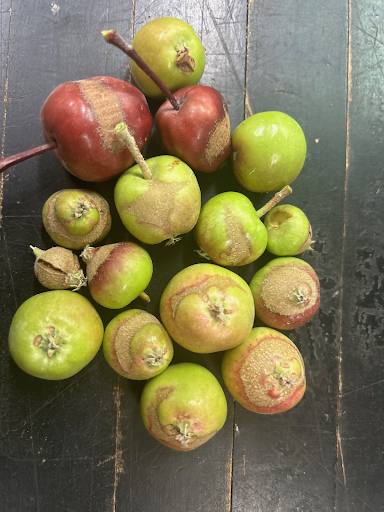
Despite the challenges posed by the frost events and the complexities in thinning decisions, it is anticipated that a full crop of apples will be achieved in most parts of Virginia. However, the quality of the fruit may be compromised in certain regions due to the frost damage (see picture attached for frost rings on apple fruits) and ineffective thinning practices. Nevertheless, operations that successfully implemented appropriate thinning strategies and employed hand thinning techniques are expected to yield above-average fruit size, particularly for cultivars like Gala, Pink Lady, and other small-sized varieties.
In conclusion, the 2023 apple crop season in Virginia was characterized by an early bloom, severe frost events, and sporadic blooming patterns. Despite the damage caused by frost, most apple cultivars are expected to produce a full crop, although fruit quality issues may arise in some areas. The challenges associated with thinning decisions due to the varying fruit sizes further added complexity to the season. However, growers who made effective thinning decisions and implemented appropriate techniques are likely to achieve above-average fruit size for specific cultivars, contributing to a successful apple crop in Virginia.
Nikki Rothwell – Michigan State University
June 22: The apple crop in Michigan is looking pretty good. We had good pollination weather, and although the winter was mild, we didn’t have any spring frost/freeze events that impacted the crop. We had good thinning weather, maybe a touch hot, but most growers had good thinning efficacy. We have been hot and dry, so growers without irrigation may struggle with fruit size. However, the weather is supposed to be cooler and have more moisture next week, so we have a long way to go to measure size. We had some cider varieties that had fire blight, more than I have seen in the past. Growers are pruning out the strikes and applying copper to keep the spread to a minimum.
Overall, growers are optimistic about apples in Michigan. We have the potential to have very high quality, and fungal disease pressure has been low because of the hot and dry weather. We are keeping an eye out for summer rots with the warm temperatures but have not seen any hint of those diseases thus far.
Jake Mann – Five Mile Orchards, California
June 27: The 2022 harvest was our biggest yet… great yield overall, and the addition of a new-to-us ranch with lots of McIntosh, Fuji, and Spitzenberg sent more fruit (and juice) to cideries throughout California. Our picking crew was fantastic, moving through the blocks quickly, while the weather remained agreeable through the fall. We seeded more acres in cover crop this year… the bell beans / vetch / peas germinated and were ready to take off when spring warmed up.
But before that… the rainfall this winter was massive. Maybe 150% of what used to be “normal” before all the drought years. We wore rubber boots for the Wassail party (not so common out here) You’ve likely seen the reports of devastation caused by flooding in nearby Pajero (a major farmworker housing community) here in Watsonville. Some corners of our orchards flooded, but fortunately drained quickly, hopefully avoiding long term damage to the trees (looks good so far). In between the storms, we accumulated plenty of chilling hours. All signs were pointing to a good year.

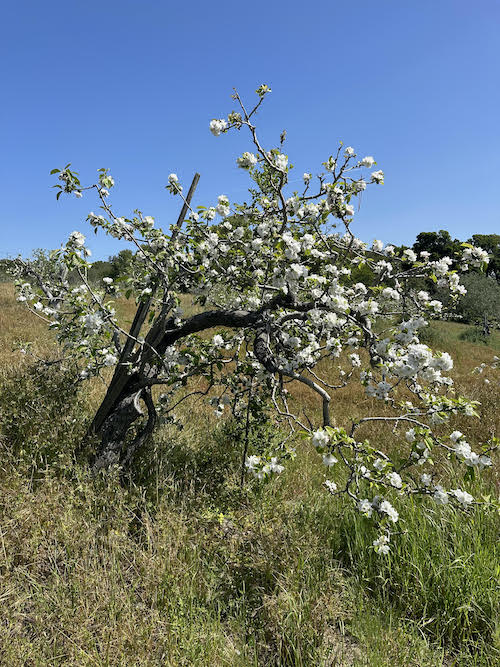
The bloom was promising in some blocks, a bit light in others. Bees were working during blossom time despite cooler temps, but as the petals fell and fruitlets started to stick, it became apparent we’re entering one of the lowest production years we’ve seen in a decade. Red Delicious (not something we use for our cider accounts) are very sparse (harvest strategy will have to be creative as our regular contract picking setup won’t pan out with the current density). McIntosh set is light but starting to size up. Pippins, Mutsu, and Fuji set is decent. Aphid has done a real number on the Granny Smith, unfortunately, and the cool temps seemed to keep lady bugs away in that crucial first week of activity. Starting to see new leaf growth beyond the aphid damage which is a relief. On a better note, the dry-farm Gravenstein orchard we take care of has the best set in the 4 years we’ve been working with it. (Good news for fans of Grav ciders).
We’ll be dialing back the irrigation efforts / hours this summer due to the accumulated rainfall. Hoping our mild, foggy weather keeps things mellow though the next couple months. Ripening is looking 2+ weeks later than normal.
Seth Brawner – WSU’s Northwestern Washington Research and Extension Center (NWREC)
April/May: This year in western Washington, spring weather was atypical – April was uncharacteristically cool and wet, while May was uncharacteristically warm and dry. Uncommonly, temperatures stayed almost completely below 60 °F until the end of April, when a heat event caused increasing temperatures (even briefly into the 70s °F) between April 27th and May 3rd. Yet overall, April was very cool. Olympia and Seattle experienced the coolest and second coolest Aprils, respectively, in the last 80 years. These low April temperatures seemed to have delayed bud development and, consequently, the date of full bloom. Hence, much of the orchard (planted with 65+ varieties) reached full bloom a little later this year, closer to mid-May rather than early May such as in the past. This will subsequently delay the time of harvest this Fall.
After an uncommonly cool April, the heat event in the beginning of May was followed by another period of cool temperatures that lasted until mid-May. These cool temperatures helped to prolong the blooming period. However, a higher heat event (high 80s °F) in mid-May and subsequent high temperatures in the latter half of May quickly reduced the effective bloom period. This May ended up being the second warmest May the Seattle area has experienced in the last 80 years. The abnormally cool, and then warm, temperatures this Spring have influenced and adjusted the full bloom date and bloom length this year. Due to the delay in bloom and subsequent high heat event which effectively ended the bloom period, these weather patterns may have a slight negative effect on pollination, fruit set, and final yields.
June: Now that we are almost into July, we can more clearly see what our crop outlook will be like this fall. While there is much variation within the orchard, this is generally the “off” year in the tree’s biennial cycle. Therefore, fruit set is relatively low compared to last season. Additionally, this year we saw the presence of tent caterpillars throughout the orchard; these pests were not present in the orchard last season. Some cultivars, those that are strongly biennial, have no fruit this season. The following list includes cultivars in which all 6 trees in the orchard had no fruit this season, or so few fruit as to be inconsequential: ‘Amere de Berthcourt’, ‘Brown Thorn’, ‘Brown’s Apple’, ‘Blanc Mollet’, ‘Breakwell Seedling’, ‘Bulmer’s Norman’, ‘Domaines’, ‘Ellis Bitter’, ‘Medaille D’Or’, ‘Mettais’, ‘Smith’s Cider’, ‘Sweet Coppin, and ‘Vilberie’. Popular cider cultivars such as ‘Golden Russet’, ‘Harrison’, ‘Hewes Virginia Crab’, ‘Kingston Black’, ‘Porter’s Perfection’, ‘Ashmead’s Kernal’, ‘Roxbury Russet’, and ‘Frequin Rouge’ all have a full apple crop load this season which needed to be thinned out. Although temperature and precipitation conditions this spring were not ideal, it seems that the apple crop load in our orchard was not severely affected. Looking forward to a great harvest this fall!
Greg Peck (Cornell University) and Scott Ramsey (New York Cider Association)
July 17: For cider apple growers in New York, 2023 was set up to be a banner year. Many orchards that had been planted over the past 10 years were finally expected to be in full production. Although the early parts of the 2022-2023 winter had above average temperatures, a relatively cold April held back bloom enough so that most regions in the state had fairly average full bloom dates. After Spongy moths, fire blight, and biennial bearing all coincided to reduce yields for many growers in 2021 and 2022, there was a tremendous bloom on cider apple trees in 2023.
Unfortunately, cold temperatures returned with a vengeance on 18 May. Most regions of the state experienced temperatures below freezing, with some locations getting into the mid-20’s. Trees in bloom or with small fruitlets experienced a range of damage from outright crop failure to varying levels of fruit loss and fruit peel damage. The damage was state-wide, but site specific. Orchards in close proximity to large bodies of water, such as Lake Ontario, one of the Finger Lakes, or the Hudson River, reported the least amount of damage. The 18 May event really drives home the importance of site selection in developing a sustainable cider apple orchard.
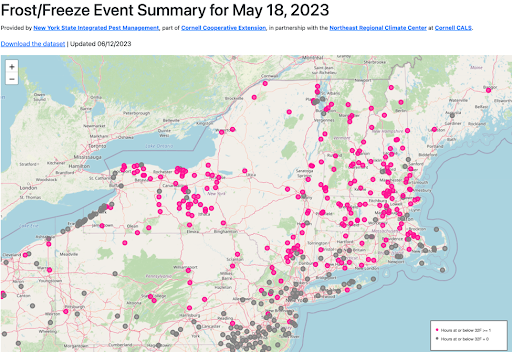
You can learn more about the frost/freeze event by visiting: https://data.nysipm.org/weather-events/20230518/map.html. This resource developed by Dan Olmstead who is the Project Lead for the Network for Environment and Weather Applications (NEWA), which is the regional mesonet system.
In response to the freeze events the New York Cider Association and Cornell co-hosted a listening session and are currently pursuing support for the cider industry through state and federal programs. Although it’s too early to fully get a sense of the varieties that fared better in the frost/freeze event, it does appear that some of the later blooming cider apples that had yet to bloom will have at least a partial crop.
To date, there hasn’t been a statewide survey for the apple industry at-large, much less for cider apple growers, there will still be many apples available for cider production. In fact, fresh-market apples that are unsellable through mainstream markets because of peel blemishes can still be used for cider production.
After the 18 May event, much of the state experienced dry conditions through the end of June, and then frequent precipitation occurred for the last few weeks. In mid-July, parts of the state experienced a “once in a thousand years” rain event that caused widespread damage to crops and infrastructure. It is too early to comment on the effects this will have on apple production, particularly in the Hudson River Valley where 8 inches of rain was reported in just six hours.
Additionally, smoke from fires in Quebec, British Columbia, and elsewhere have caused repeated air quality issues in New York. Although there might be some reduction in photosynthesis from the smoke, there should be minimal impact on apple productivity or fruit quality. However, the smoke is a significant health hazard for farm workers.
Despite the hardship that these weather and largely climate change driven events have on individual farms and cider producers, there are many producers in the state that have reported having minimal damage. In particular, growers close to Lake Ontario, one of Finger Lakes, or the Hudson River Valley have so far been spared significant crop damage. Even though crop yields and cider production will be down this year, we are hopeful that 2023 will produce some excellent New York ciders.
Megan Muehlbauer – Rutgers University
July 31: The 2023 growing season has been very variable across New Jersey. A late season frost caused extensive damage to the apple crop in the Northern half of the state. However, many growers unaffected by the frost are anticipating a bumper crop.
The season kicked off with very little rain, and by mid summer the state had a number of heavy rain events.
Thus far diseases have been minimal or well controlled.
CCP Level One Workshop at Far West Cider

Far West Cider is excited to collaborate with the American Cider Association to host an in person Certified Cider Professional workshop on the afternoon of August 14!
Do you sell cider or work in a tasting room or retail shop? Are you a chef, sommelier, cicerone, buyer or cidermaker? Do you just love cider and want to be able to spread the word with some serious cider knowledge to back it up? Then this workshop is perfect for you! This is a great opportunity to gather with fellow California cider folks to develop your cider knowledge so you can keep on promoting the amazing California ciders you know and love or to learn about them if you’re new to cider! Not to mention, you’ll have the chance to walk away with a Certified Cider Professional Level One designation!
Attendees will enjoy a two hour workshop and tasting session with American Cider Association Education Operations Manager and Certified Pommelier™ Jennie Dorsey. After the workshop, attendees will have the opportunity to take the online test at Far West Cider (bring your own computer). The test can also be taken online at a later date if so desired.
Did we mention that after the workshop, you’ll be able to purchase Far West Cider to take home or to enjoy with fellow attendees in the tasting room?!
Cost to attend is $65 per person and includes the test fee (this is a $30 savings from individual bundle purchases AND includes a cider tasting).
*A note about arriving at Far West Cider: Use the above address in Google Maps and just follow the navigation, if it feels like you’ve headed the wrong way you’re right on track. Riggers Loft is located at the end of the long winding road. Look for a building marked “SHEET METAL / PAINTING” and a red banner marked “WINE TASTING HERE.” Far West is right inside!
CCP In Person Training at South Hill Cider

South Hill Cider is excited to collaborate with the American Cider Association to host a training workshop in person for the Certified Cider Professional Level 1 Certification at their cidery on August 21, from 10:00 AM – 12:00 PM Eastern. Participants will have the opportunity to take the test online immediately after the training or take the test at a later date.
This is a great opportunity for the NY cider community to gather in person to attend the workshop and get CCP Level 1 certified. Anyone who sells cider, works in a tasting room or retail shop, is an owner, chef, sommelier, cicerone, buyer or cidermaker who is interested in cider education and adding a cider certification to their accreditation is welcome and encouraged to join the training session!
Lunch will also be available for purchase at the South Hill Cider tasting room after the training.
Details :
- 9:45 AM: Arrival and check-in
- 10:00 AM – 12:00 PM: Workshop in tent
- 12:00 PM – 12:45 PM: Lunch break (food will be available to purchase)
- 1:00 PM – 2:15 PM: Take the online CCP 1 exam (please bring your own laptop)
- 2:15 PM: Enjoy a glass of cider and the view
Cost per person is $45 which includes the test fee. Tickets are available on EventBrite.
Interested in learning how you can host an in-person training event at your location? Learn more on our CCP Level 1 website.
Help Us Tell Cider’s Story: Take ACA’s 2022 Cider Production Survey
At the American Cider Association we work hard to support cider and cidermakers across the United States every day of the year, but we need your help to keep providing Congress, the media, and buyers with the most up-to-date and complete industry overview we possibly can. Please help us collect aggregated production information for the U.S. cider industry for 2022.
If you are licensed to make cider on a commercial basis we invite you to take our survey so we can gather information vital to promoting and protecting cider in the U.S.
Details:
- This survey will take about 20 minutes to complete.
- The survey is being aggregated and anonymized by an independent third party. They have agreed to not share information with us that might identify who you or your cidery are, and to only share aggregate data with us. YOUR PRIVACY MATTERS TO US.
- Your cidery name is collected by the 3rd party to ensure there are no duplicates, but the ACA will not store that information after the survey has been returned to us with identify features removed.
- We do ask a number of questions about sales and production for 2022. You will find it helpful to have that data handy before completing the survey.
- Note: If you produce wine or other beverages besides cider, please answer only considering your cider production.
- Deadline to complete the survey is August 10, 2023.
- Anyone who submits their completed survey and provides their contact info will be entered into a raffle to win an American Cider Association hoodie (4 available) and a grand prize winner will receive a complimentary ticket to CiderCon® 2024!
If you have any questions regarding this survey or how the data is used, please contact CEO of the American Cider Association Michelle McGrath.
We appreciate your help in allowing us to continue to promote cider across the United States!
New On Premise Data for ACA Members!

Nationally Cider is up 3.3% in On Premise channels for the 52 week period ending April 23, 2023.
That’s right! On Premise data is back! We have renewed our partnership with CGA by NIQ OPM to bring our members helpful insights about On Premise cider trends. Drill down by Chain or Independent establishments, by 6 major urban markets, by national/regional brands, and by draft/package. Compare current trends to data from the last couple years to see growth and opportunities.
You must be an active ACA member to view this data. Not a member? Join now! Need to renew your membership. Renew here!
Live Sensory Analysis Webinar with Alma Cider
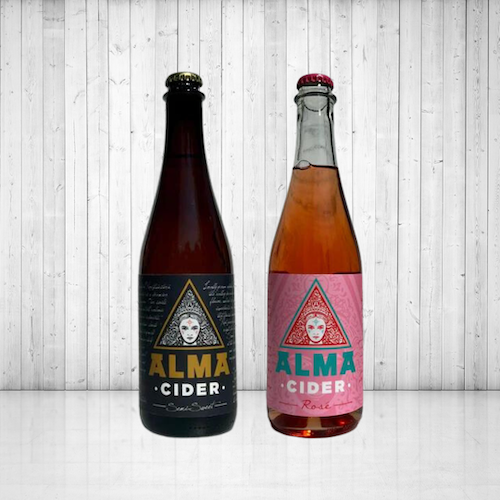
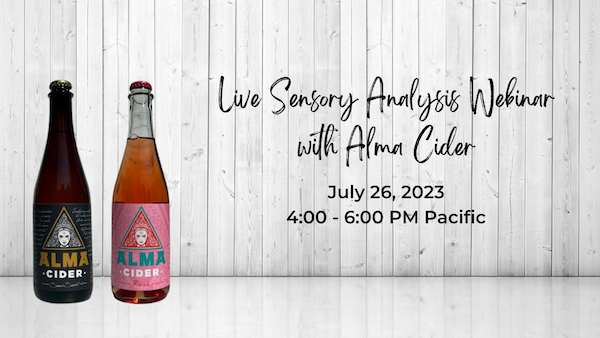
Join our Certified Pommelier™ panel in a live practice sensory webinar on Wednesday, July 26, 2023 from 4:00-6:00 PM Pacific featuring cider from Alma Cider. This webinar will also be available to rewatch and practice as a prerecorded event. ACA Members can register for a discounted rate of $15. The discount code for members can be found here.
Cider must be purchased separately. Please be aware that it may take several days to receive your cider order, so we encourage you to purchase your ciders as soon as possible. Also, please verify that cider can be sent to your state before purchasing ciders. Ciders can be purchased from Press then Press.
Once registered, you will receive a confirmation email. This email is a placeholder for the event. The evening before the event you will receive an email with a Zoom link to the webinar. Please note this link will be sent to the registered email.
Certified Pommelier™ Exam to Be Held in San Francisco August 13

TAKE THE CERTIFIED POMMELIER™ EXAM IN SAN FRANCISCO, CALIFORNIA!
Are you ready to take the next step in your professional development in the cider industry? Already passed the Certified Cider Professional Level 1 Certification and looking for that next challenge? Now’s your chance!
The American Cider Association is pleased to announce that the next Certified Pommelier™ Exam will be held in San Francisco, California! The exam will take place Sunday, August 13, 2023 at Barebottle Brewing, 1525 Cortland Ave, San Francisco, CA 94110.
After the exam you can stick around for a tour and tasting at Barebottle Brewing too!
PREPARING FOR THE CERTIFIED POMMELIER™ EXAM
The Certified Pommelier™ Exam is our second tier of certification and requires in depth study. You must have passed our CCP Level One Certification prior to taking the Certified Pommelier™ Exam. You can purchase a CCP Level One bundle here. (ACA members can find a discount code to purchase the bundle here). The bundle includes an on demand training webinar, a study guide, and two exam attempts.
The ACA has also recently released a Certified Pommelier™ Study Guide that covers the information needed for the theory portion of the exam. It can be purchased here on Amazon.
In addition, several pre-recorded sensory webinars are also available for purchase and can be found here. Please be aware that cider must be purchased separately. Also, be aware that key sensory elements of these ciders may vary from year to year.
Stay tuned for the option to participate in a live sensory analysis webinar this summer prior to the exam in San Francisco. You can check our certification page for the latest news.
WHILE YOU’RE IN SAN FRANCISCO
Why not make it a weekend (or longer) since you’ll be heading to the beautiful Bay Area of California anyway, especially since it’s the weekend of the Gravenstein Apple Fair, which will be celebrating it’s 50th year!
Dry Cider July Launches July First to Showcase Hard Cider with 0g Sugar
The American Cider Association (ACA) is launching Dry Cider July on July First to highlight hard ciders containing zero grams of residual sugar. The Association is encouraging others to join the campaign through social media with the hashtags #dryciderjuly and #pickdrycider. This year the association will be working with their partners at Cider Culture to highlight dry hard ciders throughout the month of July.
The Association’s CEO Michelle McGrath debunks the myth that dry ciders don’t exist, “As cider industry professionals, we hear people asking about less sweet ciders all the time. Luckily, for drinkers looking to monitor their sugar intake or who prefer the flavor of dry ciders, there are literally thousands of options.”
The ACA hosts a dry cidery directory on their website to make finding bone dry hard ciders easier. The directory can be found here on ACA’s website, and is easily sorted to help consumers find no-sugar ciders local to them.
Alcohol is created when yeast converts sugar into alcohol through fermentation. A cider that contains no residual sugar has been fermented to absolute dryness. Sometimes cidermakers will blend a completely dry cider with fresh juice for acid/sugar balance, but other times they leave the cider entirely dry. These dry ciders with zero grams of sugar in the final product are the focus of the Dry Cider July campaign
“The brain has a hard time distinguishing fruity from sweet. Many ciders with absolutely no sugar in them can still be very fruity,” explains McGrath.
The ciders in the Dry Cider Directory reflect the variety of flavors and styles possible. From single varietal ciders showcasing specific apple varieties and served in a 750 ml bottle to ciders aged on rose petals and sage and served in a 12 oz can, the range found in dry ciders is impressive.
Follow the association on their Instagram account @pickcider and on Cider Culture’s Instagram account @ciderculture to learn more about the campaign.
###
Fresh Data Insights Found in Latest Members-Only Cider Market Dashboard

For the lastest 13 week period through May 20, 2023, regional cider brand sales were up 7.2% YOY per NIQ.
Cideries use data talking points like this to make decisions and to pitch retailers, investors and wholesalers. But good data is hard to find and can be cost prohibitive. We have some good news for you though. Cider market data is included in your membership with the American Cider Association–what a great benefit!
The latest 3 Tier Beverages dashboard is now available to ACA members with data current as of May 20, 2023. Explore recent off-premise cider sales trends by state, packaging, style and more.
3 Tier Beverages, in partnership with NIQ, is proud to be the official data supplier of the American Cider Association. Part of this partnership brings you quarterly dashboards with key market data and insights to help you drive your business forward. Should you be interested in more detail on your brands/markets, please reach out to Mary Mills at 3 Tier Beverages.
If you missed our dashboard orientation webinar, you can watch it here.
In addition, there is a Glossary of Attributes available to help you understand the terms used as you progress through the data. You can download the glossary here.
Looking for data for previous time periods? Access our Cider Reports Library here.
We are data nerds here at ACA so please feel free to reach out if you have any questions.
How to Submit Your SKUs to Circana


We want to make sure your cider is accounted for in national sales data. It’s important that every cider is included so we can have an accurate picture of the cider industry and can collect data that you can use when pitching your ciders to wholesalers and retailers around the country. Please submit your new or updated SKUs to Circana today.
Please find below detailed instructions for how to submit new products to Circana (formerly IRI).
Work with your Client Service Consultant to submit image labels. If you are not a Circana client, send images directly to: DCA.ElectronicImage@circana.com.
Submission Guidelines
- New SKU – send images of packaging with UPC on the packaging; Circana does not accept images without clear UPCs.
- If an item is a seasonal/series/rotational, provide packaging with the multiple styles/flavors to Circana. If those packaging images are not available, provide a sell sheet or proof that there are multiple styles/flavors using the same UPC. If you want a specific series name included in the coding, please include the word “series” in the packaging name, otherwise Circana will code as seasonal.
- Image Requirements
- Multi-packs need either a flat-file package image, two images of the front and the side of the package containing the UPC, or a flattened carton to show both front and side with UPC.
- Multi-packs in snap ring/hicone (where individual can/bottle only option for scanning the multi-pack unit). Turn one can/bottle to show the front label and another to show the part with the UPC with both connected through the snap ring/hicone.
- Singles need either the flat-file package/label image or two images of the front and back of the container and a clear image of the UPC code.
- Change Coding on Existing SKUs – send images of packaging and details of attribute(s) you wish to change.
ACA Welcomes New Certified Pommelier™, Industry Veteran Nicole LeGrand Leibon

The American Cider Association is thrilled to announce that Nicole LeGrand Leibon has passed the Certified Pommelier™ exam. Deeply experienced in cider, from orchard to package, Nicole has been there for industry growth from its modest beginnings to the juggernaut it is today. Nicole joined Farnum Hill Ciders and Poverty Lane Orchards in 2000, where she helped create a style that honored the terroir and the fruit, while gaining renown for the best ciders in America. In 2018, while finishing her 19th harvest at Farnum Hill Ciders, Nicole went on to expand her skills to distilling. She became the Assistant Distiller at SILO Distillery in Windsor, VT, as well as Head Cidermaker. Currently, Nicole is the cider blend consultant, LeNose Knows and a board member for the Cider Institute of North America (CINA). Nicole is the first person from Vermont to become a Certified Pommelier™.
The Certified Pommelier™ certification was developed to move beyond a fundamental understanding and to encourage cider professionals to think critically while demonstrating a higher understanding of the elements of cider. The rigorous test consists of five types of questions: short answer, fill in the blank, matching, essay and blind sensory (based on tasting).
While the Certified Pommelier™ exam is designed to be challenging, the ACA is dedicated to making sure all of the information tested on is accessible for all who desire to learn. To that end, the ACA recently announced the release of their new textbook to help candidates prepare to take the exam with just one resource. Those interested in preparing for the exam can purchase the new textbook through Kindle Direct Publishing. In addition, sensory analysis practice webinars and a Facebook study group are continually being updated with resources for candidates studying for the exam. Links to all CCP resources can be found on the ACA’s website.
The ACA has recently announced several new sensory analysis webinars and exams for those interested in pursuing their Certified Pommelier™ designation. Upcoming events include:
- July 26: Live Sensory Analysis Webinar with Alma Cider
- August 13: Certified Pommelier™ Exam in San Francisco, CA
- October 24: Certified Pommelier™ Exam in Asheville, North Carolina
- November: Date TBD Sensory Analysis Webinar with Haykin Cider
- January 17: Certified Pommelier™ Exam at CiderCon® 2024
Contact the ACA’s Education Operations Manager Jennie Dorsey if you have questions about the Certified Cider Professional program or are interested in taking either the Level 1 or Certified Pommelier™ exams. You can also learn more at https://ciderassociation.org/certification.
###
New Item Coding for UPCs with NIQ

We want to make sure your cider is accounted for in national sales data. It’s important every cider is included so we can have an accurate picture of the cider industry and collect data that you can use when pitching your ciders to wholesalers and retailers around the country.
Please find below detailed instructions for how to submit new products to NIQ (formerly Nielsen).
To get NEW UPCs added:
- Fill out the NPC 2023 Form.
- Send both the form and correct photos (see below for photo guidelines) to Mary Mills at 3 Tier Beverages and she and her team will make sure everything is good to go for NIQ. She recommends uploading images to a shared drive (Dropbox or Google Drive) in order to preserve image quality.
Photo Guidelines:
Below is an in-depth photo guideline to follow when submitting photos to NIQ to get new UPCs coded or current ones updated.
Nielsen accepts 2 types of photos:
- 3D: Photos of the real 3D item.
- Flat: 2D photos of the label/box.
Nielsen is VERY PARTICULAR about the photos needed so below are the guidelines to follow. The images needed are described below, flat photos are best if you have them. If not, please send images of the actual item. For either type of photos you choose to submit, Nielsen requires photos of:
- Clear images of all 6 sides, including top & bottom of the individual product
- Clear images of all 6 sides, including top & bottom of the packs (2/4/6/12pk/etc) are needed if they are not sold individually
- Make sure photos are in jpeg format or else they will NOT be accepted
- They need to be clear, have a neutral background, and high resolution so no blurring when zoomed in
- Professional photos are not required
Click here to view photo examples for both 3-D and Flat.
Have questions? Email our NIQ contact Ryan Sisto.
Urge Congress to Support the USPS Shipping Equity Act

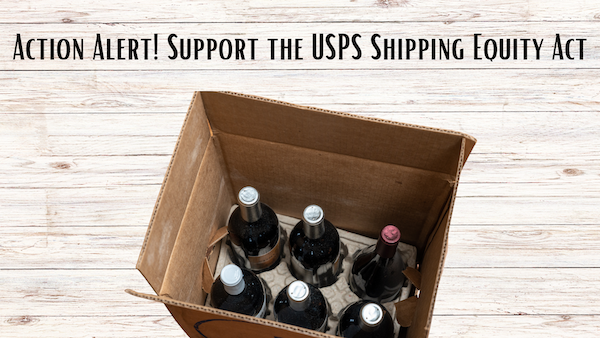
On May 23 Rep. Dan Newhouse (R-WA) once again introduced the USPS Shipping Equity Act in Congress alongside Rep. Jennifer Wexton (D-VA) and 8 other House co-sponsors. Currently, the U.S. Postal Service is not allowed to ship cider, beer, wine, or distilled spirits, because of a leftover, outdated ban put into effect during the Prohibition era. The USPS Shipping Equity Act would give parity to the US Postal Service, allowing it to ship licensed alcohol for commerce just like FedEex or UPS. Additionally, the USPS Shipping Equity Act gives rural producers access to another option for shipping alcoholic beverages. This bill is critical in leveling the playing field and increasing consumer and manufacturer choice while bringing in millions of dollars in revenue per year that will support small businesses, rural communities, agricultural enterprises and the US Postal Service.
We encourage you to email your Congressional representatives and urge them to cosponsor the USPS Shipping Equity Act. We have set up a campaign with an email template that you can use. Click the button below to be taken to the campaign. After you’ve emailed your reps, we encourage you to take a moment to share your actions on social media and via email to inspire others to reach out to their representatives as well.
Have questions? Please email ACA CEO Michelle McGrath.
Celebrate World Cider Day on June 3!

Saturday, June 3, 2023 is World Cider Day! We hope you’ll join us in the international declaration of love for the beverage we all hold dear. Whether you’re sipping on a crisp apple driven cider or a unique botanical cider, take a moment to snap a photo and share it on your social channels this Saturday. Posting about your favorite cider can help raise awareness about this beautiful beverage and also gives you a chance to connect with other cider enthusiasts and cidermakers around the globe. Show your support for cidermakers and small businesses, and join the conversation using the hashtags #WorldCiderDay and #WCD2023 and tag us @pickcider. Let’s raise a glass to cider and cheers to a great day!
A Little History on World Cider Day
World Cider Day was launched by the members of the Association of Apple Wine and Fruit Juice Press Houses in Hesse, Germany in 2013 to promote cider and the meadow orchards in the region. Since then it has been embraced by cideries, bars, restaurants, cider associations and cider lovers all over the world. Learn more and find resources on the World Cider Day website.
New ACA Member Benefits!


We’re excited to share some new ACA member benefits with you this spring. Read on to learn more about our brand new resource hub, the new 3 Tier Beverages dashboard just released with Nielsen Q1 2023 data, and a free Crafted for All account now available to all members.
Resource Hub
We’re so excited to share that our new digital Resource Hub is now live! The resource hub is exclusively for ACA members and is filled with items useful for cider businesses of all sizes. The resource hub already includes a wealth of information and members can expect a quarterly release of new resources and will be notified via email when these updates occur.
Nielsen Q1 2023 Data on New 3 Tier Beverages Dashboard
3 Tier Beverages, in partnership with NielsenIQ, is proud to be the official data supplier of the American Cider Association. Part of this partnership brings you quarterly dashboards with key market data and insights to help you drive your business forward. The first dashboard is now available with data through Q1 2023 (3/25/23).
Crafted for All Account
We’ve had the privilege of working with Dr. J Nikol Jackson-Beckham and her organization Crafted for All for several years now and we’re so pleased to be able to expand our partnership and offer all ACA members the opportunity to create an account with Crafted for All where you’ll find a wealth of resources.
We’re Looking for Vendors for CiderCon® 2024
Did you know that the largest gathering of cider producers in the world is coming to Portland, Oregon next January for CiderCon® 2024? In addition to a wide range of educational sessions and events for cider producers, we also host an extensive trade show where our attendees can meet vendors with products and services that can help them thrive. CiderCon® 2024 will be held at the Oregon Convention Center from January 17-19 and the trade show will be right in the middle of it all. We haven’t been back to Portland since 2016, so we’re anticipating a great turn out!
If you haven’t been a vendor at CiderCon® before, now is the time to get involved and showcase your products and services to the rapidly growing cider industry. Our attendees always appreciate the chance to meet new vendors.
Have you already been a vendor at CiderCon®? Then you already know how much our attendees love the trade show and seek it out to connect with you!
Booth prices for CiderCon® 2024 are $3000 for a 10’ x 10’ space – and that includes 3 passes to the conference as well as lunch on Thursday and Friday!
Interested in joining us? Email our Trade Show Coordinator Ellen Husch for more information!
Know a company that you think would be a great fit? Send their contact information to Ellen.
There are also numerous sponsorship opportunities available for vendors. Supporting the American Cider Association is a great way to gain brand visibility at CiderCon® and beyond. There are a myriad of reasons why sponsoring the ACA works in your favor. We shout out our appreciation for our sponsors far and wide at CiderCon®, on our website, on social media and our members hear us. Our Executive Director Michelle McGrath is eager to work with you on creating a custom sponsorship experience that meets your brand’s personality and needs. Email Michelle to schedule a meeting.
Webinar: How Cideries Like Santa Cruz Cider Are Preventing Catastrophic Climate Change


There are a significant number of reasons why cideries like Santa Cruz Cider are looking to become more sustainable. Agriculture health, ingredient accessibility, customer engagement, preserving the bottom line, and protecting the planet are all driving cideries to focus on sustainability.
Join Jenny Morgan from Tradewater and Nicole Todd of Santa Cruz Cider Co. on June 6 at 10:00 AM Pacific for a discussion of the ways that Santa Cruz Cider committed themselves to sustainable action and how they came to partner with Tradewater.
We will also dive deeper into the high-impact climate projects that Tradewater leads and how each cidery can do their part to prevent catastrophic climate change.
Interested in learning how you can take action on sustainability in your cidery? Download this PDF with suggestions from Tradewater.
Our Speakers

Jenny Morgan joined Tradewater in 2022 as the Market Development Manager. In her role, she partners with organizations to help achieve carbon neutrality through sustainability consultation, emissions reduction, and the purchase of carbon credits. She operates under the belief that our most challenging problems cannot be solved by government and nonprofits alone – it requires a collective effort. She is passionate in changing the way we view business and industry to be both profitable and purposeful. Prior to joining Tradewater, Jenny has worked within the technology and hospitality sectors, and comes with 15+ years of experience in Business Operations, Market Development, Events, and Community Engagement. Outside of work, Jenny enjoys spending time with her family and friends hiking, running, swimming, and planning themed celebrations.
Nicole’s love for cider started with a truck bed full of ‘found’ apples in a nearby orchard. Having a passion for fermenting anything she could get her hands on, she started Santa Cruz Cider Co. in 2013 with the help of her husband and her sister. They have built the company from the ground up on a shoestring budget with a hands on approach. Nicole lives on a historic apple orchard in Santa Cruz county with her husband and two dogs.

Resource Hub Now Available to ACA Members


The American Cider Association is pleased to announce the launch of a new digital Resource Hub. This resource hub is exclusively for ACA members and is filled with items useful for cider businesses of all sizes. There are several categories available to help members locate the resources they need. These categories include:
- Compliance & Taxes
- Market Data
- Marketing
- Making Cider
- Human Resources
- Sales
- Business
- Cider Pairing & Evaluation
- Apple Growing
The resource hub already includes a wealth of information and ACA staff will be continuing to add already created resources in the near future. In addition, members can expect a quarterly release of new resources and will be notified via email when these updates occur.
The resource hub also features a contact us button so that members can reach out to the ACA with suggestions for new resources they think would be helpful to them and fellow members.
You must be an active ACA member to access the Resource Hub. Click here to learn more about becoming a member today. Need to renew your membership? Login here to renew.
Declaration of Appreciation for Founding Members
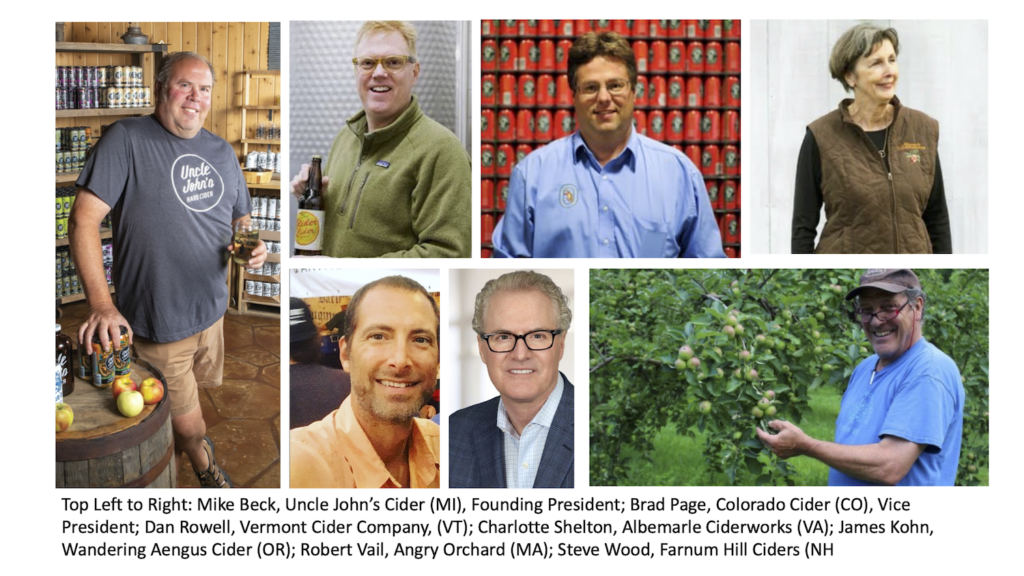
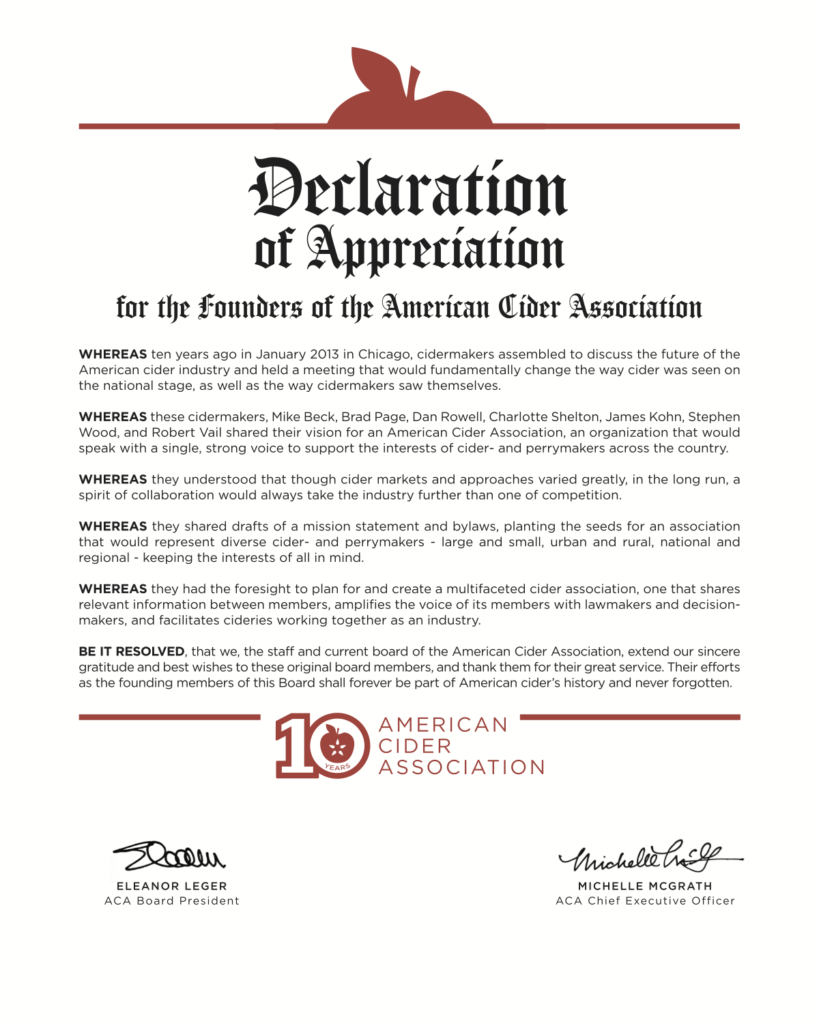
Nielsen Q1 2023 Data Now Available!
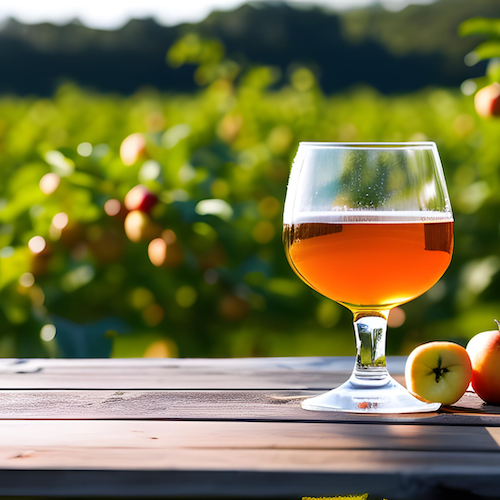
This content is for members only.
If you were a member and are now seeing this message, please Renew your membership to continue.
Webinar: The Story Within the Story of Cider
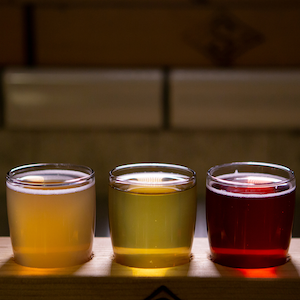

You’ve heard the headlines and the general trends for Cider. Join Brian “BK” Krueger and Dave Williams from Bump Williams Consulting on Tuesday, May 23, 2023 at 11:00 AM Pacific to dive in a little deeper and really take a look at the KPI’s that matter and how you can apply them to your own situation, presentations, insights, and decisions.
You can expect to hear more of the story on Cider Velocity, Runway for the Future, the Role of Flavor, Pack Size and Type, Innovation, Regional Power, and the Modern Bev Alc Consumer.
This webinar is for active ACA members only. Not a member? Join now!
Our Speakers

Brian “BK” Krueger graduated from the University of Texas, Austin in 1996 with a degree in Marketing – focusing on Strategic Marketing & Promotional Strategies. BK is a 24-year Industry Sales Leader with a distinguished and accomplished history of growth and development across multiple National and Regional Craft Breweries. Rising from New Belgium’s first “Texas Beer Ranger” in 1999, BK spent 17 years growing in parallel with New Belgium’s success and expansion and held the role of Assistant Director of Sales for 5+ Years. Leaving New Belgium in 2015, BK spent the next 4 years applying his knowledge, experience, and skill set to an extended selection of National and Regional Craft Breweries helping to evolve them into the modern and future world of Craft Beer. Joining Bump Williams Consulting in 2020, BK now applies his talents and expertise on Sales Systems and Structure, Portfolio Development, Distributor & Retailer Partnership, and Sales Strategy & Growth across the broad spectrum of Beverage Alcohol clients.

Dave Williams graduated from Penn State University in 2006 with a degree in Marketing. Dave began his career at Marketing Management Analytics (Ipsos MMA) as a Data Analyst, running sales regression models and market level analytics across various Retail and CPG clients. He left MMA and joined Nielsen in 2010, working up to the role of Client Manager. In this role, Dave led a team dedicated to Market Mix, Price/Promo and Consumer analysis for Procter & Gamble globally, spanning multiple categories and brands across their wide portfolio. In 2015, Dave left Nielsen to join Bump Williams Consulting where he currently runs high-end analytics across the Beverage Alcohol universe. His key focus areas include Consumer Behavior, Pricing, Promotion and Retail Landscape for BWC’s Supplier, Distributor and Retailer clients.
Live Sensory Webinar with Artifact Cider Project
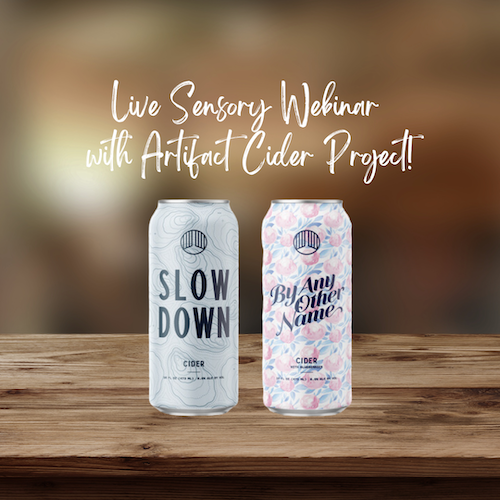

Join our Certified Pommelier™ panel in a live practice sensory webinar on May 4 from 4:00-6:00 PM Pacific featuring cider from Artifact Cider Project. This webinar will also be available to rewatch and practice as a prerecorded event.
Cider must be purchased separately. Please be aware that it may take several days to receive your cider order, so we encourage you to purchase your ciders as soon as possible. Also, please verify that cider can be sent to your state before purchasing ciders. Order the Certified Pommelier Study Sample Pack from Artifact to participate along with the webinar here.
Once registered, you will receive a confirmation email. This email is a placeholder for the event. The evening before the event you will receive an email with a Zoom link to the webinar. Please note this link will be sent to the registered email.
Spring is in the Air on the Virginia Cider Trail

Spring is in the air and it’s time to hit the trail! The Virginia Cider Trail that is. Apple blossoms are bursting open around the state and spring festivals and cider releases are popping up like daffodils. Check out these upcoming events to find something near you or something farther afield if you’re looking for a nice drive on a sunny day!
April 7: Habanero Mango Cider Release at Buskey Cider
April 7: Friday Love Cider Series at Stable Craft Brewing
April 8: Farmhouse Hops & Hunt at Back Bay Brew House
April 8: Adult Easter Egg Hunt at Henway Hard Cider
April 8: Easter Weekend Brunch at Courthouse Creek Cider
April 8: Adult Easter Egg Hunt at Coyote Hole Ciderworks
April 9: Live Music in the Orchard at Albemarle Ciderworks
April 9: Easter Weekend Brunch at Courthouse Creek Cider
April 9: Easter Sunday Brunch at Stable Craft Brewing
April 9: Heirloom Apple Grafting Workshop at Tumbling Creek Cider Company
April 12: Hewe’s Crab and Crab Action at Sage Bird Ciderworks
April 14: Night Teach with Spectator Bird at Cider From Mars
April 14: Boot Scoot Square Dance Party at Potter’s Craft Cider
April 15: Seafood and Sounds with Jacob Paul Allen at Blue Toad Hard Cider
April 15: Daze of Rosé Festival at Castle Hill Cider
April 15: Mars Market: Spring Edition and Cider From Mars
April 15: Second Annual Bloom Fest at Potter’s Craft Cider
April 15: Winchester Ciderworks Takeover Night at Blue Fox Billiards
April 16: Pints & Ponies at Stable Craft Brewing
April 16: Heirloom Apple Grafting Workshop at Tumbling Creek Cider Company
April 20: Flappy Hour Benefit for Bat Conservation and Rescue of VA at Cider From Mars
April 22: Sharif Live at Blue Toad Hard Cider
April 22: Spring Apple Blossom Festival at Bryant’s Cider
April 22: Earth Day Flower Crown Workshop at Courthouse Creek Cider
April 22: Spring Block Party at Lost Boy Cider
April 23: Step Up for Down Syndrome Annual Fundraiser at Blue Toad Hard Cider
April 23: Liquid Craft Festival at Sly Clyde Ciderworks
April 26: Pride Night Social Fundraiser at Sage Bird Ciderworks
April 29: Britchin Brown Renaissance Fest at Stable Craft Brewing
May 6: Kentucky Derby Party at Coyote Hole Ciderworks
May 7: Spring Car Show at Coyote Hole Ciderworks
May 13: Mother’s Day Saturday Flower Workshop with Faded Poppy at Stable Craft Brewing
May 14: Live Music in the Orchard at Albemarle Ciderworks
Three Upcoming ACA Webinars

The American Cider Association is pleased to share that we have several upcoming webinars in the next month and we hope you’ll join us at one or all of them. Read on to learn more about these webinars and to find links to register!

March 22 – 11:00 AM Pacific: 3 Tier Beverages Dashboard Orientation for ACA Members
3 Tier Beverages, in partnership with NielsenIQ, is proud to be the official data supplier of the American Cider Association. Part of this partnership brings ACA members quarterly dashboards with key market data and insights to help you drive your business forward. This webinar will walk ACA members through these dashboards so you can make the most of this unique offering. This webinar is for active ACA members only. Join now or renew your membership by clicking here.

March 24 – 9:30 AM Pacific: Coffee Chat with Vinoshipper: 2022 Cider Trends for Online Sales
Vinoshipper Senior Analyst Taylor Harrison will lead us through a look back at their data from 2022 and also provide a quick snap shot of what they’re seeing at the beginning of 2023 with regards to sales, packaging, and demographics! Want to check out some of the data before Taylor’s presentation? You can download it here. This webinar is open to all.
April 18 – 11:00 AM Pacific: ACA Annual Membership Meeting
The American Cider Association is pleased to invite our members to join us for the Annual Membership Meeting. We will review last year’s accomplishments, examine our strategic plan, and share what’s in the works for the year ahead. We look forward seeing all of you virtually and hearing your ideas for how we can promote the US cider industry. You must be an Active ACA Member to participate in the Annual Membership Meeting. You can join or renew your membership here.
ACA Welcomes 20 New Certified Pommeliers™ Following CiderCon® 2023

The American Cider Association is thrilled to announce that twenty people have newly earned the title of Certified Pommelier™ as a result of the exam held at CiderCon® 2023 in Chicago, Illinois last month. It is the largest passing cohort of any Certified Pommelier™ exam to date.
The new Certified Pommeliers™ are: Ann Marie Thornton of James Creek Cider House (NC), Anthony Lopez of Casa de Oro Cider (CA), Brian Wing, James Kerr & Khris Johnson of Green Bench Brewing (FL), Cam Workman of Schilling Cider (WA), Casey Simpson of Artifact Cider Project (MA), Danny Dispo of Hydraulic Hearth (NY), David Lugo of the Clyde Theatre (IN), Deirdre Birmingham of The Cider Farm (WI), Geoff Happel (NC), Ian Niblock (VA), Karl Hartdegen (NC) & Max Finnance (CT) of Bold Rock Hard Cider, Janelle Balsillie of Carolinia Cider Company and Heeman’s Cidery and Meadery (ON), Joseph Nosse of Frontier Ciderworks (OH), Sarah Pozgay of Twin Cities Somms (MN), Walker Smith of Goldeneye Cider (WA), cidermaker Eric Gasser (CA), and cider enthusiast Brandon Buza (CA). You can learn more about our Certified Pommeliers™ on the ACA website.
Cider is a beautifully nuanced beverage with a diverse set of elements that are often less understood by food and beverage professionals. Certifications are increasingly used in the professional realm to set oneself apart as an individual with specialized knowledge, though cider is often covered in a cursory manner by most certification programs, if at all. This led the American Cider Association to establish its Certified Cider Professional (CCP) program to educate those on the front-line of cider sales. Today it is the world’s most comprehensive and in-depth cider certification program for beverage professionals.
The Certified Cider Professional program began with a Level 1 certification to help those in the industry develop a fundamental understanding of cider. The Certified Pommelier™ certification was developed to move beyond a fundamental understanding and to encourage cider professionals to think critically while demonstrating a higher understanding of the elements of cider. The rigorous test consists of five types of questions: short answer, fill in the blank, matching, essay and blind sensory (based on tasting). Test questions fall into seven categories: Apples, the Orchard & History, Cidermaking, Evaluation, Families & Flavor, Keeping & Serving, Food & Cider and Social Responsibility.
“To see twenty people pass the Certified Pommelier™ exam in one sitting is remarkable for many reasons,” says Michelle McGrath, CEO of the ACA. “People are valuing the Certified Pommelier™ designation and putting in the hard work of preparing for the exam. It’s exciting to watch ACA’s cider appreciation program grow and succeed.”
While the Certified Pommelier™ exam is designed to be challenging, the ACA is dedicated to making sure all the information tested on is accessible to those desiring to learn. To that end, the ACA recently announced the release of their new textbook to help candidates prepare to take the exam. Those interested in preparing for the exam can purchase the new textbook through Kindle Direct Publishing. In addition, sensory analysis practice webinars and a Facebook study group are continually being updated with resources for candidates studying for the exam. Links to all CCP resources can be found on the ACA’s website.
“We have seen a huge advantage for candidates that utilize the study aides we make available,” states Jennie Dorsey, ACA’s Cider Education Outreach Manager. “We’ve also witnessed new professional connections form through ACA prep-webinars and informal study groups. It’s exciting to see networking as one of the CCP program’s many positive impacts on the cider community.”
The ACA asks that you contact Cider Education Outreach Manager Jennie Dorsey if you have questions about the program or are interested in taking either the Level 1 Certified Cider Professional test or the Certified Pommelier™ exam.
The next Certified Pommelier™ exam will be scheduled for the Bay Area of California in September, and more tests dates will be announced shortly. You can also learn more at https://ciderassociation.org/certification.
###
Celebrating Women’s History in the Cider Industry
Happy International Women’s Day!
What is this day for? International Women’s Day is a day to bring awareness to the lack of gender equity on our planet. Where does the U.S. fall in gender equity progress? The gender gap in pay is one measure of dynamic inequalities–just last year, U.S. “women earned 82% of what men earned, according to a new Pew Research Center analysis of median hourly earnings of both full- and part-time workers.” (Pew Research) Researchers also found that this number hasn’t changed much in 20 years.
As a cider industry, we can take steps to ensure we are part of progress on gender equity. Here are a few ways your cidery can lead the way on gender equity in hiring and HR:
- Post all jobs with a pay rate.
- Avoid using gendered pronouns in job descriptions.
- Evaluate your pay scales for equality–are people earning the same wage for similar positions?
- Use established skill-based assessments to promote.
- Invest in making sure your company and your establishment are taking proactive steps to prevent gender-based violence and discrimination.
- Increase women and non-binary representation in leadership and decision-making teams.
In what ways are you promoting gender equity at your cidery?
Did you miss Dr. J’s presentation at CiderCon® on Retaining Great Talent? Her tips are useful for recruiting and retaining a talented gender-diverse workforce. Check out her slides here.
Celebrate Women’s Voices
The cider industry has an extremely talented community of women doing incredible work. We’re celebrating International Women’s Day by sharing some of their stories with you. And to double the celebration–all these stories were written by women beverage journalists and storytellers! Enjoy this collection of recent publications by women, about women, and for cider!*
Cider Chat Podcast by Ria Windcaller –ACA 2023 Significant Impact Winner
Prohibitchin’ Newsletter by Beth Demmon
Courage and Other C Words by Jenn Martell
Cider Culture
- Cidermaker Q&A: DOPE Cider House and Winery with Malaika Tyson –ACA 2023 Significant Impact Winner
- Women Making Waves in the Cider World: Elizabeth Ryan of Hudson Valley Farmhouse Cider by Malaika Tyson
- Women Making Waves in the Cider World: Gretchen Esbensen of Shoal Draft Cider by Malaika Tyson

CiderCraft Magazine
- Meriwether’s Taproom Manager Mixes it Up on Netflix Series by Molly Allen
- Book Review: The Lost Orchards by Liz Copa by Darlene Hayes –ACA 2020 Significant Impact Winner
- 4 Questions with Elle Correll, Co-Owner of Buskey Cider by Stasia Brewcynski
And Some Women-Created Stories About Apples That We Love:
- From Apples to Fromage: 5 episodes of cheese and cider pairing goodness from Talia Haykin and Colleen Vidlocker
- Apple of My Eye: Foxwhelp by Lily Waite for Pellicle Magazine
- Stoke Red: Small-Town Apple Wins Big Competition by Darlene Hayes for Cidercraft Magazine

*Friendly reminder cider members–make sure you have Michelle McGrath on your press list. We want to elevate your press!
Claude Jolicoeur Book Signing Events


The American Cider Association is pleased to share that they will be hosting three book signing events in the Northwest with esteemed global cider ambassador and celebrated drinks author Claude Jolicoeur. Come to one of the events to learn more about cider and perry making traditions from around the world, take home a signed copy of his delighful book Cider Planet, and enjoy a refreshing cider. Books and cider will be available for sale at all events. Cider and books––what pairs better than that?
Book signing events will be held at the following:
- March 10, 2023 at 6:00 PM at The Place, 1212-D SE Powell, Portland, OR
- March 11, 2023 at 3:00 PM at Crush Cider Café, 1020 Wasco St., Hood River, OR
- March 15, 2023 at 5:00pm at Finnriver Farm & Cidery, 124 Center Rd., Chimacum, WA
Let us know you’ll be joining on Facebook!
Can’t make any of these three events? Claude will be presenting at the Northwest Cider Symposium in Tacoma, WA on March 14, 2023 and signing books as well. You must have registered for the Symposium in order to attend.
Open That Cider Bottle 2023 Prize Winners
Thank you, thank you, thank you! We are so ecstatic with the turnout for year two of our #openthatciderbottle celebration! Almost 100 posts from around the United States and from Canada, France, Japan, Spain and the UK! There were so many amazing posts and amazing cider bottle stories told that it made it really hard to choose just one winner for each category. But it had to be done, so without further ado the winners are…
Most likely to make you 🤣: @cidermakeric
Consulting with the cellar dog to see what to taste for Open That Cider Bottle? It’s hard to quit smiling when you see this adorable pic!
Most likely to 🤯: @fencelinecider
A gift of cider made in 1993? Made by a family that’s been making cider since the late 1800s? How could our minds not be blown?!

Most likely to warm your ❤️: @heartland_ciderworks
It may look chilly outside in this pic, but it warms our hearts to hear about a cidermaker popping the top on their first commercially made cider and making their dreams come true! Good luck!
Most likely to make you 💲 a 🍾: @littleapplecidery
This was one of the first things to show up on our feed for #openthatciderbottle and we just couldn’t help watching this reel again and again and wishing we had a bottle to sip on too!
And last but not least…the randomly drawn winner of the wine (we mean cider) suitcase is…
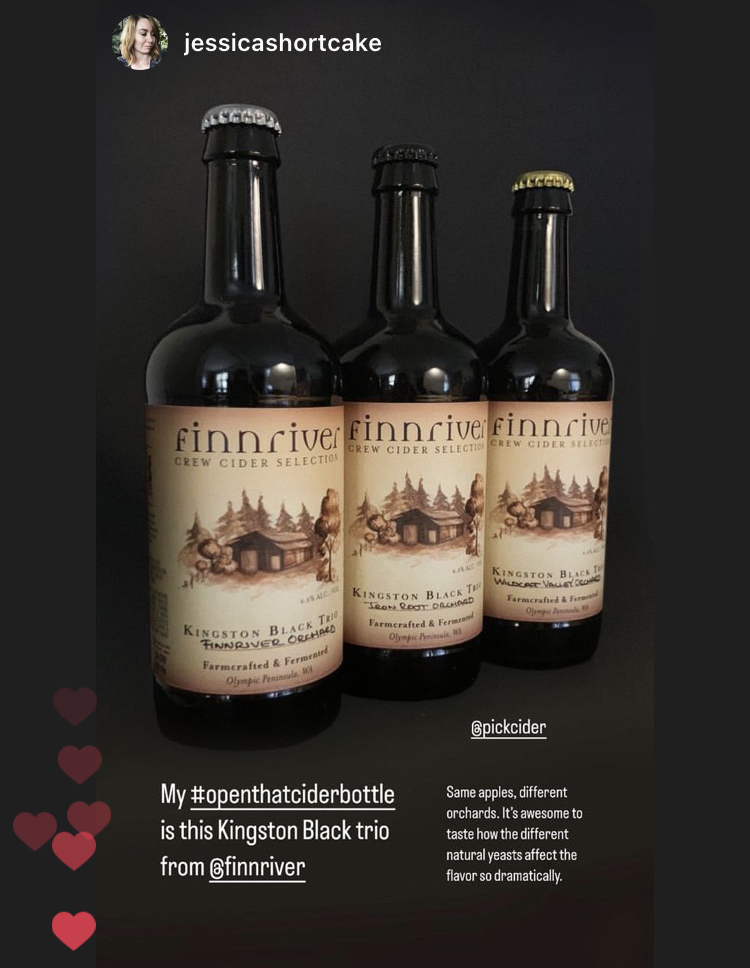
And she created a pretty awesome story about this Kingston Black trio from Finnriver too!
New Benefits and Webinar with 3 Tier Beverages

The American Cider Association is dedicated to providing our members with valuable data they need to pitch retailers, investors and distributors. We are thrilled to announce an expansion of our data benefits through our new partnership with 3 Tier Beverages. The new dashboards will give the user more control over how you view the Nielsen data, offer you options for more comparisons, and provide insights on more regional markets—we’re excited to share that the dashboards will now include data for 50 markets! We’re finalizing the customization of the dashboards with 3 Tier, but they will be available to all ACA members very soon. This is just one area we are expanding our data benefits, and we hope you join the webinar to learn more about the 3 Tier custom dashboards for ACA members. Learn more about the webinar below.
3 Tier Beverages, in partnership with NielsenIQ, is proud to be the official data supplier of the American Cider Association. Part of this partnership brings ACA members quarterly dashboards with key market data and insights to help you drive your business forward. This webinar will walk ACA members through these dashboards so you can make the most of this unique offering. This webinar is for active ACA members only.
About Our Speakers

Mary Mills joined 3 Tier Beverages in 2022 from NielsenIQ, where she spent 14 years across client management, business development, and innovation insights. She has experience working with various clients in the food, beverage, and consumer goods industries, with 9 years focused on alcohol specifically. She holds a Marketing degree from The Ohio State University and is an avid Buckeye fan. She resides in Columbus, Ohio with her husband Andy and two children, Luke (4 years old) and Ava (2 years old).

Joe Sepka began his career in the CPG industry a little over a decade ago with PepsiCo as a contract pricing analyst for raw ingredients. Over the next few years, he grew into a variety of data-intensive roles. In 2018 however Joe was ready for a change and made the decision to leave PepsiCo for a new role at Revolution Brewing managing the data department. This was where he discovered he had a particular passion and love for the Bev-Alc side of the CPG industry. In 2020, Joe made the decision to leave Revolution to help launch 3 Tier Beverages. Each day he leverages my passion for data to assist their clients to find new opportunities in their respective Bev-Alc spaces, and help “level the playing field” when competing for space against the big guys.
In addition to being data-obsessed, Joe enjoys hikes, playing chess, recording music, and above all spending time with his wife Rosy, son Arthur, and (sometimes) grumpy but loveable dog Albus.
ACA Now Accepting Speaking Proposals for CiderCon 2024

CiderCon® is the world’s premier networking and educational event for the professional cidermaking community. CiderCon® 2024 will take place in Portland, Oregon from January 16-19, 2024. We invite presentation proposals from qualified experts who meet the criteria of being able to educate cidermakers, apple growers, cidery owners, retailers, wholesalers, marketers and other cider industry professionals about best practices, new trends, research, and improving processes.
Successful proposals will state clearly:
- Target Audience – role in industry as well as business model.
- Skill Level – is material is best for beginner/intermediate/ or advanced attendees.
- Educational Goal – what skill, tool or new understanding will attendees walk away with?
COMMITMENT TO INCLUSION
We are committed to ensuring CiderCon® is a safe and welcoming space for all regardless of race, ethnicity, age, gender, disability or sexual preference. We strongly encourage BIPOC, LGTBQIA+, veterans and speakers with disabilities to submit proposals.
Additionally, we invite speakers from outside but related industries to cider. Our industry will be strengthened with fresh perspectives.
Particular topics of interest we seek applicants for through this RFP:
- Compliance
- Branding
- Marketing
- Distributor Relationships
- Chain Retail Sales
- DtC Sales
- Market Trends
- HR
- Finance
- Operational Safety
- Team Leadership
- Equity & Inclusion
Proposals are due to the CiderCon® committee by June 1, 2023. Approved speakers receive a complimentary pass to CiderCon® 2024 which includes lunch for 2 days.
ACA Seeks Guest Country for CiderCon 2024


CiderCon® is one of the most robust, diverse, thorough and connected professional cider conference in the world. We pride ourselves on being a host to international attendees year after year. The 14th annual CiderCon® will take place in beautiful Portland, Oregon from January 16-19, 2024. We expect well over 1,000 people to attend. We are requesting proposals from other countries to send a diverse representation of their regional cidermaking community to be featured guests of honor at CiderCon® 2024. Previously featured countries are Spain, France, UK, Canada, New Zealand and Ireland. Guests from these countries continue to attend future CiderCons because of the quality programming and because CiderCon® is an exchange of ideas, understanding and knowledge that enriches the global cider community.
Costs: The American Cider Association will waive CiderCon® registration fees, provide up to 5 nights hotel for up to 4 cidermakers, and pay for and help coordinate cider imports for educational sessions. Guest countries are asked to further fund cidermaker expenses (airfare, taxi, per diem). Cidermakers may also fundraise through sponsorships, and we are happy to brainstorm strategies. ACA will also provide professional photos of cidermakers participating in CiderCon®, suitable for PR uses by their home country.
Proposals will be considered on the following priorities: (A) evidence of guest country financial commitment (B) compelling cider story (C) depth of cidermaking knowledge for proposed speakers (D) diversity of proposed speakers, in cider style, cider opinions, and demographics. We are also prioritizing countries that have not been featured before.
Countries in close proximity to each other may want to team up if there are less cideries available in their own country. We welcome creative proposals.
Proposals are due June 1, 2023 at 5 PM Pacific Time. Please contact Michelle@ciderassociation.org if you have any questions.
March 24 Coffee Chat with Vinoshipper

Join us March 24 at 9:30am for a Coffee Chat webinar with Vinoshipper!
Vinoshipper Senior Analyst Taylor Harrison will lead us through a look back at their data from 2022 and also provide a quick snap shot of what they’re seeing at the beginning of 2023 with regards to sales, packaging, and demographics!
Want to check out some of the data before Taylor’s presentation. You can download it here.
About Our Speaker

Taylor joined the alcohol industry directly out of college as in intern with Constellation Brands. Shortly after, he was awarded the ability to play lacrosse for Team England, so he moved to England, where he began working as a fine wine market analyst for the London International Vintners Exchange (Liv-Ex). During his summers, he would take time off to do vintage work at a winery in Surrey. Taylor joined Vinoshipper, from London, in 2021 and started up the data analytics program, offering insight into the craft alcohol industry. He continues to develop the division with the goal of helping producers make the most of their data and understand what is happening in the market.
ACA Announces Release of New Certified Pommelier Textbook


The American Cider Association is very pleased to announce the release of its new textbook for candidates preparing for the exam to become a Certified Pommelier™. Certified Pommelier™ is the second level of the ACA’s Certified Cider Professional program, the world’s most comprehensive and in-depth cider education program for beverage professionals.
“Cider is a broad and complex category,” commented ACA chief executive officer Michelle McGrath. “Our program is designed to give professionals in the beverage and hospitality industries a thorough knowledge of cider, the how and why as well as the what, empowering them to not only improve their ability to help advise customers but to create and grow whole cider programs. It is really the equivalent of any of the other well known and respected professional certification programs such as Cicerone® or the Court of Master Sommeliers. It is clear how much having those credentials can enhance someone’s career prospects, and we’re seeing that with the CCP program, too.”
The Certified Pommelier™ exam has two separate parts, one examining theory and the other a candidate’s ability to taste and accurately describe a cider. Study materials geared toward the theory portion of the exam have previously been made available through the ACA’s website, but these materials are now considered obsolete. Those interested in preparing for the exam can purchase the new textbook on Amazon.com.
You can learn more about our Certified Cider Professional Program on our website.
Thinking about studying for the exam? Join our Certified Pommelier™ Facebook group.
For more information, contact Michelle McGrath at michelle@ciderassociation.org
###
2023 Annual ACA Membership Meeting

The American Cider Association is pleased to invite our members to join us for the Annual Membership Meeting. The meeting will take place Tuesday, April 18, 2023 at 11:00 AM Pacific via Zoom.
We will review last year’s accomplishments, examine our strategic plan, and share what’s in the works for the year ahead.
We look forward seeing all of you virtually and hearing your ideas for how we can promote the US cider industry.
You must be an Active ACA Member to participate in the Annual Membership Meeting. You can join or renew your membership here.
We will provide you with the Zoom link prior to the beginning of the meeting on April 18, 2023.
Open That Cider Bottle Returns February 25
Open That Cider Bottle is back and better than ever on February 25! This year the ACA will be offering prizes for various categories and everyone who participates will be entered to win a wine (ahem, cider) suitcase. Read on to learn more about what we’re looking for and get ready to share your cider story with us!
A Little Background
Open That Cider Bottle began in 2022 when we stumbled upon Open That Bottle Night. Open That Bottle Night was started back in 2000 by two Wall Street Journal columnists, Dorothy J. Gaiter and John Brecher. Held on the last Saturday in February of each year, this day encourages folks to open up that special bottle and share memories.
While they may have been talking about wine, we know that there are a lot of special bottles of cider with great stories sitting on shelves and in cellars just waiting to be opened and have their stories told. So we’re once again asking you to open one of those special bottles and share your cider bottle story on Instagram.
Is it a bottle from the first batch you ever made? Does it have a unique apple variety that you’ve been wanting to try? A cider you stumbled upon while on vacation? A cider gift from a friend that you’ve been saving? A cider that you fell in love with the first time you tried it and had to add it to your collection? Silly or poignant, we want to hear them all and there’s a chance to win some awesome prizes!
Did We Say Prizes?
Yes, we did! Besides the aforementioned wine suitcase that all who participate have a chance to win, we will also be offering prizes to our favorites in the following categories:
- Most likely to make you 🤣
- Most likely to warm your ♥️
- Most likely to 🤯
- Most likely to make you 💲 a 🍾
So tell us and the world your cider bottle story and post it to Instagram with the hashtag #openthatciderbottle and tag us @pickcider on Saturday, February 25, 2023!
Cellar Looking Empty?
This holiday is a great excuse to support a local bottle shop. Pick up a bottle of a cider that excites you and join us in seizing the day!
Early CiderCon Presentation Slides for Members
This content is for members only.
If you were a member and are now seeing this message, please Renew your membership to continue.
2023 Cider Excellence Award Winners Announced

The American Cider Association announced the award winners at CiderCon® 2023 in Chicago
The American Cider Association (ACA) was pleased to announce the recipients of their annual Cider Excellence Awards at CiderCon® 2023 in Chicago last week. CiderCon® is the ACA’s annual conference and took place in Chicago, Illinois from January 31 – February 3, 2023 this year. The ACA established these annual awards at CiderCon® 2015 to honor individuals, businesses, and organizations from around the country for their achievements in and contributions to the U.S. hard cider industry. The highest honor given each year is the award for Significant Impact on the Cider Industry, and the ACA awarded Ria Windcaller of CiderChat and Sean and Malaika Tyson of CiderSoms these honors this year. In addition, Elizabeth Ryan of Hudson Valley Farmhouse Cider was awarded the Apple Advocate Award.
“Each year at CiderCon® we gather together as an industry and a community. It’s both an opportunity to learn and to celebrate,” says Michelle McGrath, CEO of the ACA. “The awards we give out each year reach to all corners of the industry and are an incredible way to highlight the contributions of so many.”
Part of the ACA’s mission for their awards is to celebrate the retailer and wholesaler tiers of the cider industry. Many of the awards go to restaurants, bottle shops and distributors who are doing well in their efforts to promote the diversity of the cider segment. As cider is highly regionalized and heavily dependent on local markets, most of the awards are given by region.
Each region includes the following states:
- East: CT, MA, ME, PA, NH, NJ, NY, RI, VT
- Midwest: IA, IL, IN, MI, MN, MO, OH, WI, KY
- Mountain West: AZ, CA, CO, NM, NV, UT, WY, SD, ND, KS, NE, OK, TX
- Pacific Coast: CA, HI
- Northwest: OR, WA, ID, MT, AK
- South: AL, AR, FL, GA, LA, MS, NC, SC, TN, VA, WV, MD, DE, DC
The ACA Cider Excellence Awards fall into seven categories: Best Cider Retailer Award; Best Cider-Focused Establishment Award; Best Cider Distributor Award; Outstanding Pommelier Award; Member Appreciation Award; Significant Impact on the Industry Award; and the Apple Advocate Award. With the exception of the Member Appreciation Award, Significant Impact on the Industry Award, and the Apple Advocate Award– all other awards are given to one individual or organization within each member region.
Learn more about the 2023 Cider Excellence Award winners below.
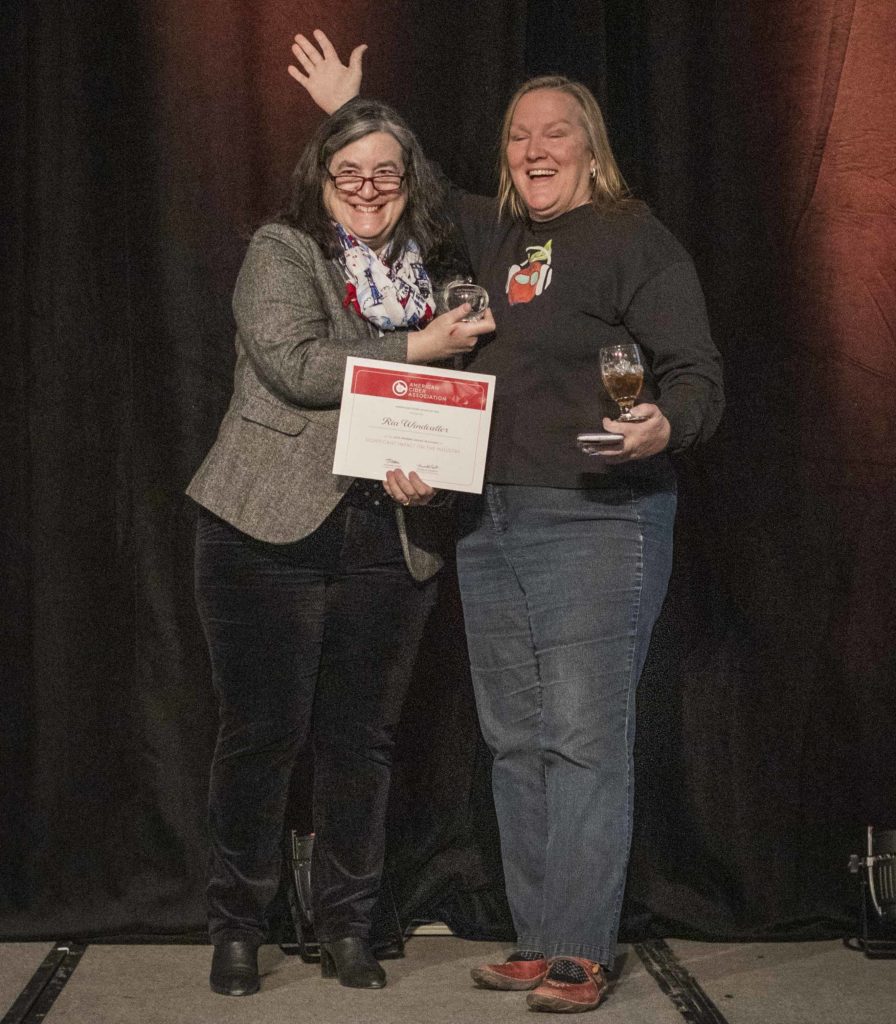
Significant Impact on the Industry | Ria Windcaller is the producer and cider emcee at Cider Chat, a weekly podcast with over 350 archived episodes with makers, cider enthusiasts, and folks in the cider trade around the world. She founded Totally Cider Tours in 2018, leading both national and international group cider tours yearly. In 2022, she produced CiderDays 2.0, a three-day event held in western Massachusetts complete with tastings, workshops, author talks, a cider pop up, cider tap takeover and a cider dinner focused on celebrating women in cider. She is also an award-winning hobbyist cidermaker and cidermaking instructor.
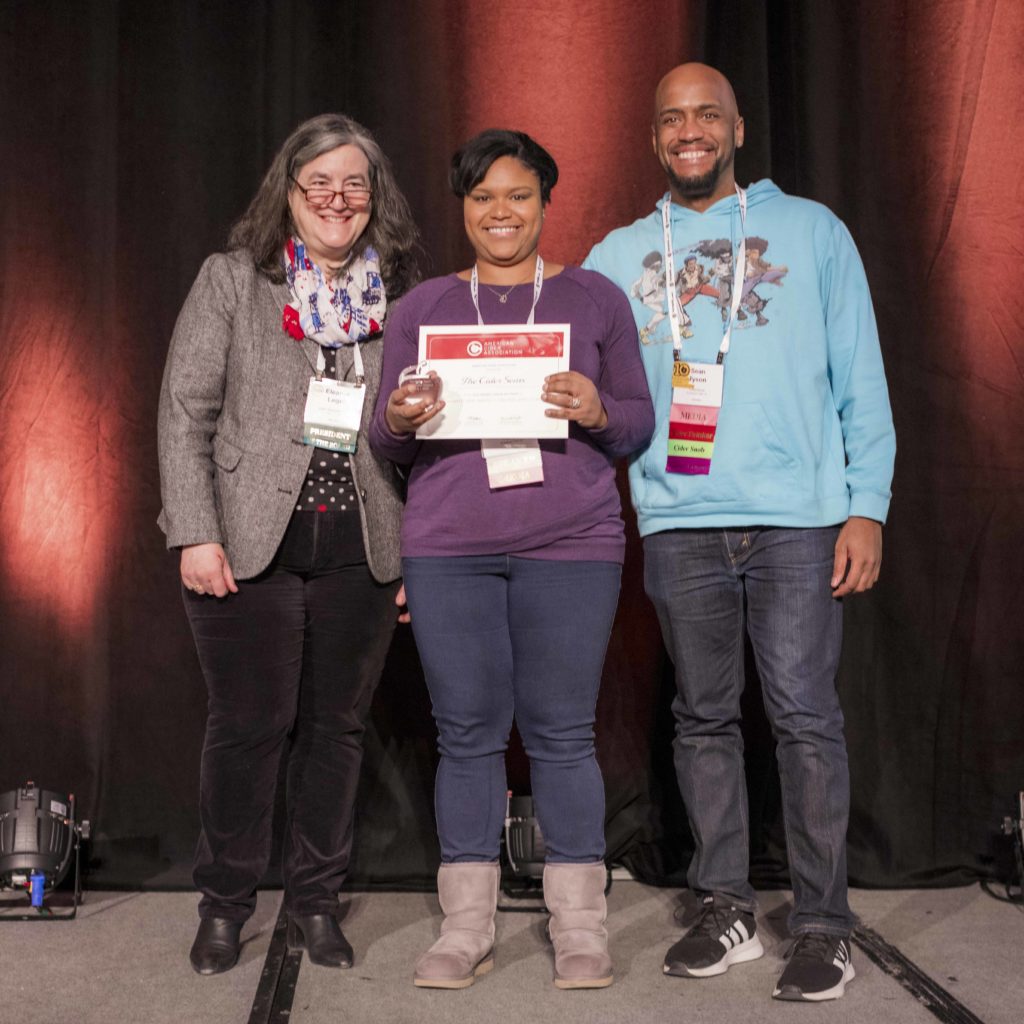
Significant Impact on the Industry |Malaika and Sean Tyson fell in love with cider in 2006 and soon after began their blog Cider Soms to introduce wine lovers to cider. Since then, they have become an integral part of the cider community through their dedicated coverage of cider and cidermakers through their blog and social media channels. In addition, they have spearheaded conversations about increasing cider’s diversity and have volunteered countless hours in support of the ACA and the cider industry.
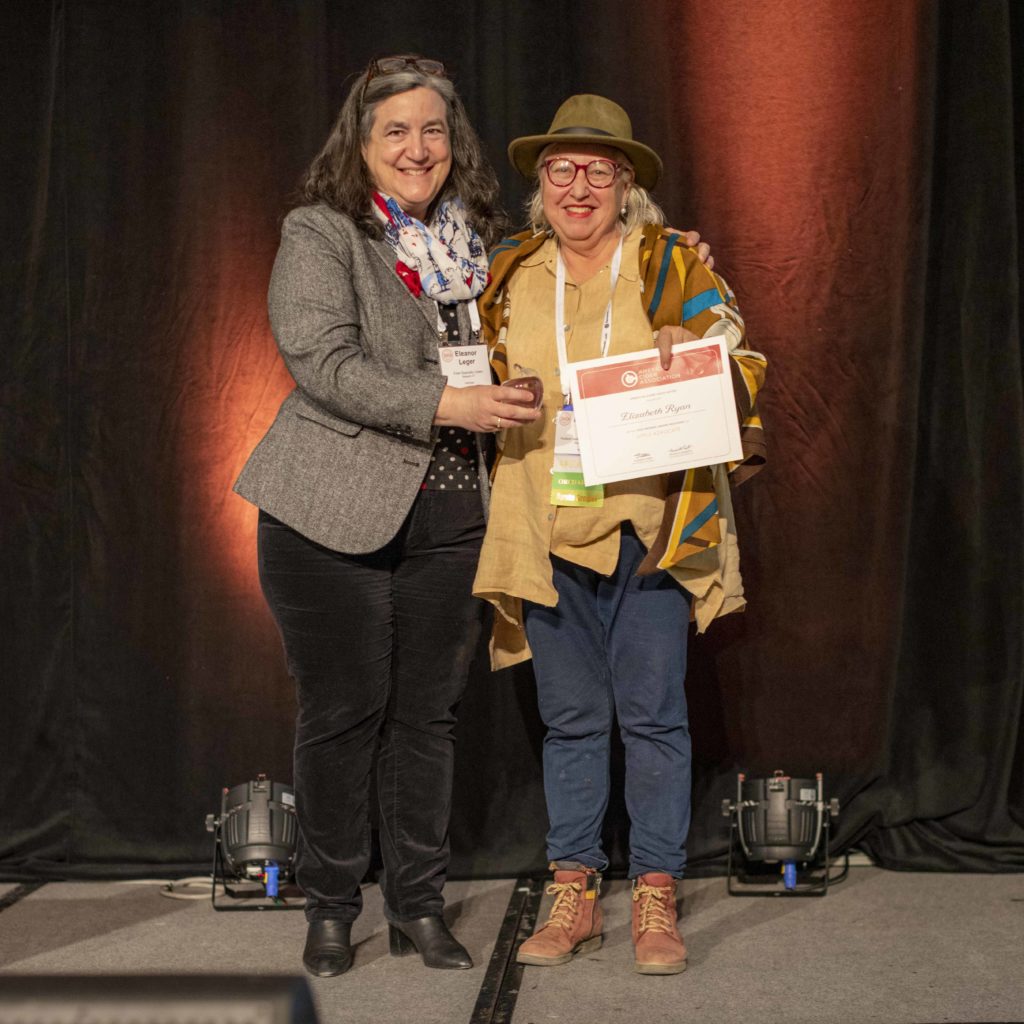
Apple Advocate | Elizabeth Ryan is the producer of Hudson Valley Farmhouse Cider. She is a renowned fruit grower and cidermaker and has studied cider making in Somerset and Hereford in England. She has a degree in Pomology from Cornell University. She made her first barrel of cider there as a student in 1980. She is one of the founding GrowNYC Greenmarket farmers. She received the Cornucopia award from Stone Barns Center for Food and Agriculture and was a Smithsonian Fellow. She was a keynote speaker at the NY State Governor’s Alcohol Summit where she pushed policy that would support small-scale hard cider production.
A full list of winners follows.
Best Cider Retailer Award (Non-Cidery Off-Premise)
- East Winner: The Cellar d’Or Wine, Cider & Spirits, Ithaca, NY
- Midwest Winner: France 44 Wines & Spirits, Minneapolis, MN
- Mountain West Winner: CRAFT Wine & Beer, Reno NV
- Pacific Coast Winner: Corner Shop, Los Angeles, CA
- Northwest Winner: Press Then Press Cider Shop, Online
- South Winner: Wine Warehouse, Charlottesville, VA
Best Cider-Focused Establishment Award (Non-Cidery)
- East Winner: Würstbar, Jersey City, NJ
- Midwest Winner: Taproot Cider House, Traverse City, MI
- Mountain West Winner: Scion Cider Bar, Salt Lake City, UT
- Pacific Coast Winner: Alma’s Cider & Beer, Los Angeles, CA
- Northwest Winner: The Place PDX, Portland, OR
- South Winner: Firefly, Charlottesville, VA
Best Cider Distributor Award
- East Winner: Coeur Wine Co., New York
- Midwest Winner: Craftroads Beverage, Indiana
- Mountain West Winner: Ibantik Craft Beverages, Utah
- Pacific Coast Winner: Lime Ventures, California
- Northwest Winner: Maletis, Oregon
- South Winner: Specialty Beverage, Virginia
Outstanding Pommelier Award (Bartender, Retailer or Distributor Representative)
- East Winner: Paige Flori, Boutique Wine, Spirits, and Ciders, Fishkill, NY
- Midwest Winner: Melissa Waskiewicz, France 44 Wines & Spirits, Minneapolis, MN
- Mountain West Winner: Matthew Ostrander, Ibantik Craft Beverages, Utah
- Pacific Coast Winner: Olivia Maki, Redfield Cider Bar & Bottle Shop, Oakland, CA
- Northwest Winner: Jonathan Chambers, Capitol Cider, Seattle, WA
- South Winner: Matthew McCallister, Potter’s Craft Cider, Charlottesville, VA
Member Appreciation Award
- Schilling Hard Cider, Portland, OR
- Awarded for their support of CiderCon® and invaluable cider networking
- Yonder Cider, Wenatchee, WA
- Awarded for their leadership with our equity and inclusion programming
- South Hill Cider, Ithaca, NY
- Awarded for their leadership with our educational programming and regional ambassadorship
Significant Impact on the Industry Award
- Malaika and Sean Tyson, The Cider Soms
- Awarded for spearheading conversations about improving cider’s diversity, for promoting cider through their blog, and for being tireless volunteers
- Ria Windcaller, Cider Chat Podcast
- For creating a source of learning and a space for storytelling in the cider community with her podcast since 2015
Apple Advocate Award
- Elizabeth Ryan, Hudson Valley Farmhouse Cider
- For telling the stories of New York apples, for growing apples, for being a pioneer orchardist and cidermaker
Further information, media interviews, award recipient bios and photos available upon request. Please contact Michelle McGrath at michelle@ciderassociation.org.
About the American Cider Association
The American Cider Association is an organization of cider and perry producers in the United States. It gathers and shares information about cider production, regulations and cider apple growing to help members improve their operations, raise awareness and advance cider in the market. The organization was founded in February 2013. Learn more at ciderassociation.org.
###
Meet Your 2023 Board of Directors


The American Cider Association is pleased to announce the results of this year’s board elections. Congratulations to new board members Sarah Hemly and Breanne Heuss, and welcome back returning board members Dave Takush, Philippe Bishop, Marcus Robert, Talia Haykin, and John Behrens.
The board also re-elected Eleanor Leger as Board President, Brooke Glover as Board Vice President, Dave Takush as Board Secretary, and John Behrens as Board Treasurer.
Visit our About Us page to learn more about all your American Cider Association board of directors.

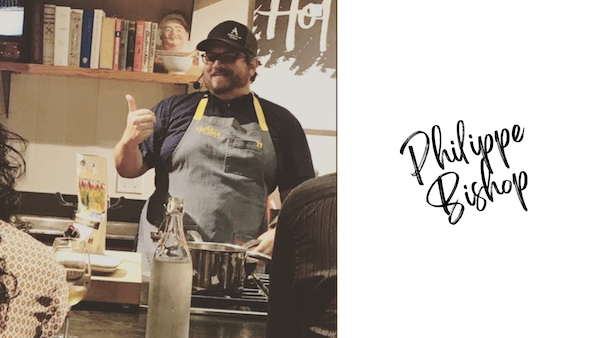
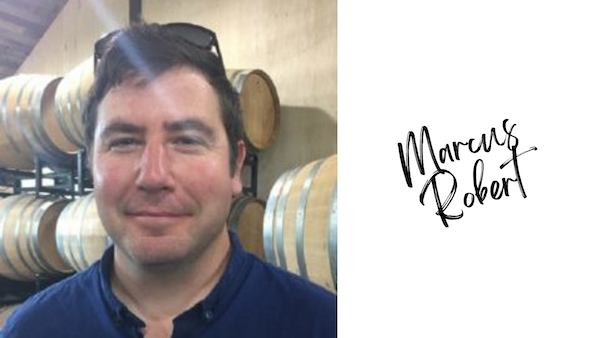
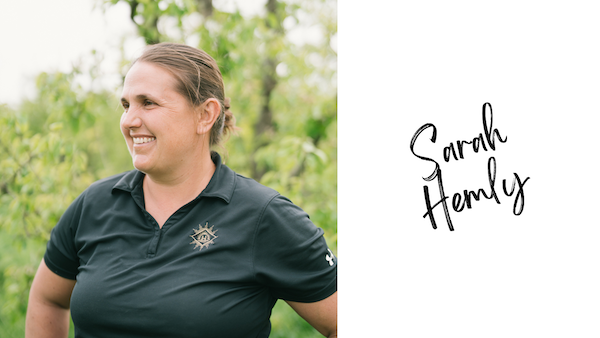

CiderCon® 2023 Fact Sheet

- The 13th annual CiderCon® was held in Chicago, Illinois from January 31 – February 3, 2023, celebrating a return to Chicago after a four year absence.
- 965 people registered for CiderCon 2023, including attendees, vendors, volunteers and speakers.
- Attendees were from 40 different states including Alaska and Hawaii.
- New York had the most registrants followed by Michigan, Illinois, California, Washington, and Virginia.
- Attendees from 9 different countries participated in CiderCon®, including Austria, Canada, France, Guam, Ireland, Korea, New Zealand, Sweden, and the United Kingdom.
- The ACA welcomed keynote speaker Sunny Gandara, former Global Wine Director for the Mathew Kenney Restaurant Group and the founder and owner of The Plant Curious Table, a digital dual-purpose education and wine consulting company, to CiderCon® 2023. Her talk explored vegan market growth and trends, who plant-based consumers are, why cider is perfect for this growing group, and how to market to these consumers.
- There were 38 educational sessions held during CiderCon® covering topics in the areas of Better Business, Cider Production, Branding, Marketing & Sales, Orcharding, and Apples, Flavor & Terroir. The Cider Institute of North America helped to develop the cider production track sessions once again. The schedule can be downloaded HERE.
- There were 12 tasting sessions, including a traditional perry tasting with Claude Jolicoeur, author of the recently released Cider Planet and of The New Cider Maker’s Handbook, which has been acclaimed worldwide as a major reference on the topic of cidermaking. Other tasting sessions included orchard trials from New York state, sensory analysis sessions, and sessions addressing pet nat cider, carbonation, blending, and spontaneous fermentation.
- There were several data driven sessions featuring speakers from the National Beer Wholesalers Association, Market Technology, Sovos ShipCompliant, 3 Tier Beverage, CGA Strategy, and Good Beer Hunting.
- Mary Guiver of Whole Foods Market Inc and Mark Venegoni of SpartanNash joined CiderCon® 2023 on our retail panel discussing how to create positive relationships with chain retailers.
- The ACA once again offered its Certified Pommelier™ exam at CiderCon® 2023. The Certified Pommelier™ is an advanced second level designation of the ACA’s Certified Cider Professional program geared toward beverage and hospitality industry professionals. Close to 40 people sat for the challenging test that includes a blind sensory evaluation section. The new cohort of Certified Pommeliers™ will be announced in 6 weeks.
- About 150 individuals participated in tours for CiderCon® 2023, including tours featuring Chicago’s cider scene, an historical tavern tour, a Frank Lloyd Wright architecture and cider tour, and a tour of the Bronzeville neighborhood, beloved as a center for African-American life and culture in Chicago.
- There were numerous networking opportunities, including a Newcomer Networking session, a BIPOC Cider Professional Meetup, a Pomme Pride Meetup for LGBTQIA+ cider industry professionals, and an Orcharding Meetup.
- The TTB and the FDA both held sessions at CiderCon® 2023 and were available to attendees to answer questions regarding topics ranging from labeling to licensing to recipes.
- The Trade Show sponsored by FruitSmart featured 92 vendors from around the country and the world, and featured several new vendors as well as many who have returned year after year to support the cider industry.
- The American Cider Association’s annual board elections happen concurrently with CiderCon®. Newly elected board members were announced during lunch on Friday. New board members welcomed are Sarah Hemly of Hemly Cider as Pacific Coast Chair and Breanne Heuss of Golden State Cider, and newly re-elected board members are Dave Takush of 2 Towns Ciderhouse and Philippe Bishop of Alpenfire Cider, both to At-Large Seats, Marcus Robert of Tieton Cider Works as Northwest Chair, Talia Haykin of Haykin Family Cider as Mountain West Chair, and John Behrens of Farmhaus Cider as Midwest Chair.
CiderCon® 2024 will be held in Portland, Oregon from January 16-19, 2024.
CiderCon® was created to offer the commercial cider industry an outlet to meet, share ideas, collaborate and affect positive changes in cider making and cider fruit production best practices, the cider market and cider regulations. CiderCon® is organized by the American Cider Association whose mission is to grow a diverse and successful U.S. cider industry by providing valuable information, resources and services to our members and by advocating on their behalf.

CiderCon® Demographics and Inclusion Dashboard

Over the last couple years, the ACA’s Antiracism, Equity and Inclusion committee has focused its efforts on expanding CiderCon®’s audience through inclusive practices for attendees, speakers, and media. A new CiderCon® Demographics and Inclusion Dashboard has been developed as part of the ACA’s efforts to set goals and measure progress toward becoming a more inclusive and representative industry. By measuring demographic and community engagement data, we are holding ourselves accountable to trackable and transparent improvement. This dashboard is reliant upon self-reported data from CiderCon® industry surveys and statistical information gathered by the ACA.
The U.S. is increasingly multiracial and cider needs to ensure it is a safe and inclusive community to grow with the country’s demographics. Research shows that diversifying ownership is a pathway to diversifying customers. CiderCon® is an excellent opportunity for new cider professionals to learn about the industry, so we are prioritizing making CiderCon® more representative of the U.S. population as a whole.
We anticipate the dashboard to evolve with time, and we welcome suggestions for improvement.
2023 ACA Board Candidates


The 2023 ACA Board Elections are around the corner. If you have an active and current membership with the ACA and you are a bonded active cidery, we will email the principal contact as they are designated on your account with an electronic ballot on Thursday, February 2, 2023. Please read below to meet the 2023 candidates for the ACA Board.
Midwest Chair:
Candidate Statement: My goal and the number one priority for the ACA is to help cideries sell more cider. This needs to be accomplished using a variety of strategies. These include providing educational opportunities to continuously improve the overall quality of cider in the marketplace and encouraging new faces to join the industry, promoting the diversity of cider and cider styles so consumers realize there is a cider for everyone, engaging with media to promote what makes cider unique and working with elected officials and agencies to create and promote common sense legislation that is fair and reasonable.
I am proud of the work of everyone on the current board and I look forward to continuing that work. I am also proud of my work as Treasurer to put the ACA back on a path of financial sustainability, creating our first reserve fund to help us better weather future economic downturns and approach those situations from a position of offense. My goal is for that to continue to ensure the long term viability of the organization.
About John: John Behrens is the Founder and President of Farmhaus Cider Company located in Hudsonville, Michigan. This company was founded in 2015 and has gone on to win many national and international accolades and awards. John began his first term as President of the Michigan Cider Association in 2018. Previously, he worked as a Certified Public Accountant for over 10 years at BDO USA and Steelcase. John holds an MBA from Grand Valley State University, in addition to degrees in Accounting and Finance.
Mountain West Chair:

Candidate Statement: Serving on the ACA board since 2020 has taught me so much about the broader cider industry and cider legislation. I have enjoyed learning how impactful the work that the ACA has done is on cideries of all sizes. I also enjoy being a conduit for the Mountain West Region – both sharing the work the ACA does with member cideries and communicating the unique needs of Mountain West cideries to the ACA. I see such a huge value in coming together as a group and advocating for what we need and want. And that generally starts with the apples. From recognition of different varietals and their unique flavor profiles, to terroir and its impact on cider, to harvest dates and transparency of what we’ve put in the bottle and where it came from. Teaching consumers the value of learning more about their regional apples and cidermakers, is a passion of mine. I can’t wait to keep working with the ACA to promote cider making, cider drinking, and apple literacy.
About Talia: In 2017 Talia, along with her husband Daniel, founded Haykin Family Cider in Colorado. Their cider journey began in 2013 as hobbyists in their living room. As they learned more about the rich history of apples and hard cider in the United States their cider became strongly focused on single varietals and family farms with whom they have personal relationships. In addition to her work with their cidery, which encompasses all business areas, Talia is a Denver-based writer and social media strategist. She formerly was the CMO of large non-profits and worked as a freelancer, prior to managing the cidery (and family) full-time. Talia lives in Denver with Daniel, their three children (who fight over who gets to ‘run the cider house’ one day), and their fluffy pup Soba Schnoodle.
Northwest Chair:
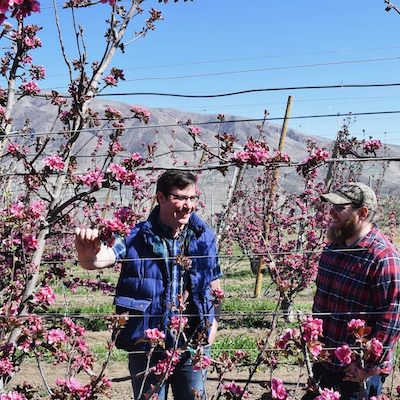
Candidate Statement: The American Cider Association’s mission is to provide valuable information, services, and resources to its members as well as advocate on their behalf. The organizations work has helped the cider industry grow by guiding legislation to reduce taxes and streamline governmental processes, providing vital industry statistics to our members and industry partners, and taking the lead as a voice in all corners of our market. During my time on the Board of Directors I have served on the legislative, membership, and finance committees, as well as serving as Treasurer on the Executive Committee. During my time as treasurer, I helped lead the organization through the toughest financial situation we have ever faced. Now, seemingly on the other side, I’m ready to help keep building the organization to better serve our members and the cider industry.
About Marcus: Marcus grew up on a family orchard, which he still owns and operates in the Yakima Valley. He owns and operates a winery with his wife Amy and has been involved in the beverage business for 20+ years. Marcus is the Cider Maker, President, and Co-owner of Tieton Cider Works where he has helped grow the company for the past 12 years.
Pacific Coast Chair:
Candidate Statement:
My name is Sarah Hemly and I’m President of Hemly Cider in Courtland California (An enormous town of over 140 people just south of Sacramento). In 2015 I co-founded Hemly Cider with an intent to showcase the fruit coming out of our families sixth generation pear and apple orchards. Our passion has been a focus on Perry, and I’d love the opportunity to bring another “pearspective” to the board.
My primary interest in joining the board as the Pacific Coast representative stems from a desire to strengthen the relationships and opportunities between cider and commercial agriculture. The past few decades of exposure to the family business of agriculture has offered me the amazing opportunity to learn about and work with some amazing farmers and diverse crops in our state. I’ve had the privilege to be able to travel and meet farmers through the IFTA (International Fruit Tree Association) and take some side trips to visit cider makers both domestically and globally. From San Diego, down to Tasmania, Germany, Spain, and Tennessee, I’ve seen the importance of growing the cider industry’s connection to commercial agriculture as well as the opportunity cider offers in return.
In California, over the past few years, we’ve seen pear and apple crops become the most expensive crops grown in the state. Coupled with canneries leaving, increases in costs of labor, land, water and added regulations, margins have shrunk while costs continue to rise. This in turn has affected costs of and access to juice for the cider industry. I think we all see potential in the cider industry as a “home” for high-quality culled fruit and seconds as well as an opportunity to convert dessert variety blocks to cider-specific varieties with the potential of reduced costs and increased margins to both farmers and the cider industry as a whole. I look forward to any opportunity to contribute to your organization and would be honored to be the ears of the board for the cideries in the Pacific Coast Region, so we can continue supporting the region appropriately.
About Sarah: In 2015 Sarah launched Hemly Cider with Co-Founder Chris Thomson. With help from her Tasmanian Business partner, Sarah built and grew Hemly Cider into an award-winning cider company that showcases the fruit grown by the family’s sixth generation pear and apple orchards. As the company has grown, the focus has shifted to include fruit from multiple California crops. Previous to Cider, Sarah earned a degree in Landscape Architecture from the University of California Berkeley. After spending 8 years in architecture and project management, she left the field and now serves full time as President of Hemly Cider as well as on the board of Greene and Hemly, the family orchard and packing company.
At Large Cidery Seat
Candidate Statement: I believe that the American Cider Association (ACA) is very good operating as a megaphone for the U.S. cider industry. This does not happen with out good leadership and a diverse board of volunteers willing to lend their time, discuss issues, share stories and help steer the industry to a place where we can all succeed. My voice comes from the perspective of a very small family run cidery, making under 5,000 gallons a year, growing traditional cider fruit in a maritime climate and trying to sell primarily large format bottles of harvest driven cider in a market that is heavily influenced by the beer world. Not the easiest thing to do, but being able to share this voice with the board members and help steer our decision making for producers like us is why I do it.
I wanted to take a more in active role in shaping the cider industry and was elected to the ACA board in 2020, previously serving on the board of the Northwest Cider Association. I have worked on multiple committees in the past 3 years including the Cider Market Data, Cider Marketing and Lexicon/ CCP as well as co-organizing regional cider maker industry socials the last one with well over 100 cider professionals from 3 states. My main goal is to help educate distributors, trade professionals, and consumers of the intricacies of cider. Not all cider is the same and cannot be presented in the same way. I bring experience from the perspective of owning a small company, spending most of my time on the sales side and having worked for a small craft distributor where I saw the frustration and challenges from both the sales rep and producer perspective. With proper tools, training and education, we can increase cider appreciation helping individual producers sell more cider and the cider industry as a whole. I look forward to continue working toward this goal collectively with Michelle, my fellow board members and everyone who has volunteered their time to committees.
About Philippe: I am a co-owner of Alpenfire Cider in Port Townsend, WA where I was raised. Some of my earliest memories are playing under ancient apple trees, that smell will be with me forever. After bouncing through many different jobs including wildland firefighter, commercial photographer, house salvage and deconstruction, to running the operations for a craft beverage distributor I fell in love with cider, following my folks foot steps. I primarily handle the sales and education side of things, but with any small company I wear many hats. Whether it is pruning or picking apples in our small cider orchard to washing tanks to blending cider in the production room that’s my life now. I live in Seattle, WA with my wife and kids Sierra and Cortland, enjoying a fine beverage or two with friends or hiking deep in the woods when I can find the time.
At Large Cidery Seat
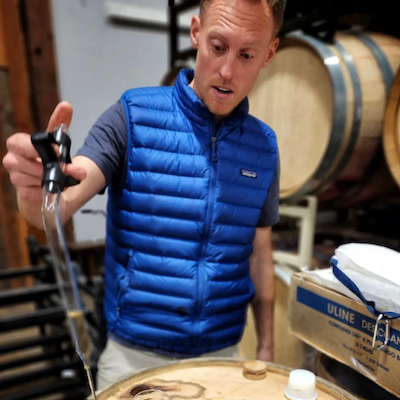
I am so darn excited to be running for the member at large ACA board position. As a board member I intend to help promote positivity and unity within the cider community. I will focus my efforts on encouraging legislative initiatives that will bring positive change for all industry members.
About Dave: Dave Takush is the Head Cidermaker and co-owner of 2 Towns Ciderhouse. Dave earned a Master’s Degree in fermentation science at Oregon State University and has almost over a decade of experience in the craft beer, wine and cider industries. His passion for fermentation led him to join two childhood friends in starting 2 Towns Ciderhouse in Corvallis, Oregon. Now one of the largest craft cider producers in the nation, 2 Towns has over 100 employees and is dedicated to producing quality craft cider from 100% fresh-pressed Pacific NW apples. Dave is also a board member of the Cider Institute of North America.
Large Cidery Seat:

Candidate Statement: While on the ACA board, I want to create more brand awareness of the cider industry; help create guidelines for consumer-facing messages across the category and share the benefits cideries bring to the environmental communities around them. It’s important for the cider industry to become a key player in the beverage category.
I’d love to create more structure regarding how cideries promote fruit-based ciders, the definition of fresh-pressed, and how we talk about additional wellness benefits with consumers. As more consumers today seek “better for you” alternatives it’s important for us as an industry to set the standards of what consumers can expect when they purchase cider. I believe my expertise in brand marketing and leveraging emerging categories will help the ACA extend its influence with key government agencies, companies, and distributors across the US. All the while we continue to evolve as a major industry player within the beverage category.
About Breanne:
Breanne Heuss is a brand marketing leader with a reputation for identifying emerging consumer trends and market opportunities, launching first-to-market products, and establishing early market dominance across multiple beverage categories. With more than a decade of branding experience in the beverage industry, she has worked on everything from established national wine brands including Sutter Home Family Vineyards and FRE Alcohol-Removed Wines to developing new brands within the low/no alcohol space. Breanne currently serves as the Marketing Director for Golden State Cider and Seismic Brewing Company overseeing the marketing department driving new consumer acquisition, new brand development, and growth within direct-to-consumer channels.
Born and raised in California, she is happy to combine her love for supporting local agriculture with brands that expand consumer occasions and experiences. Breanne is enthusiastic about cider-making and looks to bring more Millennial and of-age Gen Z consumers into the cider category. She is excited to make this wonderful beverage a staple in every household.
Cheers to 10 Years: ACA Celebrates Its Tenth Year Since Incorporating
It’s time to raise a glass and cheers to the American Cider Association’s first 10 years of success!
Thank you, dear members, for working with us over the last decade to grow the status and connectedness of the cider industry. On this anniversary, we want to express our gratitude to the growers, the harvesters, the makers, the go-getters, and the storytellers. Without the contributions of members like you, the ACA doesn’t work. Thank you for sharing your time, showing up, and pouring your passion into our industry.
“Cider Is Stronger Together” is our motto, and by working these past ten years as a community, we’ve proven it true. We are proud of the cider industry’s greatest strength: our collective grassroots nature.
Let’s take a moment to reflect on all we’ve done in the last 10 years.
Thanks to the vision of our founding board and members, the American Cider Association officially incorporated in 2013. Since forming the ACA, the board, the staff, and our members have made huge impacts in the cider world:
- Changed the definition of hard cider for federal excise taxes to include all ciders less than 8.5% ABV, less than 6.4 g/L CO2, and made from apples or pears.
- Ushered in the permanent passage of the Craft Beverage Modernization and Tax Reform Act, which saved our industry millions of dollars by expanding the Small Producer Tax Credit and allowed sparkling cider producers to receive the credit for the first time.
- Advocated successfully for three new standards of fill for wine and cider: 355 ml (12 oz), 250 ml, and 200 ml. Without ACA’s work behind the scenes, 355 ml and 200 ml would not have been included in this 2020 update.
- Educated thousands of beverage pros across the country and the world about the diversity of U.S. cider’s flavor, apples, and styles. We’ve also helped over 2,100 professionals to level up by certifying them as Cider Professionals and Certified Pommeliers™.
- Nurtured relationships with food and beverage media to champion three core messages: (1) cider has a wide range of flavor possibilities; (2) cider pairs better with food than beer, wine, or spirits; and (3) cider is fundamentally about apples.
- Invested in gathering market data, surveys, and research to highlight the nuances and segments of the cider category, so that wholesalers, retailers, and media could see the industry as more than a single number. We are a category, not a beverage!
- Initiated the work to understand the demographics of cider professionals and cider consumers and ensure that cider is a safe and welcoming community for all.
- Collaborated with regional cider guilds to promote cider to beverage consumers from coast to coast, through sponsorships, grants, and strategic initiatives.
- Joined together each year for CiderCon®, the world’s premier professional cider conference and trade show, so we could network, learn and celebrate the greatness of our industry.
- Grew our industry and our association to band together for a long, sustainable future as a thriving, collaborative cider community.
We’re just getting started! We expect big things to come about in our 11th year and beyond. Thanks to your support, we have big plans underway:
- Create TTB-approved language to include harvest years on labels with COLAs.
- Add 16 oz and 19.2 oz to wine and cider’s standards of fill.
- Eliminate the bubble tax for all cider and wine under 8.5% ABV.
- Create marketable and consumer-recognized cider regions.
- Introduce additional data resources and benefits to our membership package.
- Launch a new member portal that adds resources for cideries each quarter, making critical information, such as rules and regulation compliance, accessible and clearly stated.
- Advocating for cider’s place in emerging market trends like plant-based food pairings, natural wine, climate-friendly goods, better-for-you products, ready-to-drink canned beverages, and more.
Those are just the plans for this year–new initiatives beyond 2023 are up to all of us. It may be a challenging year for cider, but together we’ll prevail. If the cider community continues to come together and prioritize collective impact, the industry will reap rewards for years to come.
We’ll have more to say about our first decade and all we have accomplished together, but for now, we just want to say thank you, members!
Let’s celebrate all we’ve done. CHEERS TO 10 YEARS!
Sincerely yours,
Eleanor Leger, ACA Board President
&
Michelle McGrath, ACA Executive Director
Eight Scholarships Awarded to BIPOC Recipients Across the Country for CiderCon® 2023
Sponsored by Yonder Cider, in collaboration with American Cider Association and Beer Kulture, the CiderCon® scholarship program returns for its second year with more applicants and awardees than ever to bring new people of color from historically marginalized groups
CHICAGO (January 12, 2023) – Yonder Cider®, Beer Kulture and the American Cider Association (ACA) are excited to announce the awardees of the 2023 CiderCon® BIPOC (Black, Indigenous, People of Color) Scholarship. Eight individuals – including six cider passionate individuals and two media attendees – received scholarships to attend the annual conference, taking place January 31 – February 2 in Chicago, Illinois. This scholarship is designed to bring people of color from historically marginalized groups to CiderCon® to increase the accessibility of cider education and jump-start the careers of these cider professionals. Receiving more applicants than the previous year, the scholarship – now in its second year – has grown from three scholarships to eight, with awardees from seven different states across the country.
“This scholarship is really a gift for the cider industry as a whole,” said Caitlin Braam, founder of Yonder Cider and founding chair of the ACA’s Antiracism, Equity and Inclusion committee. “Diversity brings more ideas, new creativity, and broader perspectives, ultimately making a stronger and better cider community. It’s encouraging to see the efforts of this committee continue to grow and it’s truly a privilege for Yonder to be able to fund this important initiative.”
Each scholarship includes registration, travel and lodging to attend CiderCon® 2023 in Chicago. Additionally, scholarship recipients are offered training materials and waived exam fees to pursue becoming a Certified Cider Professional and Certified Pommelier™.
This year’s awardees include:
Scholarship Awardees
Monique Gray, California
Anthony Lopez, California
Gabriela Muñoz, Minnesota
Olivia Pener, Missouri
LaShanda Poteat, North Carolina
Chanell Williams, Washington
Media Sponsorship Awardees
Adrian Luna-Verduga, New Jersey
Ruvani de Silva, Texas

This scholarship is part of a broader effort by the ACA to advocate for diversity, equity, and inclusion. In 2019 the ACA launched the Antiracism, Equity and Inclusion committee which recognizes diversity, equity and inclusion as an important and necessary part of present and future successes of the cider industry. This committee structures its work around a belief that existing structures of power, privilege and discrimination must be actively questioned and evaluated in order to create equitable opportunities in an environment that embraces and values our differences. They strive to create events, opportunities and organizational policies that embody these values, and to continue evaluating these practices for sustained growth and improvement.
The ACA first partnered with Beer Kulture in 2021. Beer Kulture works in the broader craft beverage space to support professional opportunities for people of color. “By bringing more people of color into the craft beverage industry at every level, we aim to create new possibilities, not just as workers, but as founders, too. This is our hope for cider and why we’re excited about these scholarships,” said Latiesha Cook, CEO and President, Beer Kulture.

“This scholarship is one of many ACA initiatives to create a more diverse cider industry,” says Michelle McGrath, Executive Director of the ACA. “The scholarship needs to work in lock step with our efforts to create a more inclusive industry so that, as we have more diverse CiderCon attendees, they are surrounded by a welcoming community and equitable environment.”
CiderCon® is the world’s premier networking and educational event for the professional cidermaking community. CiderCon® 2023 will take place in Chicago, Illinois from January 31 – February 3, 2023 at the Hilton Chicago. Registration is now open and available at ciderassociation.org/cidercon2023. Individuals interested in applying for the CiderCon® Scholarship next year are encouraged to sign up for notifications here.
Further information, media interviews, awardee bios and photos available upon request. Please contact Michelle McGrath at michelle@ciderassociation.org.
About Yonder Cider
Best Enjoyed Anywhere. Yonder Cider was started to bring full-flavored, delicious cider to every occasion. Picked and pressed in Wenatchee, Washington – the heart of Apple Country – we create cider that’s as balanced, bright and complex as the land itself. Crafted using a blend of bittersweet cider apples and juicy dessert apples, our ciders are hardly simple, and never straightforward, but you can always count on them being interesting. Founded August 2020, Yonder Cider is available in 16-ounce cans and on draft throughout Washington state and online at yondercider.com. For more information, follow Yonder Cider on Instagram and Facebook (@yondercider).
About the American Cider Association
The American Cider Association is an organization of cider and perry producers in the United States. It gathers and shares information about cider production, regulations and cider apple growing to help members improve their operations, raise awareness and advance cider in the market. The organization was founded in February 2013. Learn more at ciderassociation.org.
About Beer Kulture
Beer Kulture is a nonprofit advancing opportunities that foster diversity, equity and inclusion within the craft beverage space. Since 2017, Beer Kulture has been a community resource and has demonstrated commitment to the work necessary to advance the Kulture forward. Learn more at beerkulture.com.
###
ACA Partners with Taproom Success for New Member Benefits

The ACA is pleased to share that we have partnered with Taproom Success, a project of Craft Brewery Finance, to offer several benefits to our members.
30% Discount on Taproom Success Membership: ACA members will receive a 30% discount for their membership to Taproom Success. Taproom Success is designed to offer the professional development needed to build new skills on customer engagement, selling tactics, and taproom finances.
The Taproom Success Membership provides you with tools, resources and access to experts so that you can achieve success in your taproom business.
What you’ll get:
- The Taproom Success Blue Print Course
- Taproom Manager Certification Program (available with quarterly and yearly memberships)
- Direct access to instructors
- Monthly calls with taproom experts
- Taproom Mastermind group with your peers (only available with annual membership)
All members will also receive Taproom Success emails with exclusive offers and announcements. Members may be contacted by Craft Brewery Financial Training and Secret Hopper.
ACA members can find special links for the 30% discount on our Member Discounts Page.
NYI Cider Competition Offers Discount for ACA Members

The 5th Annual New York International Cider Competition will be held on February 19th, 2023. Top trade buyers including importers, distributors, retailers, craft beer bar owners will be judging the ciders in a blind taste test by its category and its price. Your ciders will be judged by top buyers as if they were buying for their own business. Your ciders do not have to be sold in New York or the United States. It is open to all commercially produced ciders from around the world.
Even better, ACA members can receive a $10 discount. ACA members can login below to find the discount code on our member discounts page!
ACA Calls for Award Nominations

The American Cider Association is pleased to announce that we have opened nominations for the ACA Awards for folks who are doing great things for cider! We welcome your nominations for businesses and people who have been excellent ambassadors for cider in the last year.
Please nominate only one business or person per category. Businesses should not be cideries, but those who help promote cider through their support of cideries and cidermakers. Please submit your nominations by January 13, 2023. Only submissions from active members will be accepted.
We will be presenting awards in each ACA defined region in the following categories:
- Best Non-Cidery Off-premise Cider Retailer in Your Region
- Best Non-Cidery Cider Focused Establishment (bar, restaurant, etc.) in Your Region
- Best Cider Distributor in Your Region
- Pommelier of the Year (a cider tender who excels at promoting cider, cidery employees can be nominated for this award)
Awards will be presented at CiderCon® 2023!
Sarah Hemly Joins ACA Board as Interim Pacific Coast Chair
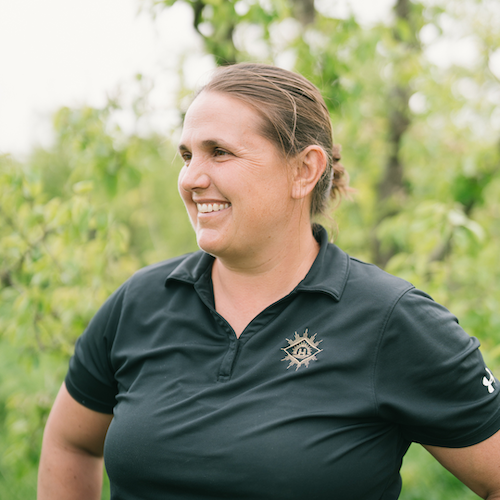
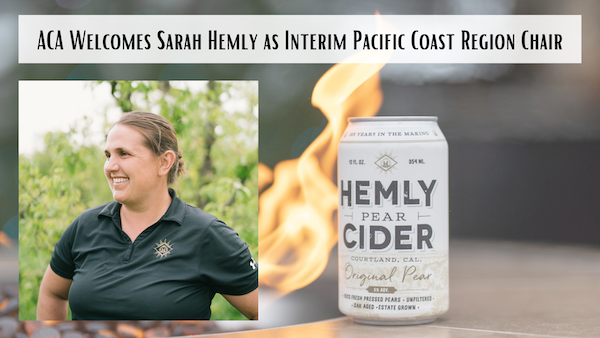
The ACA is happy to announce that Sarah Hemly has been temporarily appointed as the Interim Pacific Coast Chair from November 16, 2022 through to CiderCon 2023. Sarah launched Hemly Cider with Co-Founder Chris Thomson in 2015. The cidery and farm are located in the The Sacramento–San Joaquin River Delta region of Northern California, a unique fruit growing area. Hemly Cider has grown into an award-winning cider company that showcases the fruit grown by the family’s sixth generation pear and apple orchards. Sarah serves full time as President of Hemly Cider as well as on the board of Greene and Hemly, the family orchard and packing company.
Sarah joins as Interim to temporarily fill in for the former regional chair, Nicole Todd of Santa Cruz Cider Company. Nicole served a three year term as the Pacific Coast Chair. She was an engaged member that led with curiosity and courage, and we are extremely appreciative of her service to the American Cider Association the the Pacific Coast member region. We thank Nicole for asking great questions and being a committed member of our team.
ACA Board Nominations Due January 17

Are you full of energy and ideas on how to support the ACA and grow the industry? Perhaps you’d consider running for the ACA Board of Directors? Our annual nomination window is now open. Elections take place during CiderCon–electronically, so all U.S. member cideries may vote (1 vote per cidery). Although it is not required, we strongly encourage candidates to have an ACA volunteer history before running for office. A couple more things to know about service:
- To qualify for candidacy, you must be a permanent employee of a bonded cidery producing cider in the U.S.
- Each seat has unique requirements. The seats open for elections this year are:
- Northwest Chair – Open to Oregon, Washington, Montana, Idaho and Alaska cideries producing under 1 Million gallons of cider a year
- Mountain West Chair – Open to cideries producing less than 1 Million gallons of cider a year in Arizona, Colorado, New Mexico, Nevada, Utah, Wyoming, South Dakota, North Dakota, Kansas, Nebraska, Oklahoma, Texas
- Pacific Coast Chair – Open to California and Hawaii cideries producing under 1 Million gallons of cider a year
- At Large – Open to any U.S. cidery regardless of size
- Large Cidery – Open to any US. cidery producing over 1 Million gallons of cider a year
- Incumbents may be running for their seats again.
- Terms are three years.
- Candidates will receive further instructions on developing their platforms and what board service includes.
Have more questions about board service? Schedule a chat with executive director, Michelle by clicking here.
To submit your nomination by the January 17 deadline:
Register Now for CiderCon 2023 and Win a Hotel Stay for CiderCon 2024


Have you been procrastinating on registering for CiderCon® 2023? If you have, now is the time to do so before registration prices rise and the hotel room block deadline arrives. (Registration prices go up on January 10 and the deadline for our hotel room block is January 8!)
As an added incentive for registering ASAP, we are offering a raffle for a five night hotel stay for CiderCon® 2024 (in a TBA location) for anyone who registers between December 20, 2022 and December 31, 2022 at 11:59pm Pacific Time for CiderCon® 2023 in Chicago.
Ready to register and enter for your chance to win this awesome prize?
Press Then Press Offers Certified Pommelier™ Study Kits
Still studying up for the Certified Pommelier® exam?
The owners of Press then Press, Erik & Storie Madrid, have put together two study kits for those studying for the Certified Pommelier™ exam at CiderCon® 2023. Erike & Storie received their Certified Pommelier™ designations in June of 2022 and have put their expertise to good use by creating these two study kits, including a digital copy of completed sensory analysis forms for each cider so you can compare your answers.
The Minor Kit features 4 cans and the Major Kit features 6 bottles and cans that can be delivered to your door in most states. And Press then Press is offering discounts in case you want to fill up your box with more of their wide-ranging selection of ciders. Do make sure you verify that orders can be shipped to your state before purchasing.
You can download blank sensory analysis forms here so you can take notes as you taste the ciders and then compare to the included digital forms from Press then Press. You can register for the Certified Pommelier™ exam to take place at CiderCon® 2023 on February 1 here.
5 Actionable Strategies to Create a More Profitable Taproom Webinar


In this rapid fire session, the American Cider Association is excited to introduce you to Andrew Coplon and Kary Shumway (Taproom Success). Over just 30 minutes, you will walk away with actionable strategies you can put in place to see greater success in your taproom. Join Andrew & Kary for proven methods to build deeper relationships with guests, increase revenue, and have better financial control. Numbers can be fun! Andrew and Kary will be joined by Megan MacLean (Director of Hospitality at Artifact Cider Project) to share their success from these strategies. Get excited for this pre-CiderCon® webinar and then sign up for the half-day course at CiderCon® 2023.
Live Sensory Analysis Webinar with Two Broads Ciderworks

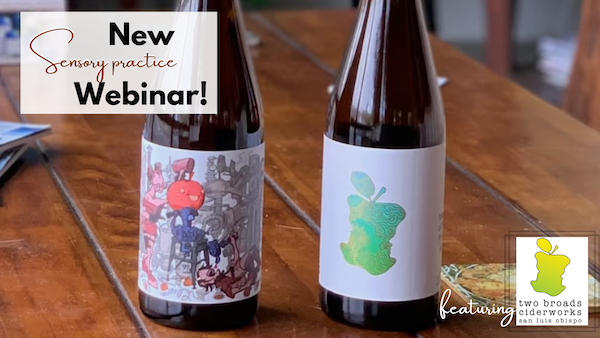
Join our Certified Pommelier™ panel in a live practice sensory webinar featuring cider from Two Broads Ciderworks on December 8 from 4-6pm Pacific. This will be your last chance to participate in a live sensory analysis webinar prior to the Certified Pommelier™ exam at CiderCon® 2023, so sign up now!
This webinar is also available to rewatch and practice as a prerecorded event.
Order cider to participate along with the webinar here. Please make sure the ciders can be shipped to your state before registering for this event.
BevFluence Announces New Campaign and New Benefit for ACA Members

This content is for members only.
If you were a member and are now seeing this message, please Renew your membership to continue.
CiderCon® Scholarships Continue for 2023 Conference


Yonder Cider, Beer Kulture and the American Cider Association have partnered to continue CiderCon® scholarship opportunities this year. These scholarships are designed to bring new BIPOC individuals into the cider industry. The scholarship includes: registration to CiderCon®; travel and lodging; Certified Cider Professional Level 1 bundle (including the exam); two Certified Cider Professional Sensory Webinars; and the registration fee for the Certified Pommelier™ Exam. Applications can be found here and the deadline to apply is December 10, 2022. Recipients will be contacted to schedule a brief interview and winners of the scholarship will be notified on December 21, 2022. CiderCon® 2023 takes place January 31 – February 3, 2023 in Chicago, Illinois.
Cider Share at CiderCon® 2023
Join us for our beloved welcoming reception, Cider Share, at CiderCon® 2023! The Cider Share reception will take place Wednesday, February 1 from 5:00 to 8:00pm.
Haven’t been to a Cider Share before? Here’s what to expect:
50 (yes 50!) cideries from around the country and the world will be serving their ciders for attendees to enjoy. Learn about the ciders from the cidermakers and their staff, meet fellow cidermakers from your region, mingle with other CiderCon® attendees to connect with old friends or make new ones! Cider Share will be limited to 400 people this year so make sure to add Cider Share during the registration process! Tickets are $20.
Want to serve your cider at Cider Share? Here’s how:
Featured cideries will be chosen using a lottery along with considerations of geography and style. If you would like to be considered as a featured cidery at Cider Share 2023, please select that choice during the CiderCon® registration process. The lottery drawing will be held in early December and those selected will be notified via email with further details.
Two Weekend Events on VA Cider Trail
Apples abound this weekend at exciting harvest events taking place at two stops on the Virginia Cider Trail. If you’re looking for a fun family weekend event, there’s no need to look any further than these two appealing harvest festivals. Read on to learn where to go, when to be there, and what will be happening!
22nd Annual Apple Harvest Festival with Albemarle Ciderworks
Date & Time: November 5 starting at 10am
Join Albemarle Ciderworrks for one of the most anticipated festivals of autumn, the Apple Harvest Festival hosted by the CoveGarden Ruritans and Albemarle CiderWorks!
Find farmers’ market vendors, meet local artisans, and craftsmen demonstrating their skills. Enjoy Brunswick stew and apple butter or grab some to go. Dig your teeth into a variety of apples and taste an array of Albemarle CiderWorks’ fine sparkling ciders. Dance the afternoon away with live music from local bands, and take a hayride around the mountain.
Apple Harvest Festival and Makers Market at Sage Bird Ciderworks
Date & Time: November 5 starting at 11am
Join Sage Bird Ciderworks to celebrate their favorite things: apples and fall!
Cider pressing, heirloom and cider apple tasting with Glaize Orchards, a cider release, mulled cider and cider donuts, food trucks, local makers and crafters, and live music will light up the festivities all day Saturday.
ACA Welcomes Wine Industry Professional Sunny Gandara as CiderCon® 2023 Keynote Speaker


The American Cider Association welcomes wine industry professional Sunny Gandara, DipWSET, CWE as the featured keynote speaker for CiderCon® 2023. Sunny is the former Global Wine Director for the Mathew Kenney Restaurant Group and the founder and owner of The Plant Curious Table, a digital dual-purpose education and wine consulting company. Sunny has nearly 20 years of experience in the food and wine industry with a focus on plant-based foods. Her expertise is connecting with “plant curious” clientele over her wine knowledge. She is a Certified Wine Educator and Specialist of Spirits through the Society of Wine Educators and a holder of the WSET Diploma. She is a professionally trained chef through the Institute for Culinary Education (ICE) in New York and a Vinitaly Italian Wine Ambassador.
According to the Plant Based Foods Association, “one-third of Americans are actively reducing their meat and dairy consumption. While a small number of Americans identify as vegetarian or vegan, flexitarians represent the largest growth opportunity for plant-based foods.” 60% of Gen-Z wants to eat more plant-based foods and 79% eat plant-based 1-2 times a week. This is where Sunny’s “plant curious” lens can help open new markets up for cider.
As the keynote speaker, Sunny will explore vegan market growth and trends, who plant-based consumers are, why cider is perfect for this growing group, and how to market to these consumers.
CiderCon® 2023 will take place in Chicago from January 31 to February 3, 2023, at the beautiful Hilton Chicago. Early registration closes November 9. Learn more about all our fantastic speakers at www.ciderassocation.org.
Nielsen Q3 2022 Data Now Available


Regional Cider Brand sales were up 11.3% in U.S. retail channels measured by Nielsen for the 12-week period ending on October 1, 2022. For more Q3 data, log into your ACA membership account and visit our members-only report library.
Spooky Cider Cocktails



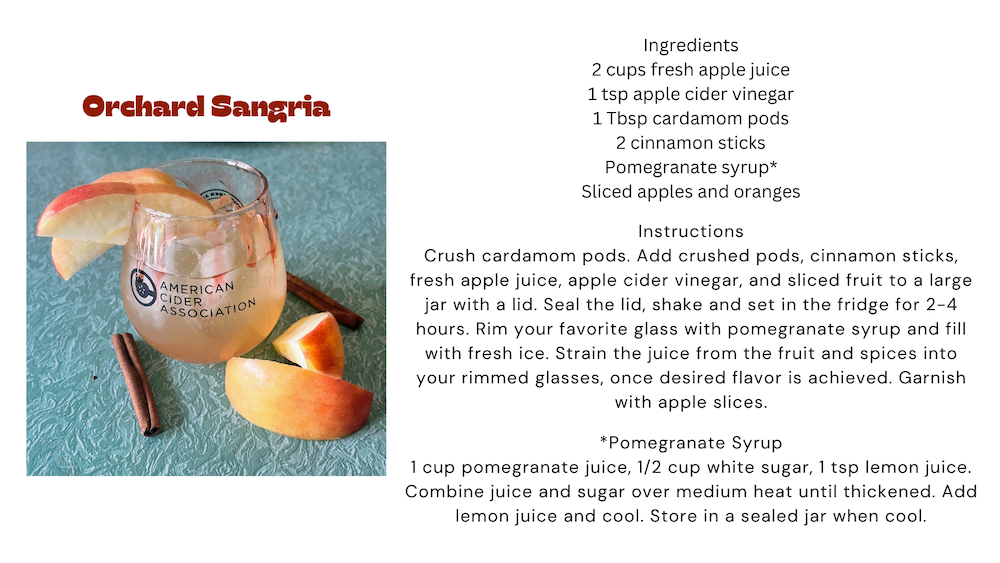
Live Sensory Analysis Webinar with Ploughman’s Cider

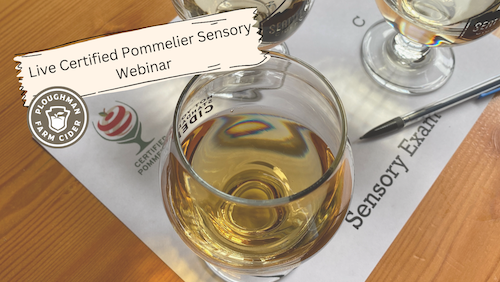
Looking to up your sensory analysis skills? Studying for the Certified Pommelier™ Exam at CiderCon® 2023? Join our Certified Pommelier™ panel in a live practice sensory webinar featuring cider from Ploughman’s Cider on November 17 from 4-6pm Pacific. Cost to attend the workshop is $15 for ACA members and $30 for non-members.
This webinar will also be available to rewatch and practice as a prerecorded event.
Ploughman’s has generously created a limited time Sensory Analysis Bundle for this webinar. You can purchase the cider bundle here.
Virginia Cider Trail Fall Events
Fall has officially arrived and apple harvest season is in full swing across Virginia! To celebrate, cidermakers across the state are hosting harvest festivals, pressing parties and cider release events. They would like to invite you to join in their celebrations of the cidermaking season with orchard parties and more. Check out the list below to find a fun event in your neck of the woods or one further afield if you’re looking for a fall weekend getaway!
- October 14: Harvest Release Party & Foodlore Friday at Troddenvale Cider
- October 15: 6th Anniversary Harvest Party at Blue Bee Cider
- October 15: Pomona Party at Cider From Mars
- October 15-16: Fall Festival at Coyote Hole Ciderworks
- October 15-16: Harvest Fest & Sunday Brunch at Courthouse Creek Cider
- October 15-16: Bryant’s Fall Festival at Bryant’s Cider & Brewery
- October 22: OkTOADerfest 2022 at Blue Toad Hard Cider
- October 22-23: Haunted Trail at Coyote Hole Ciderworks
- October 29: Halloween Street Party at Tumbling Creek Cider Company
- October 29: Halloween Dance Party at Stable Craft Brewing
- October 29-30: Haunted Trail at Coyote Hole Ciderworks
- November 5: 22nd Annual Apple Harvest Festival at Albemarle Ciderworks
- November 5: Apple Harvest Festival & Makers Market at Sage Bird Ciderworks
- November 11: Buskey Hewes Crab Cider Release Party at Buskey Cider
- November 11: Cider Smackdown at Albemarle Ciderworks
- November 12: Apple Butter Festival at Bryant’s Cider & Brewery
- November 12: Lake Anna Cider Festival at Coyote Hole Ciderworks
- November 12: VA Cider Week Kick-Off Party at Cider From Mars
- November 19: Cider & Sides Dinner with Henway Hard Cider
- November 19: Harvest Hoedown at Potter’s Craft Cider
We hope you’ll take the time to visit one or more of these fantastic fall events and learn more about Virginia apples and the ciders made from them. And don’t forget to check in on your Virginia Cider Trail Passport for a chance to earn prizes!
ACA Announces Registration is Now Open for CiderCon® 2023!

The American Cider Association is pleased to announce that CiderCon® 2023 will take place in Chicago, Illinois from January 31 – February 3, 2023. With tours, tastings, educational workshops, demos and more, CiderCon®’s Chicago homecoming is set to be an educational celebration of all things cider. Registration opened on September 29, 2022.
After a four year hiatus, the return of CiderCon® to Chicago has been much anticipated and the ACA has been working with folks on the ground in the Windy City to make the homecoming spectacular. This includes four exciting tour options: a look at Chicago’s history through the lens of taverns, a tour of the Bronzeville neighborhood in Chicago’s historical south side, a tour visiting three unique Chicago-based cideries, and a cider and architecture tour featuring the stunning works of world-famous architect Frank Lloyd Wright.
A full range of educational sessions will cover topics of cider production, marketing, sales, branding, sensory evaluation, compliance, business strategy, orcharding and more. Speakers include Claude Jolicoeur (author of Cider Planet), Yann Gilles (cider and wine consultant from France), Lester Jones (Chief Economist from NBWA), Julie Rhodes (Not Your Hobby Marketing), Mary Mills (3 Tier Beverage), Dr. J Nikol Jackson-Beckham (Brewer’s Association and Crafted for All), Elizabeth Ryan (Hudson Valley Farmhouse Cider), Bryan Roth (Good Beer Hunting), Liz Garibay (Chicago Brewseum), Elizabeth Garofalo (Red Tomato Food Hub) and many more, plus new presenters joining every day.
“We have so many amazing sessions already lined up and others in the works, “ said ACA Executive Director, Michelle McGrath. “We’re emphasizing cider quality, terroir and retail strategy this year. It’s been rewarding to think about the impact of CiderCon® on the industry, and to rise to the challenge of deepening that. CiderCon® is very special and we’re committed to improving it every year.”
The extensive trade show, presented by longstanding ACA partner FruitSmart, will feature many beloved vendors excited for the return of CiderCon® to Chicago and welcome several first time vendors eager to join the cider community and meet conference attendees.
Tickets to CiderCon® are just $425 for for ACA members if booked by October 22. After October 22, member registration rates become $475. Public tickets are $725 for early registration and $775 after October 22.
More information about the wide array of events and educational sessions being offered and registration can be found on the CiderCon® website and you can follow @cidercon on Twitter for the latest news. CiderCon® is an ACA event produced with the generous support of our members and ACA’s premier sponsor, FruitSmart.
###
ACA Joins with Organization to Support USPS Shipping Equity Act

The American Cider Association has been working with organizations across the United States to urge Congress to support the USPS Shipping Equity Act (H.R. 3287/S. 1663).
The U.S. Postal Service is not allowed to ship cider, beer, wine, or distilled spirits, because of a leftover, outdated ban put into effect during the Prohibition era. The result? Restricting options for producers and customers alike, affecting many U.S. cideries where e-commerce is essential for business. The USPS Shipping Equity Act would give parity to the Postal Service, allowing it to ship licensed alcohol for commerce just like FedEex or UPS. Additionaly, the USPS Shipping Equity Act gives rural producers access to another option for shipping alcoholic beverages.
Recently organizations across the country, including the ACA, signed on to a letter sent to members of Congress encouraging them to support the USPS Shipping Equity Act.
Third Exam of 2022 Welcomes Eight New Certified Pommeliers™
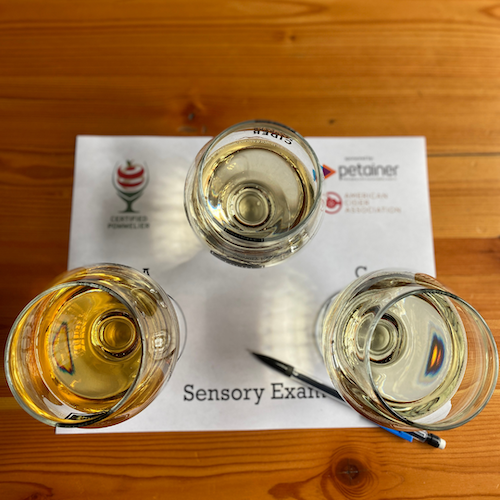

The American Cider Association announced on September 15, 2022 that they awarded eight new beverage professionals with the esteemed title of Certified Pommelier™. The new cohort passed the required exam on August 18 at the Angry Orchard Innovation Cider House in Walden, New York. The new Certified Pommeliers™ are from New York, Virginia, North Carolina and Russia. From New York are Elissa Booth, Joe Gaynor, and Matt Wynkoop of Angry Orchard; Paige Flori of Boutique Wines, Spirits and Cider; Meredith Collins of the blog Along Came A Cider,; and currently residing in New York–cider enthusiast Marina Borsalina from Russia. From Virginia is Joshua Corl of Back Bay’s Farmhouse Brewery, and from North Carolina is cider enthusiast Adam Snyder.
Cider is a beautifully nuanced beverage with a diverse set of elements that are often misunderstood by food and beverage professionals. Certifications are increasingly used in the professional realm to set oneself apart as an individual with specialized knowledge, though cider is often covered in a cursory manner by most certification programs, if at all.
“At the center of what we do at Angry Orchard is innovation, and education is at its core. We were thrilled to host a Certified Pommelier™ exam on the East coast and give more industry members the opportunity to advance their education,” says Will Loughlin, Certified Pommelier™ and Assistant Cidermaker at the Angry Orchard Innovation Cider House. “We see the Pommelier certification as an excellent tool to highlight exceptional individuals, as well as the cider industry as a whole. We’re thrilled to see interest in the exam growing and gaining more standing alongside wine and beer programs.”
The American Cider Association established its Certified Cider Professional (CCP) program in 2016 to educate those on the front-line of cider sales. The program began with a Level 1 certification to help those in the industry develop a fundamental understanding of cider. Recently, the ACA was pleased to celebrate 2000 Certified Cider Professionals.
The Certified Pommelier™ certification was developed to move beyond a fundamental understanding and to encourage cider professionals to think critically while demonstrating a higher understanding of the elements of cider. The rigorous test consists of five types of questions: short answer, fill in the blank, matching, essay and blind sensory (based on tasting).
“The Certified Pommelier™ exam is designed to be challenging, ” says Michelle McGrath, Executive Director of the ACA. “However, accessibility remains important. We’re rolling out more and more study aids in 2022, with a book on the horizon.”
The next Certified Pommelier™ exam is planned for February 1, 2023 at CiderCon® 2023 in Chicago, Illinois. You can learn more and register for the exam at CiderCon® 2023 on the ACA website.
The ACA asks that you contact Cider Education Outreach Manager Jennie Dorsey if you have questions about the program or are interested in taking either the Level 1 Certified Cider Professional test or the Certified Pommelier™ exam. You can also learn more at https://ciderassociation.org/certification.
###
New On Premise Data Reports from CGA

CGA has taken a deeper look at consumers’ recent behavior when it comes to On Premise beverage purchases. They shared these highlights of their recent research:
- On Premise visitation remains relatively static
- 33% are spending more per visit to a bar or restaurant vs. 18% spending less than they were three months ago – price increases have driven the increased spend
- Two in five expect to have to cut back on their future On Premise visits due to cost of living increases
It’s clear that inflation and lingering impacts of the pandemic are having an effect, but the good news is that 9% of bar and restaurant consumers reported cider as their beverage of choice in the last 3 months. Learn more with these reports from our partners at CGA.
ACA Celebrates 2000 Certified Cider Professionals
Cider can be a misunderstood beverage and with its increasing popularity in the United States the American Cider Association felt it was vital to create an education based program that would help those who work on the front line of cider sales speak in a knowledgeable manner about the ciders they’re selling, serving, and supporting. Thus, in 2016 the American Cider Association founded the Certified Cider Professional program (CCP) to educate those in retail and trade about cider. The success of the program is in the numbers. In just six years, 2000 people have become Certified Cider Professionals.
“We couldn’t be more delighted that 2000 have chosen to become Certified Cider Professionals,” says ACA Executive Director Michelle McGrath, “Reaching tastemakers and influencers is part of our broader strategy to increase cider sales and we look forward to watching the ranks of Certified Cider Professionals continue to grow.”
The ACA has continued to improve the CCP program since its inception and now offers a bundle package for those interested in becoming Certified Cider Professionals. The bundle includes a full study guide, an on-demand webinar, and access to the online 60 question exam. There are bulk discounts available for those wishing to get their staff certified and discounted pricing available to ACA members.
In addition, the ACA has developed a second tier Certified Pommelier™ designation. Certified Pommeliers™ must have a fundamental understanding of all topics covered in CCP Level 1, but must also be able to think critically and use the basics to demonstrate a higher understanding of the elements of cider. In order to become a Certified Pommelier™ candidates must sit for an in person exam that consists of five types of questions: short answer, fill in the blank, matching, essay and blind sensory (based on tasting). So far, 38 people have passed the rigorous exam and you can get to know them on the Certified Pommelier™ page.
To learn more about the Certified Cider Professional program you can head to the Certification page of the ACA website. For more information about the program, bulk discounts, and member discounts contact Cider Education Outreach Manager Jennie Dorsey.
CiderCon® 2022 Select Synced Audio Presentations Available to Members

The American Cider Association is please to share that we have six synced audio presentations from CiderCon® 2022 held in February in Richmond, Virginia to share with members. If you missed the presentations or were unable to attend CiderCon® this year, now is your chance to do a little catch-up.
These synced presentations can be found in our Membership Portal, as well as presentation notes from many of the sessions held at CiderCon® 2022. You must be a member to access this information and you will be prompted to login to view the presentations.
Next Certified Pommelier™ Exam Will Be At CiderCon® 2023


TAKE THE CERTIFIED POMMELIER™ EXAM AT CIDERCON® 2023!
Are you ready to take the next step in your professional development in the cider industry? Already passed the Certified Cider Professional Level 1 Certification and looking for that next challenge? Now’s your chance! The American Cider Association is pleased to announce that the next Certified Pommelier™ Exam will be at CiderCon® 2023 in Chicago, Illinois! The exam will take place February 1, 2023 starting at 8:30am at CiderCon® 2023. Read on to learn more about the Certified Pommelier™ Exam and how to prepare, what to expect, and how to register! (P.S. There’s a discount code available for ACA members who want to take the test. You can find that code HERE by logging in to your account.)
WHAT IS THE CERTIFIED POMMELIER™ EXAM?
American Cider Association’s mission is to grow a diverse and successful U.S. cider industry by providing valuable information, resources and services to our members and by advocating on their behalf. One way to fulfill this mission is through the Certified Cider Professional Program–a program aimed at educating the front-line of cider sales (distributors, retailers, bartenders and more!).
The intro-level certification (CCP Level 1) is an online test that can be taken at any time. The more advanced level of certification–the Certified Pommelier™ exam–is a sit-down hand-written exam: part short answer, part essay questions, and part sensory and taste evaluation questions. *CCP Level 1 is a prerequisite for Certified Pommelier.
Certified Pommeliers™ must have a fundamental understanding of all topics covered in CCP Level 1, but must also be able to think critically and use the basics to demonstrate a higher understanding of the elements of cider. The exam consists of five types of questions: short answer, fill in the blank, matching, essay and blind sensory (based on tasting).
The test is meant to be challenging. Studying is highly recommended.
The topics covered in the exam are:
- Apples, the Orchard & History
- Cider Making
- Flavor & Evaluation
- Cider Families
- Keeping & Serving
- Food & Cider
- Social Responsibility
*If a test-taker passes only the written or only the tasting portion of the exam, they are permitted the opportunity to retake the un-passed portion of the exam at a future date (within 18 months).
WHY BECOME A CERTIFIED POMMELIER™?
Cider is a beautifully nuanced beverage with a diverse set of elements that are often misunderstood by food and beverage professionals. Certifications are increasingly used in the professional realm to set oneself apart as an individual with specialized knowledge, though cider is often covered in a cursory manner by most certification programs, if at all. Although there are already more than 1,700 Level 1 Certified Cider Professionals, being recognized as a Certified Pommelier™ will put you in the vanguard of verified advanced cider specialists in this ever growing category.
HOW MUCH DOES THE TEST COST?
For ACA members, the exam is $200 per attempt. There is a discount code that members can access to receive the exam at the membership rate of $200. That discount code can be found here. For non-members, the exam is $275. Should it be needed, test takers can retake future written or tasting portions of the exam at a separate sitting with a 25% discount. Price now includes access to a pre-recorded introductory webinar to the updated sensory form and sample sensory forms from key cider regions. The webinar can be accessed at any point to prepare for your exam.
FAQs
- Are there ID or minimum age requirements to enter the event? YES- You must be 21 or older and you must provide an ID to prove you are who you say you are.
- Do I need to pass the level 1 CCP exam to take the Certified Pommelier™ test? Yes. Passing the Level 1 CCP exam is a prerequisite. If you have not yet taken the Level 1 exam, you can purchase the Level 1 bundle on demand HERE. The bundle includes an on-demand webinar, study guide, and access to the online exam.
- What can I bring into the event? Nothing may be brought into the exam room. Cell phones must be left at the door. Pencils and drinking water will be provided.
- How can I contact the organizer with any questions? Please contact CCP contributor and proctor Jennie Dorsey at jennie@ciderassociation.org.
- What’s the refund policy? We will refund test takers up two weeks before the exam.
- Is there a training workshop? This is not a workshop, but an exam only. Once you register for your exam, study materials including webinars and study guides will be emailed to you. There is also a dedicated Facebook Group (that is open for all to join) with prep materials and in depth peer conversations. STUDY! We highly recommend interviewing cidermakers and cider tenders to help prepare. Blind tasting flights are also good prep. In addition, two new upcoming sensory webinars will be released in fall of 2022 and available for purchase.
- Is it ok if the name on my ticket or registration doesn’t match the person who attends? If you are transferring registration to another person, please email us in advance.
- Is there a tasting section on the test? Yes. You will be asked to evaluate ciders from multiple cider families.
- How long does the test take? You are given 2 hours to complete the theory portion of the exam and 1 hour and 30 minutes to complete the sensory portion. There will be a 15 minute break in between exam portions.
Refund and Opt Out Policy
Refunds will be offered up to 2 weeks before the exam.
Any purchaser can opt out of the exam up to 72 hours prior to scheduled time. If opt out is chosen, another exam date must be chosen within 18 months. No refunds will be given.
ACA To Hold August 18 Certified Pommelier™ Exam in New York
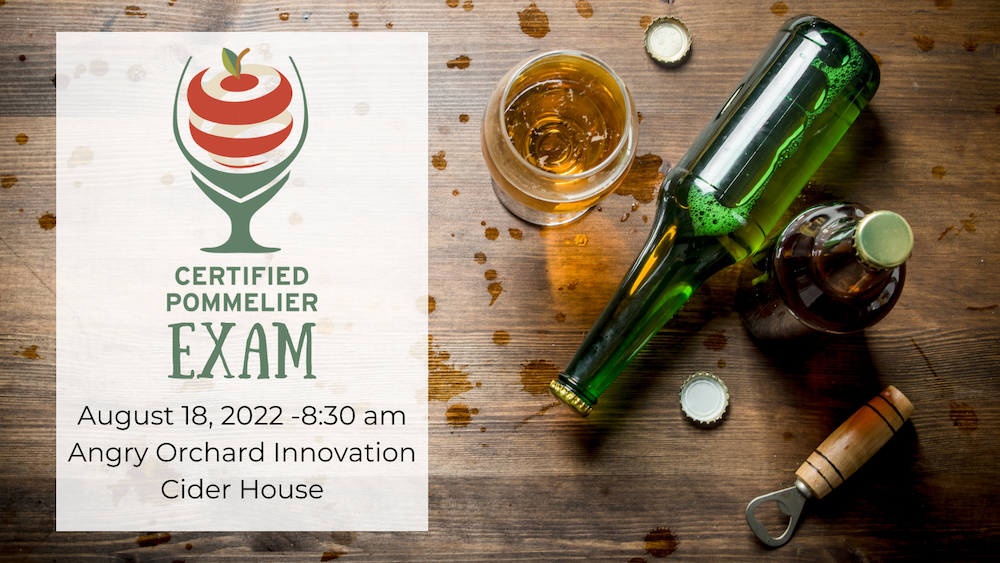
The American Cider Association (ACA) will be holding their third Certified Pommelier™ exam of 2022 in Walden, New York on August 18 at the Angry Orchard Innovation Cider House. Cider’s popularity has dramatically increased in the last several years, but that doesn’t mean the food and beverage community understands this exciting beverage category. That’s why the ACA created a way for food and alcohol industry professionals to, not only gain knowledge and expertise, but also to prove their cider knowledge through our Certified Cider Professional program (CCP).
“At the center of what we do at Angry Orchard is innovation, and education is at its core. We’re thrilled to host a Certified Pommelier™ Exam on the east coast and give more industry members the opportunity to advance their education,” says Will Loughlin, Certified Pommelier™ and Assistant Cidermaker at the Angry Orchard Innovation Cider House. “We see the Pommelier™ Certification as an excellent tool to highlight exceptional individuals, as well as the cider industry as a whole. We’re thrilled to see interest in the exam growing and gaining more standing alongside wine and beer programs.”
There are two levels of certification available in the CCP program. Level 1 CCP is designed for people who would benefit from a deeper but still introductory level of cider knowledge. The ACA has created a bundle that includes an on-demand webinar, study guide, and two online test attempts. The more advanced Certified Pommelier™ test covers more in depth cider knowledge, including sensory evaluation. Successful completion of Level 1 CCP is required to sit for the in-person Certified Pommelier™ exam.
“We really want people to learn about cider and see what a nuanced and exciting beverage it is. That’s why we’ve created study guides, reading lists, webinars, and a Facebook group to help people study for the Certified Pommelier™ exam. It is rigorous, but we want to set people up to succeed,” states Jennie Dorsey, ACA Cider Education Outreach Manager.
If you are interested in learning more or sitting for the exam, you can head to the ACA’s Certification website or contact Jennie at jennie@ciderassociation.org.
###
ACA Welcomes 9 New Certified Pommeliers™


The American Cider Association is thrilled to announce that for the second time in 2022, nine people have passed the Certified Pommelier™ exam. The exam was held June 20 in Seattle, Washington at Seattle Cider Co. The new Certified Pommeliers™ are Sara Cravens of 2 Towns Ciderhouse, Nick Hill of Puget Sound Cider Co., Timothy Powers of Commonwealth Wine School, Dave Klawer of Alma Cider, Kate Pinsley and Suzannah Klaniecki of Schilling Cider, cider enthusiasts Storie & Erik Madrid and cider influencer Alexsis Cassady (@ciderminded).
Cider is a beautifully nuanced beverage with a diverse set of elements that are often misunderstood by food and beverage professionals. Certifications are increasingly used in the professional realm to set oneself apart as an individual with specialized knowledge, though cider is often covered in a cursory manner by most certification programs, if at all. This led the American Cider Association to establish its Certified Cider Professional (CCP) program to educate those on the front-line of cider sales.
The Certified Cider Professional program began with a Level 1 certification to help those in the industry develop a fundamental understanding of cider. The Certified Pommelier™ certification was developed to move beyond a fundamental understanding and to encourage cider professionals to think critically while demonstrating a higher understanding of the elements of cider. The rigorous test consists of five types of questions: short answer, fill in the blank, matching, essay and blind sensory (based on tasting).
“The Certified Pommelier™ exam is designed to be challenging, ” says Michelle McGrath, Executive Director of the ACA. “However, accessibility remains important. We’re rolling out more and more study aids in 2022, with a book on the horizon.”
The next Certified Pommelier™ exam is planned for August 18, 2022 in Walden, New York at the Angry Orchard Innovation Cider House and will be the last opportunity to take the test before CiderCon® 2023 in Chicago, Illinois in February 2023. You can learn more and register for the New York exam on the ACA website.
The ACA asks that you contact Cider Education Outreach Manager Jennie Dorsey if you have questions about the program or are interested in taking either the Level 1 Certified Cider Professional test or the Certified Pommelier™ exam. You can also learn more at https://ciderassociation.org/certification.
Space Still Available for CiderCon® 2023 Trade Show
The American Cider Association is seeking vendors to join our CiderCon® 2023 Trade Show. CiderCon® is the premier conference for cider industry professionals in the United States, drawing around 1000 attendees annually and we’d love to have your company join us.
Are you a business selling goods or services that would be beneficial to cidermakers? Do you know a company or type of product or service you would like to see at CiderCon® 2023? Let us know by filling out this contact us form.
Space is limited and booths are filling up quickly, so be sure to reach out to our Trade Show Coordinator Ellen Husch via this contact us form to learn more about booth space and sponsorship opportunities.
2022 Apple Crop Outlook
It’s time once again to share what we’ve heard from extension agents and orchardists around the country about this year’s apple crop. Initial reports were taken in April with a follow-up from some folks in June.
Dr. Nikki Rothwell – Michigan State University Extension
April 27: We have had a slow start to spring here in Michigan, which many growers prefer compared to the wild seasons we have had in the recent past. Trees are waking up slowly, and we are gaining growing degree days at a limited rate. The seasons where we see large swings between early warm ups followed by drastic drops in temperatures are much more concerning with the apple crop. Growers are still pruning, bucking brush, and waiting for warmer weather. Some growers in the southern part of the state have made copper applications with the warm weather over the past weekend (23-24 April). We have also had much more rainfall than our typical early springs, so growers have not been as active within the orchard with the wet soils. According to our MSU Climatologist, more wet and cooler weather are in the forecast through the middle part of May. Thus far, have not seen any frost events that would be greatly reducing the crop. There is a cold overnight predicted tonight (27 April), but most temperatures are not going to be so cold as to damage flower blossoms. We will continue to keep an eye on the weather throughout the spring.
The current apple crop in Michigan is looking good at this time. However, as growers know, there is a long way to go until harvest. Our fellow growers in Utah and Washington state have provided reports of cold weather and snow, but no official estimates are out yet. The demand for apple fruit across the U.S. is likely to be good, particularly with the ongoing situation in Ukraine and Russia. One of the major issues is availability of fertilizers this spring. Again, the conflict in eastern Europe has disrupted the nitrogen supplies, and both Russia and Belarus are the second and third largest producers of potash. In addition to fertilizer shortages, there are transportation issues, which may disrupt the availability of both raw and finished products. There have even been reports of chemical container cap shortages! We are recommending that growers worth with their agrichemical representatives to secure products that will need this season. With the cold weather, insects and disease pressure has been low. However, if the predictions are correct and wetter weather will continue to be around this season, we may see increased amounts of pests and diseases.
June 16 Update: I can add that we had very cool conditions during thinning, so we may have to do some hand thinning later this season. The overall apple crop looks good, and we have had some well timed rains that have helped out a lot. Despite the relatively dry weather, we are starting to see apple scab show up. Not a lot of fireblight with the cool weather at bloom.
Katrina Mendrey & Zachariah Miller – Montana State University Western Agricultural Research Center
April 27: Trees are just starting to wake up across Montana. Many trees are still recovering from our big freeze in October 2020, so we expect a light crop in cultivars like Marie Menard, Major, Golden Russet and Harrison. The cold hardier cultivars like Hewes Virginia Crab, Binet Rouge and Muscadette de Dieppe are looking great after a relatively mild winter. We have had a slightly cooler spring than usual, but this may have been to our advantage as we had temps as low as 10F on 4/13/22 at the Western Ag Research Center in Corvallis, MT. At the station most of the trees were still in silver tip except for the HVC, Wickson and Chestnut crabapples which were all approaching tight cluster. We have seen about 20% damage to the king blossom in Hewes Virginia Crab, but little damage otherwise. Just nature helping us thin!
June 20: The cider trees at the station seem to have come through the spring cold just fine. There’s the typical variation in crop load with alternate baring, but there were dense blooms on the trees that are in a bearing year. For the later blooming cultivars, the weather was hot during bloom and that elevated the risk of fireblight. The MT growers that I talked to were managing fireblight well. We’ll see the impact on production over the next few weeks.
Greg Peck – Cornell University
New York had a fairly average winter with cold temperatures that extended into the spring. Bloom dates in the central and northern parts of the State were inline with long-term averages. There were no major spring frost events in New York’s main apple growing regions. However, there were several days during bloom when temperatures were exceptionally warm (>85 ºF), providing excellent pollination conditions. Immediately after bloom many growers were feeling very optimistic about the crop. However, those warm days allowed for the bacteria that causes fire blight to rapidly multiply and many cider apple growers have since reported that they have a considerable amount of fire blight infections in their trees. This is despite the fact that there were minimal precipitation events, which is usually needed to cause a fire blight infection. The fire blight outbreak has spared many farms around the State, but I’ve heard reports of fire blight in every region. For those with infected trees, the damage is considerable. Both organically and conventionally managed orchards are affected this year, showing the difficulty in managing this lethal disease. At Cornell’s research orchard in Ithaca, as well as many other farms in New York, we now have streptomycin resistant strains of Erwinia amylovora (the bacteria that causes fire blight). This means that streptomycin, the predominant antibiotic that is used to prevent fire blight, is no longer effective. Streptomycin resistant Erwinia strains had already become common in Washington and Michigan, but had previously only been found on a few farms in New York. I suspect that these resistant strains are becoming more commonplace in New York and are in part the cause of the 2022 outbreak.
The early part of the growing season was exceptionally conducive to plant growth. There was plenty of soil moisture from the excessive precipitation received in 2021 combined with warm temperatures. These conditions exacerbated the fire blight infections in many trees. For those farms that weren’t battling fire blight, the early season was idyllic. Apple scab, which is the most economically important fungal disease in this region, was very manageable and I have seen very few infections in either conventional or organic orchards. Last year’s extreme rain events have become a distant memory, as many parts of New York head into drought conditions. Without additional rainfall, orchards in New York can expect smaller than usual fruit. However, this may also result in higher sugar contents in the juice, similar to what New York experienced in 2020. Going from extreme precipitation in one year to drought the next has been a predicted result of climate change in our region. These predictions are now a reality as apple growers must manage producing apples with both too much and too little water.
With the exception of farms that have suffered fire blight infections, I suspect that New York’s apple crop will be near to average in volume. High tannin cider apples are still in short supply as they are not widely grown yet, but there should be plenty of apples overall.
Jake Mann – 5 Mile Orchards, Corralitos, California
June 21: The 2021 harvest was a light one. Not surprising, as we were overdue for a biennial down year after great yields in 2018/2019/2020. When we closed up the cold storage after picking Granny Smith (the last variety harvested), the large rooms were definitely not full to the doors as in years past. Though we had more robust sales in-season to cideries and fresh market, there was no denying it had been a lean year. Our extra irrigation through summer did help size-up the fruit that had set (we normally only irrigate once), and pickers were still able to place their ladders and fill bins quickly. Many cheers to our great team of foremen/women, ace mechanic, cold storage maintenance gurus, neighboring apple growers, and the community that supports our care of these remaining apple forests while providing fruit and juice to folks across the state.
Fast forward to June of 2022 and my current mantra is “Always. Be. Thinning.” The trees are loaded, and I can’t be anywhere near one without popping extra fruit off the clusters that are weighing down branches. Spring’s unreal bloom turned into a heavy fruit set. We dodged frosts, hail, and any excessive warm rains that would promote scab growth. Evidence of insect pests is minimal so far. Always keeping an eye out, ready to react, but also observing how our continued customs of orchard management are keeping this fruiting ecosystem in balance.
We accumulated a normal / minimum requirement of chilling hours and precipitation over the winter. Irrigations began in early June, starting with a newly-leased organic orchard that has a nice block of McIntosh (an uncommon variety here) all on semi-dwarf, tightly planted, ladder-free, short trees. (A fresh “rompecabezas” (“head-breaker”) …a term our foremen use when referring to the puzzles of a new orchard.) We’ll move into the giant seedling rootstock Newtown Pippins with 30’ sprinkler pipe at the beginning of July for their annual deep watering from shared wells in the neighborhood.
Gravensteins are starting to show stripes and are pushing off their “June drops”. I caught the first whiff of a ripening apple on the ground this week. Overwhelming, and quickens the pace toward the first harvests that will begin in less than 2 months. Fingers crossed, we might need all the bins this year.
Renae Moran – University of Maine
June 16: Conditions for apples in general are good in Maine. In the southern half of the state, bloom occurred with higher than normal temperatures and good pollination conditions. This was followed by cold temperatures during the thinning window. Many orchards had excessive fruit set, so I was worried about getting good thinning during the prolonged cold weather. Orchards at the Highmoor Farm experiment station are starting to show effective chemical thinning. In the north, pollination conditions were less favorable with cool temperatures and wind. Fruit set appears to be adequate in orchards in the central part of the state.
Fireblight seems less problematic than in past years. Weather during the regular bloom time was drier than normal. Late blooming cider varieties may show signs of fireblight since rain was more frequent during their bloom phase. Bloom sprays of streptomycin or other antibiotics is now routine for most growers, so I expect fireblight to remain under control.
Marcus Robert – Tieton Cider Works
June 15: In Central Washington late frost events and recent wind and rain conditions has adversely affected the crop volume. Overall stone fruit crop will be down substantially from previous years. The apple crop will also be lower than previous years. Biennial bearing trees have shown lowered return bloom and hail events in the northern area has decreased the crop. Pears seem to be holding their own so far. They have made it through the worst of the cold and crop load seems to be average.
Megan Muehlbauer – Rutgers University
June 15: New Jersey has had several frost events early in the spring that have cause significant fruit loss in early/mid-blooming varieties. Of the varieties that made it to full bloom, most of them had a very protracted full bloom (1-2 weeks). In general, the later blooming hard cider varieties have made it through the spring without damage and the crop outlook looks good. In terms of disease, some apple scab has been observed on several of the hard cider varieties in the Rutgers University variety trial (Pittstown, NJ) this year.
Dr. Chris Gottschalk – USDA ARS, Appalachian Fruit Research Station
May 16: The growing season for 2022 is off to an exciting and nerve-racking start at the Appalachian Fruit Research Station (AFRS) in Kearneysville, WV. Bloom kicked off with the majority of pear varieties entering full bloom during the week of April 11th. Unfortunately, a chilly overnight temperature of 21˚F was observed on March 29th. The cold temperatures resulted in an estimated 50% blossom death to the most advanced pear varieties (Fig. 1). Mid- to late-blooming pear varieties survived the night with potentially minimal loss of 20% or less of blossoms. Wild apple species, interspecific hybrids, and cultivated varieties began to bloom during the week of April 18th. Traditionally, apple bloom at the station during the first week of May. We are about one week ahead of schedule for historic apple bloom dates in our area. The apples also did not sustain any damage due to the cold temperatures in late March as their development is delayed compared to pear. Pollinators, especially native bee species such as Blue Orchard Bee (Osmia lignaria), have been abundant and active this season. Pears are beginning to display signs of fruit set with fruitlets starting to appear and apples are at anthesis during the week of April 25th. We are anticipating average to high yields for both crops at AFRS.
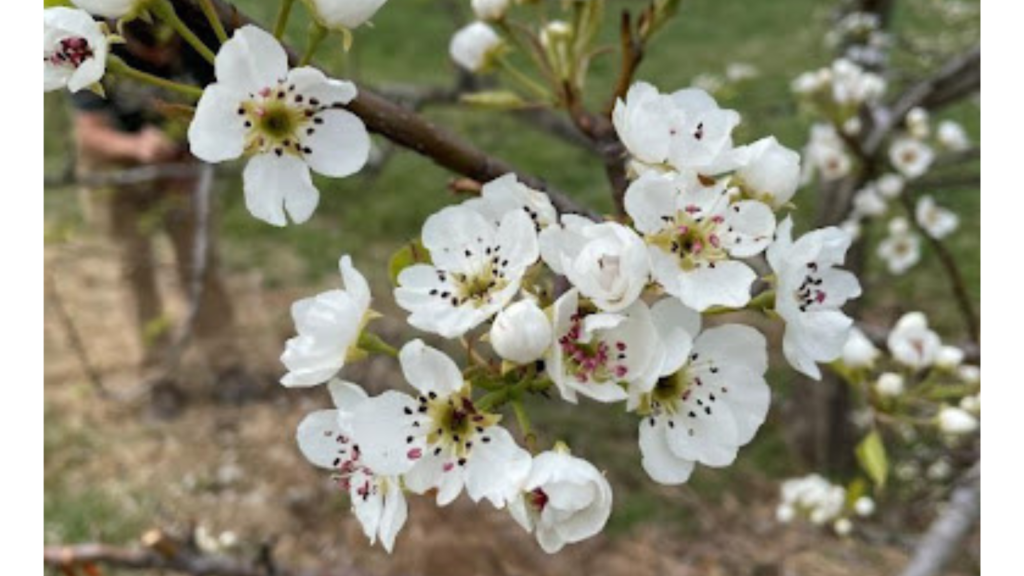
Nik Wiman – Oregon State University
April 22: We have had a very cool spring with one of the wettest Aprils on record so far. We had a rare snow in early April and some unseasonably cold temperatures throughout the month. At the North Willamette research and Extension Center in Aurora OR where our research cider apples are located we had multiple days with below freezing temperatures and a low temperature of 28 F, but we have not seen much damage to apple bloom. We anticipate good fruit set and ample soil moisture going into the growing season. We have had almost 5 inches of rain in April through the 22nd, so we are a bit concerned that there has not been a lot of time for the bees to work. Just short windows between the rain storms and cold temperatures. Probably the late blooming varieties will fare better than the early bloomers this season.
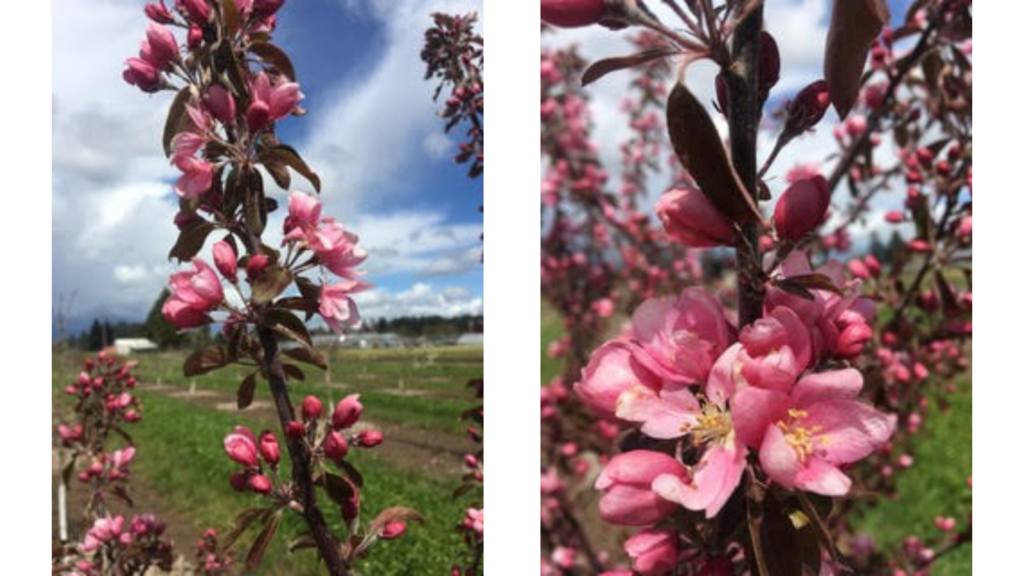
Why to Become a Certified Pommelier™


There are a plethora of reasons why we think folks should become Certified Pommeliers™ but don’t take our word for it. Hear from some of our Certified Pommeliers™ why they decided to take the Certified Pommelier™ exam and find out how you can sign up for our next exam in Walden, New York on August 18, 2022!


What will your reason be to take the Certified Pommelier™ exam?
Your next chance to take the Certified Pommelier™ exam is coming up on August 18, 2022 at the Angry Orchard Innovation Center in Walden, New York.
In depth study in required to pass the Certified Pommelier™ Exam. Study aides are available here and anyone interested in taking the exam should take advantage of these learning aides and also join the Certified Pommelier Study Group on Facebook here.
The cost for the exam is $200 for non-ACA members, and $125 for members. Members can find the coupon code to use during checkout here. You will be prompted to log in first.
For more information on the exam or if you have questions please contact our Cider Education Outreach Manager Jennie Dorsey.
ACA Launching New Digital Virginia Cider Trail
Participants will be able to check in to participating cideries for a chance to win prizes including a cidery Airbnb stay at Chesapeake Bay
On July 6, The American Cider Association, is launching a digital Virginia Cider Trail to encourage Virginians and visitors to explore the Commonwealth’s hard cideries and celebrate Virginia’s unique apples. The American Cider Association is the official organization of cider and perry producers in the United States representing cideries across 44 states and DC. They are working closely with the Virginia Cider Association to highlight the incredible ciders and apples made in the state.
The digital Virginia Cider Trail is a free program that all Virginians or visitors of age 21 and over can sign up for. The mobile exclusive passport is a curated collection of 29 Virginia cideries, with many offering unique deals and discounts that guests can redeem during visits. The trail is a year-long offering that will run through June 25, 2023, and more cideries are expected to join throughout the year.
Participating cideries include:
- Albemarle CiderWorks, North Garden
- Big Fish Cider Co., Monterey
- Blue Bee Cider, Richmond
- Blue Toad Hard Cider Cidery & Event Barn, Roseland
- Bold Rock Nellysford Cidery, Nellysford
- Bryant’s Cider, Richmond
- Bryant’s Cider & Brewery, Roseland
- Buskey Cider, Richmond
- Ciders From Mars, Staunton
- Corcoran Vineyards & Cidery, Waterford
- Courthouse Creeks, Maidens
- Coyote Hole Ciderworks, Mineral
- Ditchley Cider Works, Kilmarnock
- Halcyon Days Cider Co, Natural Bridge
- Henway Hard Cider, Bluemont
- Lost Boy Cider, Alexandria
- Moss Vineyards, Nortonsville
- Mt. Defiance Cidery and Distillery Cider Barn, Middleburg
- Old Hill Cider, Timberville
- Old Town Cidery, Winchester
- Potter’s Craft Cider, Charlottesville
- Sage Bird Ciderworks, Harrisonburg
- Sly Clyde Ciderworks, Hampton
- Stable Craft Brewing, Waynesboro
- Sugar Hill Cidery, Norton
- The Winery at Kindred Pointe, Mt. Jackson
- Tumbling Creek Cider Company – Taproom, Abingdon
- Widow’s Watch Cider, Edinburg
- Wild Hare Cider Cabin, Leesburg
- Winchester Ciderworks, Winchester
“The new digital cider trail is a great opportunity for Virginians and visitors alike to experience all the wonderful cideries in the Commonwealth in an easy, mobile-friendly way,” said Michelle McGrath, executive director of American Cider Association. “Participants don’t even need to download an app. When they sign up for the cider trail, their pass can be saved to their phone’s home screen for easy one-tap access.”
The platform will use geospatial technology that will allow users to simply check in and record visits to count towards prizes and redeem any available special discounts. The first 100 people to check in to 10 locations will win a “Virginia is for Cider Lovers” medal. Each check-in also enters users into a grand prize raffle for a chance to win a cidery Airbnb stay at the end of the year or a Virginia Cider Trail hooded sweatshirt at the end of each quarter.
“Those who opt in to participate in the trail have a whole year to explore all corners of this beautiful cider-rich state. We love the opportunity to get more people familiar with Virginia apples and the cider made from them – and why it’s so special,” said McGrath.
Funding for this project was made possible by the U.S. Department of Agriculture’s (USDA) Agricultural Marketing Service through grant 21 SCBPVA1060-00. Its contents are solely the responsibility of the authors and do not necessarily represent the official views of the USDA.
For more on the Virginia Cider Trail and participating cideries, visit Virginia Cider Trail (ciderculture.com).
###
Cider Cocktails created by Jennie Dorsey

Grapefruit & Sage Cidermosa
Fill glass 3/4 with your favorite dry acid forward sparkling cider
Shake and strain on top:
2 oz. fresh grapefruit juice
1 oz. sage infused simple syrup
3 dashes bitters
Garnish with grapefruit and sage

Red Berry Refresher
Shake and strain over fresh ice:
Juice from 1/2 lemon
1 Tbsp strawberry jam
Fill glass with a dry raspberry cider
Garnish with a strawberry and a lemon twist

Earl of Orange
Build over ice:
2 oz. cooled Earl Grey tea
1 oz. zero proof triple sec
1 oz fresh orange juice
Top with favorite barrel aged cider
Garnish with an orange and thyme
ACA Members Raise Over $7000 for Berryland Cidery
The American Cider Association is pleased to announce that events hosted by ACA members raised over $7000 to help support the efforts of Berryland Cidery to rebuild.
Berryland Cidery is an award-winning Ukrainian cidery, fruit winery and meadery located near Kyiv. In March 2022 Berryland was bombed beyond recognition by Russian troops. Berryland’s owner and cidermaker Vitalli Karvyha is committed to rebuilding. To support Vitalli, cideries and cider industry friends across the United States held events to raise funds to help.
Events were held by Press then Press LLC, Slyboro Ciderhouse, Meriwether Cider, Courthouse Creek Cidery, Liberty Ciderworks, OK Cider Co., Blue Bee Cider, Houston Cider Company, Keepsake Cidery, Ash & Elm Cider Co., Spring Hill Cider Works, Eden Specialty Ciders, 2 Towns Ciderhouse, Lassen Traditional Cider, Space Time Mead & Cider Works, Seattle Cider Company, and Cider Summit.
“We were delighted with the number of events held across the United States to help Vitalli rebuild Berryland,” stated Michelle McGrath, Executive Director of the American Cider Association. “It really shows the camaraderie amongst people in the cider industry, not just here in the United States, but around the world.”
Individuals wishing to support Vitalli in his effort to rebuild Berryland Cider can contribute to this GoFundMe campaign.
Additional Ways to Help Ukraine
Polish cidery Kwasne Jablko has multiple relief efforts underway both in Poland and in Ukraine. Currently, owner Marcin Wiechowski purchased a sprinter van and has organized deliveries of humanitarian supplies. Each week, they buy what is needed and volunteer drivers make the run into Ukraine to deliver them where they are needed.
In addition, Kwasne Jablko is currently supporting 70 refugees. 12 of the refugees are living on their cider farm, while the cidery has rented flats and houses for the others. They assist in job searches, support them financially, and assist in everyday problems that arise.
After hearing about the work Kwasne Jablko has been doing, Eleanor Leger, ACA Board President and owner of Eden Ciders made the decision to begin collecting money to send to Marcin to help him with purchasing and transport. He has set up a special account for the aid work he is doing. If anyone is interested in contributing, please contact Eleanor at eleanor@edenciders.com for more information and details on how you can help.

ACA Advocates for Ice Cider Standards
The board of the American Cider Association recently send a letter to the L’Association des Industries des Cidres et Vins de fruits de l’UE (AICV), or the European Cider and Fruit Wine Association urging them to recognize the precedent for the definition of Ice Cider (Cidre de Glace) set by the government of Quebec, Canada.
The AICV is currently in the process of developing marketing standards for Ice Cider/Apple Ice Wine in Europe and the ACA board felt it was timely to urge that the organization adopt the definition set by the government of Quebec, where the style of cider originated in the 1990s as the standard definition.
The definition is as follows: “Ice Cider” – cider obtained by the fermentation of juice of apples that has a pre-fermentation sugar content of not less than 30° Brix achieved solely by natural cold, producing a finished product with a residual sugar content of not less than 130 g per litre and an actual alcoholic strength of more than 7% by volume but not more than 13% by volume.”
This definition has been accepted by the ACA and by GLINTCAP and the required use of natural cold weather for cryo-extraction or cryo-concentration is enforced by our U.S. Federal Alcohol & Tobacco Tax & Trade Bureau (TTB) with respect to labeling.
You can read the full letter from the ACA board here.
ACA Announces New Certified Pommelier™ Exam
The American Cider Association is pleased to announce an additional opportunity in 2022 for folks wishing to take the Certified Pommelier® Exam. The exam will be held at the Angry Orchard Innovation Cider House in Walden, New York on August 18, 2022 starting at 8:30am.
The Certified Pommelier™ certification was developed to move beyond a fundamental understanding and to encourage cider professionals to think critically while demonstrating a higher understanding of the elements of cider.
In depth study in required to pass the Certified Pommelier™ Exam. Study aides are available here and anyone interested in taking the exam should take advantage of these learning aides and also join the Certified Pommelier Study Group on Facebook here.
The cost for the exam is $200 for non-ACA members, and $125 for members. Members can find the coupon code to use during checkout here. You will be prompted to log in first.
For more information on the exam or if you have questions please contact our Cider Education Outreach Manager Jennie Dorsey.
CiderCon® 2023 – Call for Proposals

CiderCon® is the world’s premier networking and educational event for the professional cidermaking community. CiderCon® 2023 will take place in Chicago, Illinois from January 31 – February 3, 2023.
We invite presentation proposals from qualified experts who meet the criteria of being able to educate cidermakers, apple growers, cidery owners, retailers, wholesalers, marketers and other cider industry professionals about best practices, new trends, research, and improving processes.
Successful proposals will state clearly:
-Target Audience – role in industry as well as business model.
-Also include if material is best for beginner/intermediate/ or advanced audience members.
-Educational Goal – what skill, tool or new understanding will attendees walk away with?
COMMITMENT TO INCLUSION
We are committed to ensuring CiderCon® is a safe and welcoming space for all regardless of race, ethnicity, age, gender, disability or sexual preference. We strongly encourage BIPOC, LGTBQIA+, veterans and speakers with disabilities to submit proposals.
Additionally, we invite speakers from outside but related industries to cider. Our industry will be strengthened with fresh perspectives.
Particular topics of interest we seek applicants for through this RFP: Compliance, Branding, Marketing, Distributor Relationships, Chain Retail Sales, DtC Sales, Market Trends, HR, Finance, Operational Safety, Team Leadership, Equity & Inclusion.
Proposals are due to the CiderCon® committee by June 17. Approved speakers receive a complimentary pass to CiderCon® which includes lunch for 2 days.
ACA Announces June Dates for Virginia Cider Ed Road Show
The American Cider Association (ACA) is hitting the road to partner with Virginia cideries and chefs to teach food and beverage professionals about the diversity and versatility of Virginia hard ciders. Workshops will be held in Alexandria, Charlottesville, Richmond, and Hampton during the week of June 6-9, 2022. The events will be free, but sign up is required to participate in these introductory cider education sessions.
Each workshop will be tailored to the cidery and city where it’s taking place with a focus on exploring ciders made with Virginia grown apples, crafting trendy cider cocktails, and mastering delicious cider pairings. Jennie Dorsey, a Certified Pommelier™ and the Cider Education Outreach Manager for the ACA, will be leading the cider learning, tasting and pairing experiences.
The ACA hopes to draw a wide swathe of participants from the food and beverage industry, including bartenders, servers, kitchen staff, distributors, bottle shop owners, and anyone else interested in learning more about cider.
“This is a great opportunity for Virginians to learn more about the cider being made here and help support the growth of the industry in Virginia and beyond,” says David Glaize, a Virginia apple grower and cidermaker who was recently elected to the ACA board of directors.
The ACA is able to offer this opportunity through a grant from the USDA Agricultural Marketing Service, in partnership with the Virginia Department of Agriculture and Consumer Serves and the Virginia Wine Board.
“We see education as vital to the continued growth of the cider industry across the United States. We hope that these events will be something we can recreate in states across the country to help educate food and beverage professionals about cider,” comments ACA Executive Director Michelle McGrath. “But there is something very special about Virginia’s cider–the apples,” she added.
Learn more about the Virginia Cider Ed Road Show and sign up for one (or more) of the events at: https://ciderassociation.org/virginia-cider-ed-road-show/. If you have questions about the Road Show or other cider education opportunities please contact Jennie Dorsey at jennie@ciderassociation.org.
###
ACA Announces Results of Inaugural Harvest Driven Cider Survey
Cider is a beverage category, not a beverage style. This is a leading rallying cry by the American Cider Association, who recently released the results of their new annual survey looking at the segment of cidermakers making cider once a year during harvest season much like a winery. The survey was undertaken in an effort to measure the size and growth of these makers, which the ACA names as harvest driven cideries. These ciders are usually made by small producers, are typically packaged in glass bottles, and are sold through channels that are usually not measured by retail scanner data providers such as IRI. The survey revealed 2021 was a year of significant growth for US harvest driven cidermakers.
For the purposes of the survey, harvest driven cidermakers are defined as those who make 75% of their cider with apples or pears that are pressed at or close to their harvest date and aged at least 3 months prior to packaging. Michael Uhrich of Seventh Point Analytic was chosen to undertake creating and analyzing the survey results.
The conclusion is that the harvest driven cider segment is small but growing. Nearly one million gallons of harvest driven cider was produced in 2021 alone. The harvest driven cider segment share grew by one third from 2020 to 2021, from 1.8% to 2.3% of the US domestic cider market. Production of harvest driven cider also increased dramatically from 2020 to 2021 with an average production increase of 26%.
“This corner of the cider market has been around for decades and has produced some of the more storied brands in our industry, yet we have never had a mechanism for measuring its growth and progress. We are excited to release these first results of what will be an annual survey, and celebrate the growing success of this segment,” says Eleanor Leger, board president of the ACA.
Uhrich also looked at packaging, club, fruit and channel trends for the segment. Uhrich’s webinar report is available to ACA members, but there is a Harvest Driven Cider Fact Sheet available for download here. Please contact Executive Director Michelle McGrath with any questions regarding the harvest driven cider survey process or results.
VinoShipper 2021 Sales Trends Data
This content is for members only.
If you were a member and are now seeing this message, please Renew your membership to continue.
DtC Shipping Compliance: Get to Know the Basics Webinar

For many producers, direct-to-consumer (DtC) shipping is top of mind these days, with ever-increasing consumer expectations for online ordering and shipping of just about everything — not to mention the pandemic’s continued impacts on the on-premise trade.
DtC shipping is a great channel for growth, but cider producers entering the market must account for key compliance concerns to succeed in DtC shipping while avoiding the fines and other penalties that can result from non-compliant shipping.
Please join us for a look at DtC shipping compliance essentials for cideries. Topics will include:
- The current state of shipping cider direct-to-consumer
- The rules that govern DtC shipping, from licensing requirements to tax remittances
- How cider producers can create effective and compliant DtC shipping programs
Webinar attendees will gain a basic understanding of DtC shipping laws and how to apply them to their own programs.
Our Speaker:

Alex Koral, Regulatory General Counsel, Sovos ShipCompliant Based in Boulder, Colorado, Alex is Regulatory General Counsel for Sovos ShipCompliant, where he serves as lead legal researcher for beverage alcohol regulation and has become a leading expert in DtC shipping laws and interstate distribution of alcohol. He has spoken on the topic at many industry events including meetings for the National Council of State Liquor Administrators, National Liquor Law Enforcement Association, DISCUS, ACSA and Craft Brewers Conference. Alex has been in the beverage alcohol arena since 2015, after receiving his J.D. from the University of Colorado Law School.
Meet Your Board Member: Christine Walter
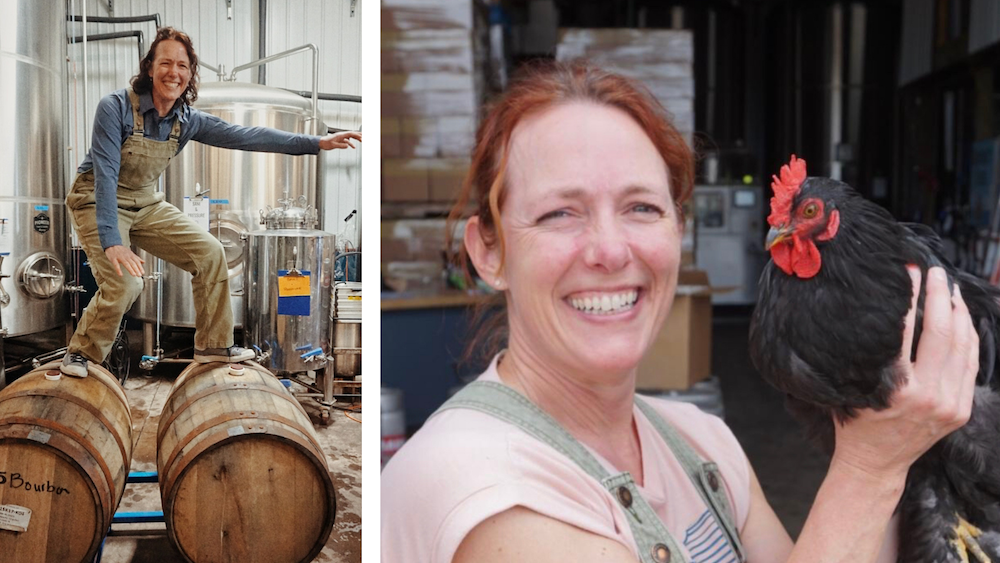
Where do you work and what is your position?
I am the owner and head cidermaker at Bauman’s Cider in Gervais, Oregon. I started the company in 2015, making cider on my family’s farm.
Tell us about your family farm/orchard.
My Great Great Grandmother Elizabeth homesteaded the original property back in 1895, having come from Austria-Hungary by way of North Dakota, with her two sons. Today we have nearly 1000 acres under cultivation, and about a dozen family members playing one role or another in farming, operating the farm store, and now, making cider!
We grow a wide variety of crops, including many cane berries, hazelnuts, fruits and vegetables. Currently we have about 22 acres of apple orchards.
How did you get into cider?
The first time I drank a bottle of cider was around 2013. I was on a fishing trip in rural Alaska and the beer selection was pretty slim. I ordered an Angry Orchard and it literally shocked me that it was basically fermented apple juice. Upon returning home to Portland, I began searching out all of the local craft options and just fell in love. I immediately started trying to convince my family that one of them should make cider on the farm with our own juice. In attempting to make the case for cider, I met makers and heard their stories, and began taking home gallon jugs of my family’s cider, experimenting and developing recipes.
My cousins didn’t get the cider bug right off, the way I did. But I convinced them to trust me and let me get a license and start with a little corner of one of the barns. Now I can’t get enough space and I take more than half of the apples grown on the farm to make cider, and I love it!
Why did you decide to run for a position on the board?
I really appreciate the role that the ACA plays in advocating for cidermakers. It is really important work and mustn’t be taken for granted. In my short tenure as a cidermaker, I have seen some really significant changes to the rules regarding land use, alcohol production and labeling, and taxation. Those changes don’t happen on their own, and not without a lot of work and planning from people who really care about the industry. I want to be part of that work. If we don’t fight for our own interests and values, no one will.
Additionally, I see that webinars and events like CiderCon® are what shape the future of the industry in keeping cidermakers and cider sellers at the top of their games professionally and educationally. If we are all left in our own little islands of knowledge and experience, we miss out on a lot of growth opportunities. CiderCon® is a big part of what will keep us as an industry moving forward, growing, adapting and innovating.
What are your hopes for the future of the US Cider Industry?
Of course I want to see it continue to grow, but also to be seen as a success story with regard to adaptation to changing climate and market conditions. We are perfectly poised to thrive. Apples have an amazing and diverse biological history. They have stood the test of time again and again, both through natural evolution as well as human-aided adaptation and hybridization/breeding programs. I hope that cidermakers can be as resilient and creative as an industry as our dear fruits have shown to be.
How do you describe your cider region?
I feel pretty darned fortunate to be from the Pacific Northwest. We not only have a nearly rogue sense of adventure, but the market supports this level of innovation and aversion to staunch traditionalism. Just as nature favors adaptation and evolution, the craft beverage market in this beautiful corner of the US appreciates and even demands that we always push the edge of what has been done before, in search of new frontiers of culinary and beverage experience.
At the risk of seeming irreverent, the culture of cider in the PNW can be said to take traditional methods and turn them on their heads, or maybe interpret them through a lens of kaleidoscope.
What’s your favorite apple to work with and why?
That’s a big old three-way tie between Porter’s Perfection, McIntosh, and Mountain Rose (aka Airlie Red). And even in saying this terribly non-committal response, I feel guilty for not saying Yarlington Mill, or Golden Russet, etc. I’m not good with decision making. Maybe my favorite apple is the one I’m picking or fermenting right at the moment…and I spent yesterday mulching my McIntosh trees, then cracked a bottle of last season’s McIntosh SV, so we can say that one for today.
What is your favorite cider/food pairing?
Ok, I think I can commit here: CHEESE! and most any cider. One specific favorite combo is a French Comte and a juicy acidic Porter’s Perfection Cider.
What is your favorite nature/cider pairing?
Summer paddle boarding on the river with dear friends, sipping a Cosmic Crisp by 2 Towns (in a life jacket.) Doesn’t get much better.
What would you like our members to know about you that they might not know?
Once I spent the night in a hammock, alone, in the jungle of Tikal, Guatemala so that I could watch the sunrise from the top of Temple IV. I am certain that the only reason I was not eaten or attacked by wild animals was that they were in complete awe at my stupidity. I could see their eyeballs watching me.
Nielsen 2021 Data Insights Webinar

Nielsen 2021 Data Insights Webinar – April 27, 2022 at 11:00am Pacific
Join the ACA and Nielsen for a review of 2021 Off-Premise cider trends with Nielsen. Nielsen VP Jon Berg will share sales trends by packaging, flavor, style and region. We will also look at the insights provided by our newest report with Nielsen, a comparative consumer panel study. We’ll identify cider’s strengths and areas for growth regarding consumer demographics, and we’ll compare it to wine, beer, FMBs and cocktails.
About the Speaker
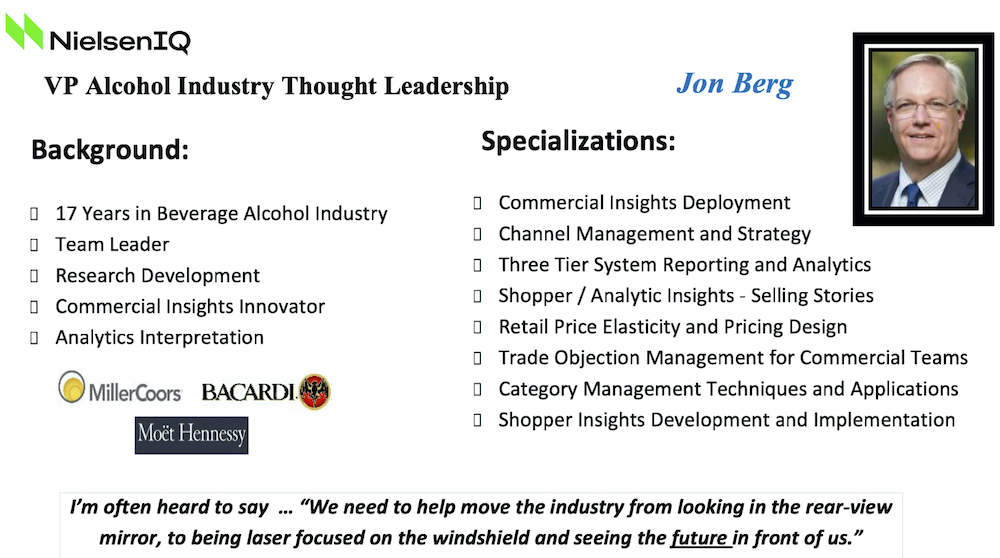
You must be an active ACA member to attend this webinar. You can join or renew your membership here.
Ekos Cider Business School March 29

Our friends at Ekos are very excited to bring Cider Business School back for its third consecutive year! Join Ekos CEO Josh McKinney for an hour-long webinar exploring the state of the cider industry and providing a crash course on business management best practices. Attendees can expect to learn about:
- Technology adoption trends for cider businesses
- Streamlining team communication
- Driving efficiencies across your business
- Tips for increasing revenue
Meet Your Board Member: David Glaize
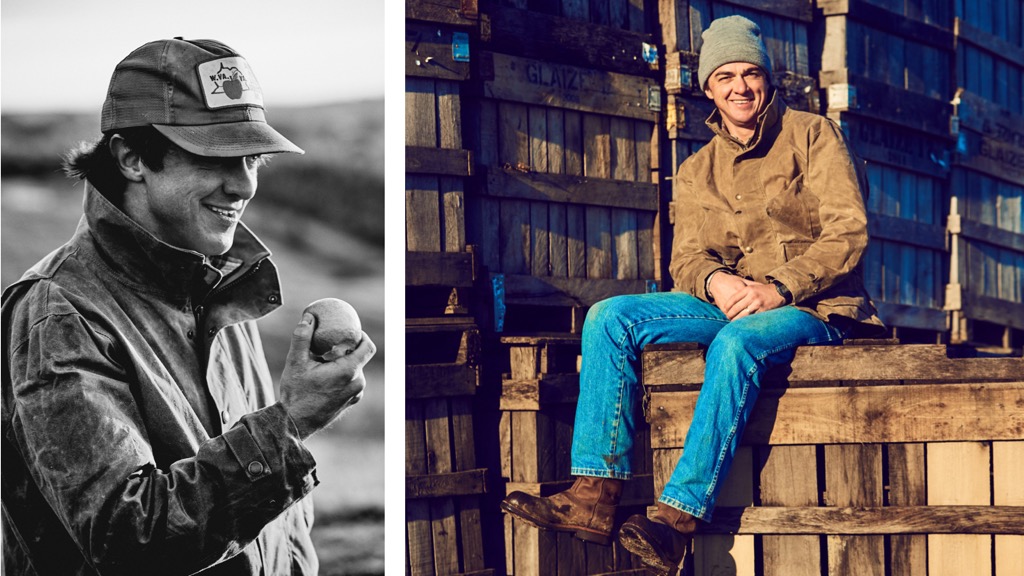
Where do you work and what is your position?
Co-owner of Glaize & Brother Juice Co. and Old Town Cidery
Tell us about your family farm/orchard
Glaize Apples are grown in the beautiful Shenandoah Valley of Virginia. Since the early 1900s, four generations of Glaizes have added to the history of premium fruit harvests between the Blue Ridge and Allegheny Mountains
How did you get into cider?
In 2012 my brother and I convinced our dad to top work existing trees into cider specific fruit. Around that same time I started experimenting with 5 gallon carboys and fell in love with the natural chemistry, and history, of the process. In 2017 we put in a juicing facility to service the cider/wine/beer industry with fresh pressed juice. In 2019 we hired a cidermaker (Stephen Kelly), and in 2020 launched Old Town Cidery.
Why did you decide to run for a position on the board?
I wanted to represent our region not only as a cidery but also as a grower. I want to help promote the growth of cider but also the expansion of apple orchards. It is important for me to keep the land in apples and working directly with cideries, orchardists, and law-makers can help achieve that goal.
What are your hopes for the future of the US Cider Industry?
I want to see the US Cider Industry continue to grow and establish itself as a leading producer of top notch cider throughout the world. We also need to better understand the demand for fresh juice vs concentrate, and the global supply/scale of apples and concentrate. The US Cider Industry has potential to play a large role in helping promote sustainable growing/juicing practices.
How do you describe your cider region?
Our cider region is dense with apple varietals, rich in history, and very complex. Virginia offers mass produced sweet ciders, fruity adjunct ciders, and also traditional single varietals of heirloom fruit. Virginia is home to some of the oldest apple varieties in the US, and some would argue Virginians were the first to drink, and perfect, the craft.
What’s your favorite apple to work with and why?
The Idared and Black Twig. The Idared is one of the first to come off the trees so it is early to the press. It is my favorite to ferment. Its flesh is straight white and loaded with fruity notes plus the perfect touch of acidity. The Black Twig is one of the last apples we pick and stores very well in cold storage. It showcases a thick body with an earthy aroma that is hard to find in any other apple. Both the Idared and Black Twig produce amazing single varietals, but also do well blended.
What is your favorite cider/food pairing?
In my eyes, it all pairs well together. I’m not too picky when it comes to food nor drink. But if I had to say something, it would be pork.
What is your favorite nature/cider pairing?
Its hard to beat drinking a cider while walking through the orchard that helped produce it.
ACA Welcomes 9 New Certified Pommeliers™
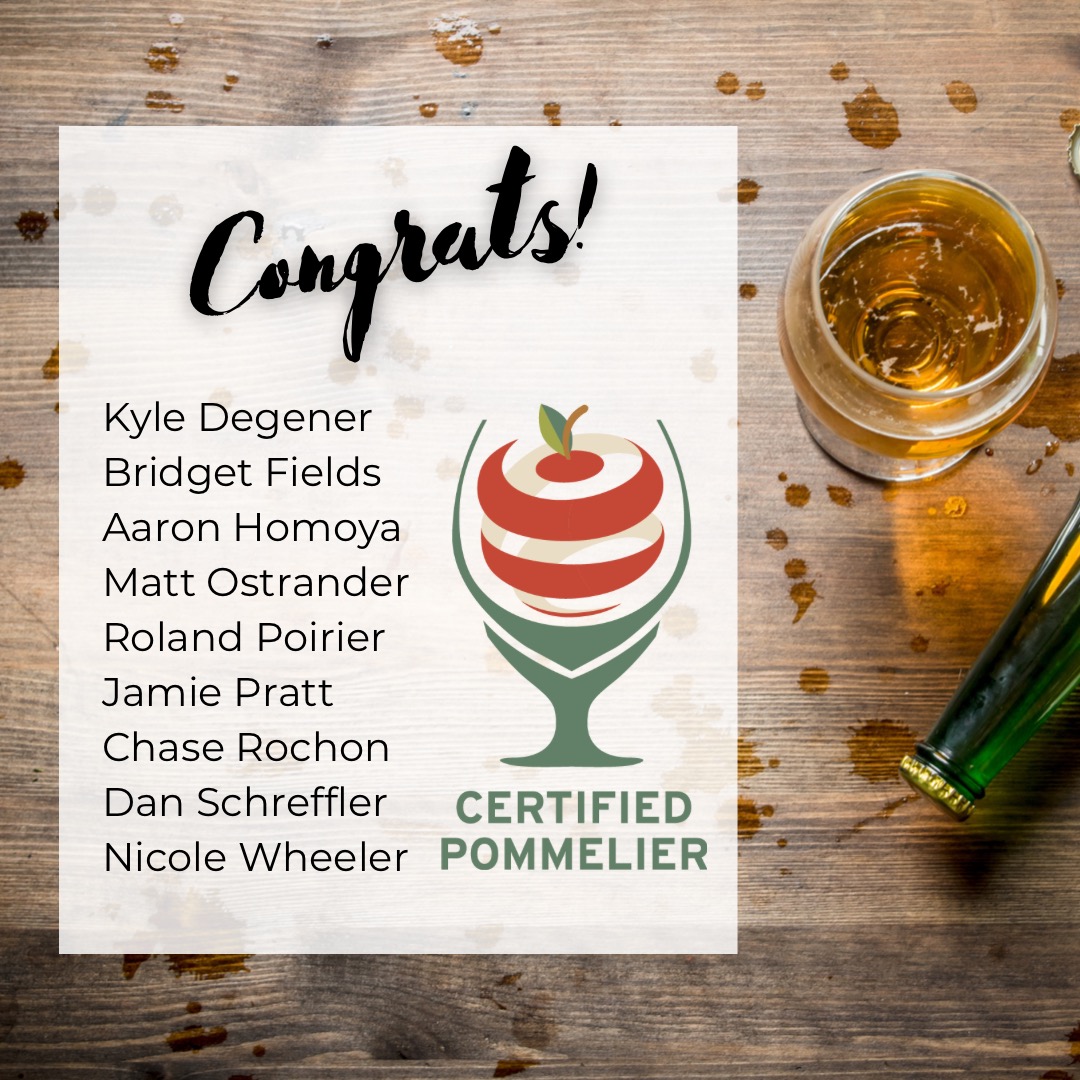
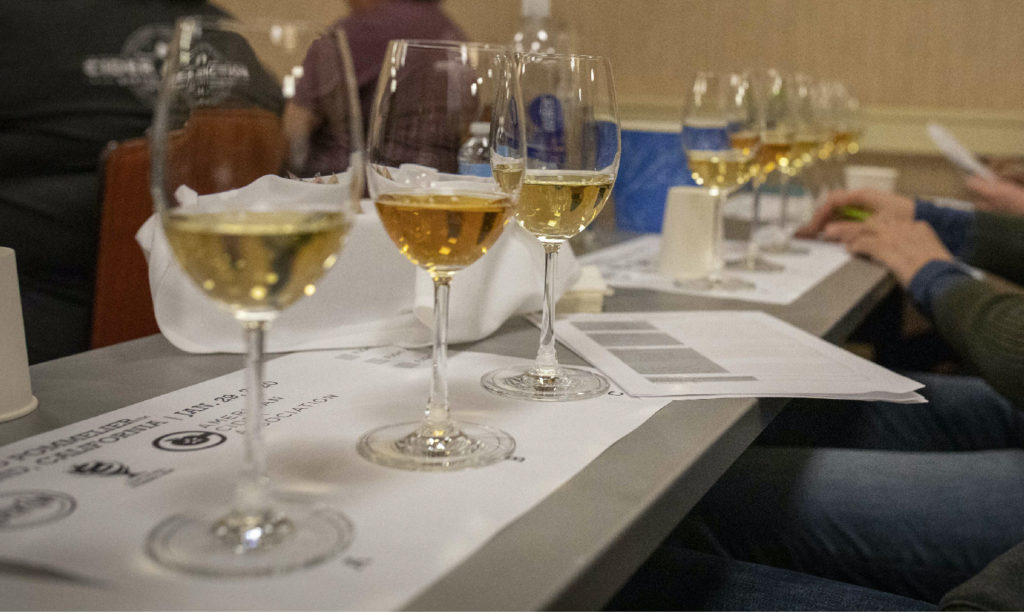
ACA Welcomes 9 New Certified Pommeliers™ to the Ranks of Cider Experts
The American Cider Association is pleased to announce that nine people passed the Certified Pommelier™ exam taken in February at CiderCon® 2022 in Richmond, Virginia. Newly Certified Pommeliers™ are: Matthew Ostrander of Ibantik Craft Beverages (UT), Dan Schreffler of Space Time Mead and Cider Works (PA), Chase Rochon of Craft Curbside (ME), Jamie Pratt of Liberty Ciderworks (WA), Nicole Wheeler of Treehorn Cider (GA), Aaron Homoya of Ash & Elm Cider Co (IN), orchardists Kyle Degener from Holy Beez Orchard, (KY) and Roland Poirier (NY), and cider aficionado Bridget Fields (DC). This is the largest cohort of successful exams on both cider theory and evaluation of the four exams offered to date.
Cider is a beautifully nuanced beverage with a diverse set of elements that are often misunderstood by food and beverage professionals. Certifications are increasingly used in the professional realm to set oneself apart as an individual with specialized knowledge, though cider is often covered in a cursory manner by most certification programs, if at all. This led the American Cider Association to establish its Certified Cider Professional (CCP) program to educate those on the front-line of cider sales.
The Certified Cider Professional program began with a Level 1 certification to help people obtain a fundamental understanding of cider. The Certified Pommelier™ certification was developed to move beyond a fundamental understanding and to encourage cider professionals to think critically while demonstrating a higher understanding of the elements of cider. Preparation for the exam demands months, if not years, of study and practice evaluating cider.
“The Certified Pommelier™ exam is designed to be rigorous. ” says Michelle McGrath, Executive Director of the ACA. “However, accessibility remains important. We’re rolling out more and more study aids in 2022, with a book on the horizon.”
The next Certified Pommelier™ exam is planned for June 20, 2022 in Seattle, Washington, and the ACA will announce one more test opportunity before CiderCon® 2023 in Chicago, Illinois.
The ACA asks that you contact Cider Education Outreach Manager Jennie Dorsey if you have questions about the program or are interested in taking either the Level 1 Certified Cider Professional test or the Certified Pommelier™ exam. You can also learn more at https://ciderassociation.org/certification.
###
Open That Cider Bottle February 26
Open a special bottle of cider this Saturday, February 26, 2022!
This Saturday, February 26 is Open That Bottle Night. Open That Bottle Night was started back in the year 2000 by two Wall Street Journal columnists, Dorothy J. Gaiter and John Brecher. Held on the last Saturday in February of each year, this day encourages folks to open up that special bottle and share memories.
While they may have been talking about wine, we know that there’s a lot of special bottles of ciders with great stories sitting on shelves and in cellars just waiting to be opened and have their stories told. So we’re asking you to open one of those special bottles and share your cider bottle story on Instagram.
Is it a bottle from the first batch you ever made? Does it have a unique apple variety that you’ve been wanting to try? A cider you stumbled upon while on vacation? A cider gift from a friend that you’ve been saving? A cider that you fell in love with the first time you tried it and had to add it to your collection?
Silly or poignant, we want to hear them all! Tell us and the world your cider bottle story and post it to Instagram with the hashtag #openthatciderbottle this Saturday, February 26, 2022!
BeerBoard’s Hard Cider Trends Webinar Recording
This content is for members only.
If you were a member and are now seeing this message, please Renew your membership to continue.
Certified Pommelier™ Exam June 20, 2022 in Seattle
TAKE THE CERTIFIED POMMELIER™ EXAM JUNE 20, 2022 IN SEATTLE, WA
Are you ready to take the next step in your professional development in the cider industry? Already passed the Certified Cider Professional Level 1 Certification and looking for that next challenge? Now’s your chance! The American Cider Association is pleased to announce a new date for those interested in sitting for the Certified Pommelier™ Exam! The next Certified Pommelier™ Exam will take place June 20, 2022 from 7:30-11:30am at Seattle Cider Co. in Seattle, Washington. Read on to learn more about the Certified Pommelier™ Exam and how to prepare, what to expect, and how to register! (P.S. There’s a discount code available for ACA members who want to take the test. You can find that code HERE by logging in to your account.)
WHAT IS THE CERTIFIED POMMELIER™ EXAM?
American Cider Association’s mission is to grow a diverse and successful U.S. cider industry by providing valuable information, resources and services to our members and by advocating on their behalf. One way to fulfill this mission is through the Certified Cider Professional Program–a program aimed at educating the front-line of cider sales (distributors, retailers, bartenders and more!).
The intro-level certification (CCP Level 1) is an online test that can be taken at any time. The more advanced level of certification–the Certified Pommelier™ exam–is a sit-down hand-written exam: part short answer, part essay questions, and part sensory and taste evaluation questions. *CCP Level 1 is a prerequisite for Certified Pommelier.
Certified Pommeliers™ must have a fundamental understanding of all topics covered in CCP Level 1, but must also be able to think critically and use the basics to demonstrate a higher understanding of the elements of cider. The exam consists of five types of questions: short answer, fill in the blank, matching, essay and blind sensory (based on tasting).
The test is meant to be challenging. Studying is highly recommended.
The topics covered in the exam are:
- Apples, the Orchard & History
- Cider Making
- Flavor & Evaluation
- Cider Families
- Keeping & Serving
- Food & Cider
- Social Responsibility
*If a test-taker passes only the written or only the tasting portion of the exam, they are permitted the opportunity to retake the un-passed portion of the exam at a future date (within 18 months).
WHY BECOME A CERTIFIED POMMELIER™?
Cider is a beautifully nuanced beverage with a diverse set of elements that are often misunderstood by food and beverage professionals. Certifications are increasingly used in the professional realm to set oneself apart as an individual with specialized knowledge, though cider is often covered in a cursory manner by most certification programs, if at all. Although there are already more than 1,700 Level 1 Certified Cider Professionals, being recognized as a Certified Pommelier™ will put you in the vanguard of verified advanced cider specialists in this ever growing category.
HOW MUCH DOES THE TEST COST?
For ACA members, the exam is $125 per attempt. There is a discount code that members can access to receive the exam at the membership rate of $125. That discount code can be found here. For non-members, the exam is $200. Should it be needed, test takers can retake future written or tasting portions of the exam at a separate sitting with a 25% discount.
FAQs
- Are there ID or minimum age requirements to enter the event? YES- You must be 21 or older and you must provide an ID to prove you are who you say you are.
- Do I need to pass the level 1 CCP exam to take the Certified Pommelier™ test? Yes. Passing the Level 1 CCP exam is a prerequisite. If you have not yet taken the Level 1 exam, you can purchase the Level 1 bundle on demand HERE. The bundle includes an on-demand webinar, study guide, and access to the online exam.
- What can I bring into the event? Nothing may be brought into the exam room. Cell phones must be left at the door. Pencils and drinking water will be provided.
- How can I contact the organizer with any questions? Please contact CCP contributor and proctor Jennie Dorsey at jennie@ciderassociation.org.
- What’s the refund policy? We will refund test takers up two weeks before the exam.
- Is there a training workshop? This is not a workshop, but an exam only. Once you register for your exam, study materials including webinars and study guides will be emailed to you. There is also a dedicated Facebook Group (that is open for all to join) with prep materials and in depth peer conversations. STUDY! We highly recommend interviewing cidermakers and cider tenders to help prepare. Blind tasting flights are also good prep.
- Is it ok if the name on my ticket or registration doesn’t match the person who attends? If you are transferring registration to another person, please email us in advance.
- Is there a tasting section on the test? Yes. You will be asked to evaluate ciders from multiple cider families.
- How long does the test take? You are given 2 hours to complete the theory portion of the exam and 1 hour and 30 minutes to complete the sensory portion. There will be a 15 minute break in between exam portions.
Refund and Opt Out Policy
Refunds will be offered up to 2 weeks before the exam.
Any purchaser can opt out of the exam up to 72 hours prior to scheduled time. If opt out is chosen, another exam date must be chosen within 18 months. No refunds will be given.
Cider Production Survey
Please fill out the 2021 Cider Production Survey!
The American Cider Association would appreciate your help in aggregating production information for U.S. cideries for 2021. We collect this information in order to help advocate for cidermakers with Congress, the media, and buyers.
This survey will take about 20 minutes to complete. This survey is being collected by an independent third party who has agreed not to share information with us that might identify who you or your cidery are, and to only share aggregate data with us. YOUR PRIVACY MATTERS TO US.
Your cidery name is collected by the 3rd party to ensure there are no duplicates, but the ACA will never see that information.
We do ask a number of questions about sales and production for 2021. You will find it helpful to have that data handy before completing the survey. Thank you for taking the time to complete this survey! Note: If you produce wine or other beverages besides cider, please answer only considering your cider production.
Deadline extended to Thursday, March 10, 2022! Fill out the survey now before time runs out.
ACA Annual Membership Meeting – March 29, 2022
The American Cider Association is pleased to invite our members to join us for the Annual Membership Meeting. The meeting will take place Monday, March 29, 2021 at 10:00am Pacific via Zoom.
We will take a look at last year’s accomplishments, review our strategic plan, and let you know what’s in the works for the year ahead. We look forward to virtually seeing all of you and hearing your ideas for how we can promote the US cider industry.
You must be an Active ACA Member to participate in the Annual Membership Meeting. You can log in, join, or renew your membership here.
We will provide you with the Zoom link prior to the beginning of the meeting on March 29, 2022.
Harvest Driven Cider Segment Survey Report Webinar
Join us March 1, 2022 at 12:00pm Pacific for analyses of the harvest driven cider segment of the cider industry. Harvest driven cider makers are defined as those for whom 75% of their annual cider production is are pressed once per year at or close to the date of harvest and are aged for a minimum of three months prior to packaging. Because this segment of the cider industry is often smaller producers who don’t sell in markets captured by Nielsen data or retail data scanner providers like IRI, the American Cider Association decided to launch an annual harvest driven cider survey. This inaugural survey was undertaken by Michael Uhrich of Seventh Point Analytic Consulting. He has taken a deep dive into the data to suss out the current status of the harvest driven cider segment and will present these results with us in this webinar.
This webinar is for ACA members only. You can log in, join, or renew your membership here.
Registration closes February 28, 2022 at 1:00pm Pacific. Information to join via Zoom will be sent after registration closes on February 28, 2022.
Urge Congress to Replenish the Restaurant Revitalization Fund
While we appreciate Congressional support for the Restaurant Revitalization Fund, it is clear that cideries and others in the hospitality industry are still in need of additional support. Submitted claims far outstripped what was provided in March 2021 by approximately $50 billion. Refilling the RRF is an important step in the hospitality industry’s recovery from the COVID-19 crisis.
New bipartisan legislation provides much-needed economic relief to the hospitality industry, including restaurants, bars, cideries, and other craft alcohol businesses with tasting rooms. With fewer Americans dining out, traveling, or gathering for events, these businesses have seen dramatic declines in revenue and struggled to reopen. Through this legislation, eligible entities may receive grants to help cover payroll, mortgage or rent payments, utilities, operational expenses, and other eligible expenses.
We’re asking Congress to provide relief to hospitality businesses still struggling to survive, and we need your help. After Congress established the Restaurant Revitalization Fund (RRF) last spring, the initial round of funding left 177,000 eligible businesses without a penny of relief.
According to research by the National Restaurant Association, the RRF saved more than 900,000 jobs at restaurants that received grants. Their estimates indicate that fully funding the RRF will save more than 1.6 million restaurant jobs.
Congress is weeks away from considering a spending bill for all government operations. It’s critical that this package include additional support for the RRF!
Join us in urging your Members of Congress to support additional funding for the Restaurant Revitalization Fund (RRF) by passing the Continuing Emergency Support for Restaurants Act (S. 2675)!
Webinar: BeerBoard’s Hard Cider Trends

BeerBoard’s Hard Cider Trends Webinar February 22, 2022
Join Dillon Card and Jim Randall from BeerBoard for the newest on-premise insights for cider with national and regional breakdowns, including competitive style and product performance data. This webinar will take place Tuesday, February 22, 2022 at 12:00pm Pacific on Zoom. Zoom link will be provided the day before the webinar.
This webinar is for active ACA members only. Join now or renew your membership!
CiderCon® 2022 Fact Sheet
- The 12th Annual CiderCon® took place in Richmond, Virginia from February 1 to February 4, 2022. This was a return to an in-person event after holding CiderCon 2021 in a virtual space. CiderCon® is the American Cider Association’s annual event. This year’s theme was Southern Cider.
- On the main two days of the conference, 37 workshops presented information on 8 tracks. The tracks were: apples and orcharding, cidermaking, flavor and terroir, sales and distribution, marketing and trends, better business, legal and compliance, and history. The schedule can be downloaded here.
- 36 states and DC were represented with Virginia, New York, Washington, California, Oregon, and Pennsylvania sending the most attendees.
- 805 people attended the conference, and there was an increase in the number of regular ticketed attendees participating compared to the last in-person conference in Oakland, CA in January 2020.
- This year’s trade show featured 73 vendors including several veterans from past CiderCons®, as well as an impressive number of first time exhibitors who were excited to meet professionals from cider’s growing industry.
- James Beard finalist and multi-nominee Diane Flynt of Foggy Ridge Cider was the event’s keynote speaker. She discussed the history of Southern apples and cider and the lessons that modern growers and cidermakers can learn from that history.
- There were 11 tastings sessions in total for CiderCon® 2022 including sensory evaluation and food pairing workshops, crab apple cider tastings, Southern apple cider tastings, a sensory review of Northern Michigan ciders, low-abv cider cocktails and more.
- The American Cider Association partnered with the Cider Institute of North America to co-develop a large production oriented and technical-in-nature workshop track with 9 sessions on topics from producing cider using wild fermentation to fruited cider to creating ciders with residual sugar. The Cider Institute of North America trains cider makers through their educational programming in partnership with universities like Cornell.
- In addition, CiderCon® held several orcharding sessions for growers. Beginning sessions included an introduction to holistic orcharding practices and a hands-on grafting workshop. Advanced concept sessions included integrated pest management solutions for both diseases and insect pests.
- Sessions also focused on lessons that can be learned from other craft beverage industries, including tourism, sustainability practices, clubs, and barrel aging.
- The American Cider Association offered its Certified PommelierTM exam at CiderCon® 2022, an advanced second level designation of its Certified Cider Professional program geared toward beverage and hospitality industry professionals. More than 30 people sat for the challenging test that includes a blind sensory evaluation section. The new cohort of Certified PommeliersTM will be announced in 6 weeks.
- More than 150 people took one of 5 tours during CiderCon® 2022. The first overnight tour was offered to the Northern Shenandoah Valley of Virginia, in addition to tours to the Virginia apple growing regions of Albemarle County and Nelson County. There was also a tour of Richmond based cideries and a tour of the historic Jackson Ward area of Richmond–once known as Black Wall Street. The tours were coordinated the Virginia Association of Cidermakers and the Virginia Wine Board Marketing Office.
- The ACA launched an equity pledge at CiderCon® and two sessions directly addressed methods for building a more inclusive cider industry. Day Bracey, founder of Barrel & Flow (formerly Fresh Fest), discussed how he and his team built one of America’s most inclusive brew festivals and the initiatives behind it. Dr. J. Nikol Jackson-Beckham of Crafted For All and the Brewer’s Association returned to CiderCon® to cover a variety of practical pipeline development strategies to help cider business successfully increase the breadth, depth, and diversity of its pool of qualified job applicants.
- CiderSoms hosted CiderCon®’s first ever BIPOC Cider Professional Meetup and Pomme Pride hosted their first meetup for LGBTQIA+ cider industry professionals.
- Richmond Cider Days, an unaffiliated list of cider events sponsored by the Virginia Association of Cidermakers, took place during the week of CiderCon® with 30 events ranging from single varietal tastings, to tap takeovers, to cider pairing dinners.
- The American Cider Association’s annual board elections happen concurrently with CiderCon®. Newly elected board members were announced during lunch on Friday and include: Christine Walter of Bauman’s Cider in Oregon to an At-Large Seat, and David Glaize of Glaize & Bro. Juice Co. and Old Town Cidery in Virginia as the Southern Chair. Eleanor Leger of Eden Ciders in Vermont was re-elected to Eastern Chair and Ben Calvi of Vermont Cider Co. was re-elected to a Large Cidery Seat.
- The American Cider Association’s board recognized Diane Flynt of Foggy Ridge Cider in Virginia and Dan Pucci of New York, co-author of American Cider, for their significant contributions to the cider industry.
CiderCon® 2023 will be held in Chicago, IL from January 31 through February 3, 2023.
CiderCon® was created to offer the commercial cider industry an outlet to meet, share ideas, collaborate and affect positive changes in cider making and cider fruit production best practices, the cider market and cider regulations. CiderCon® is organized by the American Cider Association whose mission is to grow a diverse and successful U.S. cider industry by providing valuable information, resources and services to our members and by advocating on their behalf.
ACA Announces Board Election Results

Last Friday, the American Cider Association (ACA) announced the results of their annual board of directors election at their 2022 industry trade conference called CiderCon®, held this year in Richmond, Virginia. The ACA is the nation’s non-profit trade group working to protect and advance the hard cider industry. Christine Walter of Bauman’s Cider in Gervais, Oregon was elected by members to the ACA board as a director-at-large and David Glaize of Old Town Cidery in Winchester, Virginia was elected as the Southern Chair, tasked with serving as the liaison for the ACA’s Southern members and the Board of Directors.
Notably, both new board members are multi-generational apple growers in addition to being cidermakers. Apples are a critical ingredient in cider’s production as all hard cider–traditional, bottle-conditioned, fruited or otherwise–is made from fermenting apple juice using the same fermentation methods as wine. Having a substantial grower presence on the board of directors connects the board further with cider’s most important ingredient–apples.
New ACA Board Members
Christine Walter grew up on the family farm, Bauman Farms, in rural Oregon. Raising apples and pressing juice with her family are some of her earliest memories. She studied Biochemistry in college, and eventually made it back to the farm where she now makes award winning Bauman’s Cider in the barn. She is currently a member of the board of The Cider Institute of North America, close partners of ACA. She is energetic, creative, and strategic.
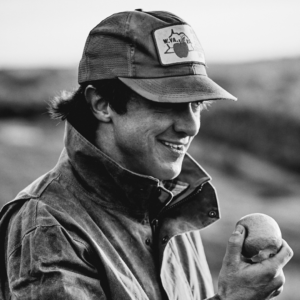
David Glaize is a 4th generation apple grower in Winchester VA, and co-owner of Old Town Cidery. Alongside his brother (Philip) the two convinced their dad to plant cider varieties back in 2010, and to construct a processing facility in 2018. The juice company, Glaize & Brother Juice Co, provides custom juice blends to cideries, wineries, and breweries up and down the East Coast. In working to keep the family business vertically integrated, David and his brother opened Old Town Cidery in 2021. David is a member of US Apple–a trade group for apple producers–and hopes to help deepen the relationship between the two groups. He is passionate about consumer education and farmland protection.
2022 ACA Board Officers
The ACA also announced the results of their 2022 board officer elections. Dave Takush, the head cidermaker of 2 Towns Ciderhouse in Oregon joins the ACA’s executive committee as Secretary. John Behrens of Farmhaus Cider in Michigan served as the board secretary in 2021 and was newly elected as Treasurer for 2022. Brooke Glover of Swilled Dog in West Virginia and Eleanor Leger of Eden Specialty Ciders in Vermont were both reelected as Vice-President and President, respectively.
“I’m excited to work with our fantastic board and our diverse membership to move the cider industry forward with the trade and regulators. Together, we will help American drinkers of all demographics discover and enjoy the amazing range of great ciders in the marketplace,” says Leger.
Retiring Directors
Paul Vander Heide of Vander Mill Cider in Michigan and David Thornton of James Creek Cider House in North Carolina both completed their ACA board service this year.
“Paul and David are both incredibly strong leaders,” says ACA executive director, Michelle McGrath. “Paul and I have worked very closely together to grow the ACA since my hiring in 2016. It’s been an honor to work with him and learn from his mentorship. And David was a force for positive change. I am a better leader for having worked with both Paul and David, and I will miss their presence on the board tremendously.”
Membership Meeting
The ACA will hold its annual virtual membership meeting, with opportunities to meet board member, on March 8, 2022 at 10AM Pacific. Members will be sent meeting details by email.
“Our virtual membership meeting last year was a big success. The board loved it so much we’re going to do it every year now,” says McGrath. “It’s a great chance to talk more deeply about strategic initiatives on the heels of CiderCon® conversations.”
###
ACA Board Elections

Please meet the candidates for the 2022 Board of Directors! We will email active cidery level members their ballots Wednesday and they will close Friday.
At Large Cidery Seat – 3 Candidates
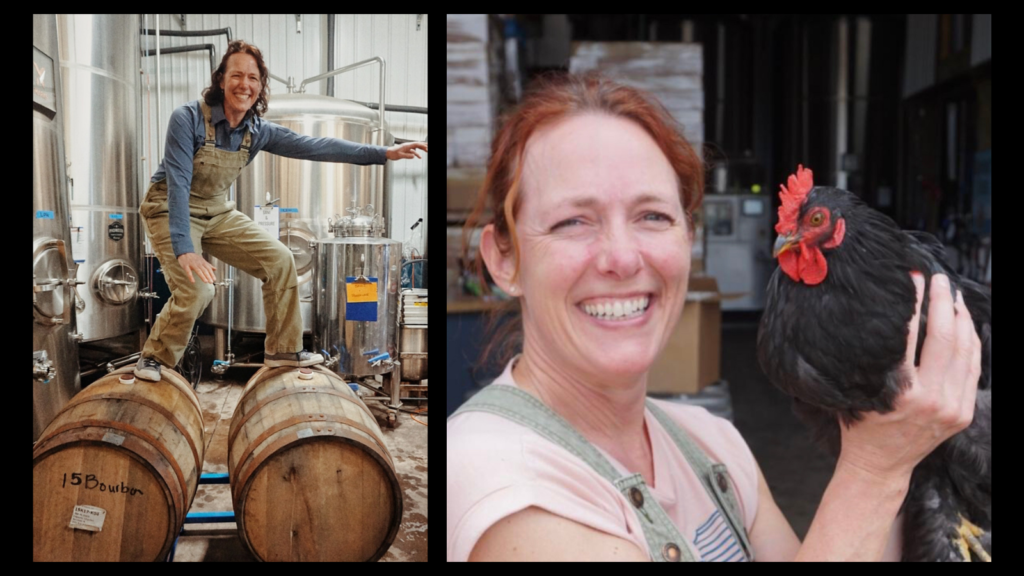
Christine Walter, Bauman’s Cider Company
I know that an organization like the American Cider Association makes a thousand small decisions and hosts hundreds of conversations all along the way to be the effective industry-shaping force that it is. Casting a broad net with regard to diversity and inclusion is no little thing. Spearheading and advocating for the kind of lasting legislation that makes or breaks cidermakers of all sizes is transformative work as well. I want to bring my creativity and energy to the board, to help shape the conversations and lean on my experiences as a small farm-based producer to make the climate of cidermaking more friendly to both big and small cider businesses.
ABOUT CHRISTINE
I grew up on my family’s farm in rural Oregon. Raising apples and pressing juice with my family are some of my earliest memories. I studied Biochemistry in college, and started and ran a small retail company for 22 years before discovering and quickly falling in love with cider. It took me a couple years to convince my family that cider was a real thing and that I might be able to make it on the farm if they would only let me use a small corner of a barn.
I think you can imagine that I have since taken over the whole barn, and created a huge following among my family. And I absolutely love making cider, drinking cider and being around cider makers!
I am currently a member of the board of The Cider Institute of North America and regular guest instructor.

Adam Ruhland, Wild State Cider
I want to see your cidery succeed. The realities of owning a successful cidery extend well beyond making amazing liquid. I’d like to help support the ACA and it’s members by being a champion for practical resources and initiatives for the average cider business owner. This includes increased support and programming around finance/funding, marketing, distribution, product innovation, human resources, and retail strategies.
It’s a tough market out there for even the most established brands, and we need to work together to grow our individual cideries and, in turn, the whole category. Cider exists in a strange and ever-changing place in the alcohol market. Our relevance depends on the strategies used by our members to meet our customers where they are, which involves frequent change and re-thinking how we operate our businesses.
As a board member, I’ll help the ACA maintain a focus on how it can practically support the needs of the average member working hard to succeed in a crowded market.
ABOUT ADAM
Adam Ruhland is the co-owner of Wild State Cider and president of the Minnesota Cider Guild. WIld State is a Duluth, MN based cidery started in 2019 that sells cider in five states and employs 27 individuals. Adam spent five years as a special education teacher before making the jump to entrepreneurship. He believes anything is possible through creativity, hard work, and education. Adam is married with two young children, a dog, and a cat named Kevin. He loves cross-country skiing, trail running, and mountain biking with his kids.

Steve Hance, Number 12 Cider
One thing my experience in serving non-profits has taught me is that there is typically no shortage of great ideas but a great shortage of initiative. Volunteer board members have day jobs that take priority and organizations often struggle to find people that will actually dedicate real time and effort to the organization. For better or worse, I have always been one to raise my hand and volunteer my time when it comes to this kind of service. The reward is seeing the positive impact and being directly involved in something worthwhile.
We all want to see cider grow, and hopefully not just for the bottom line, but because we want to share the joy of cider with everyone. I think a strong ACA is critical for that goal.
The ACA has already made great strides to help cider grow since its inception. CiderCon is an incredible event for us to come together and share ideas. The CCP program is a great way for us to develop our own conventions. Gathering and sharing market data is essential for us to understand how we can fit in to the economy and grow.
Moving forward, I would like to help the Board expand on these and other existing initiatives, but also to find new ways to connect with more of those potential cider-makers and drinkers out there. One thing I see for cider compared to other products, is a lack of resources for people seeking to learn how to start making cider themselves and all of the different styles of cider.
We have a great foundation, lets build on that but also start looking beyond the die-hard cider fanatics and market to the next generation of cider-makers.
I would be honored to serve on the Board if you choose to elect me.
ABOUT STEVE
I am the President of Number 12 Cider in Minneapolis where I live with my wife and our 14-year-old son. I have been making cider for about 25 years. Most of that time I have been “that guy” who always had plenty of cider to share whenever the chance arose. I am a student of history, and I love learning about the tradition and history of cider.
Although I am a lawyer by trade, a few years ago I decided to follow my passion and started an orchard-based cidery in the small town of Buffalo, Minnesota with my friend and business partner Colin. We were one of the first cideries in Minnesota when we started in 2014. Four years later we built a new facility in Minneapolis.
I helped to create the Minnesota Cider Guild where I have served as its President and Treasurer. It has been a joy to see cider grow in Minnesota and nationally since then. Outside of my law career and cider, I have dedicated countless hours to other non-profits as Organizer, Board Member, President and other posts.
Eastern Chair
CT, MA, ME, PA, NH, NJ, NY, RI, VT.
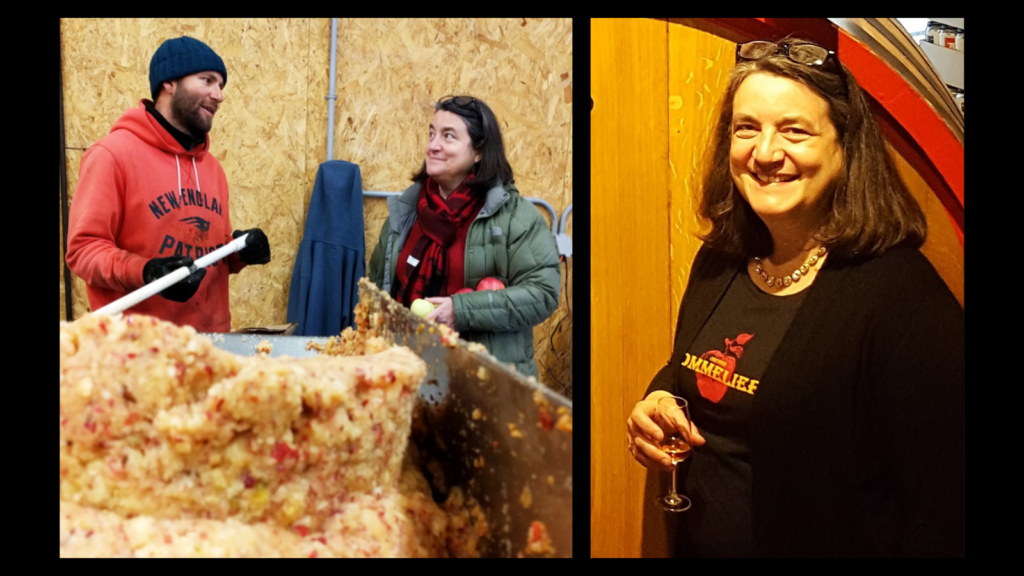
Eleanor Leger, Eden Ciders
I believe more than ever that cider’s future is strengthened when we draw the connection from apples to orchards to cider. Stories of growers, varieties, and the flavors that apples bring to ciders and to food pairings are what can move people to a greater appreciation of the diversity among cider offerings and a greater openness to considering cider as a choice on the shelf or at the table. These stories will benefit large and small cideries alike, across all price points and methods. Our fruit is what makes our product more expensive than grain or cane sugar-based alcohols. We all must celebrate it if we are to claim the price points we need for economic sustainability across size and method. In this sense, we are truly united in our “big tent” approach. All cider is made from apples and we as a category share pride in that. As passionate as I am about the high end, expensive ciders I make from rare and delicious apples, I want cider as a broad category to succeed, at all price points and across all processes. I am excited to engage with all the wonderful cideries in the large Eastern Region, to seek their input and feedback, to work collaboratively with Michelle and fellow board members to reach sound decisions, and to move us all forward.
ABOUT ELEANOR
Eleanor started producing ice cider with her husband Albert in the basement of their Vermont farmhouse in 2007. For the next eight years they built the business themselves, planting 1,000 trees, developing partnerships with other small local orchards, and working together in the cellar to produce ice ciders, and eventually expanding into dry wine-style ciders and apple-based aperitifs.
Today Eleanor primarily runs the business, the team has grown to six people, and in 2020 they launched a new line of harvest-driven ciders in cans. Before cider Eleanor was an over-educated execu-mom who was underwhelming her potential in corporate america. Now she parses TTB forms and depletion reports with gusto. With spare time she doesn’t have, she occasionally writes about small cidery economics at cidernomics.com.
In addition to serving on the board of the ACA as an At Large Member from 2015-2018, and Eastern Region Chair from 2019 to the present, Eleanor is a founder of the Vermont Cider Makers Association, and was appointed to the inaugural Vermont Working Lands Enterprise Board, proving once again that the road to hell is paved with good intentions.
Southern Chair
AL, AR, FL, GA, LA, MS, NC, SC, TN, VA, WV, MD, DE, DC.
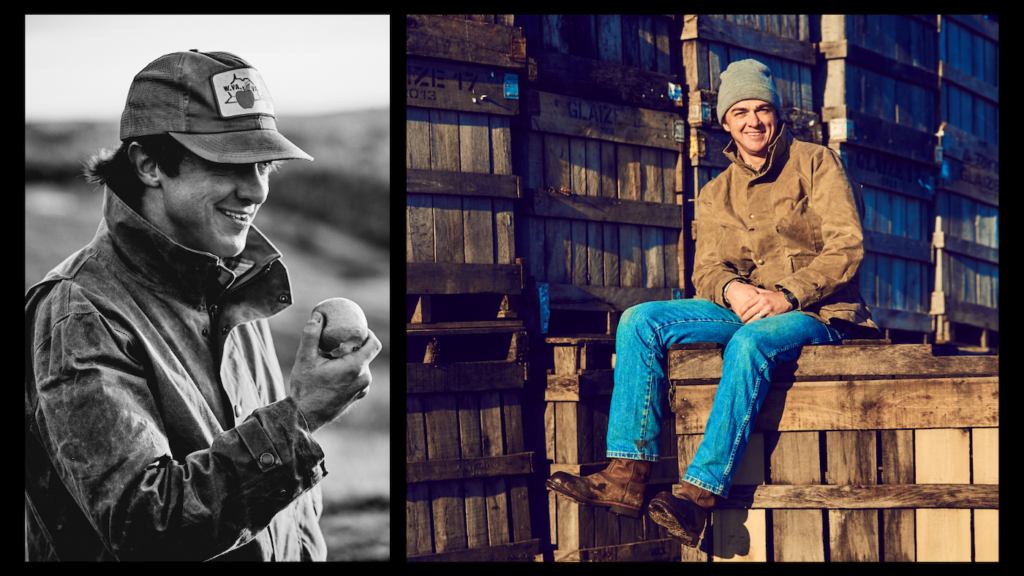
David Glaize, Old Town Cidery & Glaize & Brother Juice Co.
American Cider Association is the liaison between cider-makers/enthusiasts, and law makers, consumers, and buyers. As a member of the ACA board, David will work as the voice for cideries to promote industry growth and to broaden consumer education. David is a 4th generation apple grower and fresh juice provider. His understanding of the base industry will contribute immensely to supporting sustainable practices that lead to high quality juice/cider and hopefully orchard expansion. In selling fresh juice to over a dozen cideries throughout the South, David will represent the southern region with a strong understanding of what cideries need, and what the consumer wants. David has worked/lobbied with USApple and is familiar with policy making that helps protect our industry. With an end goal to keep the land in apple trees, David will do what it takes to get more people drinking more apples!
ABOUT DAVID
David Glaize is a 4th generation apple grower in Winchester VA, and co-owner of Old Town Cidery. Alongside his brother (Philip) the two convinced their dad to plant cider varieties back in 2010, and to construct a processing facility in 2018. The juice company, Glaize & Brother Juice Co, provides custom juice blends to cideries, wineries, and breweries up and down the East Coast. In working to keep the family business vertically integrated, David and his brother opened Old Town Cidery in 2021. David resides in Winchester VA with his wife Mimi, and two children, Charlotte and Walker.
Large Cidery Seat

Ben Calvi, Vermont Hard Cider
I have served on the ACA board since 2016 as a representative for large producers. Over the years, I have worked on the CCP, Legislative, Financial, and AEI committees. As board treasurer, I advised the ACA on its business plan, financial policies, and tax returns. I continue to work on the legislative committee addressing legal and regulatory issues important to Cider following passage of the Cider Act in 2015. And most recently, I joined the Anti-racism, Equity & Inclusion committee to support its development and outreach to members. There are 2 strategic goals I am most excited to participate in: (1) building Cider’s Political Power and (2) creating a more Sustainable and Inclusive Future for cider. The ACA has a unique position to speak on behalf of the cider industry. From lobbying efforts in Washington D.C. to liaising with state and regional chapters, the ACA must work to ensure regulations align with how cider is made and sold in the U.S. and to make sure laws and regulations allow all our members to remain competitive and well represented in the bev-alc landscape. Cider is a small and niche industry, however, it is not isolated from the broader social and cultural changes rippling through our nation. In the past few years, the ACA has begun to look within our organization, to educate ourselves, and to advocate for a more diverse and inclusive industry. It is not an easy task, nor always a comfortable one, but it is necessary so that cider becomes a beverage for all and a place where all people feel welcome.
ABOUT BEN
Ben Calvi was born and raised in Vermont and is an accomplished cider & wine maker. He joined Vermont Hard Cider in 2015 and now leads operations as COO. At prior roles in California, Germany, and Vermont, he has made wines and ciders for Quintessa, Esser, the Robert Mondavi Institute, Burklin-Wolf, and Champlain Orchards. Ben earned a Master of Science in Viticulture & Enology from the University of California Davis, a post-Bach from the University of Vermont, and a Bachelor of Arts in Environmental Studies from Middlebury College. He serves on boards of the American Cider, Vermont Cider, and Vermont Tree Fruit Growers associations, and he was a founding member of the Atletico Middlebury Soccer Club. Ben lives in Cornwall, VT with his wife and two children enjoying music, sport, and anything outdoors.
Craft Alcohol Marketing Bootcamp Giveaway from The Crafty Cask
The Crafty Cask is kicking off their 2022 class of craft alcohol makers in their 10-course online Craft Alcohol Marketing Bootcamp and are offering ACA members a chance to win a giveaway (valued at $2,673). One ACA member will be selected to win this membership.
Entries accepted through Friday, February 4th.
Here’s everything that is included:
- Lifetime access to all 10 courses in our Craft Alcohol Marketing Bootcamp AND all new courses added in the future. This includes:
- 12 hours of video tutorials and lessons
- 9 Action Sheets & 40 exercises to put the learnings into action
- 31 bonus downloads, cheat sheets, and templates
- Additional log-ins for anyone else on their team to divide and conquer or train their team more fully.
- A community of craft alcohol makers who will all be starting the course together on February 21st for increased accountability with extra support, challenges, tips, and more.
- Exclusive member-only discounts on their favorite marketing products and services (brand photography, web design, etc…).
- Weekly live drop-in office hours for personalized support.
That’s a $2,673 value of marketing education and support, totally free for one lucky ACA winner.
Interested in entering for a chance to win this phenomenal giveaway! Click here to find the link to enter (you will be prompted to login to your ACA account).
The Crafty Cask Giveaway
This content is for members only.
If you were a member and are now seeing this message, please Renew your membership to continue.
NEW! Additional Richmond Tour Added for CiderCon 2022!


That’s right cider people! There was so much demand for tours that we decided we needed to add one more. A big thanks to the Virginia Wine Board and Virginia Association of Cider Makers for their work in planning this new tour! Now, what do you need to know about this new tour?
Richmond Cider Tour
9:00am – 4:00pm Departure from Richmond Marriott Hotel
$75 includes transportation, lunch, and tastings at 5 cideries
Enjoy getting to know the Richmond area and cider scene with this tour of five cideries. You’ll start out your day with tastings at Bryant’s Small Batch, then head on to Hardywood Craft Brewing to taste their line-up as well. Following lunch (and cider) at Courthouse Creek Cider you’ll take a tour of their facility before heading on to taste at Blue Bee Cider. The day will wrap up with a tasting at Buskey Cider before returning to hotel.
Already registered for CiderCon® 2022, and you’d like to add this tour? You can buy a ticket for this tour HERE.
Not registered for CiderCon® 2022? You can add this on during the registration process. You can register HERE.
Q3 Trends Available for Download


Q3 reports are available for download as part of your ACA membership benefits. Regional cider brand sales were up 11% for year over year comparisons of Nielsen-measured off-premise channels for the 52-week period ending with Q3. Total cider category sales for the 52-week period ending with Q3 were up 2% compared to 2019 and down 4% when compared to 2020 for Nielsen-measured off-premise channels. In on-premise channels, cider’s rebound for the 12-week period of Q3 compared to the same period for 2020 exceeded beer’s rebound for both draft and packaged sales. For more details on how the category is performing including regional and packaging analysis, download our members-only Nielsen reports after logging into our website.
ACA Receives Grant for “Year of the Apple” in Virginia
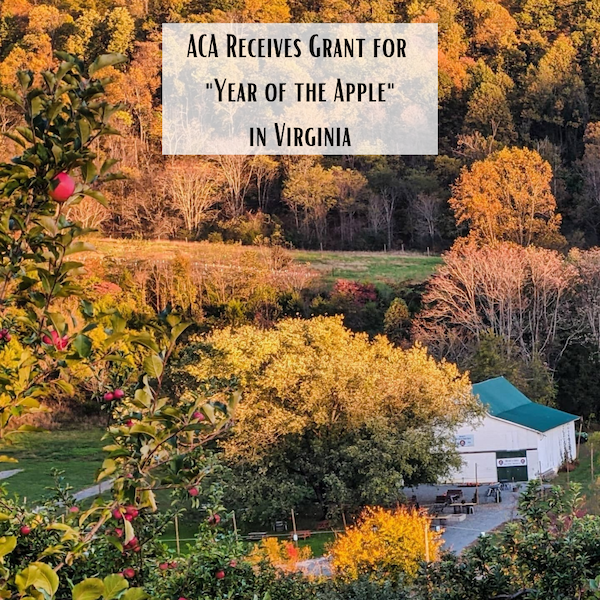
The American Cider Association is proud to announce a new partnership with the Virginia Department of Agriculture and Consumer Services through a USDA Specialty Crop Block Grant awarded for $70,012. Starting in early 2022, the American Cider Association (ACA) and their partners in Virginia cidermaking and agriculture will launch “The Year of The Apple,” an integrated public awareness, food industry professional outreach and market research campaign.
Virginia is the country’s 6th largest producer of apples and home to 48 independent cider makers, from the celebration-worthy bottles to adventure-ready cans. Virginia also boasts perhaps the longest and most storied history of cidermaking in North America, with apple orchards that date back to the 1600s. Yet both the restaurants and food lovers of Virginia don’t choose home-grown cider enough—Virginia has lower sales-per-capita than other cider making states.
Virginia Association of Cider Makers President Anne Shelton is excited about the opportunity the grant may bring. “Our state has a bountiful array of homegrown apple varieties, a deep history of cidermaking, and a super talented community of cidermakers crafting a wide variety of styles. We hope this grant can increase awareness around this with consumers and buyers and promote Virginia apples.”
In addition to creating awareness and understanding around Virginia cider, the grant will pay for survey research to learn more about the supply of the unique mix of apples that grow best as well as more about the state of the cider industry in Virginia.
From Shenandoah peaks to gentle ocean beaches, Virginia is home to a uniquely American diversity of landscapes, people, and ciders. “With just a little reminding, I think the drinkers of Virginia are ready to embrace the diversity and deliciousness of our uniquely Virginian ciders,” says ACA member Courtney Mailey of Blue Bee Cider in Richmond.
Letter from Board President Eleanor Leger
Dear Cider Friends –
As the new year begins, I am reflecting on the special challenges our incredible industry faces. 2022 will inevitably require more adaptation to supply chain issues, inflation, labor shortages, and the ongoing impact of the pandemic on sales channels and business models. These conditions are impacting all sectors of the alcoholic beverage market, but the special challenges we face in cider are a function of our small category size and the limited resources and power we have among ourselves to build awareness among consumers and achieve leverage in distribution.
I believe more than ever that cider’s future is strengthened when we draw the connection from apples to orchards to cider. Stories of growers, varieties, and the flavors that apples bring to ciders and to food pairings are what can move people to a greater appreciation of the diversity among cider offerings and a greater openness to considering cider as a choice on the shelf or at the table. These stories will benefit large and small cideries alike, across all price points and methods. Our fruit is what makes our product more expensive than grain or cane sugar based alcohols. We all must celebrate it if we are to claim the price points we need for economic sustainability across size and method. In this sense, we are truly united in our “big tent” approach. All cider is made from apples and we as a category share pride in that.
On an exciting note, we are seeing new cideries continue to open across the country. Also increasing are wineries and breweries who are adding ciders to their product line ups, including new orchard operations. These will be more voices helping to spread the word about apples and cider. Concurrently, as an association, we have invested this year in more projects to measure and report on the growth of cideries. Additionally, for the first time, we are reporting on trends in the segments of the market that are often missed by data services such as Nilsen and IRI, including cellar door and cider club sales and sales to smaller and/or regional on-premises accounts. This will allow us to create a fuller picture of the American cider market. Stay tuned for more exciting data announcements!
We are excited to include this new data perspective in our CiderCon® program in Richmond next month. The ACA team, volunteers and partners have worked hard to identify the best tracks, presenters and topics based on your feedback, from apples and orcharding to production, compliance and more. CiderCon® covers these important topics across a range of experience and business models: from enthusiast to expert, from taprooms to cider clubs, and from high volume cans to small batch natural ciders. Michelle and the Board are working to make sure we can hold CiderCon® safely in the current environment, and there will continue to be updates as the date draws nearer.
I wish all of you, your families and team members health and prosperity for 2022. In the meantime, if I can be of service, if you have questions, if you have comments or suggestions, I will always be delighted to hear from you.

Beer Kulture, ANXO Cider, and The American Cider Association Partner to Increase Diversity in the Cider Industry
ANXO, Beer Kulture Kollaboration Cider Will Help Fund Cider Scholarships
Beer Kulture, ANXO Cider, and the American Cider Association have partnered to introduce three scholarship opportunities designed to bring new Black, African American, Hispanic, Latino, Native North American, Pacific Islander, and other BIPOC individuals into the cider industry.
Each scholarship includes:
- Certified Cider Professional Level 1 bundle (including the exam)
- Two Certified Cider Professional Sensory Webinars
- Registration fee for the Certified Pommelier Exam
- Registration for the recipient and a guest to CiderCon®, the cider industry’s annual conference
- Travel to and from CiderCon® for the recipient and a guest
- Lodging at CiderCon® for the recipient and a guest
“We’re excited to expand into the cider industry with the work we’re doing,” said Latiesha Cook, CEO and President, Beer Kulture. “The broader alcohol space is large and offers so many opportunities to people of color as consumers, potential industry employees, and future owners that it makes sense for us to start looking at partnerships beyond beer. By bringing more people of color into these industries at every level, it creates new possibilities, not just as workers, but as founders, so they can own a piece of the space and drive the industry forward too. We’re really excited to work with ANXO and the American Cider Association for our first official scholarship and kollaboration in cider.”
While this is the first official cider scholarship and kollaboration for Beer Kulture, it’s not the group’s first foray into cider. Last year, the group worked with Michelle McGrath, Executive Director of the American Cider Association, to offer a package of free virtual registrations to CiderCon® 2021 to past Beer Kulture scholarship and internship winners. That package also included the Certified Cider Professional Level 1 exam and workshops.
“Last year’s partnership with Beer Kulture went so well that we wanted to continue the relationship with them this year,” explained McGrath. “Much like the beer industry, cider has historically struggled to diversify, especially beyond gender. Partnering with Beer Kulture is an opportunity for us to proactively reach people of new backgrounds and welcome them into our industry.”
This year, the partnership expanded to include Washington, D.C.’s ANXO Cider.
“We’re really focused on doing the work to help move the industry forward,” commented Rachel Topelius, co-founder and Director of HR and Community Outreach, ANXO Cider. “When we started talking with Latiesha and Michelle about this scholarship opportunity, we thought about how we could go further and drive more impact. After Latiesha mentioned that past Beer Kulture scholarship winners have given feedback that it can be intimidating being the only person of color at a conference, the idea came up to fund sending a plus one, to make each winner feel more comfortable and welcomed.”
The three scholarship packages will be funded by a new cider kollaboration from ANXO, Beer Kulture and the American Cider Association. The cider, a 7.3% ABV dry cider named Kulture, is a unique blend of 50/25/25 Albemarle Pippin, Dabinett, and Harrison apples, developed in conjunction by ANXO and Beer Kulture. The resulting liquid will be juicy with bold and gripping tannins producing a textured mouthfeel accompanied by balanced acidity.
“Kulture contains an exceptional blend of apples,” explained Sam Fitz, co-founder and President/Director of Production, ANXO Cider. “All the apples were sourced from Virginia and Pennsylvania within 100 miles of our facility in D.C. They were each then fermented naturally in wood prior to the blending.”
Black, African American, Hispanic, Latino, Native North American, Pacific Islander, and other BIPOC individuals interested in the scholarships are encouraged to apply by visiting this LINK.
Kulture, the new dry cider kollaboration, will debut at a release party at CiderCon® on February 2, 2022. Follow ANXO and Beer Kulture to learn more details about the release party closer to CiderCon®, including the time and location.
About Beer Kulture
Beer Kulture builds trust and strengthens communities by using craft beer to foster inclusion, equity and diversity. Together, we can change the world – one beer at a time. Learn more at www.beerkulture.com.
About ANXO Cider
ANXO Cider (pronounced Ahn-Cho) is a Washington, DC-based craft cidery inspired by centuries of American and European cider making culture. The idea of ANXO was first planted in the minds of Founders and Co-Owners Sam Fitz, Rachel Topelius, and Cooper Sheehan during a life-changing trip to the Basque country of Spain and the West Country of the United Kingdom where Sam was introduced to the rich history of farming and fermenting apples. ANXO’s mission is to grow cider culture in the US by creating and importing the finest ciders that are the purest expressions of the apples they are made from. ANXO makes cider much like vintners make wine, embracing an #ApplesOnly approach, using apples and yeast. Fermented in stainless steel or wood vessels the resulting product is sugar and gluten free and low-carb and is as complex as wine and accessible and sessionable as beer. Learn more at https://anxocider.com/.
About the American Cider Association
The American Cider Association is an organization of cider and perry producers in the United States. It gathers and shares information about cider production, regulations and cider apple growing to help members improve their operations, raise awareness and advance cider in the market. The organization was founded in February 2013. Learn more at ciderassociation.org.
CiderCon Session: Can I Say That? Health and Nutrition Labeling Restrictions and Requirements

Both the TTB and the FDA regulate what you can, can’t and MUST say on your cider packaging and in your promotions. Amidst a consumer-driven health craze, it’s important to know how these regulations impact your cidery. In this workshop, beverage-specialist attorney Marybeth Williams will walk you through these regulations when it comes to health claims and nutrition disclosures. She will cover the regulations for ciders both over and under 7% ABV.
About Marybeth Williams
Marybeth Williams is President of Williams Compliance and Consulting Group, LLC, near Richmond, VA, which provides compliance services and legal consulting to the alcohol beverage industry. She works with suppliers, focusing on the day to day compliance issues and trade practice parameters within which industry members must function. Ms. Williams graduated from the University of Denver College of Law in 1996, and has practiced in both the public and private sectors.
CiderCon Session: New Skins: How Brand Positioning & Packaging Design Can Reinvigorate a Category & Connect with New Drinkers

New CiderCon® 2022 Session! New Skins: How Brand Positioning & Packaging Design Can Reinvigorate a Category & Connect with New Drinkers
Beyond packaging trends and gimmickry, there’s an opportunity for every brand to better understand and communicate a meaningful story. As a brand strategist in the beverage alcohol space, Michael Kiser will share industry analogs and frameworks for aligning brand position, customer experience, and retail strategies that have helped companies new and old connect with their audiences.
About the Speaker
Michael Kiser is an innovation strategist (tech and CPG) working with some of the world’s largest and smallest brands to create innovation pipelines based on emerging market factors and consumer desires. He runs a boutique brand strategy and design practice in Chicago (Feel Goods Company), the world’s leading editorial voice in beer (Good Beer Hunting), and a cross-industry insights newsletter and community for beverage alcohol (Sightlines.news).
Creating Consumer Excitement with Food Pairing Suggestions


Pairing food and cider is an important key to helping people learn to love the complexities and nuances of cider, but we all understand that it can be tricky business. Join us for a dive into putting theory into practice in this session with our Cider Education Outreach Manager, Jennie Dorsey at CiderCon® 2022 in Richmond, Virginia from February 1-4, 2022.
Creating Consumer Excitement with Food Pairing Suggestions
We all know the “Four C’s” of food pairing, but putting theory into practice can be a little intimidating, especially for members of your tasting room staff that are just beginning their adventure with cider. In this session, cider and food pairing expert Jennie Dorsey will walk you through a pairing framework (with tasting samples!) that you can take back to your business, train your staff, and watch your sales grow.
About Jennie Dorsey
Jennie Dorsey is founding member of Pomme Boots Society for women in the Cider Industry and has held numerous positions since she first entered the Cider Industry over a decade ago. Jennie actually began her journey in the coffee industry where she was a nationally ranked competition barista and trainer specializing in sensory analysis with a focus on food pairings. The skills honed in competition led her on the path of beverage discovery, where she fell in love with cider and it’s unmatched pairing possibilities. Jennie is a working member of the Cider Certification team, and she was given the distinguished award of Cider Server of the Year in 2018 by the ACA. Jennie is passionate about food and beverage of all kinds, cinema, vintage lifestyle and can always be spotted by her brightly colored hair. She joined the ACA staff in 2021 as our Cider Education Outreach Manager.
An Intro to Holistic Orcharding for Novice Growers
Intro to Holistic Orcharding for Novice Growers
The American Cider Association is pleased to announce that Mike Biltonen will lead an Intro to Holistic Orcharding for Novice Growers workshop at CiderCon® 2022. In this seminar we will cover the basics of what to look for when you’re seeking a site appropriate for your orchard, whether it be in your backyard, on the adjoining hillside, or in the next county. We will discuss climate, land, and soil characteristics as well as horticultural considerations you need to ponder before you plant the first tree. We will also cover the steps for designing and planting your first trees, as well as the first year’s management focus.
This course will take place Wednesday, February 1, 2022 at the Richmond Marriott Hotel from 12:30-3:00pm. The cost to attend is $15. Be sure to add it on during registration.
About Mike Biltonen
Mike Biltonen has spent nearly 40 years in agriculture – working mostly with orchards, vineyards, and specialty veg and fruit crops. He specializes in all aspects of sustainable orchard production of apples, pears, and stone fruit. An early passion for sustainable agriculture evolved into a profound dedication to the principles and practices of ecologically-focused, biodynamically-driven farming. The last fifteen years Mike has worked as a consultant to novice and seasoned farmers and orchardists alike on all aspects of establishing and managing regenerative and integrated farmscapes. Mike also conducts workshops, seminars, webinars, and has a free newsletter for the truly dedicated. He co-owns Know Your Roots, a novel and innovative family-owned company, with his wife Debbie where they are synchronously using farming and herbalism practices to heal the Earth.
CiderCon 2022 Schedule Released
The American Cider Association is please to share the first draft of the CiderCon® 2022 Schedule! With tours, tastings, educational workshops, demos and more, CiderCon’s return to an in-person event is bound to be one of the most energetic CiderCons to date. Early registration numbers have been record breaking, with more than 400 people already signed up by November 15!
We’ve produced this draft schedule to help you with your CiderCon® 2022 planning. More session are being added each week and the schedule will be updated to reflect those additions. Session times may change as the schedule finalizes. Some sessions require separate registration which can be done during checkout. Details can be found on these sessions on the CiderCon® 2022 Registration page. Following our health & safety guidelines is necessary to participate.
For more details on all things CiderCon® 2022, you can head to the CiderCon® Website. You can download the draft schedule here.
Distributor Relationships & Social Media Advertising Sessions at CiderCon 2022
The American Cider Association is pleased to announce that Julie Rhodes of Not Your Hobby Marketing will present three sessions at CiderCon® 2022. Read on to learn more about Julie’s sessions and why you won’t want to miss them.
Social Media Advertising 101: How to Get Started with FB & IG Ads
Social media marketing should be a major component within your strategic business plans. But with organic reach of social media posts declining, that means less eyeballs on your cider brand. Learning how to formulate a paid social media advertising structure to add to your current organic content can help boost visibility, help build brand awareness and allow you to observe the purchase habits of your best customers. Join Julie Rhodes, owner of Not Your Hobby Marketing Solutions, for an interactive social media advertising presentation and workshop that will get you started with social media advertising.
Distribution Management for Beginners
Making the leap from on site sales to selling your cider products in retail is a big step, so wouldn’t it be helpful if there was some type of guidebook or instruction list for how to make this transition? Yes! Only that doesn’t exist, but lucky for you, this session on Distribution Management for Beginners led by Julie Rhodes of Not Your Hobby Marketing Solutions does. Learn the ins and outs, ups and downs, and best practices for those that are just getting started creating relationships with their distribution partners.
Distribution Management: Advanced Concepts
If you’ve been selling your cider brand with a distributor or wholesaler for a while, but are feeling a bit lost when it comes to strategic sales planning, this breakout session is right for you. Keeping your brand top of mind with your distributor personnel is vital if you want to succeed in the wholesale channel, but it’s how you accomplish this that seems to be a mystery to most. This session will explore the ways that you can implement strategic sales plans, interactive training, digital marketing, and advanced analytics to ensure that you’re building a long-term, profitable relationship with your distributor partner.
Julie Rhodes, Not Your Hobby Marketing
With over 20,000 hours of experience on the business side of the specialty beer industry, from field sales to digital marketing to regional management, a BA in Marketing from Texas State University at San Marcos, and more than 15 years of experience in the service industry, Julie Rhodes is an authority on beverage sales, marketing, sales team management, distributor partnership management, supply chain logistics, and customer service. She is the owner of Not Your Hobby Marketing Solutions, an educational services and consulting company that teaches sales, marketing & distribution management strategies to craft beverage professionals.
Webinar: Three-Tier Compliance & Regulatory Concerns for Cideries


Join the American Cider Association for the webinar Three-Tier Compliance & Regulatory Concerns for Cideries on December 9, 2021 at 11:00am Pacific Time. Alex Koral of Sovos ShipCompliant will lead this webinar.
What Will Be Covered In This Webinar?
As they expand, cider producers face a long list of complicated and evolving compliance and regulatory challenges in order for their cider to be distributed and sold in new states. Licensing, state and federal brand registrations, distribution agreements, and required follow-up reports make compliance a time-consuming and expensive process.
This webinar will spotlight the most pressing regulatory issues facing today’s cider producers involved in interstate distribution. Attendees will learn how to effectively, and cost-effectively, navigate regulatory and compliance risks.
- Get ahead of regulatory compliance to avoid delays in bringing new products to market
- Know the regulatory barriers that exist when entering new markets so you can expand your presence with minimal holdup
- Stay up to date on key regulatory issues impacting your business
This webinar is for active ACA members only. You can become a member or renew your membership here!
Our Speaker

Alex Koral, Regulatory General Counsel, Sovos ShipCompliant
Based in Boulder, Colorado, Alex Koral is Regulatory General Counsel for Sovos ShipCompliant, where he serves as lead legal researcher for beverage alcohol regulation and has become a leading expert on interstate distribution of alcohol. He has spoken on the topic at many industry events including Craft Brewers Conference, Craft Beer Professionals conferences, and meetings of the National Council of State Liquor Administrators and the National Liquor Law Enforcement Association. Alex has been in the beverage alcohol arena since 2015, after receiving his J.D. from the University of Colorado Law School.
Tiffanie Barriere, aka The Drinking Coach, to speak at CiderCon 2022

We are thrilled to announce that Tiffanie Barriere, aka The Drinking Coach, is speaking at CiderCon 2022 in Richmond, Virginia! Tiffanie is no stranger to cider, which is why we’ve asked her to demonstrate how to make killer low-ABV cider cocktails in her workshop at CiderCon. She’ll walk you through the steps so you can take these cocktails back to your tasting room program. Beyond the perfect cider cocktail, Tiffanie will also be weaving the history of Black bartenders in America into her presentation. Whether it’s cocktail construction or American alcohol history, walk away aware and A LOT smarter under The Drinking Coach’s tutelage.
Tiffanie Barriere is the bartender’s bartender, an influencer and educator who has been awarded with some of the beverage industry’s highest honors. The Bar Smart graduate is a Tastemakers of the South award-winner who spent seven years as the beverage director of One Flew South the “Best Airport Bar in the World.” As an independent bartender she is known for creative and innovative cocktail menus for pop-dinners and bar consultancy clients; hosting mixology classes around the nation, and connecting culinary and farm culture with spirits. As a leader, she is a member of the Tales of the Cocktail Grants Committee, the James Beard Beverage Advisory Board, and a member of the Atlanta chapter of Les Dames d’Escoffier.
“The Drinking Coach” Barriere has graced the demonstration stages of prestigious food and hospitality events such as the Atlanta Food & Wine Festival, Charleston Food & Wine Festival, BevCon, Tales of the Cocktail, Savannah Food & Wine Festival, Music to Your Mouth and more. As an author-contributor, Tiffanie’s cocktail recipes can be found in the Southern Foodway Alliance Guide to Cocktails by Jerry Slayter, Jubilee by Toni Tipton Martin, and Road Soda by Kara Newman.
Her reputation as a public historian has opened doors for her to speak on panels at such venues as Fire, Flour & Fork, Southern Foodways Symposium, and the Soul Summit, and she has interpreted the cocktails of African American and women firsts in spirits at the James Beard House in New York City.
The culinarians and chefs she has worked with reads like a Who’s Who in the Culinary Arts: Duane Nutter, Todd Richards, the late Darryl Evans, Kevin Mitchell, Deborah VanTrece, Jennifer Hill Booker, Suzanne Vizethann, Erika Council, Todd Ginsberg and Asha Gomez.
Barriere and her cocktails have been featured in such publications as Imbibe magazine (print and online), Difford’s Guide, Creative Loafing, Forbes, Essence, Southern Living, The Bitter Southerner, Cherry Bomb, Washington Post, Thrillist, Eater, Vine Pair, Food Republic, and Garden & Gun. In 2020 Tiffanie was featured on Food Networks The Kitchen showcasing her creativity on how to batch for more than 2 people. She also received the Tales of the Cocktails Dame of the Year award in 2020 and the cover photo of Imbibe Magazine for the Top 75 for Imbibe.
The Louisiana-Texas native is the trustworthy mentor of some of the best bartenders and mixologists in the world. Tiffanie’s main goal is education, service and fun with every pour.
5 Reasons to Register for the Certified Pommelier Exam
CiderCon® is right around the corner, and that means so is your next chance to join the elite crew of Certified Pommeliers™ that are spreading the good word about cider around the country. The exam itself will take place on February 1, 2021 during CiderCon® at the Richmond Marriott Hotel. That leaves plenty of time to prepare and we have plenty of resources to help you (see below)!
5 Reasons to Register
Still on the fence about taking your exam? We can think of a few reasons why you should:
- Research. That’s right, drinking lots of different ciders (as if we needed a reason) will actually help you prepare for your exam!
- Mastery. You too can be a master of the language of cider and help share that knowledge with others.
- Prestige. Pass your exam and show the world that you are one of the top experts in the cider industry.
- Experience. By learning more about the intricacies of cider you learn to love cider even more.
- Camaraderie. When you pass your exam you will join an amazing group of cider professionals that love cider and spreading the love just as much as you do.
- Okay, we said 5 reasons, but really, we thought mentioning research (a.k.a. drinking cider) again might be worthwhile.
Register Now!
For ACA members, the exam is $125 per attempt. There is a discount code that members can access to receive the exam at the membership rate of $125. That discount code can be found here. For non-members, the exam is $200. You can register for the exam here.
Get Studying!
Now, about those resources we mentioned. When you sign up to take your Certified Pommelier™ exam, you will be provided with a study guide and access to webinars to help you develop your knowledge and skills.
There are several books that will also help you further develop your understanding of cider, apples and history. We have created a list with our recommended reading materials. You can access this list by clicking here.
And there’s a dedicated Facebook Group with prep materials and in depth peer conversations.
Want more to fortify your cider knowledge? We highly recommend interviewing cidermakers and cider tenders to help prepare. Blind tasting flights are also good prep. See research in our list above!
Questions?
Contact our Cider Education Outreach Manager Jennie Dorsey with any questions you might have.
Don’t miss out on you chance to join this elite community of cider professionals by taking the Certified Pommelier™ Exam at CiderCon® 2022 in Richmond, Virginia in February!
A huge thanks to our CCP and Certified Pommelier™ sponsor:

CiderCon® Early Bird Registration Extended

Who needs some good news? Yes, Mercury is no longer in retrograde. But that’s not our news. We know our members are busy making cider right now, so we’ve decided to extend early bird CiderCon® 2022 registration pricing until Halloween. We can’t wait to see all of you for our beloved CiderCon® in Richmond, Virginia in February!
The extension means an extra 11 days to lock in the early registration fee of $395 for you and all of your employees for what promises to be an awesome return to CiderCon® in-person.
We are happy to have renowned cidermaker Diane Flynt join us as our Keynote Speaker. You can read more about Diane in our blog. This year’s workshop tracks include: (1) Cidermaking (2) Apples & Orcharding (3) Sales & Distribution (4) Better Business (5) Flavor & Terroir (6) Legal & Compliance (7) Marketing & Trends and (8) History.
The famous CiderCon® trade show is shaping up to be a great place to meet the amazing vendors who help support our industry. Are you a vendor that would like to join us? Do you know a business that you would love to see at the trade show? Contact Ellenfor details.
There’s a plethora of add-on options available this year. We have tours, tasting, t-shirts, cider share and more available. You can learn more about these options on our registration page. Definitely check out the incredible tours and tastings before they sell out!
You can learn about all things CiderCon® 2022 at our website, and we’ll have more exciting announcements soon.
We’ll see you in Richmond!
Michelle, Woodley & Ellen
P.S. Wanting to up your cider street cred? You can take your Certified Pommelier™ exam at CiderCon®! The exam will be held Wednesday, February 1, 2021 at the Marriott Hotel in Richmond. You can learn more and find links to register in our blog!
P.P.S. Don’t forget to book your rooms in the CiderCon® block at the Marriott. You can book them here.
Thank you to our premier sponsor:
CiderCon 2022 Registration Now Open

The American Cider Association Presents CiderCon® 2022 in Richmond Virginia!
February 1-4, 2022
The American Cider Association is pleased to announce that registration is now open for CiderCon® 2022! We are thrilled to be planning to gather in person in Richmond, Virginia from February 1-4, 2022. Register before October 31 to lock in early bird pricing!
Click below to learn about:
Cider Tasting/Cidermaking Workshops

Thanks to our premier sponsor:
CiderCon 2022 Tasting Sessions
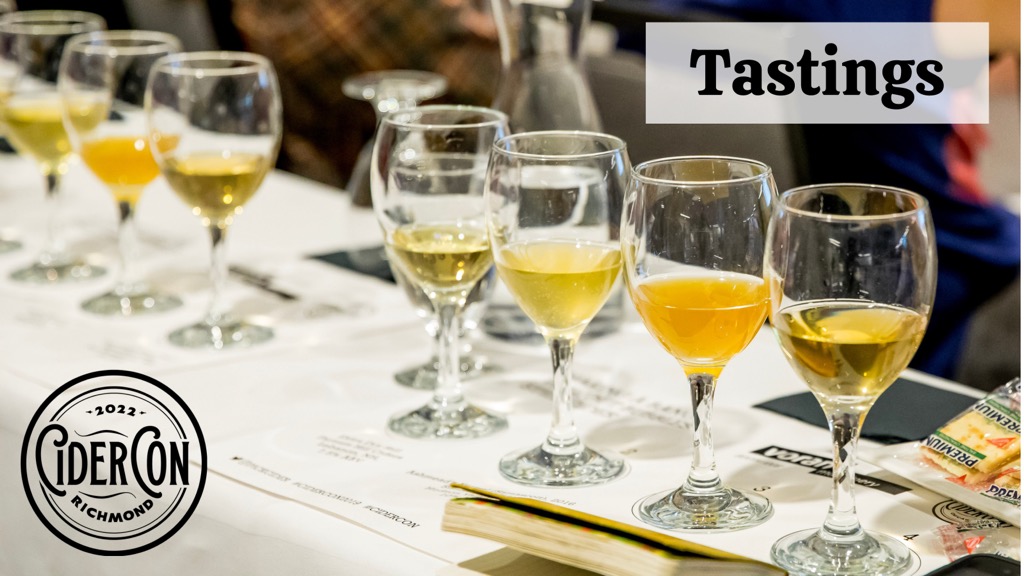
We are thrilled to offer several tastings at CiderCon® 2022! Seating is limited in CiderCon® workshops, including tastings. Read our full Health & Safety Guidelines. Sign-up for tastings available during registration.
NEW! Top of the Mitten: High Latitude Ciders from Northern Michigan
Moderator: Nicole LeGrand Leibon
Speakers: Dan Young, Tandem Cider; Dion Stepanski, Presque Isle Farm; Left Foot Charley, Bryan Ulbrich
Price: $10 Thursday, 1:45-2:45pm
Already registered for CiderCon® 2022 but you’d like to add on this tasting? Register here.
This session will be a guided sensory exploration of ciders from near or north of the 45th parallel. We’ll explore the impact of the Great Lakes, the soil, orchard history and more on these ciders from Northern Michigan.
400 Years of American Alcohol: Cider, History, Cocktails and More
Presenter: Tiffanie Barriere, The Drinking Coach
Price: $10 Thursday 10:30-11:30
Already registered for CiderCon® 2022 but you’d like to add on this tasting? Register here.
Alcohol has a tasty history in America. Cider was seen as early as 1622. We are still counting and discovering some of the historical names that helped alcohol become what it is today. With the help of original records from the service industry we are able to explore many stories on alcohol production, service and even cocktail incorporation dating back hundreds of years. To explore this history, Tiffanie Barriere–a renowned mixologist, author, speaker and researcher–brings this mash-up session to CiderCon. Her workshop will be one part history and one part inspired cider cocktail creation. She will talk about important names, historical figures, legendary Black bartenders and she will also teach you how to make amazing cider cocktails.
Fruited Ciders: Beyond the Apple – SOLD OUT
Moderator: Christine Walter
Price: $8 Thursday 10:30-11:30
Fresh, frozen, puréed, essenced? Before, during, after? Answers to all of your questions, plus sourcing ideas and tasty examples to making excellent fruit ciders. This session is designed for cidermakers just getting their start. Featured Cider Makers: TBA
Creating Consumer Excitement with Food Pairing Suggestions – SOLD OUT
Presenter: Jennie Dorsey, Cider Educator
Price: $10 Thursday 2:00-3:00
We all know the “Four C’s” of food pairing, but putting theory into practice can be a little intimidating, especially for members of your tasting room staff that are just beginning their adventure with cider. In this session, cider and food pairing expert Jennie Dorsey will walk you through a pairing framework (with tasting samples!) that you can take back to your business, train your staff, and watch your sales grow.
Tasting and Terroir of True Crabs Non- Malus Domestica Apples – SOLD OUT
Moderator: Dan Pucci, Author
Price: $12 Thursday 3:30-4:30
Malus Domestica is not the only game in town. The Malus genus is diverse with apples native to biomes across the world, wild, feral or bred with intention. Typically valued more for their flowers than fruit, cider is adapting them into its diverse tool box. This talk will look at how these apples perform in a wide range of different growing environments and how they can be used in a wide range of different cider making styles. Featured Cider Makers: TBA
Survey of Yeast-Derived Characteristics and Hands-On Blending – SOLD OUT
Moderator: Aaron Homoya
Price: $10 Thursday 3:30-4:30
Take your experience with the possibilities of flavor and aroma contributions of yeast strains to the next level with this tasting panel of cider made from one juice and a range of yeasts. Featured Cider Makers: TBA
Southern Cider Apples: A Recipe for Complex Flavor & Changing Climate – SOLD OUT
Moderator: Diane Flynt, Apple Grower and Cider Maker
Price: $12 Friday 10:30-11:30
Diane Flynt will set the stage for exploring southern cider apples with historic context for old southern cider apple varieties. Presentation will include color slides of southern apple varieties. The panel discussion will touch on fruit cultivation but will focus on the use of older southern varieties in cider.
Panel discussion topics: Varietal characteristics of old southern apples in cider; Cidermakers’ experience in using old southern apples in cider; Consumer response to cider made with old southern apples; Optional: apple tasting and cider tasting. Featuring: David and/or Ann Marie Thornton, James Creek Cider House, Tim Wright, Wise Bird Cider, Will Hodges, Troddenvale Cider
A Cider Among the Faults – An Aroma-Based Sensory Workshop
Presenter: Nicole Leibon, Chris Gerling, Jocelyn Kuzelka
Price: $12 Friday 10:30-11:30
Already registered for CiderCon® 2022 but you’d like to add on this tasting? Register here.
Take a good look at this line-up of five suspect ciders and put your detective (and detecting) skills to the test. Only one is innocent, the other four are fatally faulted by the usual (and maybe unusual) suspects. Discussion will include detection and rejection thresholds, their impact on how ciders and faults can be perceived differently, and ways to avoid or fix the faults found in the line-up.
Introductory Palate Training – SOLD OUT
Presenter: Darlene Hayes
Price $10 Friday 2:00-3:00pm
When learning the art of evaluating a cider it can be helpful to start by familiarizing your palate with individual structural elements. In this session, you will experience first hand the flavor and texture differences between several types of acids typically found in cider as well as different sugar levels and types of tannin. Give yourself a great foundation from which to take your tasting skills to the next level.
Best Practices for Producing Ciders with Residual Sugar – SOLD OUT
Moderator: Brighid O’Keene
Price: $10 Friday 2:00-3:00pm
This tasting session will explore methods and tips for producing cider with residual sugar. You will hear from cider makers producing at various scales and with different equipment about how to successfully make sweeter cider. We’ll explore downstream processing and safe bottling with a focus on best practices. Featured Cider Makers: TBA
Wild, Clean & Free: Harnessing the Beauty of Wild-fermenting, Without the Flaws – SOLD OUT
Moderator: Christine Walter
Price: $12 Friday 3:30-4:30pm
This tasting session will be a deep dive into making the most of traditional and pet-nat processes while producing a cleanly fermented sparkling cider. Featured Cider Makers: TBA
New and Updated Cider Share Returns to CiderCon!
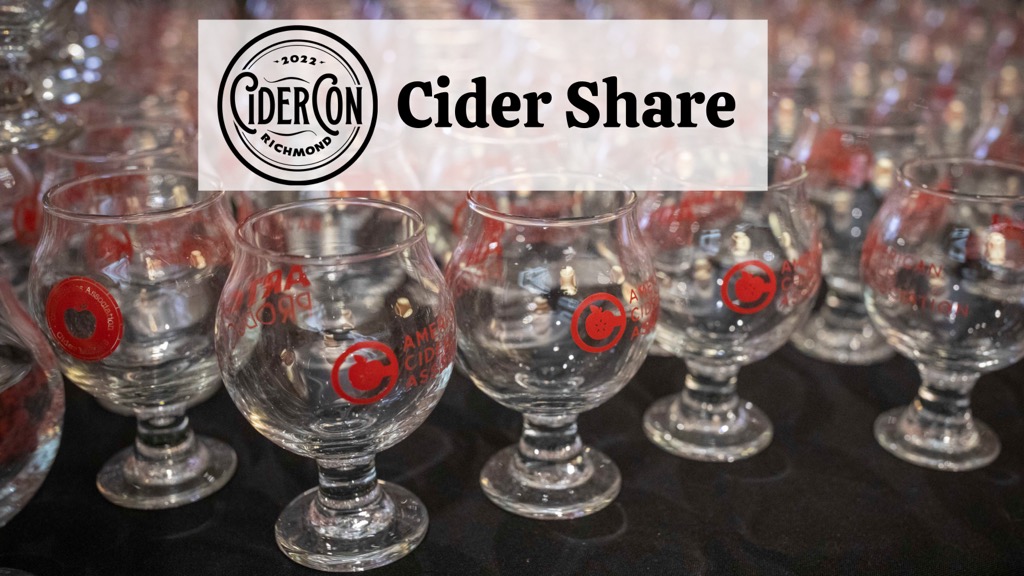
UPDATE 01/25/2022: The 4:00pm Cider Share is Sold Out. If you are already registered and would like to add the 6:00pm Cider Share on to your registration please email Ellen and she will add you and you can pay when you check in at the registration desk. If you are not registered, Cider Share can be added on during the registration process.
CiderCon® is thrilled to present an in-person conference and trade show in Richmond, Virginia from February 1-4, 2022 for American Cider Association members. Our beloved welcome reception, Cider Share, is also back!
There are two Cider Share receptions on Wednesday, February 2, 2022, a 4:00pm salon and 6:00pm salon. Tickets to Cider Share will be $20 per person. Each Cider Share time slot will be limited to 200 people. Please read the complete Health and Safety Guidelines for more information about the American Cider Association’s COVID-19 protocol for CiderCon® 2022.
Each Cider Share Salon will feature 25 different cideries, representing cider from around the US and the world. Featured cideries will be chosen using a lottery along with considerations of geography and style. If you would like to be considered as a featured cidery at Cider Share 2022, please select that choice during the CiderCon registration process. The lottery drawing will be held in early November and those selected will be notified via email with further details.
Take the Certified Pommelier Exam at CiderCon 2022!
WHAT IS THE CERTIFIED POMMELIER™ EXAM?
American Cider Association’s mission is to grow a diverse and successful U.S. cider industry by providing valuable information, resources and services to our members and by advocating on their behalf. One way to fulfill this mission is through the Certified Cider Professional Program–a program aimed at educating the front-line of cider sales (distributors, retailers, bartenders and more!).
The intro-level certification (CCP Level 1) is an online test that can be taken at any time. The more advanced level of certification–the Certified Pommelier™ exam–is a sit-down hand-written exam: part short answer, part essay questions, and part sensory and taste evaluation questions. *CCP Level 1 is a prerequisite for Certified Pommelier.
Certified Pommeliers™ must have a fundamental understanding of all topics covered in CCP Level 1, but must also be able to think critically and use the basics to demonstrate a higher understanding of the elements of cider. The exam consists of five types of questions: short answer, fill in the blank, matching, essay and blind sensory (based on tasting).
The test is meant to be challenging. Studying is highly recommended.
The topics covered in the exam are:
- Apples, the Orchard & History
- Cider Making
- Flavor & Evaluation
- Cider Families
- Keeping & Serving
- Food & Cider
- Social Responsibility.
*If a test-taker passes only the written or only the tasting portion of the exam, they are permitted the opportunity to retake the un-passed portion of the exam at a future date (within 18 months).
WHY BECOME A CERTIFIED POMMELIER™?
Cider is a beautifully nuanced beverage with a diverse set of elements that are often misunderstood by food and beverage professionals. Certifications are increasingly used in the professional realm to set oneself apart as an individual with specialized knowledge, though cider is often covered in a cursory manner by most certification programs, if at all. Although there are already more than 1,700 Level 1 Certified Cider Professionals, being recognized as a Certified Pommelier™ will put you in the vanguard of verified advanced cider specialists in this ever growing category.
HOW MUCH DOES THE TEST COST?
For ACA members, the exam is $125 per attempt. There is a discount code that members can access to receive the exam at the membership rate of $125. That discount code can be found here. For non-members, the exam is $200. Should it be needed, test takers can retake future written or tasting portions of the exam at a separate sitting with a 25% discount.
COVID PROTOCOL
Test takers must provide either proof of full vaccination against COVID or negative PCR test results received no earlier than Sunday, January 30. One these two things is required for entry, and there will be no refunds if you are unable to provide them. Test takers will be socially distanced and will wear masks unless actively evaluating a cider. Cider evaluations will take place in a separate room from the written theory portion of the exam. The full CiderCon Health & Safety Guidelines can be downloaded HERE.
WHERE WILL THE TEST TAKE PLACE
Marriott
500 E Broad St
Richmond, VA 23219
FAQs
- What is the COVID-19 protocol during the Certified Pommelier™ test? Test takers must provide either proof of full vaccination against COVID or negative PCR test results received no earlier than Sunday, January 30. One these two things is required for entry, and there will be no refunds if you are unable to provide them. Test takers will be socially distanced and will wear masks unless actively evaluating a cider. Cider evaluations will take place in a separate room from the written theory portion of the exam. The full CiderCon COVID-19 protocol can be downloaded HERE.
- Are there ID or minimum age requirements to enter the event? YES- You must be 21 or older and you must provide an ID to prove you are who you say you are.
- Do I need to pass the level 1 CCP exam to take the Certified Pommelier™ test? Yes. Passing the Level 1 CCP exam is a prerequisite. If you have not yet taken the Level 1 exam, you can purchase the Level 1 bundle on demand HERE. The bundle includes an on-demand webinar, study guide, and access to the online exam.
- What can I bring into the event? Nothing may be brought into the exam room. Cell phones must be left at the door. Pencils and drinking water will be provided.
- How can I contact the organizer with any questions? Please contact CCP contributor and proctor Jennie Dorsey at jennie@ciderassociation.org.
- What’s the refund policy? We will refund test takers up until January 26, 2022. Eventbrite doesn’t give us the option to issue refunds through the system so checks will be issued.
- Is there a training workshop? This is not a workshop, but an exam only. Once you register for your exam, study materials including webinars and study guides will be emailed to you. There is also a dedicated Facebook Group (that is open for all to join) with prep materials and in depth peer conversations. STUDY! We highly recommend interviewing cidermakers and cider tenders to help prepare. Blind tasting flights are also good prep.
- Is it ok if the name on my ticket or registration doesn’t match the person who attends? If you are transferring registration to another person, please email us in advance.
- Is there a tasting section on the test? Yes. You will be asked to evaluate ciders from multiple cider families.
- How long does the test take? It takes most students 2-3 hours to complete.
- If I sign up for this exam, do I have to register to attend CiderCon? No. This exam is an independent event and does not have to be purchased in conjunction with CiderCon tickets.
Thanks to our CCP and Certified Pommelier™ sponsor:
Download Nielsen 2021 Quarter 2 Reports
This content is for members only.
If you were a member and are now seeing this message, please Renew your membership to continue.
CiderCon® 2022 Will Feature Four Virginia Cider Tours


The American Cider Association is pleased to announce that in collaboration with the Virginia Wine Board and Virginia Association of Cider Makers there will be four tours available for attendees of CiderCon® 2022. The tours will feature Albemarle County, Nelson County, the Northern Shenandoah Valley, and Richmond’s Jackson Ward.
Albemarle County Tour – SOLD OUT
Located in the foothills of the Blue Ridge Mountains of Virginia, Albemarle County has been an apple growing and cider making region since the earliest days of European settlers. Join the tour of this historically rich area and taste the wide variety of ciders produced here. The tour will begin with a cidery tour and tasting with Don Whitaker at Castle Hill Cider. Next up will be a cider and local charcuterie tasting with Andy Hannas at Potter’s Craft Cider, followed by lunch from Plenty Cville. The day will wrap up with a cider tasting and tour with local legend Chuck Shelton of Albemarle CiderWorks before the bus heads back to Richmond.
Nelson County Tour – SOLD OUT
Enjoy the rich orchard heritage of Nelson County. The tour starts with the Virginia outpost for Blue Toad Hard Cider. Todd Rath will host a cidery tour and tasting at their facility at the base of Wintergreen. Next up will be a tour at Bold Rock Hard Cider with a tasting of ciders not widely distributed. Followed by lunch at their tasting barn. Then, the tour will travel down the road to Silver Creek Orchards, a multi-generational apple grower and longtime supporter of the Virginia cider industry. Adam Cooke will give a tour of their orchards and custom crush operation. Coyote Hole Ciderworks will be on hand for a final cider tasting before heading back to Richmond.
Northern Shenandoah Valley Tour
The Shenandoah Valley, nestled between the Blue Ridge and the Allegheny Mountains, is the heart of historic Virginia apple country. Come join a tour of some of the valley’s orchards and discussions on growing apples and cider production techniques in the valley. Six cideries will be visited on the two-day tour. The tour will start at Lost Boy Cider for lunch on January 31, 2022. Following orchard visits, dinner will be at Winchester Ciderworks and also feature the Old Town Cidery. Accommodations will be at the George Washington Hotel, a Wyndham Grand Hotel. After breakfast at the hotel on February 1, 2022, there will be stops at Old Hill Cidery, Sage Bird Ciderworks for lunch and Cider from Mars as you meander your way back to Richmond.
Jackson Ward Tour
Celebrate Black History Month in Richmond’s Jackson Ward, once known as Black Wall Street for the many financial services, cultural icons, and entrepreneurs who made the neighborhood thrive. This guided bus and walking tour includes history, food and of course cider, most of it within walking distance of the conference in case you want to circle back for more on your own.
Tour Registration
Tour registration will be available as an add on when CiderCon® registration opens. To learn more about pricing and what is included in the tours, check out the CiderCon® Tours webpage.
CiderCon 2022® will take place in Richmond, Virginia from February 1-4, 2022. For more details about CiderCon® activities, follow @cidercon on Twitter or head to the CiderCon® website.
ACA Announces Diane Flynt as CiderCon® 2022 Keynote Speaker
The American Cider Association is pleased to announce that award winning cidermaker Diane Flynt will be the keynote speaker at CiderCon® 2022 set to take place in Richmond, Virginia from February 2-4, 2022. Her keynote presentation will highlight the history and legacy of southern apples and cider. There are many lessons that can be learned from that past that can apply to creating a more sustainable future for the American cider industry.
Flynt’s own history in the cider industry began in 1997 when she founded Foggy Ridge Cider, the first licensed cidery in the South, by planting cider apples, including many southern varieties. From 2004-2018 Foggy Ridge Cider produced 5300 gallons a year of orchard-focused ciders that was distributed across 15 states.
Since its first production, Foggy Ridge Cider gained a national reputation for high quality cider. Foggy Ridge was featured on CBS Sunday Morning Show, and in publications including Gourmet, Imbibe, Saveur, Garden & Gun, Esquire and Martha Stewart Living. Food & Wine magazine named Foggy Ridge a “Small Batch Superstar” in 2010. MADE: In America awarded Foggy Ridge a 2012 American Treasurer’s Award, recognition for artisan producers. Foggy Ridge Cider received many “best of” awards, including a top rating from the New York Times for its Serious Cider blend.
Flynt herself was nominated for the James Beard Award for Outstanding Beverage Professional in 2015 and 2016, and was a finalist for this award in 2017 and 2018. She speaks on cider, farming and food culture in national and regional forums.
“We are thrilled to have Diane Flynt joining us in Richmond at CiderCon 2022 as our keynote speaker,” says American Cider Association Executive Director Michelle McGrath, “Her wealth of knowledge and experience in the cider industry is impressive and I know that attendees will walk away from her talk with new inspiration for ways to move forward sustainably in their own cider businesses.”
After moving to an online format for CiderCon® in 2021, the American Cider Association is looking forward to hosting an in-person event for CiderCon® 2022, presented by premier ACA sponsor, FruitSmart. Planning for sessions, the extensive trade show, several regional tours, and various local cider events is well under way and the ACA believes that Richmond will be an exciting city in which to be located. The rich history of southern cider will provide a broad focus on a regional lens and Flynt and other speakers are expected to address the role enslaved people, such as George and Ursula Granger, played in the development of cider in the United States.
Anne Shelton of Albemarle Ciderworks and the Virginia Cider Association President comments, “The Virginia Cider Association is pleased to welcome CiderCon® to the Commonwealth of Virginia. VCA members have been working hard to make CiderCon® 2022 a memorable experience for cider producers and cider enthusiasts both from the US and abroad.”
The ACA will be forming a COVID-safety plan for CiderCon 2022 to ensure that all attendees can participate with as little risk as possible. Both CDC and Virginia guidelines will be considered. The plan will be announced when ticket sales launch later this month.
CiderCon® is the premier conference for cidermakers in the United States. For more information about CiderCon® or the American Cider Association please contact Michelle McGrath. Follow @cidercon on Twitter for the latest news or head to the CiderCon® website for updates.
August 2021 Covid Relief Updates

There’s been some changes in the SBA Covid Relief Programs recently. Read below to learn more about these changes and how they might impact your business.
PPP Loan Forgiveness
The Paycheck Protection Program (PPP) loan period ended May 31, 2021. Existing borrowers may be eligible for loan forgiveness for all of their PPP loan. Loan forgiveness for both First and Second Draw PPP loans are available if the following criteria is met:
- Employee and compensation levels were maintained for the 8-24 week covered period.
- The loans were spent on payroll and other eligible expenses.
- At least 60% of the proceeds went to payroll costs.
Businesses can apply for loan forgiveness as soon as all the loan proceeds have been used.
Many lenders have signed on to the Direct Forgiveness Portal set up by the SBA to streamline the loan forgiveness process. You can download an Excel spreadsheet HERE to see if your lender has signed up for the Direct Forgiveness Portal. Contact your lender directly for their loan forgiveness program if they have not joined the portal. All businesses applying for forgiveness will have to submit information regarding the use of the PPP loan proceeds they received. You can read more about what documentation you will need to provide HERE.
Shuttered Venue Operators Grant
Note: The deadline to apply for the Shuttered Venue Operators Grant (SVOG) is Friday, August 20, 2021 at 11:59pm Pacific Time. Later in August, those that receive an SVOG will be able to apply for a supplemental grant up to 50% of the original award amount.
The SVOG is available to businesses that support the arts, including venues with live music or performing arts. Businesses that received PPP loans are eligible to apply for the SVOG grant. You can download the Frequently Asked Questions PDF HERE.
Eligible applicants may be able to receive grants up to 45% of their gross earned revenue up to a maximum of $10 million.
Employee Retention Tax Credit
The Employee Retention Tax Credit (ERTC) was created as part of the CARES act to encourage employee retention during the COVID-19 pandemic. The ERTC allows qualified business to claim up to 70% of the first $10,000 in pay and health benefits in each quarter for which they qualify.
It has been extended several times and was set to expire December 31, 2021. The current national infrastructure bill that is before Congress now would end the ERTC early, changing the expiration date to September 30, 2021 if the bill passes before then.
Businesses may also apply retroactively for the credit for previous quarters dating back to the beginning of the pandemic. A rule change also allows businesses who received PPP loans to claim the ERTC and can be claimed retroactively as well. In addition, “recovery startup businesses” (being those that opened after February 15, 2020) will still qualify for the ERTC until the end of the year.
2021 Apple Crop Outlook
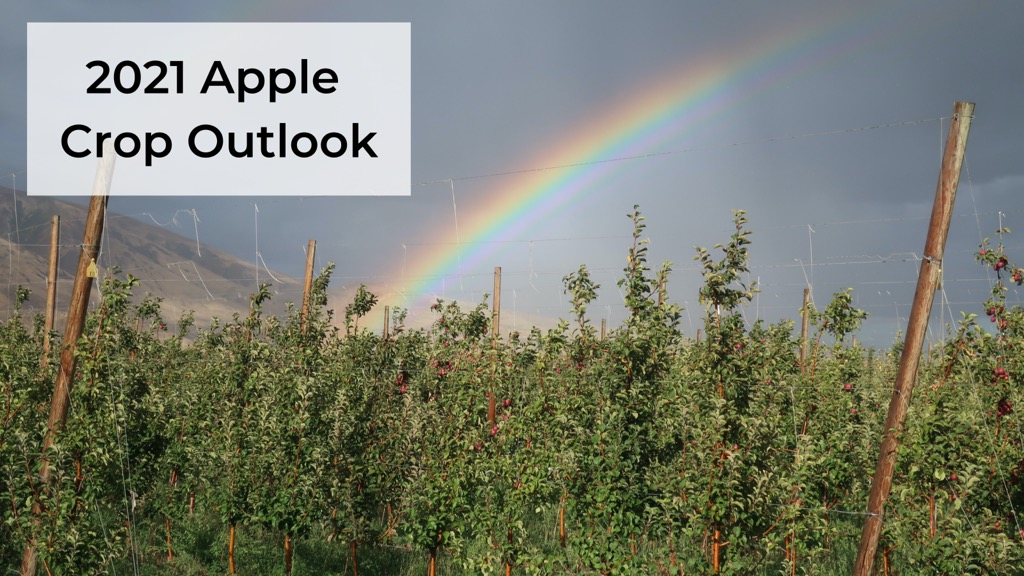
We reached out to extension agents and orchardists around the country to hear what they had to say about the progression of the 2021 apple crop around the United States. Here’s what they had to say.
Aidan Kendall, Mt. Vernon Northwest Washington Research and Extension Center, Mt. Vernon, WA
The cider apple research orchard at WSU NWREC consists of 65 different cultivars grafted onto Geneva 935 rootstock, and 4 cultivars grafted onto Geneva 202. Our apples are being managed with a conventional pesticide rotation. Apple anthracnose is present, though largely kept under control with the removal of contaminated wood. This year many of our cultivars are bearing little to no fruit as a result of a heavy crop in 2020, though what flowered was pollinated successfully by a new on-site hive. The heat wave brought sunburn to some cultivars with heavily exposed fruit, mostly in the border rows. We are grateful for healthy trees and as always, excited for this year’s harvest.
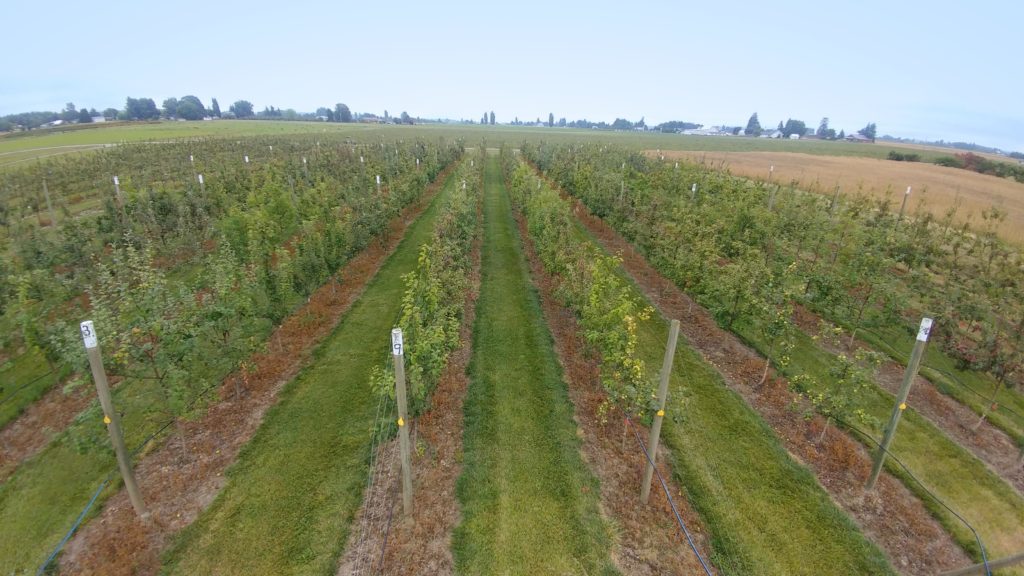
Jake Mann, The Five Mile Orchard, Pajaro Valley, CA
The 2020 harvest came on quickly after the heatwaves of August ripened the apples faster than expected. Our crews were helpful in sorting out sunburnt fruit while picking, and the sound crop stored well in our coolers. Wildfire smoke was an added challenge to harvest logistics, ending some picking days early even though the N95 masks provided by our County Agricultural Commissioner were very helpful to all involved. Apples do not pick up smoke taint, and so we were able to avoid the moral and financial quandary that the wine industry faces in these events. We simply wait until the next reasonable day to continue picking.
It was a dry winter. Pruning work was completed quickly in December and January thanks to no weather delays. Dormant sprays went on without difficulty. We received the most chilling hours seen here in 25-30 years… between 600 and 800, much more than needed to reset our trees. The bloom looked good, and there were no rain events during that time (and so, minimal apple scab events necessitating fungicide sprays beyond our regular applications) As we moved into May, it became apparent that fruit set was light across the Pajaro Valley. Looking back on cold days during bloom, a couple localized morning hail storms, and the possibility of a down year in what remains of a biennial bearing cycle (after 3 good harvests in 2018/2019/2020) has all the growers speculating about what happened, how harvest plans and crop projections will be adjusted. Some of our bonus varieties like Jonagold and Granny Smith (usually reliable croppers) are very light this year. Most of our Newtown Pippin blocks have an acceptable crop developing, and the Red Delicious and Fujis are looking decent enough to sustain a picking crew through harvest.
California is now in another historic drought and we are upping our irrigation plan for this season. We operate with temporary installations of 6″ mainline and 3″ sprinkler pipe, hooking up to shared wells as they’re available through a given week. Usually only applied once in July, we opted for an additional, early round in May that has given the crop a helpful boost going into the big growing days of summer.
Orchard work happens outside, and the folks in our crew remained healthy during the pandemic, save for one core personality, Don Pablo, who passed in January after battling COVID in the hospital for a month. His loss was a real blow to the spirit of the extended family who works to keep these local orchards rolling year after year. The mobilization by our County to get vaccines specifically to the agricultural community in February and March was such a relief, and recognition of support, for the hard working people in our corner of the State.
I’m thankful for the apples we have growing, on ranches that’ve been under our care for years, showing the wisdom and skill of our team, and diligent, iterative improvements to the process year after year as we work with this 100+ year old system. Always something new to adapt to and improve upon. Our connections with the cider industry continue to grow, and it’s a real high point in my year to see how the fruit we produce is being elevated to such a nuanced, geographically representative, and historically significant beverage by the talented cider makers we have the fortune of working with here on the West Coast.
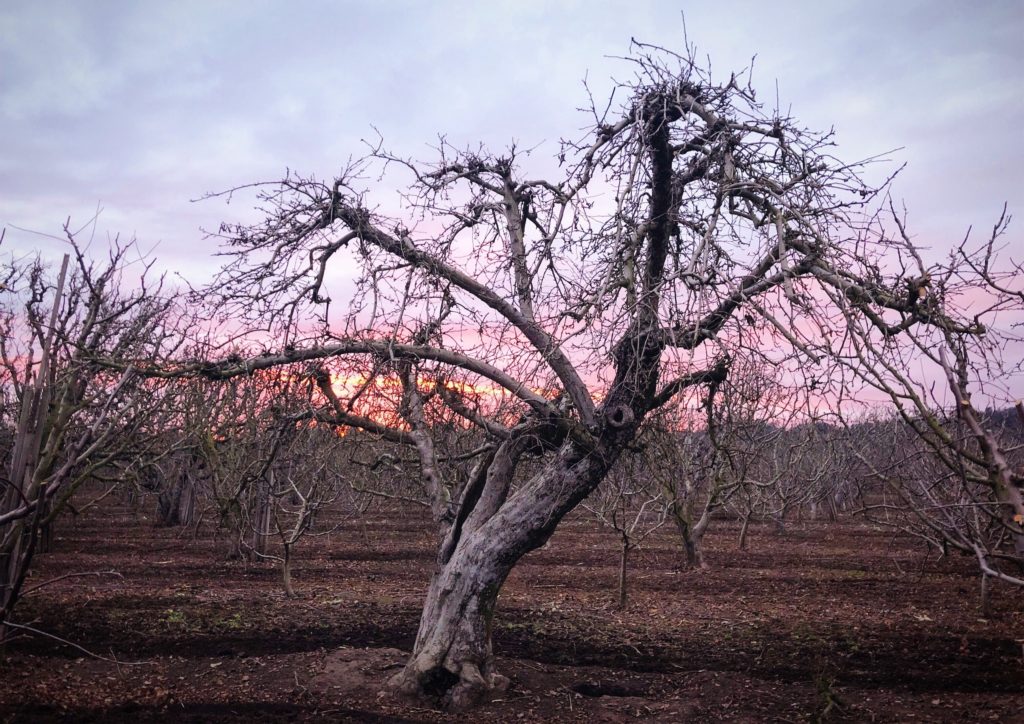
Greg Peck, Cornell University, Ithaca, NY
Crop conditions in Central NY look very good for most of the cider apple orchards. An early budbreak led to quite a bit of anxiety that we’d lose the entire crop to spring frosts. Luckily, the late blooming European cider varieties dodged the worst of the frosts and trees that are in their “on-year” were able to set a full crop. We’ve gotten plenty of rainfall in Central New York, so as we enter into July the fruit is sizing up quickly. Fireblight continues to be a major concern for cider apple orchards in NY. At our research farm in Ithaca, we had a bit of new infection through this year’s flowers despite a very aggressive anti-biotic spray program. We are also seeing fireblight show up in trees that were infected last year when we had a severe outbreak. We’ve applied pro-hexadoine three times this year, as well as adding a low rate of copper to our cover sprays. We also prune out symptomatic branches and sometimes whole trees at least once a week. The late blooming cider apple varieties might avoid spring frost damage, but they are extremely susceptible to fire blight infections during those warm and rainy spring days.
Megan Muehlbauer, Rutgers University, Snyder Research and Extension Farm in Pittstown, New Jersey
The weather in New Jersey was favorable in the spring for adequate pollination of apple flowers. Thus far the crop loads are looking good. Some thinning was required for a few varieties that had excessive fruit set.
In orchards where regular spray schedules were followed there was minimal disease pressure. This was due in part to the fairly dry weather observed in New Jersey from early spring up until present. Insect pressure has been light with the exception of the severe cicada brood X damage. Cicadas have been particularly destructive in the central portion of the state. They first emerged at the beginning of June and the populations are only just beginning to dwindle. Significant flagging of young shoots of apple trees can be seen in orchards throughout the state.
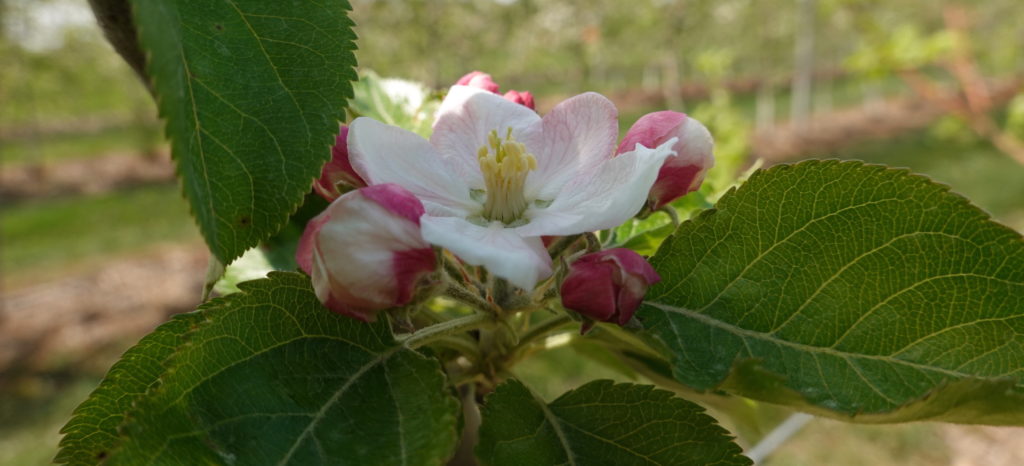
Elizabeth Garofalo, UMass Extension Fruit Program, Belchertown, MA
“Abnormally dry” conditions set in in MA on March 9, according to the U.S. Drought Monitor. These conditions persisted, reaching their worst during the week of April 27 when 20% of the state was experiencing “moderate drought” conditions. At the UMass Cold Spring Orchard in Belchertown, MA water deficits began to improve when a three-day event dropped ~2” of rain. While drought conditions in Belchertown have since abated, the site continues to receive below historical average amounts of rain as of July 1, 2021.
Temperatures in Belchertown during spring months (March-May) were overall warmer than average. On March 12, temperatures reached record highs and four days later, temperatures plummeted reaching record lows. In addition to abnormal, and wildly fluctuating, temperature patterns, nearly a foot of snow fell at Cold Spring Orchard on April 16.
With a drought on through much of the spring, you’d think that disease management would be a breeze. And when it comes to apple scab, you’d be right. With the exception of a few locations which had some extenuating circumstances, the primary scab season was managed readily. In fact, RIMpro logged only four primary infection events for the season (4/29, 5/4, 5/27 & 5/30). The severity of each event was estimated to be in the extreme, however and growers still had to be on their guard.
Long stretches of dry weather in early spring can often indicate an opportunity for reduced fungicide application. This may have been one cause of an increase in powdery mildew (PM) infections seen broadly across the state this year. Many growers have spent more time cutting out PM infested shoots than they did fireblight… Well, until recently that is. Fireblight during bloom was of relatively low concern in Belchertown (we all know fireblight is never of no concern!). Temperatures around bloom remained relatively cool. In fact there was some concern around pollination due to unfavorable bee conditions. However, as UMass’ Jon Clements reported, this year was “as close to a snowball bloom across the board as I have seen in awhile”. We managed to make it through with good fruit set and even squeaked out decent thinning weather although it was touch and go for a little while.
While blossom (fire)blight was not seen much, shoot blights began to show up in late June. Typically, we see this phase manifest later, in early to mid- July. Which, in the timeline of this season brings me too today. As I look out my window, all I can think is “Ouch, bitter rot must be having a field day out there right now”. Climatic conditions for infection initiation are ripe for bitter rot development. We will be keeping a close watch out there for this disease. Over the last few years, we have seen bitter rot cropping up more and more, even though in the past we have traditionally thought of it as a “southern disease”.
While insects aren’t my forte, per se, I can tell you this: we have seen more rosy apple aphid outbreaks across MA this year than we have in recent past. Unfortunately, once you have observed the characteristic leaf curl, it is too late to make an effective insecticide application. We expect to see more deformed, stunted fruit at harvest this year than usual, although, hopefully, not too much. Another interesting if unsettling development in the world of crawlies this year is the early capture of brown marmorated stink bug (BMSB). Typically, in MA, we do not catch this pest in our traps until later in the summer. This year our resident entomologist Dr. Jaime Piñero and his team of graduate students observed the first BMSB in traps the week of May 24 in 5 of 13 locations where traps were set out with a high count of 14.
It seems our warmer than average seasonal temperatures are making certain insect and pathogen pests happy, while vexing us.
Update: As of August 4, Belchertown, MA has exceeded average annual precipitation by more than 3” and Greenfield MA has seen more than 6” above annual average precipitation. If we continue to experience above average rainfall, sugar concentrations in apples could decline.
Amy Dunbar-Wallis, Boulder Apple Tree Project, Boulder, Colorado
After two very disappointing apple-yield years in Boulder County, Colorado, the 2021 crop is looking promising. In 2020, a late frost and snow impacted budburst and pollination so we had very few apples. This year, we have experienced higher than average precipitation with relatively mild temperatures. Undergraduate students involved with the Boulder Apple Tree Project have reported trees with many small apples forming throughout the canopy while out mapping historic trees. Fire blight and codling moths continue to be an issue for apple tree growers. We are optimistic that this will be an excellent year for apple yield.
Nik Wiman, Oregon State University, Corvallis, Oregon
We are in a severe drought here in the Willamette Valley. Regardless, our apple crop in the cider orchard is really great this year. We were a bit overcropped as the fruit set was very high. We have been thinning aggressively because our trees can’t support the fruit load yet. We had an unusual dry spring, so we are anticipating low disease pressure from apple scab, which can be pretty ferocious here in a normal year. Codling moth pressure is always high, and we are anticipating lots of pressure from borers, both flatheaded borers, which thrive on drought-stressed trees, and ambrosia beetles which seem to be ever-present. We hope the heat will not negatively impact fruit quality. We should have fruit available for purchase this year, and we are hoping to have an open-house at our cider orchard this year.
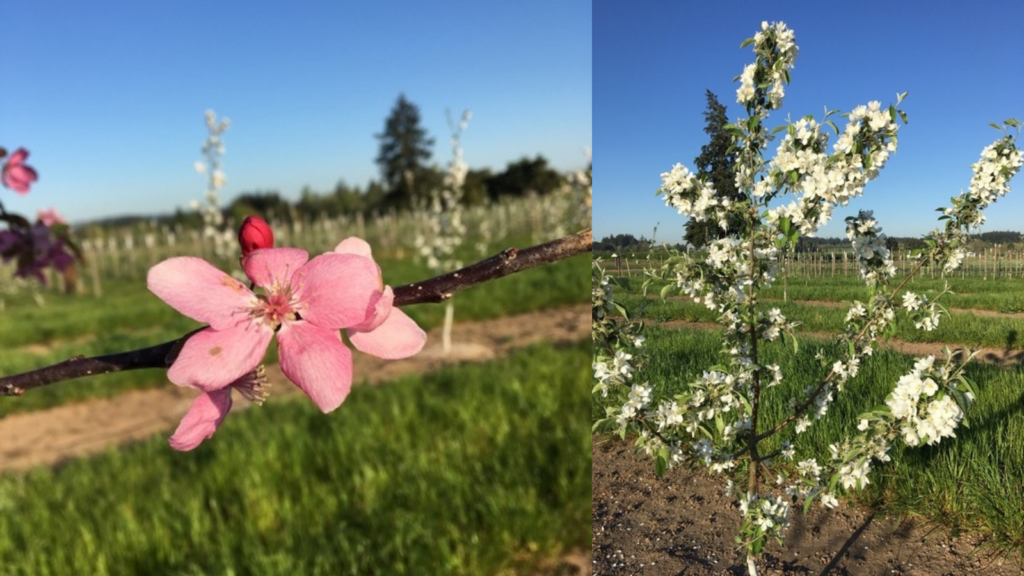
Thomas Kon, NC State Mountain Horticultural Crops Research and Extension Center, Mills River, North Carolina
Spring 2021 was not kind to southeastern apple growers (NC, SC, and GA). A pair of cold nights at pink bud stage caused some bud mortality, which resulted in a reduction in crop potential at some locations. When at petal fall, we observed 25 to 26 F at several locations, and many sites were below freezing for multiple hours. The result is widespread and significant crop damage/loss, with a few exceptions. Unfortunately, 2021 will be a difficult year for much of the southeastern apple industry.
Nikki Rothwell, MSU Extension, Traverse City, Michigan
We have a good crop of apples in NW Michigan. The crop is a bit lighter in our main apple growing region on the Ridge (just north of Grand Rapids). We have had some issues with fire blight this season, and I have also seen more scab than I would like to see so early in the season. The NW region of the state had some bad hail, but as always with hail, it is isolated–some orchards got lucky while others did not. The insect front has been slow with the cool weather early followed by the super hot, but I suscept with the rains, they will start to become more of an issue. Some areas of MIchigan received over 6″ of rain on the 24-28 June rain event. This humidity and wet conditions will also foster disease development if growers did not control primary scab.
Katrina Mendrey, Western Agricultural Research Center, Corvallis, Montana
The fall of 2020 has had a huge impact on cider apple production in the Intermountain West with several cultivars, in particular when trees are under five years, being severely damaged or killed by a sudden drop in temperatures in late October. Some of the cultivars that were severely damaged include Dabinette, Chisel Jersey, Roxbury Russet, Golden Russet and Ashmaed’s Kernel. The degree of damage was variable though based on location and the age of trees and a full report can be found here. For cultivars that came out of the winter undamaged, including Hewe’s Virginia Crab, Binet Rouge, Tom Putt, Muscadtte de Dieppe and Wickson, we’ve had good pollination and fruit set. Fire blight danger was high throughout bloom as usual. Whether trees made it through the high risk period uninfected largely will depend on grower control with effective sprays. So far we haven’t had any reports of damage and have been scouting several orchards for samples to include in a research study on antibiotic resistance in Montana fire blight.
Sherif M Sherif, AHS Jr. Agricultural Research and Extension Center, Winchester, Virginia
Our digital temperature data loggers placed in four different blocks in the AHS Jr. AREC’s research farm, Winchester, VA indicated that we were hit by killing freezing temperatures in the mornings of Friday (April 2) and Saturday (April 3), with the latter being more aggressive and long-lasting. In fact, the lowest we received on Friday was 24oF, but on Saturday, our trees were hammered by temps as low as 21oF for more than 30 min. 21 oF for 30 min or more are enough to kill 90% of apple flower buds at ‘tight cluster’, ‘first pink’ and ‘full pink’. On April 5, we collected flower clusters from Gala, Fuji, Pink Lady, Red Delicious, Zester, and Honeycrisp. Except for Zester, all the cultivars were only moving from ‘tight cluster’ to ‘first pink’. Zestar with flowers at ‘full pink’ showed 65% mortality. Other cultivars showed 45% (Fuji), 45% (Gala), 42% (Pink Lady), 15% (Red Delicious) and 5% (Honeycrisp). Unsurprisingly, king blossoms showed far more damage than side flowers. That being said, I would say that most Virginia growers, especially those in northern and central parts of the state, will achieve almost full-crop at harvest for apples. Growers insouthwest Virginia indicated that their apple orchards were hit hard by frost and they don’t expect an economic crop this year.
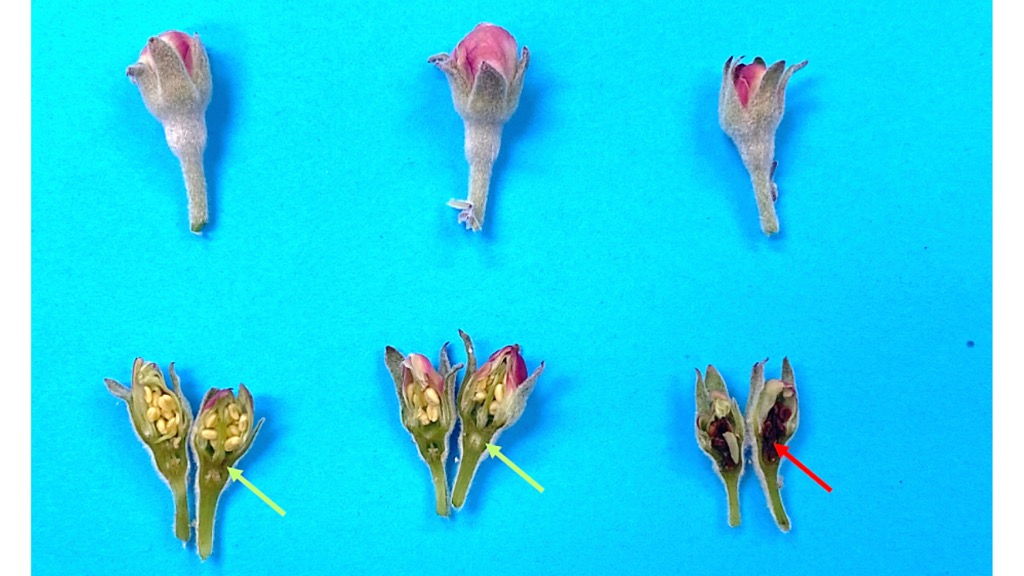
Photos from VA Tech AHS Jr. Agricultural Research and Extension Center
Renae Moran, University of Maine Highmoor Farm, Monmouth, Maine
Spring 2021 weather conditions were favorable for a heavy fruit set. Freezes occurred when trees were still at half-inch-green or tight cluster, so Maine has not had any cold temperature damage as far as I know. Some regions of the state had a very light crop last year and may be set up for biennial bearing, but hopefully, I am wrong. We had abundant bloom and good pollination, so we could be in for an excessive crop. As of May 26, most growers have applied a chemical thinner with favorable weather for good effectiveness. Last year, several growers in the southern part of the state had fireblight outbreaks, and late blooming cider varieties were particularly hard hit. As we progress through the fruit set stage, the lack of sufficient rainfall has many of us worried about another prolonged drought, but it could lessen the chance for more fireblight. Best of luck this season to all apple growers.
PPP Direct Loan Forgiveness Portal Opens Aug. 4

The U.S. Small Business Administration (SBA) has announced that it has created a PPP Direct Loan Forgiveness Portal to streamline the process by which small businesses who received less than $150,000 can apply for loan forgiveness. Over 600 banks have opted in to use the new portal created by SBA and other lenders are being encouraged to join. Borrowers should check with their lending institution to verify whether it will be using the PPP Direct Loan Forgiveness Portal.
The new portal will begin accepting applications on Wednesday, August 4, 2021. The portal can be accessed HERE! There is also a user guide for the new portal HERE!
The SBA has also created a PPP customer service team to answer questions and assist borrowers in with their forgiveness applications. The customer service team can be reached by calling (877) 552-2692. Hours for customer service are Monday-Friday, 8:00am-5:00pm Eastern.
Sept. 1 Webinar: On Premise Bounce Back

After such a challenging year in 2020, the On Premise channel has bounced back much quicker than most anticipated. With sales in many areas above those in 2019, now is the time to understand strategy and tactics in such an important channel.
Matt Crompton from CGA (the On Premise experts) will be on hand to discuss the latest trends, consumer insights and all things bar and restaurant – with one eye, of course, on Cider performance.
Sept. 1 Webinar: On Premise Bounce Back
This content is for members only.
If you were a member and are now seeing this message, please Renew your membership to continue.
Aug. 19 Webinar: Using Instagram Reels
Instagram recently announced that they are transitioning to a video platform. Learn from marketing expert Michelle Pagano (@TheBrewBabe) on how to increase engagement and viewership through videos on this critical marketing platform with this ACA member mini-webinar.
Aug. 19 Webinar: Using Instagram Reels
This content is for members only.
If you were a member and are now seeing this message, please Renew your membership to continue.
Aug. 4 Webinar: Direct to Consumer Compliance

Direct-to-consumer (DtC) shipping of alcohol is on everyone’s minds these days, as consumers and suppliers alike look for better and easier ways to interact.
The success of wineries in growing DtC shipping to a $3.7 billion market is notable. As cider producers look to enter this channel, a solid understanding of DtC shipping laws and tax regulations is critical.
Please join us for a look at how DtC shipping can work for cideries. Topics will include:
- The current state of shipping beverage alcohol direct-to-consumer
- The rules that govern DtC shipping of cider, from licensing requirements to tax remittances and more
- How cider producers can create effective and compliant DtC shipping programs
- Watch-outs and bewares
- The role of industry-level efforts to expand the DtC alcohol shipping opportunity

Aug. 4 Webinar: Direct to Consumer Compliance
This content is for members only.
If you were a member and are now seeing this message, please Renew your membership to continue.
Reflections from Antiracism, Equity & Inclusion Committee Members
We recently asked the Antiracism, Equity & Inclusion committee to reflect on their work this past year. Read below to hear our committee members sharing their thoughts on how our work has affected them.

It has been a highlight of my career to work with the American Cider Association’s Antiracism, Equity & Inclusion committee. There were so many outcomes I didn’t expect, but most of all, that the work we were doing together on this committee would have positive ripple effects across the organization. The practices we use on this committee are helping the ACA advance to the next level throughout all our programming. It’s become a launchpad for organizational growth. This committee deserves so much credit for helping ACA raise the bar for how we pursue and measure success for the entire cider industry. I’m now a believer that doing the work to pursue more equity and inclusion is a mechanism for broader change in any organization. My gratitude for everyone on this team is endless!

Doing this work has become a very grounding part of my weekly routine. During a time with so much change and instability, feeling more and more connected and aware of the world around me has given me a strength and drive to move forward that I honestly needed in order to get through these past 15 months.
In a lot of ways I feel like my eyes are opening wider and wider with every article I read, every question I ask. But it’s not just active learning. It’s learning to be quieter so that I can hear other voices around me. It’s admitting out loud that I am racist and coming to terms with that myself. I have spent 34 years growing up in a racist society, how could I not be? It seems so obvious now. But if you asked me ten years ago if I was racist, I would have been offended and started listing off all the reasons I wasn’t.
Shifting your understanding of what you’re seeing and experiencing, to think critically about your own life and separate out emotions and intentions and perceptions from reality and facts…it’s not easy. There have been moments over the last year that I really questioned myself. Am I performative? Am I a true ally? What does it even mean to be an ally? How can I live a happy life surrounded by and engrained in systems that are designed to keep certain people down? Am I “qualified” to be doing this work? But these questions are in some ways the point. If you’re questioning yourself, then that means you’re actively engaging with these hard topics. This journey is never ending, and sometimes I have to remind myself to take it one step at a time. I’m a goal oriented person, but at this stage in my own journey, the process is the goal. Sometimes that can be incredibly frustrating for my own sense of accomplishment or productivity, but it’s also more rewarding than any specific goal I’ve ever accomplished.
In the last few months my husband and I got a puppy and two kittens. We love these little ones more than I can put into words, and that love has made me think a lot about what it means to really take care of and support each other. Our unconditional love for our pets is something that won’t always be perfect; it doesn’t guarantee safety or the absence of accidents, it doesn’t mean I always treat them perfectly, and I don’t stop living my own life in order to meet every possible need of these little ones. There is always a balance to keep. But it means that their basic needs are met, and when something does go wrong that we will be there to get through it together as best we can. It means we genuinely want the best for them, and want to do our part to make that possible. Then I think about our society as it is now. There is no unconditional love for people. In fact there’s nothing but conditions placed on society’s support and love. Then I imagine a society that treats all human beings with unconditional love. It’s not perfect. Tragic accidents still happen. Terrible acts are still committed by individuals. But as a society, we collectively protect each other and unconditionally commit to growing as a collective group through whatever sphere of influence we have. In all facets of life, there is attention to a shared understanding of the greater good and basic human rights. For the first time in my life, I think that future is possible. It will never be perfect, but it can be a whole lot better. But we have a whole lot of work to do to get there!
I continue to be both humbled and grateful to have the opportunity to learn and be part of this work with the American Cider Association and the other members of the AEI Committee.

Through a somewhat non-traditional path, I found my way into serving as a member of the ACA’s Antiracism, Equity, and Inclusion Committee, and it’s been amazing to see how the committee’s vision and mission has grown over this past year. While the cider industry has had DE&I challenges, it’s been refreshing to serve on a committee that doesn’t shy away from those stumbles, while taking actionable steps to improve the diversity, equity, and inclusion landscape for the industry. Additionally, it’s been great to work with so many passionate people from varied backgrounds. The committee’s newsletter, spearheaded by Olivia Maki, also has helped to invigorate the conversation around building a just, equitable, and inclusive environment in cider and beyond. I look forward to what our committee will do in the future!

This past year being on the ACA’s Antiracism, Equity and Inclusion Committee has been a labor of love encased in a fragile box. Meaning, it was a relief to know that the ACA is dedicated to making change regarding diversity in the industry. However, with so much going on inside and outside of the industry that is working against that type of change, it can feel like an exercise in futility ready to collapse at any moment.
That is one of the main reasons I am so happy about being on this committee in particular. Even before all of the events of the past year, this team was dedicated to making significant and meaningful change to the perception of the cider industry internally as well as externally. As someone more connected to the consumer side of the industry I can attest that it is exciting to see that shift in perception and to be a part of that change.
I think the first step to any change is having a genuine group of people that believe in the goal. I can say with 100% certainty, we have that group of people and are positioned to do some awesome work for the cider industry.
Being a member of the AEI committee has increased my personal sense of community within the cider world. Not only am I proud that Blossom Barn Cidery is a part of the ACA, I’m thrilled that so many others in the organization are resolute in their commitment to equity, antiracism, and inclusion. It’s not easy work but it is necessary. Thanks to the work of the committee and Michelle’s leadership a lot of progress has been made in a short period of time. Cheers!

The road ahead to a just and equitable cider industry is a long and winding one. Serving on the AEI committee has given me the opportunity to work alongside a group of individuals that care deeply about the cider industry and the mission of our committee. I’m grateful to them and the ACA Board for allowing us this platform. Roughly one year ago following the murder of George Floyd we as a committee came together to recognize that we needed a more active approach to our DEI work and launched a number of initiatives, including our monthly newsletter, to be able to put words into actions. We are learning and unlearning, stumbling and picking ourselves up, and I look forward to the work we are going to continue to do.

A few years ago, I certainly would have said I recognized forms of systemic racism, particularly those that restricted resources and opportunities to various disenfranchised groups in our communities. As I reflect on that awareness now, I am sorry to say that I could not have been more complacent or obtuse. The more I study social justice, the more I see that my challenge was not recognizing racism, but rather understanding how blind I can be to the reality that systemic racism and broad socio-economic biases (beyond what Ibram X. Kendi might call “the mirage of race”) are profoundly pervasive, enduring, and even actively worsening. Provoking insecurity, my lack of insight can feel deeply troubling at times when I reflect on my own behaviors. But the process is also encouraging in a fashion, because I feel that only with insight can we begin a journey toward addressing the issues that so trouble our communities.
For helping me along this journey, challenging my perspectives and offering their own, I’d like to thank the ACA and our committee on anti-racism, equity and inclusion. However, I’d like to distinguish in my thanks Olivia Maki for her incredible work in curating a fantastic monthly collection of resources on anti-racism, equity and social justice over the past 12 months. The newsletter for me has been alternately challenging, radically informative, and thoroughly uplifting. Drawing from wide ranging media platforms, I’ve been witness to moving personal perspectives, crucial academic positions, and expressions of the effects of racism in film, music and literature. These perspectives don’t typically tumble out of the algorithms for the average middle age white guy’s newsfeed, but I believe that is precisely the reason they are so valuable. The newsletter has been a remarkable starting point for my studies, and I could not encourage my own peers enough that if these ideas make you uncomfortable, then study more, fact check, listen to critiques and opposing viewpoints, and discuss.
To the latter point, I appreciate our cider community’s efforts to create a safe and inclusive space for just these types of discussions, and would refer you to the recording of the NYCA’s discussion on reparations and Brooke Glover’s article on the ACA board’s work as just two examples of the ways our community is working toward goals of equity, inclusion and social justice. Though I’ve considered it my first priority to listen and study during the past 12 months, I feel richer for being a part of this community and can appreciate that we have much yet to accomplish in our small corner of the craft beverage industry.

Cider is a small industry, and it can feel at times isolated from the broader world. On first glance, the work we do at the ACA may appear inward looking, in a bubble of orchards, fermentations, tastings, and good cheer. In prior years, some of our members, myself included, may not have seen how racism directly affected the cider industry. Some may have wondered why a panel on diversity at CiderCon was even necessary. This work on antiracism has forced me to confront my own color blindness and acknowledge that this is not a distraction but a necessary centerpiece to the work we do at the ACA and the work we do in our own companies and communities. We have been challenged to affirm what is most important to us and what kind of people we aspire to become. Institutions and cultures can feel slow to change. Even when there is intention, the how of changing can get bogged down in the efforts, and inertia threatens forward motion. When feeling stuck or at a loss of how to move forward, I have found inspiration in the stories presented and efforts undertaken by so many in the food and beverage industry as highlighted by the monthly antiracism newsletter. I am thankful to be a part of a community pledging to do this work together.
Reserve Your Trade Show Booth for CiderCon 2022!
The American Cider Association is thrilled to announce that CiderCon® 2022 will be held in-person in Richmond, Virginia from February 1-4, 2022! Not only that, but we’re ready to start taking reservations for our Trade Show. You can book your booth from June 15 – July 15 at the early bird price of $2375.
In addition, the ACA would really like to thank our allied trade members who have sponsored us in the past, those who have been exhibiting with us the longest, and those who took a chance and participated in our extremely successful virtual CiderCon® in 2021. To show our gratitude, we’ve implemented a points system that thanks CiderCon® vendors by gifting loyalty points that move you up the priority list for selecting your preferred Trade Show booth space.
Points are assigned based on:
- Longevity in the show – 1 point per year of participation in the trade show
- Taking part in the virtual conference – 2 points
- Reserving and paying for your booth during our discount period – 1 point
- Sponsoring the American Cider Association – Points assigned on case by case basis
Speaking of sponsorship…
Supporting the American Cider Association is a great way to gain brand visibility at CiderCon® and beyond. There are a myriad of reasons why sponsoring the ACA works in your favor. We shout out our appreciation for our sponsors far and wide at CiderCon®, on our website, on social media and beyond and our members hear us. Our Executive Director Michelle McGrath is eager to work with you on creating a custom sponsorship experience that meets your brand’s personality and needs. You can schedule a 30-minute face to face meeting with our Executive Director here. Have your eyes on certain CiderCon® branding real-estate? Fill this short form out and we’ll follow up ASAP!
What Next?
Register HERE! We’re really looking forward to working with all of you and seeing you next February in Richmond!
Looking to become a CiderCon® vendor for the 1st time?
Please contact Ellen at tradeshow@ciderassociation.org to learn more!
Making Safer Cider Communities for All

You’ve probably seen the posts on Instagram or heard rumblings ripple throughout your friend group or community: the craft beer world is in the midst of a true reckoning right now.
Over past few weeks, there has been an immense outpouring of professionals in the industry, publicly sharing stories of gender-based discrimination or violence they’ve experienced in the workplace. These accounts, which range from repeated microaggressions to direct sexual assault, have been eye-opening for many and not so surprising to others.
Gender-based discrimination is relatively common in the US workplace, and in hospitality industries, customers, colleagues and managers can be sources of discriminatory behavior. Did you know that even though sexual harassment and gender-based discrimination are illegal, 42% of women experience gender-based discrimination in the workplace and 72% of incidents go unreported? The shockwaves running throughout the beer industry must serve as a wakeup call to all working in the alcohol sector — and that unequivocally includes the cider industry.
The American Cider Association is 100% committed to ensuring the spaces we hold for the cider community are safe and inclusive. Part of cultivating safe spaces is regularly evaluating what measures are in place to maintain that space and to look for opportunities to improve. We are taking this moment to evaluate our community policies at ACA.
Here are new ways we are striving to help make safer cider communities for all:
- For the past several years, CiderCon has held a code of conduct policy. More recently, we passed a code of conduct for ACA volunteers. But we did not establish a neutral third party to accept code of conduct violation complaints. Moving forward, CiderCon incident reports involving sexual harassment or assault by CiderCon participants and volunteers, ACA board, ACA staff and ACA committee volunteers can be made to WeVow. Other code of conduct complaints related to CiderCon participants and volunteers, ACA board, ACA staff and ACA committee volunteers may be made to the Executive Director or a Board Director. We will share more specific reporting procedures on our website soon.
- As your trade association, we want to provide you with resources to reduce the burdens of doing business. This includes tools to manage your team so that your business may thrive. We have provided members with people management trainings at CiderCon, but none of these trainings specifically addressed sexual harassment policies or other such tools.
We are pleased to share that starting today, ACA members now receive:
- A 30% discount at WeVow through December 31, 2021. WeVow is a subscription-based sexual harassment management program providing tools, policy templates, resources, counseling and incident reporting tools to your business. The packages are affordable and tiered based on business size. With your ACA discount, packages for a small business may be a little as $21/month. The ACA member discount code can be found by logging in to your ACA account and going to our member resources page. This code will expire at the end of the year.
We also wanted to provide a starting point for any members looking to create or strengthen their workplace anti-sexual harassment policies. Consistent messaging, and a transparent chain of accountability is crucial for employees’ safety — blanket statements along the lines of “sexual harassment is not tolerated here” is not as powerful as a clearly worded policy that can be referenced whenever necessary.
Here are five more best practices for cidery owners/managers to combat and prevent sexual harassment:
- Have a sexual harassment policy and a clear protocol on how staff activate compliance concerns, ideally involving a neutral third party to hear complaints.
- Have open conversations with your team to cultivate a culture of no-tolerance for harassment. Some states require annual sexual harassment trainings for all staff.
- Publish pay rates in job postings, which helps to prevent gender-based pay inequity. Also important to note: It is illegal to ban employee conversations about wages.
- Review state labor laws and compare them with your hiring practices.
- Strive for inclusive management. We know from research that diverse teams perform better — this includes, but is not limited to, gender representation.
We are excited to roll out a New Member Resource Library later this year, and plan to provide further resources for managing and supporting your team. If there is a specific resource in this arena that you would like to see, please let us know. Also, if you have suggestions related to the conduct of ACA staff, volunteers and CiderCon attendees, please share them with us.
We are committed to creating a community in which all individuals feel safe, valued and respected and have a sense of belonging. Making lasting changes is going to require an ongoing, intentional effort across our industry. The ACA will continue to improve our strategies around issues of sexual harassment and discrimination. We hope for continued conversation, self-reflection and evaluation from all of our members, so that we can tackle these issues head-on, together.
We look forward to hearing from you.
ACA Board of Directors–Executive Committee
From our Statement of Intent: “We believe that existing structures of power, privilege and discrimination must be actively questioned and evaluated in order to create equitable opportunities in an environment that embraces and values our differences. We will strive to create events, opportunities and organizational policies that embody these values, and to continue evaluating these practices for sustained growth and improvement.”
CCP On Demand Now Available!

We are thrilled to announce that our introductory level Certified Cider Professional program is growing! CCP Level 1 training is now available online for the first time. Starting now, you can order the new Level 1 certification bundle.
Pricing
The Level 1 bundle is $99 for non-ACA members, $75 for members. The bundle includes:
- Detailed, updated study guide
- On-demand online training webinar (1.5 hours)
- Level 1 exam (2 attempts)
Test & Test Prep
The training and exam cover cider-specific facts in these key areas: (1) Apples, the orchard & history (2) Cider making (3) Evaluation (4) Families & Flavor (5) Keeping & serving (6) Food & cider (7) Social Responsibility. The closed-book exam has 60 multiple choice questions. The training materials include an updated, detailed study guide and a 1.5 hour webinar. Careful review of the study guide and webinar should prepare you to pass the exam!
Who Should Become a CCP?
First and foremost, if you sell cider, this program is for you. If you write about alcohol or food, this program is for you. If you just really love drinking cider, this program is for you. Maybe you run a beer-focused bottle shop with a cider section and want to learn more about cider? Maybe you hope to prove to your community’s cider drinkers that your shop knows its fermented apples? Maybe you are a sommelier or beverage director and want to be able to chat more about cider with customers? Maybe you are a distributor that wants to better understand the diversity and range of the cider category?
We target the front line of cider sales as our primary audience for CCP, but anybody is welcome to take the test. There is no pre-requisite for the Level 1 exam.
Meet Our New Team Member
We are also excited to announce that Jennie Dorsey has joined ACA as our part time Cider Education Outreach Manager. If you have questions about CCP, please do connect with Jennie!

Sponsors
Thank you to our 2021 CCP presenting sponsor, Petainer, and to our summer training sponsor, Arryved!

DEADLINE EXTENDED! Volunteer on ACA Committees!
UPDATE: Application deadline extended until June 1, 2021 at 12:00pm Pacific Time!
As a small membership-funded nonprofit, our work is powered by the grassroots cider community. We are blessed to work with passionate and talented people like you that help us grow and support a thriving cider category. Maybe you would like to consider joining a committee?
ACA’s current commitees include:
- Government Affairs
- Education
- Data Insights
- Marketing & Resource Development
- CiderCon
- Antiracism, Equity & Inclusion
Commitment: Committee commitments are two years, except for the CiderCon committee, which is just one year. Committee members are 100% volunteer positions.
Service Expectations: We’ve put together this handbook to detail what the committee experience is. Please read through the handbook if you think you might want to apply for committee membership.
How to Apply: Click here to apply to join a committee. Applications are due on June 1 by 12:00pm Pacific Time. Questions? Don’t hesitate to reach out.
Hear from ACA member Sean Tyson of Cider Soms, a volunteer on the Antiracism, Equity, and Inclusion Committee, about what it’s like to serve on an ACA committee by clicking on the picture below.
Fermentis Webinars for Cidermakers

Fermentis has a free webinar for cidermakers. You can check it out below and find links to register. Each webinar has two sessions, one for commercial cidermakers and one for home cidermakers, however, anyone is welcome to attend either session.

Volunteer on ACA Committees!

UPDATE: Application deadline extended until June 1, 2021 at 12:00pm Pacific Time!
As a small membership-funded nonprofit, our work is powered by the grassroots cider community. We are blessed to work with passionate and talented people like you that help us grow and support a thriving cider category. Maybe you would like to consider joining a committee?
ACA’s current commitees include:
- Government Affairs
- Education
- Data Insights
- Marketing & Resource Development
- CiderCon
- Antiracism, Equity & Inclusion
Commitment: Committee commitments are two years, except for the CiderCon committee, which is just one year. Committee members are 100% volunteer positions.
Service Expectations: We’ve put together this handbook to detail what the committee experience is. Please read through the handbook if you think you might want to apply for committee membership.
How to Apply: Click here to apply to join a committee. Applications are due on June 1 by 12:00pm Pacific Time. Questions? Don’t hesitate to reach out.
Hear from ACA member Sean Tyson of CiderSoms, a volunteer on the Antiracism, Equity, and Inclusion Committee, about what it’s like to serve on an ACA committee by clicking on the picture below.
GLINTCAP – What You Need to Know
Please read below for the latest updates on GLINTCAP 2021 from competition director Eric West including tentative scheduling for 2021 and how to submit your entries.
Based on what is currently known about the pace of the COVID-19 vaccine rollout in the US, the 15th Annual Great Lakes International Cider and Perry Competition (GLINTCAP) will be rescheduled for late July to early August. This postponement will ensure the safety of our judges, stewards, and staff, and allow the judging to be held as normally as possible.
When the rescheduled event dates are confirmed with the venue, we will make an official announcement via email and social media. Until then, we ask that potential volunteers not commit to specific travel plans.
Entry registration for the 2021 event is open from now until Friday July 2nd at https://glintcap.org/register/. Entry fees are frozen at their 2020 levels: $75 per Commercial Division entry and $22.50 per Noncommercial Division entry. There will be no Early Registration window or Late Registration window for 2021.
There is no limit to the number of entries you may register in 2021, and you may register additional entries until registration closes on Friday July 2nd, simply by submitting a new entry form. You may not, however, enter the same product into multiple style categories. Visit https://glintcap.org/rules/ for a complete list of rules and regulations.
Samples must arrive at a designated collection point no later than Friday July 16th. Collection points in the United States (Vander Mill) and Canada (Twin Pines) remain the same as in recent years. Visit https://glintcap.org/shipping/ for complete details.
Entrants who registered in 2020 can make changes to their entries at no cost by emailing me (eric@ciderguide.com) between now and Friday July 2nd. These changes include swapping out one cider/perry for another, or editing details for an existing entry such as apple/pear varieties and ABV. Search your email account for the subject “GLINTCAP 2020 Entry Confirmation” for a record of what you have previously entered.
If you already shipped your samples in 2020 and wish to send fresher samples for the July 2021 event, we are offering a $20 refund per Commercial Division entry and a $10 refund per Noncommercial Division entry to offset your costs. Please email me (eric@ciderguide.com) to confirm whether you intend to send new samples for the July 2021 event.
We are now accepting judge applications for this year’s competition. There are also volunteer opportunities available for stewards, who pour samples for judges and help organize paperwork. Please visit https://glintcap.org/volunteer/ and complete the questionnaire if interested. If you registered to volunteer in 2020, please email me (eric@ciderguide.com) to confirm whether you intend to participate in the 2021 event.
We appreciate your understanding of yet another postponement. We will reach out again when the rescheduled dates for the judging are confirmed, and will notify you of any changes that may impact the timing or format of the 2021 event.
Eric West
Competition Director
Cornell Cider Supply Chain Survey

David Zakalik, a grad student under Greg Peck, has developed a survey to assess cider supply chains across North America. He is asking for the help of ACA members to take the survey to create a larger base from which to glean information. Please read below for the description of the survey from David and to find the link to the survey form.
The Peck Lab Group at Cornell University has been collecting data from cidermakers across North America about apple supply, what varieties folks are fermenting/growing, and how apple supply affects cider style. We’re doing one final push for responses (180 and counting so far) from all sizes and styles of commercial cideries. We would greatly appreciate your participation to help us understand how what we’re researching affects the cider industry.
The more responses, the more representative the results will be of the industry as a whole. If you’d like your cidery’s needs to be heard by researchers, please take a few minutes to fill out this Google Questionnaire. All info will be anonymized; a report will be coming out later this year. Responses will be accepted through May 15th.
Please direct any questions to David Zakalik at dlz27@cornell.edu. Thanks in advance!
Restaurant Revitalization Fund Webinar Now Available!
The recording of the Restaurant Revitalizaiton Fund (RRF) Webinar with the U.S. Small Business Association that took place on April 21, 2021 is now available to American Cider Associations members.
For more information regarding the Restaurant Revitalization Fund, check out our blog post!
Restaurant Revitalization Fund Webinar Recording
This content is for members only.
If you were a member and are now seeing this message, please Renew your membership to continue.
Restaurant Revitalization Fund Webinar with SBA
This content is for members only.
If you were a member and are now seeing this message, please Renew your membership to continue.
Restaurant Revitalization Fund Update

UPDATE 04/27/2021 Registration for the Restaurant Revitalization Fund will begin will begin Friday at 9am and the application period will start on Monday, May 3 at 12pm ET. The online application will remain open to any eligible establishment until all funds are exhausted.
UPDATE 04/22/2021 SBA has announced technology partnerships with several point-of-sale (POS) service providers to help streamline the application process for the Restaurant Revitalization Fund (RRF). Partnerships have been established with Clover, NCR Corporation, Square, and Toast so far. Once SBA announces when applications will be accepted, qualifying businesses can work directly with these POS service providers to help them apply for RRF. The POS service providers will help in different ways, from providing an integrated application process, to supplying pre-packaged POS documentation, to hosting webinars. Check with your POS system to see what they are offering.
While SBA encourages applicants to use the POS ecosystem, applicants without access to point-of-sale service providers can submit their applications electronically at restaurants.sba.gov.
Who is eligible?
- Restaurant, Food Stand, Food Truck, Food Cart
- Snack and Nonalcoholic Beverage Bar
- Caterer
- Bar, Lounge, Saloon, Tavern
- An Inn*
- Brewery, Brewpub, Microbrewery, Taproom, Tasting room*
- Bakery*
- Winery*
- Distillery*
- A licensed facility or premise of a beverage alcohol producer where the public may taste, sample, or purchase products
- Other similar place of business in which the public or patrons assemble for the primary purpose of being served food or alcohol.
*Inns, bakeries, breweries, brewpubs, microbreweries, taprooms, tasting rooms, wineries, and distilleries are limited to those that have onsite sales to the public of 33% or more of gross sales.
What is the maximum grant amount for the RRFG?
The maximum grant amount is $5M per location and $10M total for the eligible businesses with more than one location.
Is a business that applied for and received a Paycheck Protection Program (PPP) loan eligible to apply for an RRFG?
Yes. However, the RRFG will be reduced by the total amount of PPP Loans.
What documents will an eligible business need to prepare to apply for a RRFG? (Please remember that while you can begin to compile information, you cannot yet submit your application to the SBA.)
- SBA Form 3172
- Verification for Tax Information: IRS Form 4506-T, completed and signed by Applicant. Completion of this form digitally on the SBA platform will satisfy this requirement.
- Gross Receipts Documentation: Any of the following documents demonstrating gross receipts and, if applicable, eligible expenses will satisfy this requirement.
- Business tax returns (IRS Form 1120 or IRS 1120-S)
- IRS Forms 1040 Schedule C; IRS Forms 1040 Schedule F
- For a partnership: partnership’s IRS Form 1065 (including K-1s)
- Bank statements
- Externally or internally prepared financial statements such as Income Statements or Profit and Loss Statements
- Point of sale report(s), including IRS Form 1099-K
- For applicants that are a brewpub, tasting room, taproom, brewery, winery, distillery, or bakery:
- Documents proving that onsite sales to the public comprise at least 33.00% of gross receipts for 2019, which may include Tax and Trade Bureau (TTB) Forms 5130.9 or TTB. For businesses who opened in 2020, the Applicant’s original business model should have contemplated at least 33.00% of gross receipts in onsite sales to the public.
What will the RRFG rollout schedule look like?
| Priority Period Days 1 to 21 | SBA will accept applications from all applicants but priority will be given to small businesses that have women, veterans, and socially or economically disadvantaged individuals that have 51% ownership. |
| Open to all Applicants Day 22 through funds exhaustion | SBA will accept applications from all eligible applicants and process applications in the order in which they are approved by SBA. |
Are some RRFG funds set aside for specific groups?
Yes, there are funds set aside for specific groups. They are as follows:
- $5 billion is set aside for applicants with 2019 gross receipts of not more than $500,000
- An additional $4 billion is set-aside for applicants with 2019 gross receipts from $500,001 to $1,500,000
- An additional $500 million is set-aside for applicants with 2019 gross receipts of not more than $50,000
What can my RRFG funds be used for?
- Business payroll costs (including sick leave)
- Payments on any business mortgage obligation
- Business rent payments (note: this does not include prepayment of rent)
- Business debt service (both principal and interest; note: this does not include any prepayment of principal or interest)
- Business utility payments
- Business maintenance expenses
- Construction of outdoor seating
- Business supplies (including protective equipment and cleaning materials)
- Business food and beverage expenses (including raw materials)
- Covered supplier costs
- Business operating expenses
For more information you can check out the RRFG Info Page at SBA or sign-up to receive updates about the RRFG from SBA. In addition, you can download the National Restaurant Association’s FAQ Guide for the Restaurant Revitalization Fund Grants
New ACA Member Benefit!

The American Cider Association is excited to announce a new partnership with Good Beer Hunting to bring you premium content from their Sightlines+ insights newsletter. Each week, their team combines data, analysis, and real-world experiences from across alcoholic beverage to help break down trends across categories that can help your business make decisions for the future. All ACA voting members will receive a 50% off a year membership to some of the best insights in the industry from writers like Bryan Roth and Kate Bernot. Login to your ACA account to find the code for your 50% discount.
Interested in learning a bit more about Sightlines? Check out these recent articles:
Upcoming Webinars: Coffee Chats with Vinoshipper

The American Cider Association is excited to share two upcoming webinars with Theresa Dorr of Vinoshipper that will be available to their members. Please read below for more information about these webinars and how to register. You must be an active ACA member to register for these events.


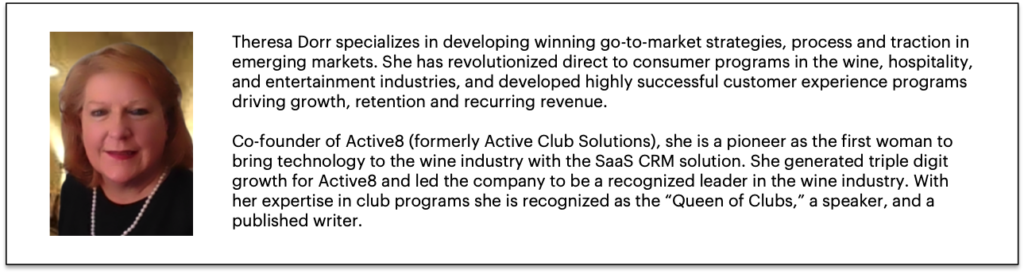
Coffee Chat with Vinoshipper: Sales Beyond the Tasting Room: Maximizing Your Online Reach

This content is for members only.
If you were a member and are now seeing this message, please Renew your membership to continue.
Coffee Chat with VinoShipper: DtC Cider Trends, 2020 + Beyond
This content is for members only.
If you were a member and are now seeing this message, please Renew your membership to continue.
Get to Know Your Board Member: Soham Bhatt

We’re pleased to introduce you to the newest ACA Board Member, Soham Bhatt of Artifact Cider Project who was elected to an At Large Cidery Seat on the board in 2021!

Where do you work and what is your position?
Co-founder and cidermaker at Artifact Cider Project in Massachusetts
Do you work in cider full time? If not, what is your other job?
Full-time
How did you get into cider?
As a customer! I had a few “epiphany ciders” that pushed me from customer to producer and changed my worldview on the relationship between apples and cider: West County Cider, Oliver’s, Cidre Dupont, and Gurutzeta.
Why did you decide to run for a position on the board?
Cider is at an exciting moment in it’s growth as an industry, and I think that I can provide a unique perspective on customer education and advocacy of cider as a category.
What are your hopes for the future of the US Cider Industry?
That it’s here to stay. Some alcohol trends come and go, styles come and go, but I’d really like cider to become a fundamental part of the cultural landscape of the United States.
How do you describe your cider region?
Broadly, our region is the Northeast. The apples we work with primarily grow in MA, NY, NH, and VT. When we make terroir-driven ciders, we focus specifically on the middle Connecticut River valley, upper Berkshires area.
What’s your favorite apple to work with and why?
Depends on the grower. I love Roxbury Russet because of its provenance, but also because of its richness, versatility, and distinct flavor profile. McIntosh is an oft-maligned apple that in the right hands with the right tools is also quite explosive aromatically and exciting. In terms of European apples, I would have to say that Yarlington Mill, with its floral, fruity softness, is also a pleasure to work with and makes me yearn for an American seedling that can supplant it.
What is your favorite cider/food pairing?
Depends on the cider. I love fresh, fruit forward ciders at the start of a meal, so anything snack-y, like pâté, tinned fish, basically any cheese, raw bar, takis, cheetos, funyuns, chips of various flavors, fried goodies.
What is your favorite nature/cider pairing?
Also depends on the cider. I love a dry, funky cider at dusk, sitting ocean side around early May, when the flowers are beginning to bloom but the water’s still too cold to take a swim.
What would you like our members to know about you that they might not know?
My wife and I are enthusiastic travelers (pre-Covid), and love to explore new places around the world. As avid home cooks we try to take cooking classes and eat everything wherever we go. Upon returning we try to replicate our favorite dishes for our friends. Come over and eat!
Learn more about all our board members here.
Annual Membership Meeting Recording Available!
In the meeting, we reviewed last year’s accomplishments, took a look at our new strategic plan, and talked about our future activities to support the cider industry.
You must be an Active ACA Member to view the Annual Membership Meeting. You can become a member or update your membership here.
Check out the recording of this year’s ACA Annual Membership Meeting by clicking here! You will be prompted to login prior to being able to access the link to the recording.
Annual Membership Meeting Recording
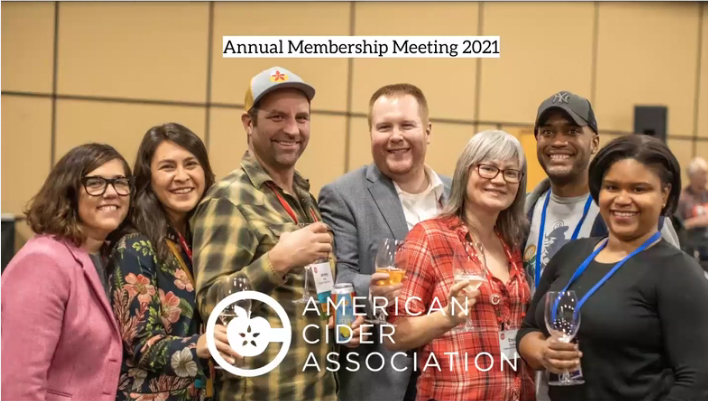
This content is for members only.
If you were a member and are now seeing this message, please Renew your membership to continue.
Get to Know ACA President Eleanor Leger

International Women’s Day has been happening for a little over 100 years, but we all know the mark women have made upon history is much longer than that and so has been their role in cidermaking. Furthermore, we continue to see more women take a leading role in the cider industry.
You’ve already been introduced to Vice President Brooke Glover today. Now it’s time to get to know ACA Board President Eleanor Leger. Eleanor has been involved with the ACA since it’s inception and has served on the board in various capacities over the years. She was elected to be Board President in 2021.
Where do you work and what is your position?
Founder and CEO, Eden Specialty Ciders, Newport, VT
How did you get into cider?
I started making ice cider in our basement in 2007. One thing led to another…
Why did you decide to run for a position on the board?
I originally ran for an ‘At Large’ position on the Board back in 2015 hoping to represent the perspective of smaller, orchard-based cideries. For the first few years I was the only woman and the only small cidery on the Board. We made good progress in professionalizing the Association, moving our finances from spreadsheets to QuickBooks, hiring our first Executive Director in Michelle, and including a track at CiderCon of relevance to smaller orchard-based producers. I was honored to be re-elected in 2019 as Eastern Region Chair.
What are your hopes for the future of the US Cider Industry?
I’m encouraged by the continued steady growth of regional ciders. I look forward to increasing awareness of cider’s diversity of flavors and methods, our ties to orchards and agriculture, and our efforts to welcome all to our products, our taprooms, and our industry.
What do you feel you uniquely bring to the board?
I bring a unique combination of 1) a professional background in business and product strategy, 2) 14 years as a very small scale grower and producer, 3) experience with wide distribution in the market due to our leadership in the tiny niche of ice cider. This means I have some understanding of the needs of cideries of all sizes and strategies, and of the complexities of the regulations, market dynamics and business challenges that impact them.
How would you describe the approach you plan to take in your role as president of the ACA board?
Our role is to work with Michelle to set the overall strategy and plans for the Association and support her in achieving them. I’ve been involved in the development of our new strategic plan, and am very excited about the initiatives we will be working on. I will be looking to insure our work is delivering benefits for all segments of our industry, and that we are consciously expanding our outreach – to the hundreds of small cideries that may not realize how our programming can help them, to the apple growing community that shares a stake in our future, and to Black, Indigenous and People of Color among consumers, trade, producers and suppliers whom we invite to join our journey.
Finally, I want to make sure we all have FUN doing this work. One of the things I have loved most about being in this industry is that by and large we are down-to-earth people that enjoy having a good cider at the end of the day, and are excited to have others party with us!
What’s your favorite apple to work with and why?
At Eden we work with so many heirloom and tannic varieties it is difficult to choose just one. For right now I will choose Belle de Boskoop – an old Dutch russet that actually became very popular in Normandy. We just released a single-variety of this from the 2019 harvest at Scott Farm. It has wonderful juicy acidity with pronounced orange and tropical notes.
What is your favorite cider/food pairing?
Any dry, tannic still cider with a pan-seared pork chop, also shortbread cookies with a glass of ice cider at the end of a meal!
What is your favorite nature/cider pairing?
Sitting on the beach at nearby, aptly-named Crystal Lake with a can of Deep Cut.
What would you like our members to know about you that they might not know?
I have two grown children, two border collies, and am blessed to be married to a saint for more than 35 years 🙂
Get to Know ACA Vice President Brooke Glover

International Women’s Day has been happening for a little over 100 years, but we all know the mark women have made upon history is much longer than that and so has been their role in cidermaking. Furthermore, we continue to see more women take a leading role in the cider industry.
Today we invite you to get to know the two women at the helm of the ACA board–first up, Vice-President Brooke Glover. Brooke was re-elected to the board and re-elected to the position of Vice President in 2021.

Where do you work and what is your position?
I am one of the co-founders and President at Swilled Dog Hard Cider and Swilled Dog Spirits.
How did you get into cider?
The first time my husband took me back to his hometown, we went to one of his friend’s cellars and I was able to try dry cider, straight from the barrel, made from West Virginia apples. Up to that point, I had only experienced sweet cider. So that was very eye-opening for me that there were many ways to make cider and I pretty much fell in love with the beverage. We then started exploring the category more and making it at home. I also soon found out that my grandfather used to make cider when he was younger- I didn’t know that about him so it has been cool for me to talk to him about that part of his life that I knew nothing about.
Why did you decide to run for a position on the board?
I really enjoy being of service and feeling like I can make a difference. We have such an amazing industry and I want it to continue growing and thriving.
What are your hopes for the future of the US Cider Industry?
Growth. I believe that growth will come with better understanding of the category and education about the beverage, how it’s made and the passion that goes into it from the makers.
What do you feel you uniquely bring to the board?
Our board has varied and wonderful skill sets and backgrounds but something unique that I try to bring to our work every day is positivity and a growth mindset to everything we do. Challenges do (and will continue to) arise and I enjoy tackling those and always try to think of it as a chance to grow and improve.
How would you describe the approach you plan to take in your role as vice president of the ACA board?
I’ve been Vice-President now for two years and I’ve always tried to make sure I’m doing more listening than talking- I want to continue doing that this year. Also, I try to make sure everything we do is working toward fulfilling our mission and our strategic plan. The strategic plan takes a lot of time, effort, and mindshare to develop and it is important that we stay on track with working that plan. And lastly, I want to make sure I am supporting the board, Michelle, and our new President, Eleanor, as much as possible.
What’s your favorite apple to work with and why?
I love the Virginia Hewes Crab. It is tiny and is a ton of work but it is very worth it. The flavor that it provides is amazing and we have bunch that grow here in West Virginia, so I’m keeping it local!
What is your favorite cider/food pairing?
I love a dry cider paired with a nice cheese tray.
What is your favorite nature/cider pairing?
My favorite nature/cider pairing is our Pumpkin Patch cider sitting around a fire in the early fall in West Virginia listening to Tony Caridi calling the Mountaineers on the radio. It really doesn’t get much better than that but my second favorite is our Pineapple cider on the beach.
What would you like our members to know about you that they might not know?
Just two fun facts: I played Division I college volleyball and we also own a distillery.
Building a Tech Stack for Your Cidery: 10 Questions You Should Ask Tech Vendors

#SponsoredContent by Ekos
If you’re reading this blog, you probably already know that technology is essential to any craft cider businesses. “Software gives the craft market a leg up against the larger, more entrenched beverage companies,” said Josh McKinney, Ekos CEO and co-founder. You might only have the resources to hire a small team, but technology allows you to make the most of what you have. “If it makes your team more efficient so you can spend more time with customers or on differentiating your brand in the market, then it is time and money well spent,” said McKinney.
So, you’ve determined you need to invest in a piece of software, but you’re not sure which vendor to choose. Before you start evaluating your options, make sure you know the problem you’re trying to solve and your desired outcome. For example, if you’re looking for inventory software, are you trying to get more organized? Communicate better with your team? Keep more accurate records? Sync inventory transactions with your accounting software to save time? Whatever your goal, make sure you (and any other stakeholders) nail it down and figure out what features the tech solution should have in order to meet your needs.
Want to learn what technology cideries are using for POS, ecommerce, accounting, inventory, sales and more? Download an analysis of 1,500 cideries and breweries.
5 Tips for Choosing a Software Solution
1. Make sure the vendor can solve your problem.
Now that you know what you’re trying to accomplish, it’s time to evaluate vendors on how effectively they can help. Once you’ve reviewed basic marketing materials to get an idea of what the software offers, be sure to set up a demo so you can see what the product actually looks like and how it works. But remember: no solution will be 100% perfect, so prioritize your top features and make sure the vendor checks off the most important boxes.
Depending on your specific needs, some general categories to consider include:
- Analytics, reporting, and business intelligence capabilities
- How you can access the platform (look for a cloud-based system)
- Integrations to other software you’re already using.
2. Set a budget, and make sure you know the “all-in” cost.
Using technology to solve your problems costs money, but fitting it into your budget is possible as long as you know the true cost. Most software-as-a-service (SaaS) companies will charge a subscription fee, but make sure you ask for all other associated costs. For example, does the company charge you for each additional user? Or, for an ecommerce or POS system, what are their website hosting or credit card processing fees?
Keep in mind that a cheap solution is often just that — cheap. Instead of trying to find a cut-rate option, simply decide how much you can afford to spend and add it to your list of considerations as you evaluate vendors.
3. Find out if the vendor is familiar with your industry.
Many craft beverage businesses have found out the hard way that big software companies cater to enterprise clients and are often ill-equipped to handle the needs of a craft cidery. Sure, they’ll tell you their platform can be used for anything — which really means the platform is incredibly generic with few, if any, features that are specific to cider production.
Plus, frankly, you’ll likely struggle to get hands-on support when you’re competing for attention against companies with multi-million-dollar, or even billion-dollar, annual revenues. Ask vendors if they are well-versed in working with businesses of your size and type — but you’ll probably be able to tell quickly just based on their industry knowledge (or lack thereof).
4. Investigate your options for customer support and any associated fees.
Another important factor to consider is what types of support the vendor makes available. Ideally, you would have the option of online and phone support in addition to a database of help articles. Make sure you understand the support packages and choose the one that makes sense for your team. You’ll also want to know whether you get hands-on onboarding and training (with a real person) as a new customer, and the company’s overall commitment to service. Will you have to wait a week for a response to a support ticket? If you have a problem during off-hours, is there a robust database of support articles for you to reference? What about ways to give product feedback? These should all be questions you ask.
5. Talk to your peers and ask for customer references.
This one’s a no-brainer, but if a company can’t offer references within your industry, you might want to look elsewhere. Ask the vendor to provide references that are as similar to your business as possible so you can properly compare.
Questions to Ask Potential Tech Vendors
- How will your software help us achieve our goals?
- What does an ideal relationship between us look like?
- What is your commitment to service?
- What’s your company mission?
- What is my “out”?
- What happens if/when challenges arise? How do you handle conflict?
- Knowing my needs, what is the “all in” cost to use your software?
- Is my business type and size typical for your client base?
- Is your software easy to use on a mobile device?
- How easy is it to get support? Does it cost anything?
To learn more about the tech solutions craft makers rely on, download Building a Tech Stack: An Analysis of Breweries and Cideries and get insights from 1,500 craft producers.
Exploring Diversity of Cider Profiles Through the Selection of New Yeast Strains
by Etienne Dorignac –Technical Manager, Fruit Fermentation
#SponsoredContent by Fermentis
Introduction
Although the global cider market has been constantly growing over the past 15 years, , the growth rate has progressively slowed down in the last 5 years. In fact, we see from the last data published (AICV) that the significant increase of consumption observed between 2005 and 2015, from 13.5 million hectoliters (MhL) to 24 MhLs, mainly driven by new regions such as North America, Australasia and Africa versus older markets such as West Europe and Latin America, progressively flattened out to reach about 26 MhLs in 2019. In addition, the distribution between regions has not been changing much in recent years… In this context, cidermakers are facing competition challenges and need to find new ways to boost their market by standing apart from each other. Among the main diversification tools they have in hands, the choice of the raw materials and the recipe; but also the selection of the yeast strain and the conditions applied to carry out the fermentation can drastically affect cider organoleptic profiles. In this way, Fermentis R&D selected 4 new yeast strains dedicated to ciders whose characterization will be presented in this article.
Evaluation of different yeast strains through different types of cidermaking
- Cider?
What could be considered as a “cider” is actually very variable depending on the countries and the substrates: 100% apples, types of apples, addition of other fruits such as pears, usage of juice, concentrates or external sugars. In addition, the number of recipes can hugely differ, what makes a standard study almost impossible.
As a consequence, the characterization was based on 4 major recipes that could embrace the main problematics faced by cidermakers around the world: types of apples used, source and quantity of sugars, completion or voluntary stop of fermentation (to eventually leave some residual sugars) and fermentation temperature.
The different recipes are detailed in Table 1.
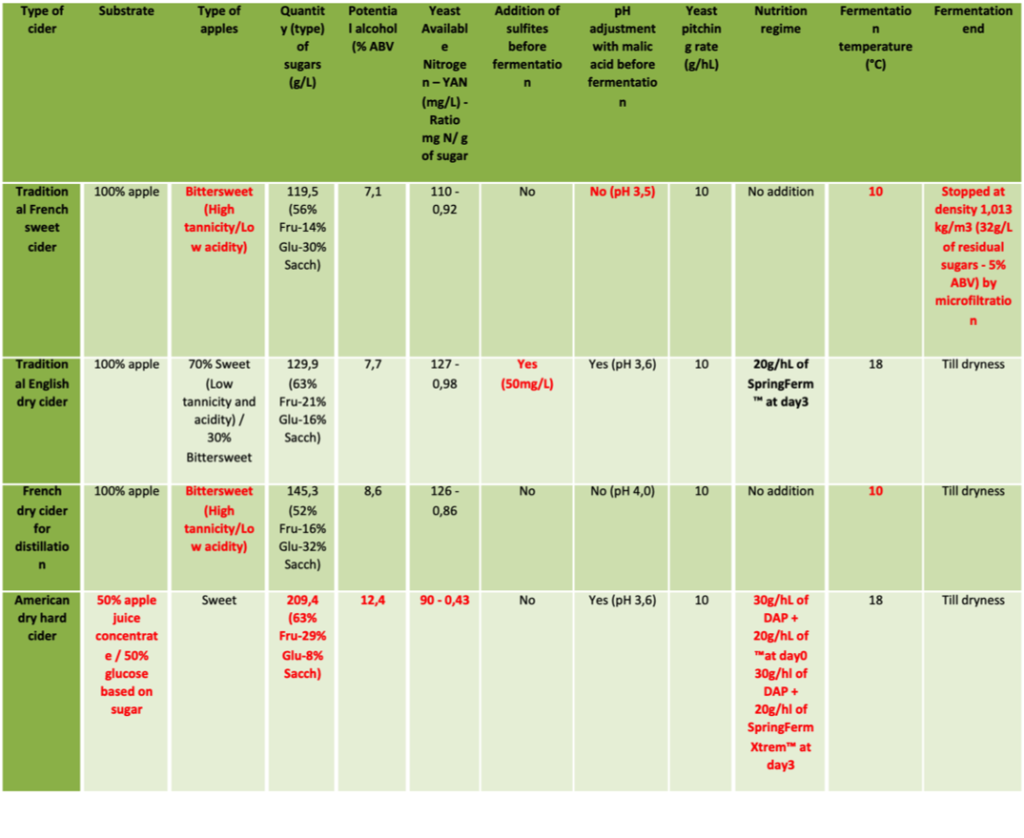
All fermentations have been carried out at the experimental cellar of the Institut Français des Productions Cidricoles (IFPC), French research institute specialized in cidermaking; in 15L glass vessels, with a standardized oxygen rate addition (1.5mg/L) and under inert atmosphere (N2).
2. Strain characterization
It is easily understandable that, from the traditional French sweet cider to the American hard dry cider, most of the fermentation conditions are becoming increasingly difficult even though nutrition and temperature were adjusted. It was then interesting to try different yeast strains through all these recipes in order to select the most diverse and interesting ones. From more than 20 strains evaluated, we’ll highlight the main results for 4 of them (SafCider™ AB-1, SafCider™ TF-6, SafCider™ AS-2 and SafCider™ AC-4) , more specifically as it relates to their robustness; and their analytical and aromatic profiles.
a. Robustness
To assess the robustness of the strains towards difficult fermentation conditions, i.e. high sugar concentration (and content in the most difficult to assimilate fermentable sugars, i.e. fructose), low pH, nutrient deficiency, low temperature… Figure 1 shows the kinetics as well as the remaining sugars at the end of the fermentation in the hard cider. The strain SafCider™ TF-6 clearly stands apart from the other strains as it was not able to finish the fermentation and typically left ~25 g/L of sugars, among which fructose was a major part. This feature was observed in most of all matrices, as TF-6 was only able to finish the fermentation till dryness in the English cider (high YAN, low tannicity, then less inhibition and more O2 availability, high temperature), highlighting the bigger needs of this particular strain and the fact that the selection can be crucial depending on the cidermaker target. A higher sensitivity to high concentration of SO2 (50 mg/L maximum) is as well to be noticed for this strain.
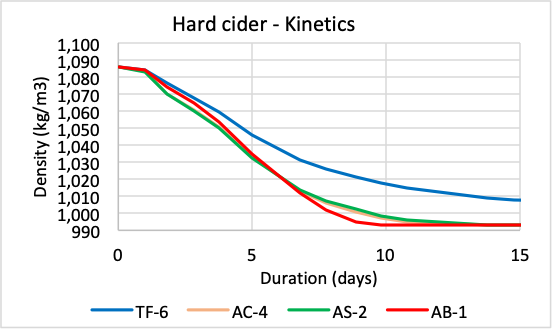
b. Analytical Profile
All basic analytical parameters at the end of the fermentation have been determined. Among the most interesting ones, the acidity profile is of particular interest as it reflects the metabolic behavior of the strain that could have a real impact on the organoleptic profile. Figure 2 shows the acidity profiles of strains in the English cider recipe. Most significant with SafCider™ AB-1 and maybe not as much with the other strains, we could see that some strains are able to consume the major organic acid present in apples, i.e. the malic acid, in significant amount through the malo-ethanolic pathway; and thus decreasing the total acidity and its feeling. To the contrary, some strains, such as SafCider™ AC-4, are preserving this acidity and maintain a crispy feeling (observed but not shown here). Moreover, the ability of strains to produce acetic acid during fermentation from the glycolysis pathway can also affect the aromatic profile, degrading its quality at too high concentration (vinegar flavors). For this attribute, all strains were selected for their low production with always the SafCider™ TF-6 being a “clean” strain towards deviations like SO2 and acetaldehyde production as well.
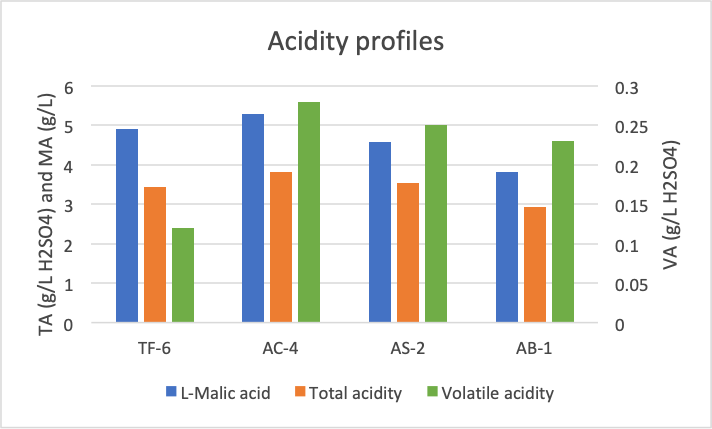
c. Aromatic Profile
In addition to higher alcohols, two major types of aromatic compounds are produced by yeast strains during fermentation and have a significant impact on the aromatic profile of all beverages: (1) the acetate esters, whose most famous and abundant one is the isoamyl acetate with its distinctive banana and candy notes and which is recognized as an overall aroma enhancer; and (2) the ethyl esters, whose most abundant ones are the linear chain ethyl esters from 4 to 10 carbons (C4-butanoate, C6-hexanoate, C8-octanoate and C10-decanoate) and which confer more discrete but more complex floral and fruity characters. Huge differences in the release of these compounds can drastically affect the flavor perceptions of beverages, the same applying for ciders. In Figure 3, all matrices have been taken to compare the aromatic behavior of the strains in different conditions.
We noticed big differences between strains; and even if aromatic compounds concentrations were of course impacted by the recipe and more specifically the amount of sugars fermented (especially for isoamyl acetate whose acetate part is directly linked to the glycolysis pathway), we could extract common trends. Except for the English cider, SafCider™ TF-6 showed always higher production of isoamyl acetate than others. This will be illustrated in terms of flavor but also aromatic intensity in the last paragraph of this article. For the English cider only, SafCider™ TF-6 was indeed able to dry the sugars and not leave any residual sugars, suggesting a strong relationship between the stress generated at the end of the fermentation and the aroma produced. SafCider™ AC-4 showed particularly high but quite stable ethyl esters production (driven by ethyl octanoate – fruity/floral), hypothesizing a reliable complexity in the flavors. SafCider™ AB-1 and particularly SafCider™ AS-2 increased their ester production along with the difficulty of the recipe with SafCider™ AB-1 being on the low values, more respecting the raw material.
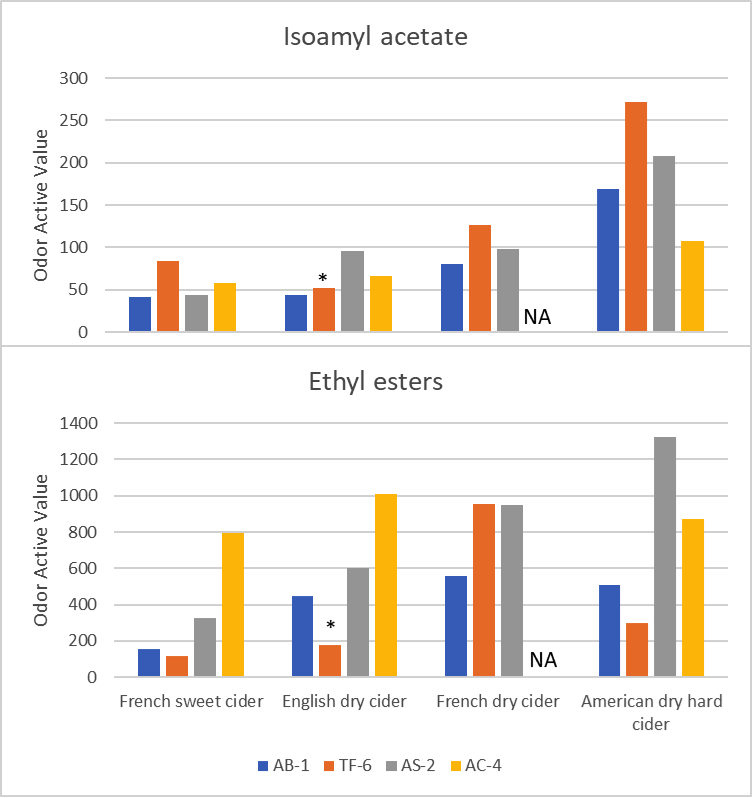
*: Sole recipe in which TF-6 was able to dry the sugars. NA = Non-Available.
Focus on French Traditional Sweet Cider – Strain Baseline
Relying on the expertise of IFPC and their trained taste panel specialized on French traditional sweet ciders, professional tastings have been carried out on French cider experiments, both stopped with around ~30 g/L of residual sugars (called “Brut” ciders in French). The specificity of this tasting was to assess first the global fruitiness of the ciders with two major descriptors: (1) “Fruity/Floral” corresponding to fresh fruit (apple, pear, banana…) feeling; and (2) “Cooked fruits” related to ripe or processed fruits (like compote), aromas that are not necessarily looked for but adding complexity to the final cider. After this evaluation, it was then asked to tasters to detail fresh and cooked fruit notes to identify the aromatic drivers for each strain and to evaluate off-flavors as well, such as phenolic and sulfury aromas. Finally, a simple evaluation of the basic tastes was done: Sweet, acid, bitter and astringent.
From these tastings, SafCider™ TF-6 (especially) and SafCider™ AS-2 were scored as the highest in fresh but also cooked fruits, whereas SafCider™ AC-4 was judged less expressive and predominantly oriented towards freshness; and SafCider™ AB-1 was more discrete (data not shown).
More interesting were the detailed fresh fruits perceived by tasters as shown in Figure 4. Obviously, sensory characterization of all ciders was driven by detection of apple notes, but SafCider™ TF-6 scored high for most of the fruits, especially banana-pear and red fruits. SafCider™ AS-2 and SafCider™ AC-4 respectively exhibited more citrus and floral notes, whereas SafCider™ AB-1 was mainly centered on apple.
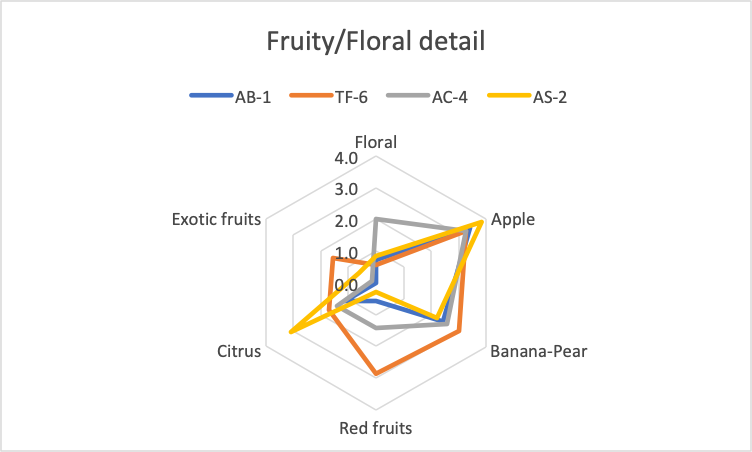
Both these general and detailed notes are actually quite well related with the production of aromatic compounds highlighted in the previous paragraph; with higher production of isoamyl acetate by SafCider™ TF-6, offering thus more aromatic intensity but enhanced aromatic complexity towards the other fruits as well; followed by SafCider™ AS-2 and SafCider™ AC-4, the latter producing mainly ethyl esters such as ethyl octanoate; which could explain these red fruits and specifically floral notes. SafCider™ AB-1 was the less exuberant and expressing more the raw material thanks to its quite discrete aroma production.
Together with mouthfeel attributes assessment (data not shown) confirming higher acidity feeling for SafCider™ AC-4 in line with its acidity maintenance and the sweetness feelings for SafCider™ TF-6 and SafCider™ AS-2 possibly linked to their high candy-like aromatic intensity and their higher remaining fructose level (higher sweetening power than glucose or saccharose), Fermentis suggested the map in Figure 5 to describe the impact of these 4 yeast strains and to serve as a baseline for cidermakers in their choices.
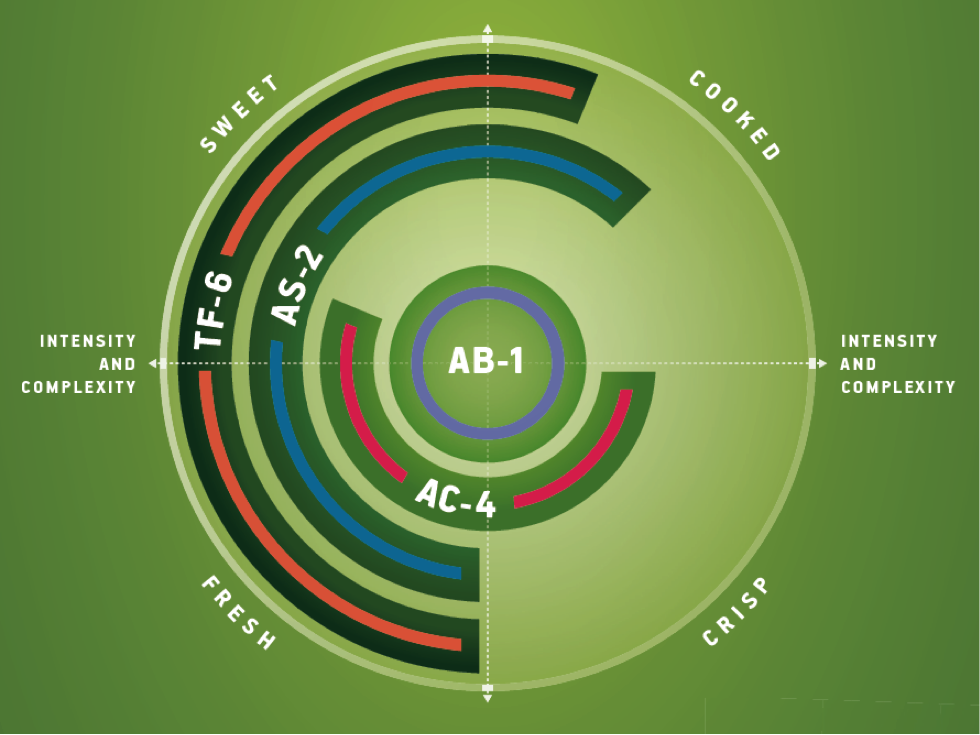
Conclusion
Yeast strains may have a huge impact on cider profiles, not only in terms of fermentation performances and analytics but for sure also from a sensory perception standpoint. As such, they can be considered as a powerful tool to diversify the cider offer in the market and cidermakers can play with them to achieve their final product target. For this purpose, Fermentis focused its research on the selection of valuable strains dedicated for ciders. SafCider™ AB-1 (Apple Balanced) will suit for all types of balanced ciders even under difficult fermentation conditions. SafCider™ AS-2 (Apple Sweet) will bring to sweet and dry ciders complex aromatic profile between fresh and cooked fruits and a rounder mouthfeel. SafCider™ AC-4 (Apple Crisp) will be applied for highly fresh and crisp sweet or dry ciders. SafCider™ TF-6 (Tutti Fruiti) will be dedicated to intensely fruity but rather sweet and round ciders!
ACA Annual Membership Meeting

ACA Annual Membership Meeting, March 3, 2021 – 11:00am Pacific Time
Please join the American Cider Association to review last year’s accomplishments, take a look at our new strategic plan, and weigh in on our future activities to support the cider industry.
You must be an Active ACA Member to particpate in the Annual Membership Meeting. You can become a member or update your membership here.
Let Ellen know when your membership is up to date and she will send you the Zoom link!
Four Insightful Webinars Coming Up Soon!



Brought to you by Ciderpros.com
Across stories of business owners’ ambitions and fears, Leadership Coach, Stephanie Hartman, found patterns of common pitfalls emerged at each phase of business maturity. For those who did not get help soon enough, the pitfalls ended their business—or the business survived at the cost of the owner’s health or relationships. Those who took necessary steps, restored balance in their lives and found renewed inspiration. In this presentation, Stephanie will share actionable tips to help you avoid the common pitfalls or escape them if you’re already there.
All CiderCon attendees will be emailed a link to the Zoom meeting prior to the date of the webinar. Didn’t attend CiderCon? ACA members can request a ticket by emailing Michelle.

Brought to you be Ekos
You started your cidery because you love making cider, but no one told you most of your days would be spent behind a computer or in meetings handling the less glamorous aspects of your business. You don’t need an MBA to run a successful cidery, but there are some business basics you need to master, including operations, sales, and accounting. In this webinar, Ekos will provide an overview of what you need to know in each area, advice for how technology can help you be more efficient, and tips for taking your business to the next level.
Certified Pommelier™ Guided Tasting March 4, 2021 – 3:30pm Pacific Time
Brought to you by Arryved
The Certified Pommelier™ exam is a rigorous test of a beverage professional’s cider knowledge, including one’s ability to taste and evaluate an apple-driven cider. This workshop is an opportunity for students to practice using the formulated evaluation schema used in the Certified Pommelier™ tasting exam. Workshop registrants will be sent a link to purchase the cider that the instructors will be evaluating. Purchasing cider is optional.
Instructors: Darlene Hayes & Tim Godfrey

CiderCon Encore: Driving Organizational Change with Stephanie Hartman March 11, 2021 – 9:30am Pacific Time
Brought to you by Ciderpros.com
For your facility move or new software to deliver on the promise of life being better, you’ll likely need some employees, customers or suppliers to stop doing something and start doing something else. In this presentation, Leadership Coach, Stephanie Hartman, will share a blend of academic theory and practical tools for addressing the tactical and emotional aspects of organizational change.
The link to the Zoom meeting will be sent to all CiderCon attendees prior to the date of the course. Didn’t attend CiderCon? ACA members can request a ticket by emailing Michelle.
CiderCon® 2021 Fact Sheet
While CiderCon® 2021 may have had a different feel due to the necessity of transitioning to a virtual platform, it was undoubtedly an unparalleled success!
- CiderCon® 2021 took place on the virtual platform Hopin from February 3-5, 2021. The schedule can be downloaded here. Instagram Highlights available here.
- 793 people attended the conference via their computers from around the world.
- 41 states and the District of Columbia were represented, with Oregon, New York, California, Colorado, Michigan, Virginia, and Washington having the most attendees.
- 18 countries were represented, with cider professionals from the US, Canada, Mexico, Thailand, Australia, New Zealand, Japan, Russia, South Korea, Finland, Norway, Denmark, Netherlands, Germany, United Kingdom, Ireland, France and Italy all in virtual attendance.
- 47 vendors took part in the virtual Trade Show, sponsored by Fruitsmart, with resounding success. Many provided live virtual demonstrations of their product offerings and interviewed cidermakers who were using their goods and services.

- Four keynote speakers graced the virtual main stage, sponsored by Fintech, over the course of the conference. They were:
- Anna Nadasdy of Fintech Infosource who opened the conference with a discussion of what consumer trends in 2021 might look like and how businesses can stay agile in a tumultuous climate.
- Justin Doggett of Kyoto Black Coffee who discussed the need for businesses to support one another during the pandemic and beyond and suggested innovative ways in which to do so.
- Michael Uhrich of Seventh Point Analytics Consulting who discussed, not only the importance of analytics to businesses, but practicable ways in which cider professionals can do assessments in house.
- Dr. J Nikol Jackson-Beckham founder of Crafted for All who closed out the main stage presentations with concrete ways in which businesses can create sustainable inclusion, equity, and justice strategies and put them into practice.
- The Cheers & Chat Networking sessions allowed attendees to be randomly matched with someone for a speed dating style virtual meetup. Hundreds of people took part in Cheers & Chat and new cider professional friends were quickly made.
- The American Cider Association once again partnered with the Cider Institute of North America to develop a range of in-depth, production oriented sessions for cidermakers. Every single session in the production track had more than 100 attendees and several topped 200 people. Sessions included co-fermentation in natural ciders, factors to consider when making sparkling cider, quince fermentation, improving the shelf life of canned ciders and strategies for creating a successful blend. The Cider Institute of North America trains cider makers through their educational programming in partnership with universities like Cornell.
- VIP packages purchased by attendees raised $1000 for the Cider Institute scholarship fund, whose goal is to offer tuition-free education to Black, Indiginous and People of Color covering the fundamental aspects of cider production through their online training.
- The Pomme Boots Society once again partnered with the ACA to provide unique content this year, including a session from Samantha Lee, co-founder of Hopewell Brewery, who shared how her progressive craft brewery flipped the script on traditional craft brewery business by putting people over profits. Pomme Boots Society is a volunteer run organization for women working in the cider industry. The Pomme Boots Society annual meeting featured Lee, and speakers from the Pink Boots Society, and had close to 200 people in attendance.
- Five legal and compliance sessions were also offered. Four of these sessions were led by employees from the TTB, the federal agency responsible for regulating cider taxes and labels. In addition, TTB employees hosted a virtual booth in the Trade Show that saw over 200 attendees stop by to discuss the finer points of legal regulations.
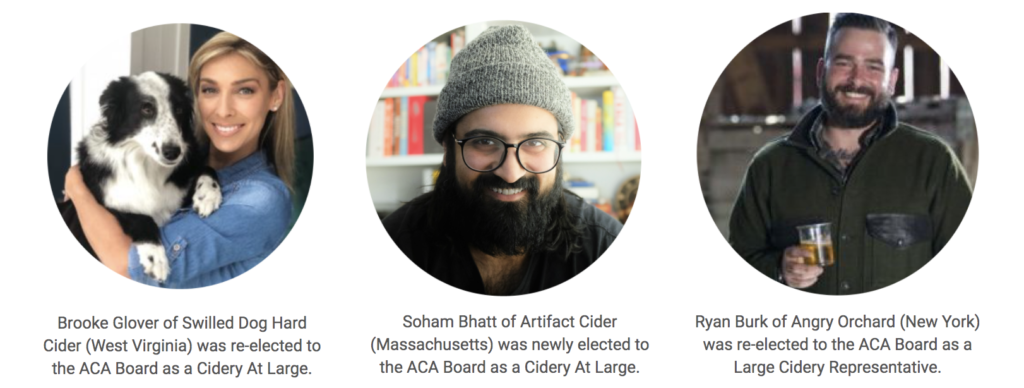
- The American Cider Associations annual board elections happen concurrently with CiderCon®. Newly elected board members were presented prior to the Grand Toast. Soham Bhatt of Artifact Cider was elected to his first term on the board in an At Large seat, Brooke Glover of Swilled Dog Hard Cider was re-elected as an At Large member, and Ryan Burk of Angry Orchard was re-elected as a Large Cidery member.
- In addition, new board officials were installed with Eleanor Leger of Eden Ciders taking the helm as president, Brooke Glover of Swilled Dog Hard Cider as vice-president, Marcus Robert of Tieton Cider as treasurer, and John Behrens of Farmhaus Cider as secretary.
CiderCon® 2022 is scheduled to take place in Richmond, Virginia from February 1-4, 2022.
ICYMI: CiderCon® Starts Tomorrow!


CiderCon® is literally just around the corner! Virtual doors open at 8:00am tomorrow, Wednesday, February 3, 2021. Are you registered yet? If not, there is still time! Click the button above to be directed to our virtual platform, Hopin, where CiderCon is being held this year, and you can still buy your tickets. Trust us, you don’t want to miss out on all the amazing sessions we have offered this year, nor the super sweet virtual Trade Show! Plus, if you’re a registered attendee you will have access to the sessions long after CiderCon so you can check out sessions you missed at your leisure. Curious about just how awesome these sessions are: Read on for some recent highlights!

At Hopewell Brewing – one of Chicago’s rising brewery stars – success is not defined by bottom lines. Thanks to co-founder Samantha Lee, the brewery measures its performance against the way it treats its employees, and prioritizes being responsible community members and building a culture of good business practices. In this session, Lee shares how her progressive craft brewery flipped the script on traditional craft brewery business by putting people over profits. Plus, hear about how the brewery has maintained that sense of togetherness and hope during the pandemic — through activism, creative connection, and, of course, brewing damn good beer.
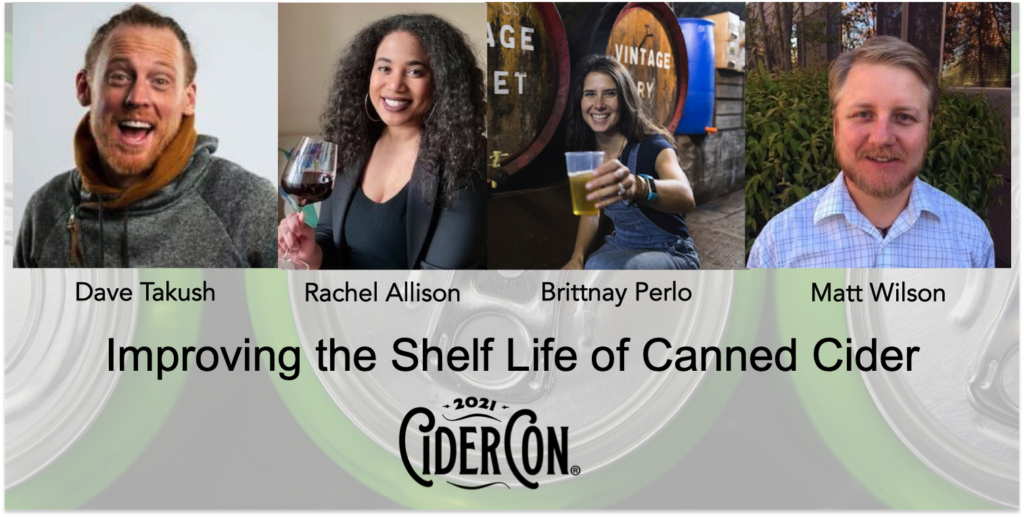
Cider producers are facing several issues which impact successful canned packaging, including overcoming reduced aromas due to formation of H2S which can negatively impact consumer opinion upon consumption. Join this session to hear about research from Cornell University using accelerated aging tests to predict corrosion and H2S formation during long-term storage of wine and cider in aluminum packaging. Producers will discuss preliminary results and observations from current trials with Enartis related to reducing the use of SO2 and removing copper-bound sulfides to increase shelf stability and minimize the appearance of sulfur off aromas in the can. The panel will discuss solutions and trends to be aware of and continue exploring.

While keeping our distance has become the norm in 2020, everyone who chooses to visit your taproom for on-premise consumption is accepting that some level of interaction will occur. Even during the shortest, COVID-era encounter, you have the ability to build connections with your guests. In this session, we will show the financial value of engaging at a high level and why it is vital even more so during a pandemic.
Why bother with home cidermaking if you are not going to experiment? This session will explore various ways in which cidermakers can experiment on a small-scale. Darlene and Dana will provide advice regarding experimental-control design that will enable you to more objectively evaluate the effect of your “treatment.” The presentation will include examples of successes as well as failures. If you are interested in experimenting with additions from native plants, we will provide tips for investigating previous uses by Native American tribes and emphasize the importance of doing your research to ensure you do not poison anyone. Finally, Dana will share her own experiences using California native plants such as Manzanita (“Little Apple” in Spanish), Elderberry, Toyon, and Pacific Madrone.

Consumers and commercial food buyers are increasingly interested in products with “sustainable” attributes — products that are local, natural, organic, or claim other social or environmental benefits. This session will review consumer and market research on the demand for sustainable products. We will consider some best practices for making sustainability claims and address the differences between first, second and third party claims. We will also discuss the pros and cons of third-party certification and the roles that certification can play improving operations and supporting the brand and product marketing.
This session will detail how cidermakers in the United States are presenting single variety ciders and ciders that specifically call out notable varieties in a blend. We will examine the feedback loop from producer to consumer and chart how this is changing the way producers market their products. We will talk about creating successful tasting notes and how to educate consumers on raw materials.
CiderCon® Mainstage Presentations
We are stoked to have these 4 amazing mainstage speakers join us at CiderCon® 2021! Our mainstage is sponsored by Fintech.

This engaging seminar will consist of a robust presentation of current market trends impacting craft cider sales. How was your business impacted by shifts in consumer behavior in 2020? How well did you adapt to the dramatic changes? We will discuss how craft suppliers are using consumer demand data to stay agile, and what you need to look out for in 2021.

Have you made a commitment and embarked on the journey toward improved diversity and inclusion outcomes but find your efforts to be disjointed and running out of steam? In this talk, Dr. J guides attendees through building a comprehensive strategic plan for inclusion, equity, and justice (IEJ) work; creating a responsibility structure to foster accountability and transparency; and addresses the challenging realities of implementation.

Justin Doggett, owner of Kyoto Black Coffee, will be taking a retrospective look at the effects of the SARS-CoV 2 pandemic on the food industry and offering insights on some of the unique challenges and opportunities to thrive that have been created by this event.

The cider industry is thirsty for analytics, but just like a new cider drinker we’re not all sure which flavor we want to invest in. Beverage alcohol analytics veteran, Michael Uhrich, will give a taste of insights in alcohol competition, pricing, assortment, and more to help your business today and inspire you to up your analytics game.
ACA Launches 2nd Annual Dry Cider January
The American Cider Association (ACA) is once again launching their month long campaign called Dry Cider January to celebrate ciders containing 0 grams of residual sugar. The ACA hosts a dry cidery directory on their website to promote their members’ ciders. The association is encouraging others to join the campaign through social media with the hashtags #dryciderjanuary and #pickdrycider.
The ACA’s Dry Cider Directory will be updated as members submit new product releases. The directory can be found here on ACA’s website. The list can be filtered and sorted so consumers can find no-sugar ciders local to them.
Alcohol is created when yeast converts sugar into alcohol through fermentation. A cider that contains no residual sugar has been fermented to absolute dryness. Sometimes cidermakers will blend a completely dry cider with fresh juice for acid/sugar balance, but other times they leave the cider entirely dry. These dry ciders are what the association is listing on their website for the campaign.
“The brain has a hard time distinguishing fruity from sweet. Many ciders with absolutely no sugar in them can still be fruit-forward,” explained the association’s executive director, Michelle McGrath. “You’ll find there are a multitude of dry ciders available when you start seeking them,” she added.
The list of ciders on the association’s website demonstrates the flavors and styles possible not only in the cider category, but in ciders with 0g sugar. From single varietal ciders showcasing specific apple varieties and served in a 750ml bottle to ciders aged on rose and hibiscus petals and served in a 12 oz can, the range is impressive.
Follow the association on their Instagram account @pickcider to learn more about the campaign.
Are you a cidermaker and want to add a cider to the directory? Fill out the form HERE! Have a picture and description of your cider ready to go before you fill out the form.
ACA Board of Directors Election Announcement
The American Cider Association is accepting nominations for joining their board of directors. Nominations are due January 22. These are volunteer positions with a three year commitment. Active membership of the association is one of the few requirements. There are three seats in this year’s election. Incumbents whose terms are up for renewal may choose to run for these seats again. The three seats up for renewal are:
- At Large 1 (Open to any permanent salaried employee of US-based ACA member cidery in any region – no size restrictions)
- At Large 2 (Open to any permanent salaried employee of US-based ACA member cidery in any region – no size restrictions)
- Large Cidery (Open to any salaried permanent employee of US-based ACA member cidery in any region where 2020 production was more than 1 million gallons of cider)
Interested candidates should complete the self-nomination form here:
Have questions about board service? Reach out to Michelle. She can send you an informational video that she recorded last year and schedule a time to chat.
Do you know who is on the 2020 board? Meet them HERE.
Developing a more diverse and equitable cider industry and association is a long-term project that requires conscious iterative investment at every stage. Our board is actively working toward goal development in this area (read a recent blog post from our board vice president, Brooke Glover). We believe that representation matters in reaching those goals and we are thus encouraging diverse candidates including women, BIPOCs, LGTBQIA+, veterans and people with disabilities to run for the board of directors.
Three February 2021 Webinars
CiderCon Encore: Driving Organizational Change
February 11, 2021 – 9:30 am Pacific Time
Likely, you checked the Math to make sure your facility move, new software system, or acquisition was going to make or save your business money. Organizational changes can look good on paper but fail to deliver on the promise of increased profits or savings if the people impacts aren’t considered and managed. For your initiative to work, you’ll likely need some combination of employees, customers and suppliers to stop doing something and start doing something else. In this presentation by Stephanie Hartman of Catalyst Consulting, you will get a blend of academic theory and practical tools for addressing the tactical and emotional aspects of organizational change.
The link to the Zoom meeting will be sent to all CiderCon attendees prior to the date of the course. Brought to you by CiderPros.com
CiderCon Encore: Avoiding Common Pitfalls of Business Maturity
February 18, 2021 – 9:30 am Pacific Time
Working with small business owners across many industries, Stephanie Hartman of Catalyst Consulting learned about their ambitions and the fears at the root of their missteps. Through these stories, she began to recognize common pitfalls at each phase of business maturity. For those who did not get help soon enough, the pitfalls either ended their business, or the business survived at the cost of the owner’s well-being or important relationships. Those who took necessary steps, restored balance in their lives and found new inspiration. Business thriving requires courage to look honestly at your contribution to the chaos and make tough decisions, about processes, people, and more. In this presentation, you will learn actionable tips to help you avoid the common pitfalls or escape them if you’re already there, giving you confidence about your next steps.
The link to the Zoom meeting will be sent to all CiderCon attendees prior to the date of the course. Brought to you by CiderPros.com
Cider Business School: A Crash Course in Running Your Cidery as a Business
February 24, 2021 – 11:00am Pacific Time
You started your cidery because you love making cider, but no one told you most of your days would be spent behind a computer or in meetings handling the less glamorous aspects of your business. You don’t need an MBA to run a successful cidery, but there are some business basics you need to master, including operations, sales, and accounting. In this webinar, Ekos will provide an overview of what you need to know in each area, advice for how technology can help you be more efficient, and tips for taking your business to the next level.
Register HERE!
New CiderCon Session: Fermenting with Quince
Was Aphrodite’s Forbidden Fruit a quince or the apple? She’s not talking, but cidermakers will be at CiderCon®!
Quince a.k.a. Cydonia oblonga is the sole member of the genus Cydonia in the family Rosaceae. Quince is a ‘pomme’ fruit with the likes of apples, pears, and medlars. This golden pomme is having a renaissance of sorts with makers partly due to it aromatic qualities and tannins.
Kim Hamblin and Dan Rinke of Art + Science in Oregon, Steve Selin of South Hill Cider in New York and UK makers Martin Berkley of Pilton Cider and James Forbes of Little Pomona will discuss fermenting with quince with moderator Ria Windcaller of Cider Chat.
Learn more about this and other CiderCon® sessions HERE!
CiderCon® Session: Labeling of Hard Ciders Under FDA Jurisdiction
Is your hard cider under 7% ABV? If so, do your labels comply with U.S. Food and Drug Administration (FDA) labeling regulations? Join Keller and Heckman food and beverage attorneys Nury Yoo and Arturo Reyes as they discuss the ins and outs of FDA’s labeling requirements for these products. The discussion will also touch on other “labeling” aspects to consider, such as claims on packaging and in advertising/marketing/social media, as well as strategies to help manage the risk of potential consumer class action and competitor challenges.
We’re thrilled to have experienced lawyers, Nury Yoo and Arturo Reyes, of Keller and Heckman join us at CiderCon® to talk about the ins and outs of FDA compliance. Learn more about them below or on our Speaker page.
Nury Yoo
Nury Yoo represents clients in the food, beverage, cosmetics, dietary supplement, personal care, and alcohol beverage industries, as a member of Keller and Heckman’s Tier 1 nationally-ranked Food and Drug Practice. Her areas of expertise include regulatory compliance, labeling, marketing and advertising (including social media), food safety, product recalls, due diligence reviews in connection with private investment, California’s Proposition 65, and the complex federal and state issues surrounding the use of cannabidiol (CBD) and related cannabinoids in consumer products. She also advises clients on litigation risk analysis and avoidance measures, responses to litigation demand letters, and the development and implementation of litigation strategy.
Nury is actively involved with the Food and Drug Law Institute (FDLI) and is a frequent speaker on regulatory compliance and litigation risk issues related to the food industry.
Arturo Reyes
Arturo Reyes advises domestic and foreign clients on compliance with California’s Proposition 65, as well as food and food-contact material requirements, in a host of jurisdictions. He counsels clients on U.S. Food and Drug Administration (FDA) and U.S. Department of Agriculture (USDA) regulations relating to food, alcoholic and non-alcoholic beverages, cosmetics, and food contact materials.
Arturo assists clients by reviewing food labeling and promotional materials, including suitable common or usual names, ingredient declarations, nutrition labeling, health claims, nutrient content claims, and allergen labeling. He prepares labeling information for food products marketed in Australia, Canada, Mexico, Hong Kong, Taiwan, and the Philippines.
Prior to attending law school, Arturo worked as a litigation paralegal and, before that, as a fellow at the New York City Mayor’s Office, where he worked with numerous city officials, including the Food Policy Coordinator for the City of New York. Arturo is fluent in Spanish and Italian.
New CiderCon® Session: Strategies for Creating a Successful Blend
What does it take to make a successful blend? What’s the best way to do a blend? How can we use blending to create a cider with that perfect aroma and flavor profile?
A finished cider can be a combination of apple varieties that have been fermented separately, a blend of different vintages, or the amalgamation of a multiplicity of fermentation vessels combined to assure consistency in a release. Blending to create the perfect aroma and flavor profile in that cider is an essential skill, but one that takes time and effort to learn. Our panelists will share their many years of blending experience which will help you to jump start a new skill or give you tips that will take your blending game to a new level.
Join Darlene Hayes, Nicole Leibon, Autumn Stoscheck, and Chris Condos as they discuss these questions and more during their session at CiderCon® 2021.
This session is in the Cider Production Track sponsored by CINA.
Bulk Company Discounts for CiderCon® 2021!
There has never been a better time to bring your whole team to CiderCon®!
The best thing about CiderCon® going virtual this year is that it means you can bring more of your team to the party! With lower registration fees, not to mention no airfare, hotel, and travel expenses to limit you, so many more of your team members can enjoy the knowledge, camaraderie, and fun that CiderCon® has to offer, all from the comfort of their home or office.
Not only that, but we are offering some awesome discounts when you register your crew together! Bulk discounts are available to team members working for the same company. Check out the discount table below and then contact Ellen for your discount code!
Still on the fence about how many people to bring? Check out why Mark Ray, owner of Stowe Cider, is bringing his whole team for CiderCon® 2021!
“Since first attending CiderCon in 2016 we haven’t missed one yet. The diverse educational sessions and networking opportunities offer something for every focus and each member of your team. I can safely say we wouldn’t be where we are today without those experiences and are beyond grateful for the community that this conference has created. We are so excited to include the entire team in CiderCon this year and have no doubt that although it will be different, it will be just as beneficial in building the knowledge of our team while raising the cider community up in a time of need.”
Mark Ray, Owner & Cidermaker, Stowe Cider
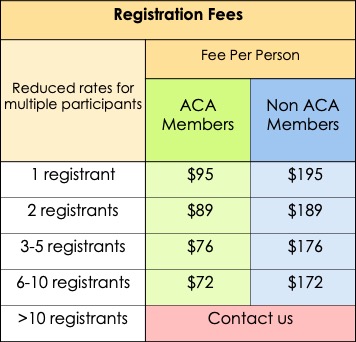
Certified Pommelier Exam Prep Workshops Now Available!
We are bringing you two online Certified Pommelier™ cider evaluation workshops. The Certified Pommelier™ exam is a rigorous test of a beverage professional’s cider knowledge, including one’s ability to taste and evaluate an apple-driven cider. These workshops are an opportunity for students to practice using the formulated evaluation schema used in the tasting exam. The cost for each of these workshops is $35 for non-ACA members and $15 for members. The instructors will be teaching using a live evaluation of three featured ciders.
Certified Pommelier™ Guided Tasting – January 20, 2021 – $35 non-members, $15 members
The first workshop on January 20, 2021 will feature the Rare Apples Series: Variety 4-pack from Stormalong Cider. Registered students will be sent information on how to purchase those ciders. Cider purchases are entirely optional and are limited to states with amenable shipping laws. You can review the states that Stormalong can ship to here. The workshop will be led by Jenny Dorsey and Brian Rutzen. This workshop can be purchased here. *The deadline to purchase cider for this workshop on 1/20 has passed, but the workshop will be available on-demand and may be viewed at any time.
The second workshop will feature different ciders from three different producers (TBD). That workshop is tentatively scheduled for February 17, 2021. The workshop will be led by Darlene Hayes and Tim Godfrey. Purchase this workshop here.
Get to Know Your New Board Member: Philippe Bishop


Meet Philippe Bishop, who was elected to the board as an at large member in 2020!
Where do you work and what is your position?
I am a partner with my folks at Alpenfire Cider, primarily I handle our sales, designs and the marketing side of things… But as every small business owner I wear many hats when needed. For instance, I’m currently sitting on the ferry heading over to the orchard to off-load a trailer of bottles for our 2019 releases.
Do you work in cider full time? If not, what is your other job?
I am with Alpenfire full time.
How did you get into cider?
I blame my parents . My first sips of cider that I remember were around 1990 sailing up in the Gulf Islands of British Columbia. It was super sweet, came in a 2 liter plastic bottle and was flavored with peach or berries or something. Perfect for my young palate. That sparked my interest, then when we decided to get into the business and feeling the connection to the land after years of clearing it, working the soil, and planting trees is really what firmed up my love for cider. As time and Alpenfire progressed we needed ways to sell it, I jumped on that and haven’t looked back.
Why did you decide to run for a position on the board?
I am passionate about the cider industry and felt I could help give a voice to the über small orchard based producers out there.
What are your hopes for the future of the US Cider Industry?
For cider to grow, from the trees to the glass. I would like to see the industry help spur a younger generation into growing trees and working the land. I would like to see the cider lexicon educate the buyers, the media and the influencers, plus help consumers find a cider they like and realize not every cider is the same. I want people to want to learn about cider, know their apples and celebrate the differences from large to small and urban to orchard based producers like us.
How do you describe your cider region?
We have a lot of passionate good people up here making primarily modern interpretations of cider spurred by an abundance and availability of eating apples. It has closely followed the beer industry and the term “innovation.” I’m not a big fan of that word but it seems to fit where we are. We as a whole have done a great job of offering a wide selection to the consumers. That has paid off by a fair amount of shelf space and lots of taps dedicated to local cider but I feel we have a ways to go on the educational front and helping people to better understand cider.
What’s your favorite apple to work with and why?
Our Foxwhelp apple. It may not be the “real” one but it has all the great characteristics of the traditional bittersharp apple and does very well in our orchard. It is also a very large apple, so easy to pick though they have gotten smaller as our orchard has matured. It ferments well, and given the proper time (roughly 1.5 years), makes a stellar single varietal cider!
What is your favorite cider/food pairing?
Too many to list really! I believe what grows together goes together and being in the maritime climate 1/2 mile or so from the beach I really enjoy most seafood with our Pirates Plank Bone Dry. The earthy tannins, subtle acids, and hints of salinity make things like oysters POP!
What is your favorite nature/cider pairing?
Our Ember Bittersweet by the glow of a campfire.
What would you like our members to know about you that they might not know?
There’s life outside of cider? My wife Shannon and I live in Seattle with our kids Sierra & Cortland along with our old cranky dog Zephyr. I love and crave being outdoors, specifically either deep in the woods or at the beach. The further away from crowds I can get the better.
Learn about the rest of your board members HERE!
New CiderCon® Session: Artisan Japanese Cooking with Japanese Craft Cider

Japan is home to centuries old culinary tradition that is still thriving. It is also home to a relatively new but growing cider scene. Join Lee Reeve of inCiderJapan and world renowned cookbook author Nancy Singleton Hachisu for this exploration of cider today in Japan and how it can be incorporated in both traditional and modern Japanese food traditions. Lee will open this session with a review of what’s happening in Japan’s cider scene and it will be followed by a cooking demonstration with Nancy.
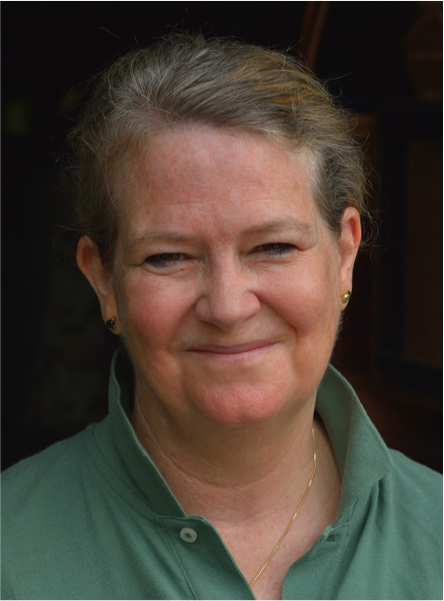
Nancy Singleton Hachisu is a native Californian, Stanford graduate who has lived with her Japanese farmer husband in a 90-year-old farmhouse in rural Saitama since 1988. Author of four cookbooks: Japanese Farm Food (Andrews McMeel, Sept. 2012), Preserving the Japanese Way, (Andrews McMeel, Aug. 2015), Japan: The Cookbook (Phaidon, April 2018), and Food Artisans of Japan (Hardie Grant, Nov. 2019). Hachisu’s work has been translated into French, Italian, Spanish, German, Portuguese, Dutch, Chinese, and Japanese.
Hachisu appears frequently in Japanese media, documenting her preserving and farm food life as well as visits to artisanal producers in more remote areas of Japan to advocate for Japan’s disappearing food traditions. Recipient of a James Beard award, she has written for The Art of Eating, Lucky Peach, Saveur, Food & Wine, Travel & Leisure, National Geographic Food, BBC Travel, and Fool Magazine.
Hachisu also assisted on and appeared in the Salt episode of Netflix’s runaway hit: Salt, Fat, Acid, Heat.

Lee Reeve is the Owner-operator of inCiderJapan G.K., a marketing & promotion creative consulting company, as well as an importer, retailer, and producer of cider and cider-related goods. He is also the publisher of inCiderJapan, Asia’s first and only bilingual magazine dedicated to all things cider.
Lee is widely regarded as a leading authority on Japan’s cider scene, market, and industry, and is often asked to present seminars on said topics. He has been a keynote speaker for several distinguished conferences including the Australian Cider Festival (2018), Second World Beverage Conference & International Symposium on Beverage Crops in Xi’an, China (2018), and was scheduled to speak at the Global Cider Forum (2020) before its cancellation due to the COVID-19 pandemic. In addition, Lee is the representative for Japan at the international cider tourism network, Ciderlands, as well as co-organizer of the Global Cider Connect project, a world-first six-nation cider collaboration to be held in Japan in 2021.
What’s New for CiderCon® 2021 This Week!

The 11th annual CiderCon is happening during February 3-5, 2021. Ready to grab your tickets? Click here! (Ask us about bulk discounts for your company.)
Each week we’re highlighting a few of our talented speakers and CiderCon® features with you. It’s going to be a virtual cider extravaganza!

Stephanie Hartman
For more than 20 years, Stephanie Hartman has provided Leader, Team and Organization Effectiveness support to large and small businesses in wide ranging industries such as financial services, technology, B2B professional services, restaurants and home services. Her client experience spans the range of large corporations to small family farms. Through her consulting firm, Catalyst Consulting, Stephanie has adapted planning and team development methods typically used in large corporate settings for practical use by small businesses. Stephanie’s presentation is brought to us by the sponsorship of Ciderpros.com
Julie Rhodes
Julie Rhodes is an authority on beverage sales, marketing, team management, distributor partnership management, supply chain logistics, and customer service. She is the owner of Not Your Hobby Marketing Solutions, a consulting company that offers online educational programs and customized coaching services designed specifically to teach business skills to craft beverage professionals. We’re excited to bring Julie to CiderCon as a featured speaker. If you missed her dynamite webinar on managing distributor relationships, check the webinar archives on our member page.
Belinda Kemp, PhD
Belinda is the Senior Staff Scientist in Oenology at CCOVI, Brock University, and Adjunct Professor of the Department of Biological Science, in the Faculty of Math and Science at Brock University, Ontario. As well as a wine scientist, Kemp gained previous practical still and sparkling winemaking experience in commercial wineries in NZ and the UK. Her current research is focused on the Maillard reaction in sparkling wines, wine flavor chemistry, the impact of sugar on wine aroma and flavor, leaf removal strategies according to grape variety and wine style, the influence of sour rot on sparkling and still wine flavors, and phenolic management of sparkling and red wines.
5 Things to Consider before Using Ground-Harvested Apples for Cider
By Bri Valliere, Fermentability Consulting & Education
While the fruit this time of year begins to disappear from tree branches, there still may be plenty on the ground. Before you pluck up those apples and throw them into the press, you should know some of the basics of turning these ground-dwellers into your favorite drink.
- Regulations & Food Safety
Make sure you know what’s legally allowed and not allowed in your country. In the U.S., growers must follow the Food Safety Modernization Act’s Produce Safety Rule. The Produce Safety Rule clearly states that covered produce – including apples – may not be used for human consumption unless it has undergone sufficient processing to eliminate food safety concerns. Fortunately, there are many steps that both apple growers and cidermakers can take to ensure safe practices and products when using ground-harvested fruit for cider. One of the best steps is fermentation, as high ethanol concentrations and the low pH of the cider together help eliminate human pathogens.
2. Method of Harvest
Gathering the fruit from the ground needs to happen relatively quickly to prevent further rot or animal scavenging. The quickest, most efficient way to scoop up your apples is to use a mechanical sweeper on your orchard floor, though this may be a major capital investment. The other option is to pick up the fruit manually. Regardless of if you’re using machine power or human power, make sure you’re able to get there soon after the apple meets the earth.
3. Immediate Sorting and Processing
One of the downfalls of windfalls is that the fruit can get bruised and beaten on its journey from the branch to the ground. While apples can usually be stored for weeks or months before processing (depending on the fruit maturity at harvest), ground-harvested fruit may quickly begin to rot and must therefore be processed immediately. Make sure that you also sort out any “bad apples” before crushing and pressing. Also, mature apples can be softer than their earlier-harvested counterparts, so be sure to build in some extra time for troubleshooting your crushing and pressing operations.
4. Cidermaking and Fermentation
Apples fall from the trees when they’re ripe, so ground-harvested fruit may have more sugar (and therefore a higher alcohol potential) than when fruit is harvested and processed earlier in the season. The presence of fruit rot may also result in higher levels of acetaldehyde, a compound that affects SO2 binding. If molds take hold, they can raise the pH, so it’s extra important to sort out rotten fruit and make pH adjustments if necessary. You might also notice different flavors and sensory characteristics!
5. Sustainability
Cider business owners must always be aware of their triple bottom line (profits, planet, people). Using dropped apples may be good for the planet by reducing food waste and for your business by making full use of available resources. However, will your employees develop injuries from bending down to pick up apples repeatedly? Will you lose significant time (and therefore money) if you have to stop frequently to clean out the gummy apples from the crusher? What additional steps will you need to take to ensure your product truly is safe from foodborne pathogens, and what will they cost? Make sure your use of ground-harvested apples is sustainable for you, your environment, and the people who depend on you.
There’s no one-size-fits-all solution for making cider with ground-harvested fruit. However, if you keep in mind these 5 points, you are well on your way to having some serious dropped knowledge.
Get to Know Your Board Member: Talia Haykin
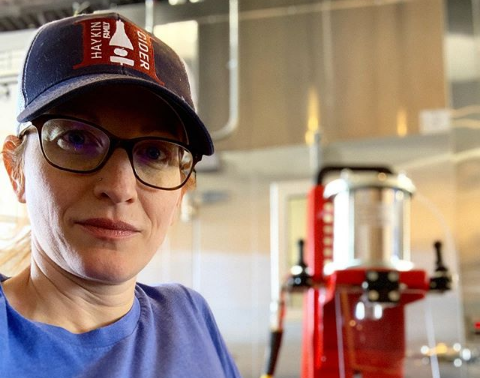
Here’s another installment of Get to Know Your Board Member. Meet Talia Haykin, representing the Mountain West Region, including the states of Arizona, Colorado, New Mexico, Nevada, Utah, Wyoming, South Dakota, North Dakota, Kansas, Nebraska, Oklahoma, and Texas.
Where do you work and what is your position?
I own Haykin Family Cider with my husband Daniel. He is the cidermaker and I basically do everything else. We joke that I am the CEO/COO/CMO/CFO/CSO and any other C’s you can think of along with – salesperson, packaging expert, club manager, inventory specialist, and occasionally, bartender.
Do you work in cider full time? If not, what is your other job?
These days I mostly work in cider though I maintain my freelance business doing marketing, social media strategy, content creation, and occasionally website building. Oh and being a mom. That’s my other full time job.
How did you get into cider?
It was a complete accident. We made our first batch on October 30, 2013 just for fun and it spiraled into a business. We swore up and down that we would never professionally make cider and here we are.
Why did you decide to run for a position on the board?
I have worked in non-profit management for a long time. My last position was as the CMO of a large Jewish non-profit. I have worked in conjunction with and served on boards for a long time but not in the past few years. I worked with Michelle and the marketing committee as well as the CiderCon committees and really enjoyed it.
What are your hopes for the future of the US Cider Industry?
I hope we will be fully recognized as a legitimate and historical beverage. I hope people will see the stratification of our industry in similar ways that they view wine, beer, and spirits. There’s something for everyone and it doesn’t always boil down to “dry” and “sweet.”
How do you describe your cider region?
Impressive. Not only from a cider perspective (Colorado really pulls our weight at competitions and on the market) but also from an apple perspective. We grow exceptional fruit here in Colorado. Sometimes an early or late frost knocks us out completely but when we have the apples, they are amazing.
What’s your favorite apple to work with and why?
Tough question. Since we focus on single varietals, we get 40+ different apples to work with plus small batches of things that go into our blends. Honestly, my favorites are the ones that I can bring home to my kids. In season, we always have a huge box of Akane or Esopus Spitzenberg apples at our house. They also happen to make exceptional ciders.
What is your favorite cider/food pairing?
Again tough question. Daniel and I tend to focus so much on the flavor profile of the cider that we forget to eat with it. However, we have worked with some awesome chefs and foodies. Maybe cheese and cider? We did an awesome five-course cheese pairing with my friend Colleen from Behind the Rind and I was able to taste incredible flavors in both the cheese and cider that weren’t there on their own. I also like a cider that pairs well with a full meal. Our 2018 Dabinett was so awesome – we brought a magnum to Thanksgiving dinner and it paired perfectly from appetizers to dessert!
What is your favorite nature/cider pairing?
I do love chilled cider in a sparkling wine glass at a nice hotel in the mountains… 😉
What would you like our members to know about you that they might not know?
Coming from a family of generations of rabbis, my dad hoped I would follow in his footsteps but I was dead set on pursuing acting. Before marketing and cider, I was a professional actress. There’s still a video from a commercial I did for CZ-USA floating around the internet.
Get to know the rest of your board members at Who We Are.
CiderCon® 2021 Registration is Officially Open!
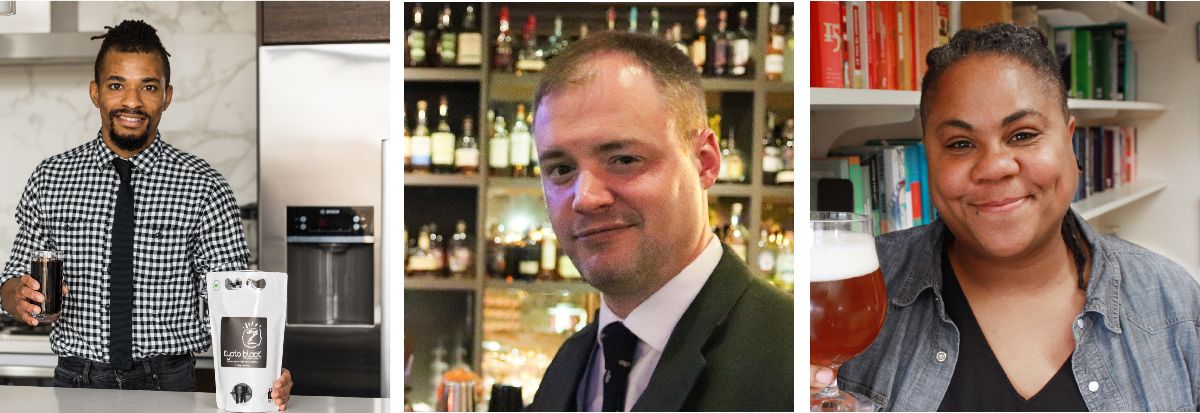

The 11th annual CiderCon® is happening during February 3-5, 2021. Ready to grab your tickets? Click here!
We are STOKED to start unveiling all the exciting components of this global virtual cider conference! Make sure you are following along on Twitter, LinkedIn, Instagram and Facebook for fun CiderCon® updates throughout the coming months.
What’s new for CiderCon® next year?
The answer is A LOT! We’ll get you started with these highlights:
- We’re grabbing the virtual bull by the horns and taking full advantage of this opportunity to host CiderCon® online. Our Virtual Trade Show is not to be missed (Hint: Easter eggs. All the easter eggs!). Interested in having a booth at our virtual show? Reach out to Ellen!
- ACA is offering BULK discounts for companies purchasing multiple CiderCon® tickets this year! Individual member-priced tickets are just $95. Contact Ellen for your discount code today.
- A special VIP CiderCon® swag bag sale is helping us raise funds for the Cider Production Education Fund set up by the Cider Institute of North America (CINA). CINA will match all donations until they meet their goal of three full scholarships for their online Foundation class in 2021. Visit our website to learn more about this!
- Flexibility of the virtual stage is allowing us to jam pack CiderCon® with educational sessions from cutting edge beverage, business and cider experts from all over the world. We are confirming more and more speakers each week, but let us kick things off by introducing you to our THREE main stage speakers:

Justin Doggett
Justin is the owner and founder of Kyoto Black, a small coffee business located in Edgewater, Chicago. Kyoto Black focuses exclusively on the Kyoto style slow drip method of brewing. Though Kyoto Black sprang forth from a simple hobby it now employs both him and his wife. Justin was an early adopter in the cold brew coffee craze and Kyoto Black is set to emerge from 2020 even stronger than before.

Michael Uhrich
Michael is the founder and chief economist of Seventh Point Analytic, former chief economist at the Beer Institute and former head of marketplace intelligence at MillerCoors. His estimates, forecasts, and analyses have informed billions of dollars in investments and improved performance among countless businesses large and small.
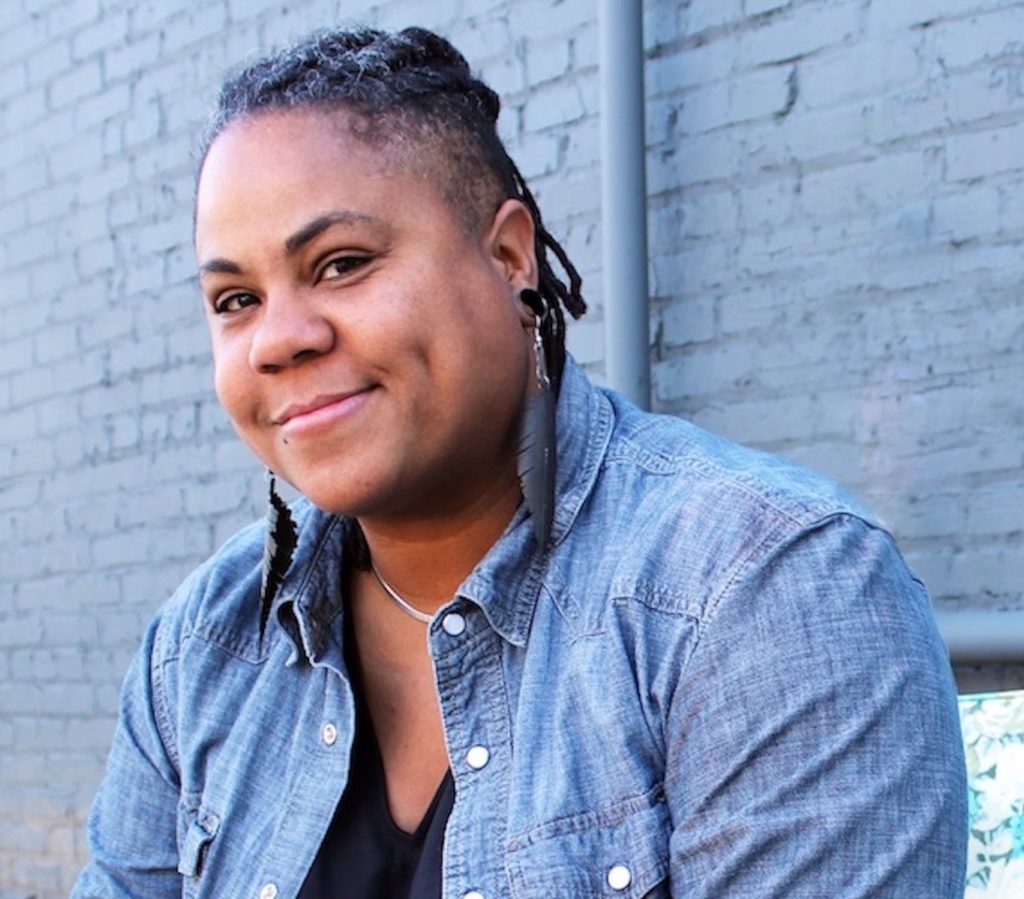
J Nikol Jackson-Beckham, Ph.D.
Dr. J is a scholar, writer, and equity and inclusion strategist who provides consulting and training to individuals and organizations in craft brewing industries. She is the founder of Crafted For All, a platform that works to bring the diversity of craft beverages to people and the diversity of people to craft beverages.
Get to Know Your Board Member: John Behrens
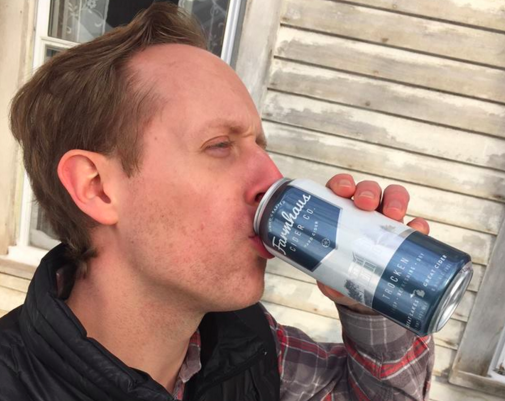
Welcome to our next installment of Get to Know Your Board Member! This time we’re featuring John Behrens, who represents the Midwest region, including the states of Iowa, Illinois, Indiana, Michigan, Minnesota, Missouri, Ohio, Wisconsin, and Kentucky.
Where do you work and what is your position?
I am the owner of Farmhaus Cider Co. located near Grand Rapids, Michigan.
Do you work in cider full time?
Yes, I work in cider full time.
How did you get into cider?
I started out as a CPA, so it has been an adventure getting here. Cider for me started out as a fun challenge with friends, turned hobby, turned side project, turned business, turned full on way of life. I enjoyed the fact that it was niche and you couldn’t go to the store and purchase anything similar to what we were making, which was very different than was the case with beer at the time.
Why did you decide to run for a position on the board?
I believe there is still tremendous opportunity in cider. To see that opportunity we need to clear some legislative hurdles and focus strategically on how we as an industry market our products. I see the work of the American Cider Association in these two areas as critical to the long-term success of the industry.
What are your hopes for the future of the US Cider Industry?
I want to see much more diversity in the industry: diversity in the styles of cider commercially available, diversity from the people involved in the industry, and diversity in how we position our products. To do this, we must continue to focus the majority of our efforts and energies as an industry outward instead of inward.
How do you describe your cider region?
The Midwest Region is fortunate in that we grow a huge amount of apples here, and apples that make fantastic ciders. The challenge is that the Midwest is also a very beer-heavy region which leads to a huge amount of choice for consumers in the beverage space.
What’s your favorite apple to work with and why?
That is a tough question because I prefer a blend of apples, but I have a soft spot for apples with a story. Forced to choose I would probably go Spitzenburg.
What is your favorite cider/food pairing?
Risotto made with a dry cider pairs perfectly with an off-dry keeved cider.
What is your favorite nature/cider pairing?
Sitting under a shady tree on the shores of Lake Michigan drinking a dry, sessionable cider is tough to beat.
What would you like our members to know about you that they might not know?
I love a great adventure – whether running with the bulls in Spain, bungee jumping in New Zealand or doing volunteer work with Elephants in Thailand – I’ve had many great adventures and look forward to many more!
Get to know the rest of your board members at Who We Are.
CiderCon® 2021 Will Be Online!
Is CiderCon® 2021 happening? YES!! CiderCon® 2021 will take place online in our exciting virtual platform from February 3-5, 2021. (New to CiderCon®? Check out our fact sheet for last year’s CiderCon® to get an idea of what we’re all about!)
When can I register? Registration is open! Check out all the latest updates and register on our CiderCon® 2021 website!
What will CiderCon® be like next year? The same informative mix of educational sessions, networking opportunities, and trade show from the ease and comfort of home!
Will there be a trade show? Yes! We are very excited to be offering a trade show as part of CiderCon® 2021. If you’re interested in a virtual exhibit and the leads that come with that, please get in touch with our coordinator, Ellen.
Much more info is coming soon!
Get to Know Your Board Member: Nicole Todd
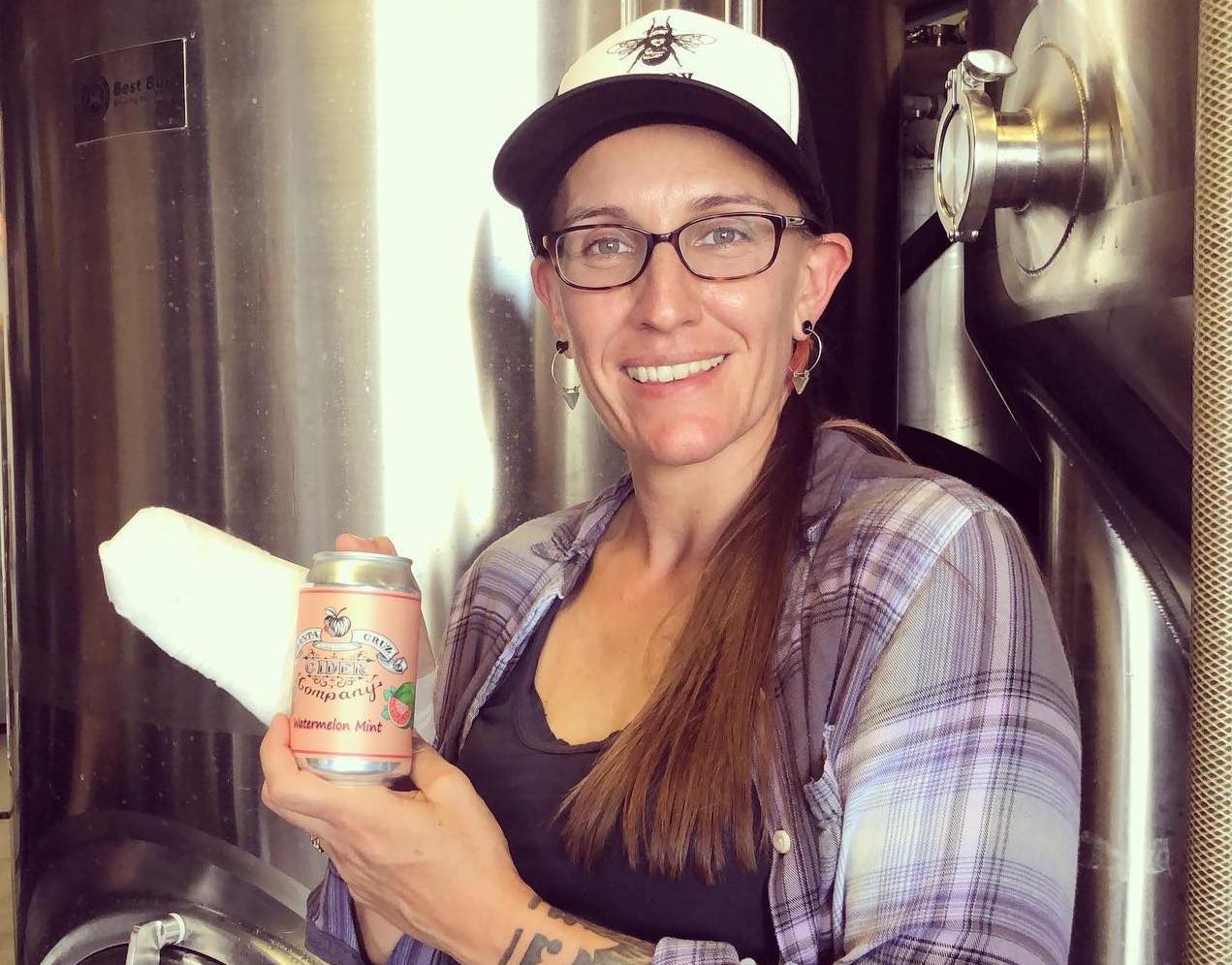
Five new board members joined the American Cider Association in 2020. We wanted to give you a chance to get to know them better. First up is Nicole Todd, who represents the Pacific Region, including California and Hawaii.
Where do you work and what is your position?
Santa Cruz Cider Co. in Santa Cruz, California. Owner/cidermaker/janitor.
Do you work in cider full time? If not, what is your other job?
Yes, I do full time cider for my company and part time brewer for a friend’s local brewery.
How did you get into cider?
We were looking to buy a house and toured a property with over two acres of apples and a tiny house. We did not end up buying it, but there was no one living in the house and it was harvest time, so we went back at night and filled our truck bed with apples. We pressed them into about 80 gallons of cider and shared with friends. Everyone liked what we were making so we went back and helped ourselves to more apples. Soon after, our friend Dave ended up buying that same piece of property and gave us free reign over the apples. It was then that we learned about the different varieties and qualities of each type and my love for apples blossomed.
Why did you decide to run for a position on the board?
I love the cider industry and everyone in it! All of the folks I have met in the industry are down to earth, hard working, real people. I wanted to be more involved in the cider community and help it grow.
What are your hopes for the future of the US Cider Industry?
That it will continue to grow and educate consumers about the wide variety of ciders available.
How do you describe your cider region?
I live in Apple City. No joke, a hundred years ago Watsonville, CA was the number one grower, packer, shipper of apples in the whole world, thus its nickname of Apple City. We have a lot of old apple orchards with 5th generation apple farmers still growing apples. While a lot of the orchards have since been taken out to make room for berries, we still have Martinelli’s being made locally and keeping the demand for our local apples. The Pajaro Valley is mostly flat with some rolling hills that lead into the Santa Cruz mountains. Orchards are planted all over the county with sizes ranging from one acre to 200 acre orchards.
What’s your favorite apple to work with and why?
I think there is something really special about the way Newtown Pippins grow in our area, I think there is a true terroir here. They are a good blending apple as well as good on their own. They cold store well and are great fresh off the tree too!
What is your favorite cider/food pairing?
Cider and cheese for sure! Especially a nice hard, salty cheese.
What is your favorite nature/cider pairing?
Beach and a dry cider on a hot day.
What would you like our members to know about you that they might not know?
I love dogs! I have always had them at home and the favorite part of my bar shifts is getting to pet the dogs other people bring in.
Get to know the rest of your board members at Who We Are.
Spring 2020 Apple Crop Conditions
Written by Greg Peck, Assistant Professor of Horticulture, Cornell University
Gee whiz, 2020, you really have it in for us! In the midst of a global pandemic in mid-May apple growers throughout the Midwest and Eastern US endured several nights of potentially damaging cold temperatures. At our research farms in Ithaca and Lansing, NY we had below freezing temperatures on May 6, 7, 9, 13, and 14 (Figure 1).
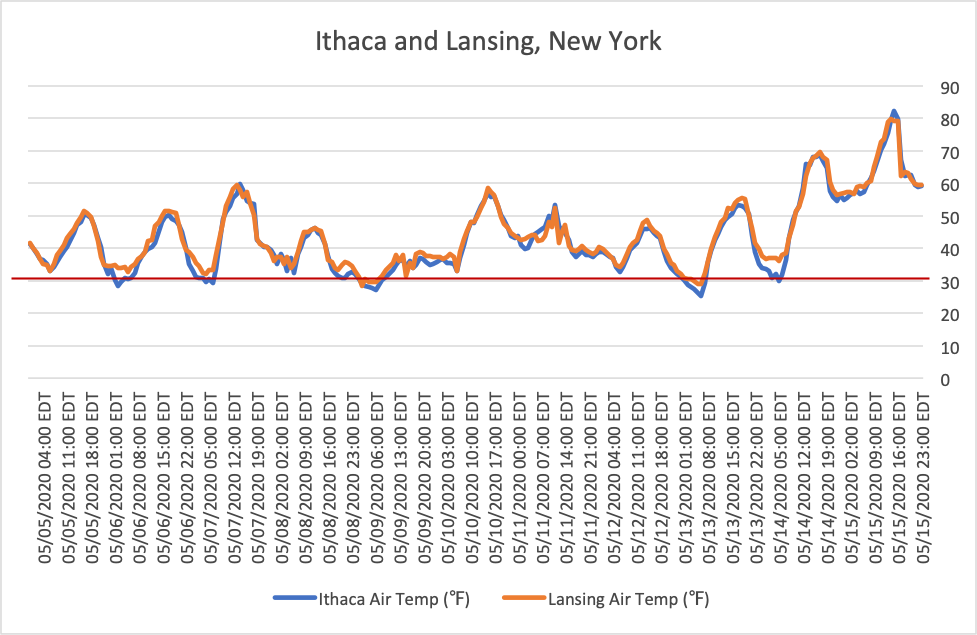
However, it’s important to note that because of the solute concentration in the flower bud cells, and the protective layers around the buds, the absolute cold temperatures typically need to be several degrees below freezing to cause damage (Figure 2). You will also notice that as the flowers develop from silver tip to petal fall, they become more susceptible to freeze damage.
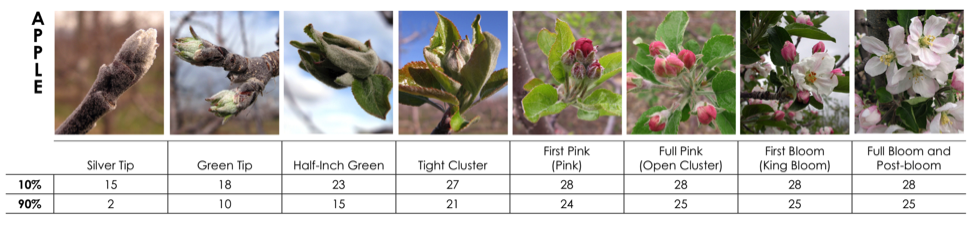
The amount of damage that occurs is also very much so dependent upon the air movement, humidity, number of hours below the critical temperature, tree health, soil moisture, moisture on the bud surface, and if any frost control methods were used, such as wind machines, helicopters, overhead irrigation, or heat. A thorough discussion of frost control methods written by Michigan State University Extension Educator Amy Irish-Brown can be found at: https://www.canr.msu.edu/uploads/files/2013_NW_orchard_show/OrchardShow13Irish-Brown.pdf
Damage to the apple flowers can also vary. Typically, the king bloom (center flower in the cluster that usually becomes the largest apple at harvest) is several days more mature than the side blooms in the whorl. Thus, the king bloom is more likely to sustain damage. For culinary apple producers who sell wholesale, this can be a major problem since pricing is very much tied to fruit size. For cider producers, individual fruit size is less of an issue than tonnage per acre. Additionally, apples typically produce up to 95% more flowers than can reasonably be carried as fruit (not to mention that over-cropping leads to biennial bearing) some level of frost damage is tolerable. The threshold for how much damage is acceptable depends upon the initial flower bud load and yield expectations.
One other thing for the cider industry to remember is that many of the European cider cultivars tend to bloom later than culinary apple cultivars and crab apples. Local and regional apple industry reports tend to be more focused on culinary apples. So, how the freeze damage might affect your apple selling or purchasing this fall will depend upon the types of apples that are being used for cider.
So, how much damage occurred around the country this spring? I’ll give an update from New York and a few colleagues and growers in other regions have shared what they experienced, as well. (Note: I did some minor copy editing for clarity.)
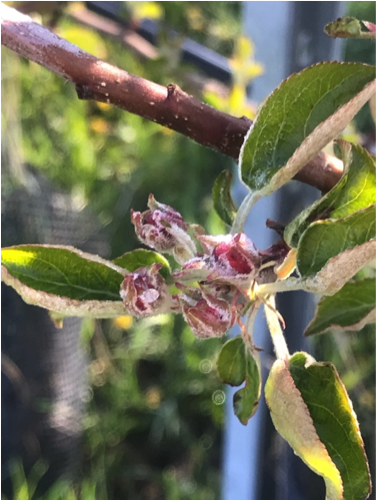
New York (May 27): In the Finger Lakes region of NY, despite temperatures down to 26 ºF in our research farm (23 ºF at my house!) we probably only sustained 10-15% damage to the earlier blooming cultivars and much less to our research cider apple trees. Several growers I’ve spoken with report similar findings. We’re now at late pink to full bloom for most of our apple cultivars with excellent pollination conditions. I suspect we’ll start out the season with the potential for a full crop. The Lake Ontario region of NY has had variable damage from none to greater than 80% of the flowers being damaged. Typically, growers who are closer to the Lake will have less frost damage because the cold water in the Lake delays flowering by several days or more. Reports from the Hudson River Valley are also variable, but more growers in that region appear to have sustained damage than those in the Finger Lakes or Lake Ontario region. Update (June 18): After surviving several frosts and a hail storm, the particularly warm temperatures during bloom have led to several cider apple growers in the Finger Lakes reporting that they have fire blight infections. For our conventionally managed research orchards, we applied streptomycin four times (we use predictive models to determine the need to use this antibiotic), but we were still not able to prevent infections. I think most of the infections were from a late afternoon shower on June 6. We had sprayed strep on June 4 after hail went through the Ithaca research orchard and with just a handful of flowers not open at that application, I thought we would be okay. Big mistake. Most of the infections started in flowers on one-year old wood, including on the central leader. We’re cutting out as much as we can, but I may need to rip out my Dabinett trees and start over. The Medaille d’Or and “Geneva” Tremlet’s Bitter trees also had a large number of fire blight strikes. There was a moderate amount of fire blight on Ellis Bitter, Harry Master’s Jersey, and Yarlington Mill. Porter’s Perfection only had a couple-few strikes, likely due to the fact that it blooms about a week earlier than the other English cider cultivars. Despite all of these issues, if we can stay ahead of the fireblight infections we should have a decent crop overall.
Renae Moran, University of Maine (May 14): “We are at the beginning of pink on Macs, and still at tight cluster for Honeycrisp. I have not checked apple buds yet, but I don’t think it got colder than 30 ºF in most places. Peaches that survived the winter are mostly still alive, but most orchards had 50% or more bud death by April. Peaches are just starting to bloom. Sweet cherries in a frost pocket are dead. The ocean effect delays bloom in Maine, and most growers have orchards at high elevation which also delays bloom. Poor soils are the compromise for escaping frost in most years.” Update (June 16): “I have not checked statewide, but in southern Maine, we had freezing temperatures around June 1, at the petal fall stage. Obvious injury to fruitlets was reported by two growers in the Newport area. In my orchard, I am seeing heavy fruit drop which is probably due to this freeze, and some due to normal thinning. I am also seeing about 10% of the apples with frost rings. Other growers are reporting the heavy fruit drop, as well.”
Terry Bradshaw, University of Vermont, Burlington, VT (May 14): “We’re actually looking pretty good here on the freeze front, although I need to check on a few folks in the southern part of the state. I’m still at early pink on most stuff, tight cluster on some. On cider varieties, a bit of half-inch-green, even. Lows haven’t been that low: 31.8 ºF on May 9th in Shoreham, 28.4 ºF in Essex where buds are tighter than ours.”
Liz Garofalo, UMass Extension Fruit Program, Belchertown, MA (May 27): “There were a few sites in MA where we dipped (on May 10, at 3am one site hit 30.7 ºF, warmed and then dropped back down to 31.7 ºF from 5-6am) below freezing for an hour or two. But, with cider varieties being largely behind others in terms of bud development, they have escaped bloom damage, and the worst that we are seeing are some crinkly leaves from prolonged cool temperatures. Of course, we are now knee deep in fireblight weather with varieties like Stoke Red just barely at pink in one location. For reference, the pink date for that particular variety and location was May 19. All of our apples look like they are setting a good crop, weather has improved, and bees are buzzing.” Update (June 16): “Nearly 75% of Massachusetts is currently experiencing “abnormally dry” weather conditions. In Belchertown at the UMass Cold Spring Research Orchard, we are down 5.38 inches from the yearly average precipitation accumulation. Tree stress caused by water deficits increases the likelihood of opportunistic pathogens and insects that would not normally pose a problem in the orchard- things like black stem borer and phomopsis. High density plantings, especially new and newly established plantings, should be receiving regular irrigation to ensure healthy trees and a healthy crop. We are not yet seeing fireblight strikes. Given the late blooming nature of some of our cider varieties, however, there is still time for strikes to show up in MA.”
Megan Muehlbauer, Rutgers University, Pittstown, NJ (May 26): “New Jersey growers have seen vast differences in frost damage to culinary apples across the state this spring, with crop losses ranging from 0 to 100%. In some instances, several feet of difference in elevation at single farms resulted in complete crop loss. At the Snyder Research Farm in Pittstown, NJ the lowest temperature recorded over the past 30 days was 31 °F. Thus, it seems the late blooming hard cider apple varieties have been spared (a few of which were still in full bloom/petal fall) as of May 25.” Update (June 18): “As of mid-June the hard cider apple crop in New Jersey is looking beautiful. It seems that they have all bloomed just late enough to avoid the most brutal of the spring frosts (Mid-April was particularly disastrous for many other crops). The fruit set looks excellent, thus far there looks to be barely any damage. I haven’t seen or heard of any particularly bad fire blight incidents either, although we have been vigilant with preventative sprays at both our research site and in discussion with growers.”
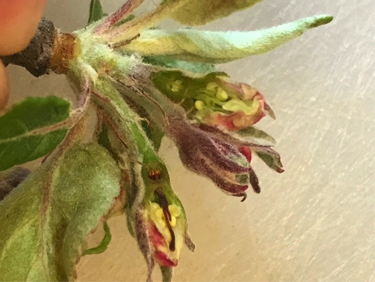
Diane Flynt, Foggy Ridge Cider, Dugspur, VA (May 13): “Spring was mostly kind here in Southwest VA—cool, with little frost damage in last weekend’s sub 28 ºF temperatures for two nights running. Wind was a big issue during bloom, with 18 to 20 mph wind most days (and nights) so spraying was a challenge. But it looks like we have decent fruit set and I hope for a good harvest. Last year I had 40 cidermakers ask to purchase our fruit, and was able to sell to only 4. All my current customers say they want to purchase again—I pass this along as a counter to anxiety growers may be facing about selling cider fruit this year. We are TINY but I do think this demand is an indication of continued interest in high quality cider apples. I hope we don’t see contraction in planting cider apples in response to the challenges cidermakers are facing in selling. Virginia Wine has done an outstanding job in communicating with the industry since isolation began in VA, and I think most of the cidermakers that were doing a decent job before the virus will come out OK.”
Tom Kon, North Carolina State University, Mills River, NC (May 26): “Southeastern apple growers (NC, SC, and GA) observed at least four frost/freeze events during spring of 2020. The polar vortex occurred when fruit was ~18 mm in diameter, but temperatures dropped slightly below freezing at most sites. While most growers avoided catastrophic losses, some blocks/sites are exhibiting sub-lethal cold injury (frost rings, russet, seed damage etc.).”
Nikki Rothwell, Michigan State University, Traverse City, MI (May 26): “We do have some damage in apples in Michigan. I think the areas in the south have more than us here in the north. It has also been pretty variety dependent. Red Delicious, which I know is not used for cider, has more damage than other varieties. However, we had great pollination weather, so I think many growers will have a decent crop. We just need to get through this fire blight weather. We are in bloom with Epiphytic Infection Potential (EIPs) in the 200-300!”
Chris Gottschalk, Michigan State University, East Lansing, MI (May 26): “On May 9th, mid-Michigan sustained temperatures of 25 ºF for two to three hours overnight. As a result, many of our early flowering cider cultivars in the Great Lakes Cider Apple Collection sustained freeze damage. Estimates ranged from 0% loss to >50% loss. For example, Chestnut crab (early blooming) was at first pink and lost >50% of its flowers to the cold. Whereas Cimitiere, a very late blooming cultivar, was at 1/2 inch green and did not suffer any damage. In general, most of our cultivars lost the king blossom but will still produce a sizable crop load this year.” Update (June 17): “The frost that Michigan experienced in early May has decreased crop load levels, for both cider and fresh market types. At the Great Lakes Cider Apple Collection, our Chestnut Crab (an early-blooming cultivar) was severely affected by the frost and has an extremely small crop load. In contrast, Vista Bella (another early-blooming cultivar) was unaffected by the frost and is supporting a high crop load. Our fresh-market industry is reporting similar results with crop load levels being very cultivar dependent. Our late-blooming cultivars, Dabinett and Cimitiere, both were unaffected by the frost and will produce a large crop this year. Many of our other accessions, that bloom at similar times to the fresh-market types, such as Sweet Alford, Yellow Newtown, Esopus Spitzenburg, Gravenstein, and Winesap all have light crop loads.”
Doug Hill, Deep Roots Orchard, Watervliet, MI (June 17): “Early bloom varieties in our orchard Redfield, Granniwinkle and Grimes Golden were negatively effected by the freeze in May. Temps dropped into the low 20’s (22-25) for several hours. Below freezing for 5-6 hours. I am happy to report that other varieties of later bloom were less affected. Browns Apple, Cox Orange Pippin, Spitzenburg, Dabinet, Harrison, Kingston Black (spotty), porters perfection. I noticed some spotty dead blooms on some of the trees but overall we feel lucky about our outcome. Trees were planted in 2017.”
Katie Nash Suding, University of Colorado, Boulder, CO (June 16): “In the Front Range of Colorado we had a late April snow storm which damaged many flowers and so we are expecting generally low fruit set.”
Brant Clark, 63rd Street Farm Orchards, Boulder County, CO (June 18): “The late cold weather, which coincided with the bulk of blossom season, more or less wiped out production for this year. We have one tree with one apple, a Golder Russet on Antonovka rootstock. Our guess is that the tree is not well (leaves more yellow than green) and so bloomed late, thereby missing the freezing event. Additionally, an earlier cold snap and major snow, measured 51cm/20″+, damaged the new leaves on early trees. Leaves which were below the snow survived with little or no damage, leaves above the snow were killed. Most of our trees are on mid and late season rootstock, so suffered little, if any, damage.”
Brady Jacobson, Mt. Hood Organic Farms, Hood River, OR (June 16): “I know the Midwest and East had severe cold weather that might have reduced the crop. We, on the other hand had great weather for bloom and set a big crop in Hood River, OR. Problem is it hailed a few nights ago, so we will have a lot more processing apples for sale this year.”
Carol Miles, Northwestern Washington Research and Extension Center, Mt. Vernon, WA (June 16): “Here in western WA we have not been negatively impacted by temperature. We have had a bit of rain though this past month, and this has led to slightly cooler temperatures, thus fruit development may be a little slow at this time in this region.”
Karen Lewis, Washington State University, Moses Lake, WA (June 17): “The apple crop looks fine in Eastern WA – we have a few pockets of frost damage but overall, if it all sticks and we manage our crop load, then we are on track. It has been a cool, wet and windy spring. Only a few warm days in May. Temperatures are on the way up this week and into next week ( 90’s). Somewhat steep increase but trees /fruit aren’t stressed.”
Jake Mann, Five Mile Orchards, Watsonville, CA (June 18): “We had two amazing seasons here in 2018 and 2019 with excellent growing conditions across the year: sufficient chilling hours and good rains, a gorgeous bloom with no frost or major precipitation during pollination, followed by a mellow summer growing season into harvest with enough folks around to pick the fruit when it was ready. 2020’s crop is looking promising, even considering this should be an alternate bearing year. Precipitation was lower this winter, but chilling hours were once again sufficient. Weather was clear and warm during bloom. Nice fruit set. Intermittent spring rains necessitated some scab control sprays, and we’ve seen outbreaks of aphis and skin worm (moths) in May and June, but have been able to keep them under control. If you wanted to say there was a pattern developing over the past three years, it’s that we’re seeing dryer winters, later accumulation of chilling, with more precipitation in spring rather than winter. The Newtown Pippin crop (our main cider apple here) looks solid, not as bountiful as last year for some blocks, but still feeling optimistic. It’s looking like a big year for our Red Delicious (not the most sought after cider fruit, true) and a worthwhile crop is growing in our other dessert fruit sections. The test blocks and grafts we have for Kingston Black, Wickson, Nehou, and some other cider-specific varieties show promise for adapting these in greater quantity to our region. The orchards didn’t get the memo about Covid… our small crew remained busy though the spring and have been able to work at a safe social distance from each other. We remain optimistic that our fruit will find it’s home in the markets this fall.”